“Before tearing down a fence, we should first understand why it was built.”
That simple wisdom fits Wyoming’s property tax debate because the choices before us are not small repairs — they are foundational changes to tax policy and structure.
And the discussion is urgent. Wyoming citizens are being asked to consider measures that could reshape local control, community services, and the long-term stability of our state.
In 2026, taxpayers will vote on a ballot initiative to reduce residential property taxes by 50 percent through a homeowner’s exemption.
During the 2026 Budget Session, legislators will be asked to vote on a bill from the Joint Revenue Committee that would eliminate residential property taxes entirely through a constitutional amendment.
Why Property Tax Exists
Property taxes are not a modern experiment. Historically, they’ve paid for the services we rely on close to home: counties, municipalities, schools, libraries, and special districts that fund law enforcement, roads and bridges, courts, fire protection, and emergency response.
When we reduce property tax collections, we do not “trim Cheyenne” or the state’s savings accounts — we reduce local revenues, self-sufficiency, and local control.
Local control means local responsibility. Counties and municipalities are not helpless bystanders in this debate. Local officials hold real authority over budgets, priorities, and mill levy adjustments. That’s why a one-size-fits-all proposal to eliminate property tax deserves serious scrutiny.
What Would Full Elimination Cost?
According to the Legislative Service Office (LSO), eliminating residential property tax statewide would reduce revenue by $601.3 million annually — on top of relief already enacted (including the 4 percent assessment cap and 25 percent residence exemption).
To replace that, LSO estimates it would take a 2.54 percent increase in statewide sales and use tax, raising the base rate from 4.00 percent to about 6.54 percent, not including local options. These are not small adjustments—they are structural changes.
One County Shows the Impact
There is one county that uniquely illustrates the stakes for the entire state.
According to the Wyoming Department of Revenue’s FY 2025 figures, that county has approximately $3.2 billion of the state’s $8.2 billion in total residential assessed value—about 39 percent of the statewide total. Using the county’s average 57 mill levy, that equates to an estimated $182 million in annual residential property tax revenue from just one county.
Under a full elimination plan, that same county could see an estimated $203 million annual benefit, or roughly 34 percent of statewide relief. Yet the sales tax increase to replace that funding would be paid across all counties—meaning Wyoming citizens everywhere would shoulder the burden for disproportionately concentrated relief.
What Would Families Experience?
Household impacts deserve clarity. Under elimination, a median-priced Wyoming home could see $1,741 in annual property tax savings, based on LSO assumptions. But average families could see sales and use tax costs increase from $1,354 to $1,993 per year—a 47 percent increase.
And that doesn’t account for big purchases. Buying a $50,000 vehicle could now cost an extra $1,270 in sales tax. Would that fully offset the savings from a lower property tax bill?
Meanwhile, renters, particularly in properties classified as commercial, would receive little to no direct relief, but still face higher living costs due to rising taxes on goods and services.
What Happens When the Base Shrinks?
Here’s the rural reality: when a major part of the property tax base is removed, the burden doesn’t disappear—it shifts.
Local governments still have to fund the basics—schools, snowplows, EMS, and law enforcement. If sales tax revenue falls short or arrives unevenly, pressure shifts to what’s left: commercial property, family-run businesses, minerals, and agriculture with improvements.
Higher taxes on Wyoming’s energy and ag sectors mean higher costs for the rest of us. When producers pay more for equipment, feed, and fuel, those costs get passed on—to ranchers, store shelves, and family budgets.
Could This Lead to an Income Tax?
Here’s a question rarely asked: Does destabilizing local property tax increase the likelihood of an income tax down the road?
Wyoming’s current structure—local property taxes, sales taxes, and mineral revenues—has helped preserve what Wyoming citizens value most: no personal income tax. But remove one leg of that stool, and future lawmakers may be forced to consider new tax streams if revenues falter. What if mineral revenues drop? What if sales taxes fail to keep up?
Hard Questions Deserve Honest Answers
Before legislators vote this session—and before Wyoming Citizens vote in 2026—there are plain-language questions that demand answers:
● If replacement revenues underperform, what services are cut—or what fees rise?
● Where does the burden shift—renters, farms, ranches, minerals, or small business—and by how much?
● If the statewide sales tax rises to 6.54 percent before local options, what does that do to cost of living and local commerce?
● What prevents the income-tax debate from landing on our doorstep if this new structure fails?
Can We Fix The Fence?
Wyoming needs relief. But we also need stability, transparency, and respect for local control.
Before we tear down the fence, we should make sure we know why it’s there—because once it’s gone, rebuilding is rarely as simple as the slogan that took it down.
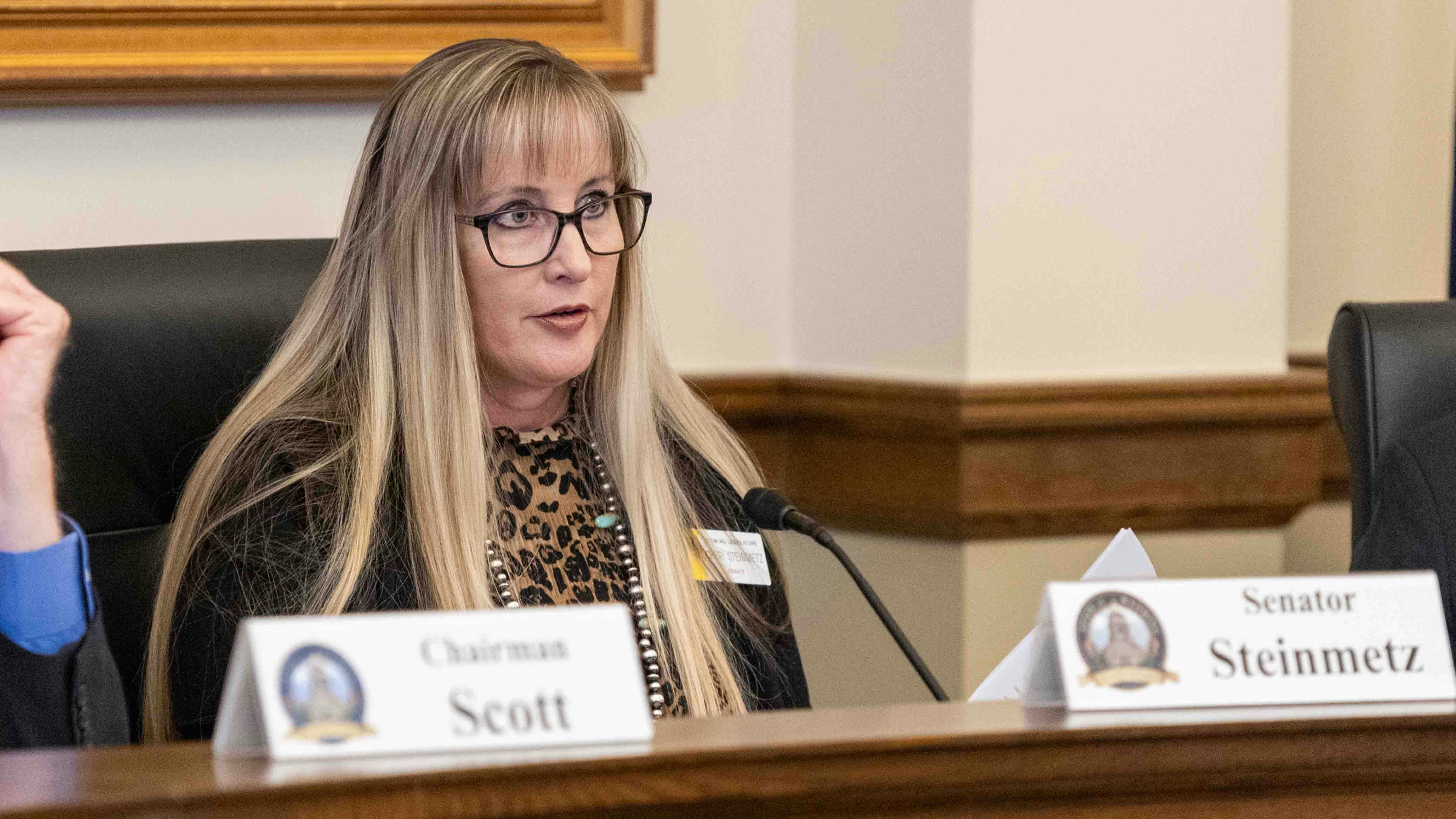
Sen. Steinmetz represents Goshen, Niobrara, and Weston counties.