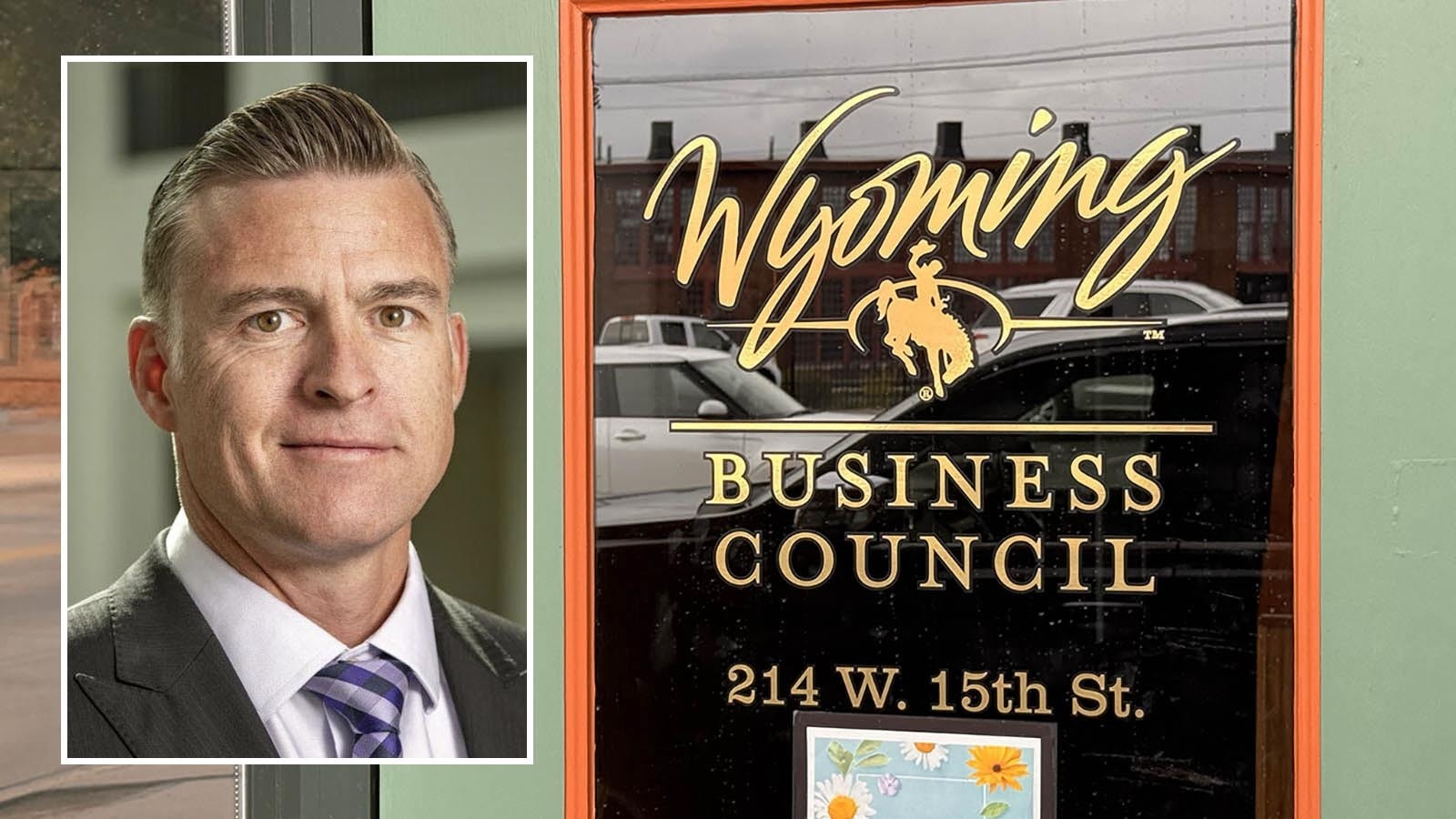
It’s difficult to have a simple discussion about the Wyoming Business Council because its work ranges from less controversial uses of public money — like building infrastructure — to more controversial — like giving grants to businesses.
The Wyoming Business Council also gives money for research projects that plan to make products eventually, but on a long enough timeline to make private-sector investors hesitate.
The WBC has received about $976 million in state money since its formation in 1997.
Now the state’s economic development agency is fighting for its existence, attending public meetings and forums, taking interviews, and launching a myth-busting campaign.
That’s after majority of the Joint Appropriations Committee last month advanced proposed legislation that seeks to defund the Wyoming Business Council and to purge it from state law altogether.
Before that, Gov. Mark Gordon recommended cutting the agency’s budget request for the next two years by roughly half, from $111 million to about $55 million.
Gordon told Cowboy State Daily’s Jake Nichols that he wants to see the agency vet business applicants to make sure they understand “what’s really valuable here in Wyoming” and they don’t request more help than is necessary.
Still, the governor has repeatedly defended WBC’s core mission and other state-backed economic development.
Meanwhile, some lawmakers and residents have taken to social media to cast the agency as a boondoggle.
Wyoming Business Council CEO Josh Dorrell sought Friday to address their claims.
“I was hoping to give a little bit of a reality check on some of the things being said about us,” began Dorrell in a phone interview with Cowboy State Daily.
First Up …
One claim lawmakers repeat is that in fiscal year 2024, the business council spent $49 million and only yielded 40 jobs, at a rate of more than $1 million per job.
That conclusion comes from one of the Wyoming Business Council’s own reports saying the “Wyoming Main Street” program in 2024 saw $49.2 million in public investment and 40 “jobs created.”
The graphic pertains only to the Main Street program, said Dorrell.
The $49 million represents local, county, state and federal money used in towns’ downtown areas to improve infrastructure: roads, sewers, water, curb, gutter, lighting and building renovations, he said.
“Those were not Wyoming Business Council funds at all,” added Dorrell.
As for the 40 jobs, those were incidental to the infrastructure projects, he said, also noting that beautification and improvement projects tend to attract businesses.
“Shame on me for a poorly-designed graphic, let’s just put it like that,” said Dorrell.
One of the WBC’s most vocal critics, Rep. Tom Kelly, R-Sheridan, also noted Friday that “everyone’s been running around talking about the $49 million spent to create 40 jobs.”
“OK,” said Kelly in a Friday interview. “I’ll concede that technically didn’t come from the Wyoming Business Council’s budget, but they’re still touting $49 million in public funds spent” alongside a metric of 40 jobs produced.
“Not an efficient or effective use of taxpayer dollars — regardless which taxing entity,” said Kelly, adding that he finds the agency long on rhetoric and short on results.
Next, The $20 Million Blowout That Didn’t Happen
Some in Wyoming have condemned the WBC on claims it paid $20 million to a Laramie business that went bankrupt, Dorrell said.
However, as Cowboy State Daily reported prior, the vertical farming company Plenty didn’t receive that money directly. In fact, no one has received the entirety of that grant, said Dorrell.
That’s because the Wyoming Business Council’s Business Ready Communities program doesn’t give money directly to businesses, but to community economic development entities.
Those entities receive grants or loans, or both, from WBC. Then they build facilities or other assets for the business. Then the business leases those assets from the entity, which keeps much of the lease money but yields back some of it to the WBC.
As for the Plenty project, only about 5% of the total payout was spent by the time the project was scuttled, said Dorrell. That’s because those building projects run on a reimbursement, or pay-as-you-go structure.
Plenty has merely filed for bankruptcy, Dorrell clarified.
Designed to help communities recycle economic development grants and loans for future projects, the Business Ready Communities program is not without controversy.
It made the news this week as Cody-based business Gunwerks won an appeal against its local economic development entity, Forward Cody, over claims the entity excluded it from building plans then offered it a poorly-made shop.
Gunwerks’ $14 million lawsuit is ongoing.
The Small Fraud Slice
Another claim Dorrell said he’s heard is that 30% of the business relief programs WBC administered during the COVID-19 pandemic were fraudulent.
“That is not correct,” said Dorrell.
Rather, 30% of the highest-risk slice of CARES Act funds were gotten by fraud, a figure that amounts to 4% of the total, he added.
Many people caught in the act have paid the government back willingly. Others are in the hands of federal or state law enforcement, said Dorrell.
He added that WBC reported those original fraud figures to the Legislature during the pandemic, but other people have twisted them since then.
One of the most high-profile fraud cases of that era was that of former Wyoming Catholic College CFO Paul McCown, who applied for and received $841,862 in emergency CARES Act money through the Wyoming Business Council to prop up what he cast as a large but ailing gin business, according to court documents.
McCown later paid back the state of Wyoming from a $14.7 million loan he secured by convincing an out-of-state bank that he was worth more than $750 million, the documents say.
Uncorking The Bottleneck
For Ben Noren, founder of CellDrop Biosciences, the Wyoming Business Council uncorked a lending blockade on innovation that long-game scientific researchers often face.
Noren’s business is working to innovate ways to expand stem cell access, at first in the veterinary field, in ways that could later translate to human medicine.
“When you have a product like ours that’s heavily regulated and risky –— and works really well as an idea in a lab, but you have to run more experiments on it — there are no funding mechanism to do it,” Noren told Cowboy State Daily on Friday.
Private-sector investors shy away from long innovation timelines. Banks won’t touch businesses that yet lack an actual product, he noted.
For Noren, FDA authorization could take a year or two, he estimated. But in the meantime, his company needs to do a lot of research to make its case.
The Wyoming Business Council has helped with this in phases, and with significant grants from the federal government.
First, said Noren, WBC gave a $5,000 “phase zero” grant to CellDrop.
It’s a small figure relatively, but “that first funding … is so critical and is super hard to get (and) then leads to having the data which you can submit for federal awards,” Noren said.
Federal awards followed: a $250,000 grant for the project’s “phase one,” which WBC matched with $100,000; and $999,999 for “phase two,” which WBC matched with $200,000.
The notion of government uncorking startup funds for projects investors shun isn’t unheard-of, even among critics of the Wyoming Business Council.
For example, Senate President Bo Biteman, R-Ranchester, told Cowboy State Daily this week that he envisions a stronger Wyoming-backed fund to help traditional energy-sector projects escape the “ESG” green-energy compacts investors have used to stifle their growth.
Biteman has pushed for amendments to defund WBC in the past, he also noted.
Winners, Losers
Noren said he wants to rebut the notion of the Wyoming Business Council “picking winners and losers” by awarding money to some businesses over others.
“It’s really hard to get these grants and it requires work and vetting,” he said. “It’s pretty competitive, and you have to write up another proposal to the business council — again, reviewed by a team of experts” for successive grants.
To Kelly, awarding competitive grants still amounts to a judgment call between businesses WBC deems winners and those it deems losers.
“It is literally a contest that you apply for,” said Kelly, who countered that, “With entrepreneurs, they’re the ones who know how to turn nothing into something.”
Kelly said his critiques of the agency range beyond grants to businesses.
For example, Kelly asserts that the agency’s involvement in the state’s housing market exceeds the proper scope of government. He said the same about its involvement with child care, which a WBC webpage calls “a critical economic infrastructure.”
“When the state becomes responsible for child care and people’s homes,” he said. “Well, we’ve seen those failures globally throughout history."
Jumper Cables
Dorrell said he agrees with Kelly’s quote.
He said the WBC isn’t pushing for state-run child care or state-owned housing.
WBC participated in a working group with other agencies to find ways to kick-start child care centers, but it didn’t give money to the group or its programs, Dorrell said.
WBC did, he noted, dedicate about one-quarter of one regional director’s work to the effort, which translates to an administrative cost, but not a grant or loan.
As for housing, Dorrell cast WBC’s involvement as funding “arterial” infrastructure like water and sewer so that housing projects would meet with sound infrastructure before starting construction.
“We’d stop at housing development,” said Dorrell, who said WBC also seeks ways to deregulate the housing market to coax supply.
For Women
Saying he had not researched it, Kelly declined to discuss the Wyoming Women’s Business Center, an intermediary group that uses WBC funding to help people — mostly women — start and grow businesses.
“Our primary focus is serving women, rural residents, artists and underserved communities,” says the WBC’s $600,000 two-year budget request for the entity.
The Wyoming Women’s Business Center serves 750 entrepreneurs annually: 82% of them women, the budget narrative says, adding that women, rural entrepreneurs, and caregivers “face structural barriers that prevent them from accessing traditional jobs.”
In the past year, WBC has helped to support or create 200 jobs and disbursed more than $500,000 in microloans using non-WBC funds through the program, the narrative says.
Gordon recommended the Legislature fund that program.
Dorrell told Cowboy State Daily, “They (the center) don’t turn men away, but their goal is to work with women entrepreneurs and help them start businesses.”
That reflects Wyoming “as the equality state,” he said.
The full Legislature may change, accept or reject the proposals to defund and dismantle the Business Council in its budget-planning session, which begins Monday.
Clair McFarland can be reached at clair@cowboystatedaily.com.