When it comes to elk in Wyoming and Idaho, it could be a case of different places, same problem. Idaho’s elk herds are booming, but hunters complain they can’t get on private land to hunt them.
In one instance involving 100 elk that won’t budge from private ground, Idaho Fish and Game is proposing relocating some, and sending in state game agents to kill the rest.
In some cases, agents have been sent in to kill elk on private property in Wyoming too. Either because hunters couldn’t kill them or weren’t allowed access.
No Access For Hunters?
Idaho elk hunter and retired federal trapper Carter Niemeyer told Cowboy State Daily the hunters’ gripes in his state sound like those of many Wyoming elk hunters.
“All you hear is hunters complaining that, ‘I can’t get in. They sell me a tag and I can’t get access to hunt,’” he said.
Hunter access has been a contentious matter in Wyoming.
Many hunters say that after the first rifle shots in hunting season, the elk herds flee on to private land, where owners won’t give hunters access.
Some Wyoming hunters have gone as far as contracting a helicopter pilot to airlift them into isolated pockets of public land, surrounded by game-rich private property.
Hunters’ frustrations also play into what Niemeyer thinks is misplaced hatred of wolves, which are blamed for “wiping out all the elk,” when Idaho, Wyoming and Montana seem to be bursting at the seams with elk herds.
Niemeyer used to trap and kill wolves for the government but has since become an outspoken advocate for the predators.
Some hunters argue that while overall numbers of elk are up, herds have been severely diminished by wolves in specific places, some of which had been favorite elk hunting spots for generations.
Some Elk Moved, Others Killed
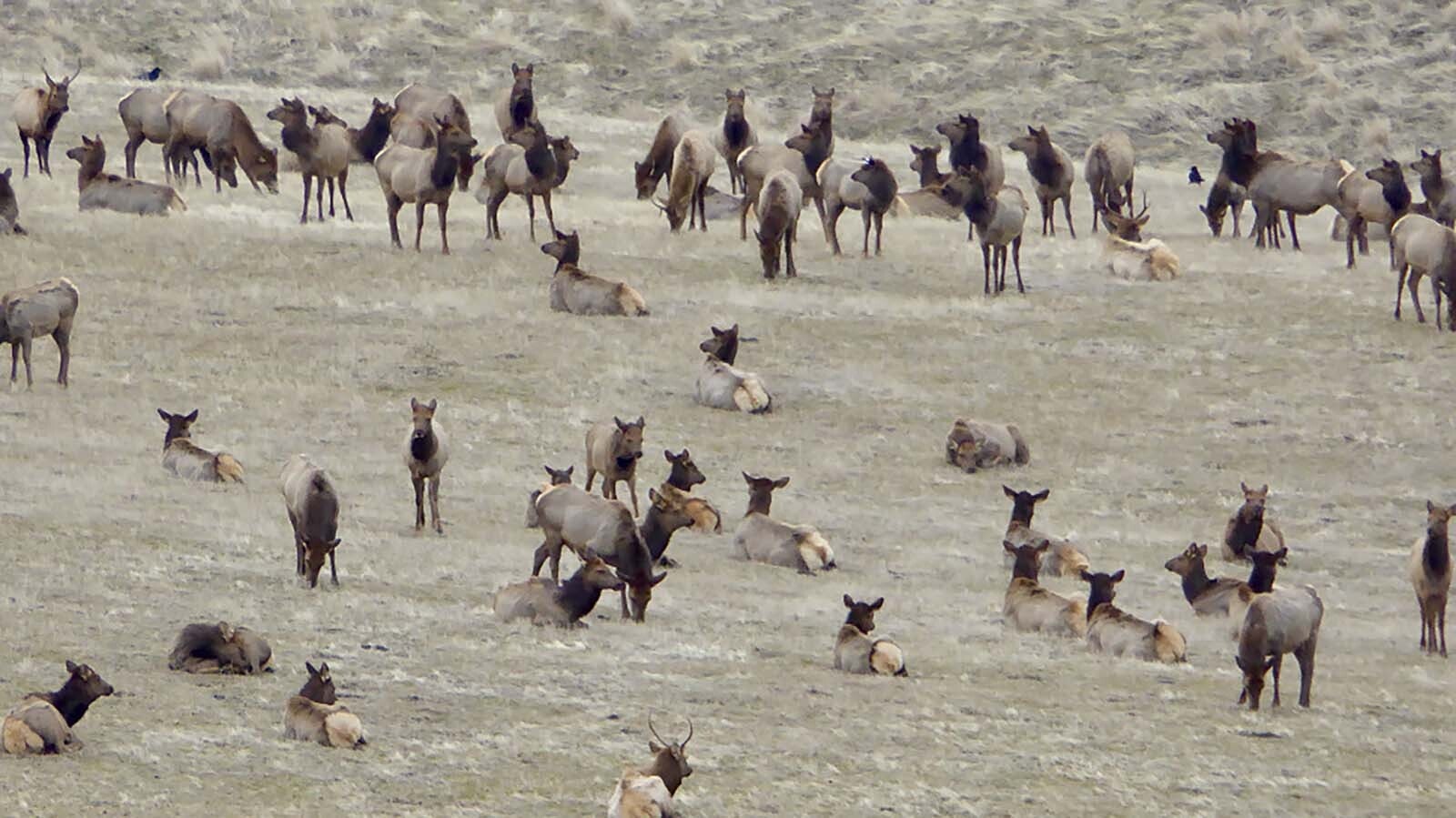
A herd of 350 elk has become a permanent fixture on private property west of Emmett, Idaho. The Idaho Fish and Game Commission is considering a plan to get rid of at least 100 of them this summer.
“Fish and Game will target elk that are living year-round on private land owned by five owners," the agency says. "The year-round herd has grown to 350 animals over the last five years despite efforts by hunters, landowners and Fish and Game staff to reduce elk numbers and associated crop damages.
“Although the elk caused agriculture damage that exceeded $1 million, landowners were only reimbursed for about 35% of their reported losses."
Killing some of the elk is likely unavoidable, according to the agency.
“Previous translocation projects have shown that attempting to trap all of a large herd, or a large portion of a herd all at once, risks the safety of the elk. Experience has also shown that elk quickly learn to avoid traps, so attempting to translocate the entire 100 would likely be unsuccessful,” according to Fish and Game.
Elks, Wolves And Lowland Habitat
The number of elk in the West is impressive.
Wyoming is estimated to have 109,000 to 113,000, while Montana is thought to have more than 150,000.
The official estimate in Idaho is about 130,000, but Niemeyer questions that. He said he’s had biologist tell him the number is actually “north of 140,000.”
And Colorado tops them all, with an estimated 280,000 to 300,000 elk.
Colorado recently reintroduced wolves, and some residents there worry about how that might affect the state’s vaunted elk herds.
Wyoming, Montana and Idaho have had wolves since they were reintroduced in the mid-1990s.
Wolf critics say that the predators have made elk hunting harder by driving herds out of the mountains and down on to private land.
Niemeyer said that, indeed, the number of elk on irrigated lowland farms in Idaho has ballooned, including in the spot where he has a landowner’s permission to hunt.
However, he questions whether that’s really because of wolves driving elk out of the mountains, where much of the land is public.
Instead, could be a matter of elk finding “food and security” on private grounds in the lowlands, Niemeyer said.
It’s often forgotten that elk, like grizzlies, are naturally a prairie species, he said.
Once elk are in the lowlands for a generation or two, it’s natural for them to stay there, he said.
The good news is that after the rut, or elk mating season in late summer and early fall, bull elk tend to “disperse,” he said.
So, that might give some hunters a crack at them if they wander on to public land, he said.
Life On The Plains
Grizzlies have been steadily reclaiming prairie habitat in north-central Montana.
Elk, too, are moving back to the Great Plains.
For instance, Nebraska has a growing population of elk, with Wyoming DNA, that have caused farmers headaches by getting into crops.
Mark Heinz can be reached at mark@cowboystatedaily.com.