Calls for Wyoming’s grizzlies to be delisted from federal protection and hunted are further damaging Wyoming’s reputation, already sullied by worldwide outrage over the reported torture and killing of a wolf in Daniel, a seasoned wilderness guide said.
Also weighing in against delisting, famed wildlife photographer Tom Mangelsen said the rights of those who enjoy watching grizzlies, without them being hunted, should also be considered.
Most recently, Wyoming Congresswoman Harriet Hageman called for grizzlies to be delisted and hunted because they keep mauling hunters.
“Well, you and I both have read too many articles of individuals who have been injured by grizzly bears in Wyoming and surrounding states,” Hageman said during a hearing earlier this month before the U.S. House Subcommittee on Water, Wildlife and Fisheries, which she chairs.
“Well, in an overabundance of grizzly bears in those areas that are not suitable habitat, it actually places our hunters, our fishermen and women and our recreators at risk of great bodily injury and even death, doesn't it?" she said.
Proposing that grizzlies be culled is poor optics for Wyoming, wilderness guide and wildlife photographer Jeffrey Soulliere told Cowboy State Daily.
Hageman made those remarks during a recent congressional subcommittee hearing in an exchange with U.S. Fish and Wildlife Service Director Brian Nesvik. During his previous tenure as director of the Wyoming Game and Fish Department, Nesvik openly supported delisting grizzlies.
Though he lives in Teton County, Wyoming’s politically blue-leaning stronghold, Soulliere is a staunchly conservative Republican. However, he said he disagrees with the spin that fellow Republican Hageman is putting on the grizzly issue.
“The national face she’s putting on it, it’s just not logical and we don’t need that as a state,” he said.
Wyoming’s reputation with the wildlife-loving public was already damaged by the controversy swirling around Daniel resident Cody Roberts, he said.
Roberts is accused of running a wolf down with his snowmobile and tormenting the animal for hours before finally killing it.
“Cody Roberts, on an international scale, did Wyoming no favors whatsoever,” Soulliere said.
Many Favor Delisting
Hageman is hardly the only one calling for grizzlies to be delisted.
Nesvik recently told Cowboy State Daily that might happen within the next two years.
Current Game and Fish Director Angi Bruce has also openly stated that she favors delisting grizzlies.
Grizzly delisting also has strong support among hunters and ranchers in Wyoming, Montana and Idaho.
Soulliere said he doesn’t want grizzlies delisted, at least not anytime soon.
Mangelsen told Cowboy State Daily that he also doesn’t want the bears delisted.
As he sees it, people who value grizzlies alive greatly outnumber those that want to see them hunted.
“We need better wildlife management, period. We need to get rid of this old paradigm that we rule the earth and animals don’t have intelligence,” Mangelsen said.
‘The Plight Of The Silvertips’
Grizzlies and wolves are huge attractions for visitors, who pour money into Wyoming’s tourism economy, so the state should be mindful of the attitude it projects toward the apex predators, Soulliere said.
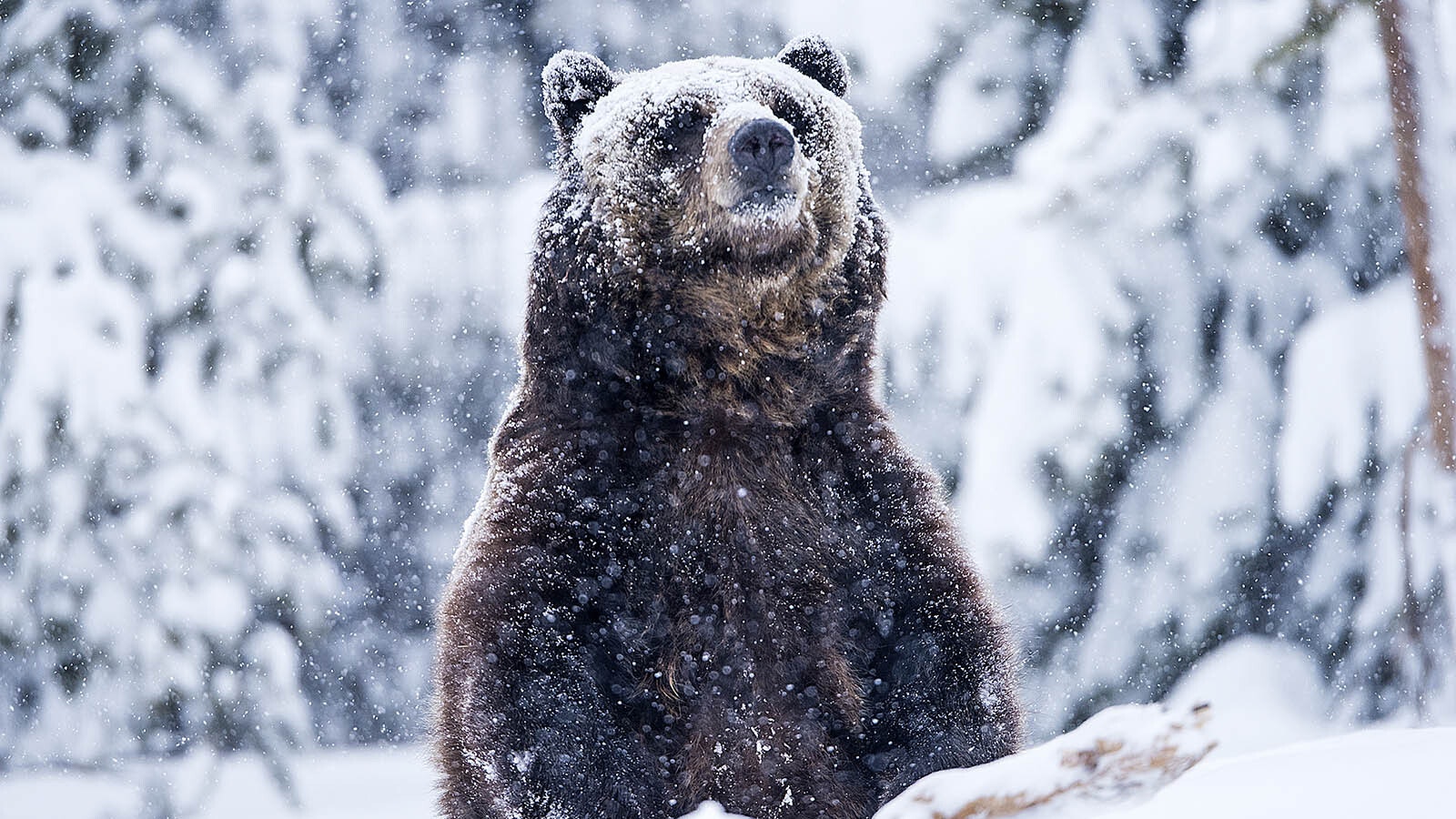
After guiding clients in grizzly country for 20 years, Soulliere has developed an affinity for the bears, which he calls “silvertips.”
That’s an old-school name for grizzlies, inspired by the light-colored tips many bears have on their fur, which produces a silver gleam in the sunlight.
“I do it (call grizzlies silvertips) out of respect, and because of the legacy,” he said.
He said he tells his wilderness trek clients about “the plight of the Greater Yellowstone silvertip grizzly.”
Grizzlies are a huge draw for tourists, Taylor Phillips, owner of Jackson Hole EcoTour Adventures, told Cowboy State Daily.
He declined to give his opinion one way or the other regarding delisting.
But there’s no question that Wyoming’s wildlife drives the tourism industry, he said.
“Our guests come from all over the world to see these bears,” Phillips said.
Wyoming’s wildlife can’t be taken for granted, he said.
“Oh my gosh, I feel so fortunate to live and work and an ecosystem where we still have apex predators on the landscape. All of the large mammals that we had here 200 years ago, we still have here,” Phillips said.
Back From The Brink
People today associate grizzlies with the rugged mountains of the Greater Yellowstone Ecosystem (GYE), but they’re naturally a plains species that was “pushed back into the GYE” by westward expansion as the plains were settled, he said.
Thousands of grizzlies once occupied a huge swath of territory west of the Mississippi River, including nearly the entirety of the Great Plains.
There were also thousands of grizzlies in California, which Soulliere said carried unique DNA.
There’s an image of a grizzly on that state’s flag, even though they disappeared from California in the early 1900s.
Some claim that grizzlies should be introduced to California, and the state could support a population of about 1,200 bears.
However, many wildlife managers and biologists say that’s unrealistic, and it will never happen.
By 1973, the population of grizzlies in the Lower 48 had been reduced to an estimated 136 bears in the GYE.
“We were going to lose the grizzly DNA, just like California did. We were on the verge of that,” Soulliere said.
Grizzlies in the Lower 48 were placed under federal endangered species protection, and have steadily recovered since.
There are now about 1,000 grizzlies in the GYE, and another 1,000 or so in Montana’s Northern Continental Divide Ecosystem, radiating out from core habitat in Glacier National Park.
Grizzlies have been steadily reclaiming high plains habitat in Montana, with bears showing up as far east as the Missouri Breaks.
Grizzlies have also been expanding their range in Wyoming, showing up as far south as the Kemmerer area.
And after years of rumors about grizzlies in the Bighorn Mountains, one was confirmed near Ten Sleep in 2024. The young male was killed by wildlife agents for preying on cattle.
Delisting Debate Continues
Hageman, Nesvik and other delisting advocates say the sheer number of bears across expanding territory makes their case.
As they see it, suitable grizzly habitat is saturated with bears, and that’s forcing more grizzlies to push into areas where the risk for conflicts with humans is too high.
Delisting proponents also argue that a grizzly hunting season would instill the bears with healthy fear of humans.
And, they say, hunters would probably end up killing fewer grizzlies than wildlife agents have killed for preying on cattle, attacking people and other human-bear conflicts.
However, Soulliere said he remains unconvinced that grizzlies are ready for delisting.
The current grizzly population in the GYE isn’t that much more than the roughly 900 bears that were there in the 1950s, he said. And that was just a couple of decades before the population nosedived to the all-time low of the early 1970s, he said.
And there have been a couple of recent years during which grizzly deaths in the GYE exceeded 70 bears, he said.
That’s enough to make a serious dent in the population, he added.
Soulliere said he agrees with the assessment of prominent bear biologist Chris Servheen. He was the grizzly bear recovery coordinator for the U.S. Fish and Wildlife Service for 35 years prior to his retirement in 2016 and is now the board chair and president of the Montana Wildlife Federation.
Servheen argues that for grizzlies to be fully recovered, there must be more genetic exchange between sub-populations of grizzlies, and “meta-population” of grizzlies from Canada to the Southern end of Yellowstone National Park.
‘Trophy Hunting’
Soulliere said he’s hardly an anti-hunter.
Elk hunting is “feeding families” in Wyoming, he said.
Game and Fish has stated the intent to open a hunting season for grizzlies, if and when they are delisted.
A Wyoming hunting season was planned, and grizzly tags were put up for sale when the bears were nearly delisted in 2018. However, a federal judge reversed that delisting proposal before the hunts began.
Mangelsen put in for the lottery-style grizzly hunting tag drawing that year and drew a tag.
He planned to use the tag to hire a guide and go “shoot a grizzly with a camera, not a rifle,” he said.
He said some weren’t pleased with his decision.
“I got death threats over that,” Mangelsen said.
Soulliere said there’s no way that grizzly hunting will ever be perceived by the wider public as anything other than “trophy hunting.”
And that could stoke broader anti-hunting sentiments, he said.
He thinks the American public should have a greater say in whether grizzlies should ever be hunted.
There has been about $150 million in “federal taxpayer money” spent on grizzly recovery over the past 50 years or so, he said.
“They never polled the American people (about grizzly hunting). It’s their taxpayer money,” he said.
Mangelsen spoke with Cowboy State Daily over the phone while on a wildlife photo safari in Kenya, Africa. In his opinion, trophy hunting is falling out of favor both in Africa and North America.
“Everybody thought it was cool 30 years ago, but it’s not anymore,” he said.
Safari hunting proponents say that the money raised through controlled hunting for specific animals helps preserve African wildlife habitat. And it pays for game wardens, who protect wildlife from being indiscriminately slaughtered by illegal poachers.
Mangelsen said he thinks that non-hunting “eco-tourism” raises plenty of money for habitat conservation and wildlife protection.
Hunting grizzlies might spoil the opportunities of wildlife watchers, said Mangelsen, whose photographs of Grizzly 399 helped make her Wyoming’s most famous bear.
“If you would have killed a bear like Grizzly 399 10 years ago, you would have robbed millions of people of the opportunity to come see that animal in the wild,” he said.
Some have argued that grizzly hunting tags would raise considerable money for bear conservation.
Soulliere said state agencies might consider raising money by auctioning off the pelts and claws from bears that died of natural causes, or had to be killed for attacking cattle.
Mark Heinz can be reached at mark@cowboystatedaily.com.