The new mystery owner of Wyoming’s massive Pathfinder Ranches — larger than Rhode Island — has finally been revealed, and, as Cowboy State Daily previously reported, it is indeed not Ukrainian President Volodymyr Zelenskyy.
The mystery buyer turns out to have been a neighbor of the Pathfinder Ranches all along.
Chris Robinson, who is CEO of Salt Lake City-based Ensign Group, L.C., is the mystery man behind the company that bought the 916,000-acre Pathfinder Ranches, a historic sale of one of the largest operating ranches in Wyoming.
The property had listed for $79.5 million last year and grabbed headlines for its size, which is double the size of Jacksonville, Florida, America’s largest city by land area in the Lower 48.
That size is also larger than the fictional “Yellowstone” Dutton Ranch, from Taylor Sheridan’s famous television series, which was supposed to be between 775,000 to 825,000 acres.
The deeded acreage for the ranch is 99,188 acres. The rest come from leases. The ranch, with leases, has a capacity of 90,444 Animal Unit Months, or AUM. That is a measure of how much livestock a given area of rangeland can reasonably support.
The sales price is not being disclosed, Swan Land Company real estate broker and listing agent Scott Williams told Cowboy State Daily. The land sale is one of the largest the company has done in Wyoming.
"This is what we specialize in are the large complicated transactions," he said. "And the beauty of this is the buyers are excellent ranchers, but they're also conservation-minded operators as well."
About Ensign Group
Ensign Group already owns and operates around 1 million acres across Wyoming, Idaho, and Utah, and was already the owner of Pathfinder’s neighbor, the Stone Ranch. The company is co-owned by Robinson, Alexander Robinson, and Victoria Robinson.
Robinson is also an elected member of the Summit County Council in Utah, and long been involved in conservation. He said his company purchased the Stone Ranch four years ago from the children of the family who had sold a large portion of the original Pathfinder, back in the 1970s.
Stone Ranch is a bridge between the two halves of Pathfinder Ranches.
“So, we’re kind of reuniting that, and we intend to, we’re operators,” he said. “We’re not generally landlords. We’re going to, over time, grow into it, where we’re mostly running our own livestock on it.”
That’s a plan that will take some time to realize, Robinson said.
“With cattle prices as high as they are, we’re not going to be buying any mother cows to stock,” he said. “We keep a lot of heifers back anyway, so we’re going to grow internally.”
The Pathfinder Ranch right now has around 800 to 1,000 mother cows. However, with the combined ranch holdings in Idaho, Utah and Wyoming, Ensign Group owns about 13,000 cows.
“There are a lot of bigger landowners and a lot of bigger cattle operators,” Robinson said. “But with the cows — the factories — we are one of the larger (for that).”
That’s positioned his ranch to help regrow America’s herd, which is at its smallest size in more than 70 years at 86.7 million head as of January 2025. That’s being driven by several things, including drought and inflation. The border with Mexico has also been closed of late, due to an outbreak of screwworm.
“There are a lot of people who buy other people’s calves by the tens of thousands of them,” he said. “But to produce the calves, there aren’t that many of us. So we’re up there.”
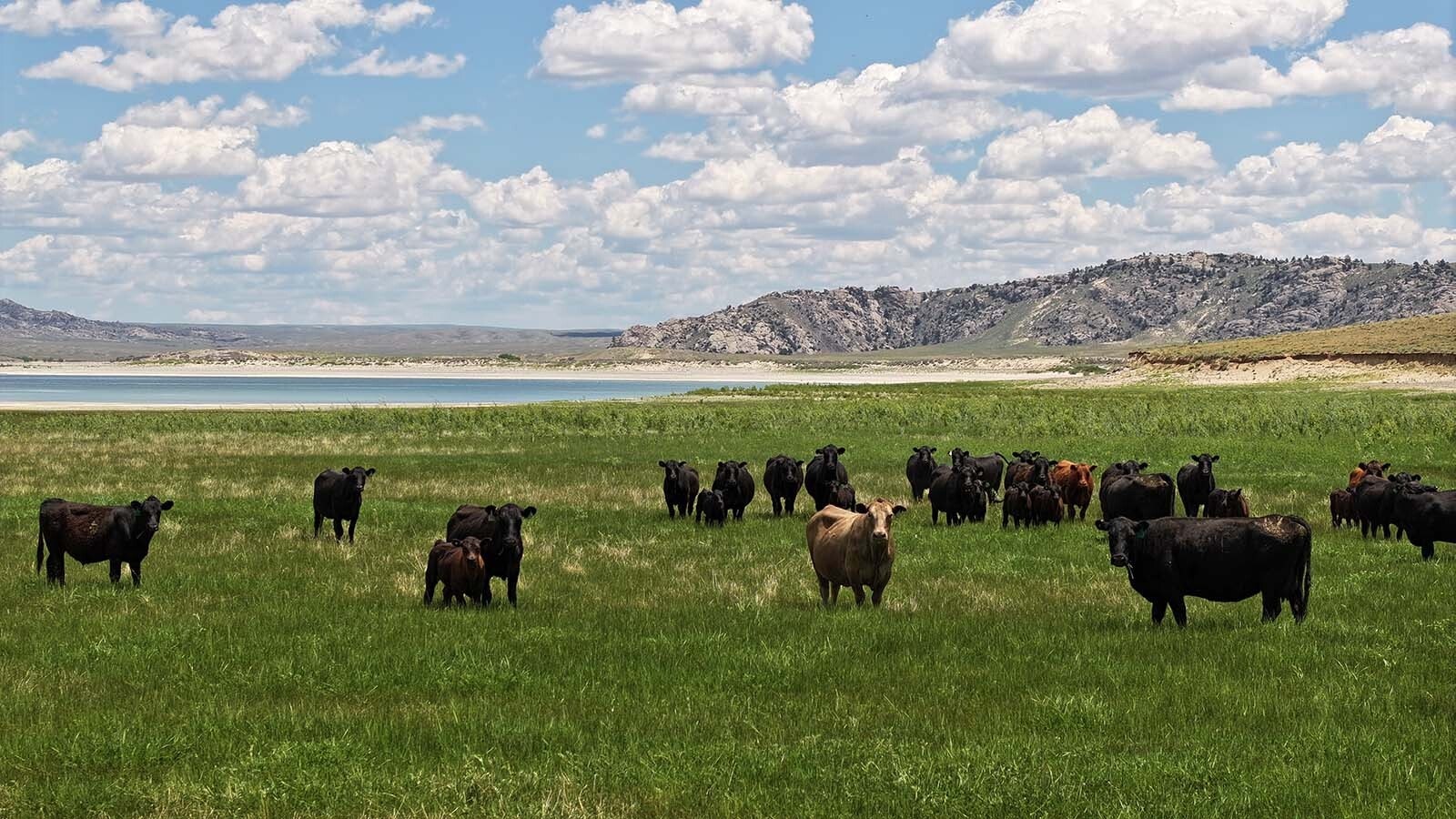
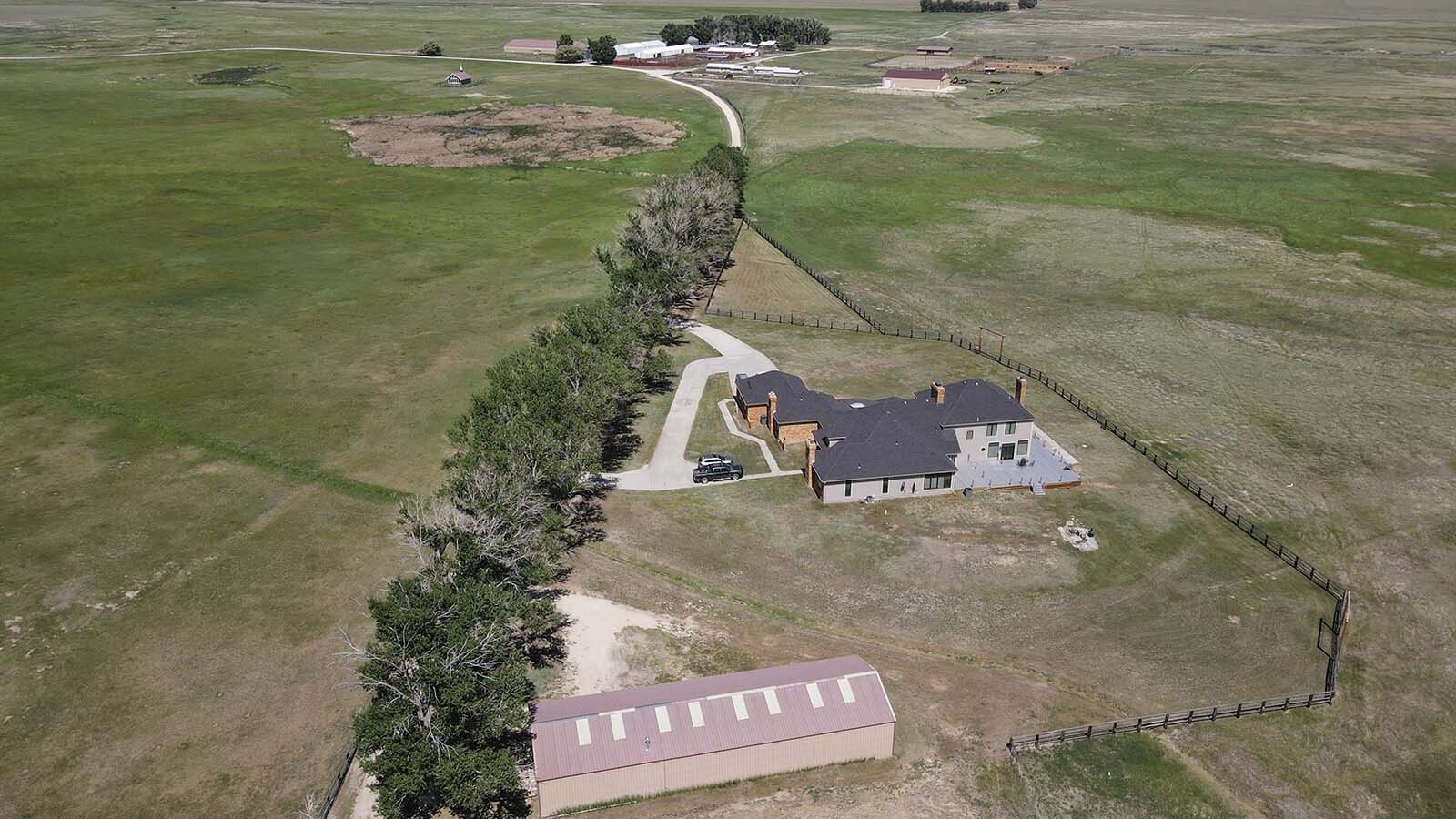
Wyoming’s expansive Pathfinder Ranches comes in at nearly 1 million acres — bigger than Rhode Island. And it’s on the market for $79.5 million. (Courtesy Scott Williams, Swan Land Co.) 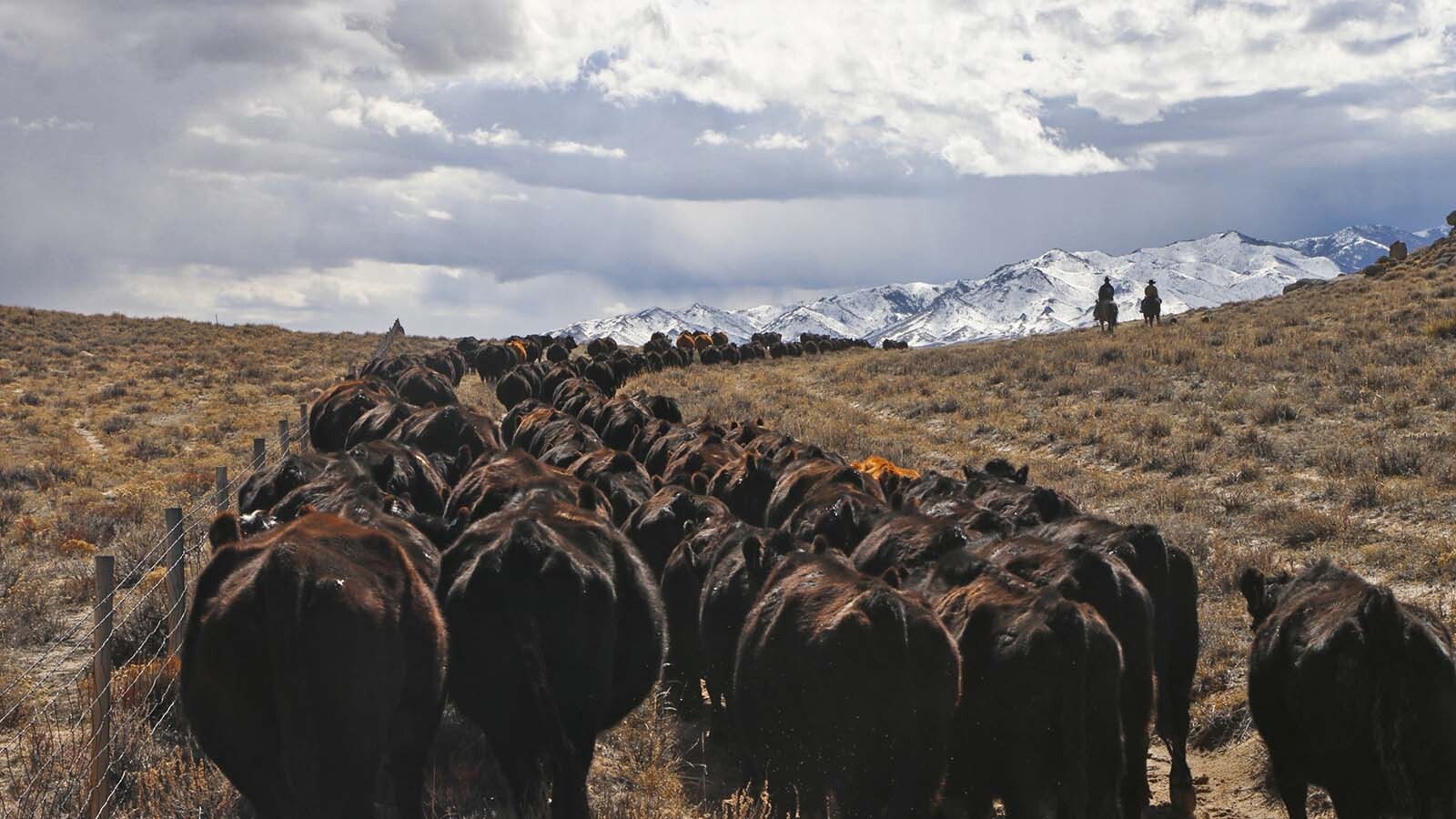
Wyoming’s expansive Pathfinder Ranches comes in at nearly 1 million acres — bigger than Rhode Island. And it’s on the market for $79.5 million. (Courtesy Scott Williams, Swan Land Co.) Wyoming’s expansive Pathfinder Ranches comes in at nearly 1 million acres — bigger than Rhode Island. And it’s on the market for $79.5 million. (Courtesy Scott Williams, Swan Land Co.) 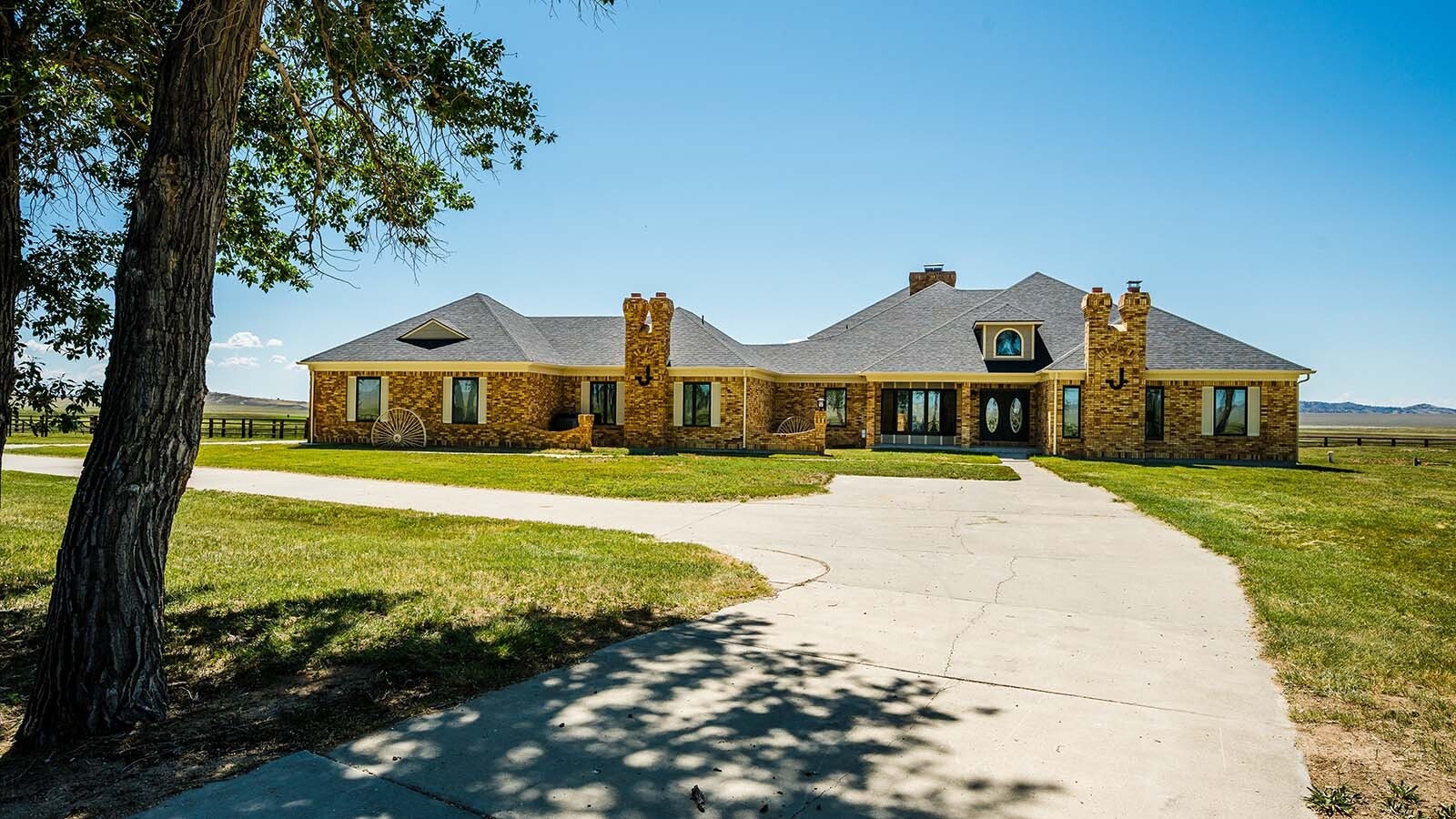
Wyoming’s expansive Pathfinder Ranches comes in at nearly 1 million acres — bigger than Rhode Island. And it’s on the market for $79.5 million. (Courtesy Scott Williams, Swan Land Co.) 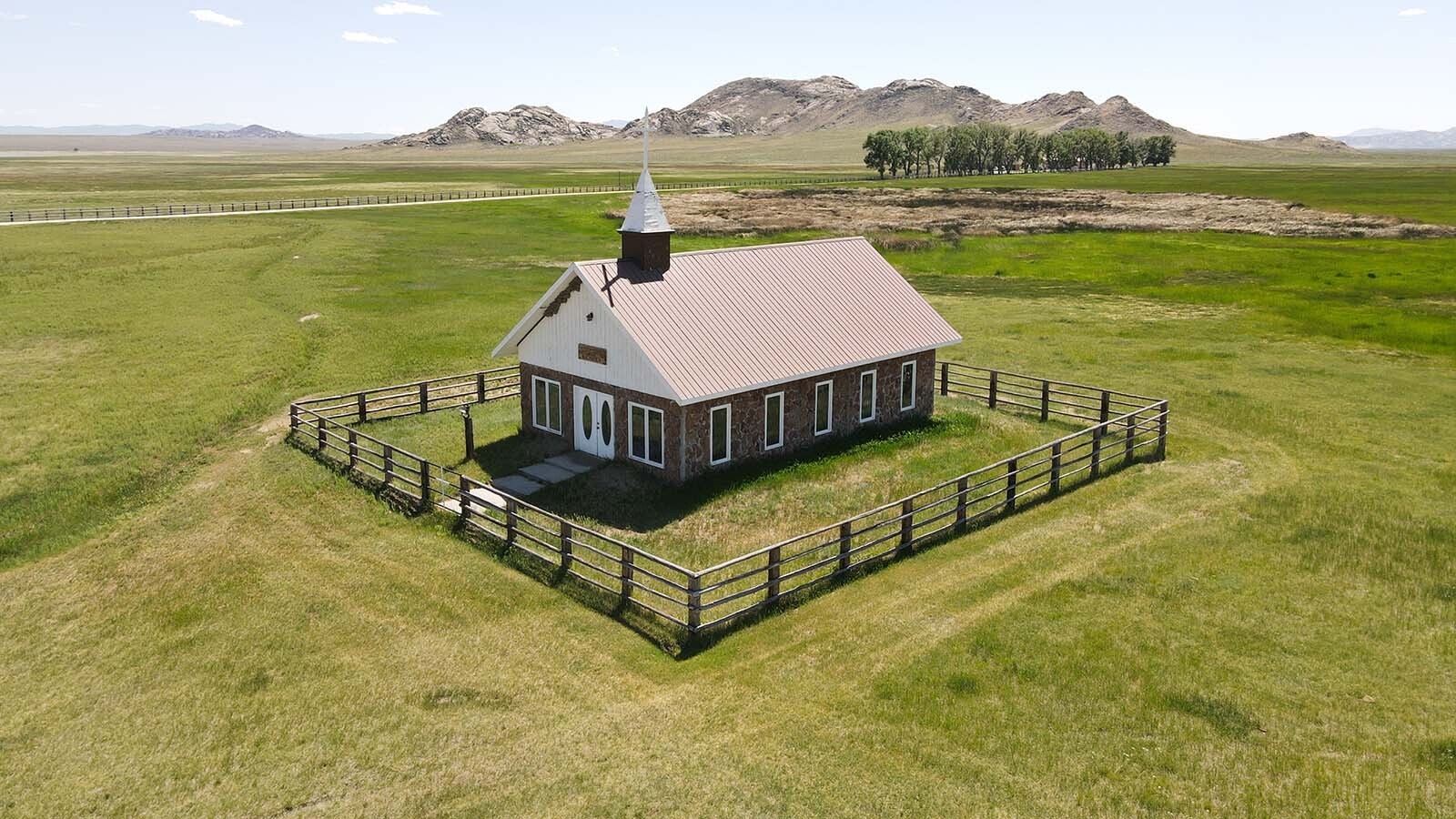
Wyoming’s expansive Pathfinder Ranches comes in at nearly 1 million acres — bigger than Rhode Island. And it’s on the market for $79.5 million. (Courtesy Scott Williams, Swan Land Co.) 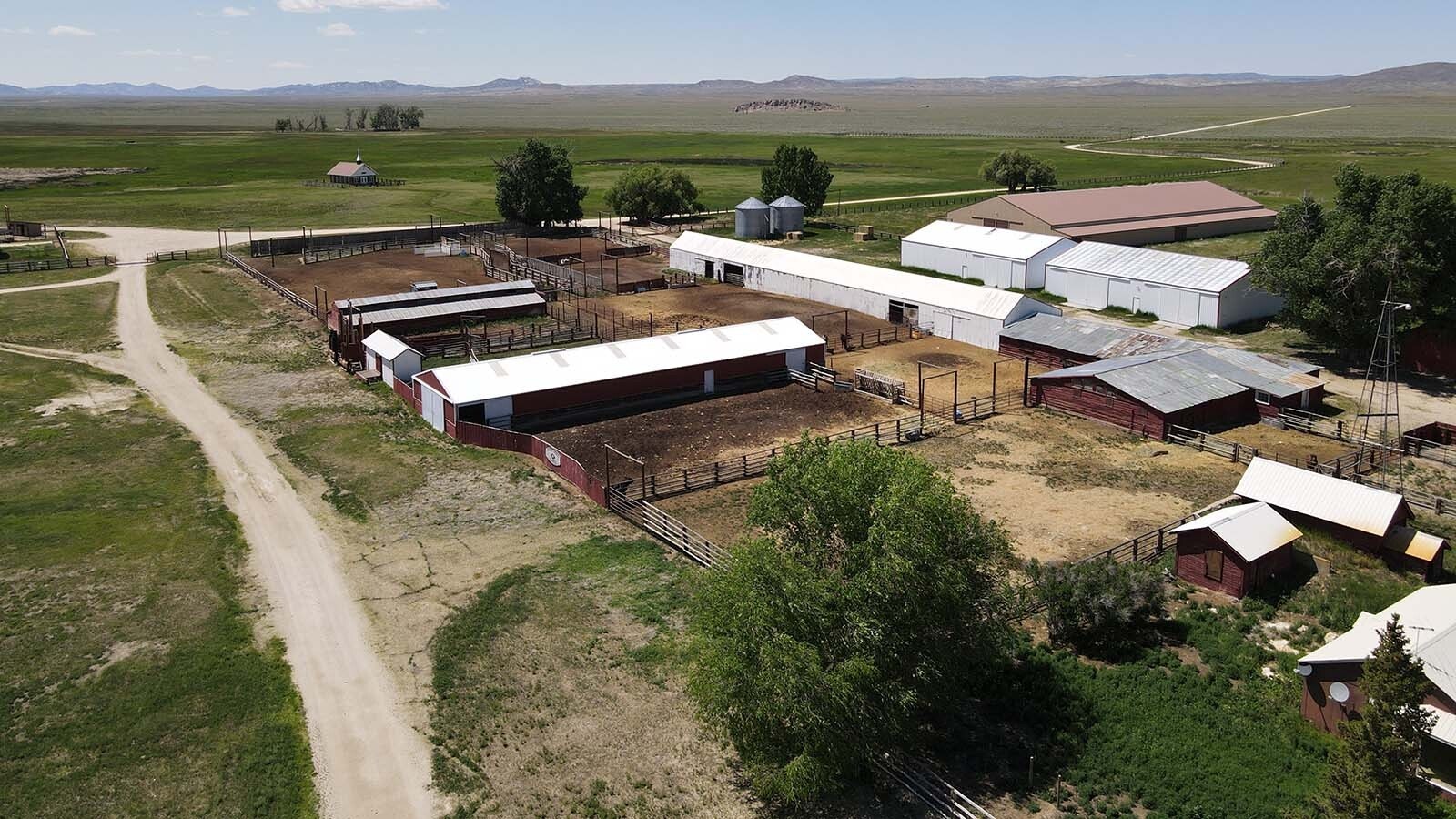
Wyoming’s expansive Pathfinder Ranches comes in at nearly 1 million acres — bigger than Rhode Island. And it’s on the market for $79.5 million. (Courtesy Scott Williams, Swan Land Co.) 
Wyoming’s expansive Pathfinder Ranches comes in at nearly 1 million acres — bigger than Rhode Island. And it’s on the market for $79.5 million. (Courtesy Scott Williams, Swan Land Co.) 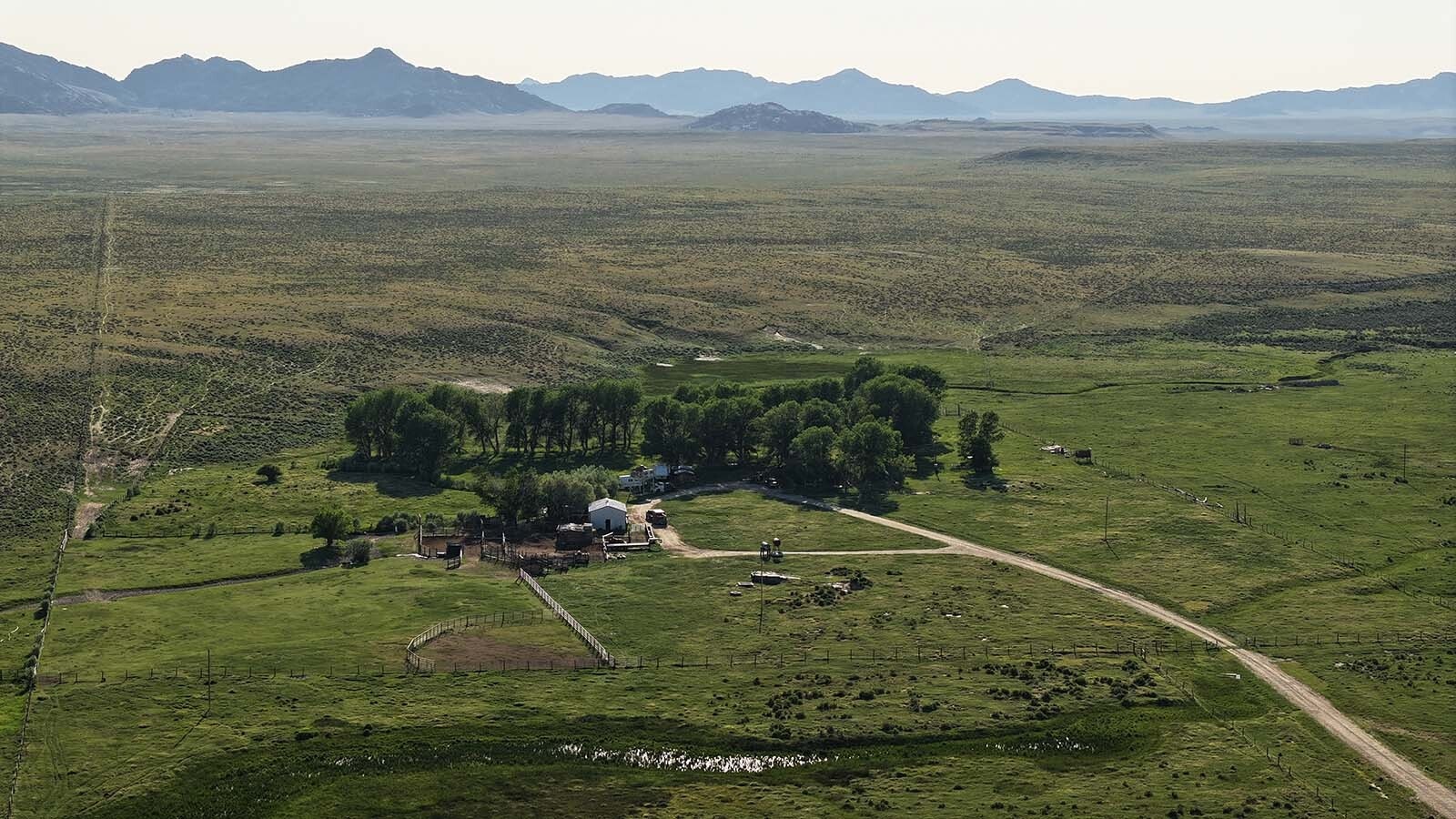
Wyoming’s expansive Pathfinder Ranches comes in at nearly 1 million acres — bigger than Rhode Island. And it’s on the market for $79.5 million. (Courtesy Scott Williams, Swan Land Co.)
Don’t Sell Your Seed Cattle
Diversification has been key to Ensign Group’s ability to shield its cows from sale, which now positions them for a rare growth opportunity, with the nation’s cattle herds at such a low point.
“If you eat your seed corn, you have nothing to plant,” he said. “So that’s our worst fear, and it’s happened to us, is that we’re forced to liquidate our mother cows. They’re the factories. I keep using that term, but they’re what produces the widgets.”
Scale and flexibility have long been key to Ensign Group’s strategy, and it’s one of the reasons they have such large holdings across multiple states.
“If things get really tough, we’ll get rid of yearlings,” he said. “But we don’t get rid of mother cows. There have been droughts and things in the past, but we’ve got enough scale and flexibility that we can sell the yearlings.”
Pathfinder Ranches is more scale and more flexibility, but the real reason for the purchase is a focus on growth, Robinson said.
“It’d be an expensive buffer,” Robinson said. “This gives us an opportunity to grow our business, and it provides more opportunity for our great employees, and our team, our managers. And it surrounds a landscape we already love.”
Three Decades Ranching In Wyoming
While Robinson’s purchase of Stone Ranch was just four years ago, he and his company have been in Wyoming far longer.
“We’ve been ranching in Wyoming since 1995 in Uinta County,” he said. “South of Evanston, we have a ranch there that bleeds over into Utah. We’ve had that for, it’s our 31st year there.”
While Robinson does not consider himself a cowboy and says he rarely rides a horse, he isn’t just another absentee landowner. His company operates cattle ranches, and, as the company’s CEO, Robinson is an integral part of decisions that get made at Pathfinder Ranches.
“One of the things that happens on these ranches when there’s someone who buys them and they’re not operators, they’re just buying and maybe they want to recreate on them, or have a bug-out if the world comes to an end … (but) they have these tenants out there who are short-term thinkers,” Robinson said. “They have no incentive to fix anything — maintain the fence, develop the spring, keep the diversion in the ditch working. They don’t have any long-term perspective.”
That’s not going to be the case with Pathfinder Ranches, Robinson said.
“We’re going to be, we are very fastidious about trying to take care of things,” he said. “We have a lot of room for improvement, but we are, I predict that we will make this place shine.”
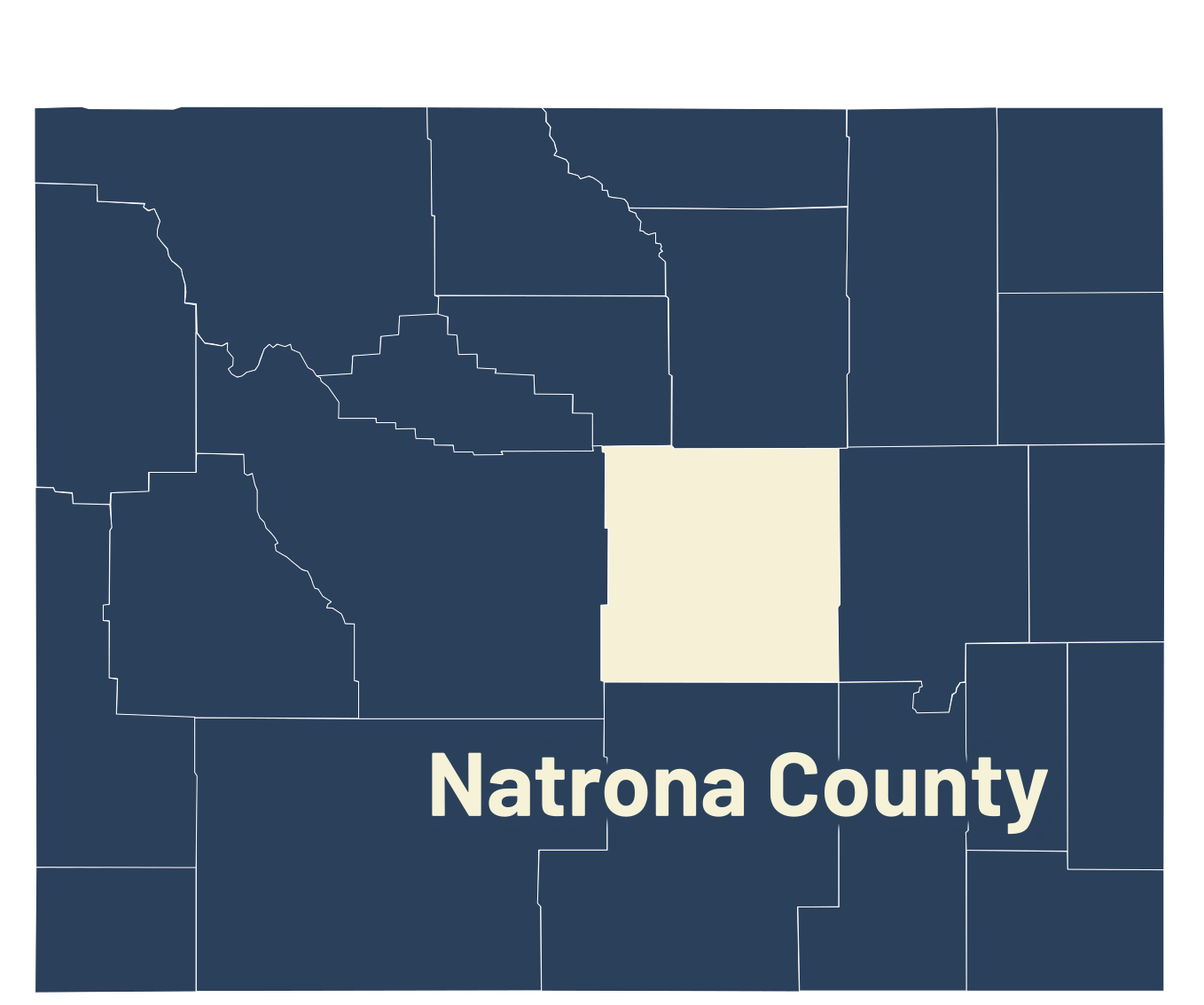
Wyoming is a beautiful state, Robinson added, and he is particularly fond of its desert landscapes, including the one in Carbon County that he has just purchased.
“We love the deserts,” he said. “We have high and low deserts. The high desert, like this (in Wyoming), are generally more summer, although we will winter cattle up there.”
All of the desert properties are helping to fill niches for Ensign Group’s ranches, Robinson added, including getting through the winter with minimal purchases of expensive hay.
The lodges on Pathfinder Ranches are also beautiful, Robinson added. Though he hasn’t yet decided what he will do with them.
“We’ll try to find a use for them,” he said. “Maybe do some outfitting or hunting out of them. There’s a lot of value in those buildings, and, if they’re not used, they’ll fall apart, so you’ve got to use them. That will be one of our challenges. We’ll figure it out.”
Renée Jean can be reached at renee@cowboystatedaily.com.