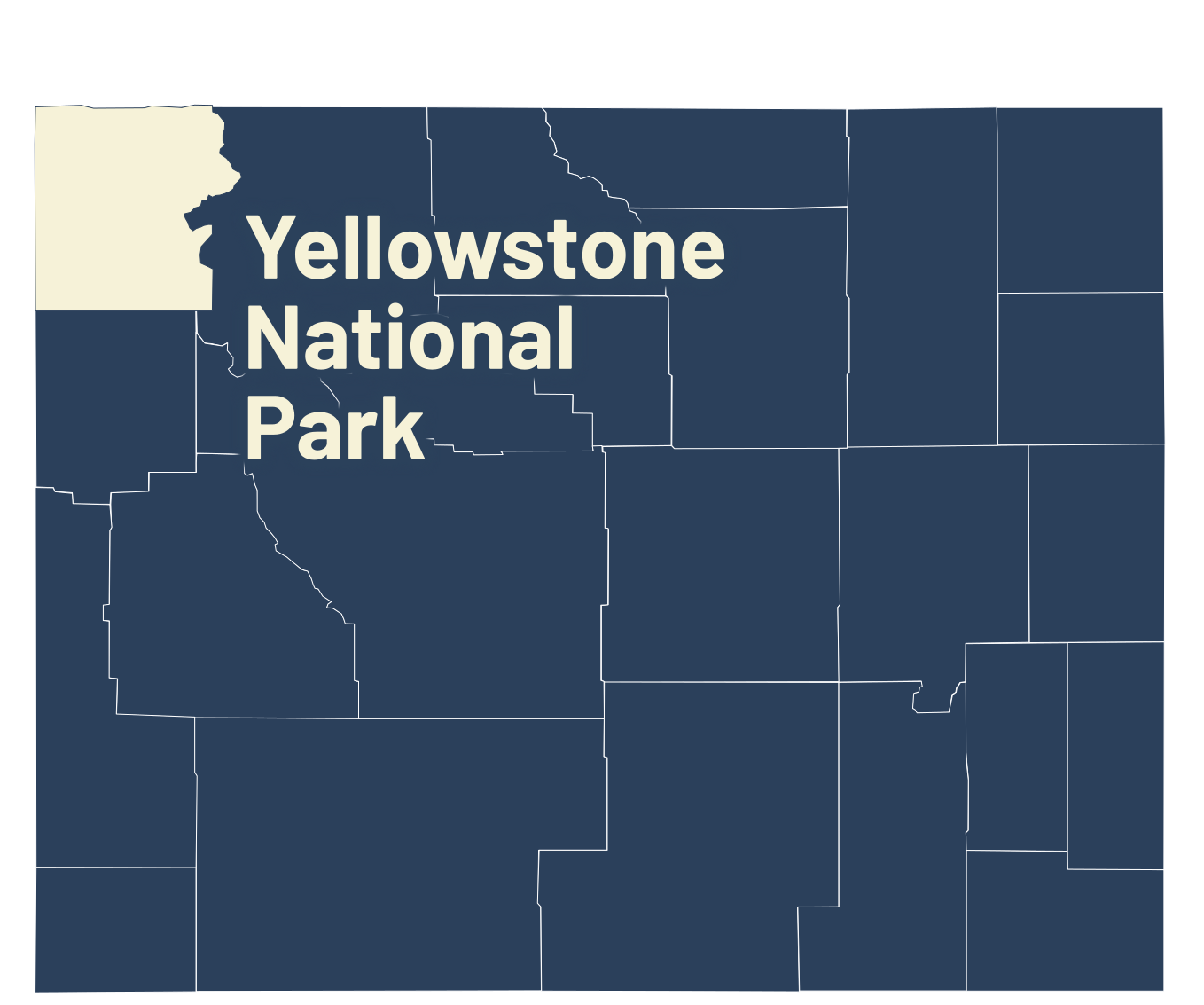
Yellowstone National Park has four options and more than $300 million ready to rebuild the North Entrance Road, park officials said Tuesday. The question is which route they’ll take.
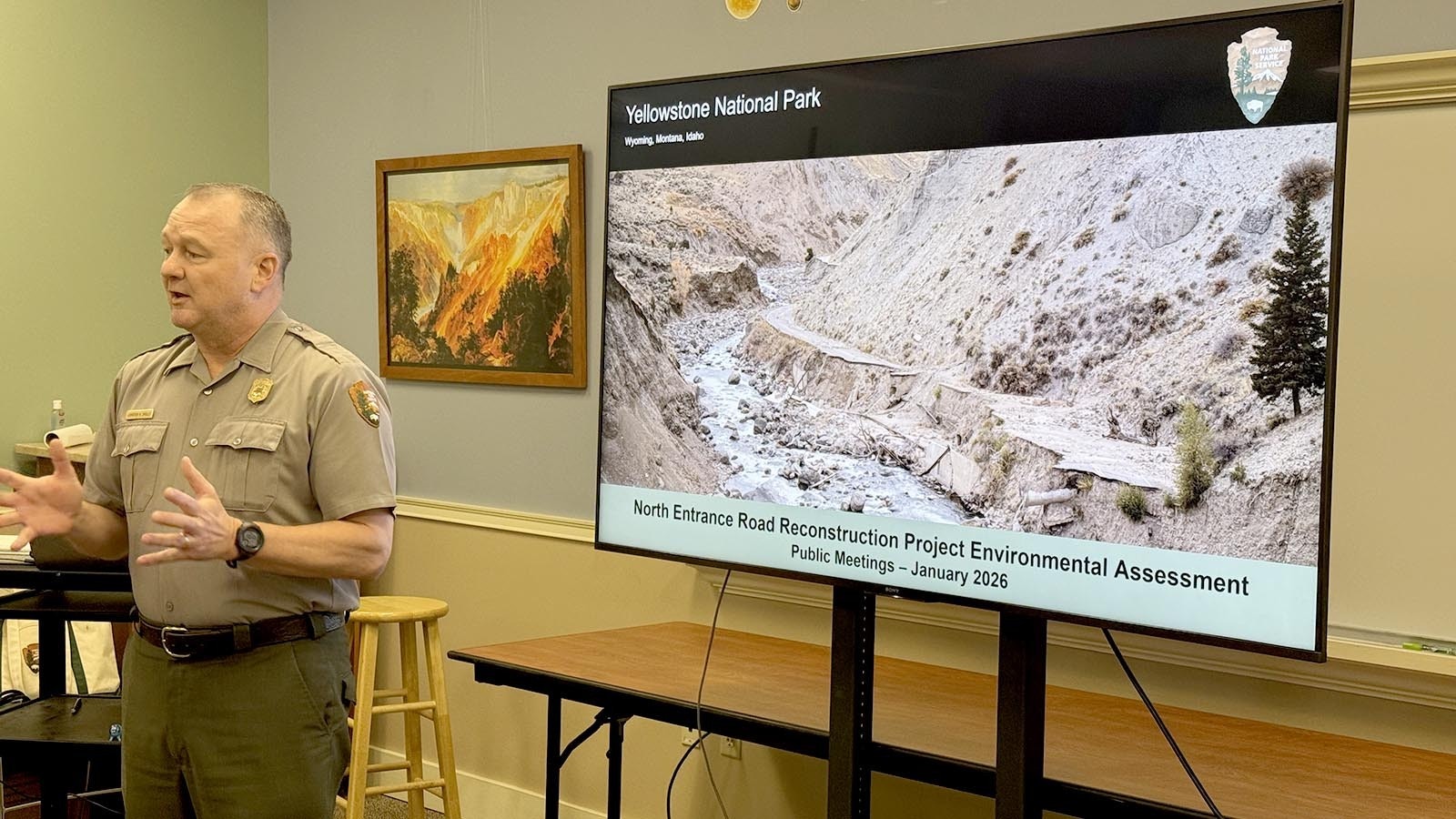
A public meeting was held Tuesday evening at Yellowstone Forever's headquarters in Gardiner, Montana, to discuss options for a permanent corridor between the second-busiest Yellowstone entrance and Mammoth Hot Springs.
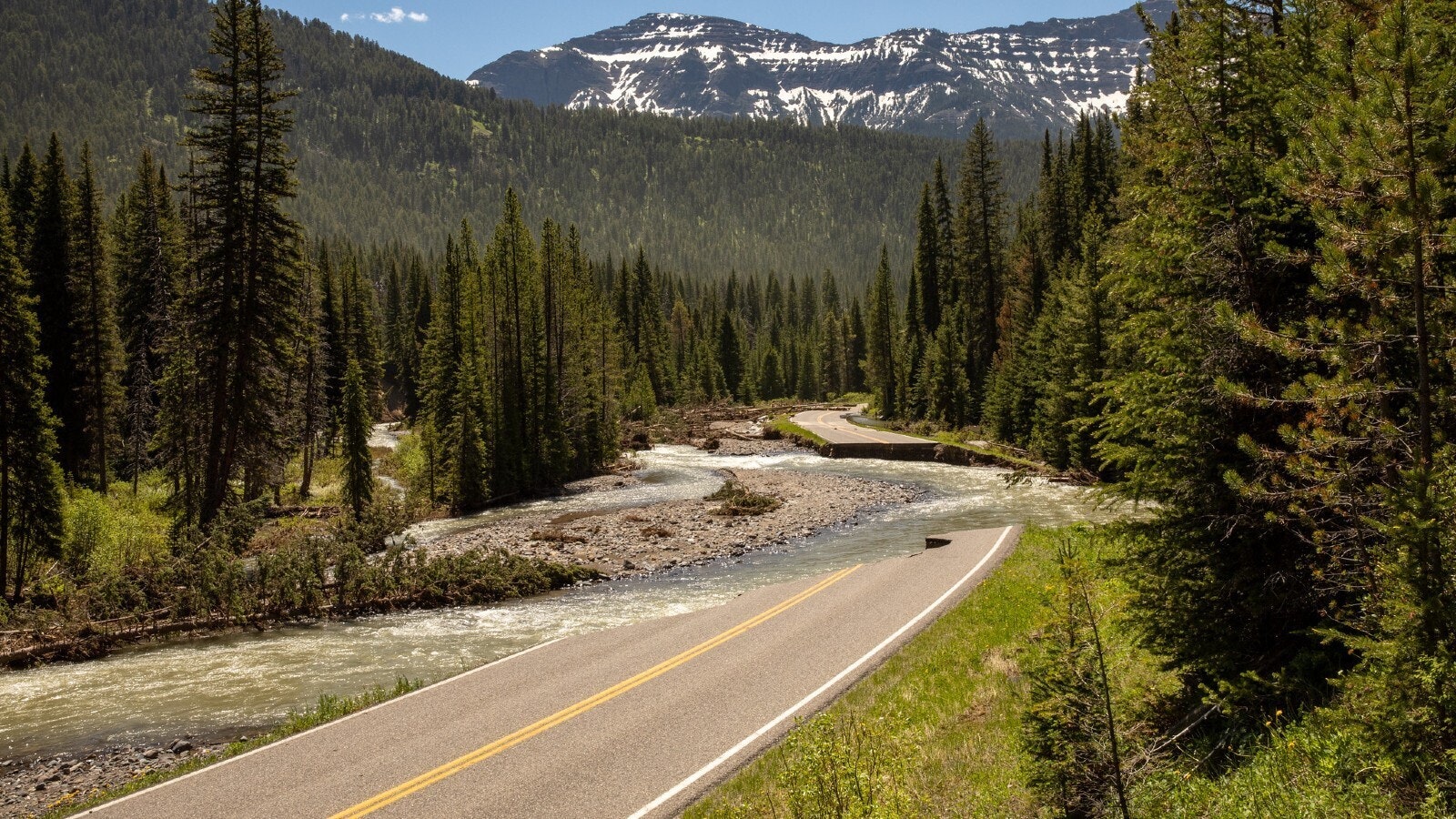
The discussion comes more than three years after a 500-year flood destroyed roads in the national park’s roads north and northeast sections.
“It’s hard to believe it's been three and a half years since the flood,” said Yellowstone superintendent Cam Sholly. “We salvaged what we could in 2022 and built a new road in four months, but (the park’s) getting busier and busier.”
The public has a month to review and comment on the National Park Service’s (NPS) plans for a new North Entrance Road.
Completing the new road will require many years and millions of dollars, but Sholly said the result will be better infrastructure and a solution that 'will extend beyond any of our lifetimes.'
“If we're going to protect these valuable assets and host nearly 5 million visitors a year, we need the right permanent infrastructure to support it,” he said.
Center, OGR, And Canyon
After years of surveys and evaluations, the NPS presented four possible alternatives for Yellowstone’s permanent North Entrance Road.
The first alternative was the simplest: do nothing and keep traffic on the Old Gardiner Road, built in the aftermath of the 500-year floods in 2022 that destroyed significant sections of Yellowstone's north and northeast roads.
Then there were the three “alignments.”
The “OGR Alignment” would permanently rebuild Old Gardiner Road, currently the main route between Gardiner and Mammoth. The “Canyon Alignment” would restore and improve the route along the northern edge of the Gardiner Canyon that was destroyed during the 2022 floods.
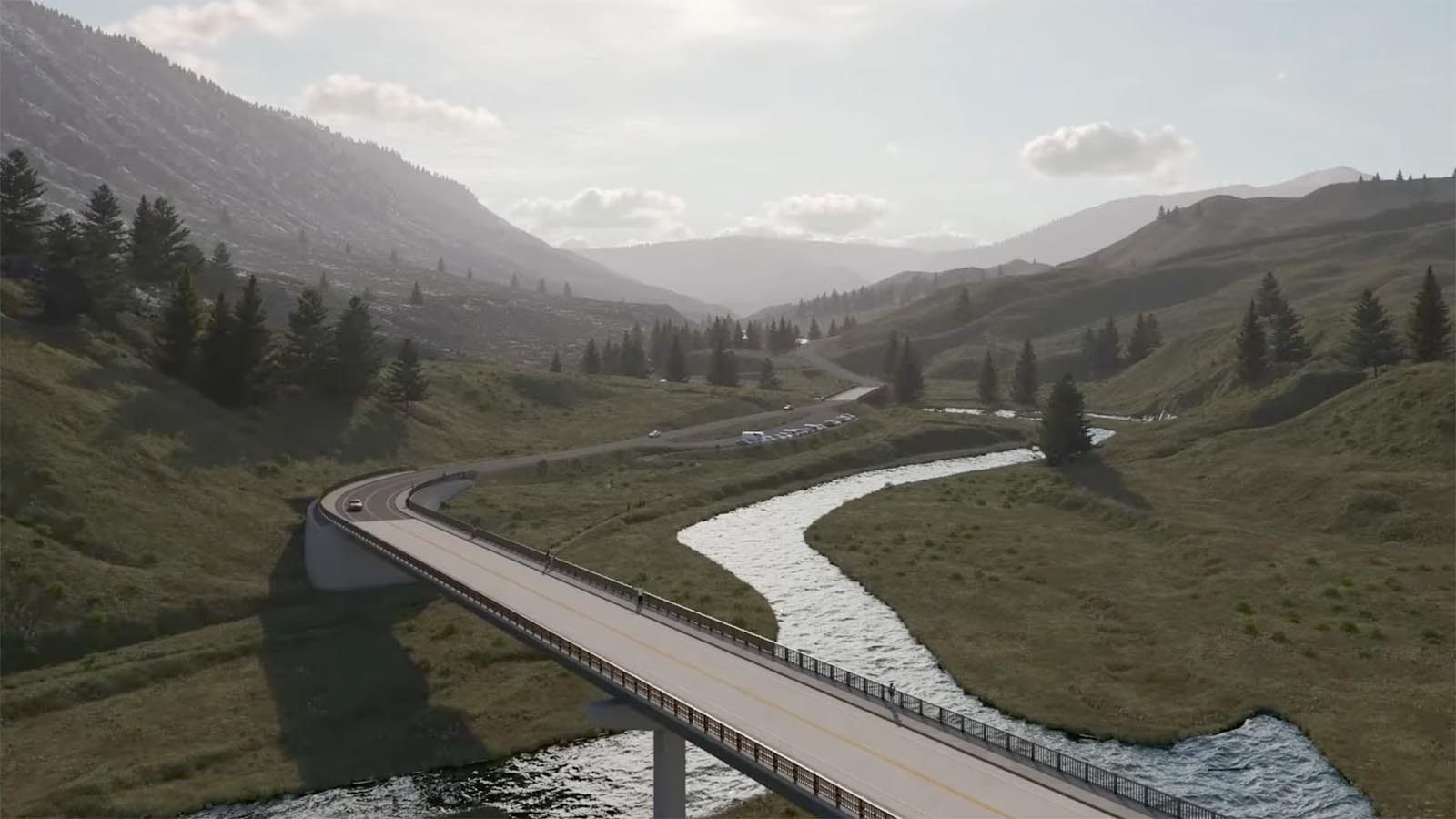
The NPS prefers the third option, the “Center Alignment.” It’s a hybrid option that follows the same route as the pre-flood North Entrance Road but cuts through the middle of the canyon rather than snaking along its edge.
To strengthen their case, the NPS presented a 3D rendering of the Center Alignment during the meeting. It was a first-person view of the finished route, which would include two new bridges, wildlife underpasses, and improved turnoffs and parking areas.
The specifications would be the same for all the possible routes. A road width of 30 to 34 feet, with 11-foot travel lanes and shoulders between 4 and 6 feet wide, a maximum grade of 9 percent, and a post-construction maximum speed limit of 35 mph.
Sholly indicated that the Center Alignment is everything they’d want in a permanent North Entrance Road. It would be the least impactful on the landscape while offering the greatest resilience to future flood events, such as those in 2022.
“With the hybrid alignment, we would take all the infrastructure out of the canyon and restore it to its natural state,” he said. “We would put a trail in for fishing and hiking access, and yes, we'll put the Rescue Creek Bridge back in, which is always a question.”
Nathan Jones, a project manager with the Federal Highway Administration, has been heavily involved with Yellowstone’s road improvements since the 2022 floods. He also favored the Center Alignment.
“One of the strengths is a fairly low impact on other traffic,” he said. “There would be a six-month period with 20-minute traffic delays while we’re making a new connection to the North Entrance station. Other than that, there’d be minor traffic impacts throughout construction.”
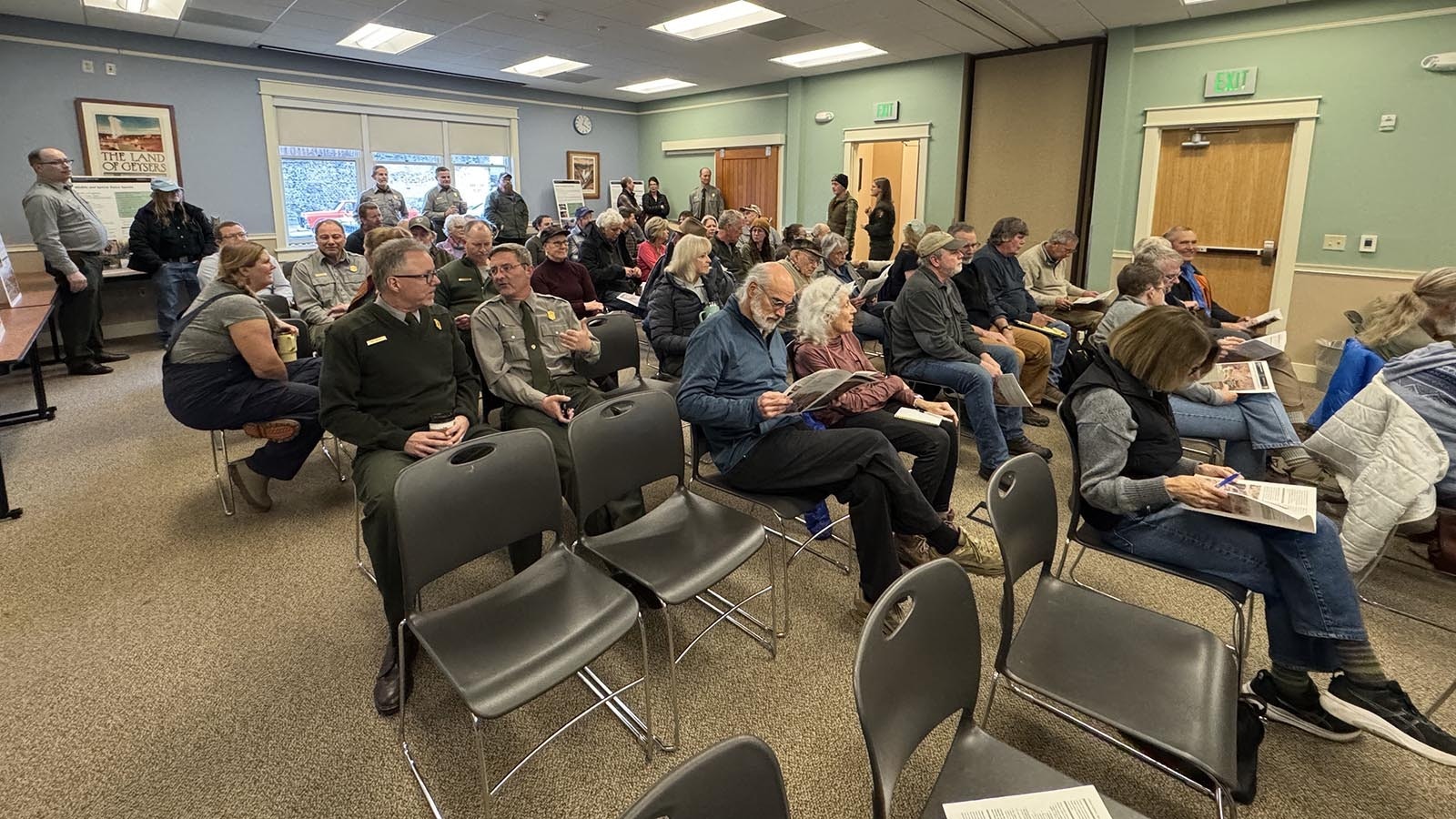
Montana residents gathered at the headquarters of Yellowstone Forever in Gardiner for the public meeting on the permanent North Entrance Road. This community was heavily impacted by the 500-year floods of June 2022, which cut off Yellowstone's second-busiest entrance to tourists and businesses for most of that summer. (Andrew Rossi, Cowboy State Daily) 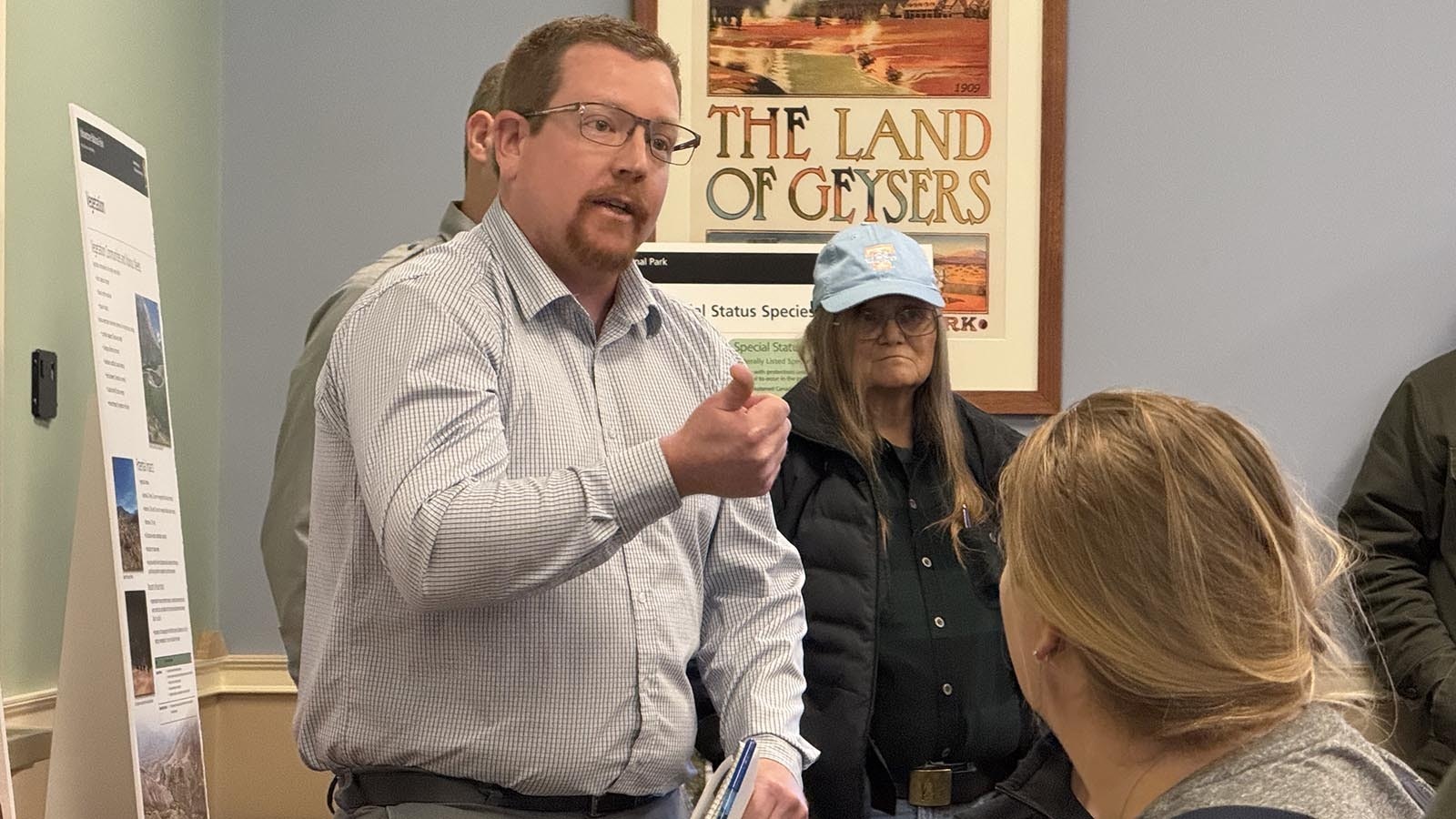
Nathan Jones with the Federal Highway Administration answers questions during a public meeting about Yellowstone's new North Entrance Road. (Andrew Rossi, Cowboy State Daily) 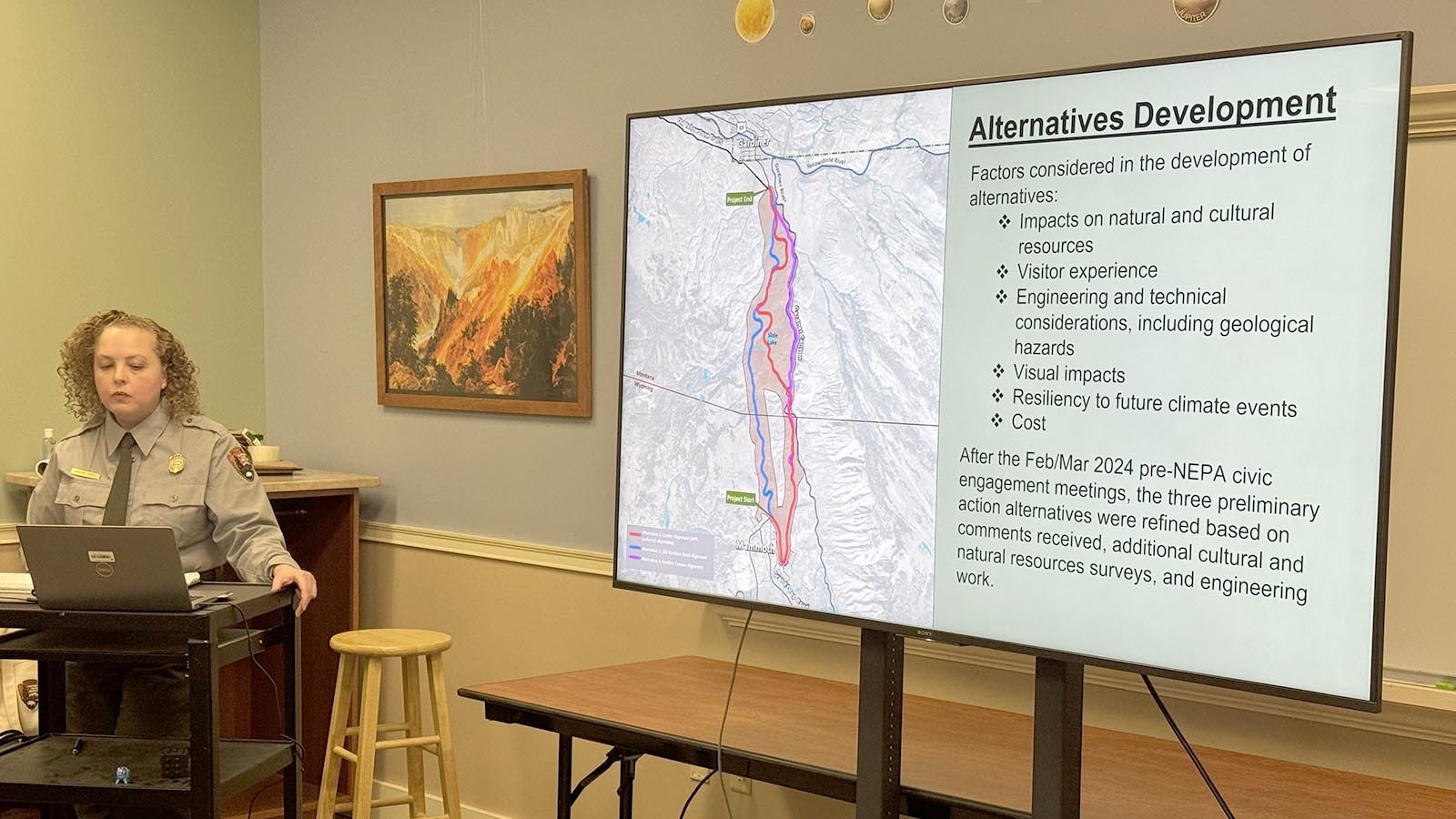
Christine Gabriel with the National Park Service presents details on the proposed alignments of the new North Entrance Road to connect Gardiner, Montana, with Mammoth Hot Springs in Yellowstone National Park. (Andrew Rossi, Cowboy State Daily) 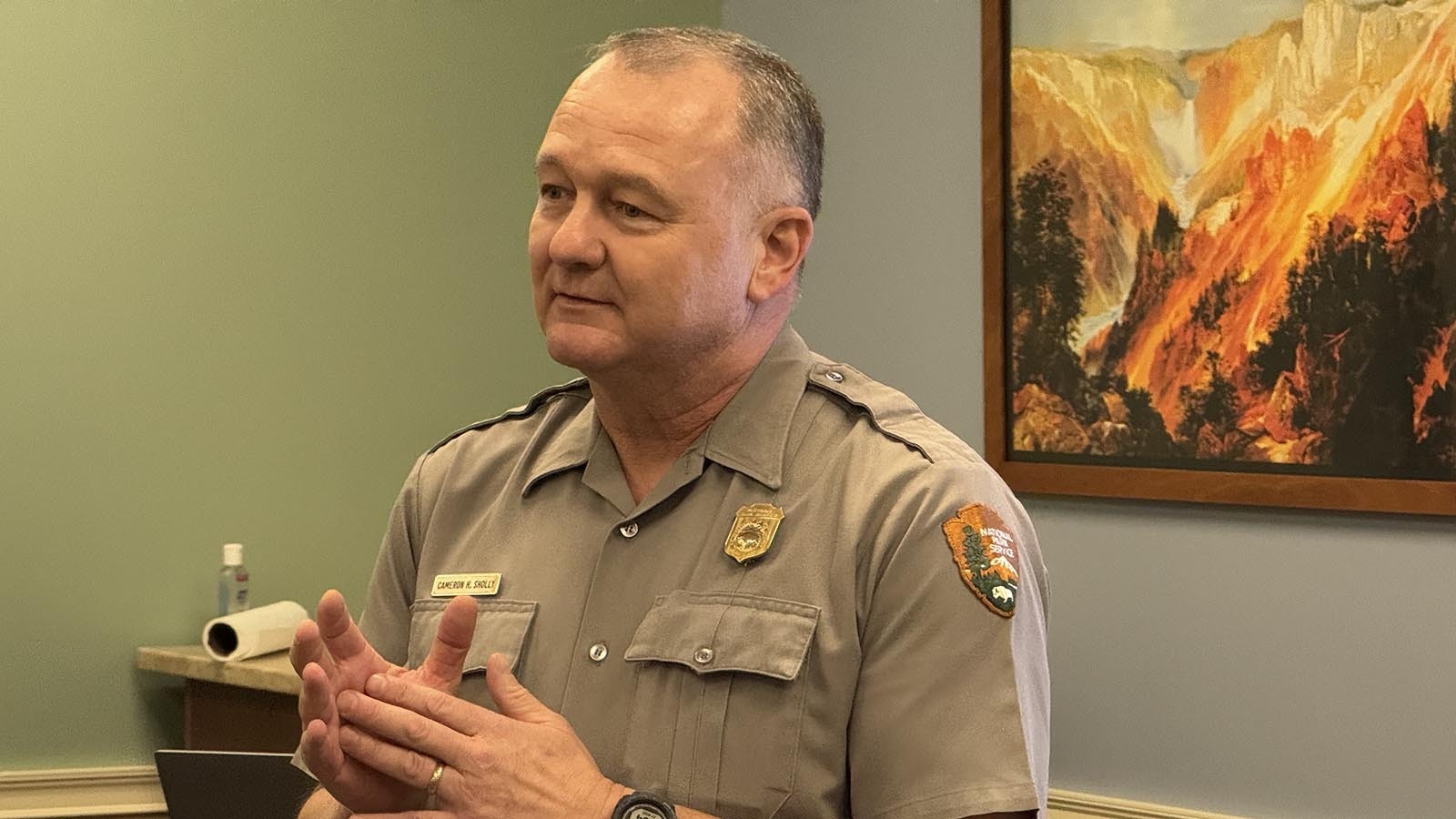
Yellowstone superintendent Cam Sholly addresses the crowd gathered for the public meeting on the new North Entrance Road into Yellowstone National Park. Sholly encouraged their comments and criticisms, saying the decisions made today will "extend beyond any of our lifetimes." (Andrew Rossi, Cowboy State Daily) 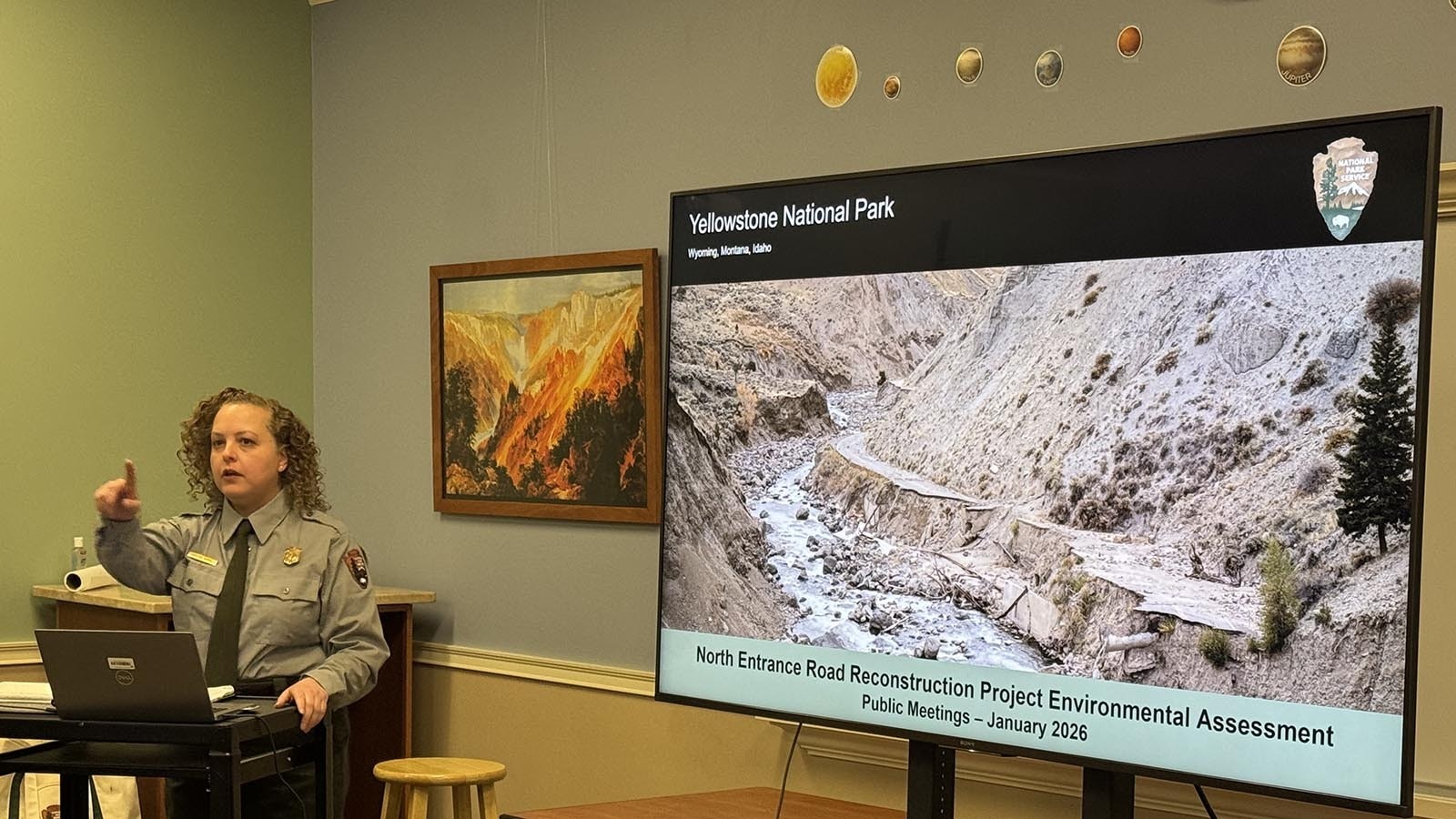
Christine Gabriel with the National Park Service presents details on the proposed alignments of the new North Entrance Road to connect Gardiner, Montana, with Mammoth Hot Springs in Yellowstone National Park. (Andrew Rossi, Cowboy State Daily)
From Old To New To Old Again
The Old Gardiner Road was the original stagecoach route between Gardiner and Mammoth Hot Springs in the early days of Yellowstone. The two-track gravel path was converted into a 22-foot-wide multi-lane corridor after the June 2022 floods.
Keeping the Old Gardiner Road as the permanent route is an option. It also isn’t an option, according to Sholly.
“It was called a ‘bureaucratic miracle’ at the time, but it’s always been a temporary thing,” Sholly said. “The road has outperformed our expectations, but I think we gave it a lifespan between eight and 10 years, which is much shorter than our other projects.”
Sholly referenced the catastrophic failure of Teton Pass in June 2024 as a close-to-home example of what could happen to the Old Gardiner Road in its current state. Several sections along the hillsides were built on massive embankments of reinforced fill.
“If we had a failure like the one we had on Teton Pass, Gardiner and Mammoth would be literally cut off for years and years and years,” he said. “This is the no-action alternative but doing nothing isn’t an option. If something bad happened, and we lost a significant chunk of that road, we’d have no backup.”
That being said, Sholly confirmed that keeping a semblance of the Old Gardiner Road is essential. The current idea is to reduce its width and keep it as a hiking and biking trail, with the option to use it as a traffic detour when needed.
“We want some redundancy in case something like this happens again,” he said. “If it’s not the alignment selected for the permanent road, we’d take the existing 22 feet of pavement up and turn it into maybe a 10 or 12-foot hike and bike lane.”
Time Is Money
Based on extensive surveys and analyses, the estimated cost of the OGR and Canyon Alignments exceeds $300 million.
The Center Alignment, even with two new bridges and a completely new road construction, would cost around $250 million. That’s another big reason why it’s the NPS-preferred option.
Sholly isn’t concerned about the money, noting that the full project amount has already been allocated by the federal government. The primary concerns are impacts to the landscape and wildlife, and the time it’ll take.
The Old Gardiner Road was rebuilt and opened in four months. The permanent North Entrance Road will take a bit longer to build.
According to the NPS, the OGR Alignment would take about six years to complete, with full daytime and nighttime closures of two to four hours and one-lane traffic on the busy corridor during construction. These closures would primarily occur during the shoulder season, between October and April.
The Canyon Alignment would have little to no traffic impacts but would take up to nine years to complete.
Meanwhile, the Center Alignment would take around five years to complete with occasional 30-minute closures of the current road. Sholly indicated that, based on recent Yellowstone construction projects, the construction window could easily be trimmed.
“We've got the funding, and if we get this process done thoroughly but relatively quickly, we can probably start construction in 2027,” he said.
All Downhill
When the formal presentation concluded, the floor opened for a question-and-answer session. Around 50 people, including Gardiner residents and Montana state representatives, were encouraged to contribute their comments and concerns.
The primary concern raised was about the placement of Mammoth’s sewer system. The old system, which used gravity to send sewage down from Mammoth to Gardiner, was another piece of infrastructure lost in the 2022 floods.
A temporary sewer system was installed during the reconstruction of the Old Gardiner Road. That blazed the trail for the new permanent system.
“We’d run the new system under the current Old Gardiner Road,” Sholly said. “It’s been incorporated into this analysis, but it wouldn’t start until the new North Entrance Road is finished.”
Other people were concerned about access to popular places in the canyon, such as the Boiling River and the Lava Creek Trailhead. Regardless of the alignment selected, Sholly guaranteed that access to these famous scenic, hiking, and fishing spots would be restored.
Jones confirmed that all the infrastructure would be resilient to floods, rockfalls, and landslides. The extent of that infrastructure would depend on the alignment they select for the new North Entrance Road.
“The Gardens Bridge on the Center Alignment would have at least 35 feet of clearance from the channel level up to the bottom of the deck,” he said. “That’s plenty of clearance based on our surveys.”
The Canyon Alternative would require more extensive infrastructure, such as rock sheds and reinforced retaining walls, as well as three new bridges, to mitigate rockfall and landslide damage. Sholly didn’t think restoring the historic road was the best idea, given that Yellowstone is Yellowstone.
“Rockfall is a big issue along those cliffs,” he said. “We don’t need to spend a couple of hundred million dollars on a new road and have it imploded from the top at some point in the next 10 or 20 years or whenever, if there's an earthquake, a volcano goes off, or whatever is facing us next.”
Regardless, anything that’s built for the permanent North Entrance Road will be built to last, come hell or high water.
“If we do see a similar event to the 2022 floods, we've designed it so that it won't be impacted,” Jones said.
30 Days For The Next Century
The 30-day public comment period for the North Entrance Road Reconstruction Project ends on Feb. 4. The comments received will be factored into the NPS’s decision, which will be announced by early summer 2026.
Sholly was grateful for the turnout at the Gardiner meeting and said he would meet with tribal leaders later that week to gather their input. He recognized that the feedback they received would impact Yellowstone’s second-busiest entrance for the next century.
“Keep in mind that a lot of the infrastructure in the park was built back in the early last century to the middle of the last century,” he said. “A lot of it hadn't been touched or addressed in a recent time. It’s very, very important to get your feedback to us so we can find the right solution that will withstand the same test of time.”
Andrew Rossi can be reached at arossi@cowboystatedaily.com.