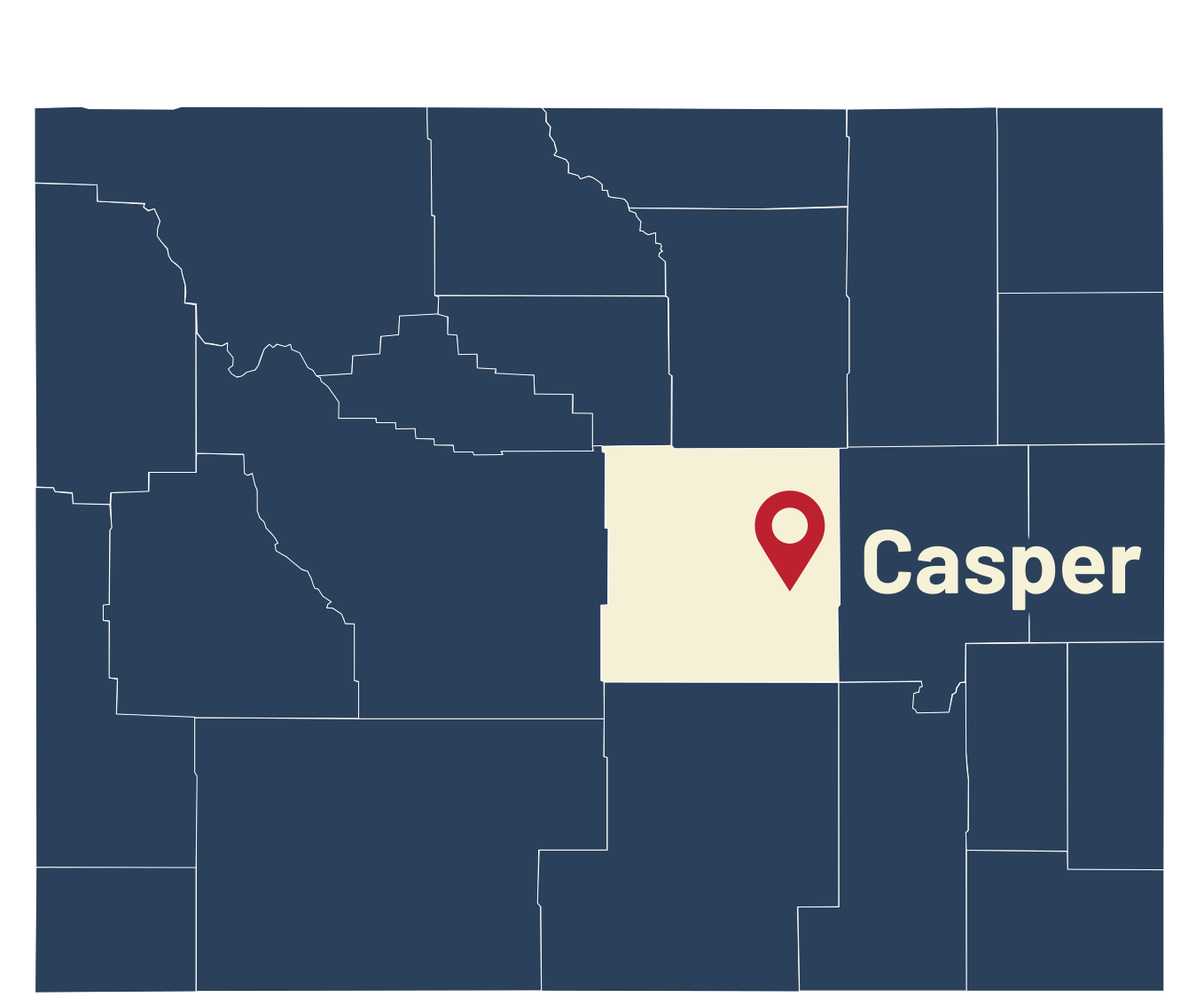
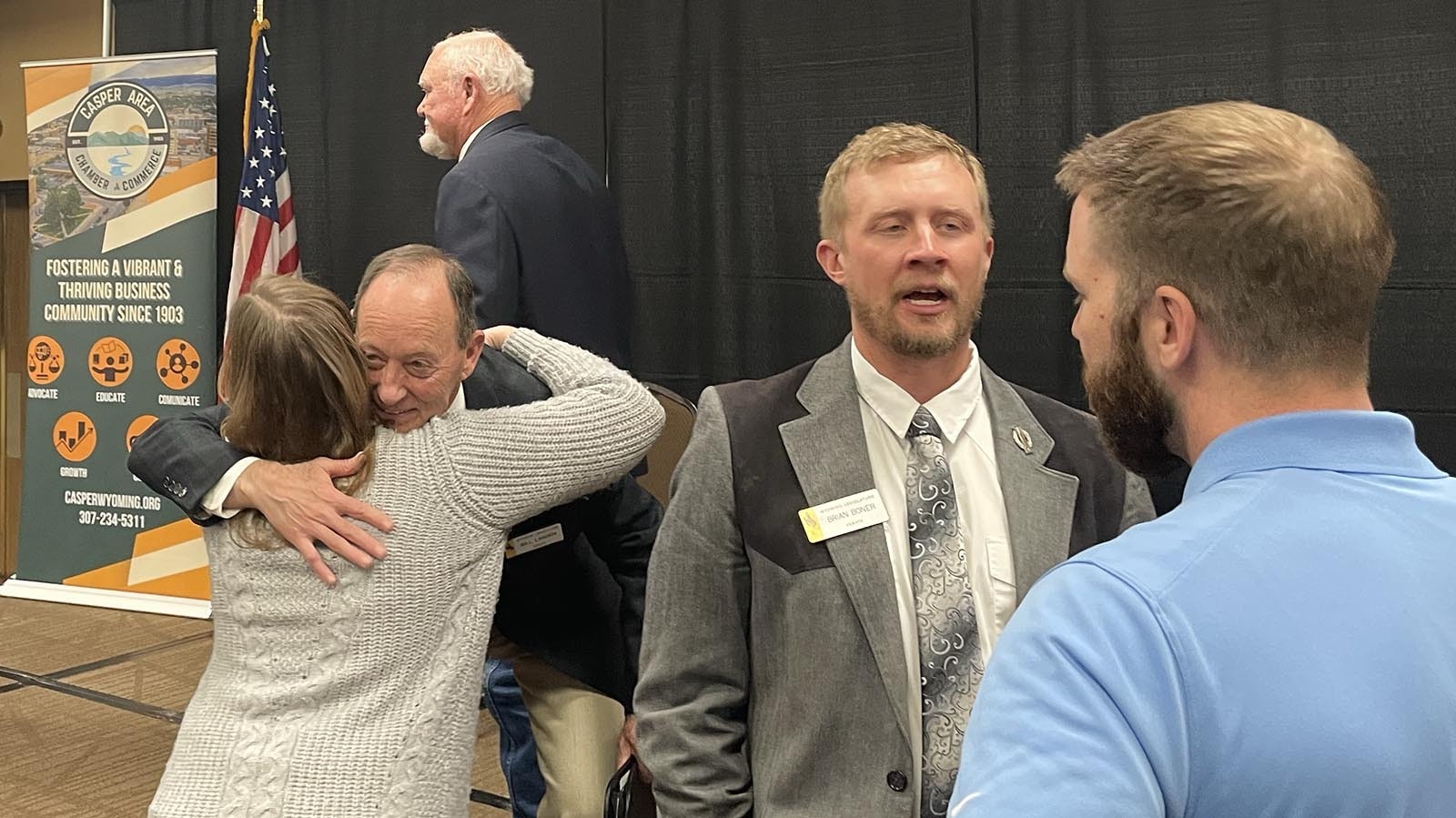
CASPER — A group of Natrona County Republican state legislators gathered for a forum Wednesday to preview legislative priorities ahead of next month's budget session.
The event was planned weeks in advance, but the discussion was hijacked by an incident that happened only the day before, as one major topic dominated the panel.
“Yesterday was a tough day, with our Joint Appropriations Committee recommending significant cuts to our University of Wyoming and pretty much eliminating our Wyoming Business Council,” Rep. Elissa Campbell, R-Casper, said at the event, put on by the Casper Area Chamber of Commerce and the Wyoming Community Development Authority.
"That hurts,” she added.
Campbell was referring to the Joint Appropriations Committee’s (JAC) Tuesday vote to dismantle the Wyoming Business Council, a publicly-funded agency designed to boost business through state-backed loans and grants.
That decision, along with the committee's move to slash funding for the University of Wyoming, preoccupied Wednesday's panelists, who helped demarcate an ideological battleline set to deepen at the Capitol next month.
“I think the biggest rub this budget session is going to be that ideology — of what place the government has, and what is our role, in investing in the [economic] infrastructure … to help build our workforce,” said Campbell, a business owner and second-year legislator.
One after another, panelists weighed in on the topic, in turns combative, defensive, and conciliatory.
Workforce Also On The Chopping Block?
The hawkish fiscal direction set by the JAC, which one committee member called a “bloodletting approach to the budget,” could undercut the long-term viability of the state’s second largest sector — hospitality and tourism — said Sen. Bill Landen, chairman of the Senate Travel, Recreation and Wildlife Committee.
The numbers speak for themselves, Landen told the forum.
Last year, almost 9 million visitors helped generate $1.5 billion in economic activity along with $278 million in sales and use tax revenue for Wyoming — all of which depends on 40,000 workers.
In this billion-dollar industry, access to trained workforce can make or break businesses, he said.
Wyoming, already struggling to retain its native workforce, will see its job market erode further if the JAC majority gets its way, Landen argued.
“We’re trying to push career technical education to the fore so we can create a dynamic workforce,” he said. "Yesterday, $61 million was cut out [of] the University of Wyoming budget. I bring that up because that’s where the next generation of our workers comes from.
“That doesn't bode well for small businesses in our state. It certainly doesn't bode well for attracting new business.”
Elsewhere on the panel, different themes emerged, indicating that there may be a middle ground in the battle over Wyoming Business Council (WBC) and the wider discussion about the proper balance of public-private partnerships in the state economy.
Tax Breaks Rather Than Grants
State Sen. Brian Boner, R-Douglas, showed little affection for the WBC, and instead offered an alternative for state involvement in the economy, namely tax breaks, like those for data centers.
“We have a sales tax exemption for data centers. That’s a win‑win situation. You have increased property taxes that go with changing from ag use to industrial use,” Boner said.
“And, of course, you have a 1.5 gigawatt power plant that’s going to be associated with that data,” he added, referencing a potential data center development east of Casper.
As for the WBC?
“I’m not sure that I'm on board for just getting rid of an entire agency, but I hope that this is the incentive that they need to take some of those concerns … and begin to become more of a resource for taxpayers,” he said.
House Rep. J.R. Riggins, R-Casper, expressed similar feelings and criticized the agency for failing to confirm tangible returns on tax-payer dollars.
Risk v. Reward
Without addressing the agency specifically, Rep. Art Washut gave an impassioned endorsement of strategic risk, and argued the state government has fostered a quality of institutional intuition for business risk that can serve as a model moving into the budget session.
“Very few things in the investment world are guaranteed. It’s like business, if your company is going to grow, you almost always take some risk” he said, noting the state’s return on risk in ventures like crypto currency, enhanced oil recovery and innovative investment compensation structure.
“If we sit back and have paralysis by analysis and only get behind things where we have a demonstrated, guaranteed outcome, then opportunities shift away from us,” said Washut, who sits on the House Judiciary Committee.
Other Priorities
Of the little time spent on specific legislation, it was Washut who expressed the most passion for his priority to address internet crimes against children.
“You see it in the headlines, but you see it one at a time, and you don't get to see the cumulative impact of Internet Crimes Against Children,” he said. “People are raping children, videoing it, selling it online, even here in Wyoming.”
Washut says he has faith in Wyoming’s internet crimes enforcement officers, but says their workload has exploded, and that he’ll be working to fund more enforcement in the coming session.
“The most dangerous neighborhoods for our kids aren't behind some Skid Row bar on the wrong side of the track. They're on their phones, and kids are visiting there every single day.”
• Boner, serving on the Select Water Committee, will be fighting for budget items that shore up aging agriculture and municipal water infrastructure, much of which is as old as 100 years, he said.
• Riggins said he will focus on nuclear facility security bills.
• Campbell said she’ll zero in on bills specific to transportation and air service reliability.
• Landen, in his capacity on the Corporations, Elections and Political Subdivisions Committee, will work on bills that aim to balance voter rights with election integrity.
• State Sen. Jim Anderson, who serves on the Transportation and Military Affairs Committee, will push budget items to support military members and bolster critical infrastructure, including what he described as a $600 million shortfall for Wyoming roads.
Zakary Sonntag can be reached at zakary@cowboystatedaily.com.