The 2026 legislative season is ramping up, and Utah lawmakers are fully embracing the nuclear industry while Wyoming legislators appear to be avoiding the subject.
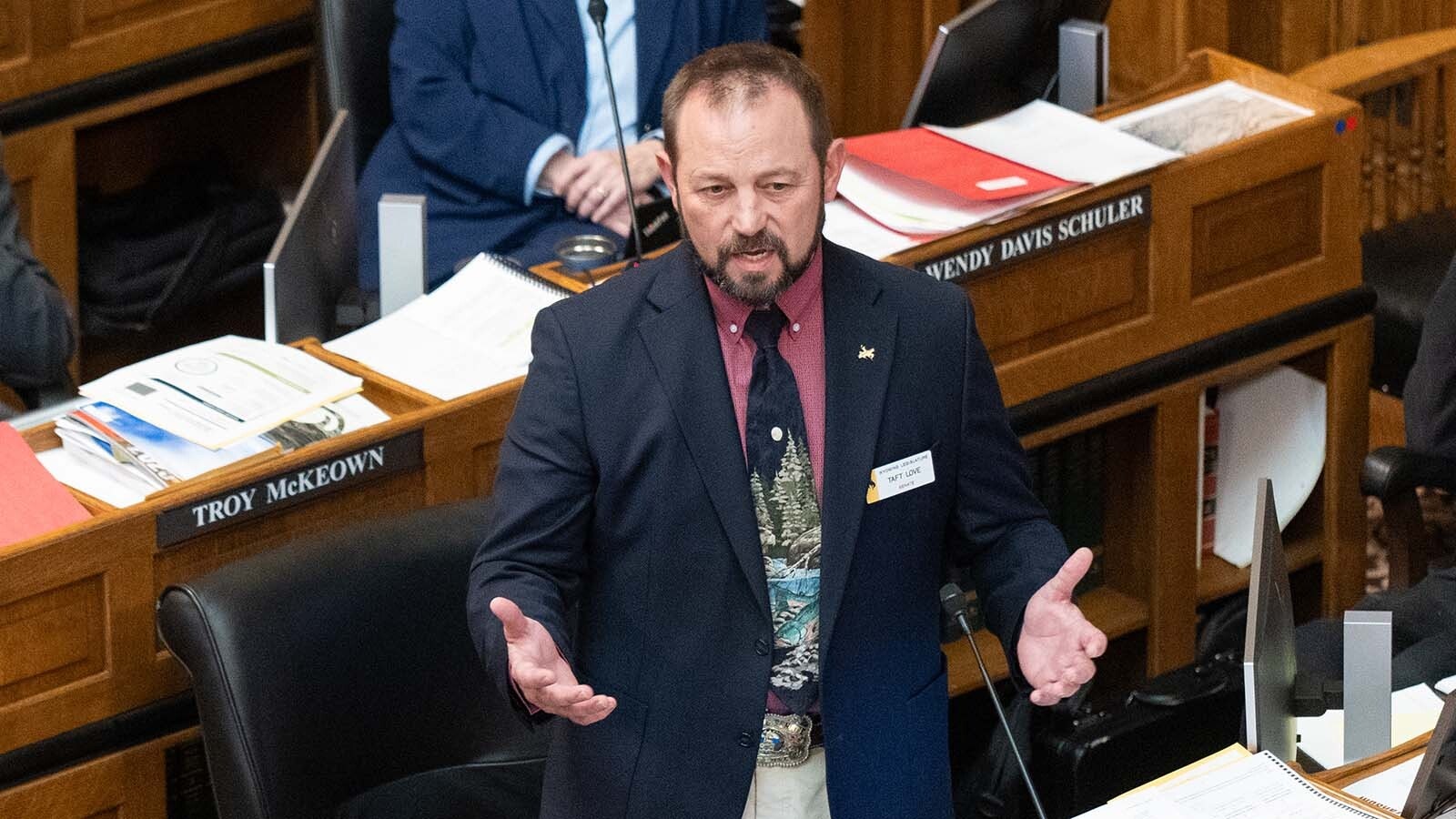
State Sen. Ed Cooper, R-Ten Sleep, drafted a bill titled “Advanced nuclear reactor manufacturers-fuel storage” that would provide advance legislative authorization for nuclear waste storage tied to reactor manufacturing in Wyoming. But he has no plans to introduce the legislation during the upcoming budget session.
“I’m not inclined to bring a bill forward,” Cooper told Cowboy State Daily. “We’ve got too much other stuff.”
Cooper also pointed to opposition from the Freedom Caucus and what he called its “war on business” as being a deterrent to try and advance any legislation supporting Wyoming’s nuclear industry.
The draft bill, 26LSO-0073, frames nuclear waste storage as an economic opportunity. It would require advanced nuclear reactor manufacturers to submit reports detailing “the number of jobs that will be created” in planning, construction, and operation, along with “local and state taxes that are estimated to be generated” and “all benefits and impacts that will accrue to the state and the local community.”
In 2025, the Minerals, Business & Economic Development Committee declared nuclear energy its top priority, stating, “The Committee intends to study ways to grow nuclear energy in Wyoming, including reviewing the permitting framework for storing spent nuclear fuel from advanced nuclear reactors manufactured in Wyoming. Additionally, the Committee will review security measures and needs for nuclear generation and storage facilities.”
But now, as Utah accelerates commercial investment and legislation supporting the nuclear industry, the Wyoming Legislature appears to be pushing pause.
Utah’s Ambitions
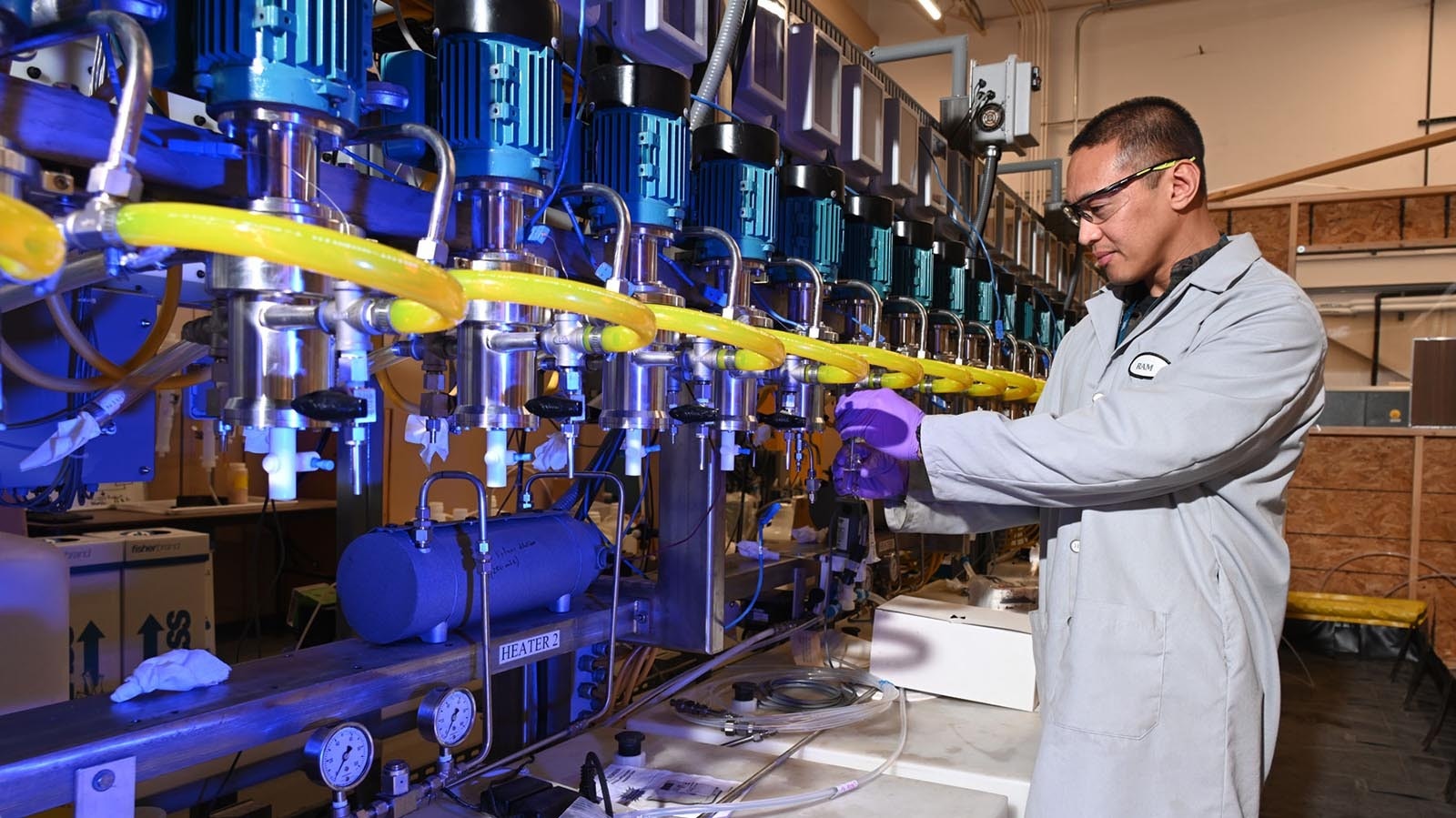
The upcoming Utah legislative session begins Jan. 20, with multiple efforts focused on nuclear energy and waste management that could position the state as a western hub for nuclear fuel processing.
Senate Concurrent Resolution 1 expresses Utah’s intent to pursue “Agreement State” status with the Nuclear Regulatory Commission (NRC) for additional elements of the nuclear fuel cycle.
The resolution states: “Utah desires to expand its regulatory authority to include elements of the nuclear fuel cycle that are not prohibited by federal statute.”
It adds that “increased state participation in these regulatory areas would enhance local oversight, improve coordination with industry and federal partners, and support Utah’s broader energy development goals.”
Lexi Tuddenham, executive director of the watchdog group HEAL Utah, said the state is moving aggressively to take on regulatory functions normally handled by the NRC.
“We know that Utah has the intent to pursue expanded agreement state authority,” she said, noting this includes uranium conversion — the process of transforming yellowcake into uranium hexafluoride gas for enrichment.
The state is also working on “creating an office of nuclear regulation,” according to Tuddenham, though she acknowledged current proposals are largely declarations of intent rather than detailed regulatory frameworks.
House Bill 201 extends the radioactive waste facility expansion tax until Dec. 31, 2026. The bill allows EnergySolutions to pay up to $30 million if the company files an expansion application before the deadline, with that money funding Utah’s nuclear strategic plan.
According to an EnergySolutions presentation, the company has an agreement with Utah to expand disposal capacity, with 85% reserved for U.S. generators and 15% for waste from Canada.
It all adds up to a lopsided comparison between Utah and Wyoming, with lawmakers in Salt Lake City tipping the scales in their direction when it comes to embracing nuclear waste as an economic opportunity.
Calling Out DOE
Utah’s legislative push comes amid intensifying debate over whether nuclear waste reprocessing — transforming spent fuel into new reactor fuel — can be done safely or whether industry leaders are downplaying atmospheric releases of radioactive gases.
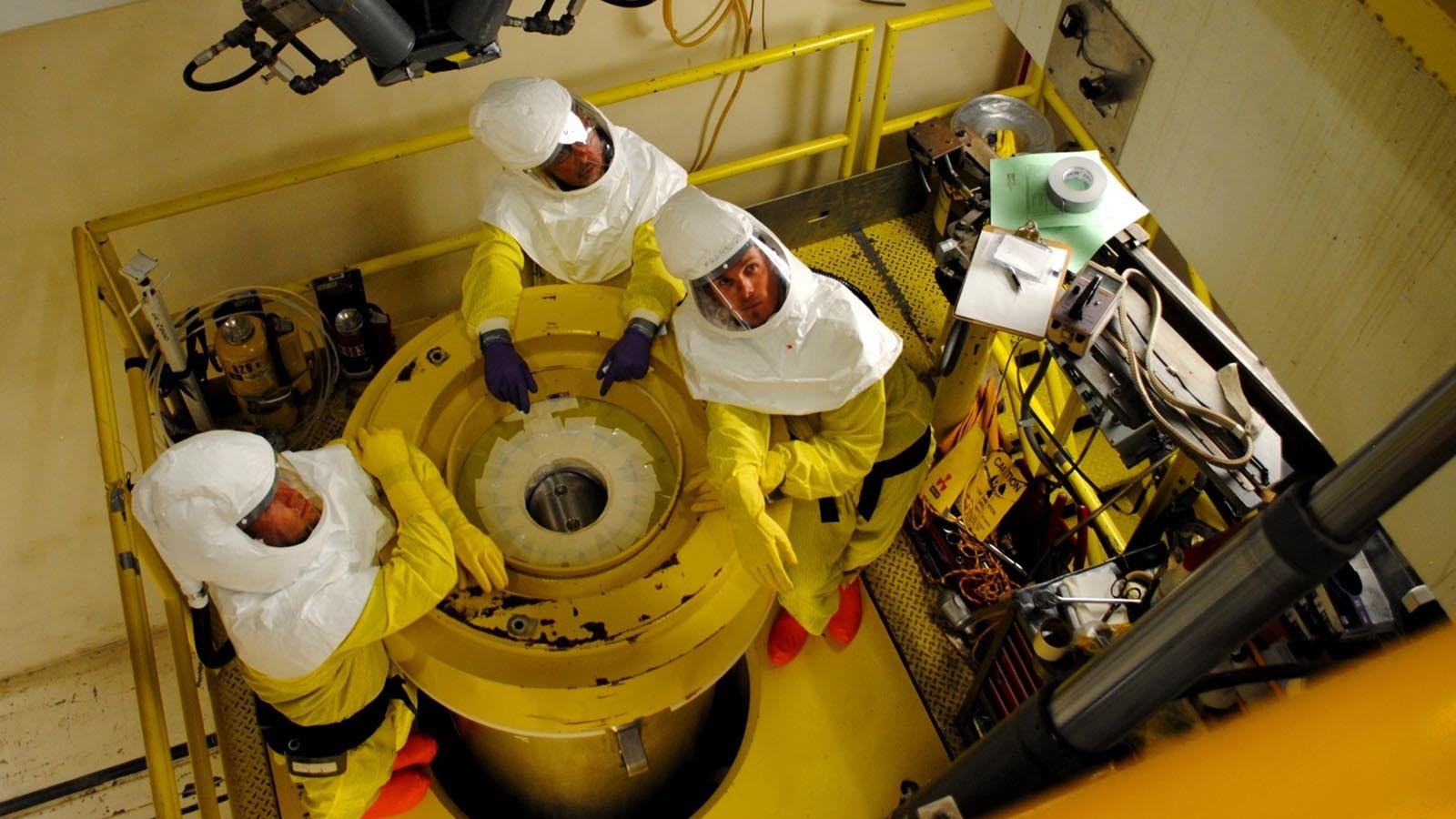
Back in early December, Energy Secretary Chris Wright visited Idaho National Laboratory (INL), where he described a “nuclear renaissance” transforming spent nuclear fuel into valuable resources rather than dangerous waste.
Standing behind five feet of protective glass, Wright operated robotic arms designed to handle highly radioactive spent fuel rods destined for transformation into HALEU — High-Assay Low-Enriched Uranium.
The moment captured the Trump administration’s optimistic view of nuclear reprocessing.
“That’s pretty cool. You’re picking up highly radioactive fuel rods,” Wright said as he watched the mechanical arm move spent fuel contained within a waste enclosure at INL’s Fuel Conditioning Facility.
The energy secretary didn’t use the word waste, calling it “fuel at the end of life.”
In an interview with Cowboy State Daily, INL Director John Wagner framed the waste question as a policy decision informed by science and safe storage.
“I would say nuclear is the only energy form that accounts for every single gram of its waste material and has it in a safe and secure place, even as we’ve been running for over 60 years,” Wagner said. “We have it completely where we know it is. None of it is leaking out.”
That characterization prompted sharp criticism from a nuclear policy expert.
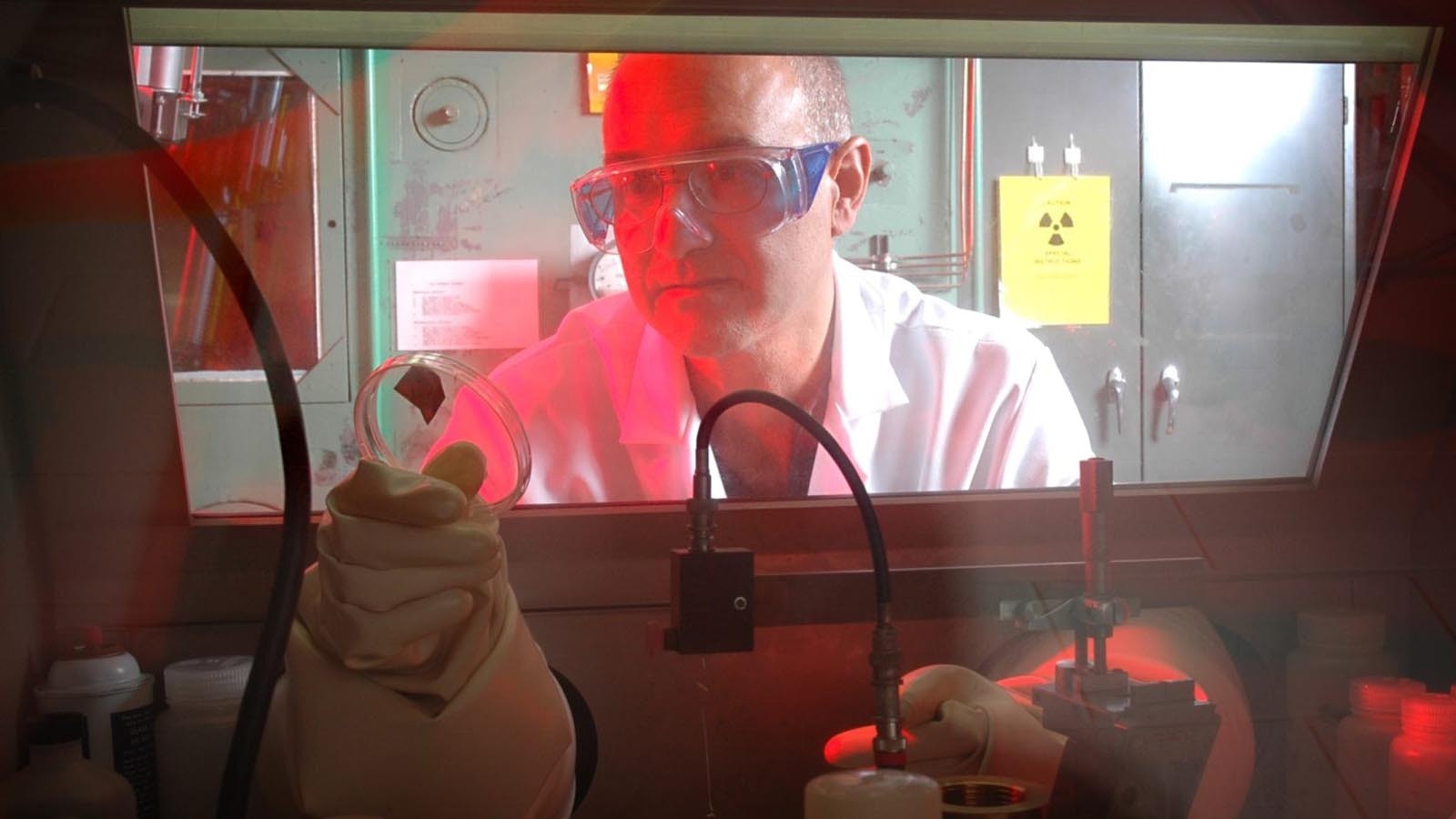
Alan Kuperman, associate professor at the LBJ School of Public Affairs and coordinator of the Nuclear Proliferation Prevention Project at the University of Texas at Austin, challenged Wagner’s statement in correspondence with Cowboy State Daily.
“I found this quote in your story quite misleading,” he wrote. “It is only true if spent fuel is disposed of directly, not reprocessed, because direct disposal keeps the gaseous radioactive waste trapped inside the fuel.”
According to Kuperman, when spent fuel is reprocessed, the first step involves chopping it up, which allows gaseous radioactive waste to escape.
“While it is theoretically possible to capture all that gaseous waste, companies don’t do so because it’s too expensive,” he wrote. “So what do they do? They vent a lot of it into the air for all of us to breathe.”
He highlighted a key passage from a 2022 Nuclear Energy Agency report: “In commercial-scale reprocessing plants across the world today… xenon and krypton are released, unabated to the environment, via an off-gas stack.”
Only two commercial reprocessing plants currently operate globally — in France (La Hague) and Russia — both of which release radioactive gases, according to the report.
The University of Texas professor added that U.S. facilities for reprocessing military and foreign reactor waste, located in Idaho and South Carolina and not regulated by the NRC, also release radioactive materials but receive less scrutiny.
Industry Response
Curtis Roberts, vice president of communications at Orano USA, defended the company’s La Hague facility in France and current practices in response to Kuperman’s concerns.
“It sounds as if Kuperman has a misdirected concern with the facility when he actually has a concern with the regulatory authority,” Roberts wrote. “The facility is designed, operating, and monitoring in complete fulfillment of all health and environmental regulations.”
The La Hague facility remains in strict compliance and closely monitors all emissions, he said, noting there’s a clear difference between closely monitored, regulated, intentional emissions and nuclear waste escaping into the environment.
Roberts also pushed back on Kuperman’s characterization of emissions, criticizing his “sensationalized phrasing of nuclear waste as escaping into the environment. Clearly, anything that is carefully monitored is not escaping.”
“Yes, dealing with off-gases from recycling and used nuclear fuel are serious business, and there is nothing haphazard about their management,” Roberts insisted.
National View
INL outside Idaho Falls is a world-leader when it comes to reprocessing spent nuclear fuel.
Josh Jarrell, director of INL’s fuel cycle science and technology division, emphasized that current U.S. practice involves collecting, tracking and managing all spent fuel and nuclear waste without reprocessing.
“Since there are no commercial reprocessing facilities in operation within the U.S., it is accurate to state that spent fuel or nuclear waste is not released to the environment as part of any reprocessing activities,” he said.
If commercial reprocessing facilities were to be established in the future, emissions would be regulated under the EPA, according to Jarrell. The INL official insisted emissions limits would be stricter than some European examples, and technologies exist to capture and store these materials.
“The commercial nuclear industry has uniquely tracked, characterized, and managed all nuclear waste materials through the use of engineered systems,” he said.
None of this satisfied Professor Kuperman, who responded by stating Jarrell fails to mention that at the federal facilities in Idaho and South Carolina, there are radioactive releases not regulated by the NRC.
Looking ahead at efforts like what’s happening now in Utah, Kuperman was not optimistic.
“As for potential future plants to reprocess that nuclear waste, no one can say what the safety standards would be, because Trump has devastated the NRC’s regulatory authority,” Kuperman wrote.
Historical Context
Scott Brunell, a public affairs officer at the NRC, provided historical context for the current reprocessing debate.
“Reprocessing has always been possible since the Reagan administration. It simply hasn’t been pursued,” he said.
Now, according to Tuddenham with HEAL Utah, reprocessing is being actively promoted in her state despite significant unanswered questions.
“We’re already hearing from our lawmakers, governor, certainly from people in the industry, the nuclear power industry, that there’s a lot of interest in what they call recycling spent nuclear fuel,” she said.
These proposals tend not to address specifics of how reprocessing would happen, but several entities are exploring production of HALEU and other nuclear fuel processing at locations including Hill Air Force Base, she said.
“What everyday citizens and communities are being told a lot right now is that you shouldn’t worry about spent nuclear fuel. You shouldn’t worry about radioactive waste because this is no longer a problem. It’s not an issue. It’s an asset, and we’re going to be able to reuse it to power our nuclear reactors,” she said. “I think that is quite a long way from being the reality of what can actually happen.”
History of Caution
Wyoming has a long history of wariness toward nuclear waste storage proposals. In 1991, the U.S. Department of Energy proposed constructing a monitored retrievable storage facility in Wyoming. Gov. Mike Sullivan ended the project a year later, citing numerous concerns.
In 1998, when a private company wanted to build a facility to store nuclear waste in Wyoming, Gov. Jim Geringer refused permission for a preliminary feasibility study, ending the proposal.
A 2019 presentation to the Joint Minerals, Business & Economic Development Interim Committee by the Wyoming Outdoor Council argued that any “temporary” storage facility would likely become a de facto permanent repository, noting “there is no permanent disposal solution for this waste, despite decades of efforts by the federal government.”
The report concluded with a warning that still resonates today: “There’s no trustworthy record with the federal government. We’d have to hope the federal government will change its ways and be reliable despite a 50-year record of broken promises, missed timelines, changing policies and political uncertainty.”
David Madison can be reached at david@cowboystatedaily.com.