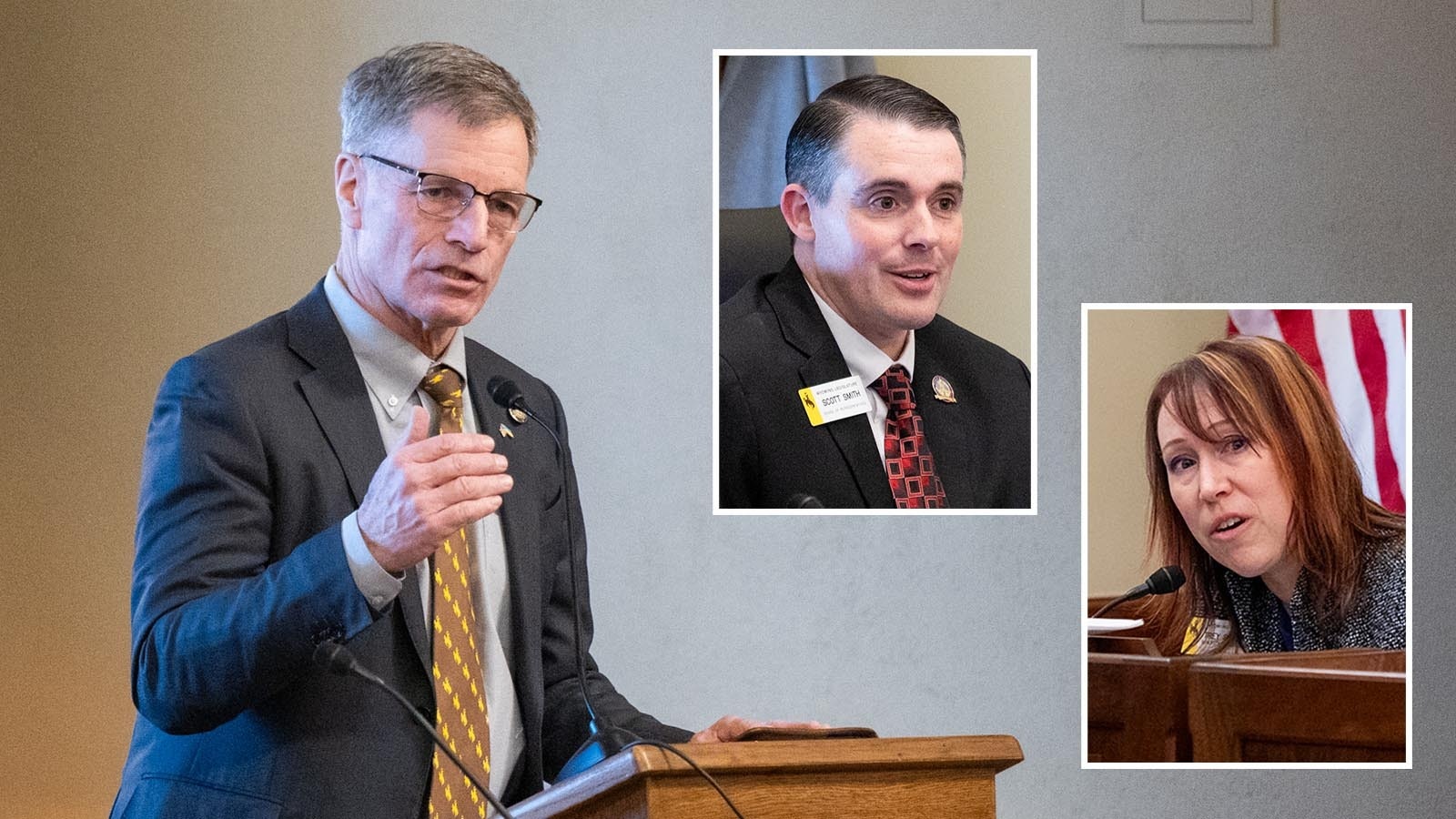
The Wyoming legislative committee crafting a preliminary state budget voted Monday to deny the governor’s $111.8 million recommendation to give state employees raises and bring them from 2022 to 2024 market payroll levels.
State Rep. Scott Smith, R-Lingle, who moved for the denial, said some Wyoming Highway Patrol troopers, Wyoming Department of Transportation snowplow drivers and Wyoming State Hospital nurses may still see targeted raises following later budget talks.
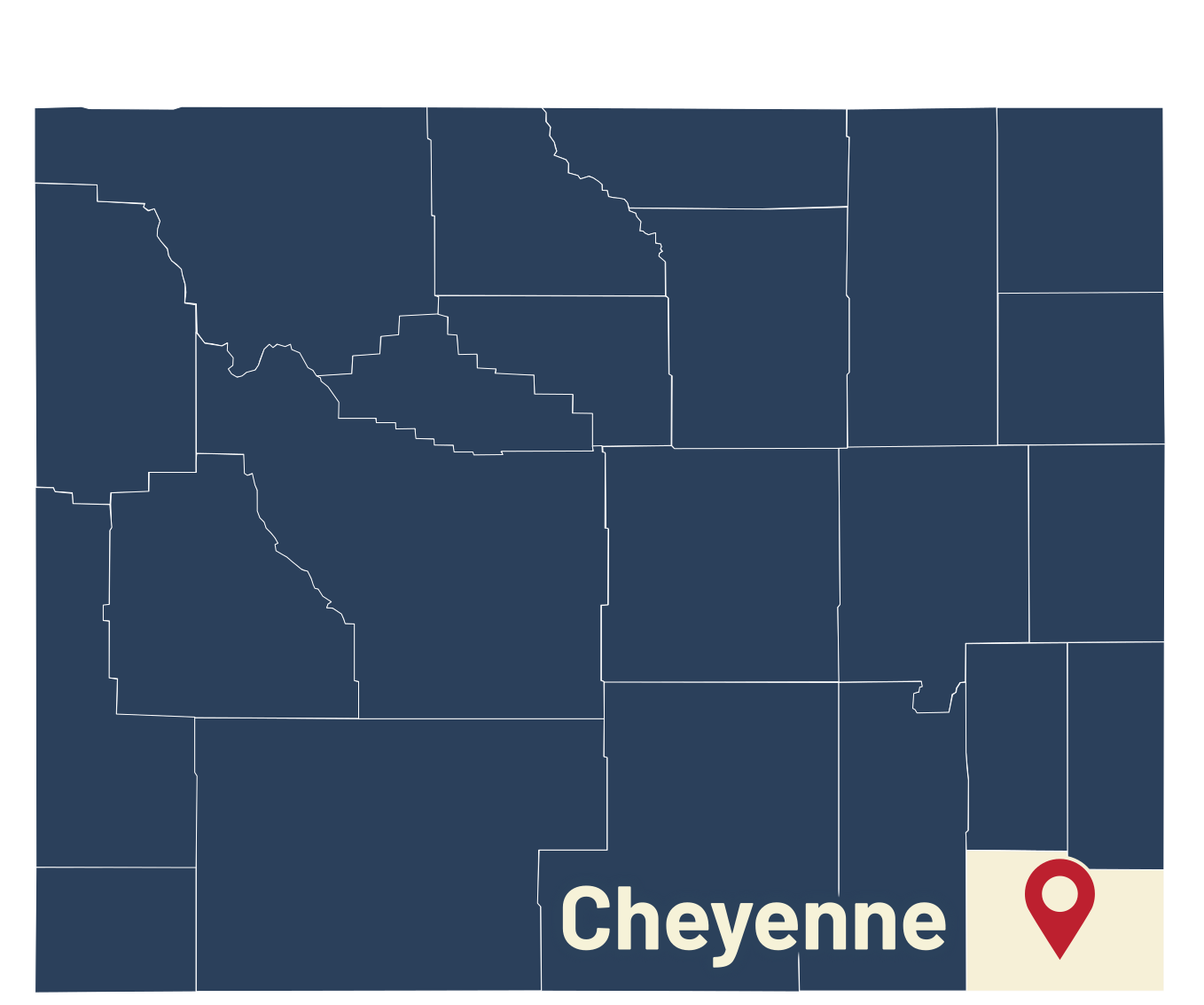
The debate is not finished: both chambers of the Wyoming Legislature are slated to influence and finalize the state’s two-year budget over their four-week session in Cheyenne starting Feb. 9.
“Just over the last few years and a couple bienniums, there has been over a 20% increase in employee compensation, and at this time we don’t believe there would be a needed increase in pay,” said Smith during a Monday meeting of the Joint Appropriations Committee at the state Capitol in Cheyenne.
Sen. Mike Gierau, D-Jackson, referenced ongoing committee discussions on the topic, “so I’m not going to belabor it.”
He asked the committee to keep 75% of the pay boost, and the committee majority rejected that motion.
Gierau then asked the committee to keep 50% of the pay boost.
That also was rejected.
Pushback
Rep. Trey Sherwood, D-Laramie, indicated that rejecting the recommended raises is shortsighted.
The state Department of Administration and Information, which would be diffusing the raises if they pass, told the committee prior that “the turnover of our employees is already costing the state more than what this request is,” Sherwood said. “That really piqued my interest.”
She said wages have not kept pace with inflation, pointing to economic data that the state’s total wage growth in the past decade was 27.6% compared to the private sector’s 37.2%.
“I know this is a huge dollar amount,” said Sherwood. “But our greatest asset is our people — the people who come to work every single day so passionate about what they do.”
Rep. Ken Pendergraft, R-Sheridan, countered.
“I would say our greatest asset is the taxpayer,” he said.
House Appropriations Chair John Bear, R-Gillette, had curbed debate in the meeting’s earlier moments to keep the budget discussion moving quickly, but since “this is probably one of the bigger reductions we’ll see” he allowed Pendergraft, Smith, Sherwood and Gierau to spar.
The committee did not cut health insurance budgets for state employees.
Gierau asked the state Budget Department director to calculate the cost of paying employees' portions of their health insurance for one year — and to have that figure to the committee by Tuesday morning.
Gov. Tells The Future, A Little
Gov. Mark Gordon issued a public statement Friday in defense of his recommendation, three days before the proposed cut to it advanced.
He reiterated that the current number of authorized full-time positions in state government is smaller by 274 positions than it was in 2018.
Agencies have met the rising demands anyway, he said, adding that his recommendation was to bring state employee salaries from the 2022 market value to the 2024 value: “An improvement that still leaves our employees two years behind their colleagues in other states.”
In a Monday text message, Gordon’s spokeswoman Amy Edmonds addressed the committee’s action.
“The governor is glad the Freedom Caucus recognizes the impacts the state has felt from not being competitive given they have singled out a few essential state positions for potential raises,” wrote Edmonds, a reference to Smith, Bear, Pendergraft and another House Appropriations member, Midwest-based Republican Rep. Bill Allemand and Wheatland-based Republican Rep. Jeremy Haroldson's official membership in the Wyoming Freedom Caucus.
That’s a socially-conservative group of House Republicans which on Monday reiterated its emphasis on cutting the budget.
“However all state employees deserve recognition and competitive compensation for the work they do,” wrote Edmonds. “We can not be selective by picking winners and losers with state employees who provide essential services in communities all across Wyoming.”
Other Budget Pressures
The committee is weathering other budget pressures, meanwhile.
The Wyoming Department of Transportation anticipates shortfalls in the hundreds of millions of dollars in the near future.
The state is in ongoing litigation over whether it funds its K-12 school system to the standard outlined in the Wyoming Constitution.
Multiple agencies have voiced concerns that federal funding in their respective spheres will decrease, or has decreased.
The Appropriations Committee last year formed a special subcommittee aimed at decreasing the Wyoming Department of Health's budget, which is approaching $3 billion per biennium.
Note - after this story's publication, lawmakers recommended a $5 million increase to the Wyoming Department of Transportation budget for pay raises for some troopers who have cleared the training phase, and for road maintenance workers, who are snowplow drivers in the winter.
Clair McFarland can be reached at clair@cowboystatedaily.com.