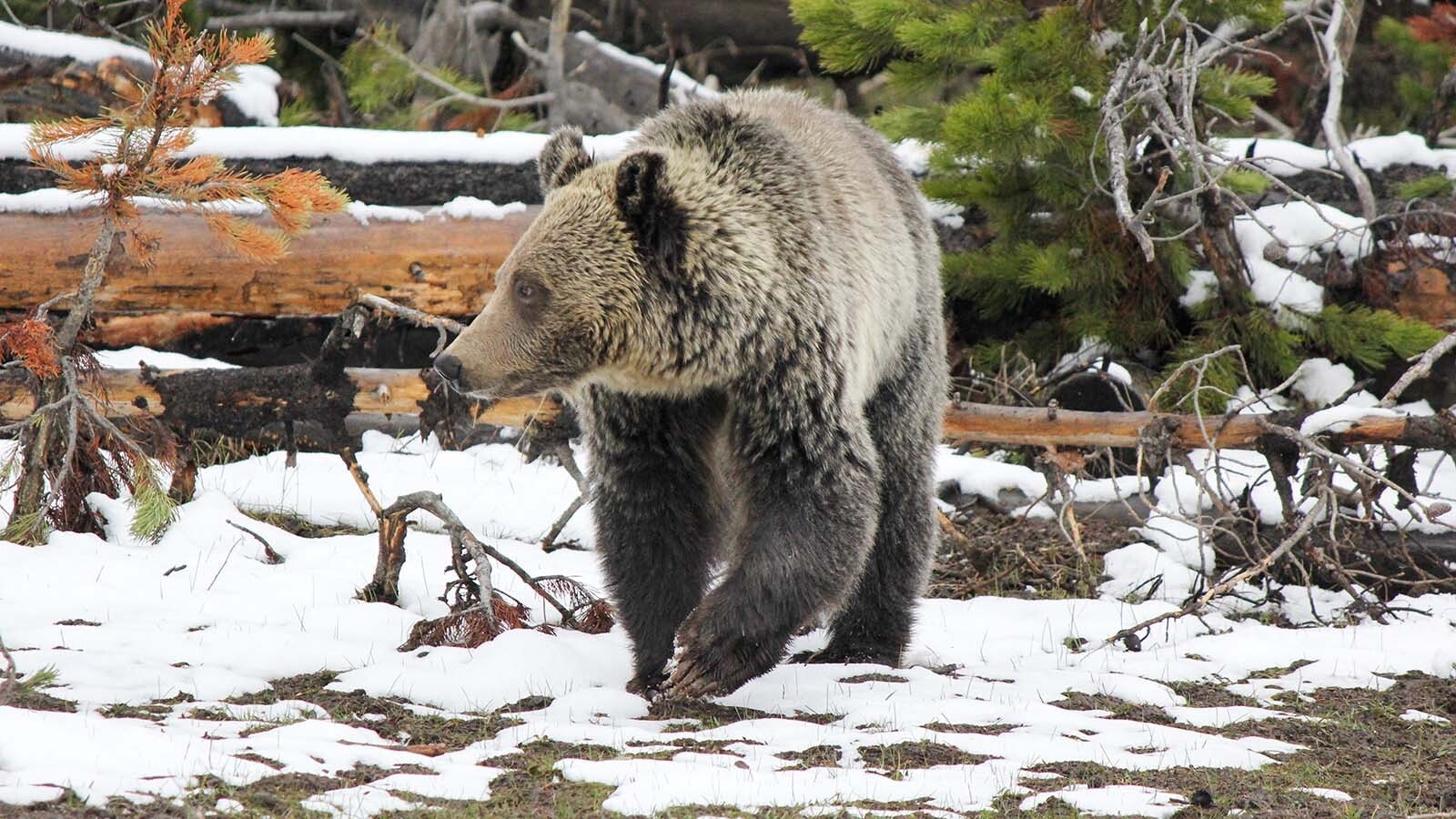
Spring-like temperatures have kept some grizzlies out roaming well past their usual hibernation time, even if most bears have gone to bed after gorging themselves.
“Anyone who is planning on hiking in bear country this time of year, I would recommend they carry bear spray,” retired federal ecologist Chuck Neal of Cody told Cowboy State Daily.
Neal hikes almost daily in bear country, and said he’s still been spotting grizzly tracks despite it being Christmastime.
“I’m still finding tracks, it appears to be mostly larger bears,” he said.
Grizzlies typically start going into hibernation in late October or early November.
Winter Bears
However, even during typical December weather conditions, it’s not unheard of for some bears to emerge from their dens in the middle of winter.
Winter-wandering bears are usually large, mature males, and sometimes restless juvenile males, Neal said.
“It’s not that unusual when we have warm spells, even during an otherwise ‘normal’ winter, there will be some large males that will come out and go on walkabout,” he said.
Pig-Out, Then Off To Bed
While temperatures can have some effect on when bears decide to head off to their hibernation dens, food supplies are the major deciding factor, Canadian bear safety expert Kim Titchener told Cowboy State Daily.
During the fall, bears go into what is essentially a pig-out phase called hyperphagia. They gorge themselves, trying to pile on fat for the winter.
Among the best bear prizes that time of year are gut piles and other big game carcass parts left behind by hunters.
Ripe wild berries, roots and other plants are also on the menu.
Once the pickings get thin, most bears shuffle off to their dens, Titchener said.
“It’s more the lack of food (than weather) that gets bears to go to bed,” she said, adding that cooler weather helps.
Titchener said the weather in Canada has been normal for late December.
“It’s very cold up here. Bears are in bed for sure,” she said.
One abnormally warm December isn’t going to disrupt hibernation patterns, she added.
But long-term trends might start keeping more bears out later.
“Over time, climate change will cause plants to grow into later fall,” she said. "This is for sure happening in some areas and may contribute to bears staying up later. So it (warm weather) is related, but more so over time."
Biological Reponses
Bear hunter and conservationist Joe Kondelis of Cody told Cowboy State Daily that bears seem hardwired to go into their dens at the usual time.
According to what he’s seen, “They typically go to den based on biological responses in the fall, and lack of food. Grizzly bears have been known to kind of reemerge if no snow or warm, black bears not so much, but I have no scientific data to back either. All anecdotal evidence."
Most bear dens are in the high country, which has been getting some snow, Kondelis said.
“I suspect in some low-lying areas, bears could be still out, or back out,” he said. "Most bears try to find places high that retain snow. We actually have had some good storms up high, so not sure it (the warm weather) is affecting those bears."
Mark Heinz can be reached at mark@cowboystatedaily.com.