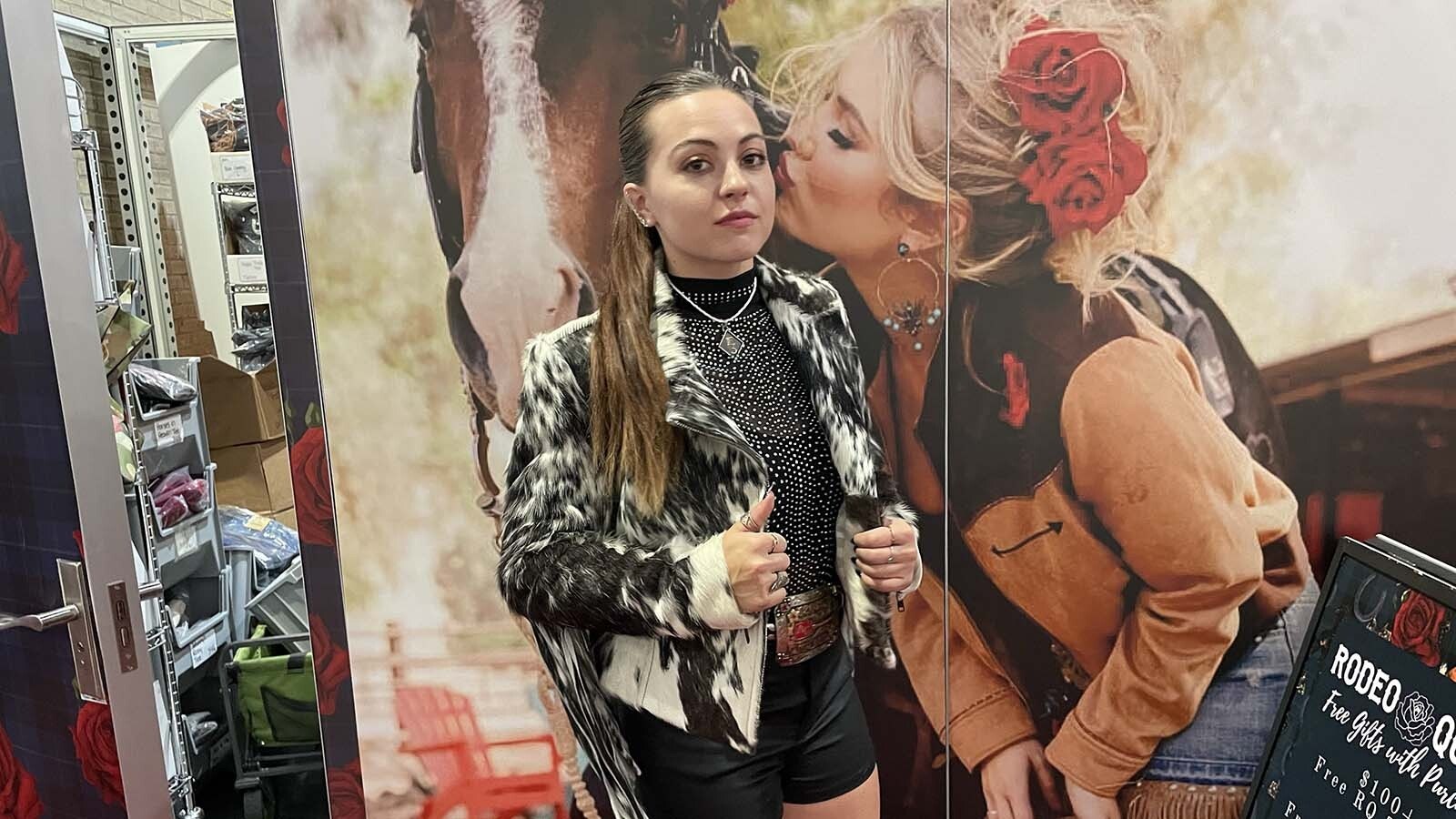
Standing around 5 feet tall with a small frame, Aspen Edge could scarcely weigh over 100 pounds, but she’s a good deal heavier in her jacket, a moto-style, cropped cowhide number with deep lapels and enough fringe to span a canyon.
“It's a full cowhide jacket, and with the fringe it weighs about 15 pounds. It's so heavy I have to put it in a carry-on when I travel so it doesn't take too much weight in my checked bag,” she said, speaking in the Cowboy Christmas showroom at the Wrangler National Finals Rodeo in Las Vegas last week.
She has amber brown hair, and brows that arc over her eyes like an equestrian bascule.
Her Western-stitched boots rise to the knees, and she’s showing some leg in a pair of short matte-leather shorts, which is a recent evolution in NFR fashion, according to long timers.
Edge, a Texas resident, is among the unsung trend-setters in the world of fashion at a moment when Western Americana is hot as a branding iron.
When supermodels Kendall Jenner and Gigi Hadid this year made the cover of Vogue magazine on the strength of a Western-wear photo shoot in Jackson Hole, Wyoming, they were merely jumping on the bandwagon.
The moment’s real style pioneers are the cowgirls and ranch hands who live the Western lifestyle. For this community, fashion is not superficial, it springs from a way of life.
“Growing up on a ranch and competing in rodeo, Western heritage gets into your DNA. Fashion is one of the expressions of that heritage and that makes it more beautiful,” Edge said.
Her personal aesthetic draws on her experience as a ranch hand and rodeo queen, leading to eclectic pairings like roughed up jean bottoms and rhinestone tops.
“We make it our own, because in Western fashion we know how to pair. We know how to pair with fringe or sparkle or leather or denim or suede,” she said, while admitting that not all is glorious under the Americana sun. “Don’t get me wrong, there are some clothing statements out there that make me go, eeeehhhh.”
Edge has seen the NFR dress-code change, and says a big part of her own sensibilities are the result of attending the event.
“I didn’t always have a sense of fashion, but after coming to the NFR for years, and being exposed to so many different Western influences, my sense has evolved,” she said.
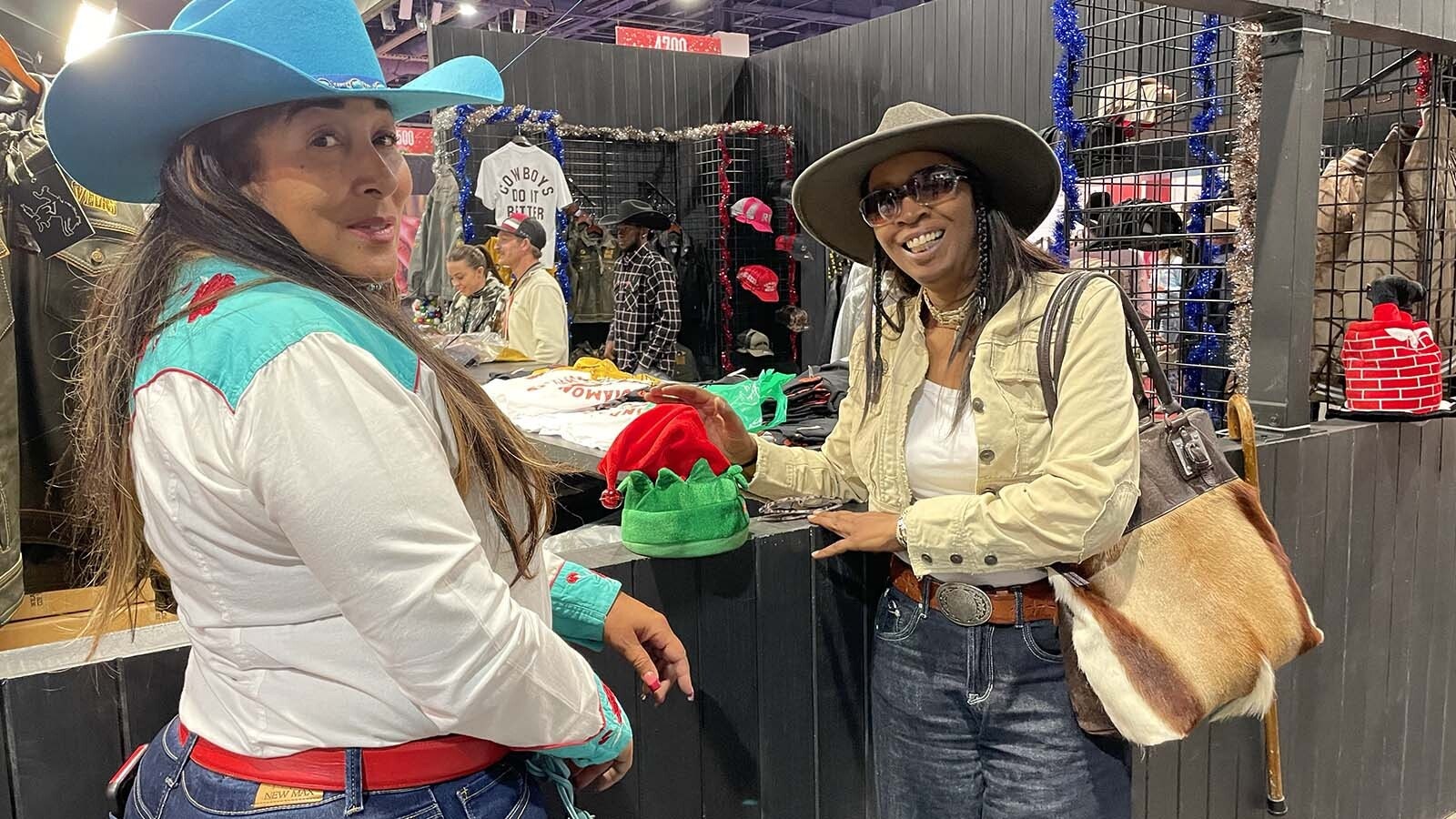
Cowgirls and ranch hands are the true innovators behind today’s Western style, not celebrity bandwagon jumpers. When it comes to fashion or function, dressing like a cowboy — or girl — is all about attitude, not wardrobe. At the National Finals Redeo in Las Vegas, Kimberly Williams and Tamiko get new Western looks. (Zakary Sonntag, Cowboy State Daily) 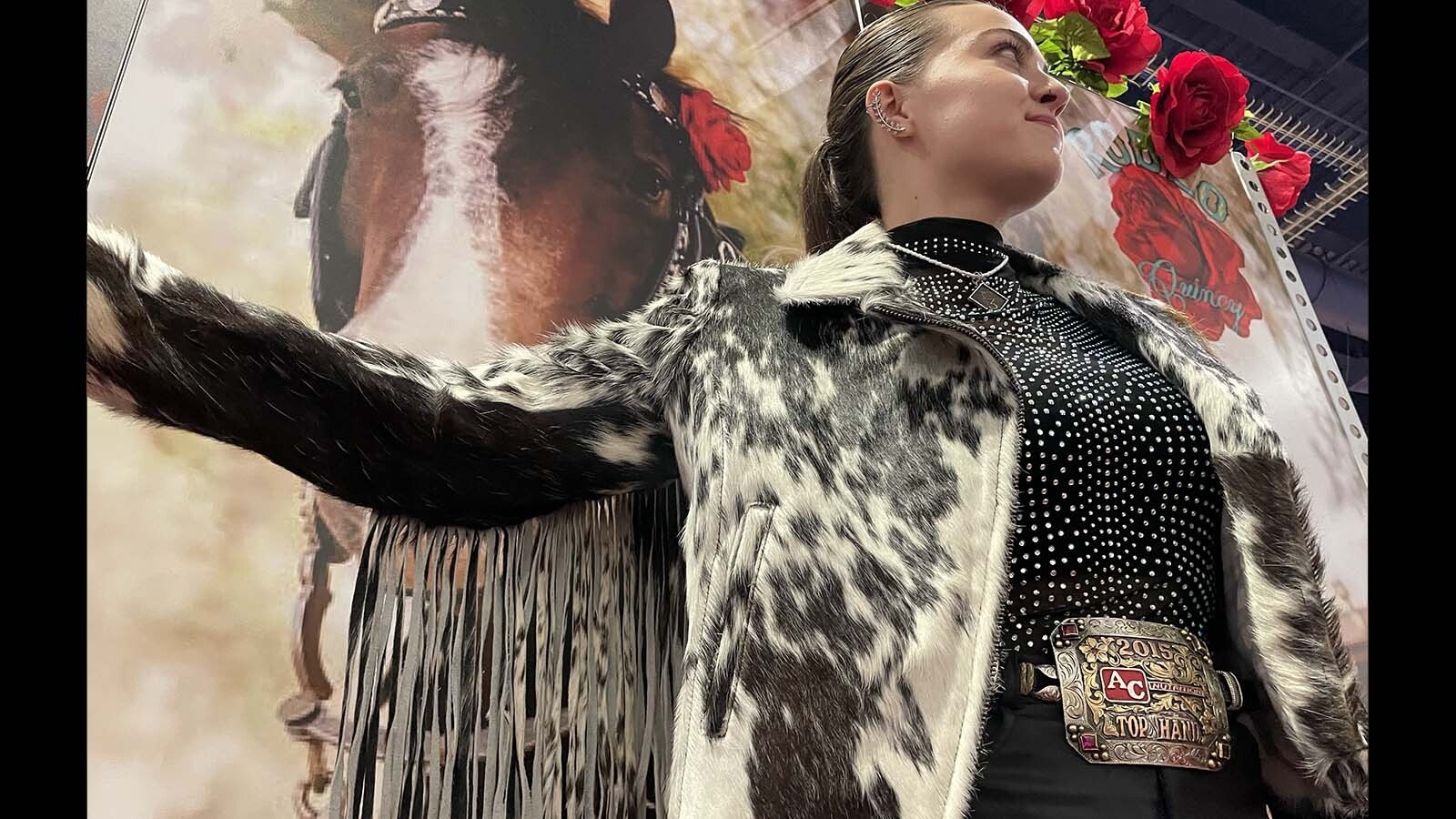
Cowgirls and ranch hands are the true innovators behind today’s Western style, not celebrity bandwagon jumpers. When it comes to fashion or function, dressing like a cowboy — or girl — is all about attitude, not wardrobe. At the National Finals Redeo in Las Vegas, Aspen Edge gets a new Western look. (Zakary Sonntag, Cowboy State Daily) 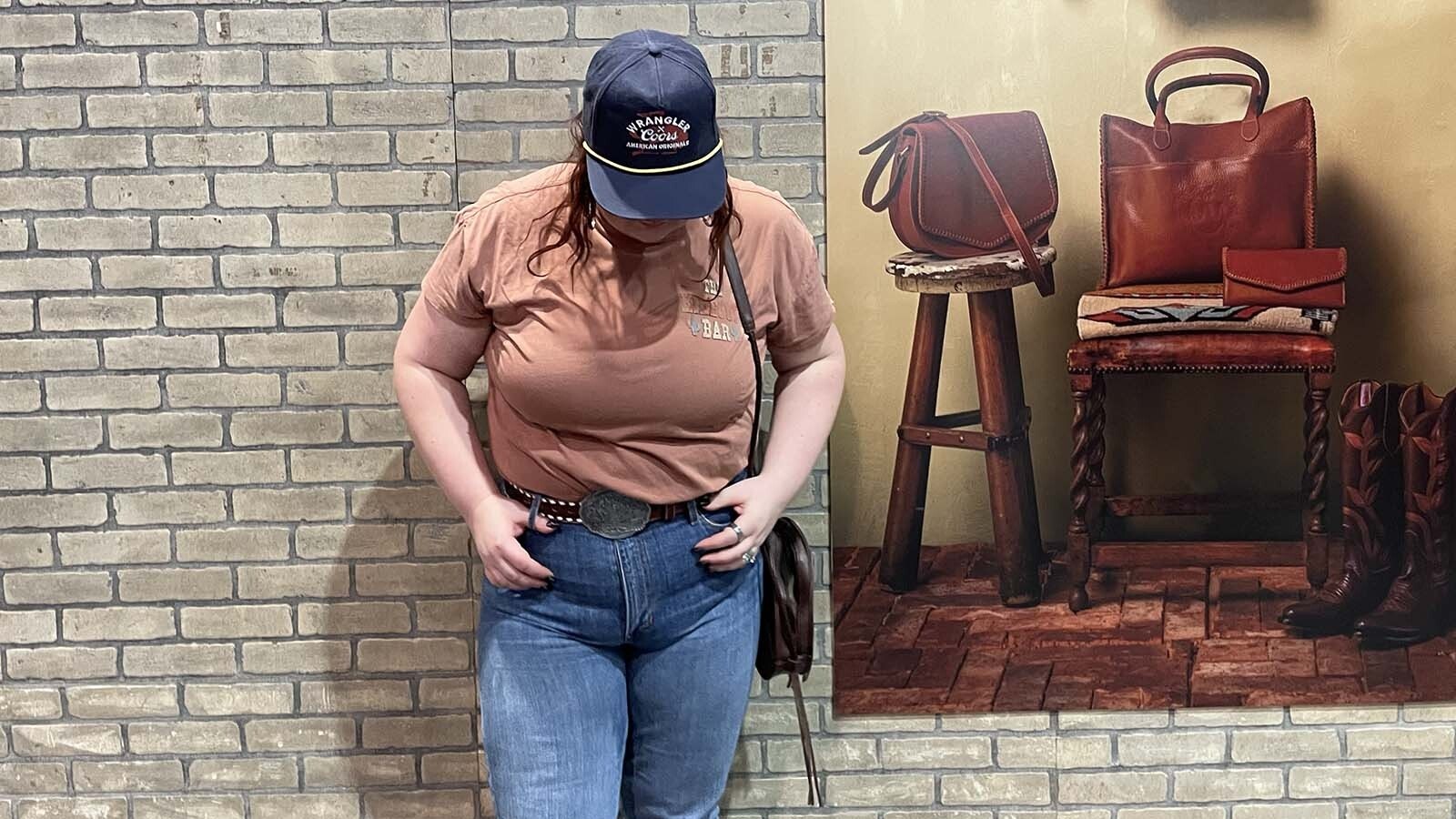
Cowgirls and ranch hands are the true innovators behind today’s Western style, not celebrity bandwagon jumpers. When it comes to fashion or function, dressing like a cowboy — or girl — is all about attitude, not wardrobe. At the National Finals Redeo in Las Vegas, Bekah Whinery gets a new Western look. (Zakary Sonntag, Cowboy State Daily)
Lineage, Not Logos
She builds her wardrobe around lineage not logos, seeking brands that embody Western values.
She gets her hats from the Cow Lot, a family-owned hat maker near Denver with generational ties to ranching. She’s a big booster of the growing artisan brand Rodeo Quincy, whose co-proprietor, Dakota Eldridge, is a professional steer wrestler.
“These are the sweetest families who run these companies, or complete rodeo families with such inspiring stories,” she says, sheepishly qualifying how a portion of her current outfit was dropped on her doorstep by Amazon, including a sheer, bedazzled shirt.
“I’m a college girl trying to ball on a budget,” she says, referring to her studies in animal science.
But her cowhide jacket is one of a kind. It’s made by a brand called Jackson Hull and it comes from a retailer in Cody, Wyoming, where she used to summer while barrel racing in the Cody Nite Rodeo.
At Cowboy Christmas, show-stopping pieces like this are everywhere you look. And for some of the cowgirls here, you won’t find any items from Amazon – because their wardrobes come from an age before the reign of online retail.
Vintage Reigns
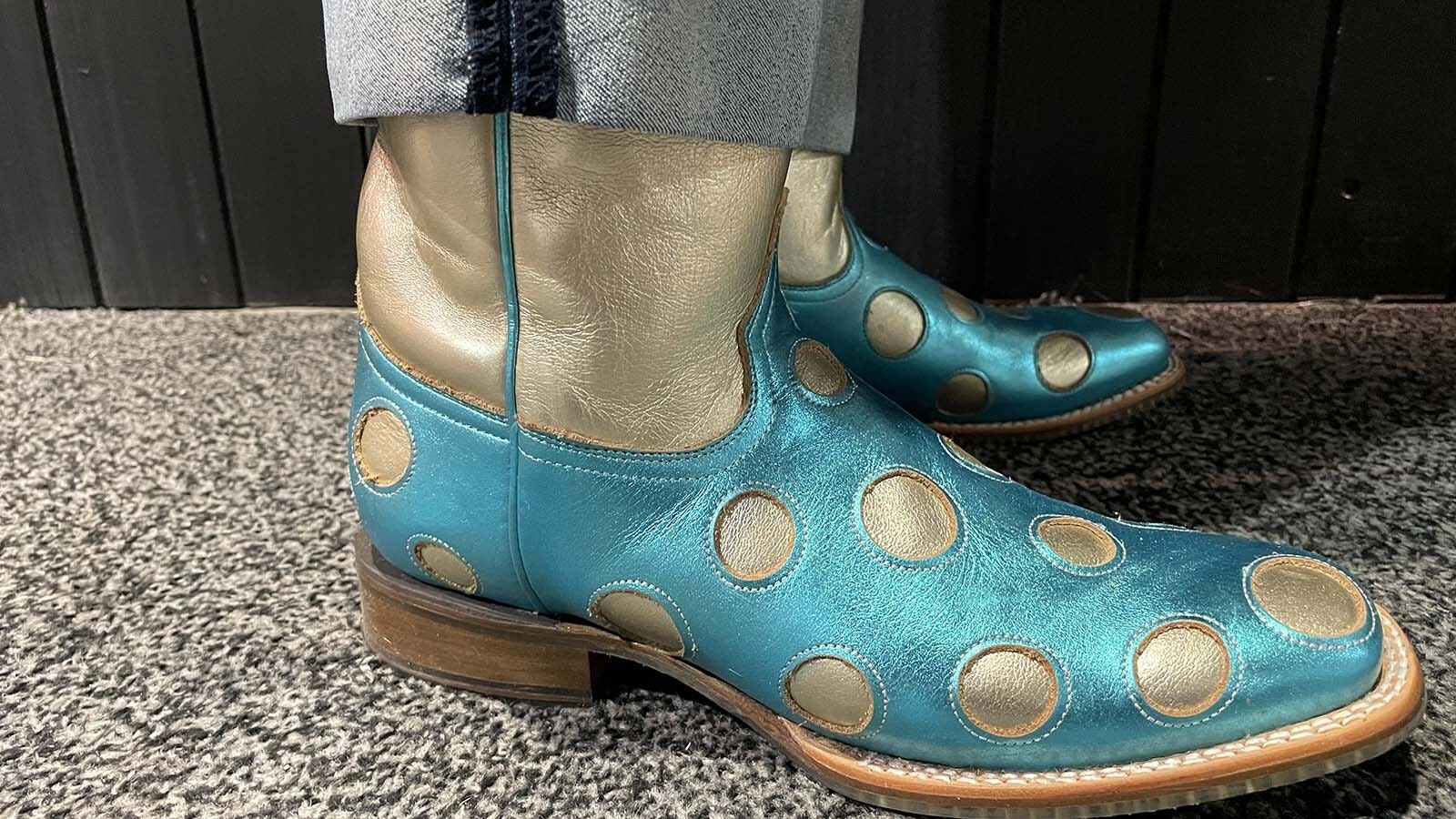
For Kimberly Williams, the look is two-tone and turquoise, from the sheath boots to the Justin-brand hat with the gemstone band. She wears a yoke shirt with embroidered red roses and a small cross body leather purse.
It’s all turquoise, and it's all vintage.
“The shirt’s over 15 years old. The purse is more than 30, it’s older than my oldest son,” she said.
Williams is a program leader with 4-H and a full-time horsemanship coach on a property in Salinas, California, where her day-to-day is in the stables and fields.
“Sometimes people will see me and ask about my fashion, and I tell them, Don't let these fingernails fool you. I'm a real, 24/7 cowgirl. I throw hay, I’m out in the stables, that’s my life,” she said.
Williams says fashion is a gateway for people to learn about wider Western heritage.
“I see people fall in love with the fashion and then the cowboy way of life. Maybe at first they just want to dress that way, so it's our responsibility to teach the integrity of Western heritage, keep that alive and teach these people those values,” she said.
Williams belongs to the Choctaw and Cherokee Native American tribes, which overlap culturally with rodeo lifestyles in fundamental ways, she says. Among their shared values are respect for animals and a focus on sustainability.
But it also works in reverse, whereby people fall in love with horses first, and then the fashion follows.
Cowgirls and ranch hands are the true innovators behind today’s Western style, not celebrity bandwagon jumpers. When it comes to fashion or function, dressing like a cowboy — or girl — is all about attitude, not wardrobe. At the National Finals Redeo in Las Vegas, Bekah and Morgan Whinery get new Western looks. (Zakary Sonntag, Cowboy State Daily) 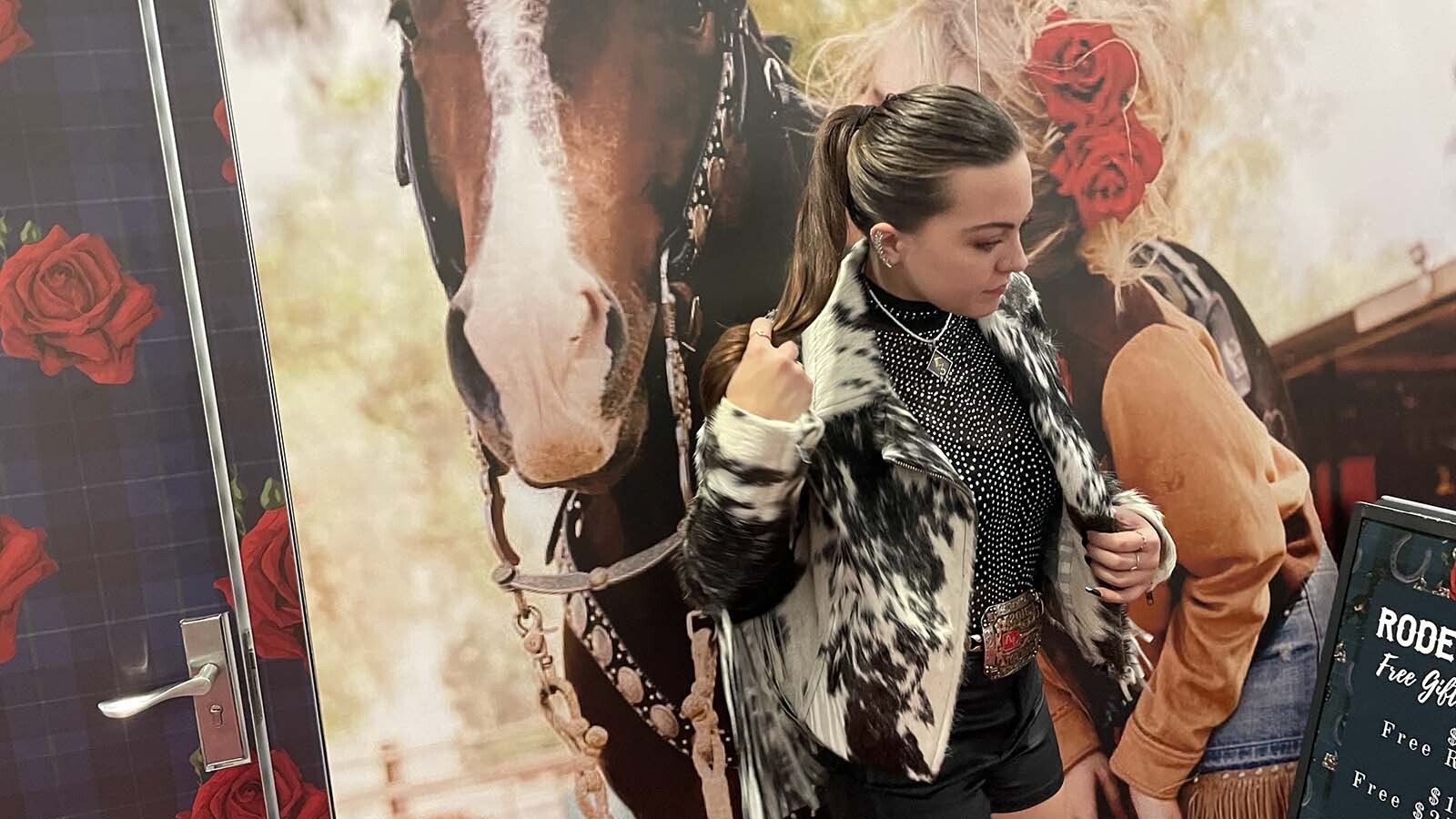
Cowgirls and ranch hands are the true innovators behind today’s Western style, not celebrity bandwagon jumpers. When it comes to fashion or function, dressing like a cowboy — or girl — is all about attitude, not wardrobe. At the National Finals Redeo in Las Vegas, Aspen Edge gets a new Western look. (Zakary Sonntag, Cowboy State Daily) 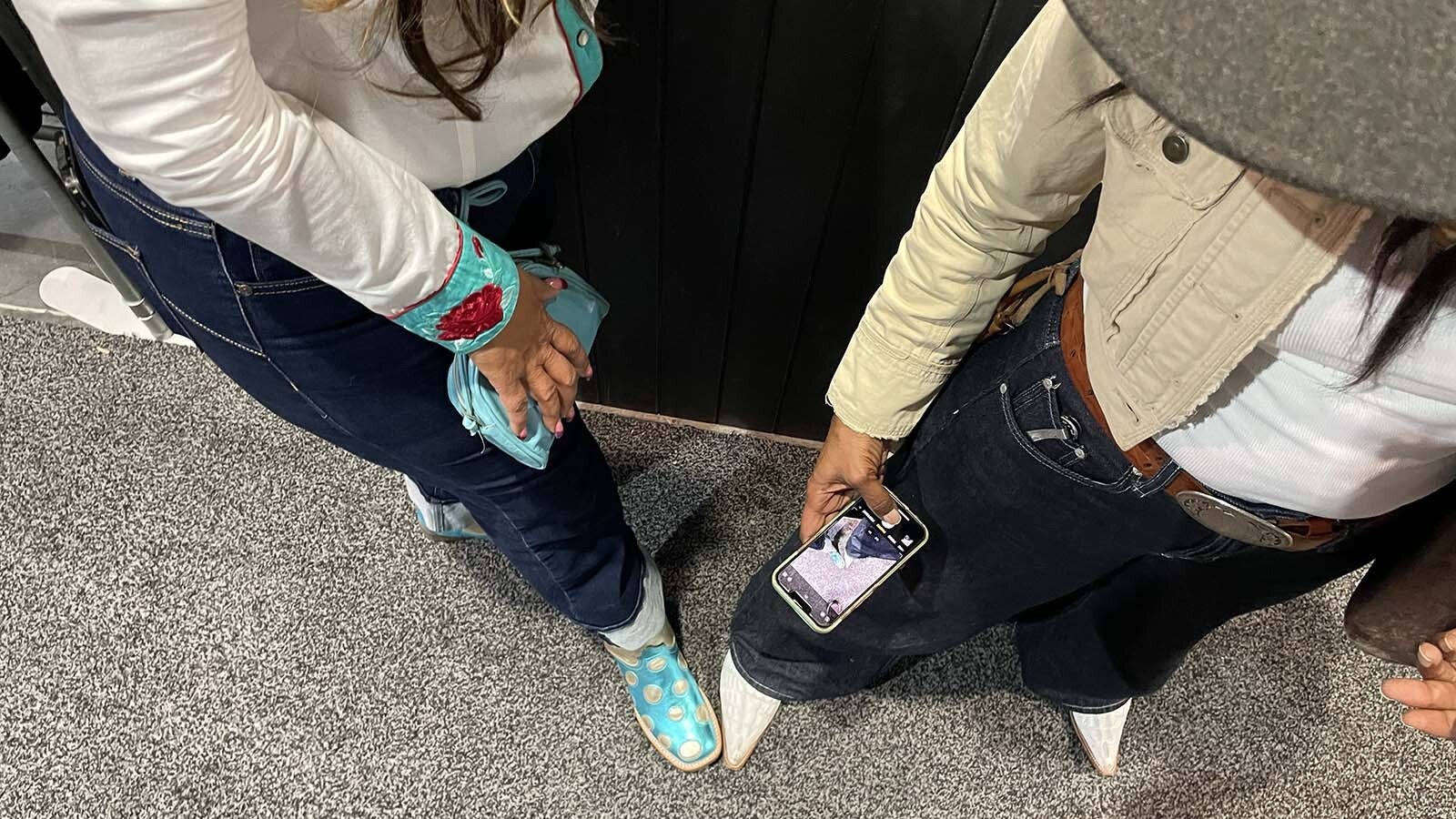
Cowgirls and ranch hands are the true innovators behind today’s Western style, not celebrity bandwagon jumpers. When it comes to fashion or function, dressing like a cowboy — or girl — is all about attitude, not wardrobe. At the National Finals Redeo in Las Vegas, Kimberly Williams and Tamiko get new Western looks. (Zakary Sonntag, Cowboy State Daily)
Horse Therapy And Fashion
Tamiko, a woman of West Indian and Cherokee heritage, explains how her fashion sensibilities deepened following a miraculous comeback from multiple sclerosis, which wouldn’t have been possible without the help of a horse.
“I was totally paralyzed, in a wheelchair, couldn't walk. Then someone suggested horse therapy,” she said.
She started by grooming the horse while simultaneously speaking her mind. From there it bloomed into an empowering relationship which she credits for her recovery.
“The horse helped me start to say, ‘I have MS. It doesn't have me.’ I talked to that horse so it could understand until we shared those same feelings.”
A few months in, she was able to ride the horse. Within eight months, she was back on her feet and walking in a pair of white croc boots, to be exact.
Here she wears a cropped bolero jacket over a ribbed-cotton tank, tucked into wide leg jeans with a big silver buckle.
For Tamiko, accessories are essential, like her bone airpipe choker necklace and bedazzled bracelet, made by handcrafters in New Mexico.
“I want things that are original, handcrafted and vintage or repurposed. I don't want anything that looks like somebody else.”
She doesn’t have to worry about bumping into anyone with the same goat hide satchel, which is itself accessorized with a separate goat hoof whip.
“Don't get all PETA on me. In Native American culture and southern states, nothing from the animal is wasted. That’s part of the reason Western style lives such a long time.”
She’s had the bag since she was in high school. She’s now 59. This is not fast fashion.
Coastal Cowboy
A key feature in Western fashion comes from a younger generation, who prefer a mashup of modern and classic.
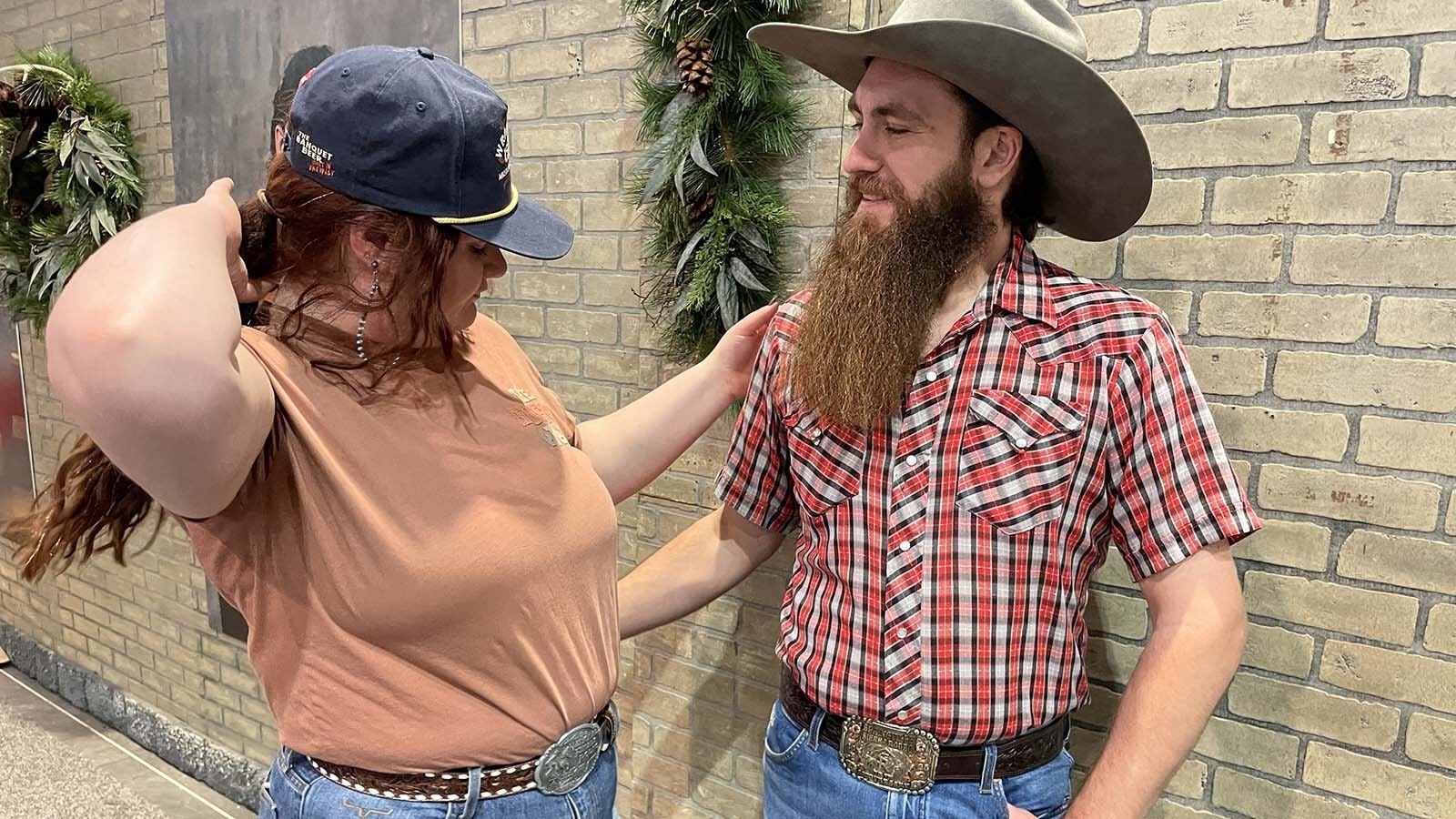
Bekah Whinery, 28, formed her style sense at Cal Poly in San Luis Obispo, honing a “coastal cowboy” look where Western vintage and punk collide.
She’s wearing boot flare jeans over white converse, with a slouchy-by-intention vintage T. Her belt buckle is vintage NFR from the year she was born, and it's strung on an embossed leather belt she tooled herself. Her hair is dyed “Cowboy Copper,” and pinned with strands of tinsel.
“Western girls love anything that sparkles,” she says, offering a coastal cowboy 101. “It’s laid back, more comfortable, baggier tops, burnt out T-shirts, beachy serapes. Clog Birkenstocks and a lot of sneakers.”
From a distance, her silhouette is not obviously Western, but Americana comes out in the details.
She wears Zunni needlepoint earrings and a trucker hat by the collaboration Wrangler and Coors. Her purse is a nod to the rope can, a circular leather pouch with buck stitch and native pattern.
Her wedding band is custom made with gemstone inlays and black mountain gold filigree.
She operates a restaurant in the small town in the foothills of California’s Sierra Madre Mountains, where she’s come to appreciate Western fashion for its durability.
“We work hard, we work a lot, and we buy from Western brands not because they’re cheap — they’re definitely not — but because they last.”
The qualities of Western fashion – sustainability, durability, and originality are a microcosm for a broader way of life, each of which plays its role in a mutually reinforcing cultural ecosystem.
Aspen Edge thinks of it this way.
“Western culture is like a tree, and there's all these roots that connect to it, and the NFR is just one of them, fashion is just one of them, but they work together to make those values,” Edge said.
Zakary Sonntag can be reached at zakary@cowboystatedaily.com.