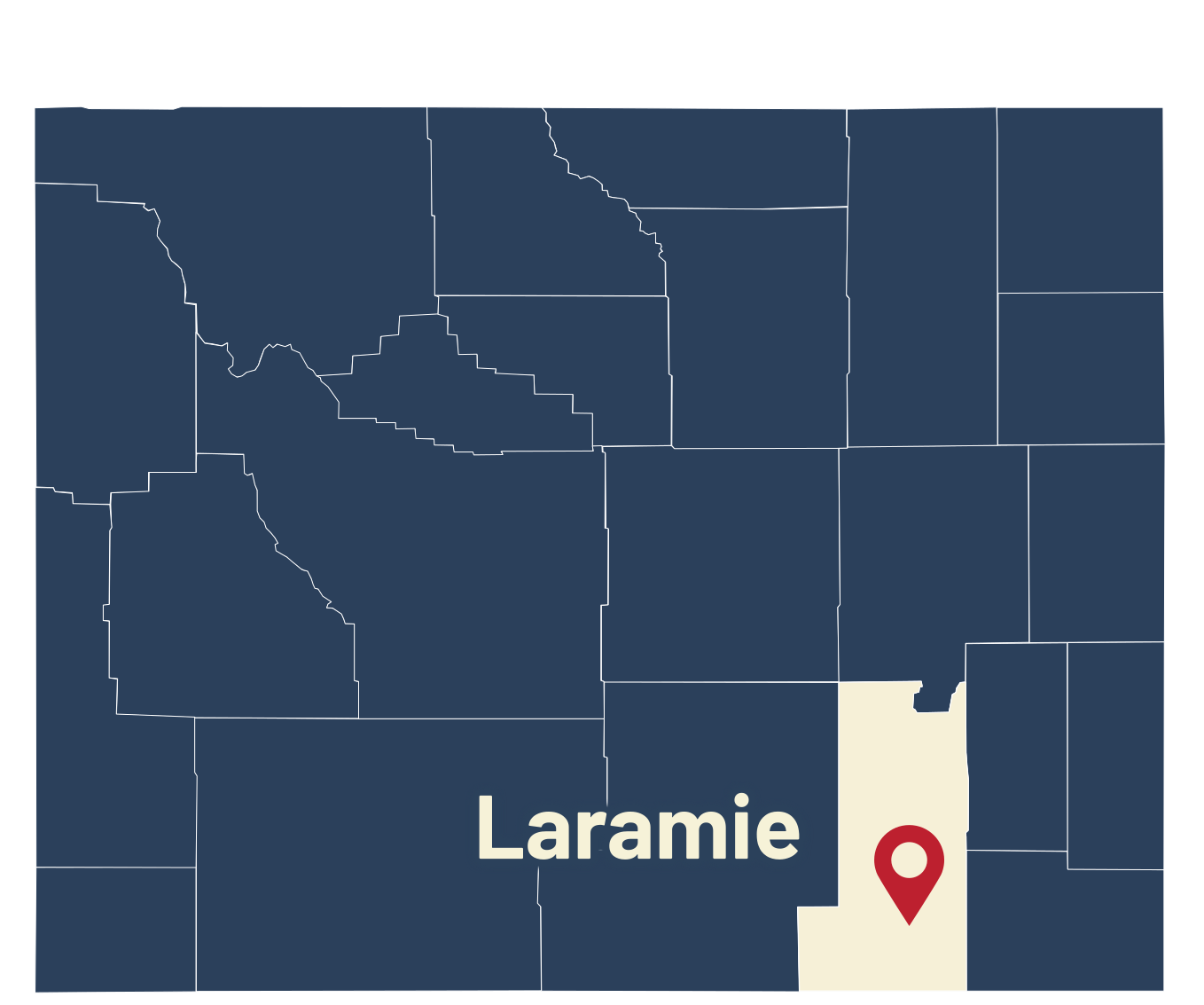
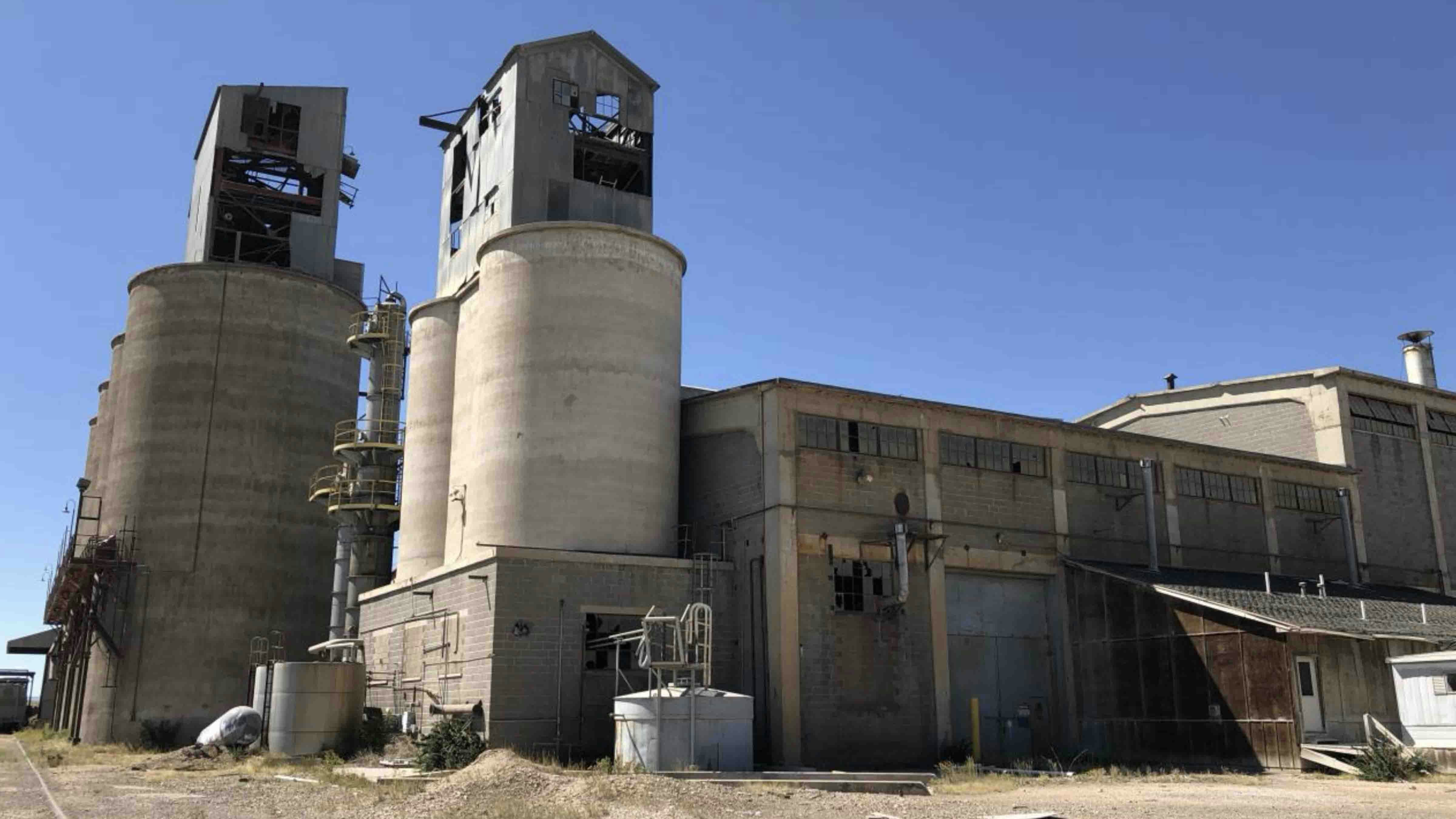
In the 1980s, residential neighbors of the Nedlog and Williams Strategic Metals property about 2.5 miles south of Laramie began complaining about an orange plume of smoke from the plant that they believed was making them and their animals sick.
That kicked off an investigation, one that eventually found arsenic in the groundwater and soils surrounding the plant, as well as mercury contamination in at least one building.
In 1988, Wyoming Department of Environmental Quality revoked the plant’s operating permit, shutting it down, which was triggered by the discovery the company changed some of its processes without adequate notice.
Thus began a decades-long marathon of cleanup efforts at the site. Now finally, that marathon may be closing in on a finish.
The Environmental Protection Agency has decided to move forward with a removal action, to once and for all rid the site of environmental contaminants.
Although the site is not on the National Priorities List, the removal action will move forward immediately using tax revenues generated from Superfund taxes. Those are excise taxes imposed on chemical manufacturers and importers.
A slower, more thorough process has also begun that will seek to identify any responsible parties who could ultimately repay the costs of the final cleanup work, if any are left to be found.
Spring Is Coming
Some of the cleanup work is set to begin in the spring, starting with an area that has high levels of arsenic, EPA Region 8 On-Scene Coordinator Abigail Hasenstab told a group of concerned citizens in Laramie Tuesday night.
Other contaminants do exist at the site, including mercury, Hasenstab said. Work to further sample and identify additional contaminated soils and groundwater in the area is ongoing.
“The arsenic is mostly accumulated in volumes of floor dust in Building B1,” Hasenstab said. “The arsenic concentrations in that floor dust were up to basically 50% in this process dust. So that’s really high concentrations, and we’d like to address that right away.”
The cleanup process there will involve washing the affected portions of the building with power and low flow washers, depending on the specific areas in question.
“We’re also going to wash down any heavy equipment that’s remaining in the buildings, metal equipment, and then once that is clean, we’ll be removing it and recycling it or disposing of it,” she said. “Then all of that wash water from that arsenic, basically arsenic-contaminated wash water at this point, is going to be collected and put through a filtration system.”
The filtration system will be designed to remove any arsenic-containing particles from the water, after which a process called reverse osmosis will be used to filter dissolved arsenic from the water.
“If the final product of the water is still dirty, then we would use an evaporation pond to dispose of it,” she said. “So clean water evaporates and the arsenic stays behind.”
On the other hand, if the water comes out clean at the end, it would just be discharged on site, as it’s “basically rainwater at that point.”
Mercury Contamination Will Take Longer
Some mercury has been identified at the site, but the presence of this poisonous chemical hasn’t been completely characterized.
“So, at the same time that we’re doing our arsenic removal action, we’re also going to be performing some assessment activities on the site,” Hasenstab said.
That will determine the extent and locations of mercury contamination, which will be a key metric for deciding the best approach for cleaning that.
“We’ll need to do a little bit more screening and mercury vapor screening around that building, in that building,” she said. “And we’ll also have to assess the condition of the building.”
One option is to just demolish the building and dispose of it. Or, if it’s feasible, it could be cleaned instead, a potentially cheaper solution.
“There’s going to be a lot of options that we’ll explore,” Hasenstab said. “That assessment will help us come to that decision.”
Mercury won’t be the only hazardous material the team is looking for. There are other contaminants that are likely present at this site, and the site assessment will be looking for those as well throughout the spring and summer.
There will likely be another meeting in 2026 to cover what has been accomplished at the site, as well as what the site assessments have been finding. A timeline on the complete removal action may be available at that time, depending on what is found.
Keep The Kids Out
Sen. Chris Rothfuss, D-Laramie, and Rep. Karlee Provenza, D-Laramie, were among those present at the EPA meeting Tuesday night.
Rothfuss raised concerns about youths visiting the site, which he indicated has become a popular youth hangout for some.
“Have any chemical hazard signs been put up, or anything along those lines, to indicate there were high levels of mercury and arsenic?” he asked.
Hasenstab said she was unsure that any of the existing signs specifically identified particular chemicals, but that the signs do clearly state the area is hazardous. There’s also a fence around the area, to try to discourage visitors.
“I think at some point, you’ll start convincing kids, but you have to get past the threshold,” Rothfuss said.
Provenza echoed Rotfhuss' concerns on a call with Cowboy State Daily Wednesday morning.
“It was alarming to know how much arsenic is in the soil out there,” she said. I’ve never seen it with my own eyes, but (with) the rumors of kids going out there to party, I’m glad this is getting cleaned up.”
Hasenstab told Cowboy State Daily on Wednesday she hoped that media articles would help to further underscore that the location isn’t a suitable hangout for youths, however appealing a set of old, abandoned factory buildings might seem.
“We’ll probably put up more signage that’s a little more blatantly obvious that it’s hazardous to health,” she said. “And reporters like yourselves writing about it and explaining there are dangers at the site would hopefully discourage at least some amount of the public (going out there).”
Why Is The Cleanup On The Public’s Dime?
Among the many questions during the EPA meeting Tuesday night was a member of the audience wondering why taxpayers are getting stuck with paying for the cleanup.
Hasenstab told him that a separate department is actually pursuing responsible parties in an effort to eventually recoup the cleanup costs.
That’s a lengthy process, though, Hasenstab added. In the meantime, the site needs to be cleaned up.
The rest of the answer to that question, though, is buried in the lengthy history of this site, which actually began as a Department of Defense project during World War II.
America was searching for a domestic source of aluminum, according to an article about the site by the Albany County Historical Society.
The more usual rock for such production was bauxite, and Jamaica was a big player in the global aluminum trade. Laramie had anorthosite, a coarse-grained igneous rock commonly found in the Roger Canyon northeast of Laramie. In a pinch, aluminum can be made from it as well, giving America the domestic supply it needed in a time of war.
Unfortunately for the alumina factory, however, the war ended just as the plant was completed in the 1944-45 timeframe. There was no more need for a domestic source of alumina, so the jobs disappeared and the plant closed.
From 1950 to 1952, the Bureau of Mines did use the facility for some feasibility tests on producing alumina from anorthosite and other aluminum silicates in the area.
The Long And Winding Cleanup Chain
After that, the site was a cement plant for a time. Ideal Cement manufactured lower weight aggregates by punching tiny holes into the rock, creating a sort of synthetic porous volcanic rock. But the process was expensive, and actual porous volcanic rock was cheap. The plant ultimately shut down.
Nedlog Technology Group purchased the property next, with the idea of extracting metals from smelter waste and waste ores, operating until about 1990. They sold out to Williams Strategic Metals, Inc., which continued a similar operation at the location.
But when an orange plume began appearing from the smokestack in the 1980s, complaints of sickness touched off investigations, and investigations ultimately found arsenic contamination.
Wyoming DEQ shut Williams Strategic Metals down in 1988, after which the EPA entered into a consent agreement with what remained of the company for cleanup work. That continued through 2001.
The company eventually went bankrupt, and the trust they’d set up also ran out of money, Hasenstab said. Some of the principals who were involved have also since died, leaving this beleaguered property in the hands of a trustee.
The property landed in Wyoming’s Voluntary Remediation Program in 2011, which carried the ball for a time, working with EPA.
Hasenstab said Wyoming asked EPA to step in and help complete cleanup of the site about two years ago.
Efforts will continue to find responsible parties to recoup the costs of cleanup at some point, Hasenstab and Meyers said. But, in the meantime, getting rid of the contamination simply can’t wait any longer than it already has.
"Cooperative federalism is the cornerstone of EPA’s efforts at the Nedlog site, enabling us to work hand-in-hand with our WY Department of Environmental Quality partners while prioritizing community health and safety," said EPA Regional Administrator Cyrus Western. "We are steadfast in our commitment to supporting residents and ensuring transparency throughout this process, reflecting our dedication to impactful and responsible environmental stewardship"
Renée Jean can be reached at renee@cowboystatedaily.com.