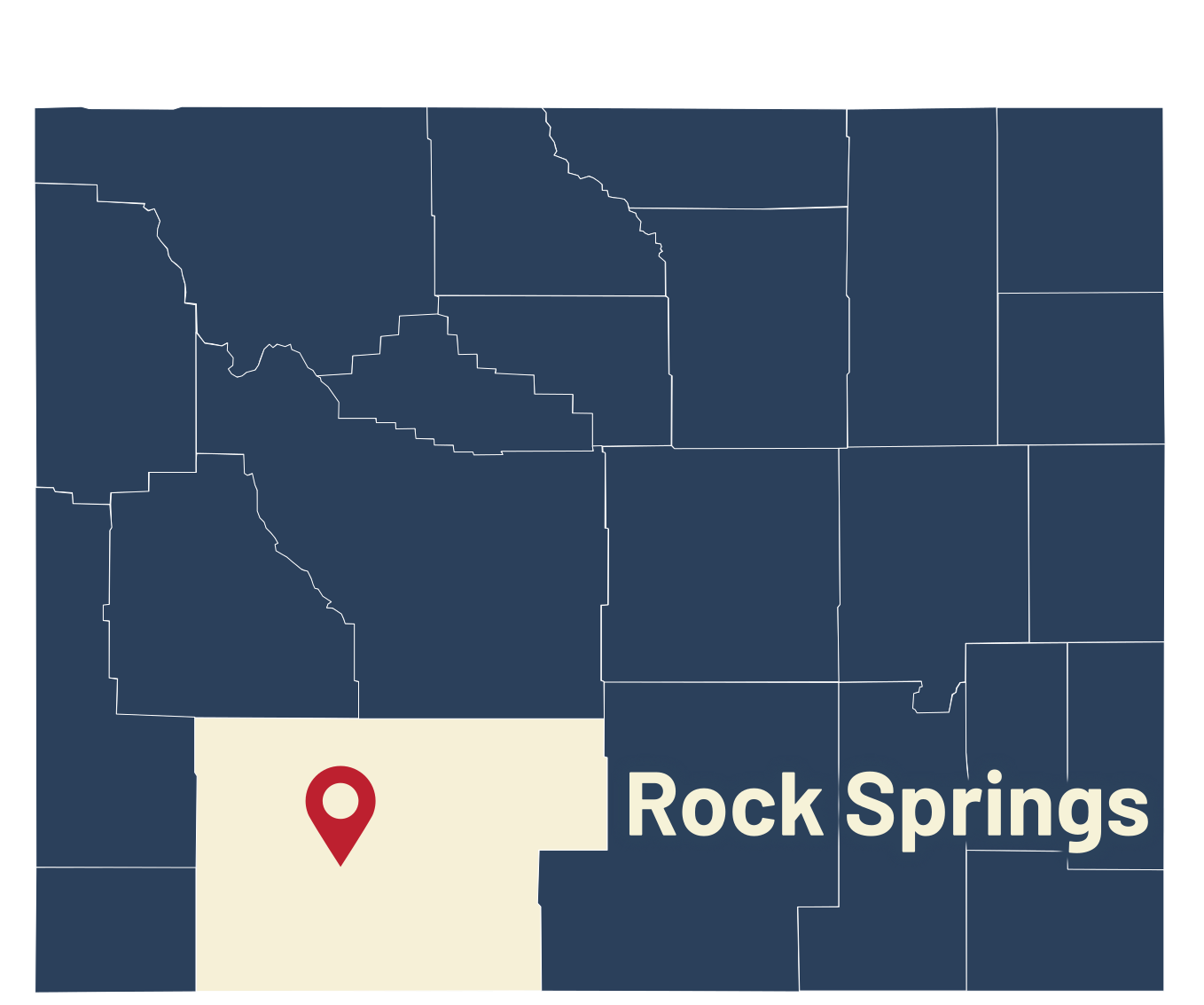
ROCK SPRINGS — A controversial plan to manage 3.6 million acres of federal land in southwestern Wyoming finalized in the waning days of the Biden administration is back under review.
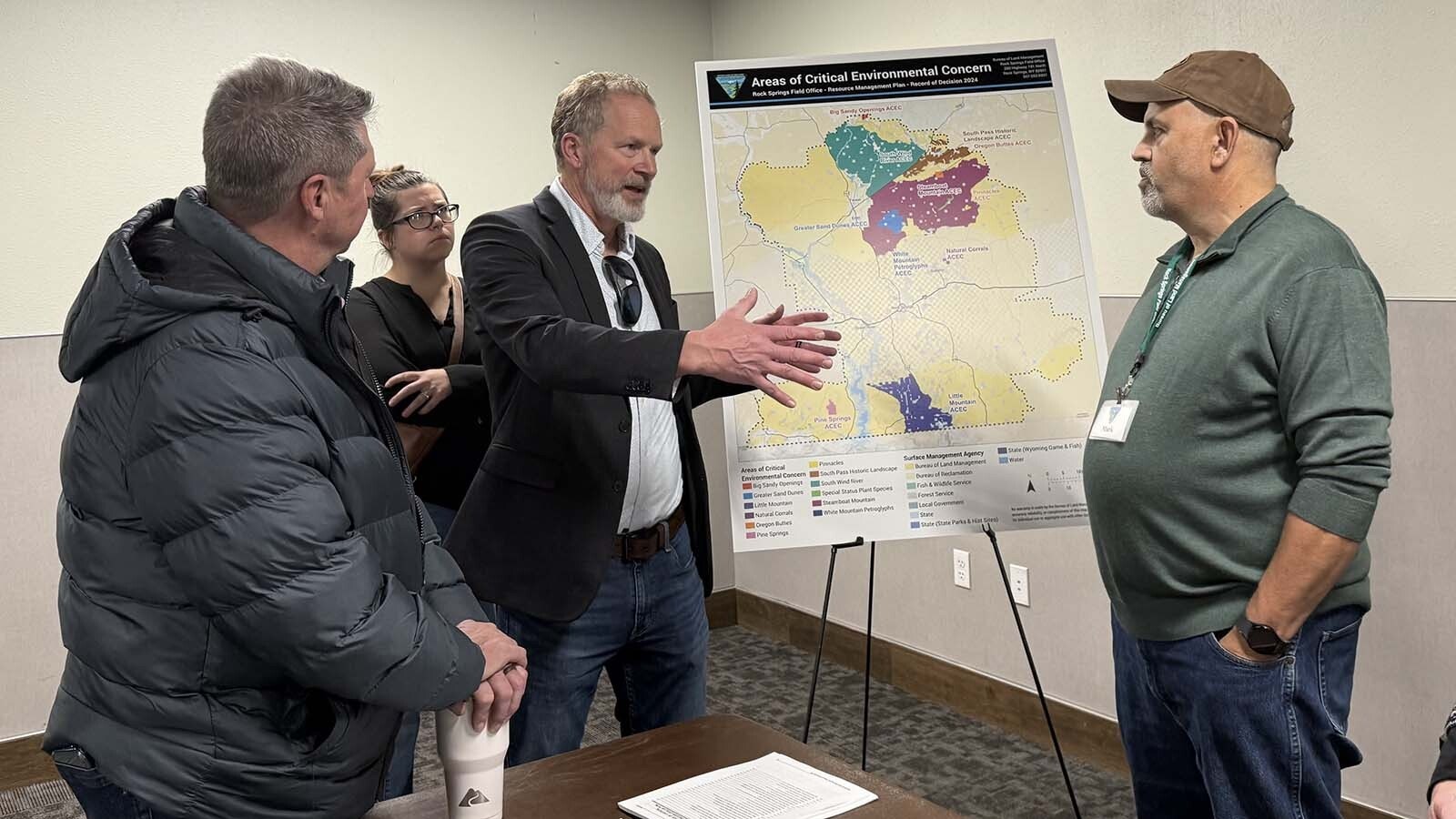
Now the Trump administration’s promise to amend the Rock Springs Resource Management Plan to open more opportunities for resource development drew residents and local officials Tuesday to the Sweetwater Events Complex.
The Bureau of Land Management is considering targeted amendments to the plan, which governs huge areas of public land in Sweetwater, Sublette and Fremont counties.
The original 2024 plan drew intense backlash across Wyoming, where residents, lawmakers and industry groups argued the new land designations, trail buffers and use restrictions went far beyond what had been discussed during years of public meetings.
Counties passed formal resolutions opposing the plan, and thousands of comments were filed urging the BLM to withdraw or revise large portions of it.
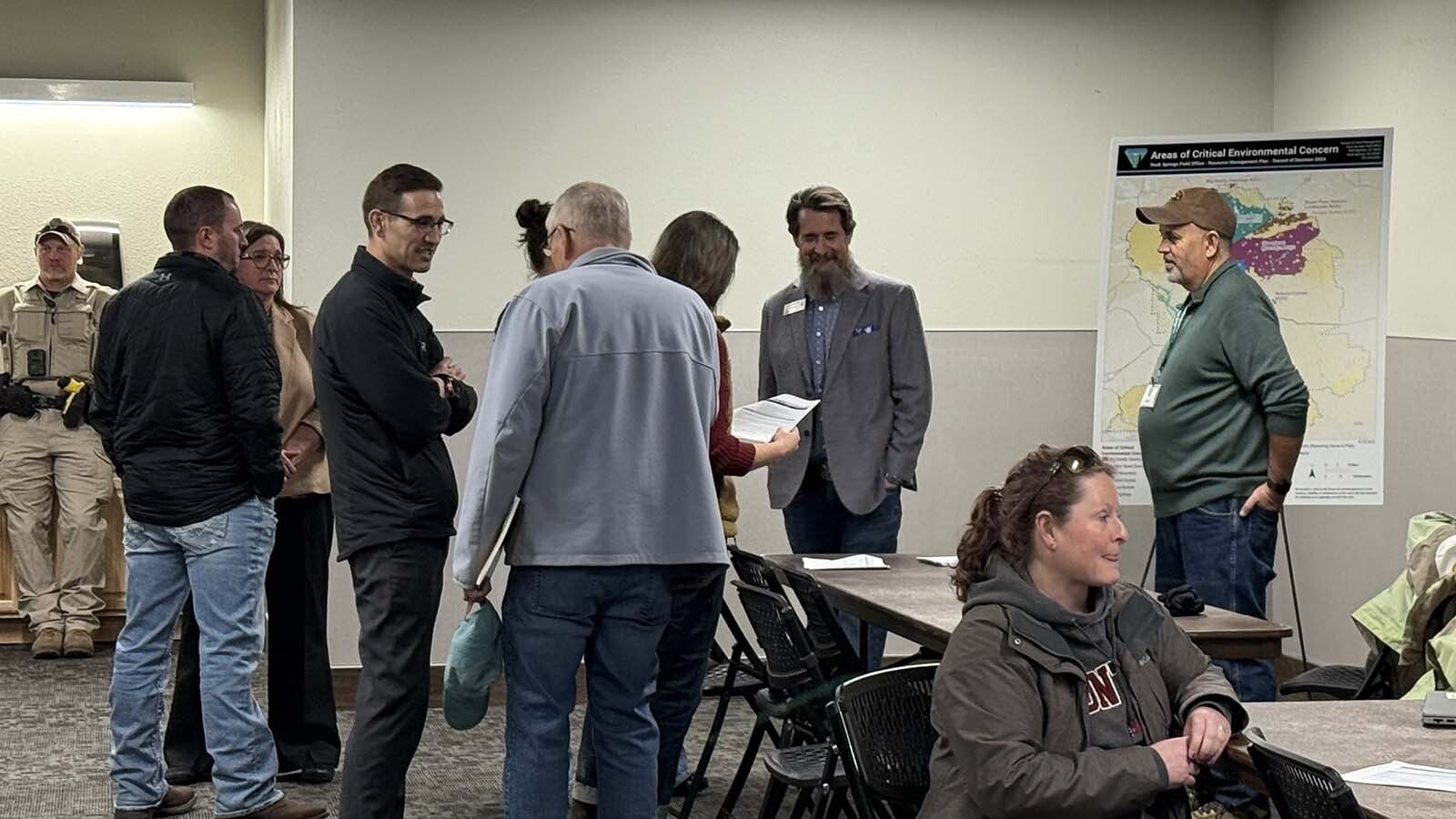
Tuesday’s open house was held to gather public input about possible amendments to the current plan, allowing attendees to identify concerns they want the agency to analyze.
With no proposed alternatives presented, attendees used the meeting to flag what they want reconsidered, including large Areas of Critical Environmental Concern (ACECs), expanded trail corridors, and layers of land-use restrictions they say extend beyond what the landscape and available data justify.
In the meantime, until it’s amended, the plan is active.
“This resource management plan is in place and in full force and effect,” said Kimberlee Foster, field manager for the BLM Rock Springs Field Office. “If we do nothing, then we keep the management we currently have in place that got signed in December of last year.
“We’re not reopening the entire plan or starting from scratch.”

‘Targeted’ Changes
Instead, Foster said, amendments to the plan will be narrowly focused.
“The changes are targeted for special management areas,” she said. “We have areas of critical environmental concern, we have five special recreation areas, and we have the National Historic Trails corridor.
“We’re going to re-look at all of those to determine should they be designated as special management and how should they be managed?”
The review is being conducted in response to a Trump administration executive order directing federal agencies to reassess policies that may unnecessarily restrict domestic energy and mineral development.
A related Interior Department order also identified the Rock Springs plan for reexamination.
Foster said Tuesday’s open house was to gather public input before any amendment options are drafted.
“This is the initial scoping process,” she said. “The purpose is to identify issues for analysis. What do people want us to look at? Are they concerned about wildlife habitat? Are they concerned about recreation?
“Do they want us to look at more oil and gas development in certain areas? We haven’t developed any options yet, because we’re just getting started.”
‘This Needs To Be Reevaluated’
Unhappy with the current RMP, local officials said they would prefer a broader reevaluation.
Still, they say this process will at least allow them to make what they consider some necessary changes to the plan, especially related to minerals extraction.
“This needed to be reevaluated,” said Sweetwater County Commissioner Island Richards. “There’s room for improvement, and this is an opportunity to get some of our concerns looked at again.”
Richards said many local comments during the original planning process were never reflected in the final recommendations.
“A lot of the issues we raised were ignored,” he said. “This time around we’ve been instructed not to refer back to previous alternatives, so now this is a chance to submit new comments and get things reconsidered.”
Among the most common concerns raised Tuesday were objections to several types of special land designations included in the 2024 plan, particularly ACECs.
ACECs are federally designated areas meant to protect specific environmental, cultural, scenic or wildlife values.
Officials said the problem is not the concept itself, but the size and scope of some designations added or expanded in the most recent plan, along with wide buffer zones layered over roads, trails and existing uses.
“I think the ACECs are a little too large,” said Sweetwater County Commissioner Taylor Jones. “I think they need to be reassessed. They’ve got 10-mile corridors over trails. That’s excessive, and it needs to be data-driven.”
Too Restrictive
Eric Bingham, Sweetwater County’s land use director, said the county will push for reducing or eliminating newer ACECs added under the 2024 plan.
“The BLM doesn’t have the data to justify how much those areas were expanded,” Bingham said. “If you reduce those areas, that’s how you deregulate the current plan and open the door to more responsible development.”
Bingham also pointed to Visual Resource Management (VRM) classifications as another layer constraining future use.
The classifications limit how much industrial activity can alter the landscape’s appearance.
“There are VRM levels that go from essentially no restrictions to almost wilderness,” he said. “Large portions of the Red Desert are sitting in very restrictive categories.
“That limits oil and gas, affects right of way access, and even impacts whether the county can realign a road.”
The problem isn’t just one designation, but how restrictions stack on top of each other, Jones said.
“The BLM layers these designations,” he said. “If you reduce ACECs, that should also trigger changes in things like visual resource management, right-of-way exclusions and mineral leasing restrictions. Otherwise, you don’t really fix the problem.”
‘Pretty Much Useless’
Residents who turned out Tuesday echoed the calls of their elected officials, wanting to see more energy development and multi-use access.
“I do want to see some changes from what it was before,” Gordon Scott said. “They cut way back on the oil industry. Trona and everything tied to it was also more restricted.”
“I’m not for making a big wilderness in the desert out there and not letting anybody use it,” he added, pointing to existing wilderness study areas and proposed additions. “Why shut it down to the public and make that land pretty much useless?”
His wife, Gale Scott, said she wants to see sand dunes and other popular areas “left open for people to use” while still allowing hunting and energy development.
Locals also raised concerns about recreation enforcement under the current plan.
One official mentioned a rider who was ticketed after BLM posted a “road closed” sign in the middle of a two-track before the RMP was even in effect.
“They put a sign in the middle of a two-track road and closed the road after the guy went through,” Jones said. “You could see the fresh dirt around the bottom of the sign.
“The last thing people want is to get shut out of places they’ve always used. Most folks just want to recreate, hunt, or ride without worrying they’re suddenly breaking a rule.”
Despite the criticism, county leaders said they are “cautiously optimistic” that the review process will allow them to revisit a plan they believe could significantly impact the region’s economy if left unchanged.
“I do think we’ll see some positive changes,” Jones said. “Based on the executive orders and the direction coming out of Washington, I’m optimistic — cautiously optimistic — but optimistic.”
Bingham echoed that sentiment.
“We’ve got the right people in place now,” he said. “The administration has been clear they want multi-use and energy development. The question is how that filters down to the local level.”
How To Comment
Foster said comments at this stage should focus on specific concerns rather than general support or opposition.
“If there’s a place someone is passionate about — whether it’s recreation, habitat, trails or energy — tell us exactly what you want us to analyze,” she said.
Public comments on the Rock Springs Special Management RMP Amendment are being accepted through Dec. 18.
People can submit comments online through the BLM’s National NEPA Register page and click “Participate Now” or by email.
“We learn something new at every meeting,” Foster said. “That’s why this input matters at the scoping stage.”