TJ Doan has been hooked on Teslas ever since a co-worker gave him a ride in one eight years ago. The Cheyenne IT consultant now owns a Cybertruck, which he loves so much he picks up Lyft riders on weekends just for the excuse to drive it around town.
When asked whether he would want a Chinese EV if they were available to Americans, though, his answer was simple.
“Oh, heck no,” Doan told Cowboy State Daily.
Calling himself a “Tesla fanboy,” Doan said it would be a hard sell to convince him that a Chinese manufacturer offers a superior product.
“It'd have to be a better ride, cheaper price,” Doan said. “It better have full self-drive already, which no one's going to win that race except for Tesla.”
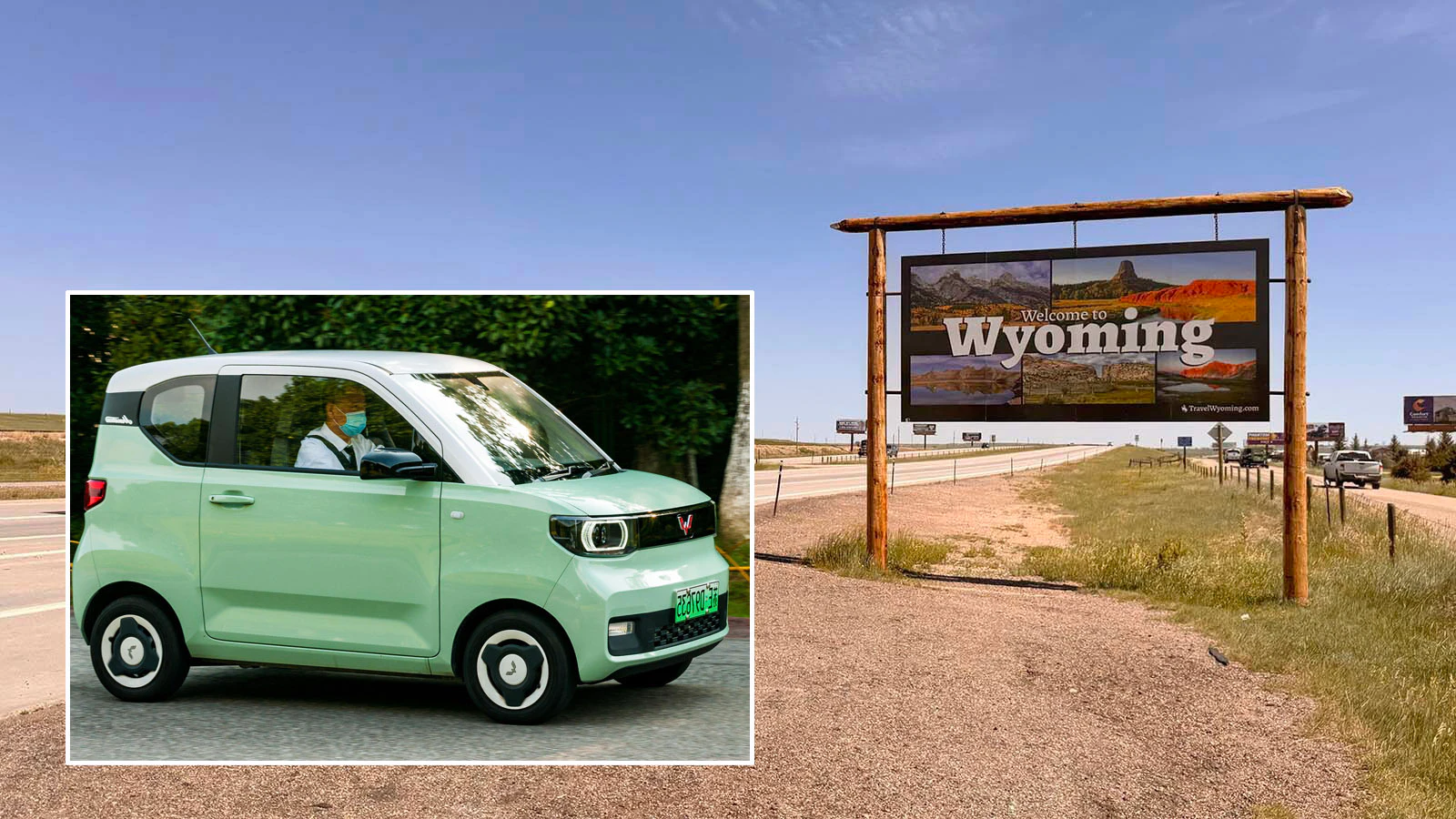
Chinese electric vehicles aren’t available in the United States yet but they are headed to Canada, and President Donald Trump has said he'd be fine with Chinese automakers building them in the U.S.
While Doan said he wouldn’t buy one, others can see the potential.
Jason Bloomberg, a Cheyenne-area hospitalist who owns three Teslas, isn't as sold on Elon Musk's EV empire being untouchable.
Though he's happy with his cars, Bloomberg told Cowboy State Daily he would consider purchasing a Chinese EV if they were available on the U.S. market, and he thinks others might, too.
“The impact of Chinese electric vehicles on the United States market is there would probably be more EV sales because they're less expensive,” Bloomberg said. "But there's a lot of hurdles to overcome.
"There's economic protectionism. The idea that we have an open, free market is a bit of an illusion when we have the government saying what you can and can't import in terms of consumer goods that are readily available in other countries.”
‘We’re Stubborn Here’
Under a Biden-era regulation, Chinese automakers are banned from making or selling passenger cars in the U.S. Earlier this month, though, Trump signaled he might want to change that, telling Fox News that he was open to allowing for production of Chinese cars domestically with U.S. workers.
“I’m not knocking Chinese cars,” Trump said.
That openness drew pushback from more than two dozen House Democrats, who urged Trump to keep the restrictions in place, and from a coalition of automakers including General Motors, Ford and Tesla, which wrote to the White House asking that Chinese carmakers stay locked out.
Meanwhile, Canada cut a trade deal with China in January that allows a limited number of Chinese EVs in exchange for relief for Canadian farmers.
Whether the U.S. follows Canada’s footsteps, Doan said that he doesn’t see Wyomingites pushing for Chinese EVs. Most, he said, don’t even want an American EV.
“We're stubborn here,” Doan said. “That’s just the way it is.”
Previous data backs that up. Wyoming ranked 47th in the nation for EV market share at the end of 2025, according to the Alliance for Automotive Innovation. Just 2.3% of new vehicles sold in the state last year were electric, compared with 9.6% nationwide.
Bloomberg, who has lived in Wyoming since 2001, said he doesn't see that gap as a matter of stubbornness or residents deciding an EV isn't right for their lives, but instead it’s due to political ideology.
“This is the the state that has been most supportive of a certain type of agenda that opposes electric vehicles and renewable energy,” Bloomberg said. “This is a state that has, for many years, had substantial financial input from the fossil fuels industry. So there's a bias there.”
But the latest numbers indicate a possible turning of tides. In 2024, only 800 EVs were registered in the state.
Mark Horan, public-affairs specialist for the Wyoming Department of Transportation, told Cowboy State Daily on Tuesday that there are roughly 2,500 all-electric vehicles and more than 5,800 EV hybrids registered in the state.
‘Eat Our Lunch’
As more EVs hit Wyoming roads, Rep. Mike Yin, D-Jackson, who founded a company that runs EV charging stations for travelers, told Cowboy State Daily he’s worried American manufacturers are falling behind their Chinese counterparts.
“It's something I've brought up with U.S. manufacturers,” Yin said. “We need to be competing better on not just EVs, but all sorts of things where they're going to eat our lunch if we don't do anything about it.”
Yin pointed to the value Chinese EVs offer for the price and how quickly Chinese companies are rolling out new technology. Chinese automakers are able to do this because they make more of their own components in-house, which streamlines the process and cuts costs, according to the research group Rhodium.
“U.S. automobiles are made from parts from hundreds of different suppliers,” Yin said. “So iterating quickly I think has been one of our weaker points in U.S. manufacturing, and something that car companies need.”
Yin said he thinks American demand for EVs will hinge on where gas prices settle over the long term. Whether the federal government lifts the restrictions that keep Chinese EVs off the U.S. market is out of his hands as a state lawmaker, he added.
Patrick Lawson, who owns Wild West EVs and runs about two dozen chargers in towns such as Riverton, Cody and Dubois, said he thinks Chinese EVs will reach the U.S. eventually, even if Washington isn't ready for them.
“I think it’s only a matter of time,” Lawson said. “They’re going to get here, and I think it's going to be a wake-up call for all the the legacy automakers to get with the program.”
Some automakers, like Ford, might be waking up already.
Ford CEO Jim Farley said on a podcast last year he was shocked and humbled by how far ahead China's EV makers were when his engineers took their cars apart. He said that pushed him to overhaul the company and convinced him Ford has to stay in the electric game.
“They’re afraid of the the Chinese ones,” Lawson said of Ford’s EV shift. “They think they're going to eat their lunch if they ever get it to America.”
Even if Chinese EVs do arrive in the U.S., Lawson warned that Wyoming's infrastructure might not be ready for them. He said even some ordinary fast chargers have been slow to come online, with stations in Rock Springs and Lander sitting on site for roughly a year while they waited on the utility to deliver the transformers to power them.
While some Chinese EVs claim to charge in a fraction of the time as Teslas, Lawson pointed out that kind of speed takes serious power. Most fast chargers in Wyoming deliver about 150 kilowatts, he said, while the newest Chinese stations run on a megawatt.
“Some of these towns here, all they have is a megawatt,” Lawson said. “So putting in a megawatt charging station is going to require some upgrades to the infrastructure.”
Emma Jane Jackson can be reached at emma@cowboystatedaily.com.