
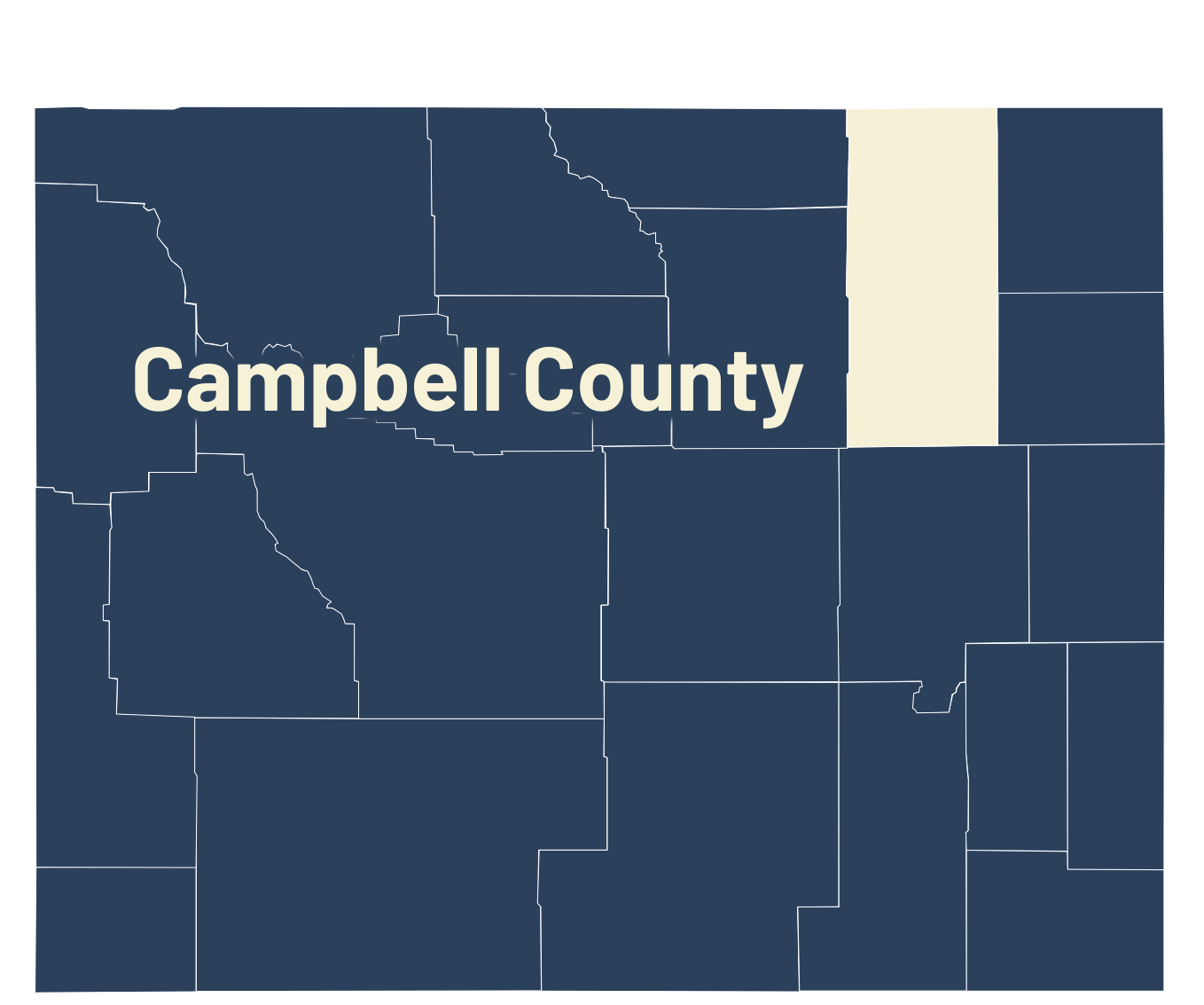
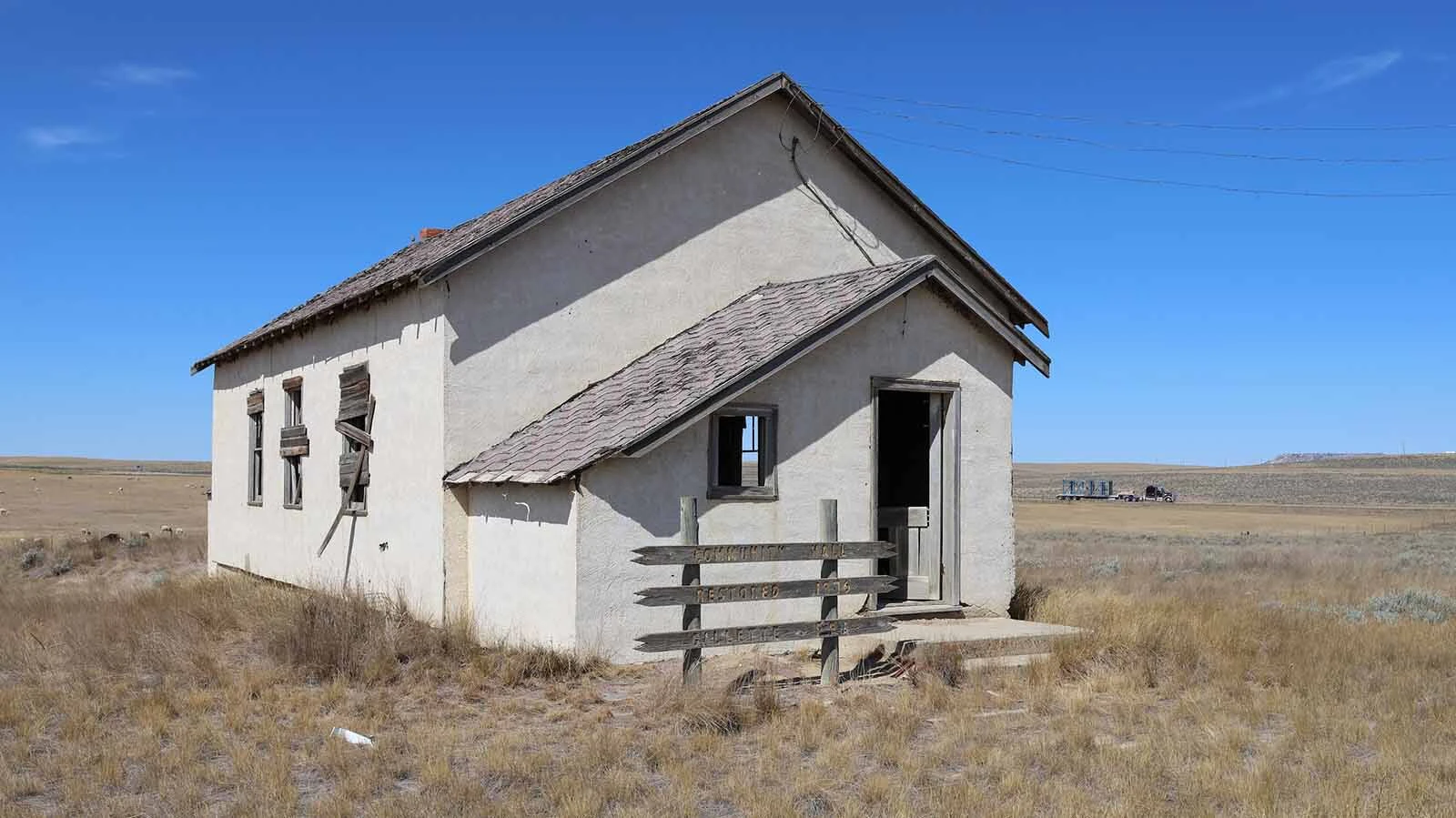
Renovations at the Pine Tree Community Hall in southern Campbell County when Gerald Ford was president have long been undone.
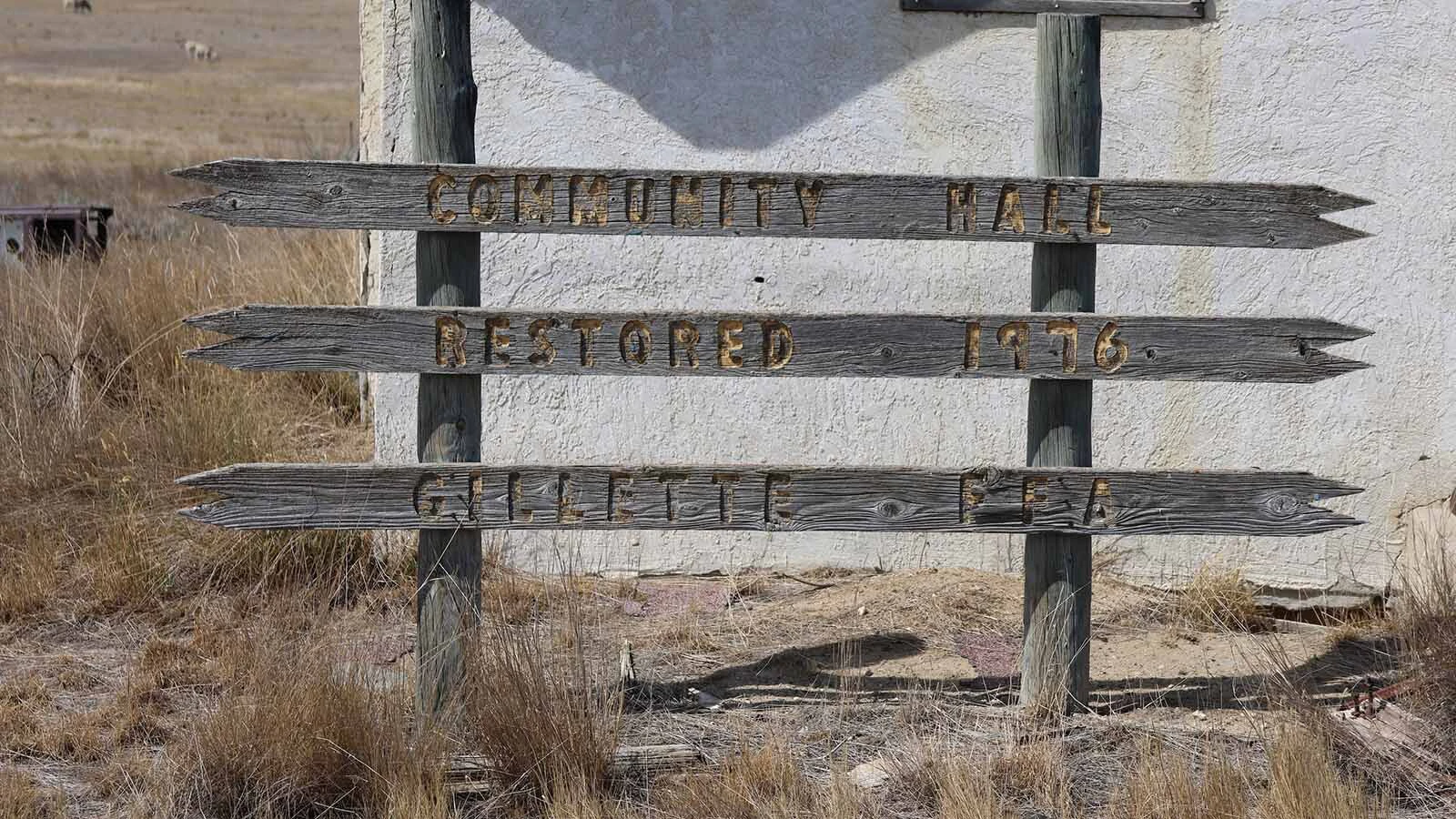
The sign outside declares the Gillette Future Farmers of America chapter did restoration work on the single-story structure with a basement in 1976, the nation’s Bicentennial.
Now the windows are gone, the door stands open and a fence protects the county-owned property from any intruders.
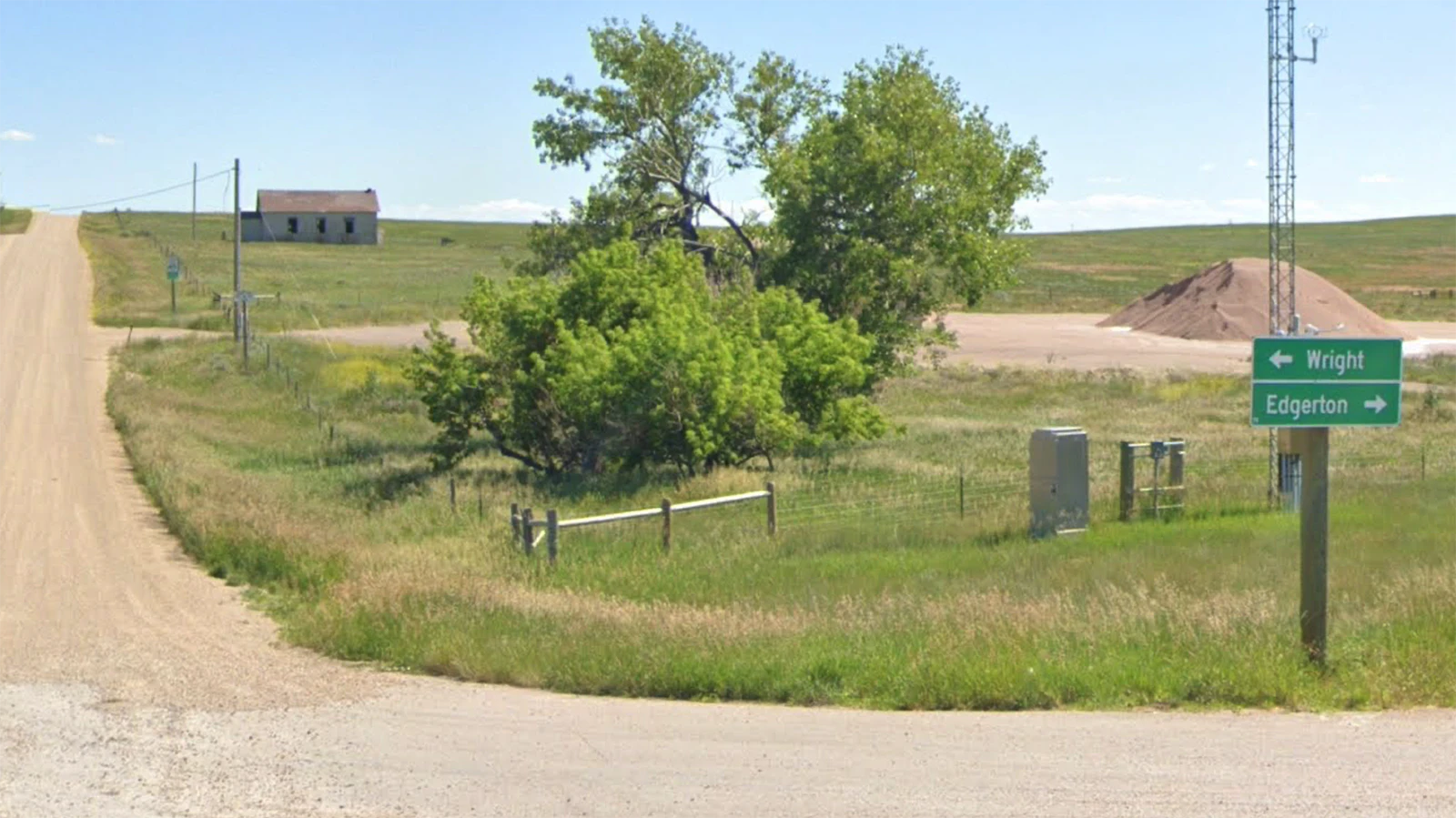
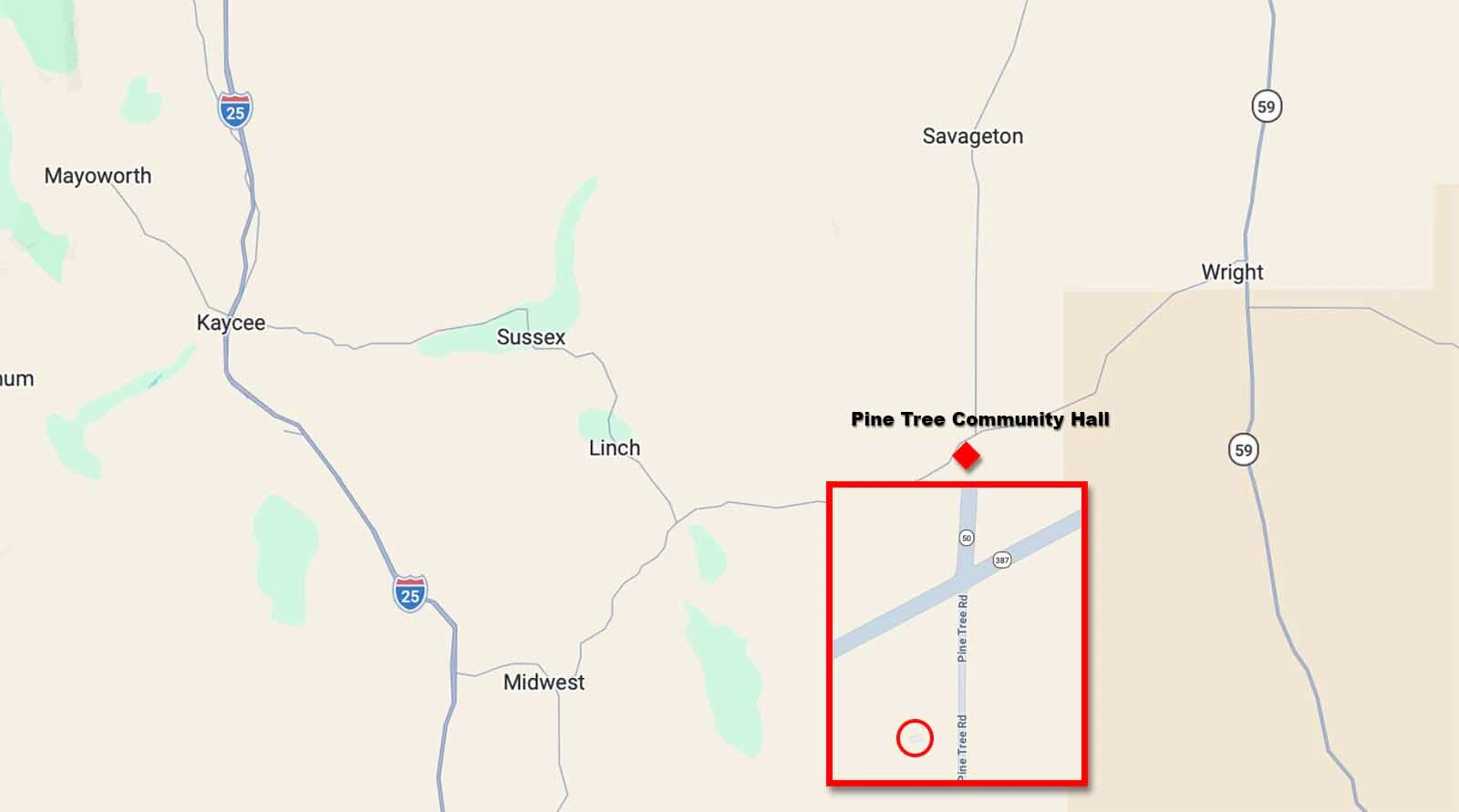
Yet, the little building a quarter-mile south of the intersection of Wyoming Highways 50 and 387 is not forgotten.
Wright Centennial Museum Director Deb Hazlett said the structure caught her eye a few years ago.
She said she has looked into trying to move it next to the museum but is in a “holding” state due to lack of funds.
“I would love to have it as a piece of history, and would love to expand the museum,” she said. “We would have to have the building stabilized and make sure the engineers are OK with it.”
Hazlett has never been inside the structure.
Local rancher Laura Roush has.
In the 1990s she wanted to move it onto her family property.
More recently, with a young Savageton couple, she looked into moving it north on Highway 50 about 15 miles to transform the forlorn building into a community hall once again.
Those hopes were dimmed when a mover examined the wood and stucco structure.
Robert Roush, 93, Laura's father-in-law, was alive when his dad, grandfather and uncles helped raise and maintain it.
The building once represented a gathering place for ranch families, a ladies club, 4-H members, school spelling bees and Christmas programs, elections and some church services.
Devils Tower Wood
“It was all built out of rough, sawn lumber from the Devils Tower area,” Robert Roush said. “It was pretty well built. It wasn’t insulated, of course, but it deteriorated when the windows (were) broken out in a hailstorm.”
The original stucco was put on by a hired specialist, he said.
Robert Roush did not recall the exact date of the storm, but boards were placed over the window holes. Those boards have since been dealt with by the high winds.
The hall was funded by local women who put on skits and fundraisers to gather money for local ranchers to build it.
Originally, it was supposed to be a church, with the basement for community events.
“But there were a few people in the community that decided that they’d have a dance upstairs and they did,” Robert Roush said. “It kind of tore the community up for a while, because they thought it was a church.
"But then it gradually went into a community hall. They did have a few church services in it, but mostly it was just Christmas programs, school (events), and things.”
He estimated that the hall was built in the late 1930s.
Campbell County Rockpile Museum Director Robert Henning said the museum’s file on the structure was thin.
A history written by Pat Moore recorded that the “Pine Tree Club” of ladies got its start in the 1920s as the “Kensington Club” where local ladies would sew and visit in each other’s homes.
The club changed its name to the Victory Club and made quilts, and in the 1930s it joined the Extension Service.
The file states the club members performed a play to help raise funds and that families in the Pine Tree area donated lumber and nails to build the hall.
Moore reported that the structure went up sometime between 1936 and 1938.
Land was donated by Frank and Esther Middaugh, who ran a gas station and store at Pine Tree Junction — the meeting of the two highways.
Church Use
Moore reported that the building was used for church services.
Gerald W. Geer was a roving minister in the 1920s for the Pine Tree, Savageton, and Bundy communities, and preached in the Pine Tree Community Hall. Geer used the hall for services.
A minister from Casper last used it in 1976.
In the 1940s, the ladies club reorganized and became the Pine Tree Club. Fundraisers in the 1950s helped with repairs, and a well was installed and tile placed on the floor.
Robert Roush said originally the structure had a wood floor in the basement. He remembers working with other neighbors, probably in the late 1960s, to put a cement floor in it.
His brother-in-law had a cement mixer on the tractor and Robert Roush remembers his job was scooping sand from a truck into it.
The ladies’ club also paid to get a gas stove and heat installed. The well water was not worth the money.
“It wasn’t worth a darn. Poor water and not much of it,” Robert Roush recalled.
The rancher also remembers helping the Gillette Future Farmers of America club put a roof on the building in 1976. The ranch supplied trucks with racks and boards on top to help the teens start the shingles.
Laura Roush said her understanding is that as the ladies club members aged they wanted a “little bit more comfortable place for their meetings” she said. “They quit using it and went to town to restaurants to have their meetings.”
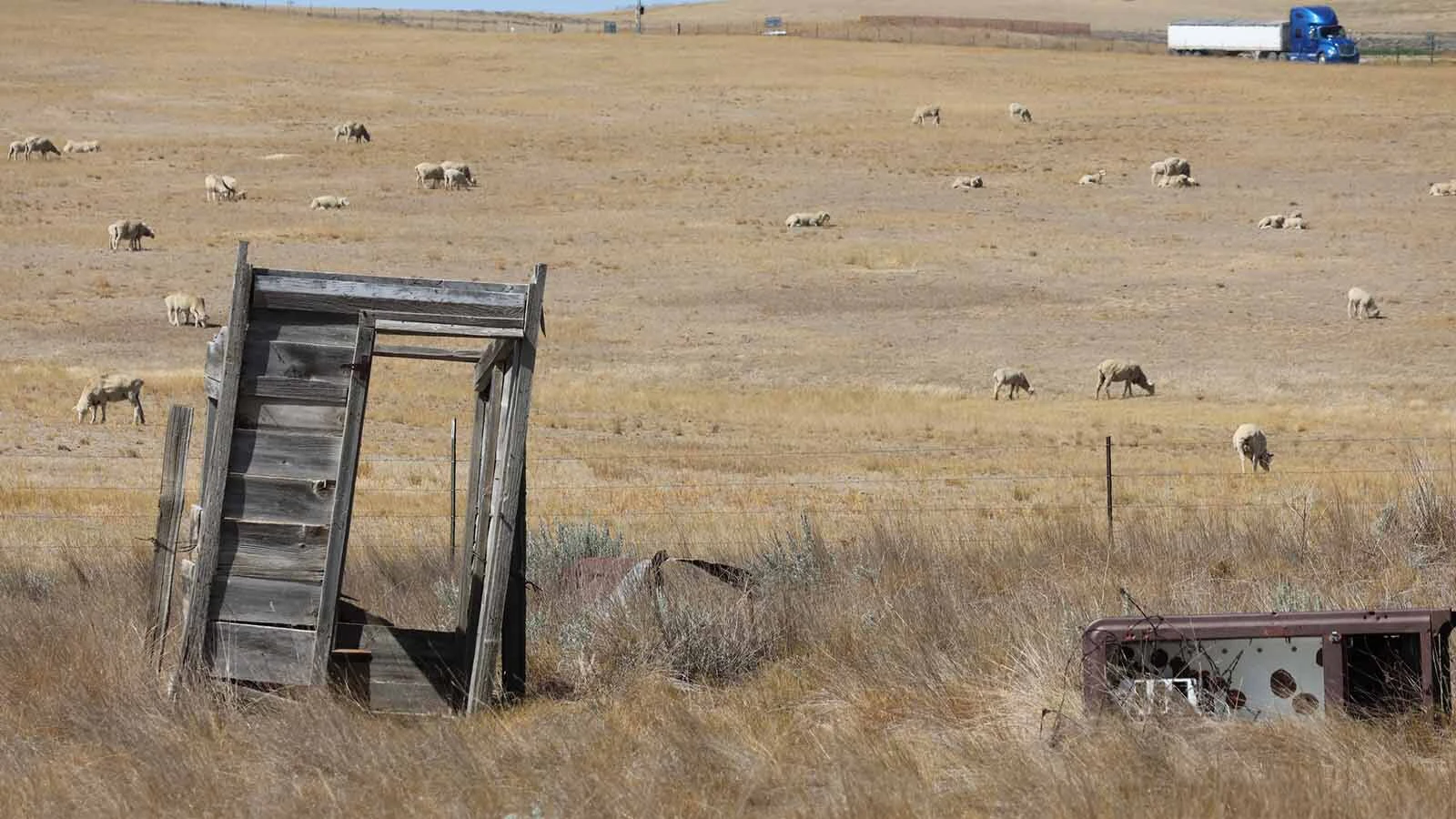
The outhouse was out.
Belles Ongoing
Hazlett said the ladies gathering is now called the Thunder Basin Belles and it continues today as a nonprofit.
They help supply “blessings in a backpack” for students, assist with food for funeral meals, and assist families going through difficulties in the region.
She said she spoke with county officials about the building because it sits on county land, and they were willing to donate the structure for a move to Wright.
The cost of insurance for the move and the museum’s budget has not allowed her to proceed further.
Laura Roush said she considered moving the structure to her ranch in the 1990s because they were in need of housing and she loves historic structures. That did not pan out.
More recently, a younger couple from Savageton, an unincorporated community on Highway 50, called her and suggested their region find a way to have another community center.
Immediately Roush thought of the Pine Tree Community Hall. A rancher was willing to donate a piece of land about 15 miles up Highway 50.
She said the entrance includes stairs on one side that descend to the basement. An area to hang coats was on the other side of the entrance area.
Inside the hall area is an open space with an elevated floor at one end.
When a South Dakota building mover was looking at hauling a building that once housed a Savageton bar to a ranch, she convinced him to take a look at the Pine Tree structure.
A small gathering of locals found the building in “rough shape.”
“The mover said, ‘Unless you are doing this for extremely sentimental reasons, I wouldn’t go into this because it's going to cost you a fortune just to rehabilitate it,’” Laura Roush said.
That was in addition to the cost of moving power lines to take it to a final destination.
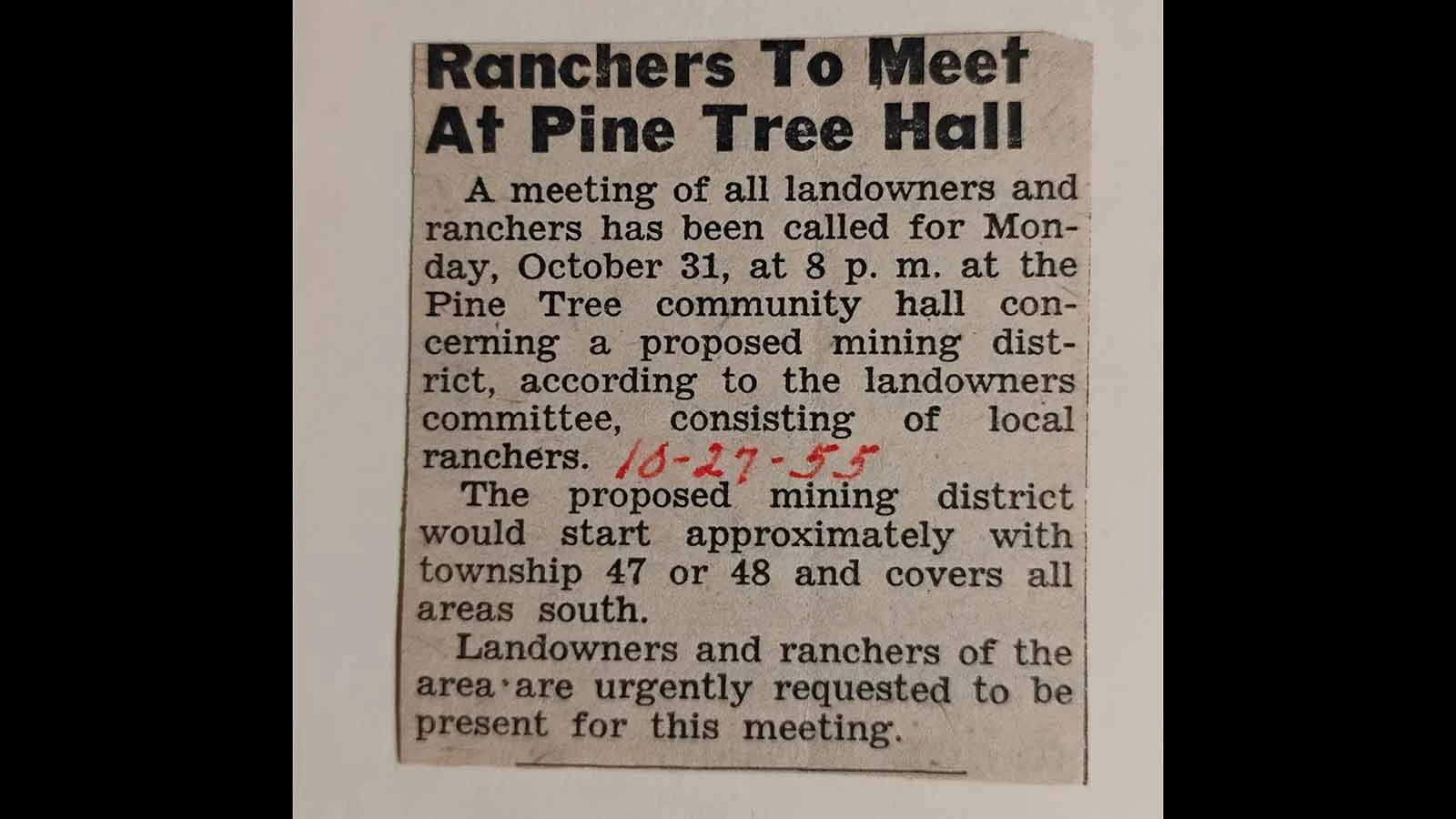
A newspaper clipping from 1955 about hall use. (Campbell County Rockpile Museum) 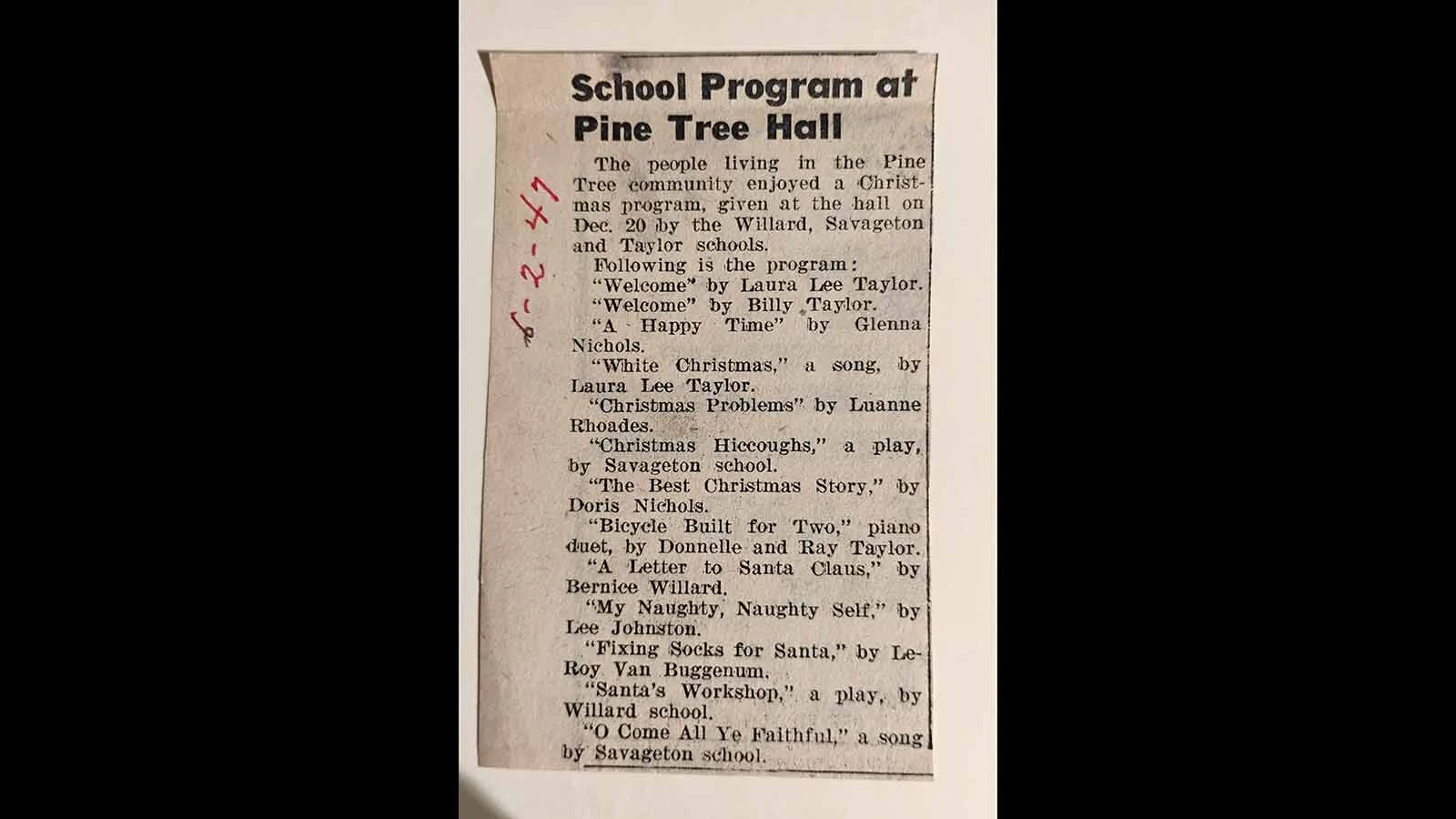
A Christmas program lineup from 1947 that was performed at the Pine Tree Community Hall. (Campbell County Rockpile Museum) 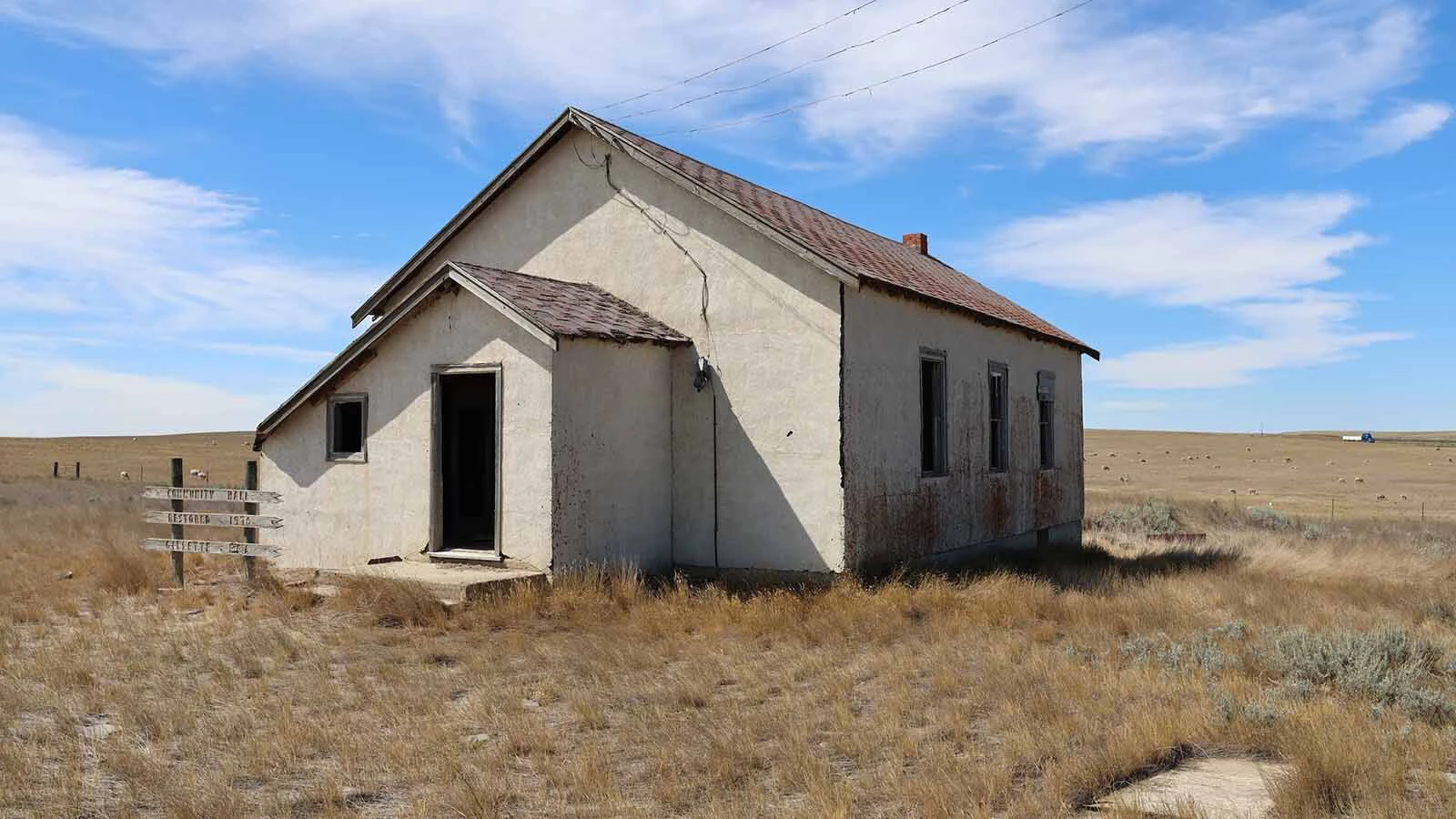
The Pine Tree Community Hall was built in the late 1930s with contributions from area ranchers and fundraisers from a ladies' club. (Dale Killingbeck, Cowboy State Daily)
Heavy To Move
Because the exterior walls are made of stucco, the mover said the structure would be really heavy and the stucco might have to be removed to transport it. And in that process the building “might crumble.”
Roush said talking with the community, she learned the older generation was interested in trying to save it but the younger generation was not. She pointed out that with the advent of social media, the need for a community center is not the same as it once was.
“These younger people, they are so busy with their own lives, and they can keep in touch with each other through Facebook,” she said. “Back in the day, those people had to get together to really know what was going on in each other’s lives.”
Contact Dale Killingbeck at dale@cowboystatedaily.com
Dale Killingbeck can be reached at dale@cowboystatedaily.com.


