

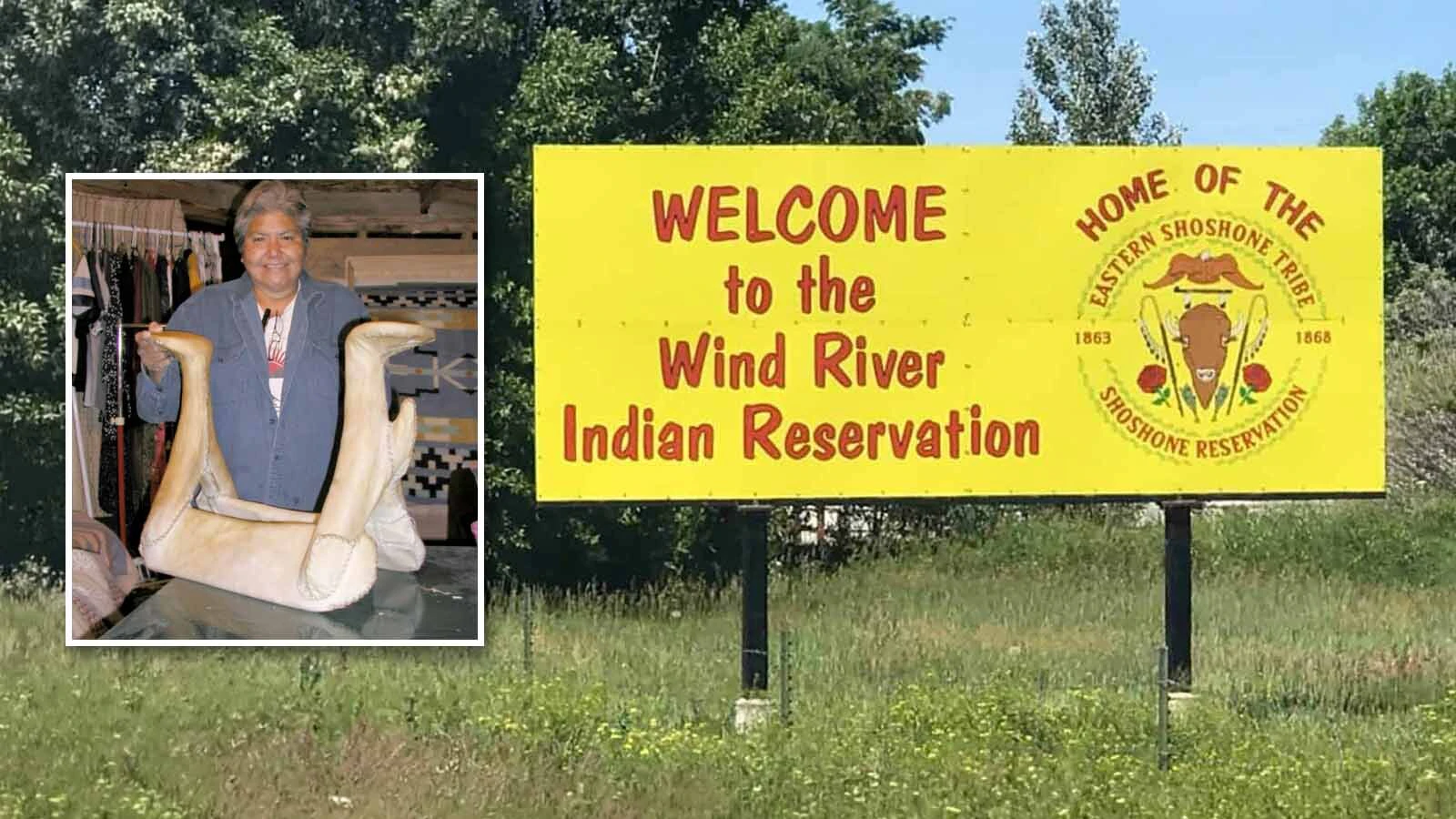
During the Corps of Discovery Expedition, Meriwether Lewis wrote in his journal, dated Aug. 24, 1805, about a saddle he observed Shoshone women using. He described how it was made of wood and covered with rawhide.
Lewis was impressed by how the wood would extend to a “considerable height.”
These saddles were ridden exclusively by women and the elderly. They also could be used to haul tipis from one camp to the next.
“It is made like the packsaddles in use among the French and Spaniards,” Lewis wrote. “It consists of two flat thin boards which fit the sides of the horse’s back.”
This Shoshone woman’s saddle had almost faded into obscurity until Reba Teran of Fort Washakie began to learn how to build them in the traditional way of her tribal ancestors.
In 2005, Teran apprenticed to master artist William Chippewa to learn how to make the saddles, according to the Wyoming Arts Council.
Two years later, Teran herself became the master artist, teaching her niece Georgietta Teran-Acebo traditional Shoshone saddle trappings.
Teran is now handing down the tradition to her niece Martha Baggs.
Teran grew up in a household filled with her native Shoshone language and surrounded by her ancestors’ art.
Her older sister Beatrice taught her to bead, and her brother, Julius Teran, a Vietnam veteran, encouraged her to learn their ancestral ways.
“He's the one that always told me to learn my culture,” Teran said. “He always encouraged me to learn our Shoshone language. I always remember him telling me to go to college.”
Julius was killed in a vehicle accident two years after he came home from the war, but his words remained with Teran. She carried his advice through school, which was her escape from poverty at home.
After getting her master’s degree in instructional technology at Utah State University, Teran returned home to take the job of cultural director for the Shoshone tribe.
It was while she was helping Beatrice and fellow Shoshone Manford Guina preserve their Native language that Teran became interested in also preserving the Shoshone saddles.
“I rode my aunt’s saddle in Lander back in the 1970s, and I always loved that saddle,” Teran said. “She had an old traditional parade saddle, and she let me use it.”
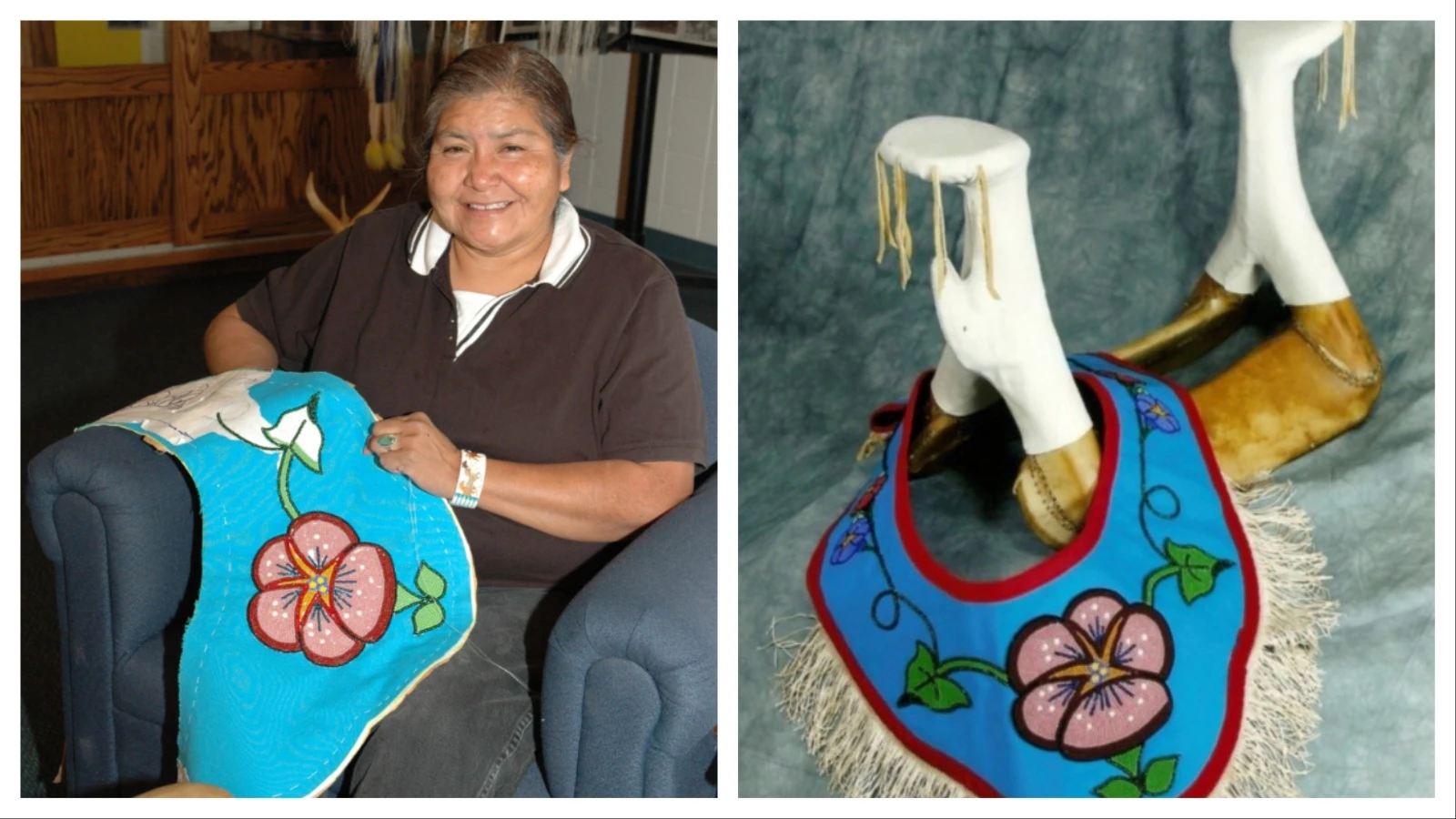
Mistaken History
The Shoshone saddle Teran has preserved was featured in many prominent paintings over the centuries but the true history was often muddied by interpretation.
A few artists apparently used samples of the women's saddles to recreate battle scenes and mistakenly placed warriors on saddles they would have been embarrassed to ride.
Frederic Remington and Charles M. Russell are two artists specifically called out for putting male warriors in high-horned women’s saddles.
In his Smithsonian study, “Man Made Mobile: Early Saddles of Western North America,” John C. Ewers believed the artists’ might have owned examples of women’s saddles in their studio collections and mistakenly assumed these represented a generic “Indian saddle.”
He writes that both artists “sometimes pictured male warriors using women’s saddles.”
According to Ewers, artist William R. Leigh’s dramatic painting of the Battle of the Little Bighorn is historically flawed because he depicted feathered, breechclout-wearing male warriors both riding and falling from high-horned women’s saddles.
An example of the saddle the artists would have used in their paintings is at the Smithsonian. It has an 1870 Wind River Shoshone saddle that belonged to a Shoshone woman identified as Mrs. Kakibah.
Its materials are listed as wood, mountain sheep hide/skin, rawhide, hide, pigment, iron nails and sinew, and its construction techniques include carving, bending, perforating, stitching and staining. It measures roughly 19 by 23 by 11 inches.
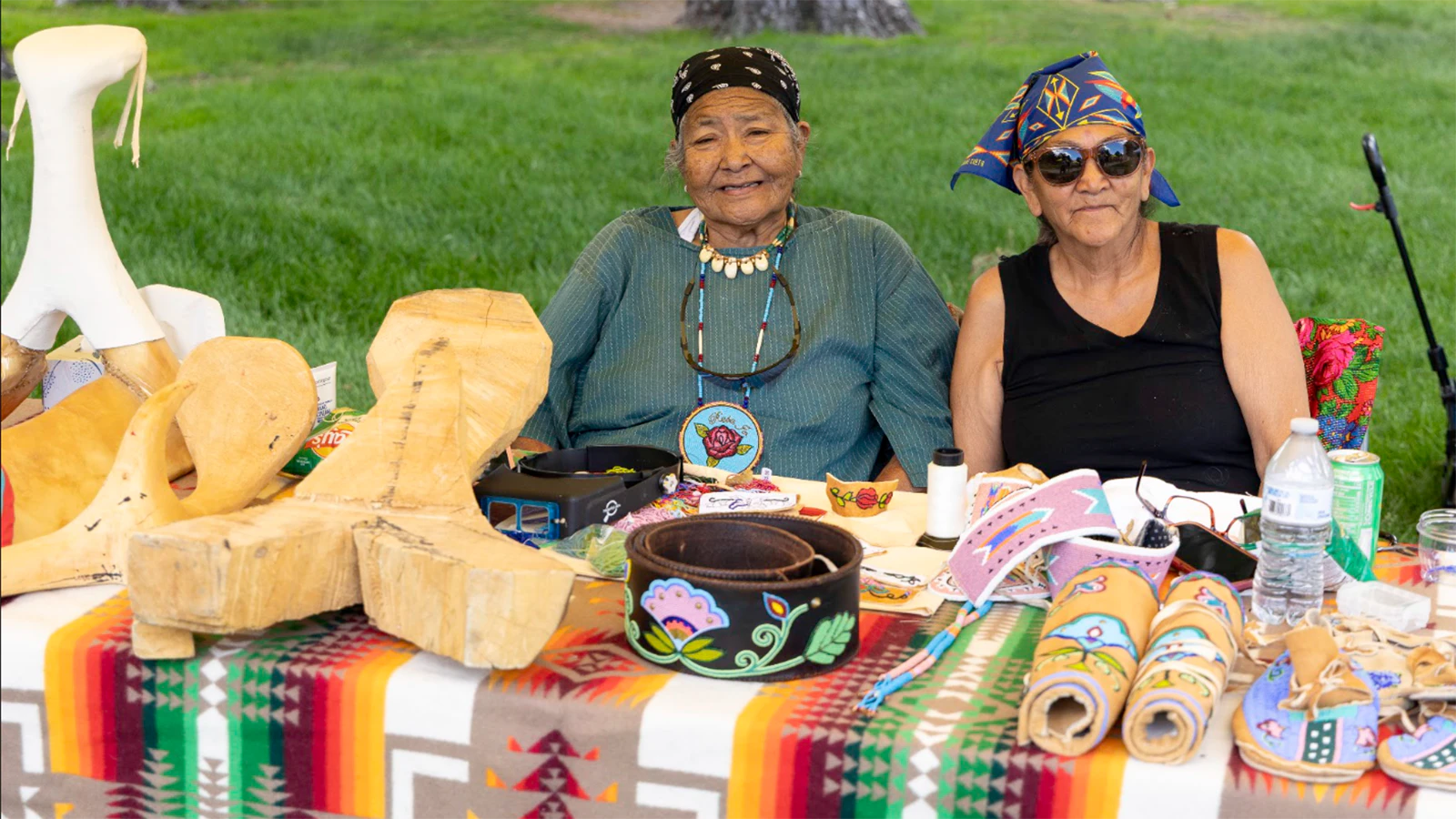
Reba Teran and Georgetta Acebo demonstrating beadwork at the Wyoming Folklife Festival, organized by the Wyoming Arts Council, in Cheyenne on July 4th, 2026. (Photo by Danica Mrozinsky via Wyoming Arts Council) 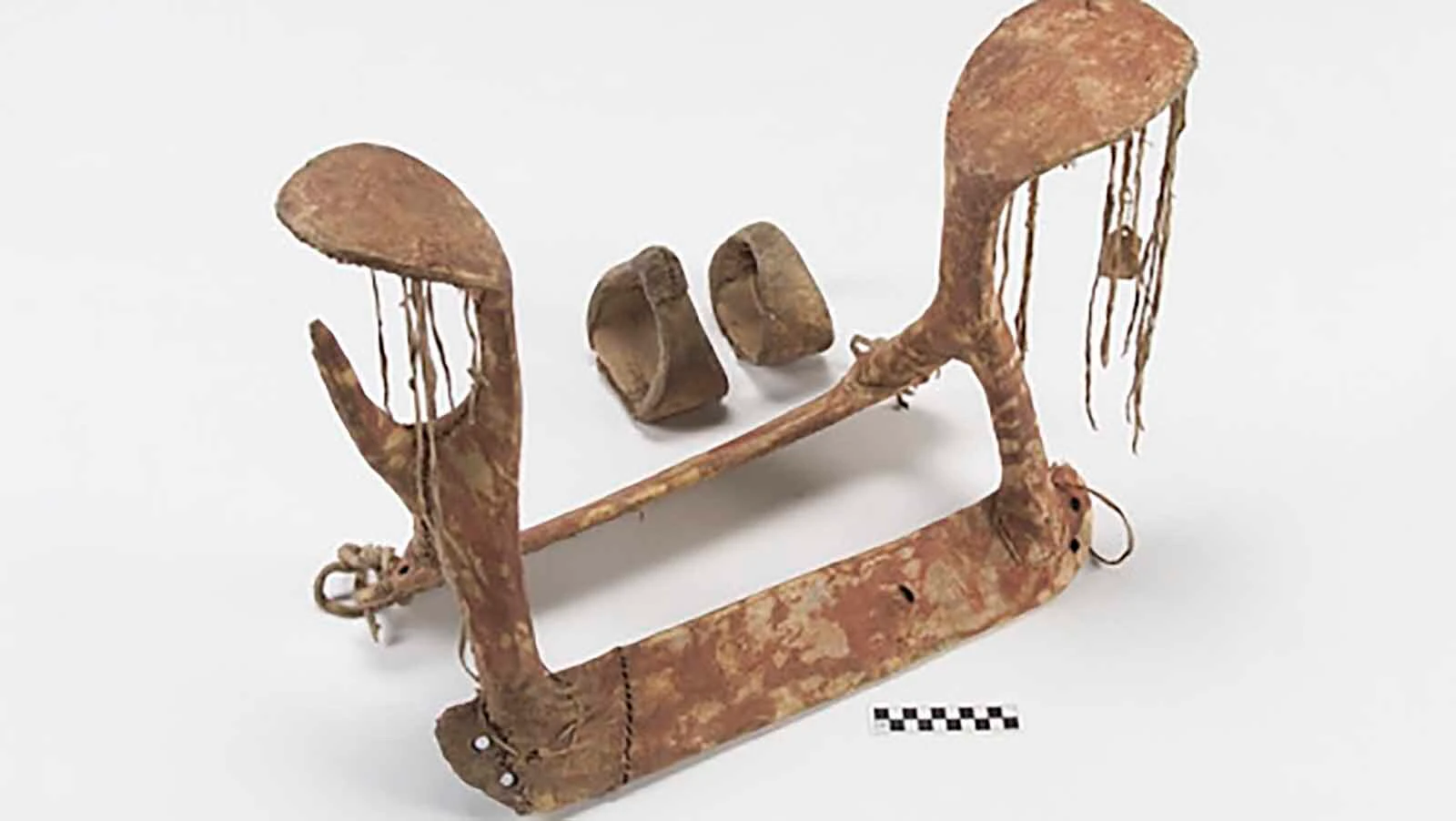
The Smithsonian has a Shoshone woman's saddle in its collection that was from the Wind River Indian Reservation in 1870. Since museums had these in their collection, Reba Teran had actual saddles to study as she brought the tradition of the woman's saddle back to her tribe. (Smithsonian) 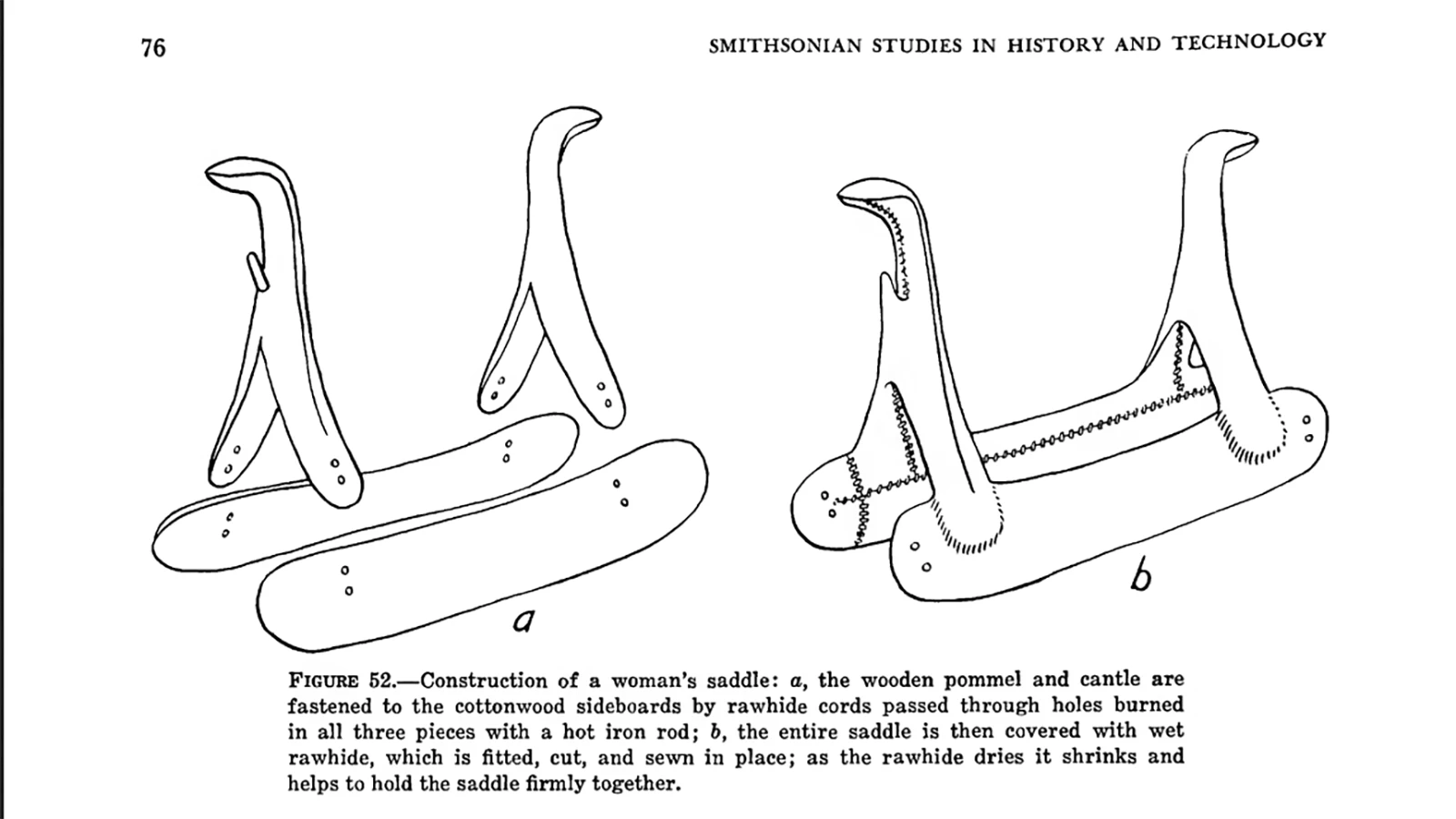
Historians at the Smithsonian have studied the Shoshone woman's saddle construction and have preserved as much history on the saddle as they could. This preservation has aided Reba Teran in her own art as she recreated the traditional art of saddle making from her ancestors. (Smithsonian)
Keep It Traditional
The preservation of this traditional saddle in museums is now enabling Teran to make her own authentic saddle.
While working at the Shoshone Culture Center at Fort Washakie, Teran saw a saddle that reminded her of the one her aunt let her ride all those decades earlier. She wanted to make her own in more of the traditional way than the one on display.
The rawhide at the center was pulled too tight and ripped, revealing 2-by-2s for the neck of the saddle along with modern screws.
“When we did our saddles, we did not use any metal,” Teran said. “It was all carved by sandstone and there was a lot of work put into them.”
When on a trip with students to the National Museum of the American Indian in Washington, D.C., Teran saw two traditional Shoshone saddles.
“They let me measure all the dimensions,” she said. “I took photos and tried to look at how it was made but they were under hide.”
Teran did discover that the saddles were delicate and looked almost like bones. On closer inspection, she discovered they were made from cottonwood.
Armed with this new knowledge, Teran was determined to make her saddles the traditional way.
She called her first saddle an “Amazon” because it was thick compared to the one she studied at the museum.
As she refined her technique, her saddles became delicate like those her ancestors would have made. Teran’s preservation work has been recognized by the Wyoming Arts Council and the Alliance for California Traditional Arts as valuable to preserving the culture of her tribe.
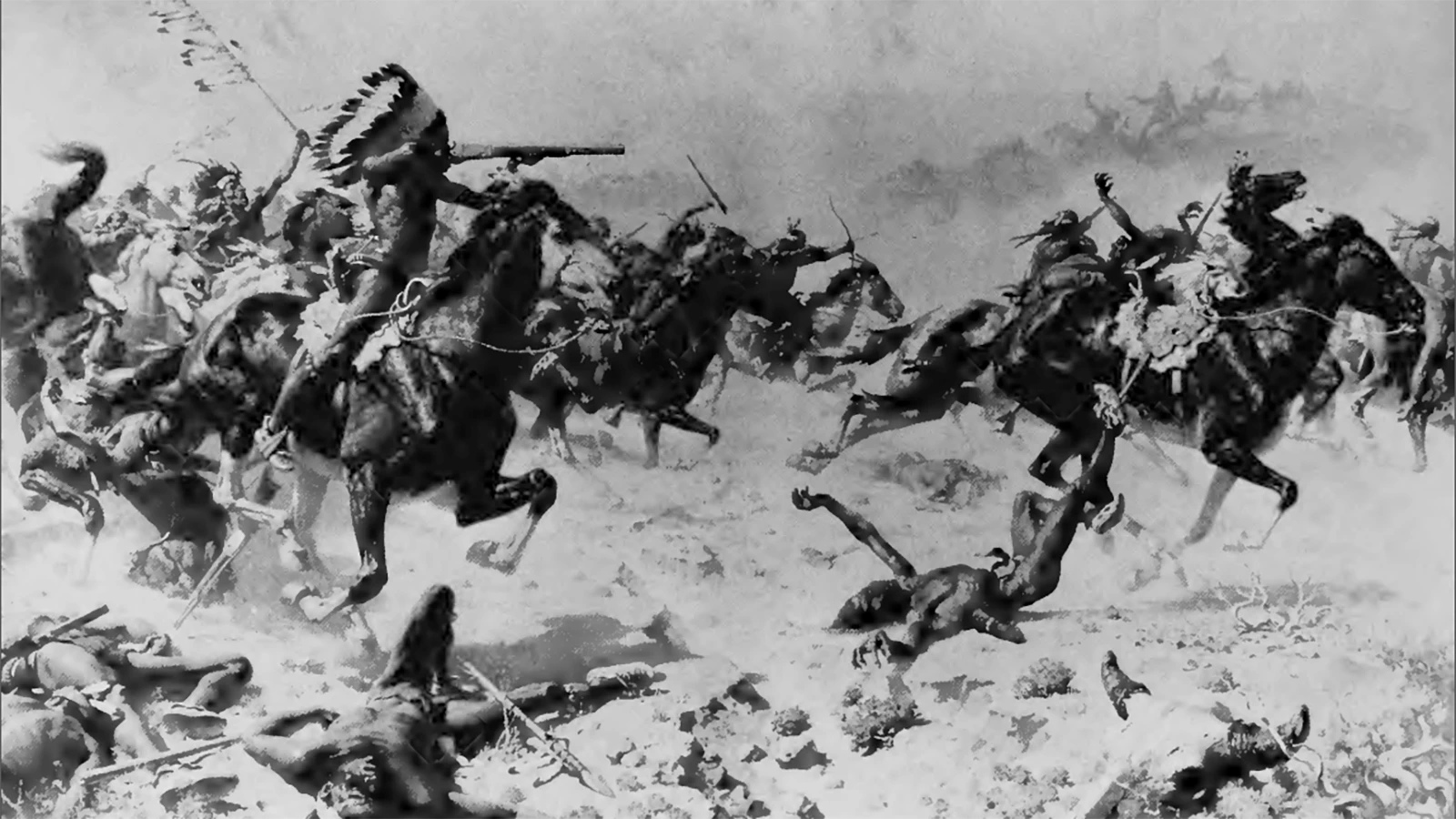
Over the years, famous Western painters have mistakenly used the high-backed woman's saddles in their art. Warriors would have been mortified to be depicted as riding these saddles that only women and old men rode. 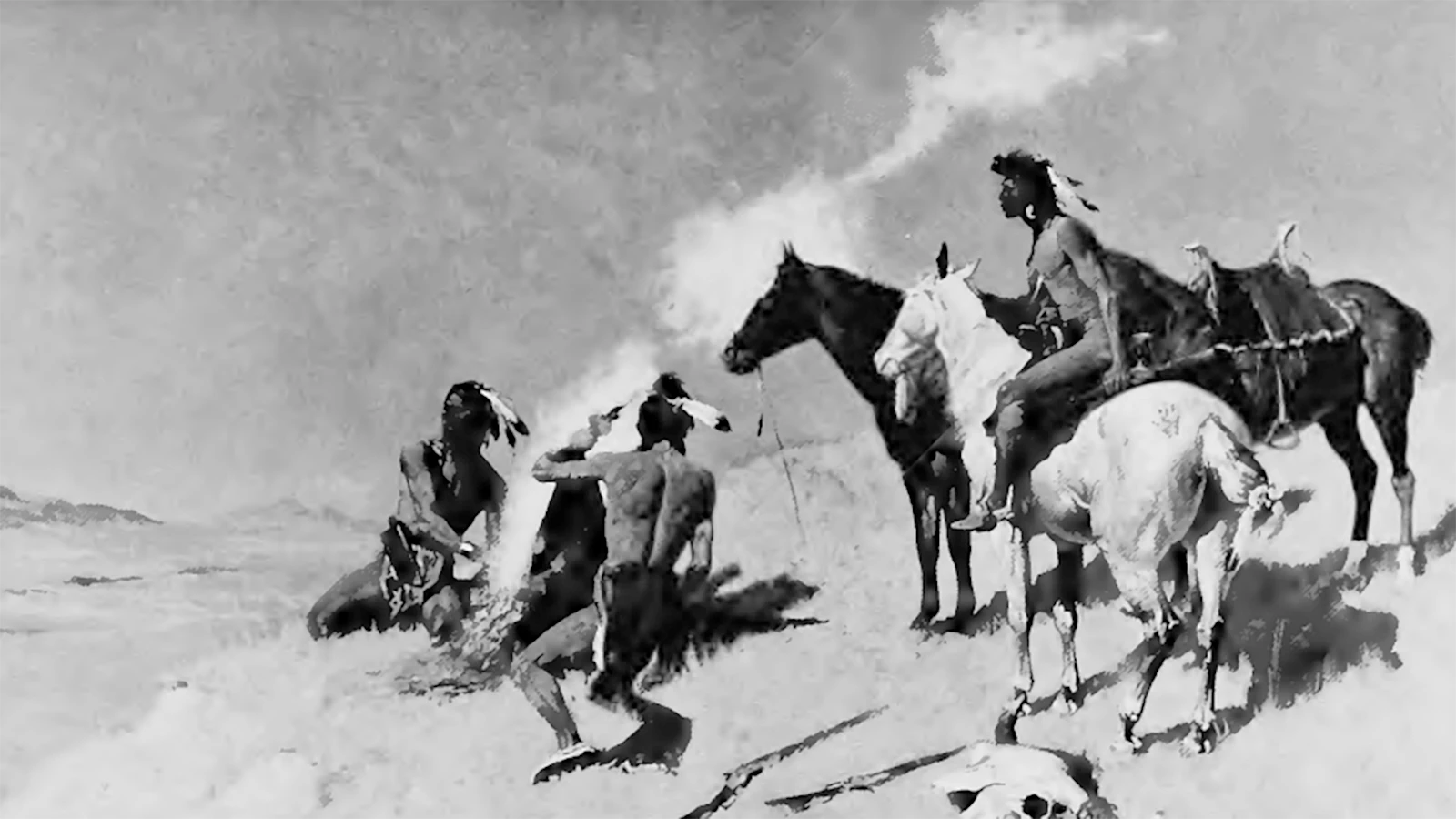
Over the years, famous Western painters have mistakenly used the high-backed woman's saddles in their art. Warriors would have been mortified to be depicted as riding these saddles that only women and old men rode. 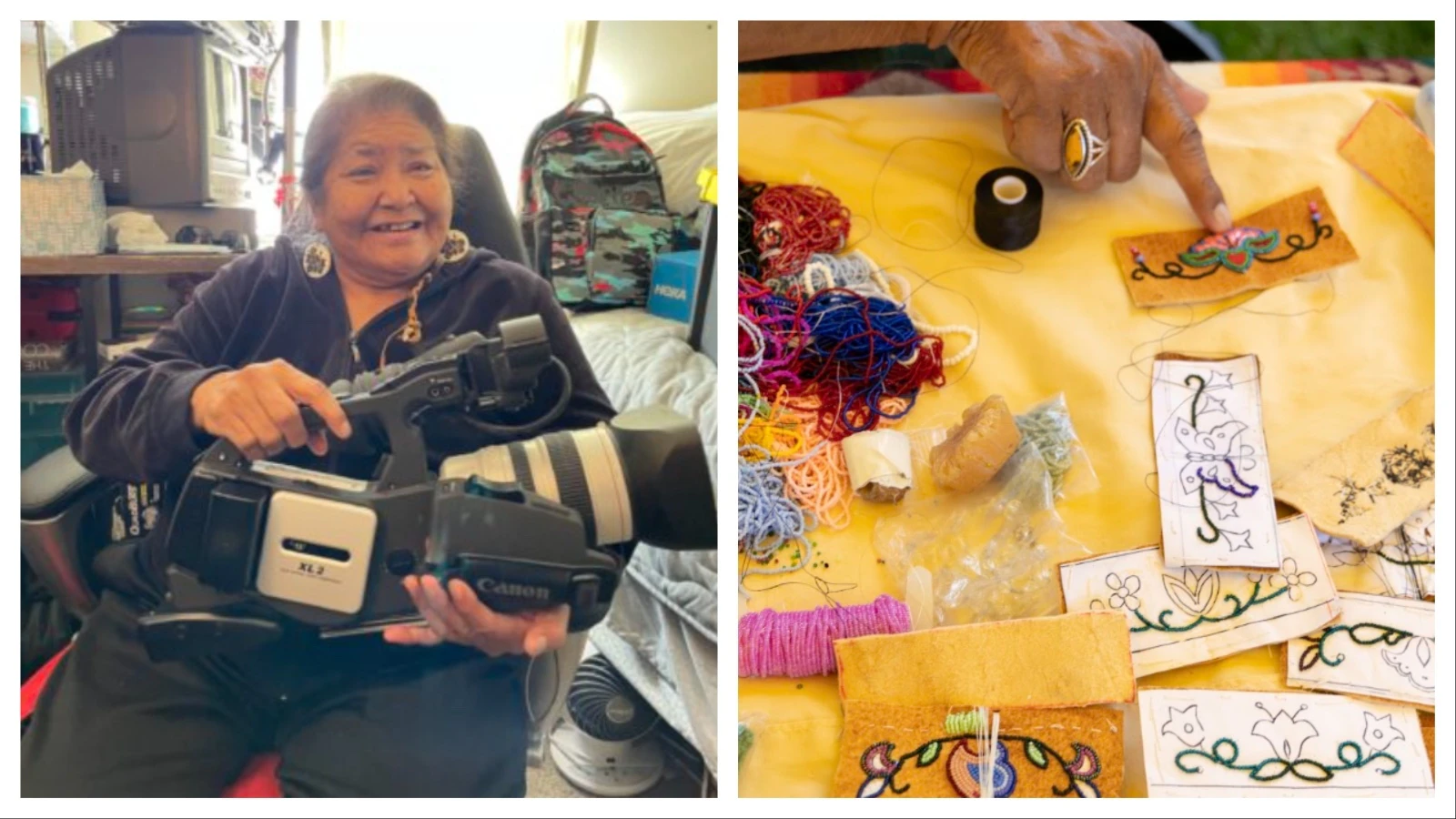
Right, over the past 20 years, Reba Teran has recorded 20,291 Shoshone words in her work to preserve her native language and customs. Left, Teran demonstrates her beadwork at the Wyoming Folklife Festival, organized by the Wyoming Arts Council in Cheyenne on July 4th, 2026. (Reba Teran; Danica Mrozinsky via Wyoming Arts Council) 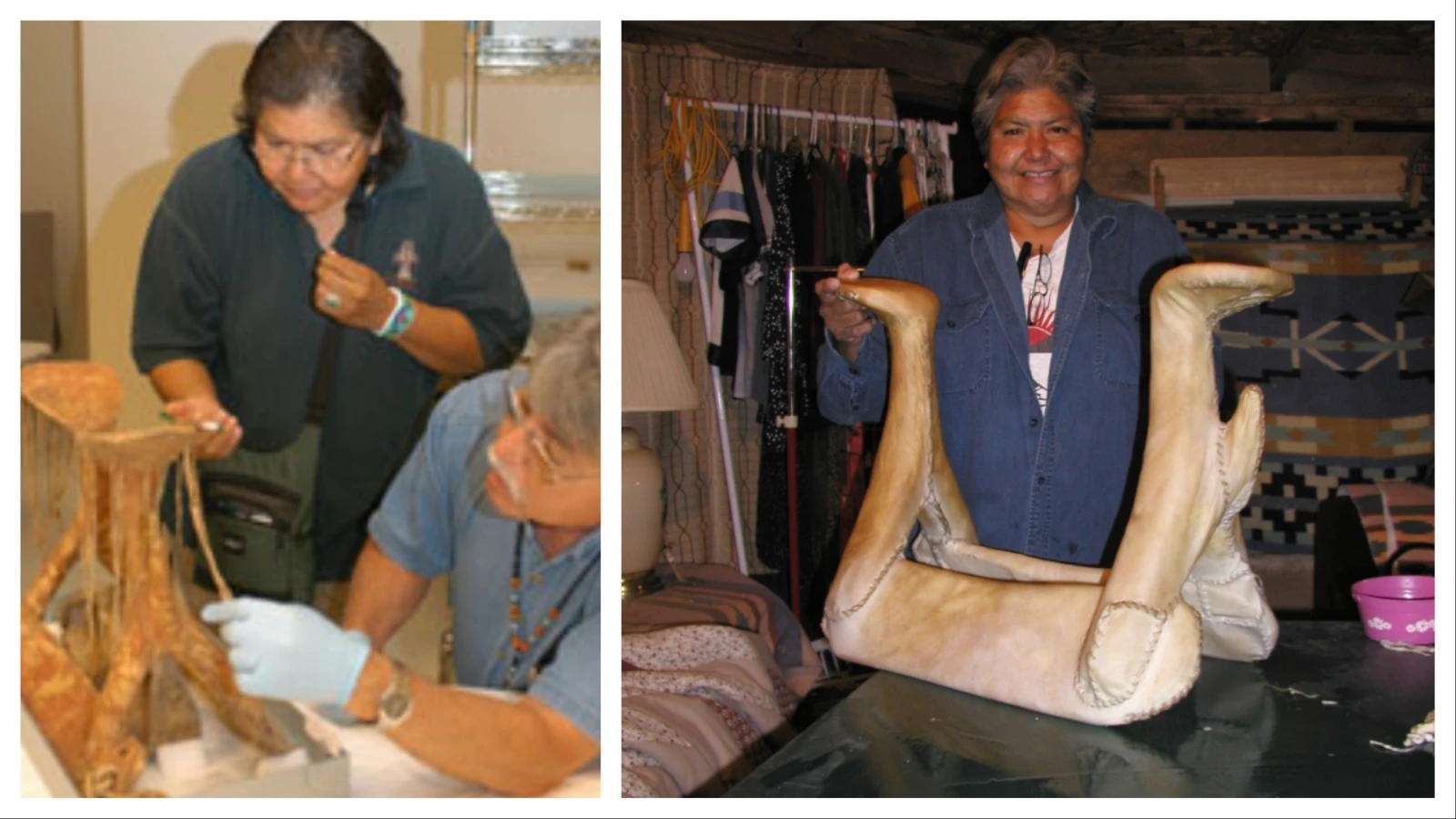
After seeing a Shoshone saddle in a museum, Reba Teran discovered the lost art of making the woman's cottonwood saddles her ancestors used to use. She has been honored for her work and is now passing this knowledge down to the next generation. (Reba Teran)
Making The Saddle
According to Richard Ahlborn, the editor of “Man Made Mobile: Early Saddles of Western North America,” the traditional Shoshone woman’s saddle was made from green cottonwood and built by women.
Two thin sideboards were cut and carefully selected forked pieces of cottonwood formed the high pommel and cantle. Holes were burned through the wood and the pieces lashed together with buckskin thongs.
The frame was then covered with wet buffalo rawhide, cut to fit and sewn underneath with rawhide cord. As the rawhide dried, it shrank around the wood, pulling the entire structure tightly together.
Makers had to carefully brace the saddle during drying so the tremendous force of the shrinking hide did not warp its delicate wooden frame.
Once dry, the saddle was fitted with padded supports beneath the sideboards, rawhide rigging and a wide cinch. Some women’s saddles had a suspended rawhide seat, while others were covered with a folded buffalo robe for the rider to sit on.
The tall pommel and cantle gave the saddle its distinctive silhouette, and women could decorate their saddles and accompanying trappings with paint, beadwork and other ornamentation.
Passing On The Tradition
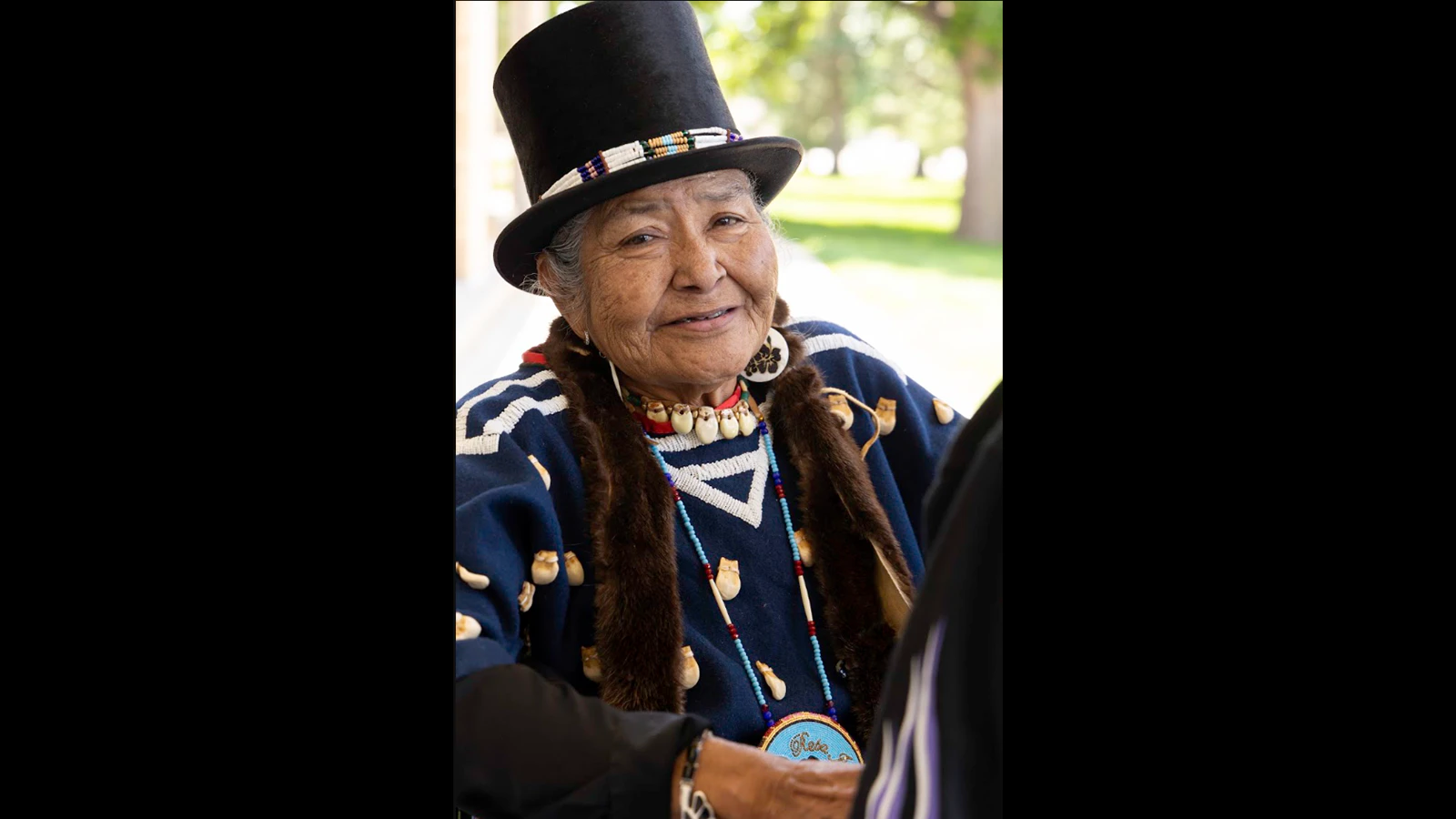
Teran has given the name of her grandmother Elk Twin to her niece, Martha Bragg, who is now learning the Shoshone traditions Teran has helped restore. Bragg was named after Teran’s mother, Martha, and, like her Uncle Julius, served in the military.
“She went to the Marine Corps and was stationed in Okinawa, driving big trucks,” Teran said. “When she got done with that, she married and now has four kids.”
Bragg wanted to learn the traditions of their Shoshone family and asked Teran to teach her.
“If we don't learn the old ways, it will just become history that is forgotten,” Bragg told Cowboy State Daily. “I think it's important that my generation and my children keep our Shoshone traditions going because there's a lot of good benefits that can come from it.
“It's in our blood.”
Bragg is learning the basics and the traditional way to work on hides from Teran. She is especially enjoying how as they work, her aunt is sharing “ancestral talk” and stories of their family.
“She's willing to learn and she's not afraid of hard work,” Teran said. “We are braining some hides this weekend and I will show her how to smoke the buckskin.”
"Brain tanning" is a traditional method of softening and preserving hides using animal brains.
“Learning how to cure hide just feels like home,” Bragg said. “This is what my ancestors did back in the day and now I'm part of that and it just feels like complete.”
Bragg said that as her aunt shares the stories of their tribe, she is learning about the great people who came before them that would otherwise be lost.
“As I learn to make saddles out of wood, it's just going back generations,” Bragg said. “Of how life used to be.”
As Teran looks to the future, she said it is important to pass on her knowledge to the next generation.
“As Native people, we are born with gifts and an inner knowledge to do good things on behalf of our Creator,” Teran said.
And that includes preserving the Shoshone woman’s saddle seen by Meriwether Lewis more than two centuries ago.
Jackie Dorothy can be reached at jackie@cowboystatedaily.com.


