
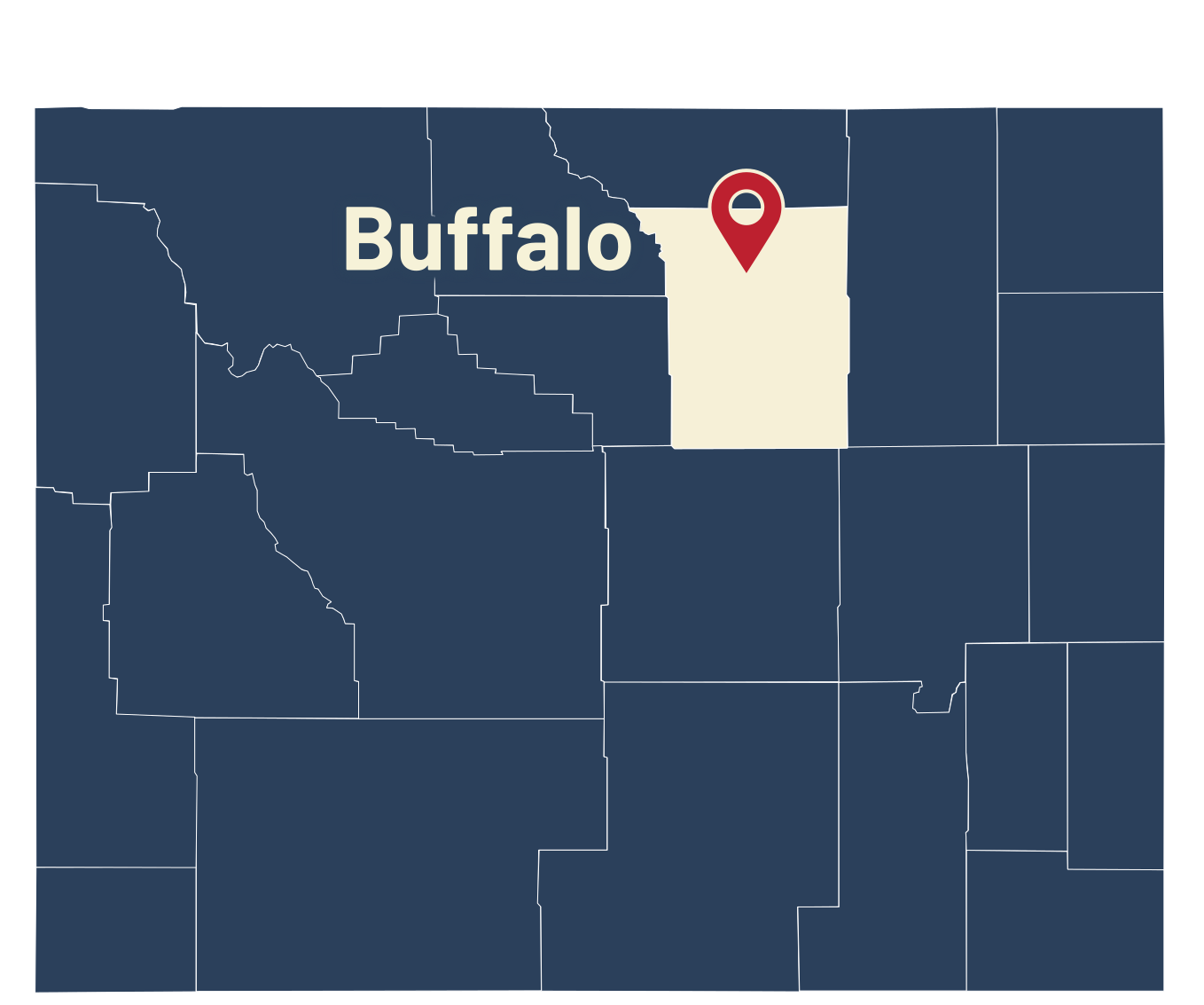
When Wyoming was still a virtually unexplored territory, entrepreneurs saw an opportunity in the remote landscape to create their fortunes amid the soldiers, miners, tribes and ranchers who could use their expertise.
For one enterprising adventurer, he would even find himself hiding gold for others.
In the summer of 1879, Charles Buell traveled over the old Bozeman Trail with a small party of men from Medicine Bow.
He had recently immigrated to the Wyoming Territory from Wisconsin to seek his fortune and found it in the foothills of the Bighorn Mountains.
According to Oliver Perry Hanna, pioneer and first settler in Sheridan County, these men had come to this remote region not seeking mining claims or ranchland.
They were there to open a store for August Trabing, a member of this first scouting party.
Bennett R. Pierce, an early Wyoming historian, wrote in the Summer 1970 Old West magazine that the party paused for lunch on the banks of Clear Creek at the site of the future town of Buffalo.
Buell “exercised his culinary talents” and cooked a fine meal for his companions, setting the stage for his future endeavors.
Pierce wrote that even as Buell pitched his tent he had already decided to stay.
However, Hanna said the Sutler at Fort McKinney two miles away told them that the ideal spot was part of the Government Reservation, so Trabing’s store was moved.
When Buell realized they had been misled, he returned to the original location.
Tent Hotel
Buell was just settled in his tent when Pierce said a group of miners arrived and asked to board with him for a few days. Buell agreed and hosted the group in his tent and prepared their meals.
One of the miners asked Buell if he could cache some gold he had mined in the Bighorns. Buell led the man to the back of his tent and removed a buffalo robe from the ground.
Under the robe was a hole.
The miner was told he might hide his gold there until he was ready to leave and no one would bother it.
For several days, Buell made coffee, bacon and eggs, and flapjacks for his guests. When they departed, he was paid well for his hospitality and services.
In his tent, Buell provided the first hotel and bank in Johnson County. From this simple beginning, Pierce wrote, the famous old Occidental Hotel was established.
Log Beginnings
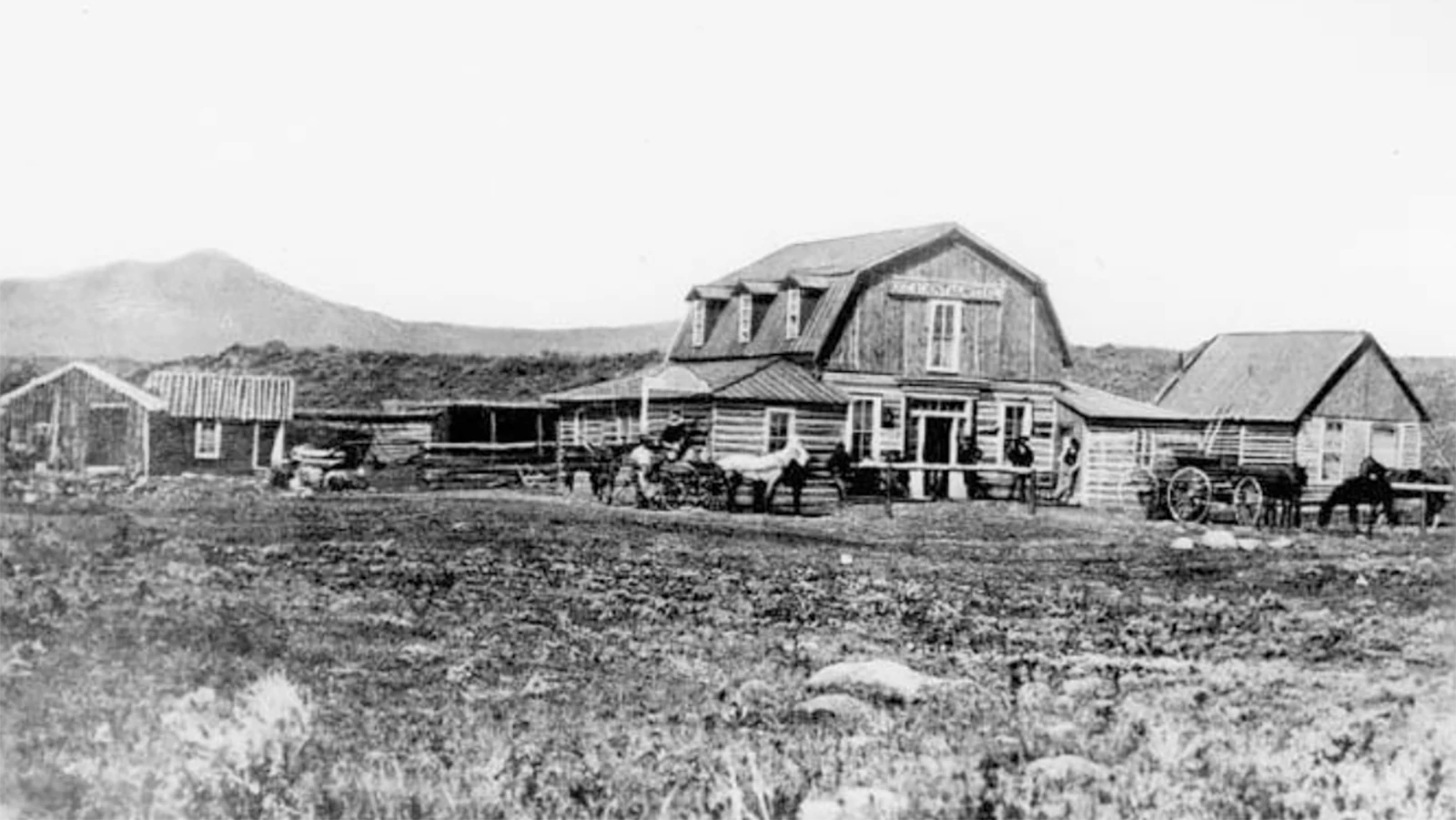
Buell replaced the tent with a temporary frame shack and started building a more permanent construction. He partnered with A.J. McCray and they built a log hotel called the “Occidental.”
By then, Trabing had relocated his own store to the location and Buell had a two-story hotel ready for business by the fall of 1880.
He built it to appeal to travelers with dormer windows on the north and south sides, a shingled roof and a stable built in an excavation on the banks of Clear Creek.
The hotel entrance was through a large door surmounted by a panel consisting of small panes of glass. One window was on each side of the door and another on the second floor directly over the door.
There were six bedrooms on the second floor, each with its own dormer window. The lower floor boasted a lobby, dining room and kitchen.
The traditional hitchrack was set in the street to serve as a tie-up for countless cow ponies. In a short time, the hostelry became a stage stop on the newly established Rock Creek-Junction City Stage Line.
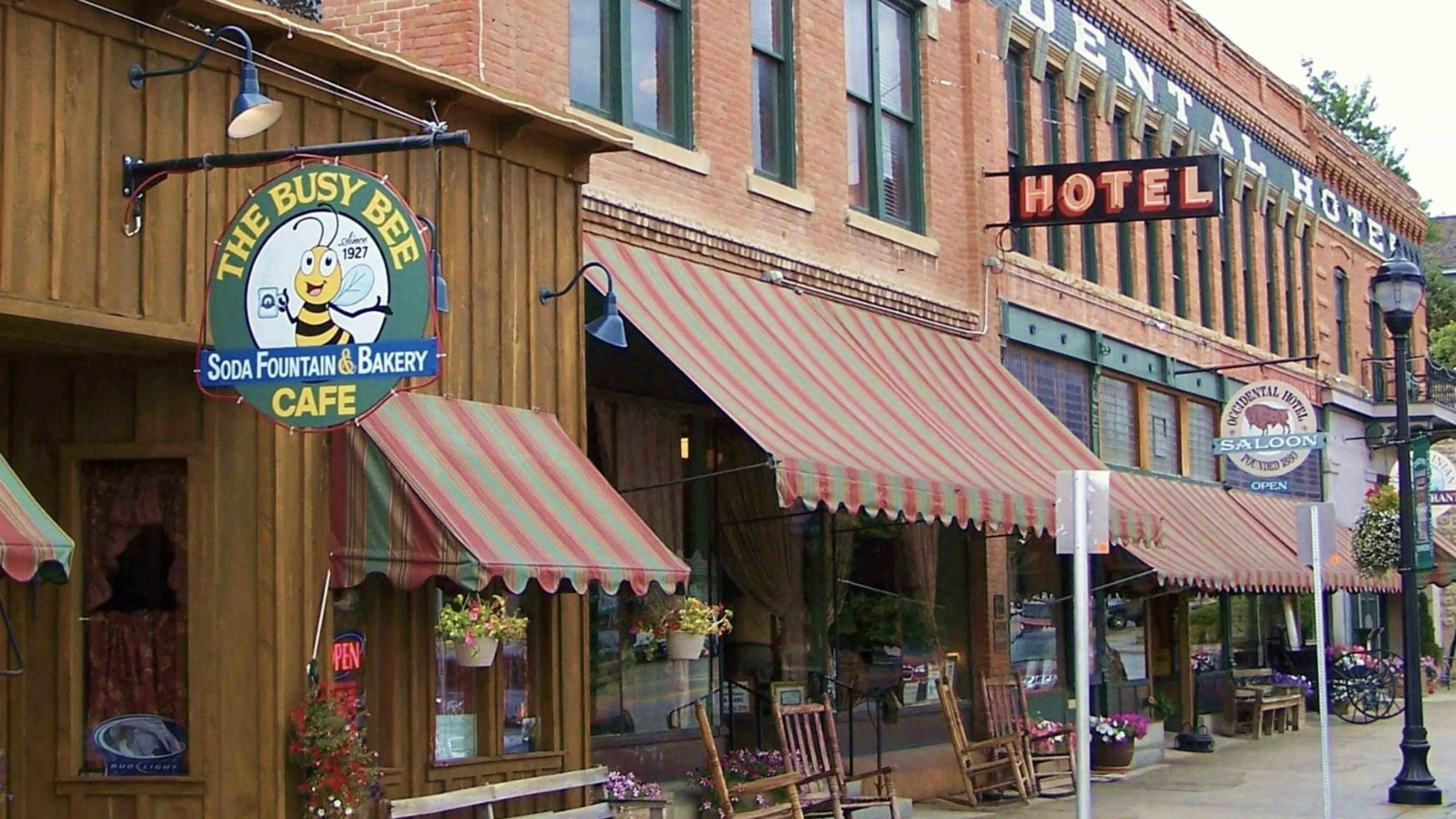
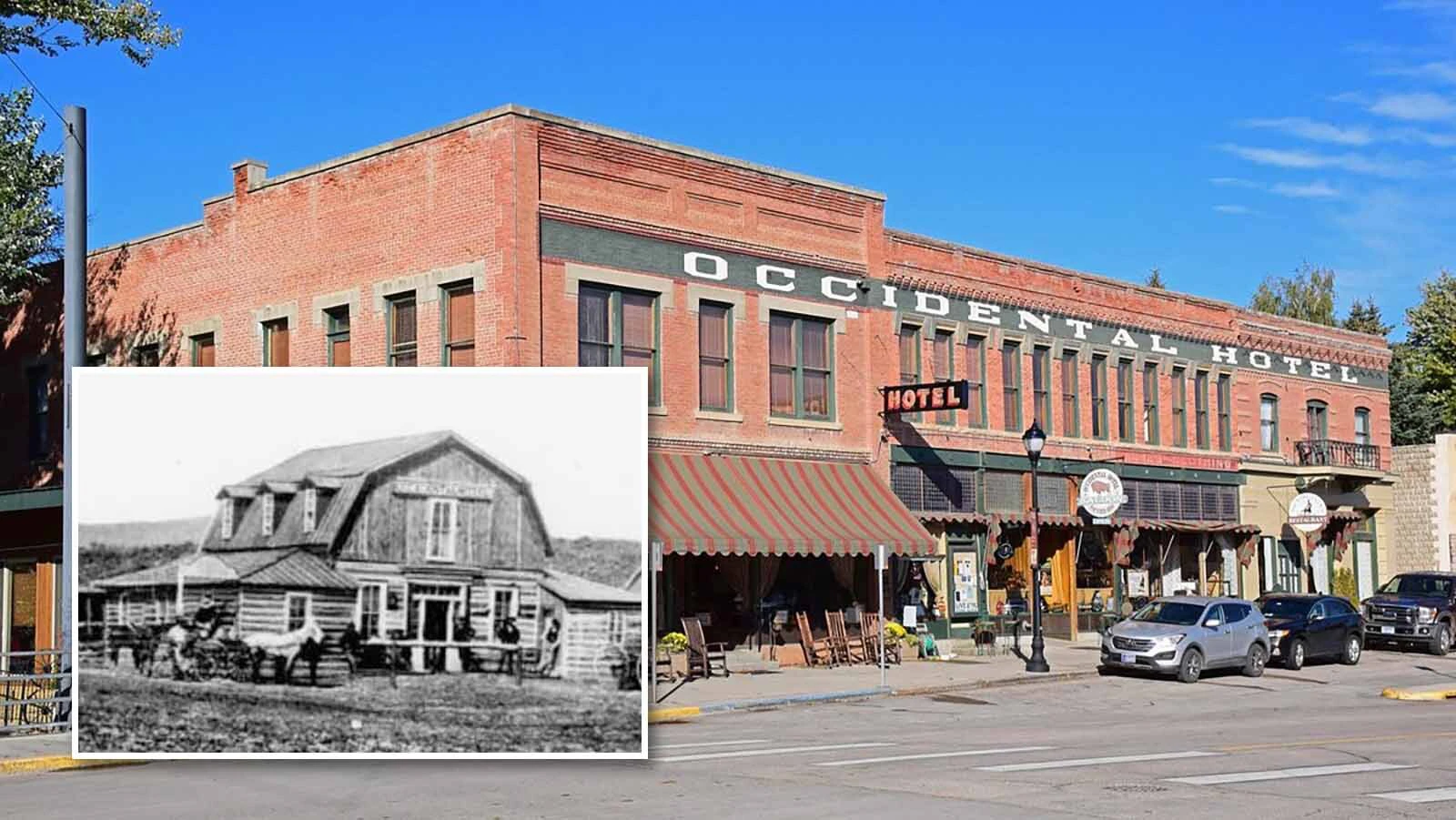
The Occidental Hotel. (Cowboy State Daily Staff) 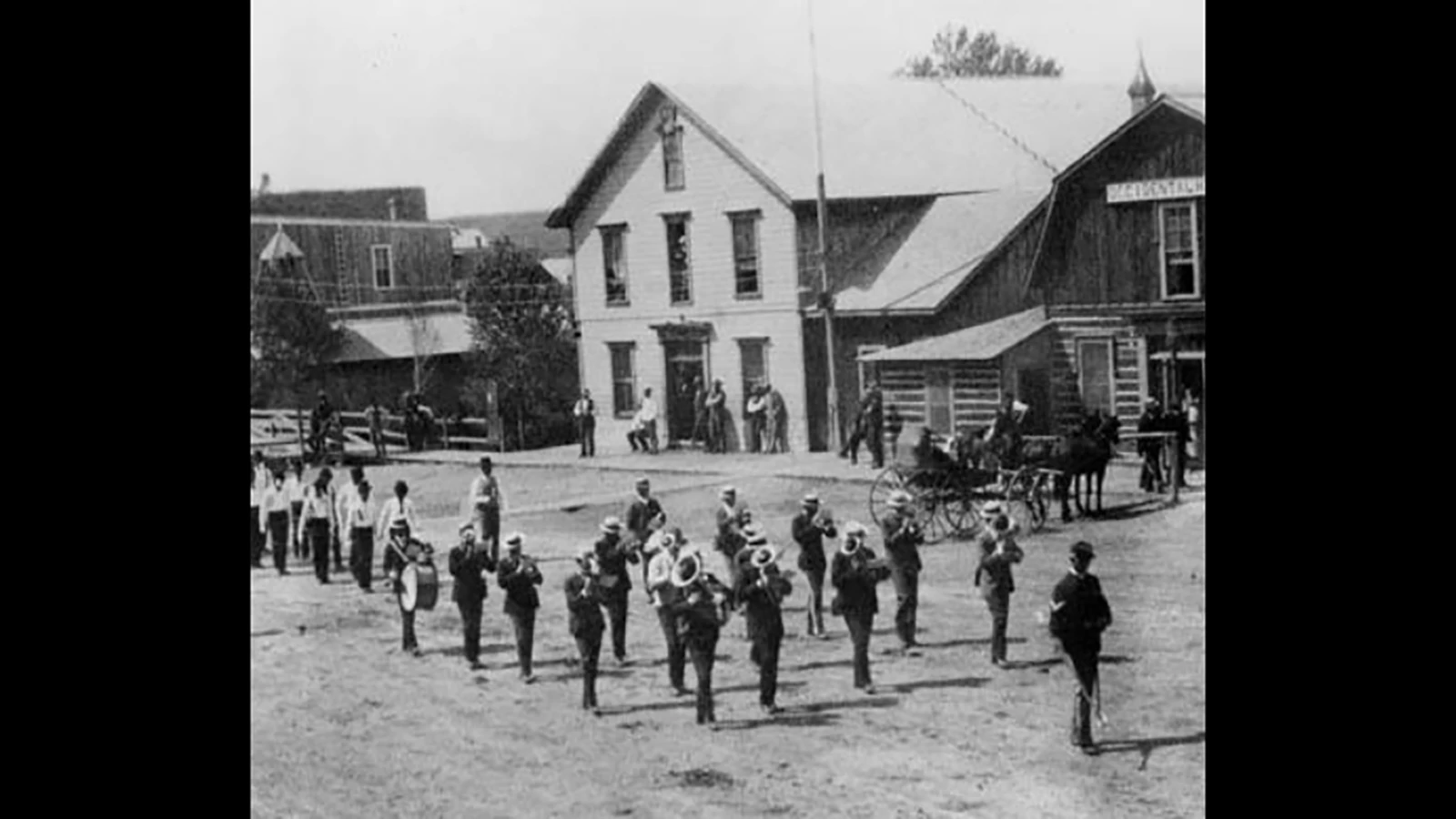
Marching band in front of the log Occidental, celebrating the Fourth of July in 1888. The original hotel was torn down in 1906 and replaced with a more modern brick building. (Wyoming State Archives) 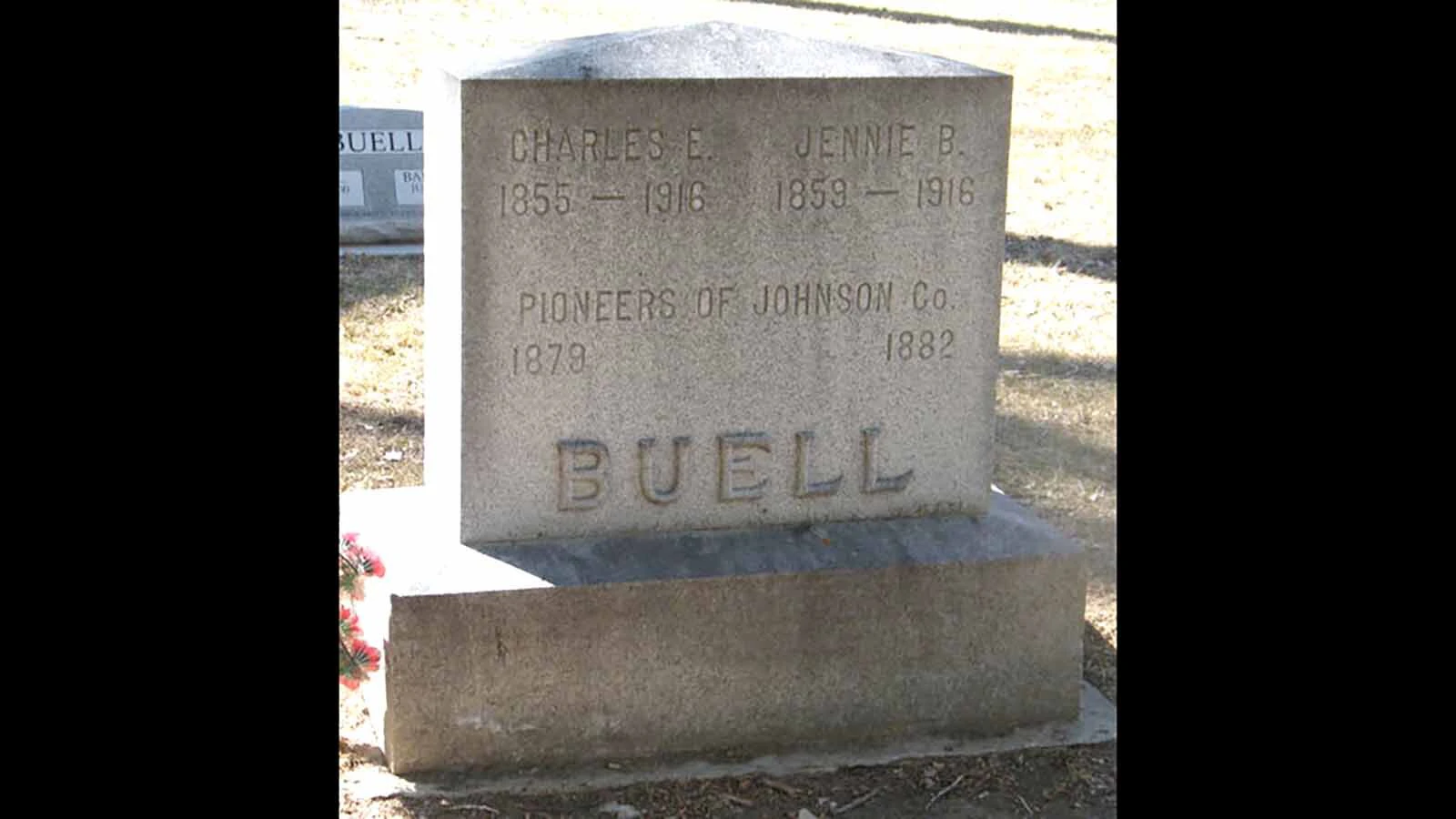
Charles and Jennie Buell were the original owners of the Occidental Hotel and were known as "gracious hosts" before selling out to move to their family ranch northwest of Buffalo. The well-known couple were killed in an automobile accident in 1916, just 37 years after Buell had first arrived and hosted guests in a tent hotel along Clear Creek. (Find A Grave)
The Town Becomes Official
Hanna said with a store and hotel established, it was time to name the town.
The little community on Clear Creek also wanted to be the new county seat for Johnson County, but for several weeks was unable to agree upon a name, according to Pierce.
One evening in the Occidental Hotel saloon, Buell solved the dilemma by suggesting the citizens each write his choice of a name on a piece of paper and place it in a hat. The first one drawn was to be the name of the town.
According to Hanna, one of the original founders, Will Hart, put in the name of his old home, Buffalo, New York, and it was the first name drawn.
“Thus Buffalo was named — and not for the herds of roaming buffalo,” Hanna wrote.
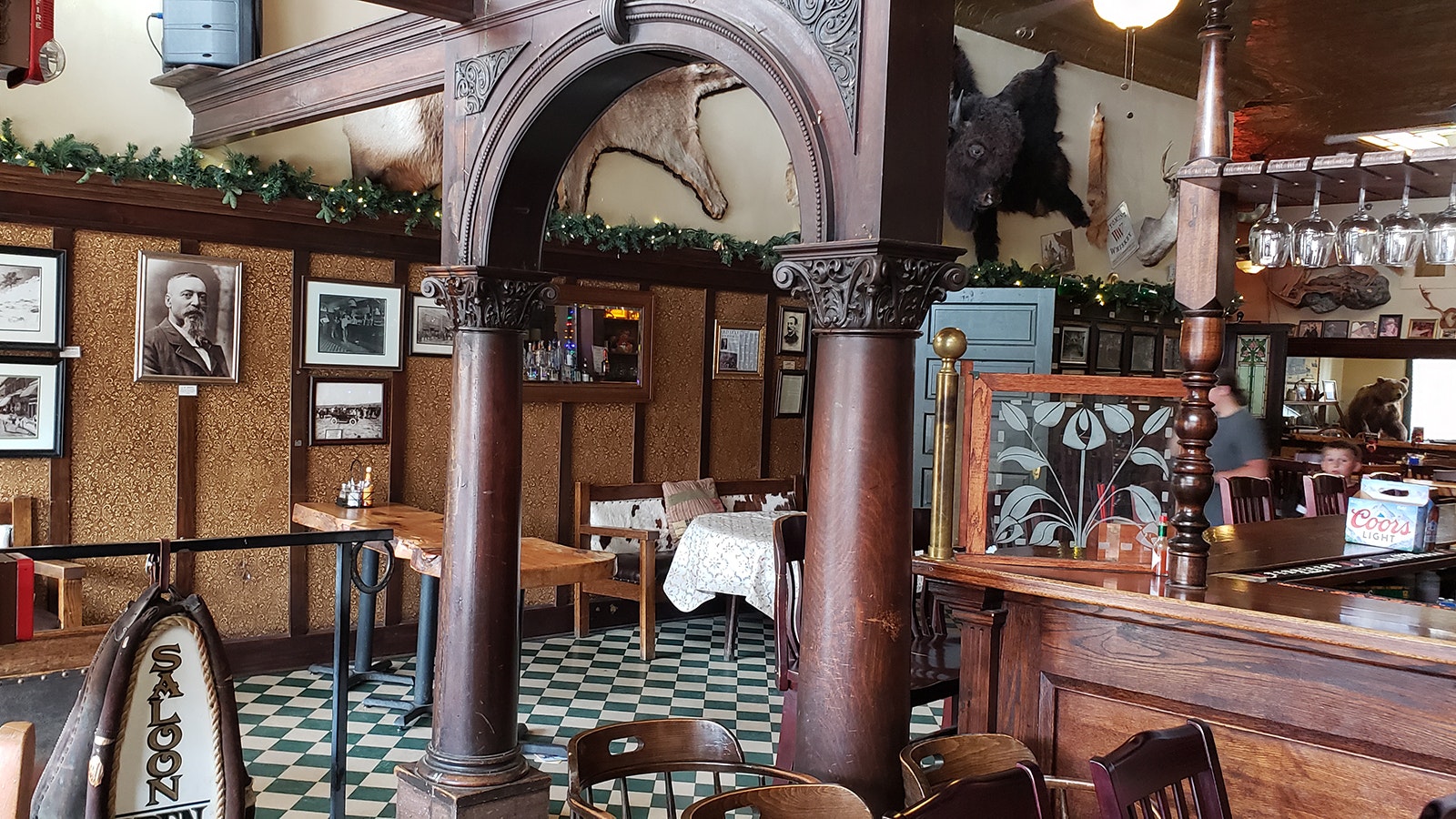
The Occidental was the center of activity in the new town of Buffalo. It was the stopping-off spot for newcomers, soldiers, gamblers, and in later years, for cowboy and cattle baron.
In the Occidental bar, whiskey sold for two-bits a drink and faro was the game of choice.
John C. Van Dyke, an early-day clothing merchant in Buffalo, enjoyed telling Pierce some of his experiences in the Occidental Hotel.
According to Pierce, Van Dyke was called on by a well-known traveling salesman who invited him to the hotel after supper to see his samples.
Shortly after Van Dyke arrived, he noticed that the salesman was impatient to show his wares and take the order. He kept looking toward the bar where the sounds of shuffling cards and clattering poker chips could be heard.
Van Dyke finally asked the salesman if he were in a hurry. The salesman replied that he was holding up a poker game in the bar.
He gave Van Dyke his key and order book and told him to write up his own order. He told Van Dyke to leave the key at the desk when he left and that he would see him in the morning.
“Business” was informal at the old Occidental.
The People of the Occidental
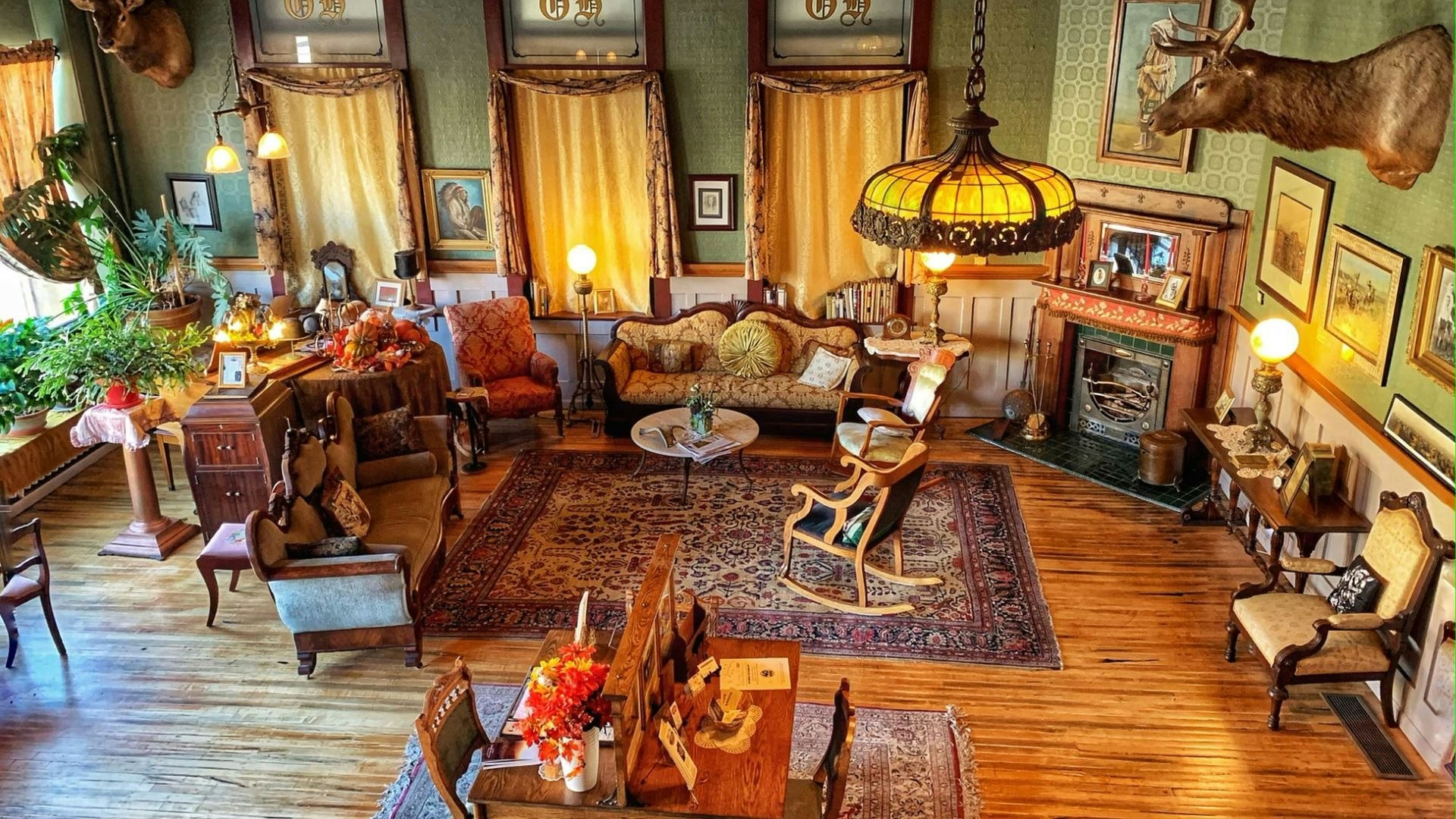
Charles married Jennie Herreik in 1882 and the two became known as gracious hosts. Their parlor was opened to public meetings, social gatherings, weddings and a few funerals.
Pierce said that in 1883, Helen Buell was born at the hotel and was the first white child born in Johnson County.
Buell employed a cook named Jacob Schmerer, known to his friends and patrons as “Dutch Jake.” According to Pierce, Schmerer was liked by Buell and presided over the kitchen until 1885.
In April of that year, Dutch Jake disappeared from his squatter’s claim on Dry Creek, about eight miles southeast of Buffalo. He had spent the winter on his claim poisoning wolves, and when it was discovered that he and his belongings were gone, his friends in town were instantly concerned.
Suspicion centered on a questionable character known as Bill Booth, who had spent the winter with Dutch Jake on his claim.
After Schmerer’s body was discovered by Burrell Madden that spring, Frank Canton, sheriff of Johnson County, traced Booth to Miles City, Montana. Booth was returned to Buffalo and tried for the murder.
Canton was able to get a written confession from Booth and he was convicted and hanged on a gallows erected just outside the west door of the new courthouse on Oct. 2, 1885.
In 1886, Charley Buell turned the operation of the Occidental over to his partner, A. J. McCray, and became a rancher on Shell Creek northwest of town.
The log hotel changed hands several times in the ensuing years until Oscar N. Quick and Fred Waegele became sole owners.
Pierce said it was these two men who began the modernization of the primitive frontier hotel, which had run down over the years. The old buildings of logs were hauled away to serve as building materials on a nearby ranch and a new brick hotel was built in its place. Construction began in 1906 and finished by 1910.
The entire block was rebuilt at a cost of $65,000, a value of $1.8 million in today’s dollars. The first floor of the new hotel was used for a lobby, dining room, kitchen, barbershop, and a new Occidental Bar.
There were also several storerooms on the first floor. The second floor was occupied by guest rooms and bathrooms.
The Buells meanwhile were ranching with their son northwest of town until tragedy struck. In January 1916, the couple were on their way to conduct business in Buffalo when they were killed in an automobile accident. Their car slipped on the red shale and overturned.
Their death was mourned by the town they helped build and marked the end of the frontier era, started humbly in a tent along the Clear Creek just 37 years earlier.
Jackie Dorothy can be reached at jackie@cowboystatedaily.com.


