
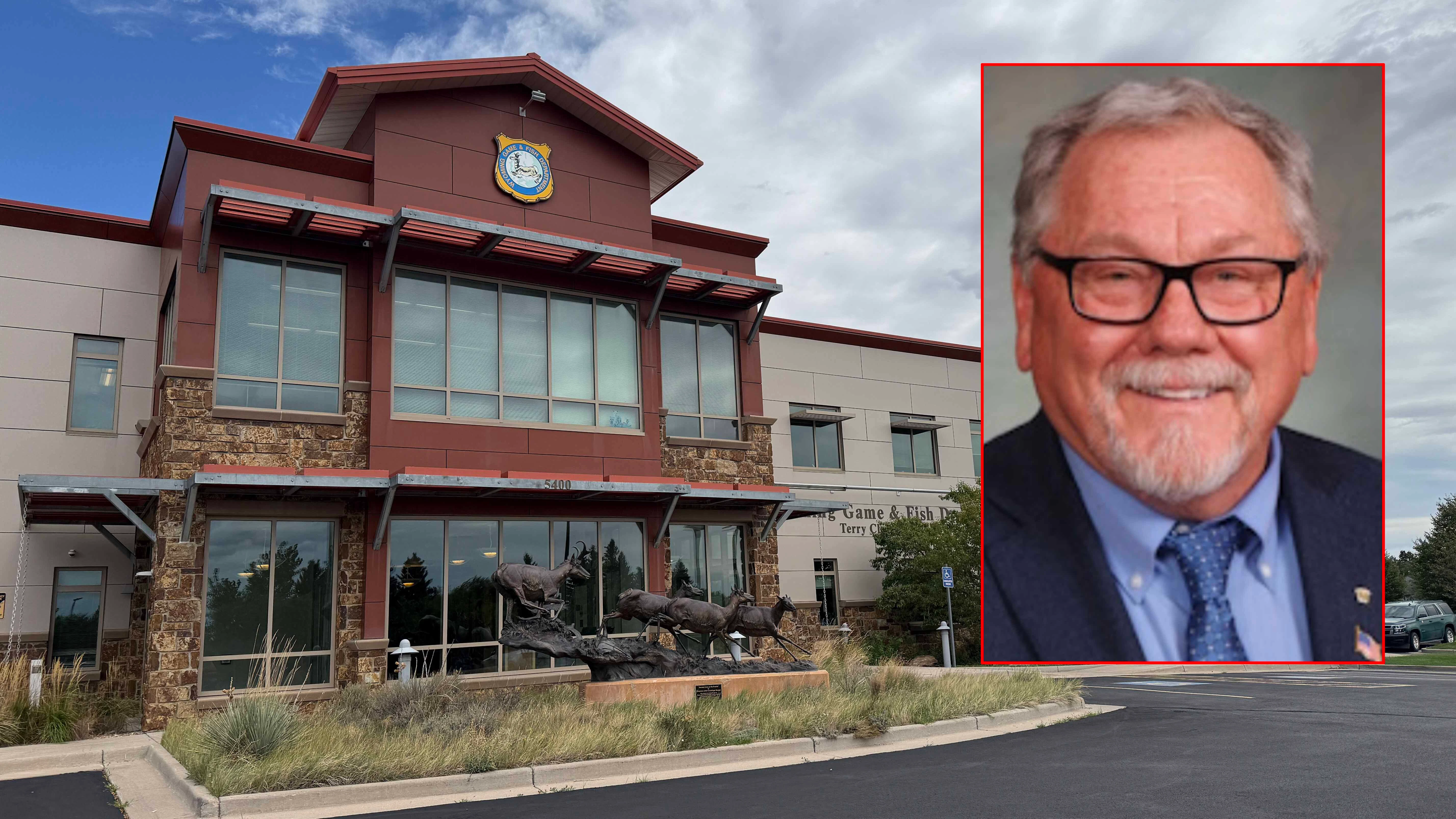
The Wyoming Game and Fish Department might have dug the looming financial hole it could slip into, former commissioner Mike Schmid told Cowboy State Daily on Friday.
“I think there was some self-inflicted pain there,” said Schmid, who served on the Wyoming Game and Fish Commission from 2017 to 2021.
Trust Fund?
Interim Game and Fish Director Eric Wiltanger told legislators this week the department is holding its own for now but could face a “dire” budgetary crisis by 2030 or 2031.
To stave that off, conservation groups and others have proposed establishing a Game and Fish trust fund. To that end, the Legislature’s Joint Travel, Recreation, Wildlife, and Cultural Resources Committee is considering whether to forward two bills to the 2027 legislative session.
Schmid said he’s skeptical and wonders if Game and Fish shouldn’t consider belt-tightening, particularly when it comes to large capital projects such as new office buildings.
But Bill Wichers, a retired Game and Fish fisheries biologist and deputy director, told Cowboy State Daily that a trust fund might be a good idea.
Critics might take for granted how much Game and Fish spends on non-game animal management, he said. An example is the restoration of black-footed ferrets near Meeteetse.
“Wyoming has been a leader right from the get-go in restoring black-footed ferrets,” said Wichers, who retired about 20 years ago. “It would have been nice to have had some sort of outside funding (such as a trust fund). Money was always a limiting factor with the ferrets.”
Building Projects
Schmid said when he served on the commission he was baffled by the amount of money spent on office buildings, employee housing, and other such projects.
Nearly $50 million was spent on new facilities, he said.
And costs for a game warden house in Newcastle ballooned to $750,000, Schmid added.
“I just don’t understand why those buildings cost so much,” he said.
And he questions Game and Fish pitching in $2.5 million toward the new Wyoming State Shooting Complex near Cody.
Building operation and maintenance costs also must be considered, Schmid said, noting that the Legislature also gave Game and Fish a break on property taxes.
The department could have prepared better for lean times and inflation, he said.
During his tenure on the commission, “we were trying to set aside a year’s worth of operating funds,” he said. “When I left, we had about seven months’ worth set aside.”
Wichers said that while new facilities might require big up-front costs, they are good long-term investments.
The Game and Fish office in Jackson was built about the time he retired, and while “it was expensive at the time” it’s held up well, Wichers said.
“When you build capital facilities correctly and they last for years and years, they definitely pay for themselves over time,” he said.
Inflation and Tag Sales
Possible reasons cited for expected Game and Fish budget shortfalls are inflation and sagging hunting tag sales, particularly for mule deer.
Schmid said the overall hunting tag sales have likely remained strong.
Proponents of the trust fund argue it could be a way to avoid more price hikes for hunting tags.
Schmid said he agrees the department should avoid price increases, especially for non-residents.
“They’ve jacked up the prices extremely for non-residents, to the point where it might not be feasible for the average working man or woman to hunt in Wyoming as a non-resident,” he said.
And just as private businesses must, Game and Fish could plan how to absorb inflation-driven costs.
He also questioned the necessity of some wildlife research.
“I’ve seen a lot of repetitive research going on. Just the same research going on, year after year, and we’d hear the same result reported (to the commission),” Schmid said.
Wichers said Game and Fish is charged with many non-game species, or animals for which hunting tag sales are few, or none.
Managing wolves and grizzly bears, for instance, has hugely increased expenses for Game and Fish over the past few decades, he said.
Trust Fund Doubts
Schmid said he’d like to learn more about the Game and Fish trust fund proposal before deciding whether to support or oppose it.
He added that he has his doubts.
If some of the money in the trust fund came from donors or special interest non-governmental organizations (NGOs), that could lead to those people or groups pressuring Game and Fish, he said.
“They’re going to start asking for favors,” he said.
A trust fund would likely be used for investment funds, toward producing a yearly yield of available income, perhaps around 4%.
That raises the question of how big the trust fund would need to be, Schmid said.
A $100 million trust fund would yield a few million dollars per year, Schmid wondered if that would that be enough to make a difference.
Wichers said a trust fund could be a reliable source of additional funding, and money could be earmarked for specific purposes, such as habitat improvement.
Clinton Missed Chance
Wyoming’s share of funds from the federal Pittman-Robertson and Dingell-Johnson acts makes up a significant portion of Game and Fish’s budget.
Through those acts, tax revenue from the sale of firearms, ammunition, archery gear, boat fuel, and the like is funneled into wildlife agencies and conservation at the state level.
Wichers said that decades ago, during the administration of former president Bill Clinton, there was a proposal for a “non-game equivalent” of those funds.
It would have put a similar tax on binoculars, camping equipment, and the like, he said.
“That almost made it through. But unfortunately, the Clinton administration killed it in the last hours. That was a sore point for me,” he said.
With that option off the table, a trust fund could be the answer for Game and Fish, he said.
Mark Heinz can be reached at mark@cowboystatedaily.com.


