
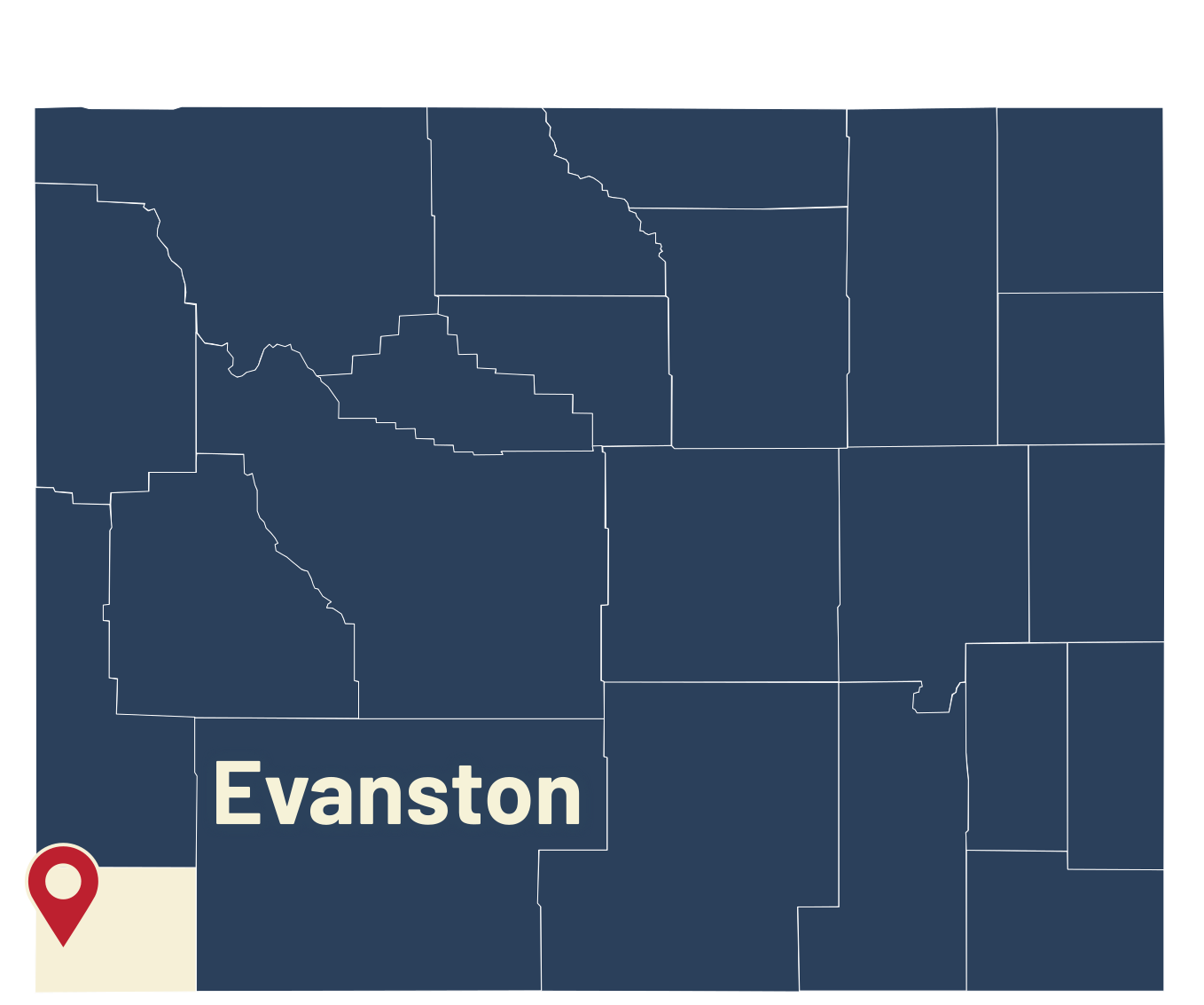
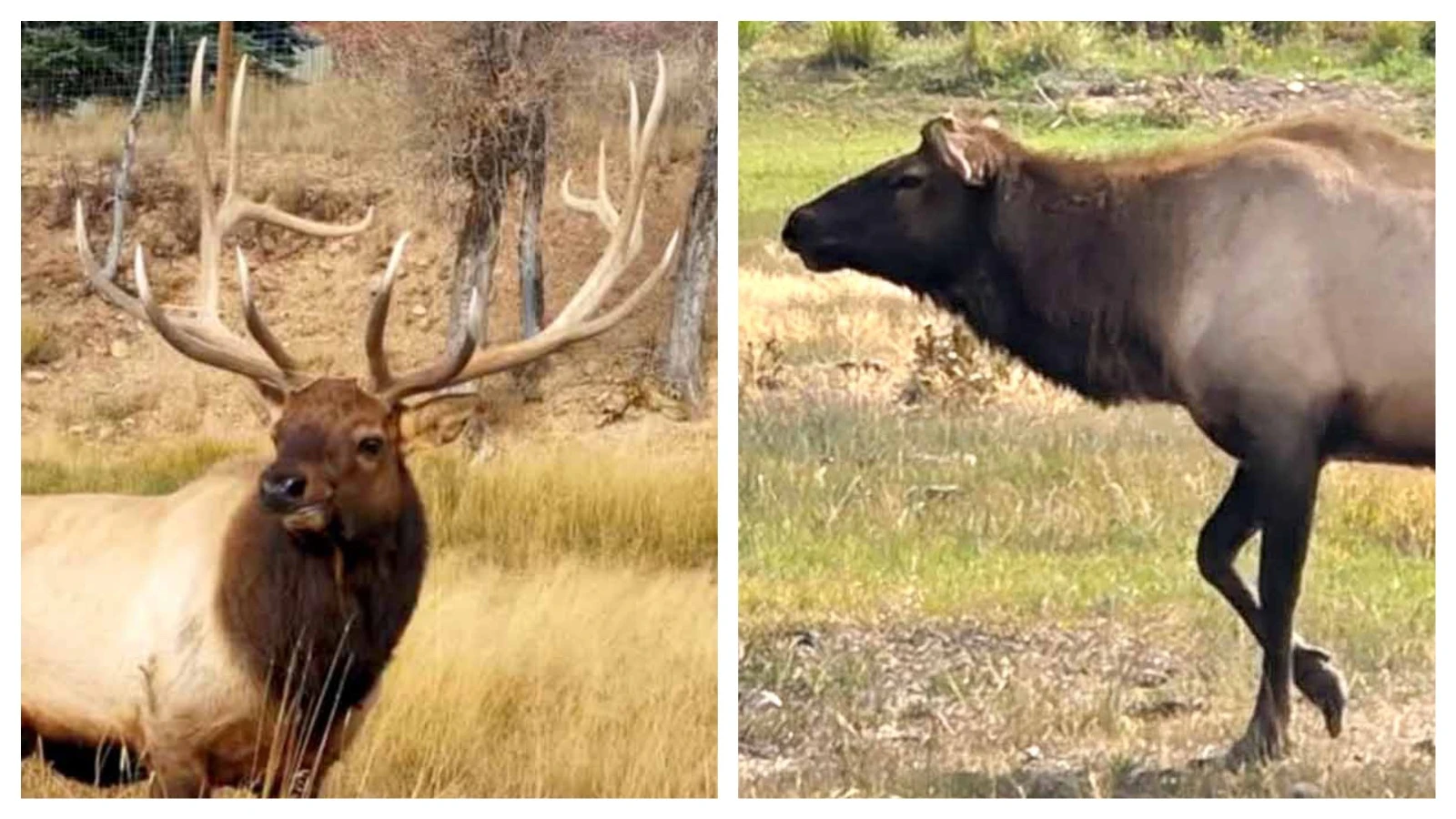
Boo the bull elk has lived a quiet life at Bear River State Park in Evanston, bereft of the freedom of wandering across vast landscapes and battling rival bulls to claim a harem of cows.
The upside is, at nearly age 18, he’s lived several years longer than most bull elk in the wild, which rarely make it past 12.
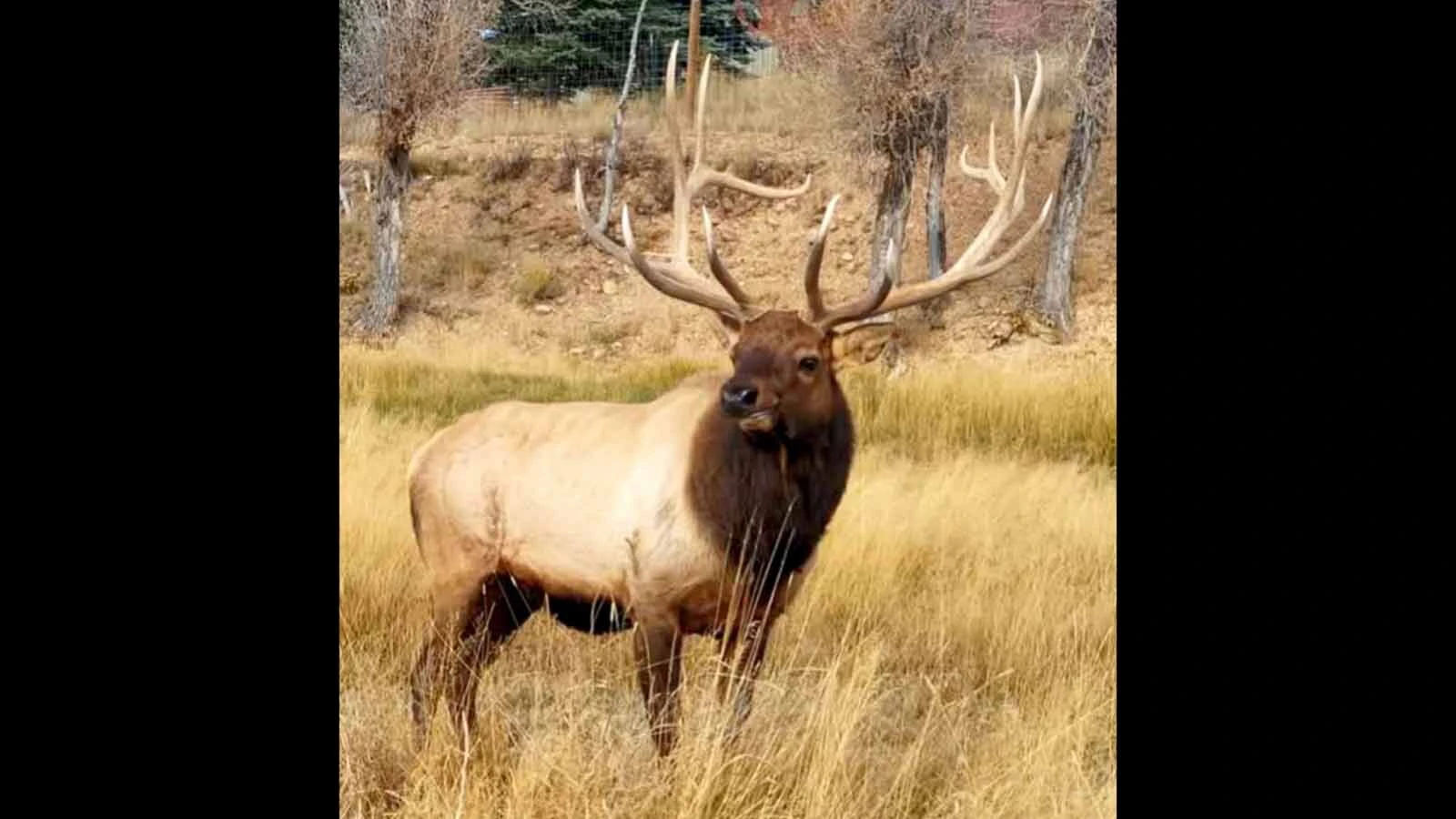
He’s so old he doesn’t even grow antlers anymore, despite reportedly sporting a magnificent rack in his prime.
“He’s not like he used to be. In his younger years, when the rutting season (elk mating season) would come around, he’d get ornery,” Bear River State Park Superintendent Tyfani Sager told Cowboy State Daily.
Boo is slower and quieter now, and park staff aren’t sure whether he’ll make it through another winter.
But even if these are the last few months of his life, it’s been a good one, they say. He’s lived virtually carefree in the park, which straddles the river on the east side of Evanston.
Captured By Game And Fish
The Wyoming Game and Fish Department sometimes sends elk and bison to the park for public viewing and educational purposes.
Boo was captured as a yearling in the Pinedale area, and has lived in the park ever since, Sager said.
He’s one of three bull elk living there. The park won’t take cow elk.
“We’d have some dead elk here if they were fighting over cows during the rut,” Sager said.
Also, there would be nowhere for calves to go if there was a breeding population in the park and the elk got too numerous, she said.
Boo and the other bulls spend much of their time in a 17-acre elk pasture. During the summer, they’re allowed into a 53-acre pasture with the bison and a pond.
“They love wading and swimming in the pond when it’s hot,” Sager said.
During the winter, the elk are sometimes fed to help them make it through, including “cakes” that contain supplemental vitamins and minerals, Sager said.
Tourists, many of whom have never seen an elk, love watching Boo and his fellows, she said.
That gives park staff the opportunity to teach visitors about elk, the role they play in the ecosystem, and their historical and cultural importance to Native Americans, she said.
So, while Boo might have had a rather lazy life, by elk standards, he still had a job to do, in public education, Sager said.
Why No Antlers?
Last year it became apparent Boo’s glory days were behind him, Sager said.
He grew a full antler on one side, but only a “few inches” on the other side, she said.
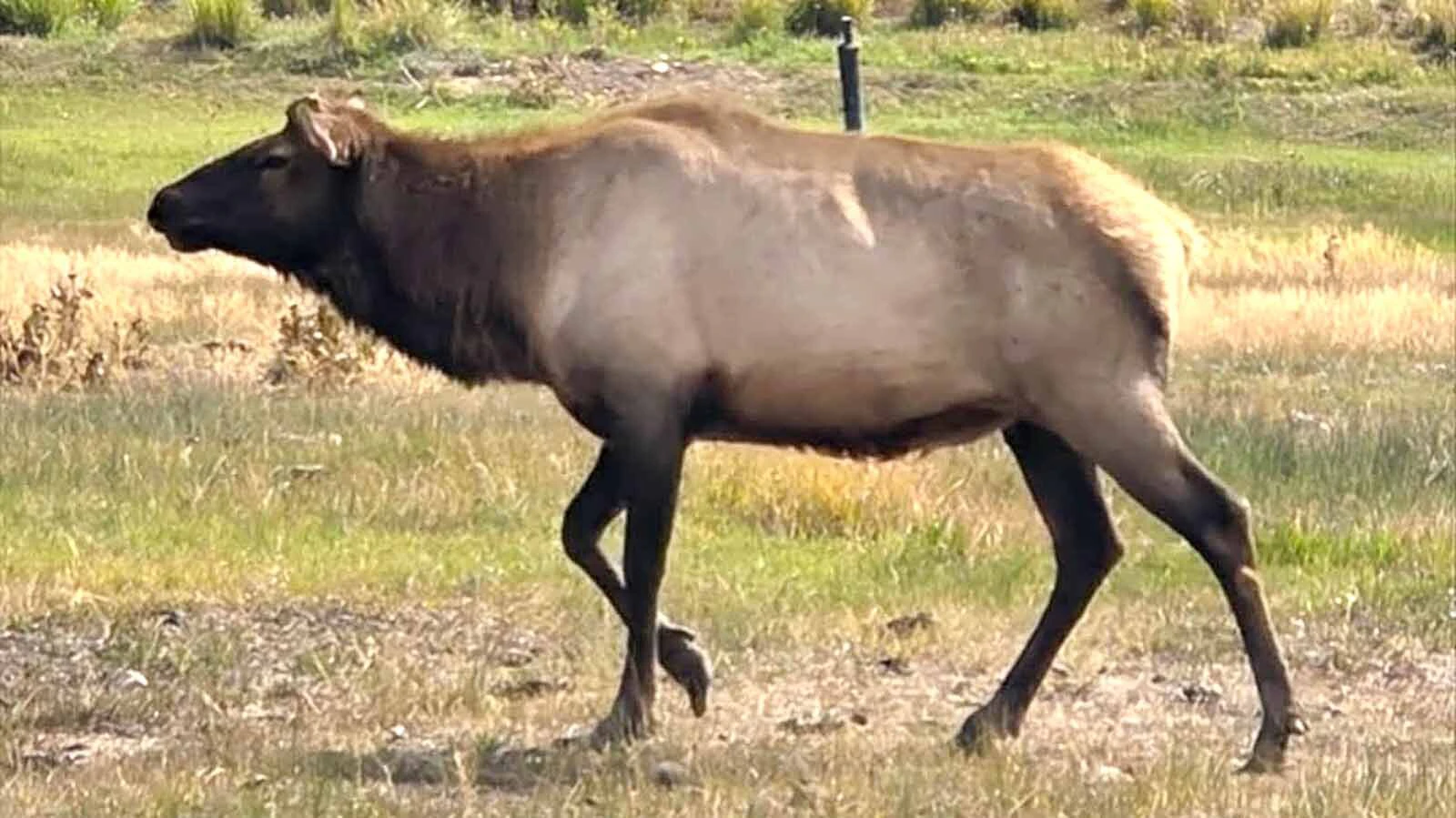
This year, all Boo managed to produce is “little nubs” where his antlers should be, she said.
There’s some speculation he suffered an injury to the pedicle, or antler bases.
However, it could be that because he’s gotten so old his body no longer has the spare energy required to grow antlers, Sager said.
Wild Bulls Have Short Lives
It's possible for a bull elk to age out of growing antlers, wildlife researcher John Winnie Jr. told Cowboy State Daily.
“It’s, metabolically, really expensive to grow antlers, and as they (elk) get old they just might not be able to pay that cost,” Winnie, an associate teaching professor in the Department of Ecology at Montana State University, told Cowboy State Daily.
However, the odds are slim that a bull elk could survive in the wild long enough to become an antlerless elder, he said.
“I doubt you’d be able to go into the Greater Yellowstone Ecosystem and find a wild, free-ranging elk that’s 18,” he said.
Out there, “12 is ancient” for a bull elk, he added.
Bull elk in the wild pour immense energy into fighting each other during the rut and then minding their harems once victory is established, he said.
“They are burning massive amounts of calories. So, they lose their fat reserves going into the winter,” Winnie added.
The feed in late summer and fall has fewer nutrients in it than springtime forage, Winnie said. So, bull elk are going into a calorie deficit at the worst possible time.
Fat Helps Cow Elk Live Longer
Elk can browse, or eat brush and shrubs. But they greatly prefer to graze on grass. And during the winter, that means pawing down through the snow to get to it, which burns even more calories, he said.
That means it’s usually winter that kills bull elk long before they become geriatric. Predators such as wolves also take a toll, as bulls exhausted by the rut can make easy targets, he said.
Cow elk, on the other hand, occasionally live to age 20 in the wild.
That’s because they’re not undergoing massive energy dumps and fat loss during the late summer and fall, Winnie said.
Elk store fat in three ways: Under the skin, around organs (belly fat) and in their bone marrow, he said.
The fat under the skin gets burned first, then the organ fat, and finally the marrow fat.
While bull elk might get all the way down to burning marrow fat during the winter, that’s generally not the case with cows, he said.
Testing for marrow fat from the femurs of road-killed elk, or elk killed by wolves, was telling in that regard, Winnie said.
“At the end of winter, around green-up, cow elk had marrow fat that was as good or better than bull elk had at the beginning of the winter,” he said.
Mark Heinz can be reached at mark@cowboystatedaily.com.


