
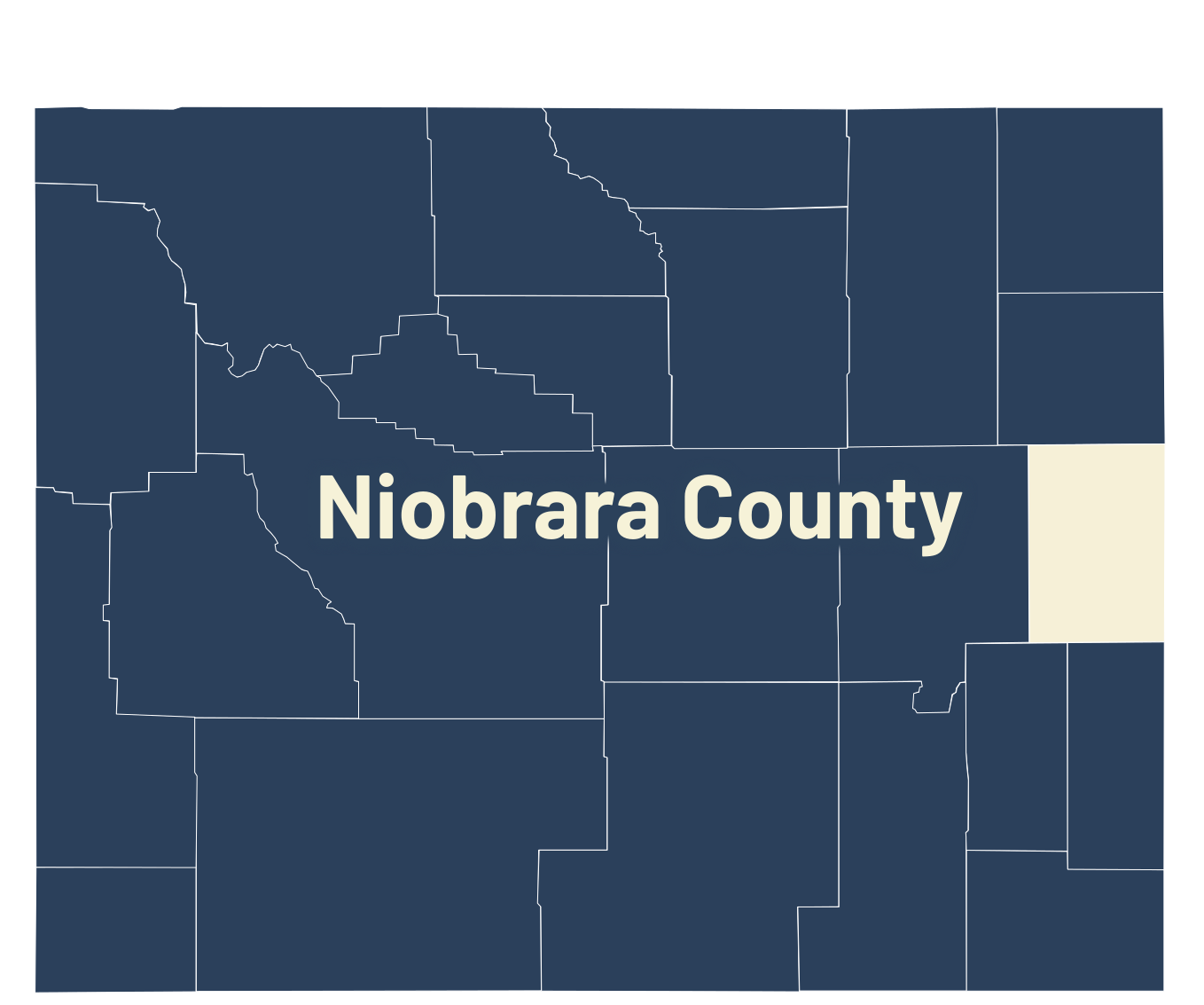
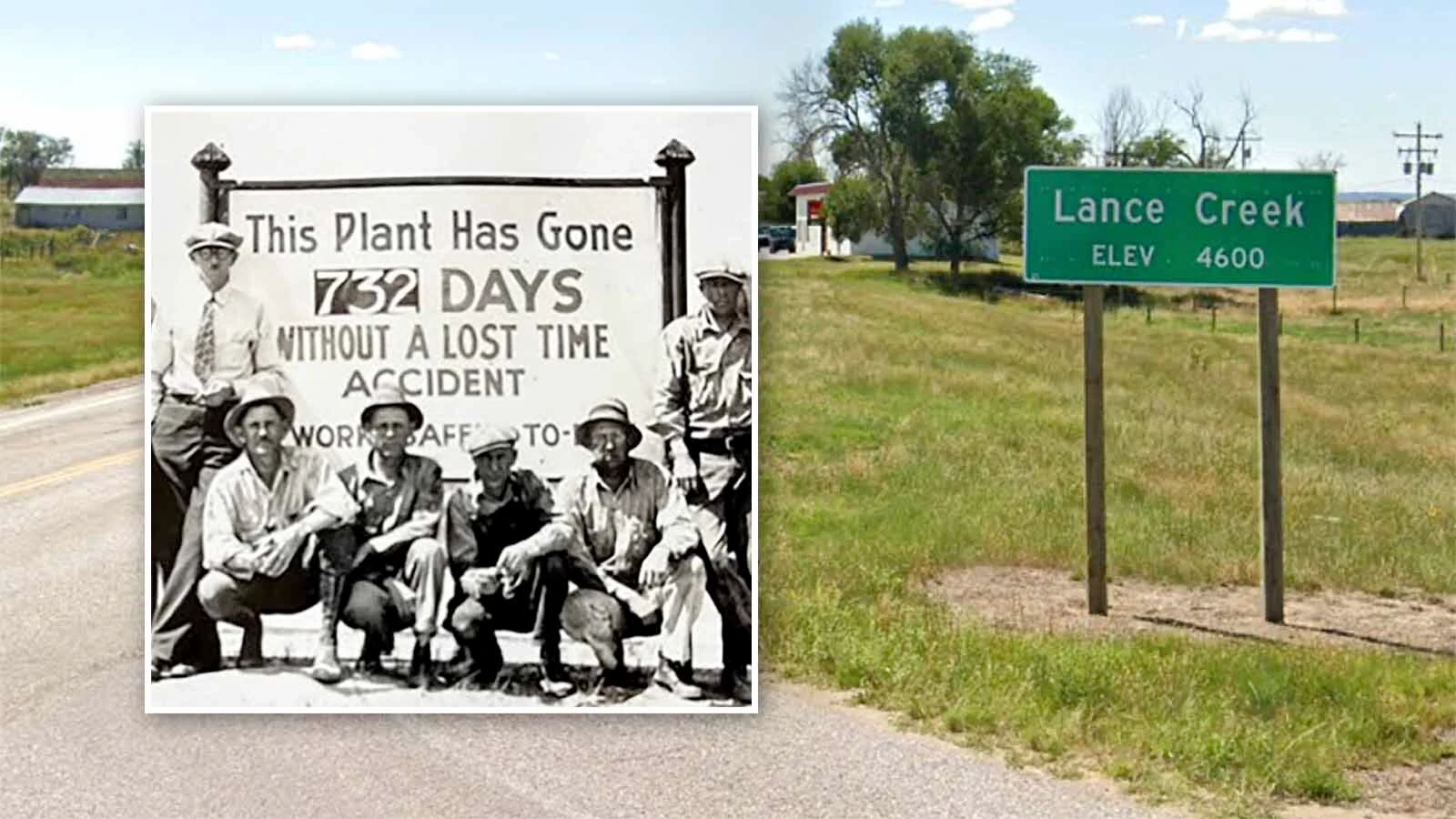
During World War II, wartime rumors swirled that Lance Creek in Niobrara County was on German Chancellor Adolf Hitler’s bombing list and that Japan had plans to attack as well.
Before the United States entered the war, the major oil companies in Lance Creek had completely shut down operations in October 1941 at their once-busy oil fields. This occurred despite a contemporary oil-industry report in the March 1, 1941, Montana Journal that showed Lance Creek produced more than one-quarter of Wyoming’s oil at 26,490 barrels of crude per day.
Then Japan attacked Pearl Harbor on Dec. 7, 1941, and, according to historian Geoff Dobson of wyomingtalesandtrails.com, the oil companies swung into emergency action. Drilling picked up immediately.
“Lance Creek was really quite important nationally because this was a pretty highly refined oil,” Leslie Stewart, a volunteer at Lusk's Stagecoach Museum, said.
WyoHistory.org documents that Lance Creek oil was considered particularly suitable for producing 100-octane aviation gasoline in the 1940s. Wyoming officials argued during the war that Lance Creek crude should be sent to Cheyenne's Frontier Refinery to make aviation fuel rather than be shipped elsewhere.
Meanwhile, immediate action against Hitler and the Japanese was taken at the newly reopened oil fields.
Local historian Gloria Vogel Johnson wrote in The Lusk Herald on July 9, 1986, that additional floodlights were installed and other measures taken against possible sabotage.
Lance Creek resident Tiffany Thurston’s grandfather had moved to the area just before the war broke out. She said an eight-foot chain-link fence was placed around the gas plant facility, and everyone who worked there had to have ID badges for fear of saboteurs.
“These ID badges were so that somebody wasn't coming in that shouldn't be there,” Thurston said. “But as far as protecting it if Hitler decided to bomb us, there was no protection from that.”
Oil production continued and the fields remained free from saboteurs and bombing raids as locals remained vigilant.
“Fears of the safety of loved ones who had been in the Pacific when war broke out caused much anxiety here,” Johnson wrote in 1989. “Home defense was rapidly perfected and scrap drives for paper, aluminum, and iron were conducted on a regular basis.”
After the war, the oil fields were once more largely abandoned. Today, the population has dwindled from an estimated 5,000 to less than 50.
Four students are enrolled at the elementary school. High schoolers bus to Lusk 35 miles away. Locals meet three days a week for coffee at the closed Conoco gas station, the only public place left.
“Lance Creek is very small — we have a post office,” Thurston said. “At one time there were three gas service stations operating in our town but the one we meet in was the last and it closed in the 1990s.”
Remnants of Lance Creek’s heyday are still etched into the land. Stands of trees mark where camps were and a few buildings still stand as a silent testimony to a vibrant oil town.
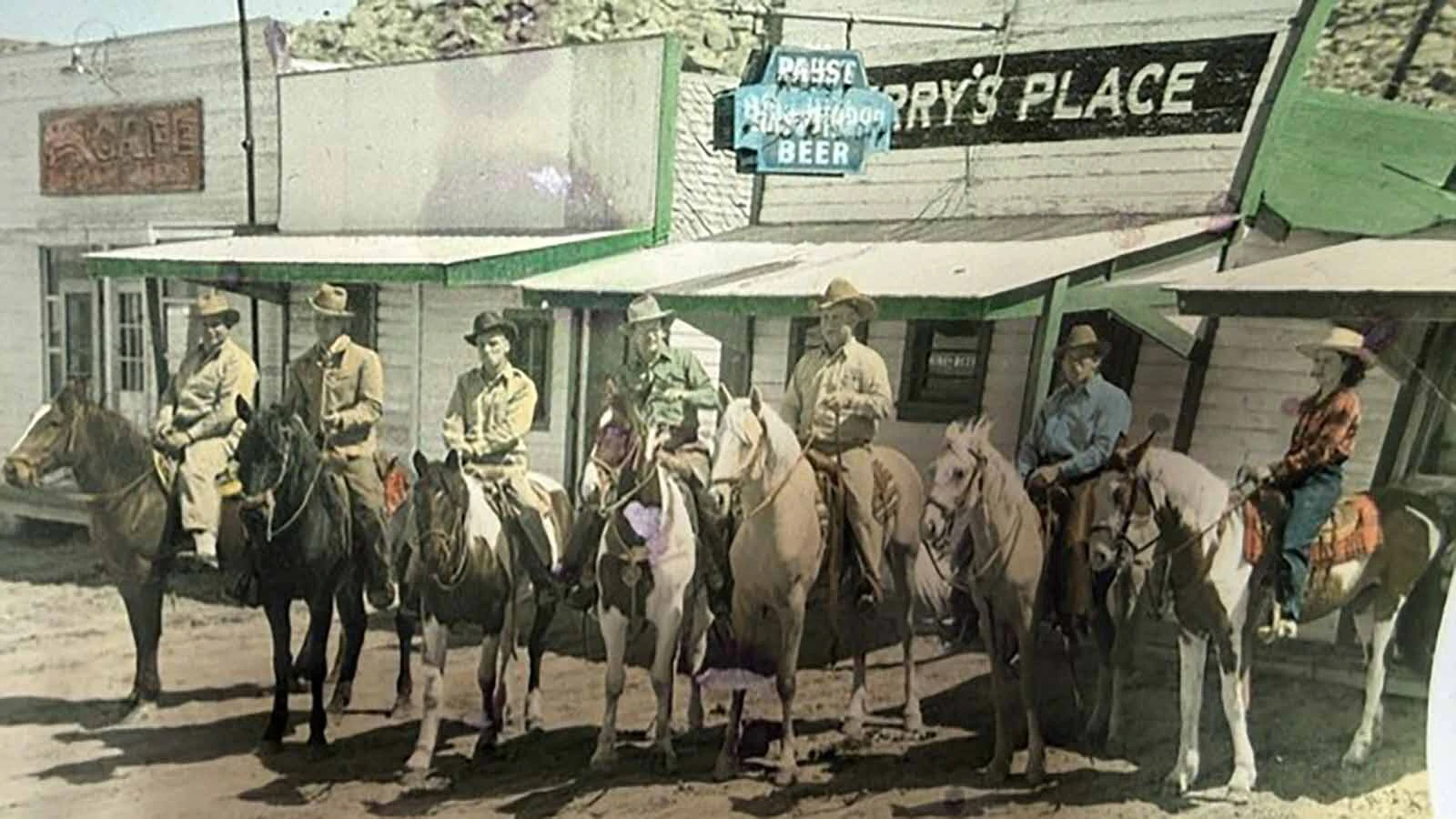
From 1918 to the 1950s, the oil field camps in Lance Creek, Niobrara County, ebbed and flowed with the oil. The highest number of residents was to be 5,000 people and today, there are less than 50 residents. (Stagecoach Museum) 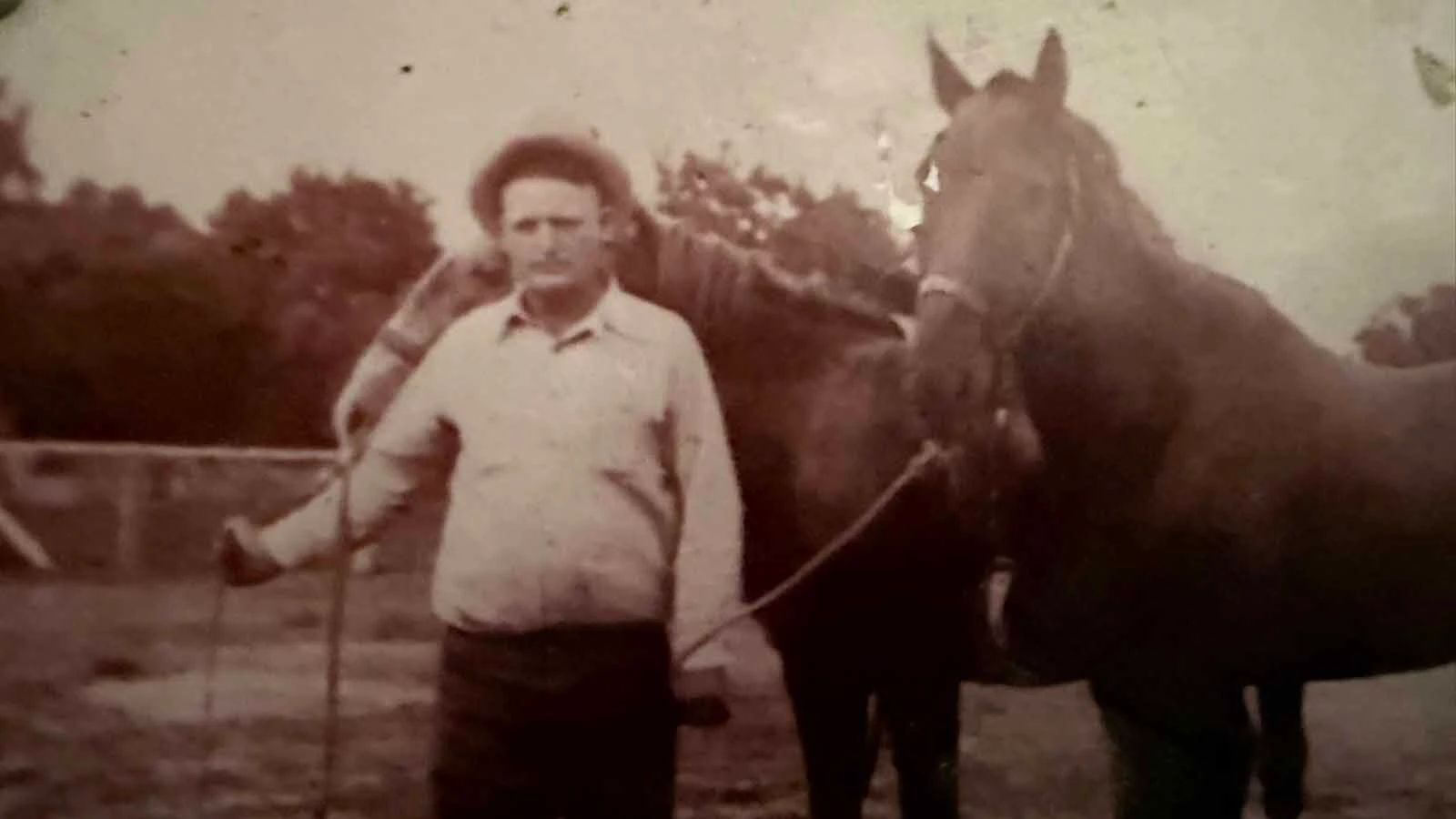
Aubry "Pat" Miller arrived in Lance Creek in 1938 and found work organizing rodeos. He was around when the oil fields were reopened in 1941 for the war effort and local oil companies were fearful of Nazi saboteurs. Local residents were also concerned that they would be bombed just like Pearl Harbor. (Tiffany Thurston) 
Tiffany and her husband John Thurston are one of the last remaining families in the once thriving oil camp and ranching community of Lance Creek. In its heyday, there were nearly 5,000 residents but today, the 2020 census numbers only 43 people. (Tiffany Thurston) 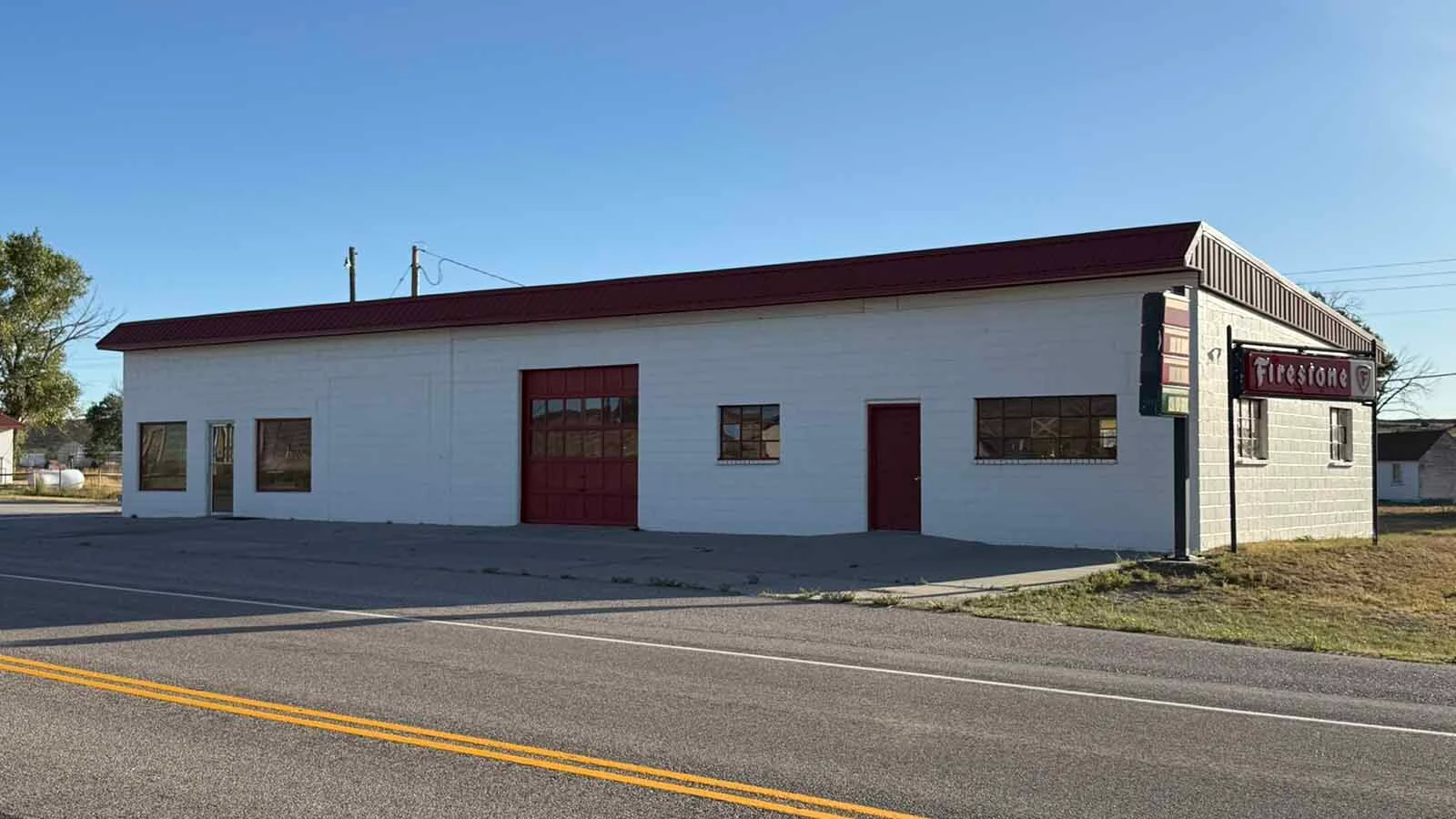
Lance Creek once boasted a bank, store, tennis courts, lit baseball fields and was a self-contained town. Now, its population is less than 50, they have a post office and the local coffee club meets in the closed Conoco gas station. (Tiffany Thurston) 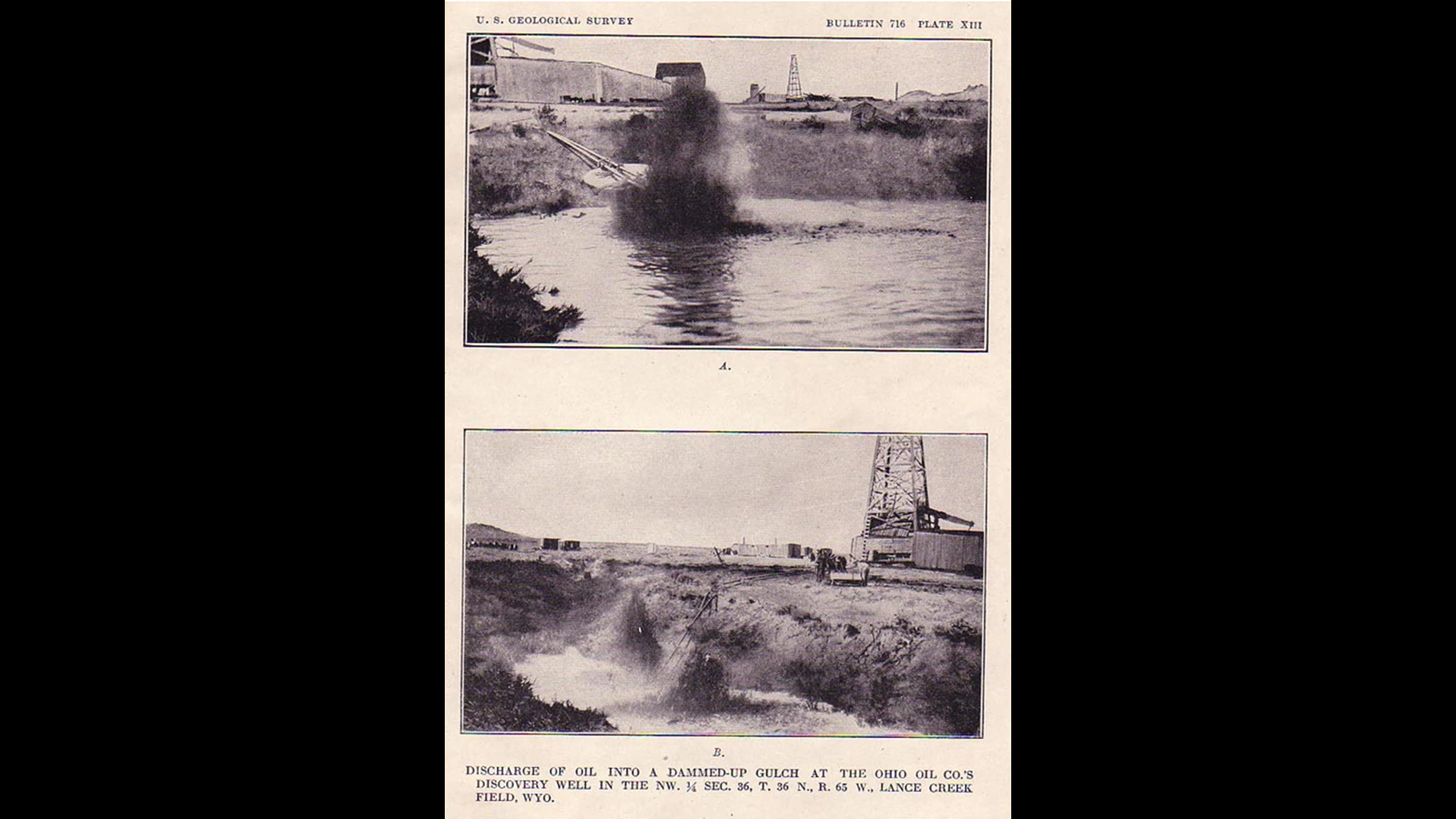
The oil in Lance Creek was sought after since 1912 but the first successful well was not drilled until 1918. After the Discovery Well, Lance Creek produced more than a quarter of the crude in Wyoming during the 1930s and 1940s. (U.S. Geological Survey)
The Forgotten Oil Camps
Dobson said the oil fields are largely forgotten and Lance Creek is now most noted for upper Crataceous dinosaurs discoveries at several sites between Lance Creek and Crazy Woman Creek, including the discovery in 1908 of the Edmontosaurus "Mummy" by Charles Sternberg and his sons.
Allegedly, the Sternbergs were working on behalf of the British Museum, but in a scene Dobson wrote that was reminiscent of the Bone Wars, the mummy was sold by Sternberg to the American Museum of Natural History for $2,000. The mummy is significant in that the specimen preserves an impression of almost an entire dinosaur hide.
Johnson’s research revealed that as early as 1912 efforts were made to drill a hole on Buck Creek, but it wasn’t until 1913 that the Lusk Wyoming Oil Company was founded.
Ohio Oil Company, later known as Marathan Oil, took over the field and finally struck oil on Oct. 6, 1918. The Discovery Well flowed at the rate of 1,500 barrels.
A booming townsite was immediately anticipated and was named, according to Thurston, after the Lance Creek formation from which the oil came. The Lance Creek post office was officially established Nov. 19, 1919. Men working around the clock would hire women to wait in line for their mail.
As the rush started, rigs and camp equipment were hauled in. In one four-day period, more than 1 million pounds of freight were moved from Lusk alone. Nine major oil companies built their own camps for employees.
“These camps created the Lance Creek community and rivaled each other,” Stewart said. “They'd have local baseball games between groups and other competitions.”
To meet the needs of oil company employees, Lance Creek had every type of business imaginable, from banks to drugstores. The community was completely self-contained.
Johnson wrote that those seeking recreation could play tennis, golf, shoot at the rifle range, go roller skating and ice skating, see a movie at the theater, go bowling, play pool or if you were lucky enough to have a plane, Lance Creek had its own airport, which was still used in the late 1980s.
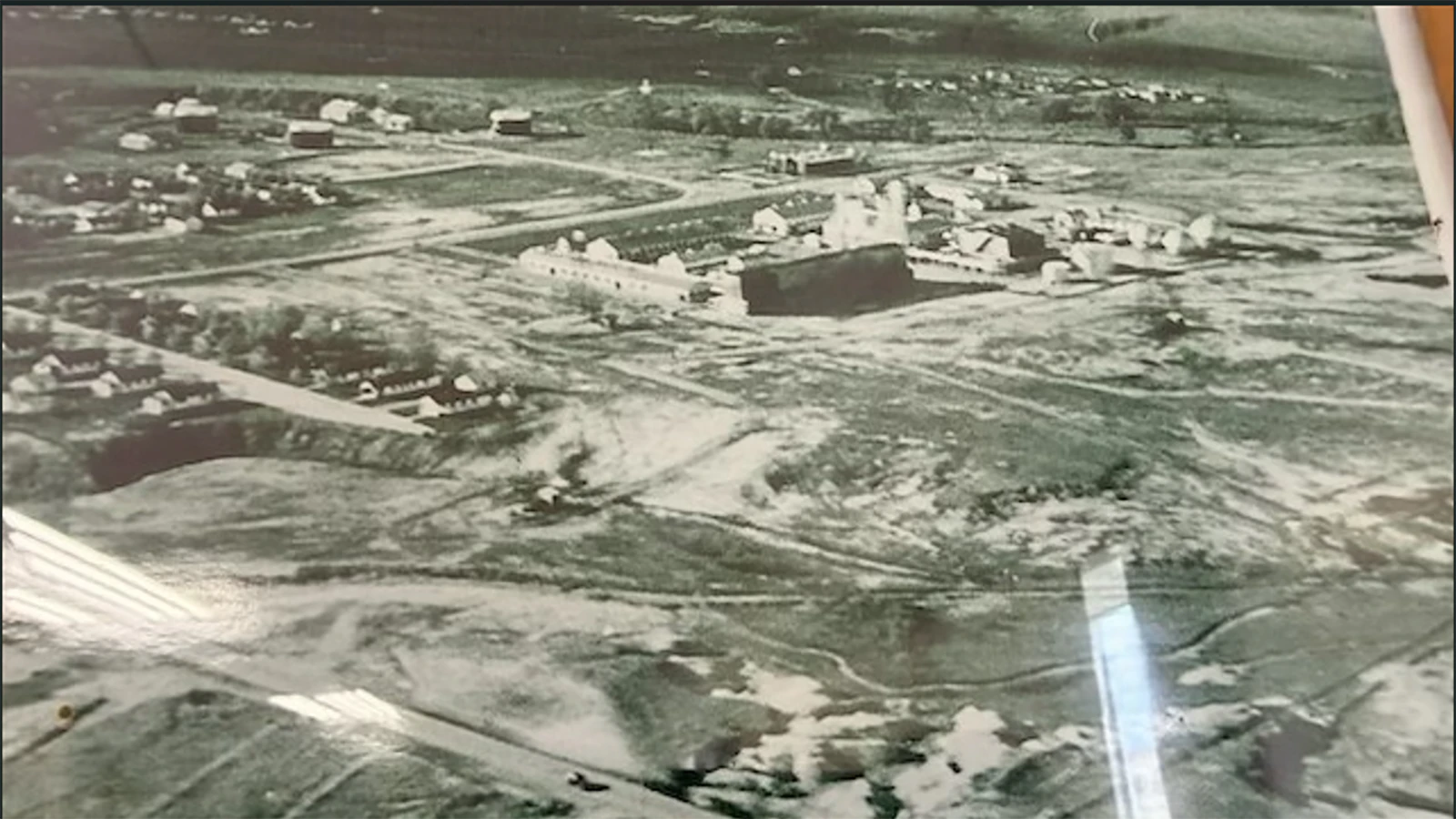
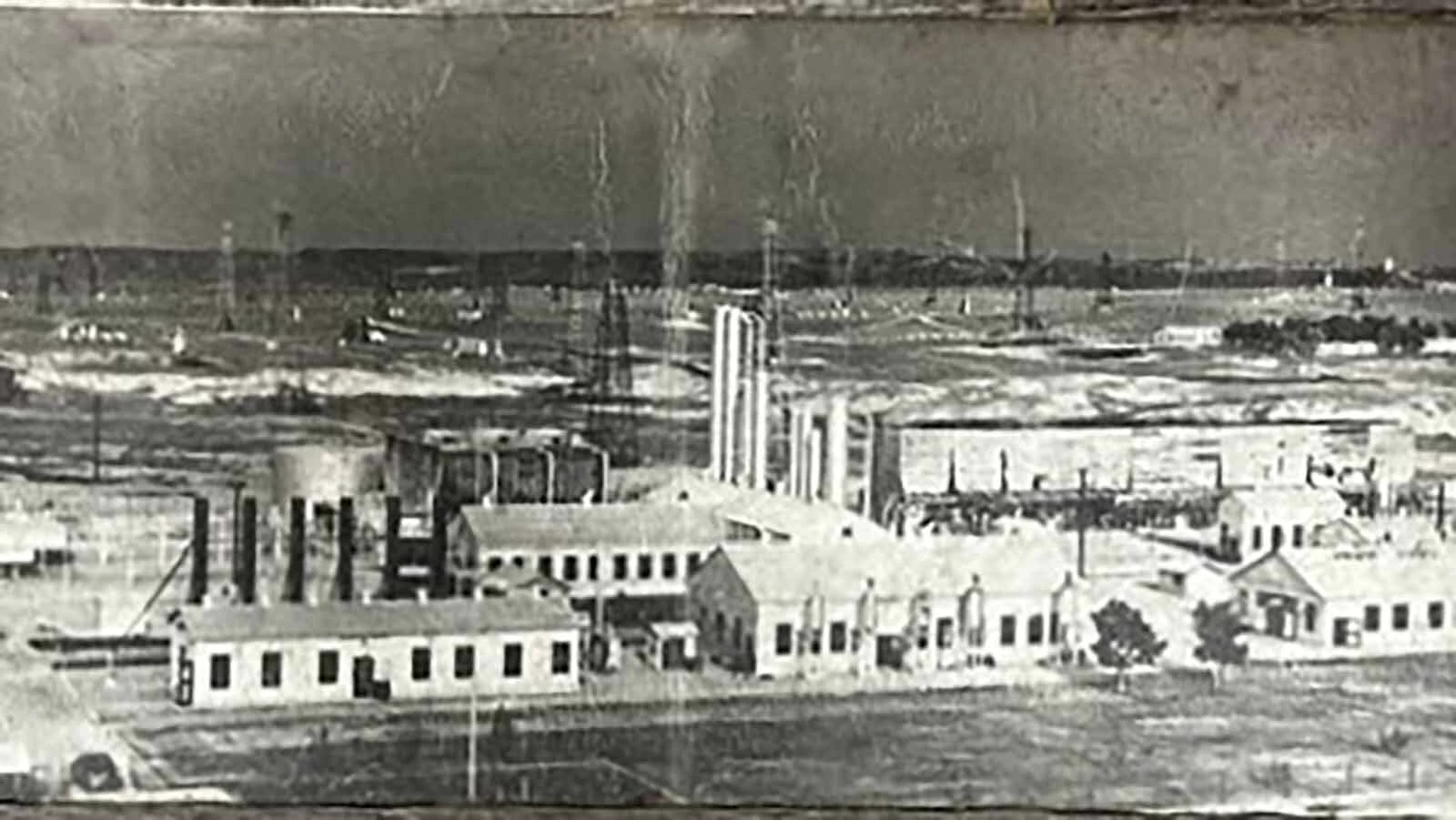
During World War II, the oil fields of Lance Creek were vital in supplying oil to the war effort. Oil companies feared Nazi saboteurs and tightened the security around the facilities. (U.S. Geological Survey) 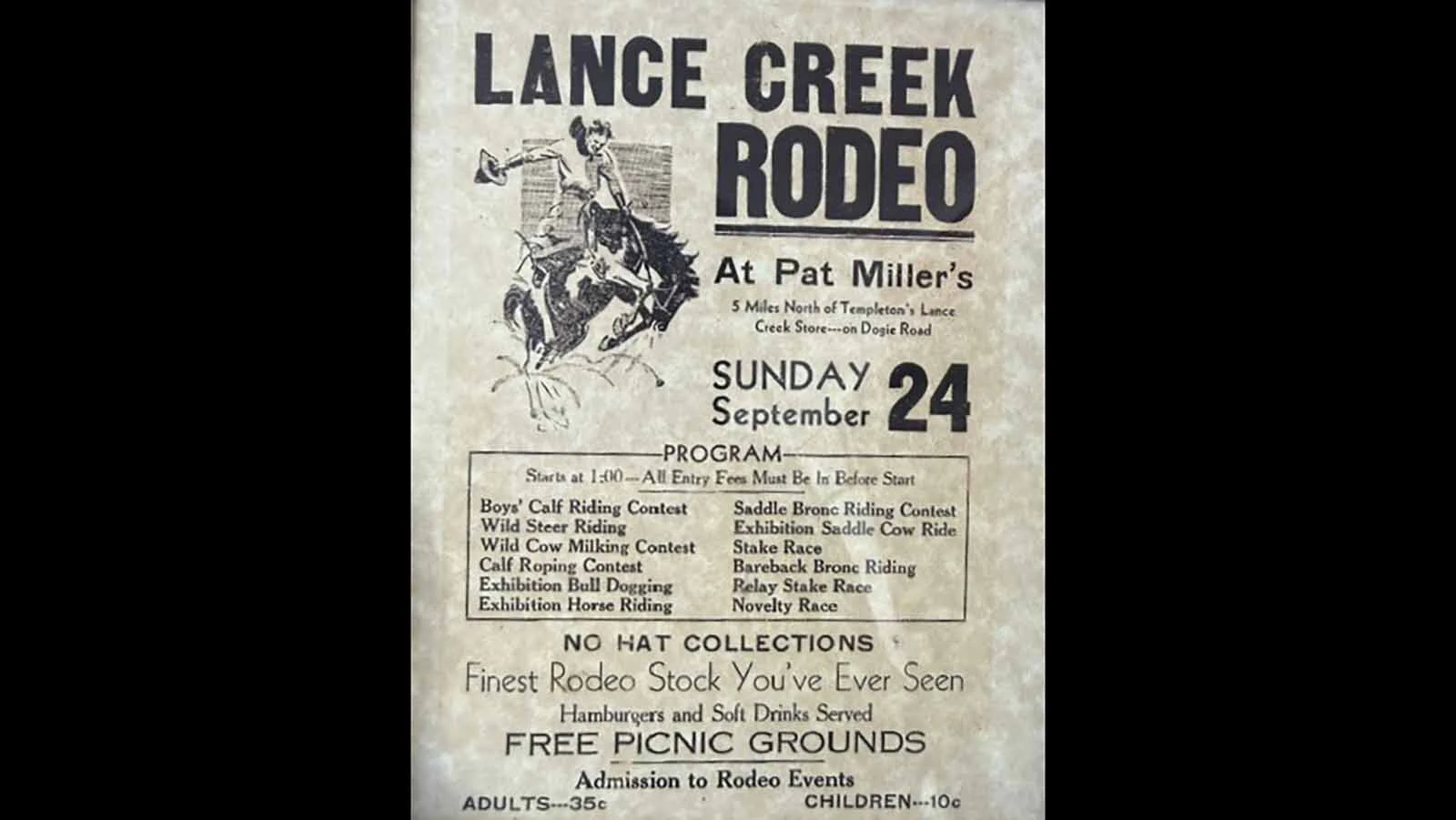
From 1918 to the 1950s, the oil field camps in Lance Creek, Niobrara County, ebbed and flowed with the oil. The highest number of residents was to be 5,000 people and today, there are less than 50 residents. (Stagecoach Museum) 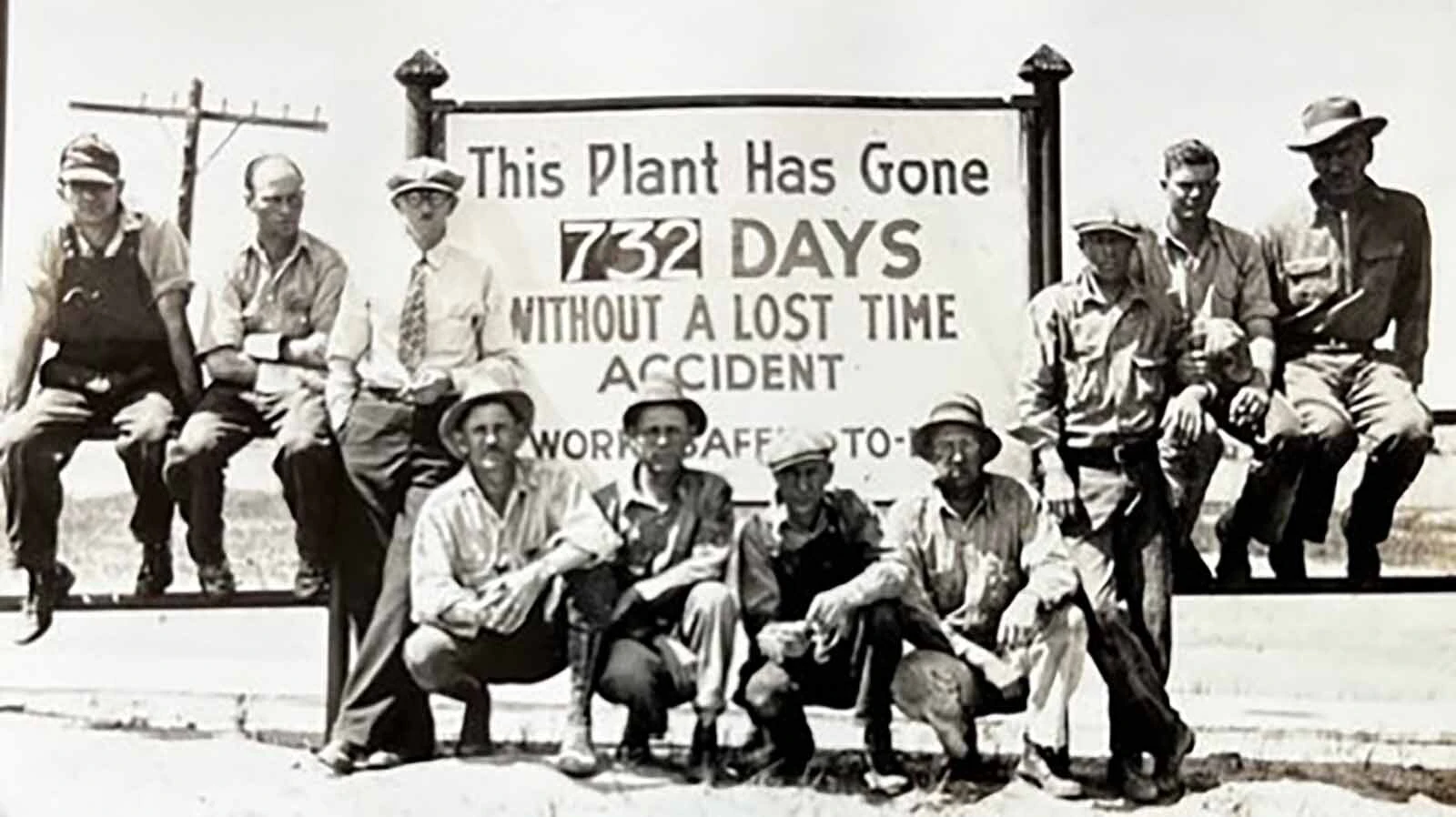
From 1918 to the 1950s, the oil field camps in Lance Creek, Niobrara County, ebbed and flowed with the oil. The highest number of residents was to be 5,000 people and today, there are less than 50 residents. (Stagecoach Museum)
Dangerous Roaring ‘20s
Life at an oil camp could be dangerous, according to Johnson. One of the largest of many fires erupted in January 1924, when Union's big gasser ignited after the cap was removed during a test of the well.
The heavy pressure lifted a rock that encountered the crown block, creating a spark. Flames shot high, and the roar of the fire could be heard for miles.
Forty million cubic feet of gas went up in smoke daily for 10 days. It took 60 pounds of dynamite to smother the fire with an explosion.
Another disaster almost caused mass starvation.
The H. J. Templeton grocery store burned to the ground in a blizzard in April 1927. The heavy, wet snow caused the roof to collapse, and the bursting gas pipes set fire to the building. This was the only food supply house for miles and suddenly the community of what was then 300 people was without food.
A road was finally broken through the 10- and 15-foot drifts to the Buck Creek camp. A two-day supply of food was brought in by the big Carbon Black truck and several other oil company trucks. A 10-ton Caterpillar tractor pulling a trailer heavily loaded with supplies made a 300-mile trip to Lance Creek in 19 hours.
On its return trip to Lusk, the tractor pulled the big Carbon Black truck and another truck, which had exhausted their fuel supply bucking the heavy snows. This broke the road enough so the trucks could make it back to Lance Creek with more supplies.
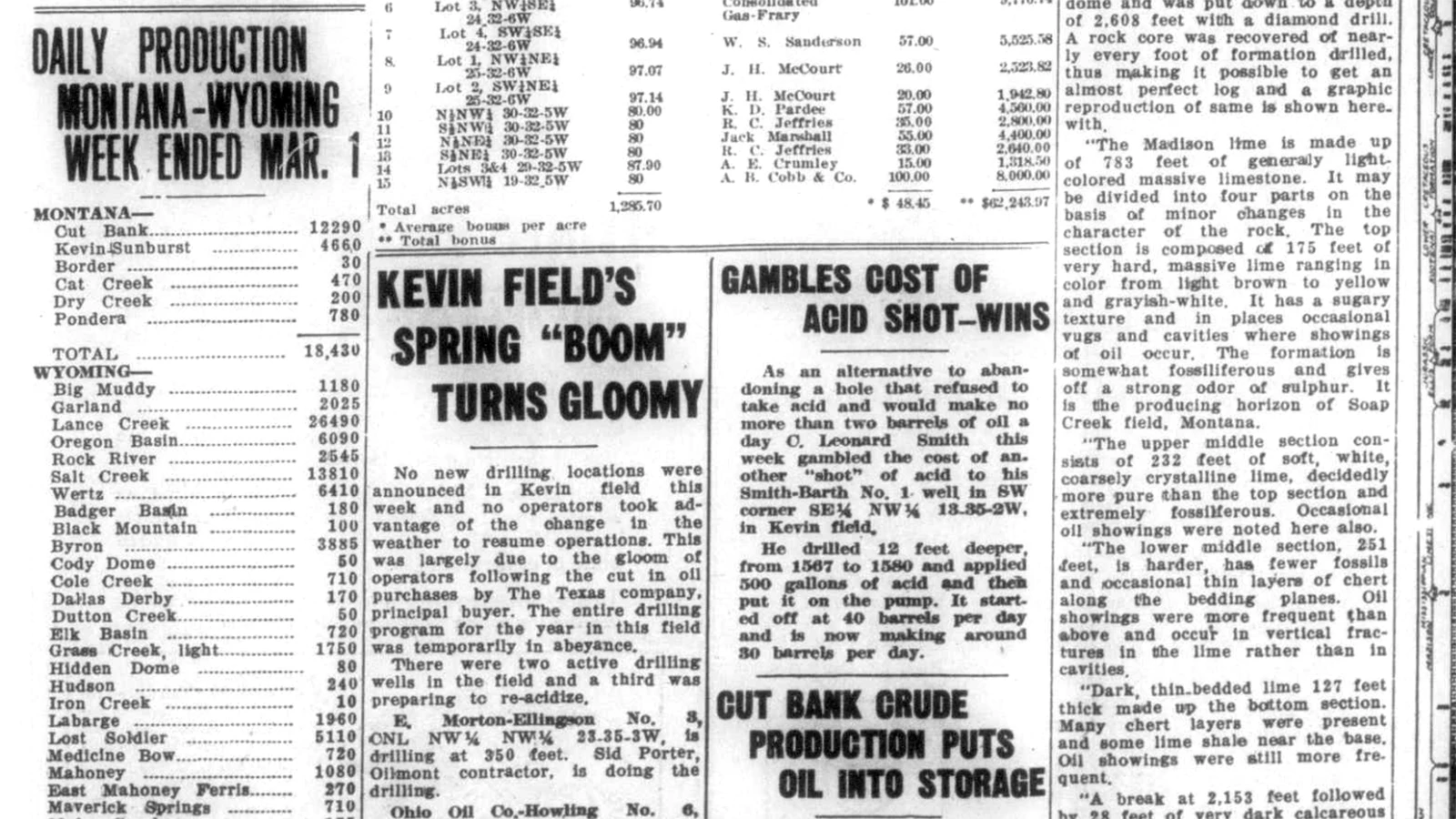
The March 1941 Montana Journal reported that 36% of all oil in Wyoming came from Lance Creek in Niobrara County. The fields were temporarily closed until America entered World War II and oil was desperately needed. Oil companies were concerned about Nazi saboteurs and tightened security while locals were convinced that they would be bombed just like Pearl Harbor. (Library of Congress) 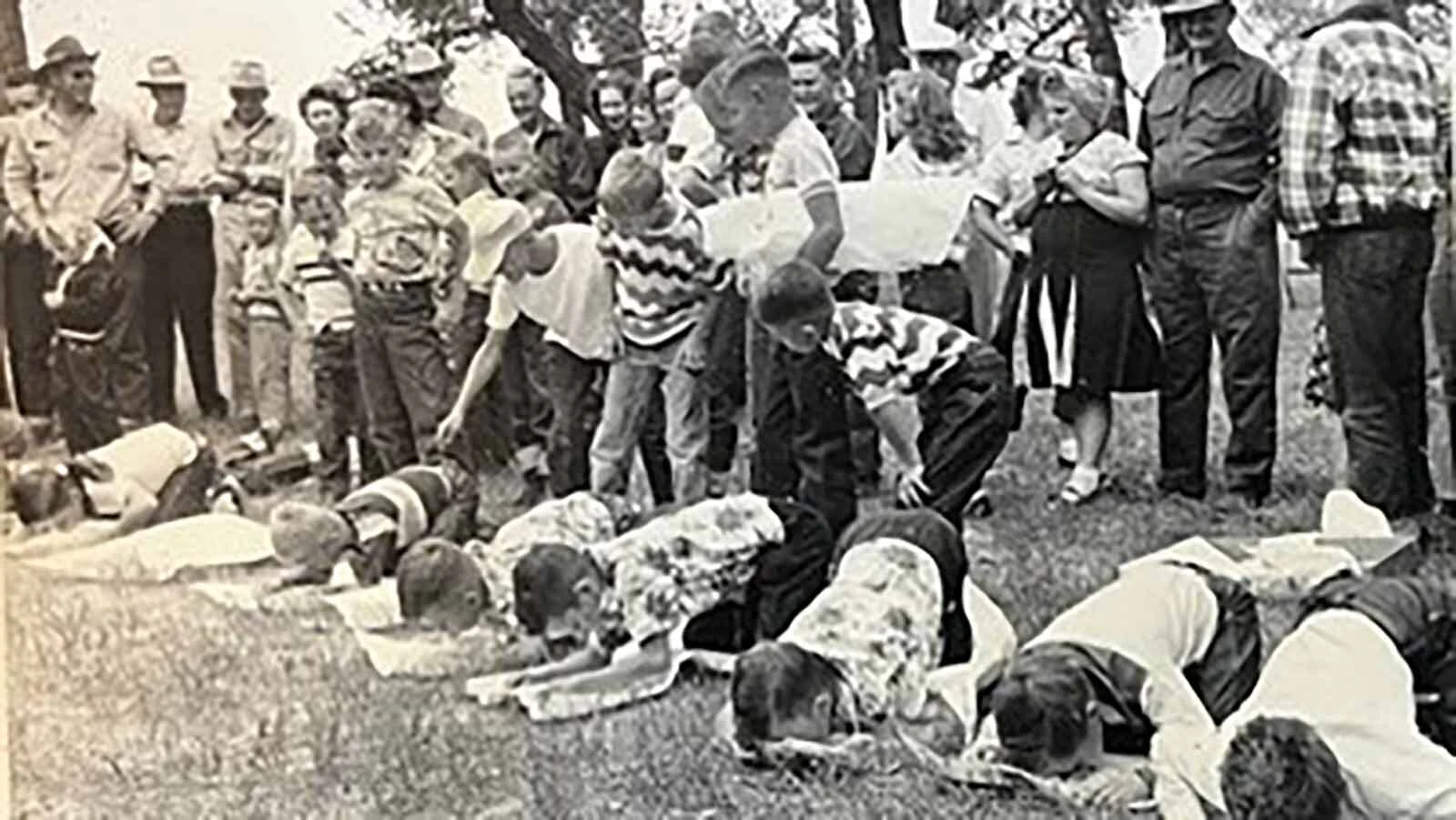
From 1918 to the 1950s, the oil field camps in Lance Creek, Niobrara County, ebbed and flowed with the oil. The highest number of residents was to be 5,000 people and today, there are less than 50 residents. (Stagecoach Museum) 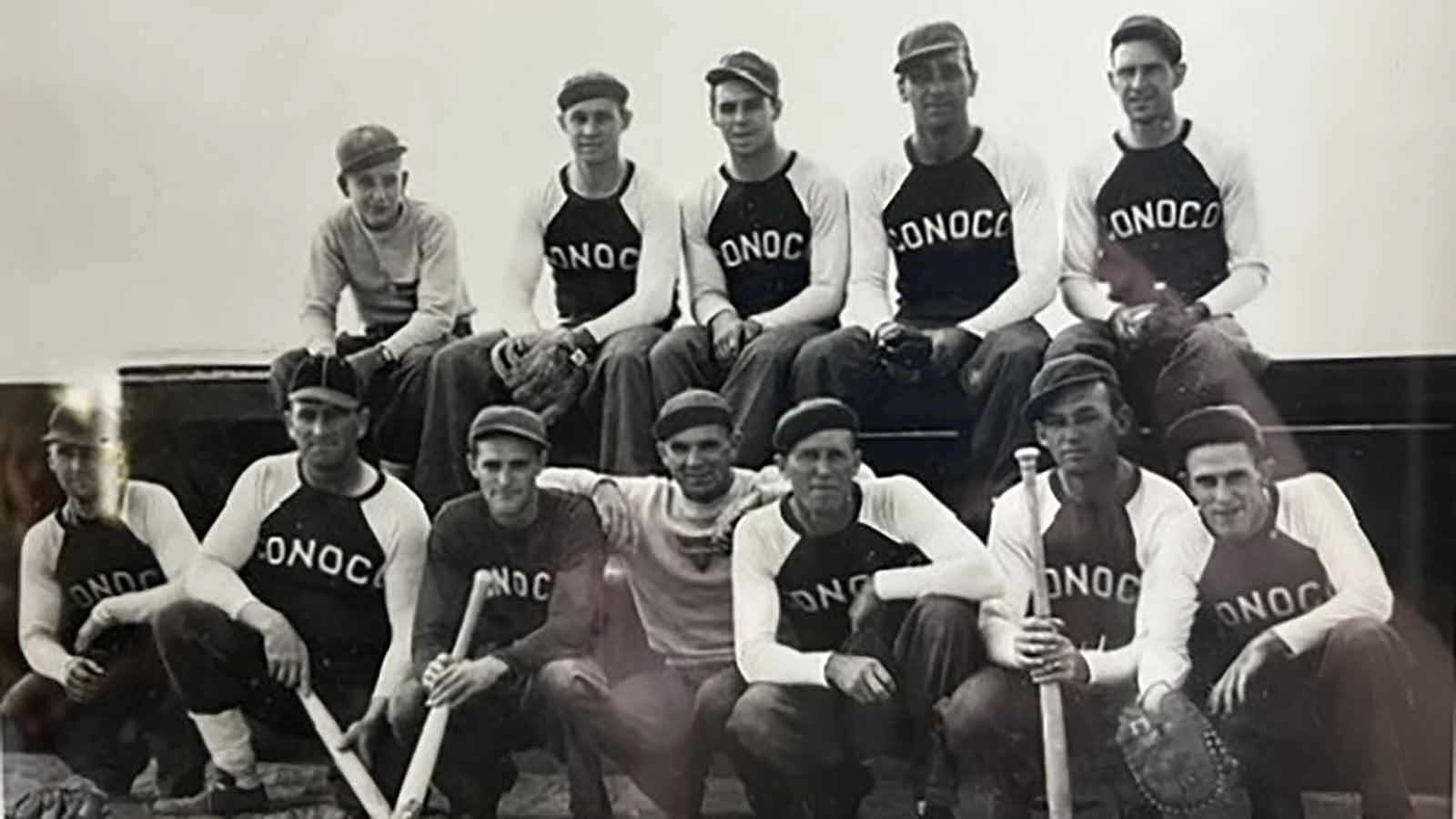
From 1918 to the 1950s, the oil field camps in Lance Creek, Niobrara County, ebbed and flowed with the oil. The highest number of residents was to be 5,000 people and today, there are less than 50 residents. (Stagecoach Museum)
Ghost Camps
Production started dwindling in the field and the oil pool was put into a systematic water-flooding program to gain all the production possible. The 1950s saw many families in Lance Creek transferred to oil fields in other regions.
As people moved out, so did the houses. Little remains of the many camps that comprised the Lance Creek community.
A few families remain, making a living with private oil fields and ranching.
“My granddad moved here in 1938 and we've just continued,” Thurston said. “He came here and was ranching and producing rodeos. My dad got a degree from the University of Wyoming in agriculture and came home and ranched, and started a successful oil filled business, that's still in operation today.”
Miller Enterprises, Inc. is run by Thurston’s brother and continues to provide for the family.
The history is being preserved through a museum housed in some of the old oil field buildings. Aj camp house can be toured by visitors wanting to experience a hint of what life was once like in this rural oil camp.
“Our family legacy continues in Lance Creek,” Thurston said. “It's just continuing with another generation.”
Jackie Dorothy can be reached at jackie@cowboystatedaily.com.


