
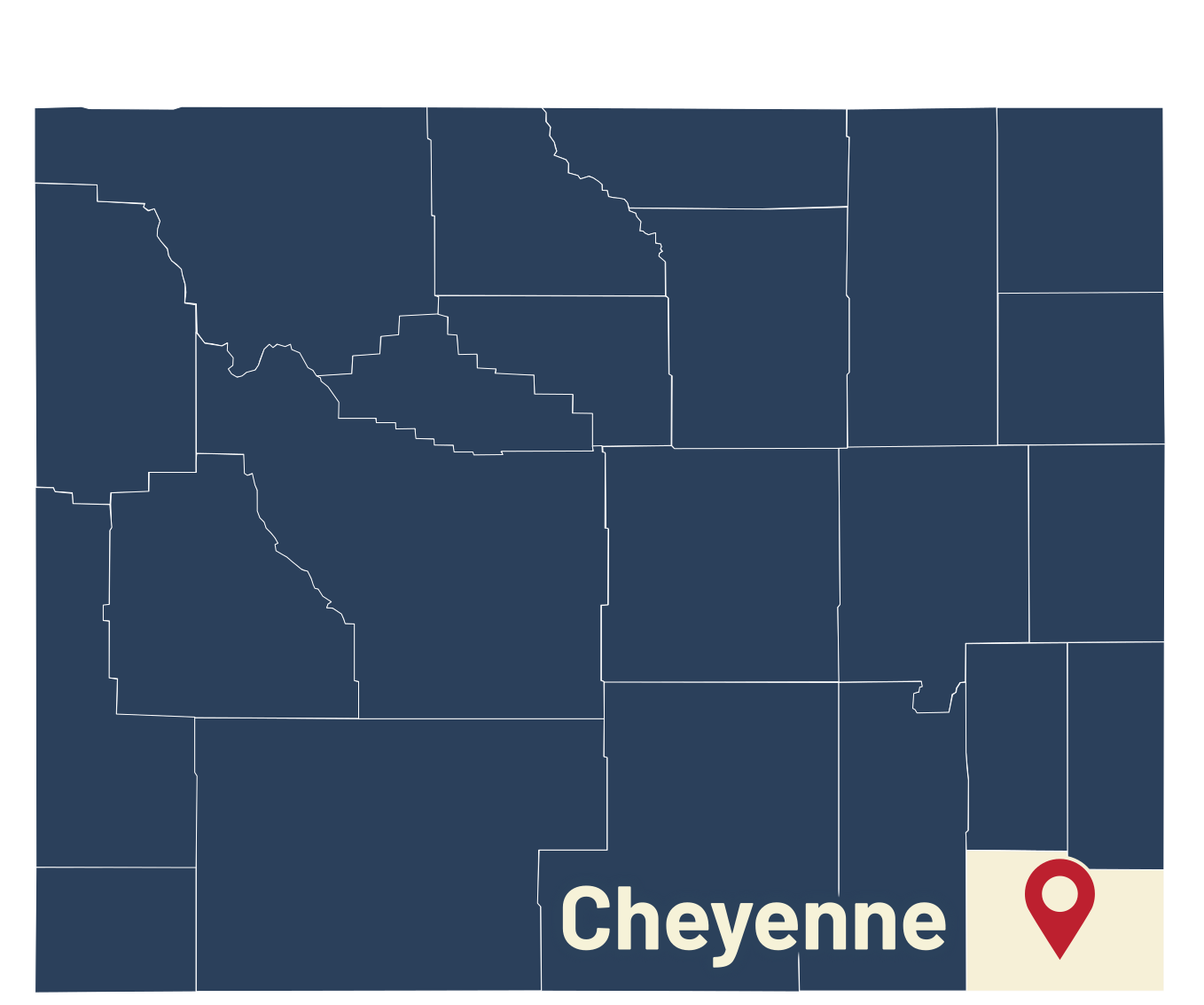
CHEYENNE — There was a time when Alyssa Lenell-White swore up and down she would never make a cowboy boot.
They were too tedious, too traditional, and too far removed from the contemporary fashion footwear she imagined creating.
But plans change, and so do passions.
Today, Lenell-White almost exclusively makes cowboy boots, and she wouldn’t have it any other way.
Monday morning, surrounded by the rich, earthy scent of leathers she has sourced from what she says are among the last remaining tanneries in North America, her smile was everlasting as she thought about all the cowboy boots she’ll be making in her new Cheyenne storefront, Aly L’s Custom Boots & Shoes.
“I always wanted to do women’s shoes, the fashion side,” she said. “And then I kind of started into that and went, OK, but then you’re playing with fast fashion, and I don’t like fast fashion very well. It’s not good for our environment, it’s not good for anything.”
The more she thought about cowboy boots, the more intrigued she became.
“They’re not going to break down in a year and get thrown away,” she said. “They’re repairable. It’s going to take a couple of years just to get to the point where they need repair in the first place.”
What clinched it, though, was the huge creative canvas that a pair of cowboy boots offers. So much bigger than a mere shoe.
“So then I did fall in love with cowboy boots,” she said, gesturing to the tops of a pair of boots. “Because I have this big open space to create things on and make beautiful artwork.”
Lenell-White now spends hours sitting with a sketchbook, dreaming up new boot designs, and it’s rare that she wants to make anything else.
Cowboy boots have roped her in.
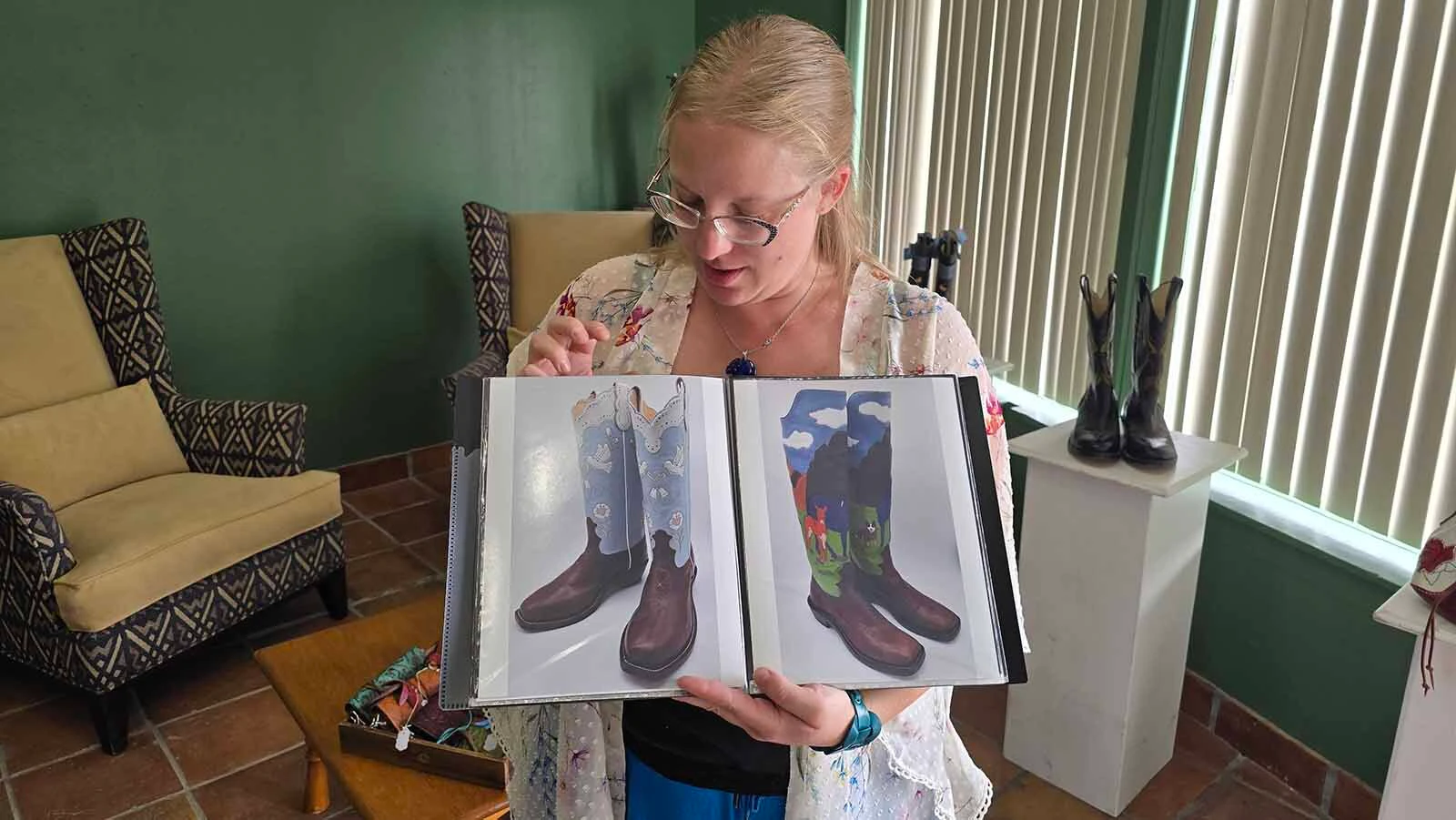
Alyssa Lenell-White talks about some of the boots she's designed for customers in the past. Her boots start at $3,500. (Renee Jean, Cowboy State Daily) 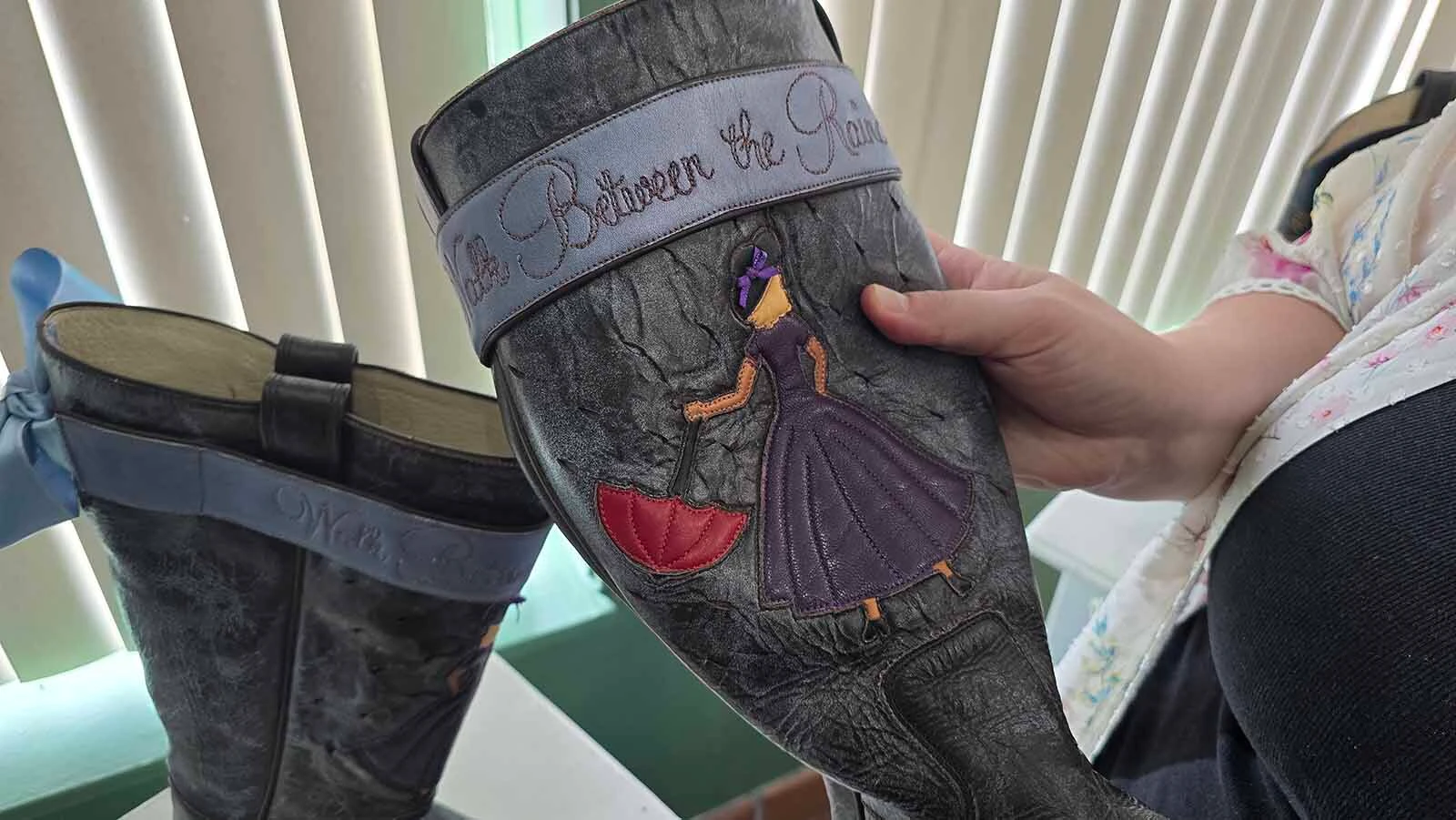
This pair of boots commemorates Alyssa Lenell-White's grandmother and a song she wrote called "Walk Between The Randrops." (Renee Jean, Cowboy State Daily) 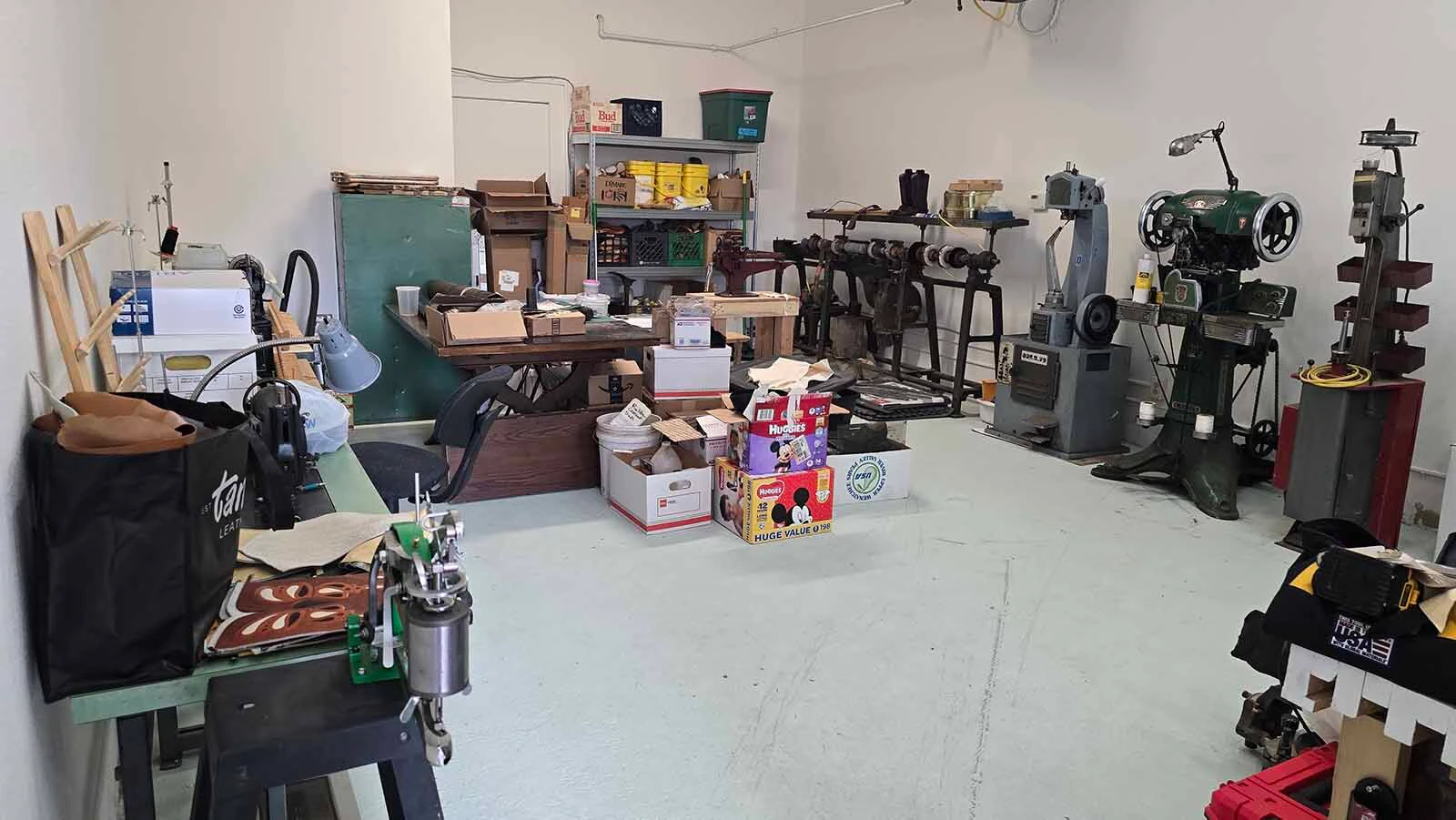
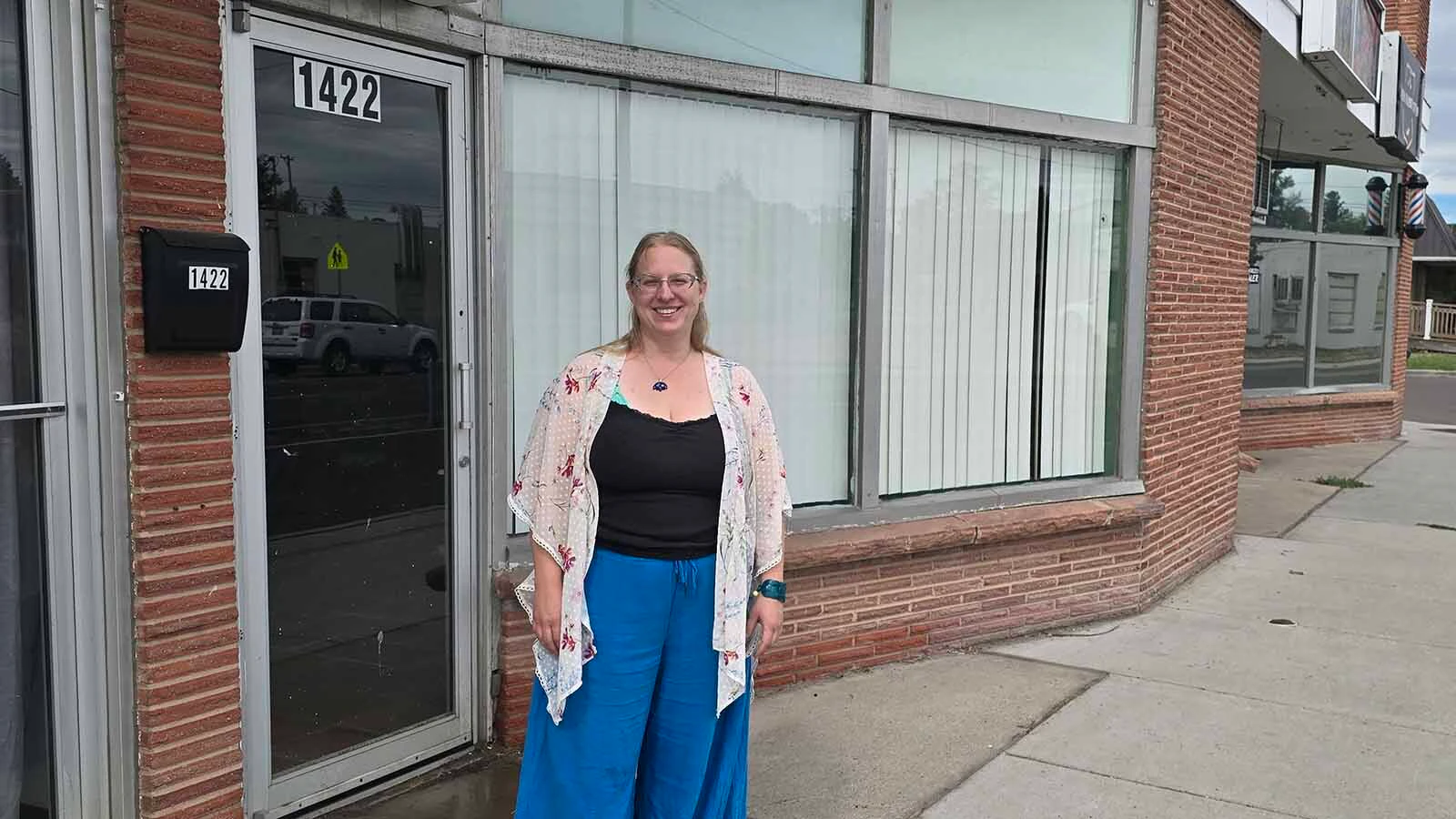
Alyssa Lenell-White's new custom bootmaking shop in Cheyenne. (Renee Jean, Cowboy State Daily) 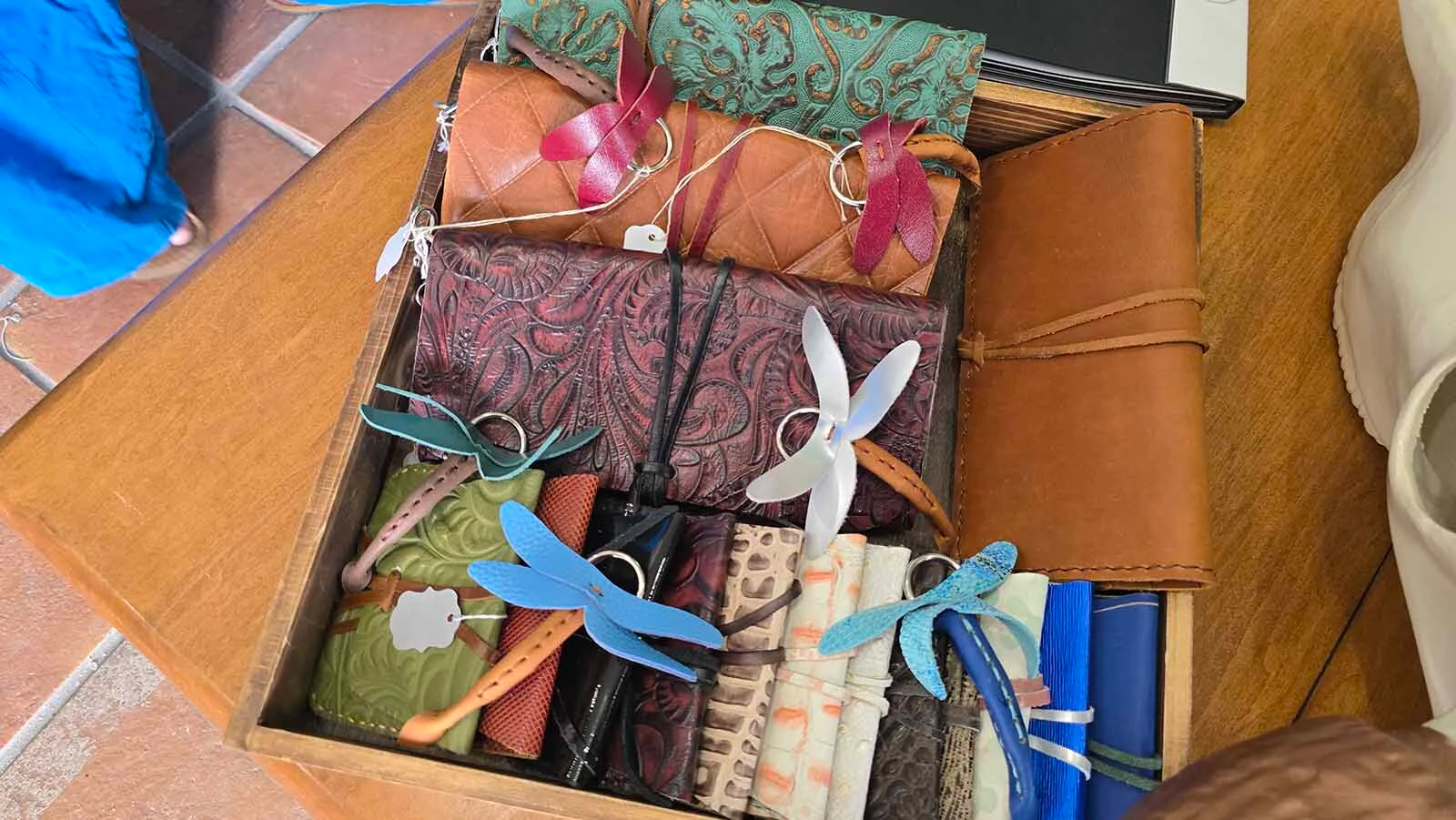
Alyssa Lenell-White has also made a variety of other leather objects. But lately she's obsessed with cowboy boots. (Renee Jean, Cowboy State Daily) 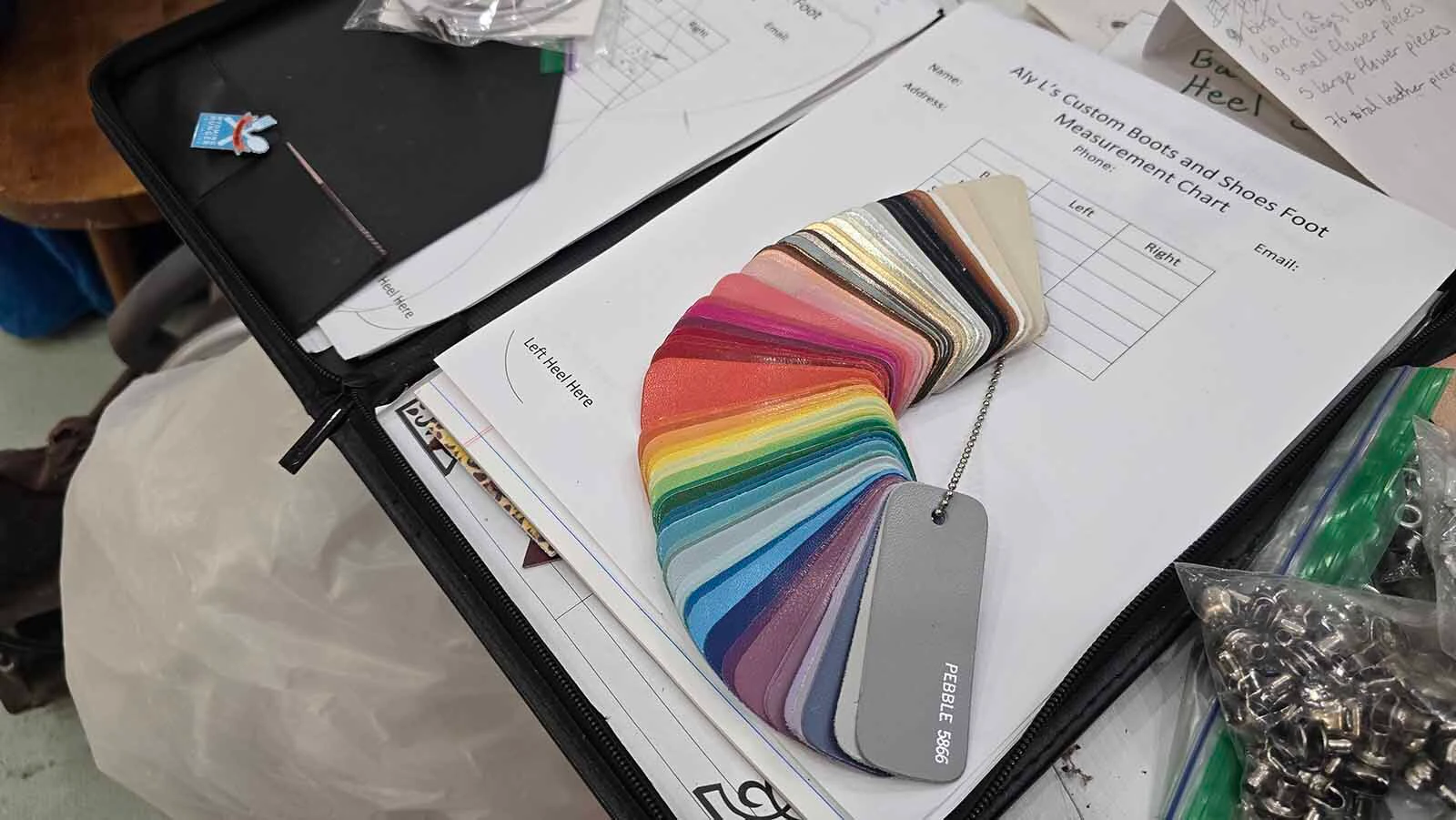
Samples of available leather colors for making boots in Alyssa Lenell-White's new custom bootmaking shop in Cheyenne. (Renee Jean, Cowboy State Daily)
Leather-Scented Shop
On Monday, most people in Wyoming were enjoying a little hard-earned rest for the federal Labor Day holiday.
But not Lenell-White.
Resting was the last thing on her mind. There was far too much work to do in her new storefront — boxes to unpack and boots to arrange.
“This was a great day to do this because my husband’s off work,” she said with a chuckle. “He took the three children.”
That left her free to unpack boxes and arrange boots in her new shop, where the rich scent of leather was already chasing away old-building smells.
Lenell-White has worked with leather for so long, she doesn’t smell it any more.
“You go nose-blind to things you’re around all the time,” she said.
Still, every once in a while, when she’s “face into” a project, even she notices the fresh, raw smell, somewhere between smoky oak and warm, dry earth.
It’s the scent of the Old West and of a craft Lenell-White said is becoming increasingly rare, one she wants to preserve.
“I love being part of this movement to bring back these crafts that don’t exist anymore,” she said. “Things that we made into big manufacturing companies and shipped overseas. There aren’t a lot of us left. Maybe a few thousand in the world. It’s a small enough community, I could literally know almost everyone who works in the craft.”
An Accidental Avocation
Lenell-White has always liked making things.
“Since I was little and tiny, I was always learning new crafts and new arts,” she said. “And I just kind of fell in love with (bootmaking) and how unique it is. It’s kind of a dying space.”
Her degree is in design and technical theater, a profession she jokes is “wonderful but not like super lucrative.”
Bootmaking was all but an accident in her career plan.
“I was in kind of my last couple years of college,” she said. “And there was a man, Tom Mattimore, up in Laramie who made boots. He made military re-enactment stuff. That’s almost exclusively what he did. Civil War, World War I, World War II — that sort of stuff.”
Mattimore was a go-to craftsman for re-enactors. His boots don’t just look old. He uses period-correct construction techniques, including hand-pegging soles with lemonwood pegs and sourcing authentic historical lasts, which are the foot-shaped molds used to shape shoes.
Because of his attention to historical detail, Mattimore’s boots and leather goods have been featured in major historical films and television productions, including “Gettysburg,” “Gods and Generals,” and other Westerns.
Mattimore was tapped to make a run of boots for a University of Wyoming show. During that, he told the costume shop head he was interested in teaching others his craft.
“It took me a year to get up the guts to go in,” Lenell-White said. “I didn’t have any confidence in myself at the time as a stitcher, or as in anybody.”
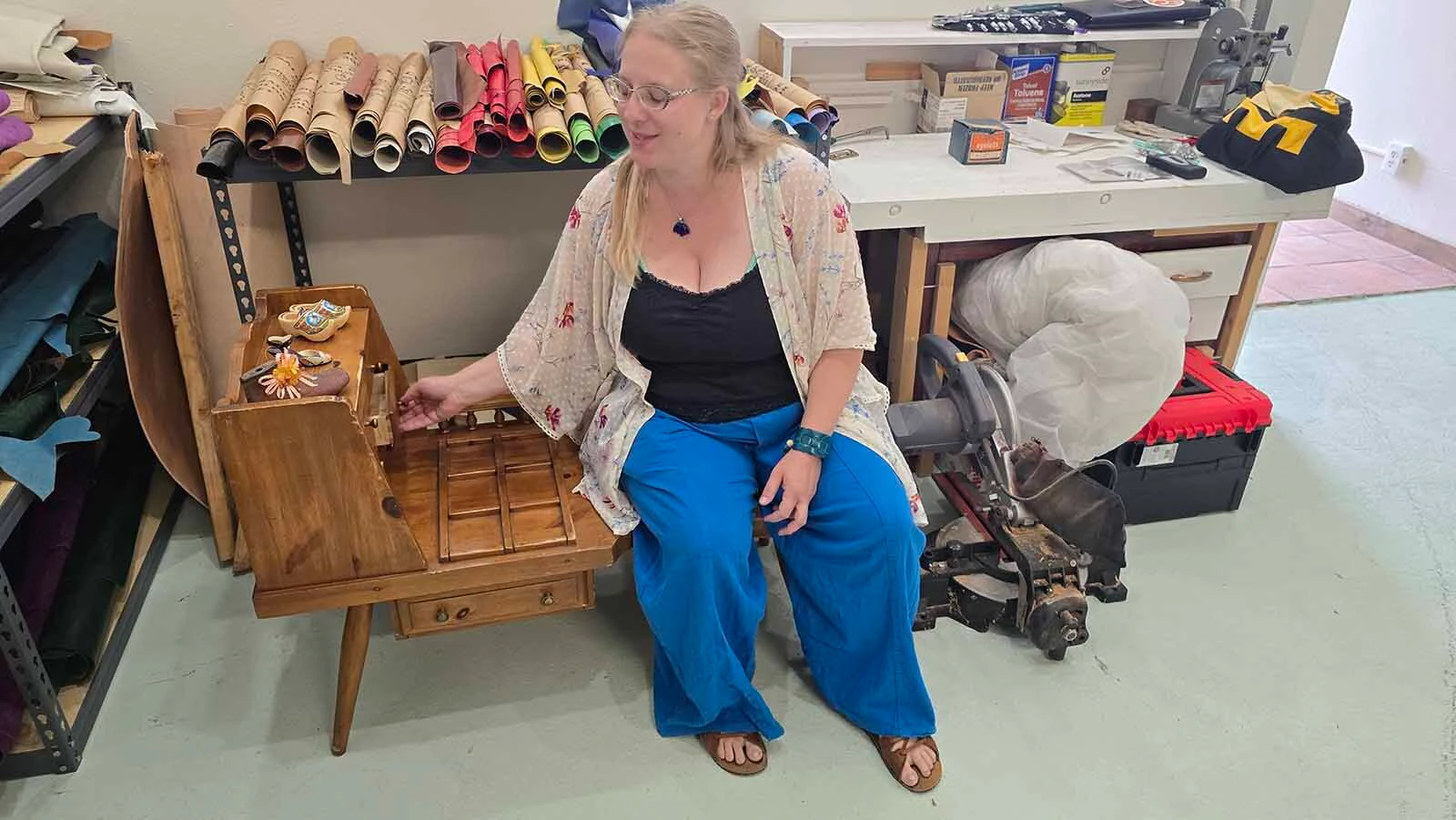
Alyssa Lenell-White Photo sits on the cobbler's table her husband gave her for her new, custom bootmaking store in Cheyenne. (Renee Jean, Cowboy State Daily) 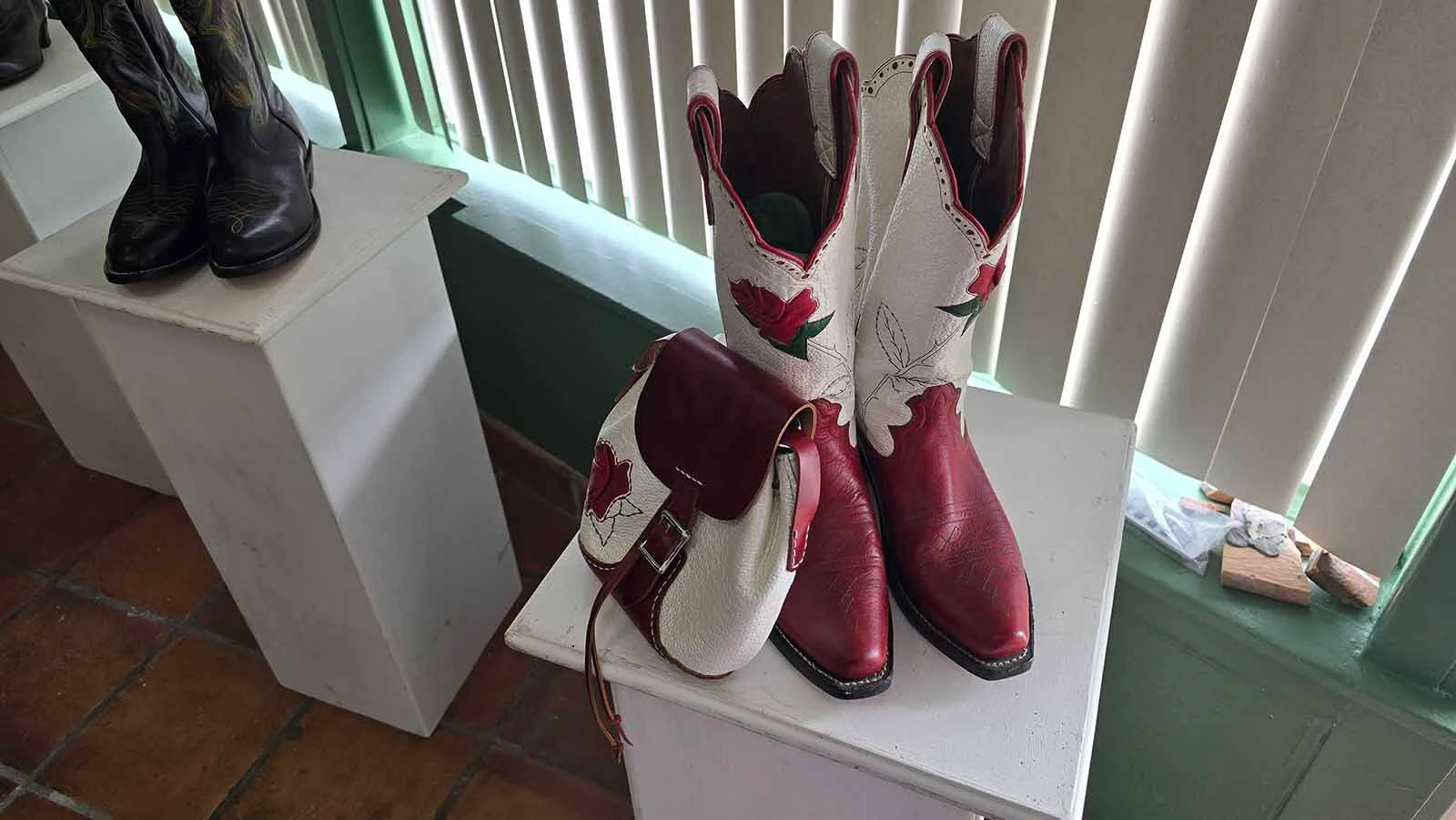
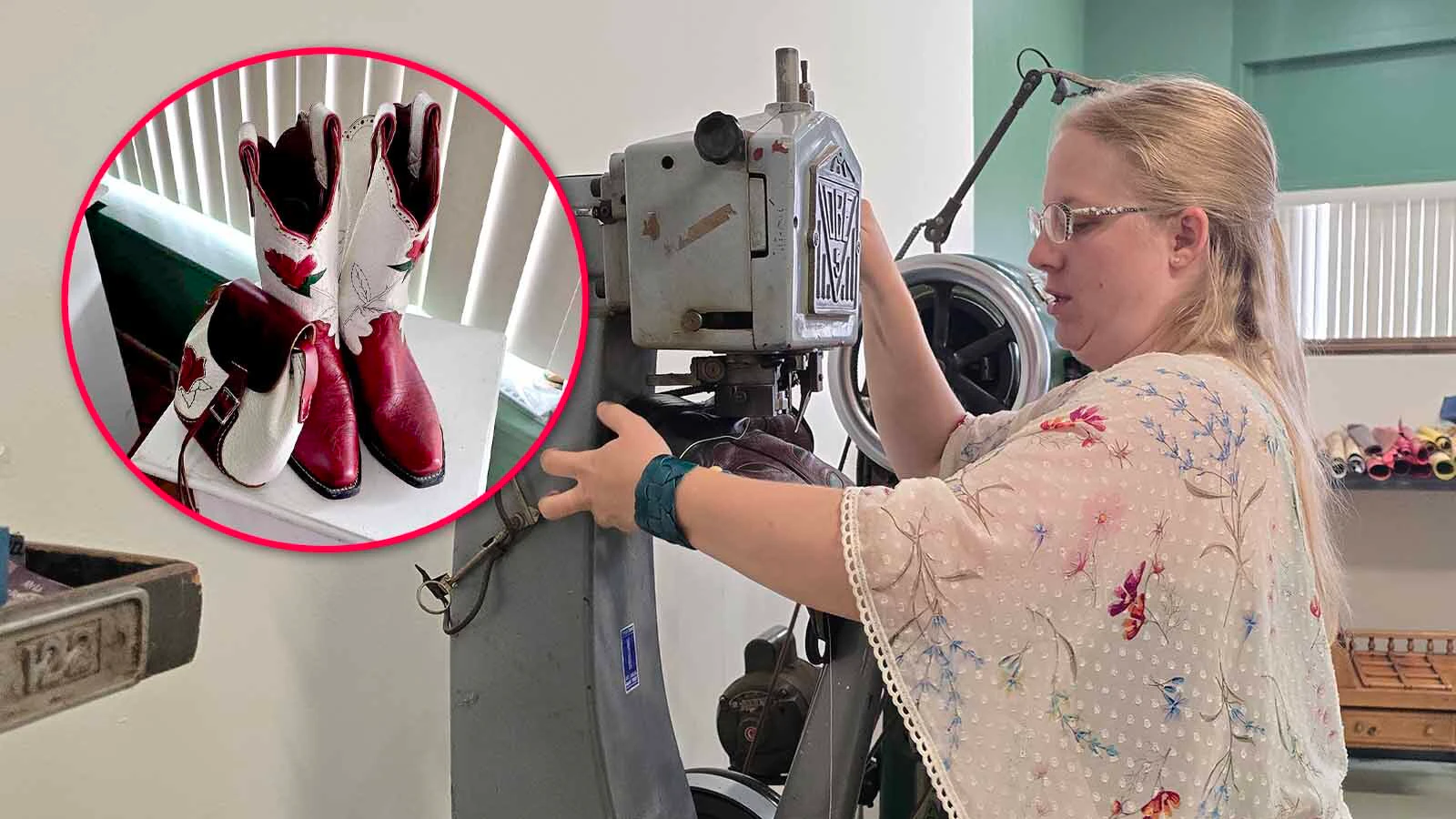
A pair of boots with matching purse at Alyssa Lenell-White's new custom bootmaking shop in Cheyenne. (Renee Jean, Cowboy State Daily) 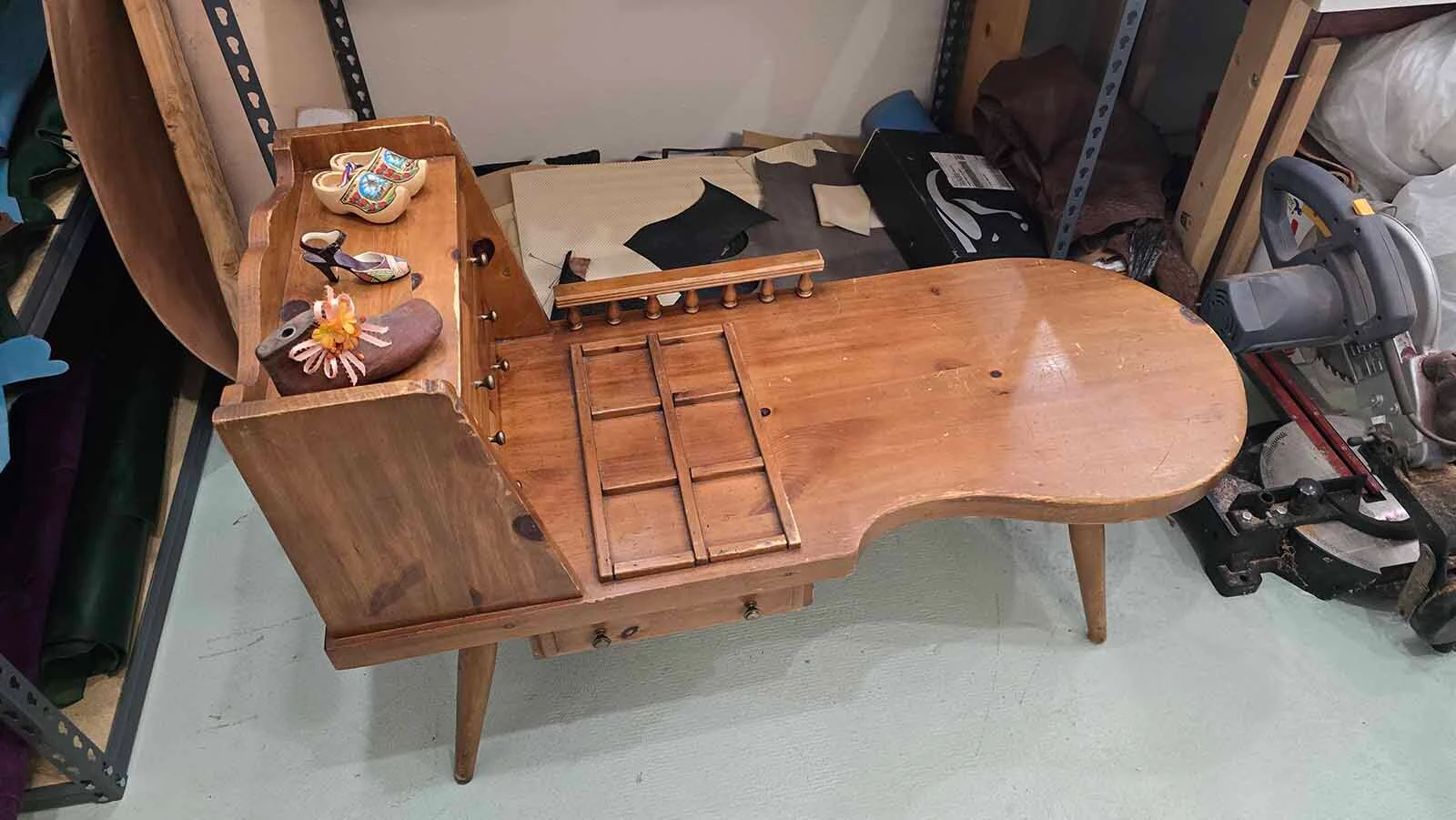
This cobbler's table was a gift from Alyssa Lenell-White's husband for her new store in Cheyenne. (Renee Jean, Cowboy State Daily) 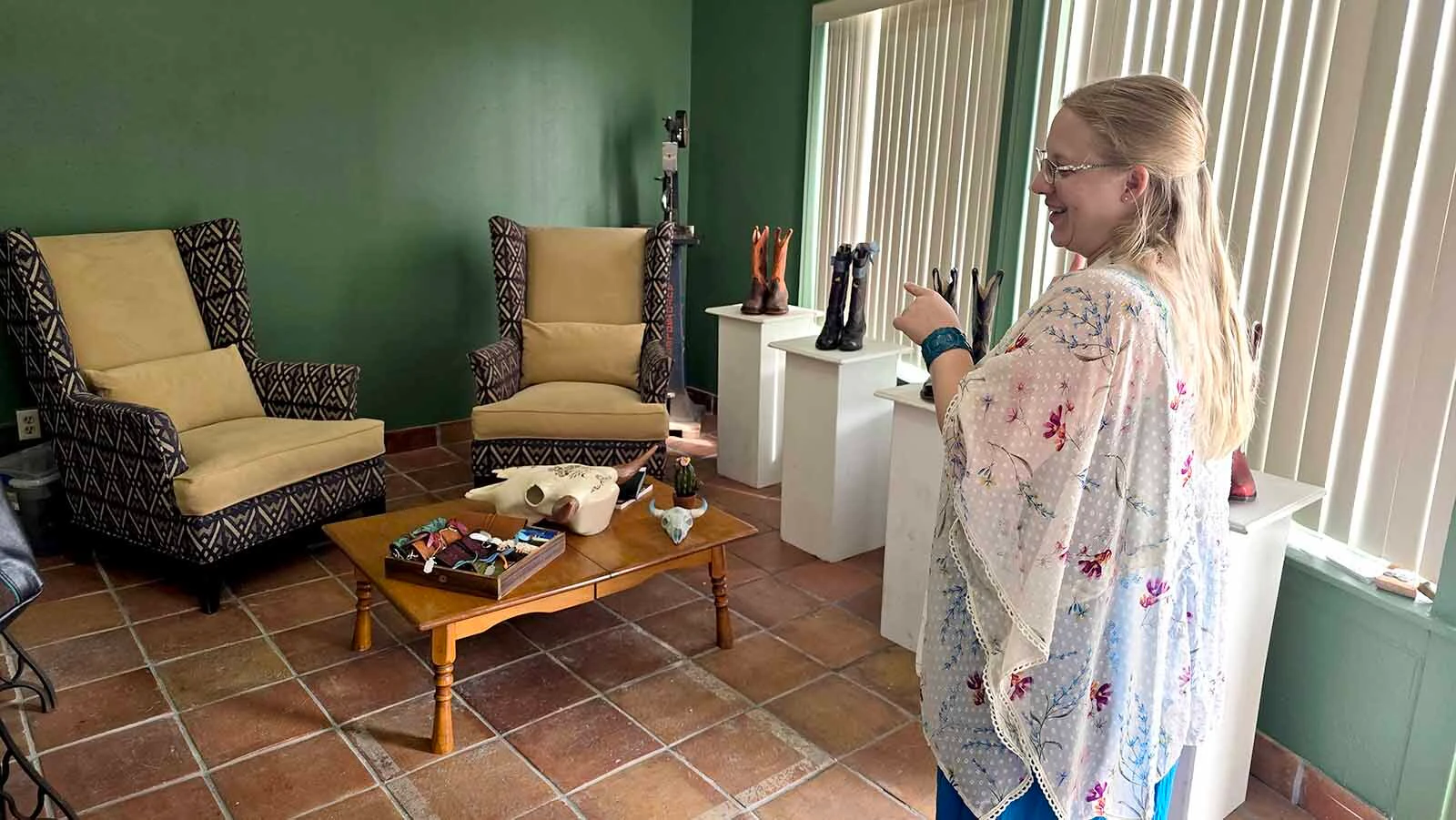
Alyssa Lenell-White's new bootmaking shop in Cheyenne also includes some of the projects she's made in year's past, ranging from wallets and purses to shoes. (Renee Jean, Cowboy State Daily)
The Shortest Interview
When she finally did decide to talk to him about an apprenticeship, she dressed carefully for the occasion.
“I walked in his door all dressed up in my interview clothes,” she recalled. “I was all ready for an interview.”
The interview was short and sweet, though.
“He says, ‘Well, do you know how to sew?’” Lenell-White recalled. “And I said, ‘Yep.’ He says, ‘All right, just come on back.’”
Then he sat her down in front of an antique Singer sewing machine. She didn’t know it then, but her journey as a custom bootmaker had just begun.
Machines Have Personalities
Seven years later, Lenell-White now has her own antique Singer sewing machine.
“It’s not the exact same machine,” she said. “But it looks just like it. This does all my top stitch work.”
It has a specialty foot with a roller rather than the standard, v-shaped sewing machine foot.
“This doesn’t leave an imprint,” she said, holding up one of the boots she’s working on. “It allows you to see where you’re stitching. It doesn’t cover it up. And it lets you get extremely close to your holes.”
Many of her designs will still take a long time, even with the help of the top-stitcher, she added.
“It depends on the skill and the person and the day and the mood the machine is in,” she said. “Like, if you’ve ever used a sewing machine, they all have their own personality.”
She also has two other sewing machines, each devoted to a different purpose.
One is a Kingman walking foot, which she uses for close side seams, and the other is a post bed — an industrial sewing machine that has a miniature tower instead of a flat sewing surface. It provides 360-degree clearance around the needle, allowing easier mobility for curved, tubular items that cannot lie flat.
“It’s handy for shoes, because shoes form a shape faster than a boot does,” she said. “Boots are sewn flat and then you put them together down the side, seams inside out, and then you turn them. Kind of like a shirt.”
The leather is first soaked in water to make it more pliable before turning the boot tops right side out. It feels almost like a magic trick every single time.
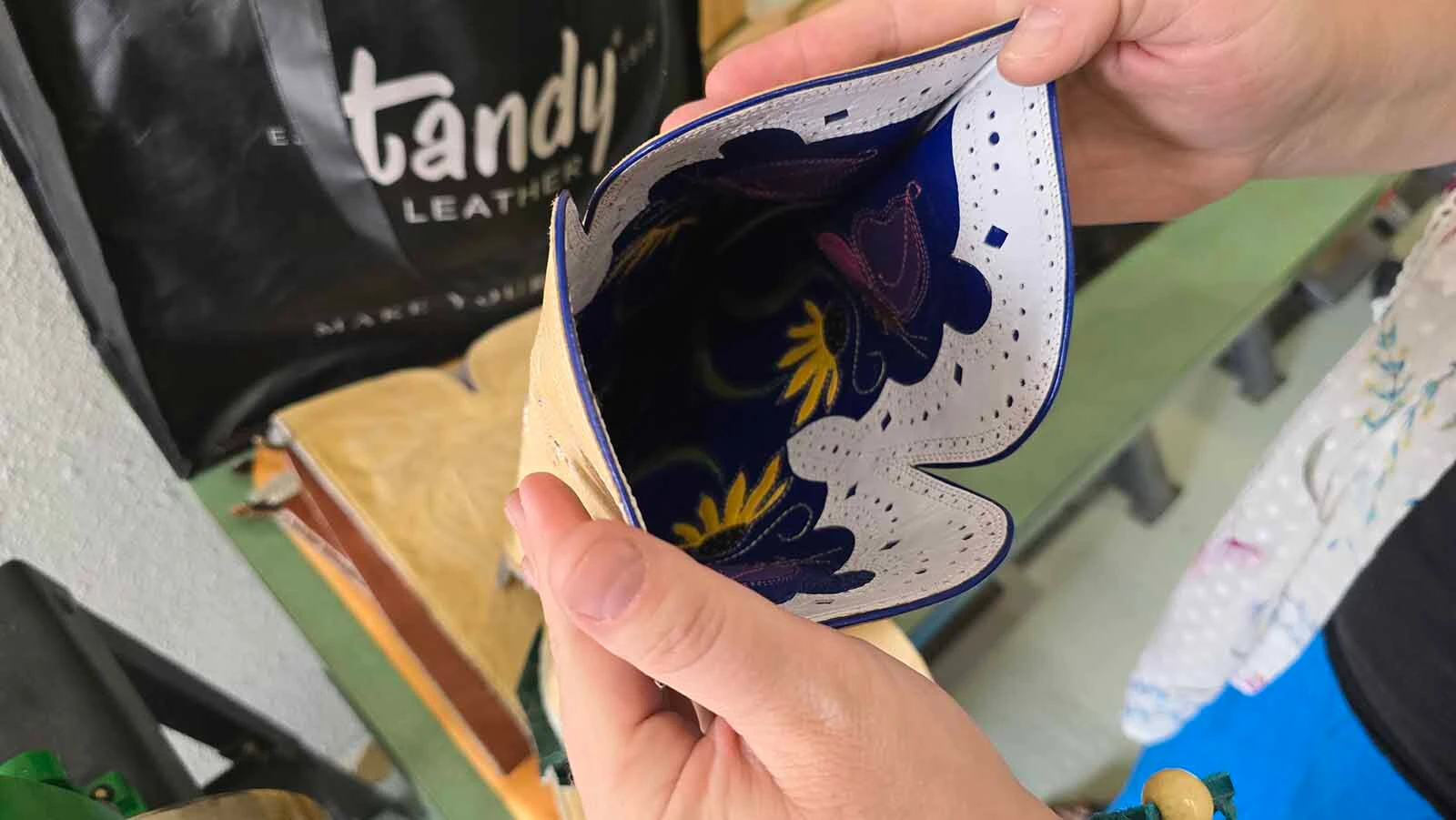
The top stitching inside of this boot took weeks to complete. (Renee Jean, Cowboy State Daily) 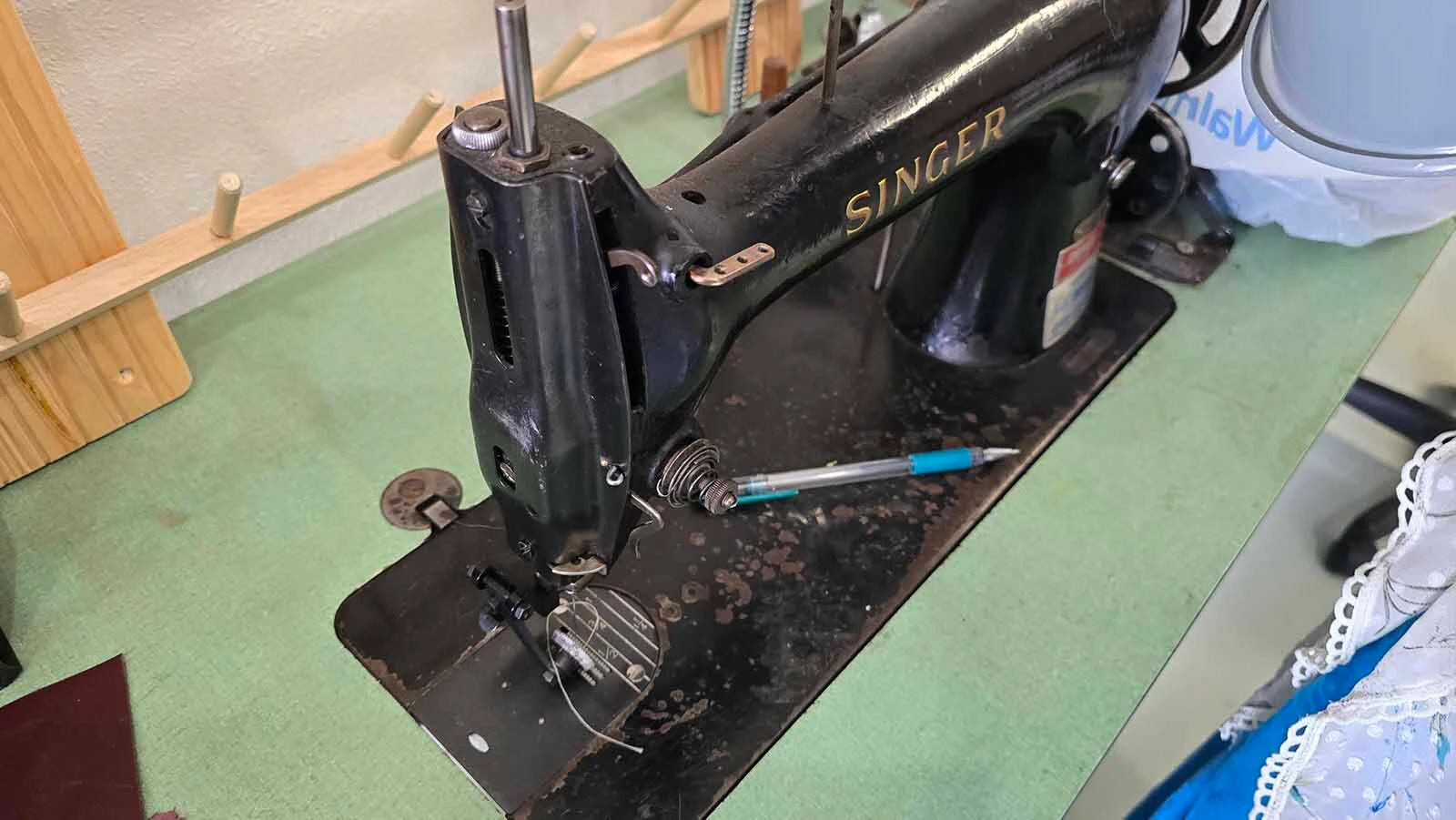
Alyssa Lenell-White, who has just opened a bootmaking store in Cheyenne learned to make boots using a Singer sewing machine very like this one. (Renee Jean, Cowboy State Daily) 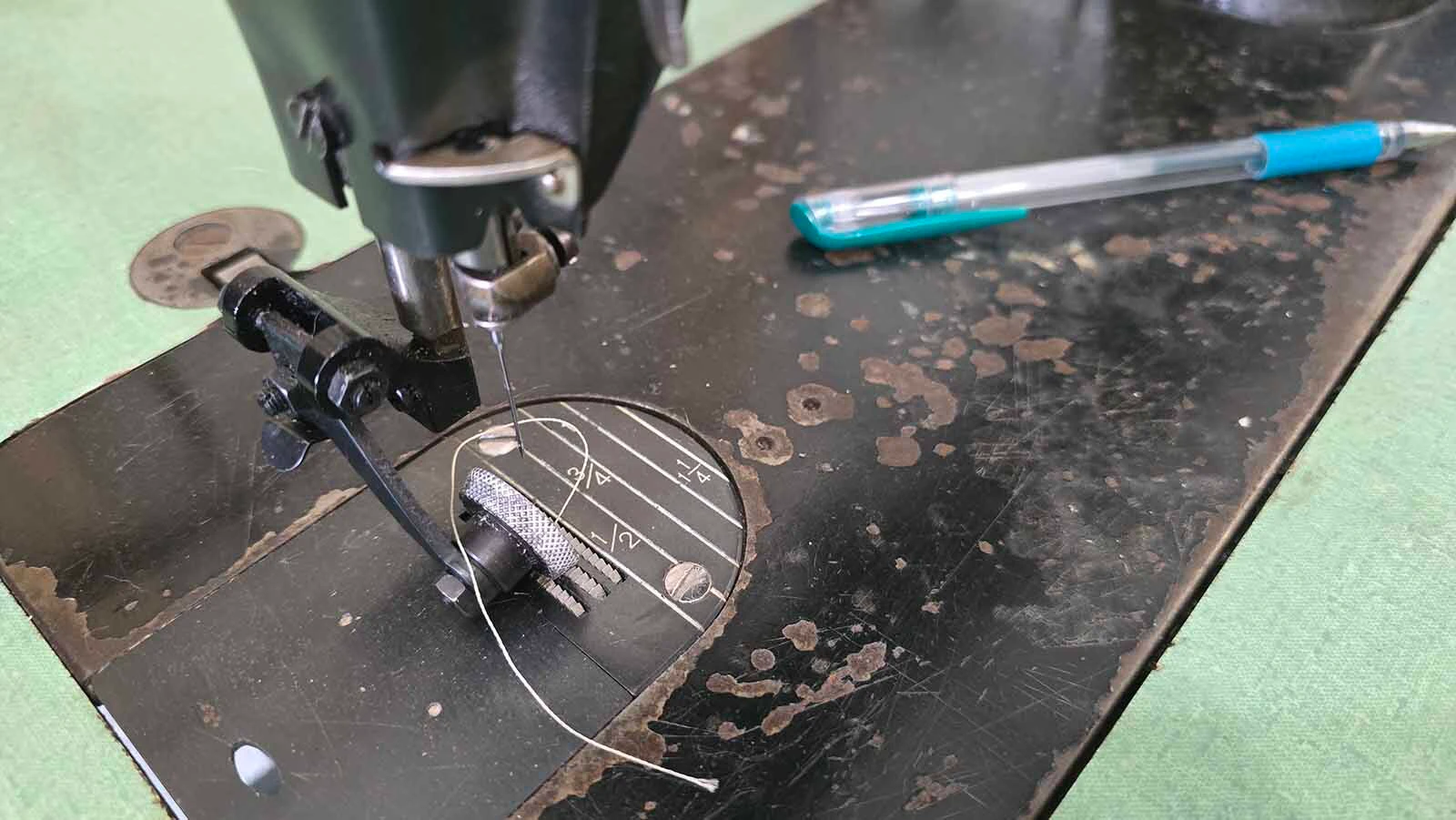
A round roller helps ensure there are no marks on the boots Alyssa Lenell-White is stitching. (Renee Jean, Cowboy State Daily) 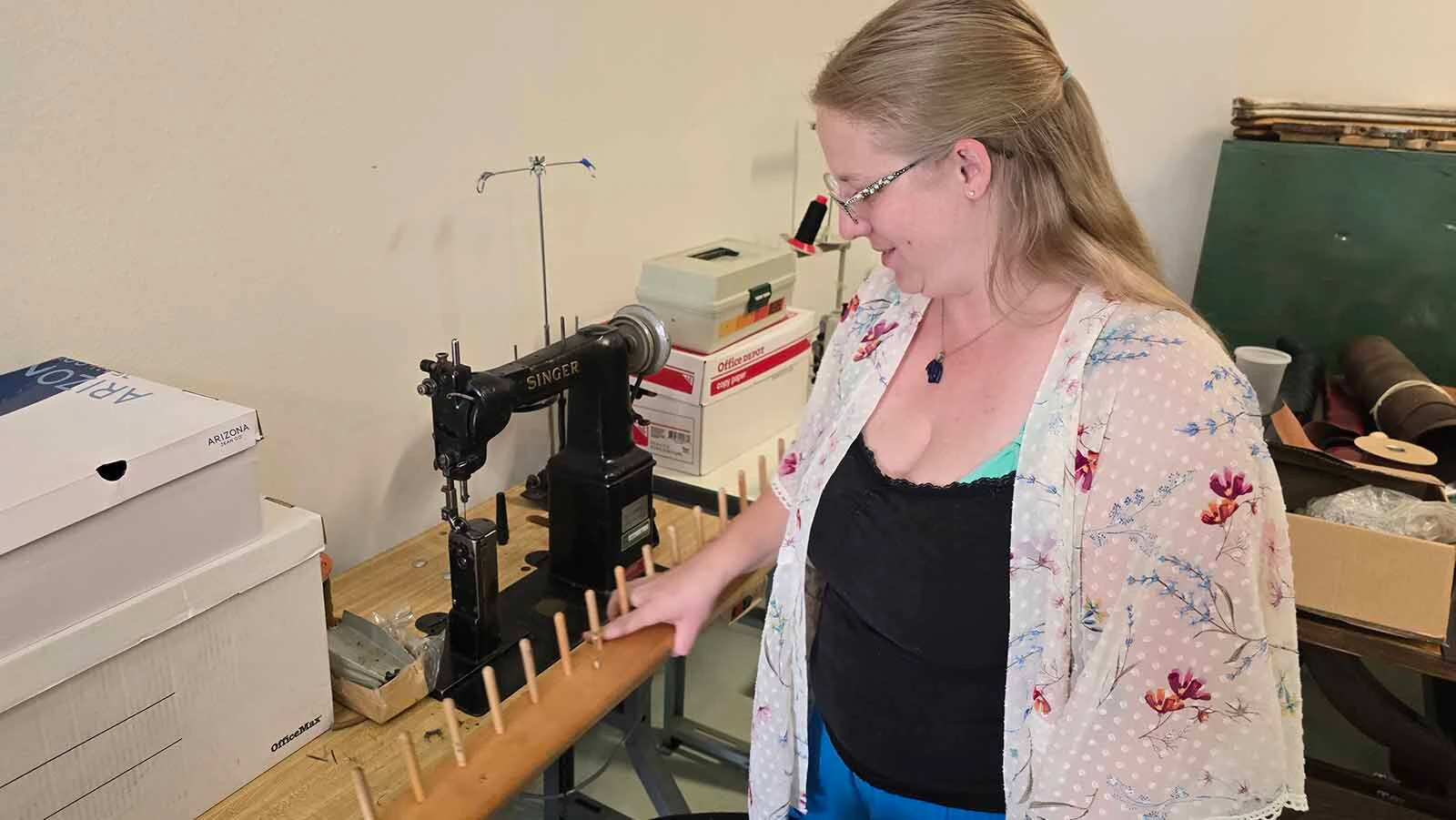
Alyssa Lenell-White talks about this Singer sewing machine with itsminiature tower, which is useful for sewing on tubular-shaped items like shoes. (Renee Jean, Cowboy State Daily) 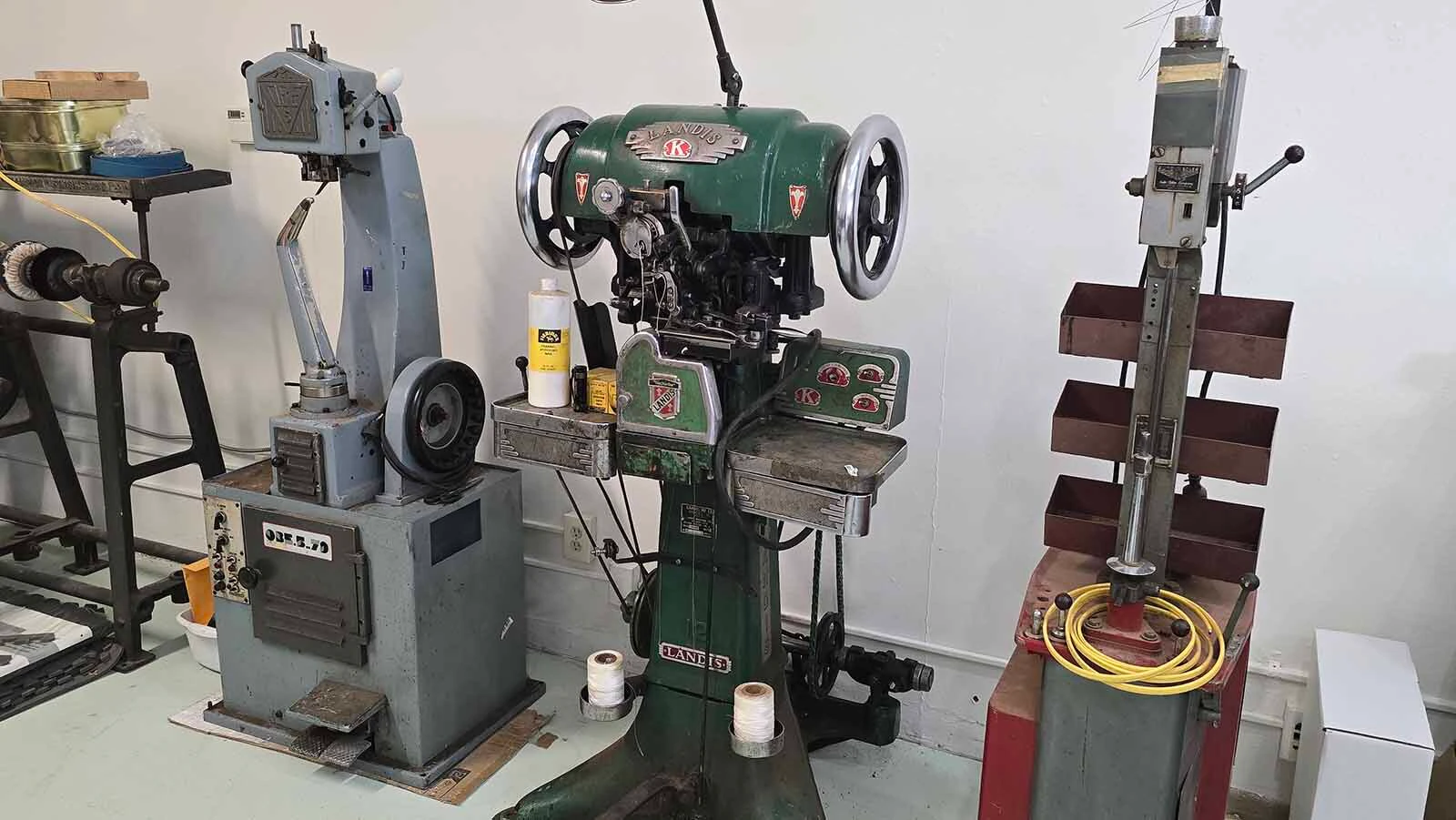
A trio of vintage machines Aly L's new custom bootmaking shop in Cheyenne. The two machines on the left are used often, whiel the third is more of a conversation starter. (Renee Jean, Cowboy State Daily)
Vintage Machines
When Mattimore sold his shop a few years ago, Lenell-White could only afford a few pieces from it. She chose to buy some of the more unusual machines, items that would have been difficult to find.
Such as the antique McKay machine. It literally looks like a metal dinosaur.
“This will actually stitch inside a boot,” Lenell-White said, picking up a pair of boots she’s been working on to demonstrate. “There’s a row of stitching in here that you cannot see.”
The McKay machine features a long curved metal arm or horn, shaped so a shoemaker can slip a boot over it and sew it all the way down into the toe. The machine’s weight keeps everything stable as it drives quickly through thick leather.
The giant wheel on the side acts as a flywheel, giving the needle more power to punch through hard leather.
Using the McKay machine is a little easier on her hands than stitching everything by hand, Lenell-White said. It’s faster, while still allowing her to make each high-end pair of custom boots individually.
The McKay isn’t the only vintage machine in her store. There’s an outsole stitcher, too.
“She’s a beast,” Lenell-White said. “This is the one that does this row stitching, the visible row that you can see here.”
She pointed at the row of stitches common to a Goodyear-welt construction. The welt is a narrow strip of leather stitched directly to the upper and the insole.
This method makes shoes easier to repair. She can cut the bottom stitch and remove the worn outsole, then sew a new one on without damaging the upper boot.
Not A Cobbler
Even though she will repair shoes she has made, Lenell-White doesn’t consider herself a modern-day cobbler.
Traditionally, cobblers were only supposed to repair shoes and not work with new leather.
The traditional term for what she does is one most people won’t recognize. She’s a cordwainer, a name related to the high-quality, smooth goatskin leather once made in Cordoba, Spain. It was used for high-end footwear for nobles and for wall hangings and armor.
In medieval England, cobblers were banned from making new shoes, while cordwainers were banned from fixing old ones. Each was taxed according to the kind of leathers they owned. Anyone caught owning the wrong kind of leather was considered to be cheating the tax system.
“Overall, I’m a bootmaker,” Lenell-White said proudly. “I make cowboy boots.”
Her boots are not impulse purchases either.
“My base price is $3,500 for just a simple pair of cowboy boots, fitted to your foot,” she said. “Everything is leather, but nothing fancy. No alligator or ostrich.”
For that, the price starts to climb, she said. Her high-end boots are running more like $5,000.
“I’m kind of mid-range pricing for custom boots,” she said. “I know people who start at $10,000 for a pair of cowboy boots. I’m not there yet. But I’ll get there I think.”
The selling point, she explained, is a pair of shoes meant to last a lifetime, if cared for properly.
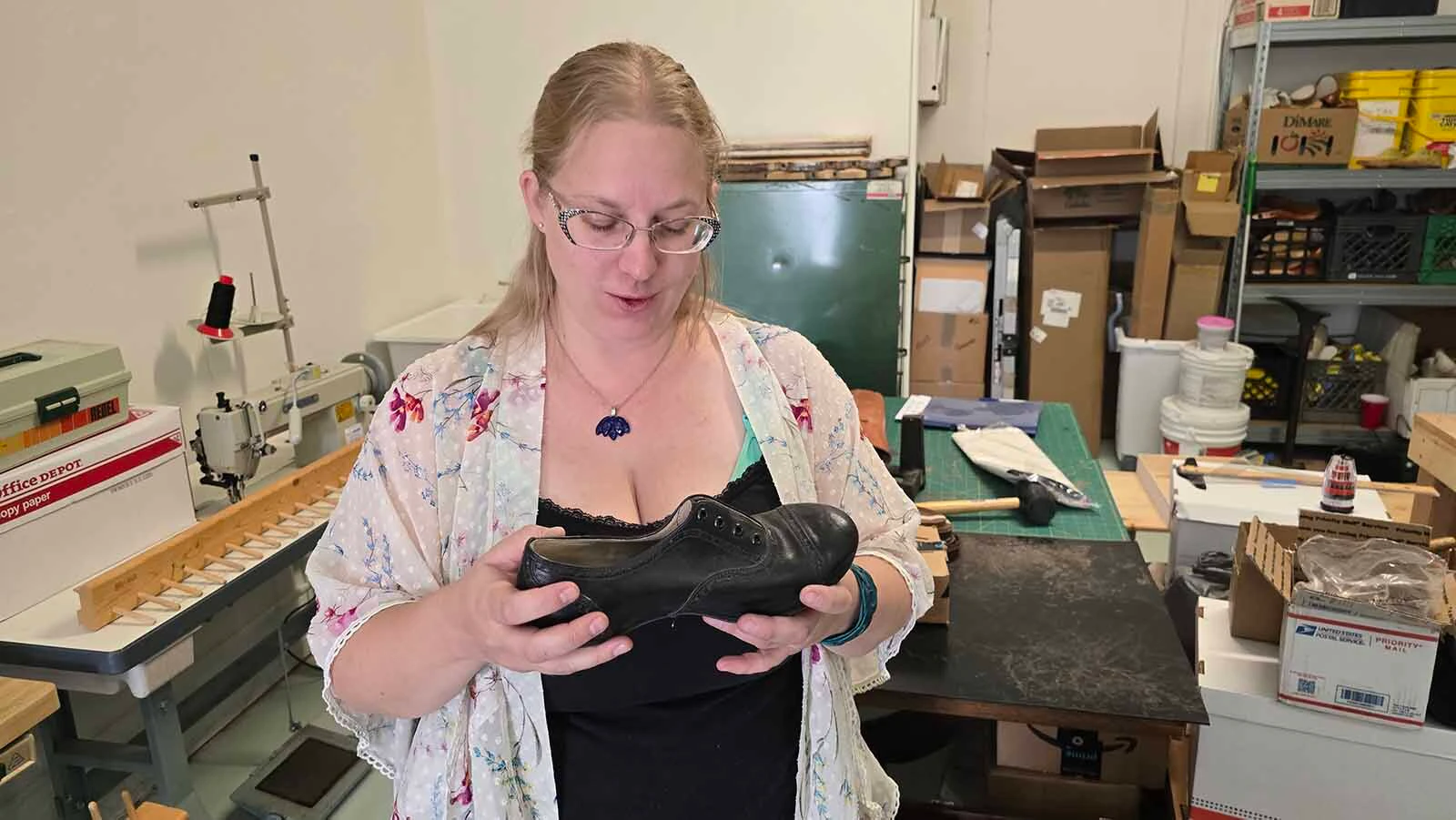
Initially, Alyssa Lenell-White thought she would make fashionable shoes, not boots. (Renee Jean, Cowboy State Daily) 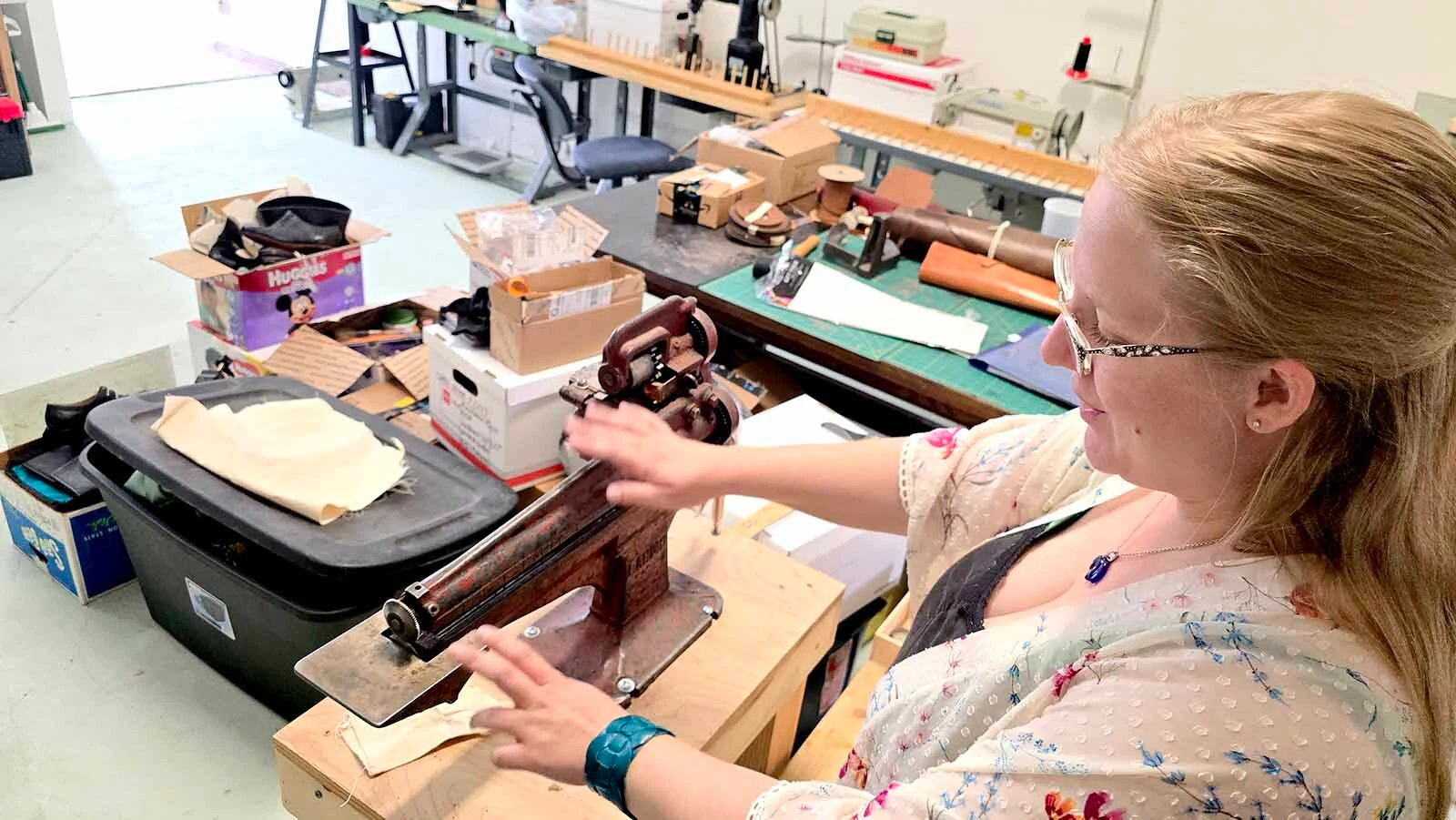
Alyssa Lenell-White talks about some of the vintage equipment she uses to custom-make boots. She's just opened a new store in Cheyenne. (Renee Jean, Cowboy State Daily) 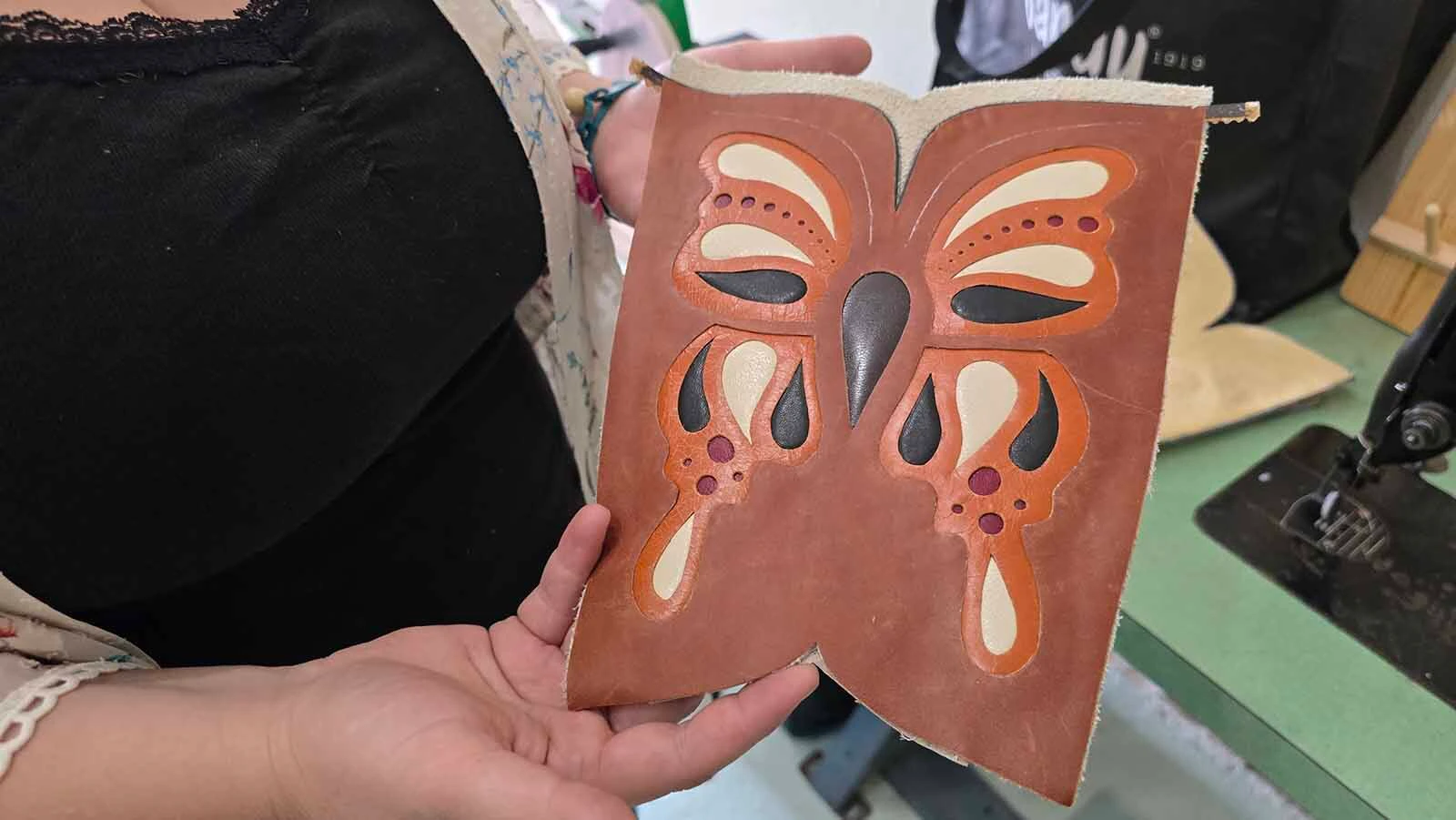
Alyssa Lenell-Whit came up with this design while doodling in a sketch book, for a pair of custom boots she's designing for one of her customers. (Renee Jean, Cowboy State Daily) 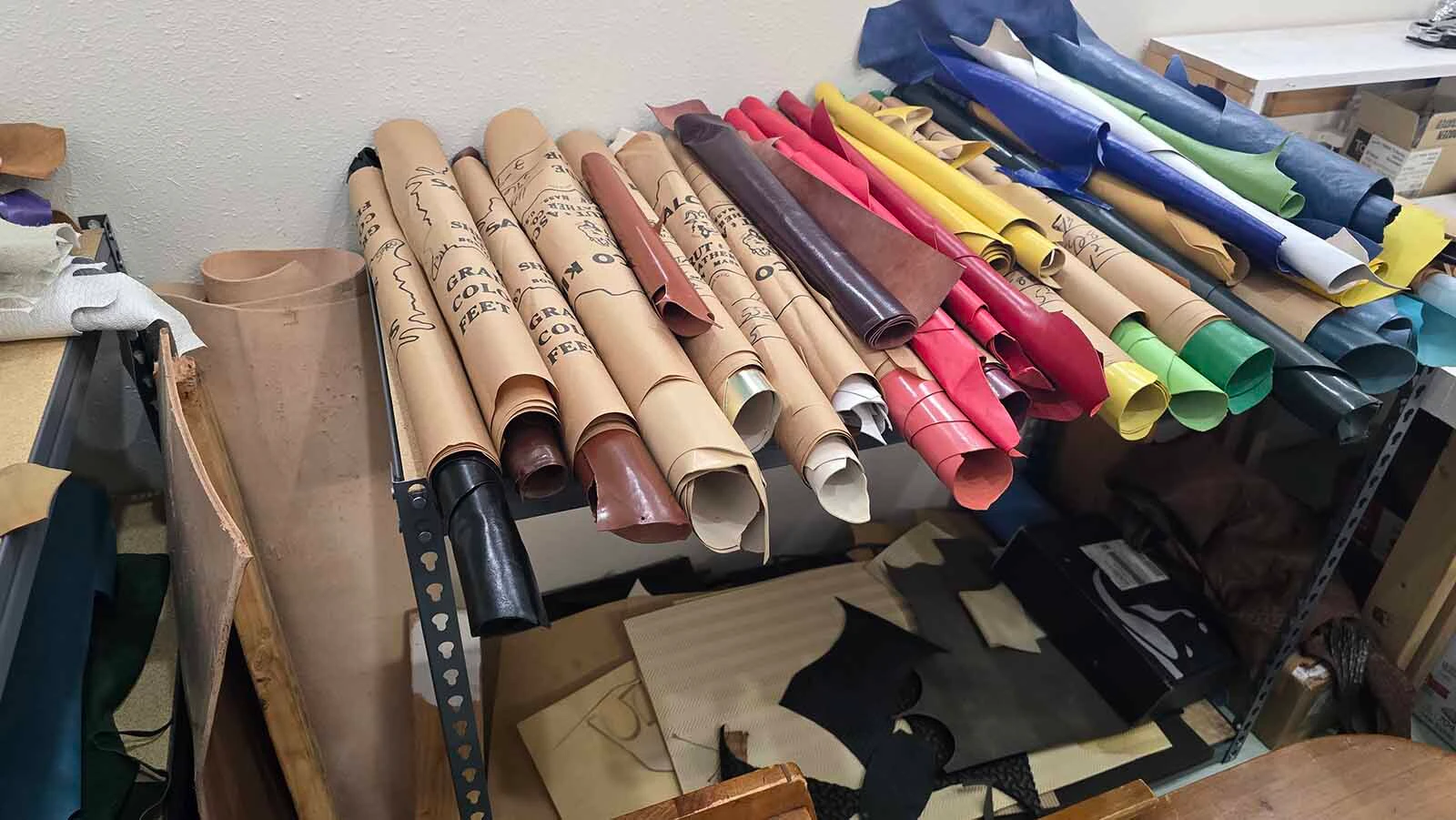
Leathers in many colors in Alyssa Lenell-White's new custom bootmaking shop in Cheyenne. (Renee Jean, Cowboy State Daily)
Paying It Forward
Although her storefront is new, Lenell-White has run her business from home for several years.
Her work had “taken over the house,” she admitted, leading to some good-natured fights with her husband over the garage, where her heavy machines were stationed. They were too big — and too irreplaceable — to risk moving downstairs.
“He’s been super supportive,” she said.
Lenell-White said her existing orders already cover the next six months of rent and then some.
But her ambitions stretch beyond filling her order book. She’s promised Mattimore that if someone ever walks through her door wanting to learn, she will pay his mentorship forward and teach them what she knows.
Mattimore has made it clear to her that the people he’s taught matter to him as much as the boots he built.
“Teaching wonderful people like her was the most important thing I did in 33 years,” he told Cowboy State Daily. “Timmy making chaps in Carlsbad, New Mexico, Yahsi the great entrepreneur who now owns three businesses. I hope I can be remembered for keeping the skills, joy and ethics of working with your hands alive.”
Lenell-White is already planning to make good on her promise to Mattimore and follow in his footsteps. She plans to offer classes in shoe-making, starting with flip-flops and eventually expanding to cowboy-boot-making classes.
Her 88-inch wooden table can comfortably seat four to five students — room enough to share a handcraft Lenell-White believes is becoming increasingly rare, but remains alive in Wyoming through makers like her and Mattimore.
Looking out over her new Cheyenne workshop, Lenell-White smiled to think how far she’d come from the college student who once fiercely resisted making cowboy boots.
Now, she said, she rarely wants to make anything else.
Cowboy boots have become the canvas for carrying forward a tradition she believes is worth preserving, one pair at a time, in her small Cheyenne shop.
Contact Renee Jean at renee@cowboystatedaily.com
Renée Jean can be reached at renee@cowboystatedaily.com.


