
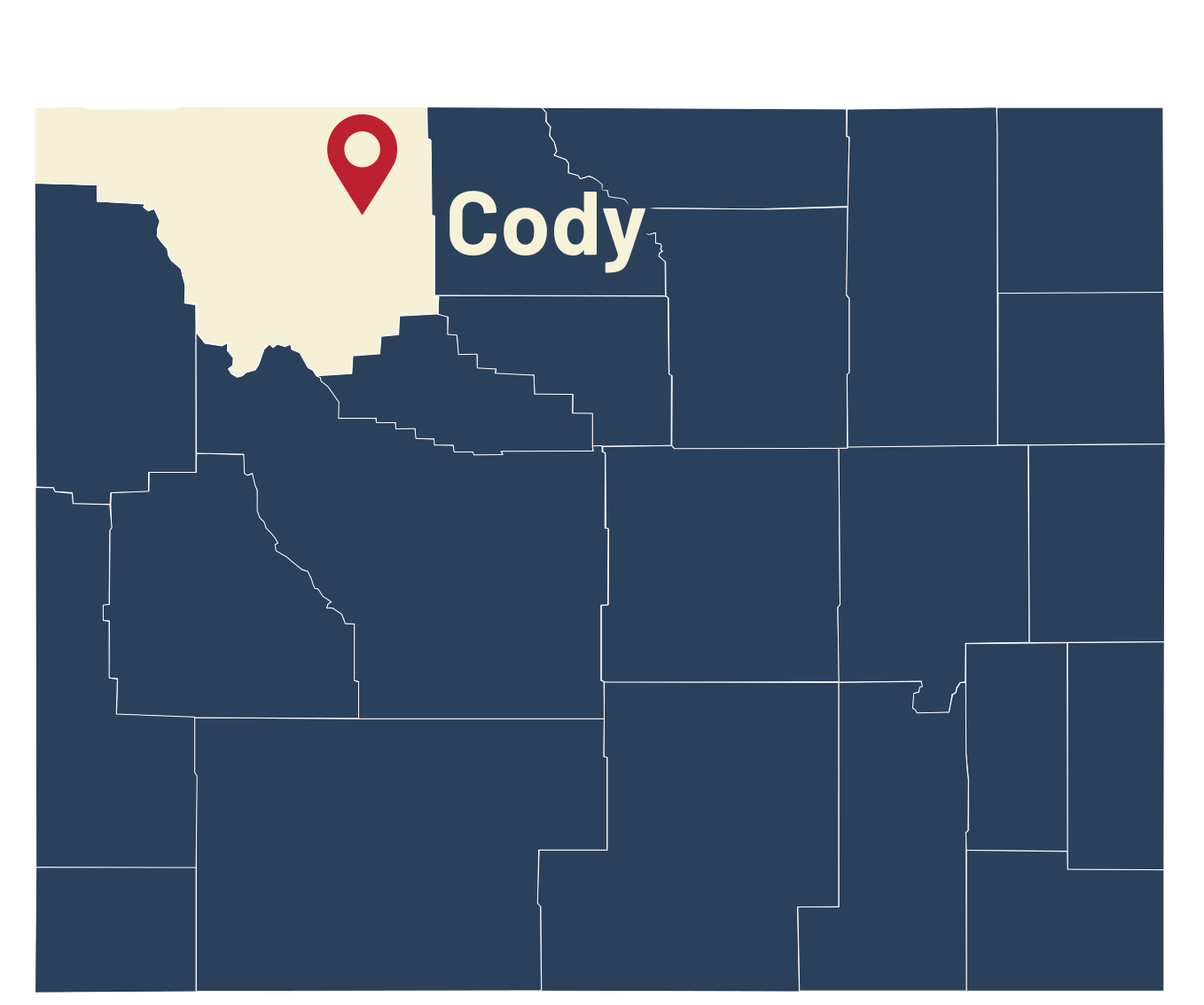

Kylie Gail had just let her dog outside Saturday night when she heard people screaming near her home in central Cody.
"It was hard to tell what they were saying," Gail told Cowboy State Daily.
She figured it was probably teenagers fooling around at nearby Canal Park.
"We live in the middle of town so we hear sirens constantly," she said. "I'm always looking to see what's happening because I'm a curious person."
What she later learned was that emergency responders were being summoned to nearby Riley Arena, where young hockey players were complaining of headaches, nausea and difficulty breathing.
Firefighters soon discovered carbon monoxide inside the building.
"I wish I would've gone to make sure everyone was OK," Gail said.
Ambulances Summoned
At 9:37 p.m., a dispatcher called for an ambulance at Riley Arena, reporting "multiple juveniles affected."
A minute later, a second ambulance was requested for "several juveniles affected by a possible carbon monoxide leak."
By 9:53 p.m., dispatchers were requesting a third ambulance.
One minute later, another call went out, this time requesting mutual aid to provide ambulance coverage for Cody Hospital.
"All their units are out on a carbon monoxide issue at Riley Arena," the dispatcher reported.
Park County Fire Protection District No. 2 Chief H.R. Coe said that when firefighters arrived, the spectators had already left and the hockey teams were outside.
The building manager directed firefighters to the utility room, where they waited for the first fire engine to arrive with a gas detector.
"When we came inside, it detected CO, so we knew there was a leak somewhere," Coe said, but finding the source of the poisonous gas proved difficult.
"In a building of that size, it's fairly impossible for us to detect the location of the leak," he said.
Firefighters opened the arena's large garage doors to ventilate the building and shut off its natural gas supply to prevent any further accumulation from gas-fired equipment.
Coe directed management to close the arena indefinitely until an HVAC contractor and Black Hills Energy could inspect the building and identify the problem.
He estimated roughly 40 players from two hockey teams were present, although not all experienced symptoms.
"There was nothing life-threatening," Coe said. "Nothing, nothing crazy."
The players were taken to the hospital by bus for precautionary evaluations, he said.
Trouble After The Game
Saturday night's North American 3 Hockey League game between the hometown Yellowstone Quake and the visiting Butte Irish ended with a 4-2 victory for the Montana team.
Butte Irish team owner Bill LaVelle wasn't at Riley Arena that night, but his assistant coach was.
LaVelle told Cowboy State Daily he received a phone call after the game reporting that six players were complaining of headaches and shortness of breath.
To LaVelle, it sounded like carbon monoxide poisoning.
He instructed the assistant coach to get the players outside immediately, then check whether anyone else was feeling nauseated or sick, and to call emergency services.
LaVelle praised both the medical responders and arena staff for their handling of the situation.
As of Monday, he said he still had no explanation for how carbon monoxide entered the building.
"At this moment, most of them are doing well. Some players are still showing symptoms. They're getting treatment," LaVelle said.
He said carbon monoxide incidents are an unfortunate hazard associated with indoor ice arenas, but this was the first time in his experience that one of his teams had encountered such an emergency.
An Invisible Danger
Carbon monoxide is particularly dangerous because people cannot see or smell it.
By the time someone realizes something is wrong, they might already be experiencing symptoms of exposure.
"Headache and nausea are probably the two biggest ones," Coe said.
He said his department responds to carbon monoxide calls fairly regularly, particularly in residential buildings during cold weather.
"We don't get too many in large arenas like that," he said.
Carbon monoxide can accumulate when fuel-burning equipment malfunctions or exhaust gases are not properly vented.
Coe explained that the same general hazards associated with a household furnace can exist in much larger commercial buildings.
"You have a furnace that heats the square foot of your home," he said. "Well, they have a furnace that heats the square foot of the Riley Arena, which is a much larger furnace or multiple furnaces."
In winter, he added, cold air can sometimes interfere with the normal venting of combustion gases, allowing carbon monoxide to enter occupied spaces.
Coe did not, however, identify the arena's heating system, ventilation equipment or ice-resurfacing machinery as the cause of Saturday's incident.
The source remained undetermined when he spoke with Cowboy State Daily.
Two Decades On Ice
The Victor J. Riley Arena has been a fixture of Cody's winter sports community for nearly a quarter-century.
Opened in January 2001, the facility is owned and operated by the nonprofit Park County Arena Board.
During the winter, it serves hockey players and figure skaters. In warmer months, the ice gives way to other community activities.
Coe emphasized that the carbon monoxide incident should not overshadow the arena's long history as a community facility.
"I do want to iterate that the Riley Arena is a very safe commercial building that is built to code," he said.
For residents, his advice was straightforward: Make sure carbon monoxide detectors are installed and working.
"As long as you have a detector, it's going to alert you," he said. "If not, it's an odorless gas. You can't see it, you know. You don't even know you're being affected."
Without an alarm, someone might dismiss the first warning sign as an ordinary headache.
Arena Remains Closed
Riley Arena management confirmed the carbon monoxide incident in a public statement Sunday, saying the facility would not resume normal operations until the source of the problem was identified and necessary repairs completed.
"We are taking this matter seriously and working with the appropriate professionals to identify the source of the issue and ensure all necessary repairs and corrective measures are completed," said general manager Ed Bednarz.
"Normal operations will resume once the issue has been fully rectified and the facility has been confirmed safe for occupancy."
Bednarz also apologized for the disruption and thanked emergency responders and medical personnel who evaluated players and others potentially affected.
Historically, carbon monoxide poisoning has claimed an average of about four lives annually in Wyoming, the National Center for Healthy Housing shows.
Kolby Fedore can be reached at kolby@cowboystatedaily.com.


