The U.S. national debt crossed another grim milestone this month, surpassing $40 trillion for the first time ever. That's more than double the amount owed in 2017, and worse still, on the current trajectory, that fiscal hole is expected grow to $64 trillion within the next decade.
As a country, we are accumulating debt faster than ever. Since 2020, the U.S. has added $1 trillion of debt every five months, more than twice the rate over the past quarter-century. By comparison, in the 2000s it took two years to add $1 trillion, on average, and 11 months in the 2010s.
Even The New York Times acknowledged that Washington's "borrowing binge" has put our economy on "shaky" fiscal footing. Of course, it blames Republicans' tax cuts, although, as The Wall Street Journal editorial board explains, that's like "scarfing double cheeseburgers and then blaming weight gain on the lettuce and tomato."
For what it's worth, only a decade ago, Times columnist Paul Krugman proclaimed, "Debt Is Good," a position he clings to today, and last week the paper published one financial guru's solution -- "amargi," or a "blanket declaration of public debt cancellation." Which is to say, the Old Gray Lady's finger-pointing should be taken with a grain, or block, of salt.
In truth, both sides of the political aisle are responsible for getting us into this mess. A $40 trillion budget hole doesn't happen overnight, nor with only one side doing the digging. The left's reckless spending on programs we don't need and cannot afford set the course, but it's been aided by conservatives' willingness to tolerate spending without offsetting cuts.
At this point, assigning blame does little good. Our country's federal debt is spinning like an out-of-control odometer, and the interest costs to finance it are growing alongside, creating a snowball effect. Right now, our government spends $2.8 billion (SET ITAL)per day(END ITAL) just on interest payments -- more than we spend on national defense -- and that's projected to rise to nearly $6 billion per day by 2036.
The growing debt is unsustainable, and it's already having a real impact on ordinary, hardworking Americans.
Our country's debt -- and lawmakers' utter refusal to get it in check -- has creditors worried about whether Uncle Sam can repay its obligations. All three major credit rating agencies have downgraded the U.S. credit rating over the past decade, the most recent coming last year.
As a result, the government must pay more to service the debt. This year, the U.S. Treasury must refinance $9.7 trillion, which means it will reset to higher rates -- which will add even more to our deficits.
What ensues is a ruthless cycle: As the federal government pays more to incentivize bond buyers, it crowds out investment in the private sector. In turn, corporations must pay higher rates to attract investors, making capital that drives economywide growth and job creation more expensive.
Coupled with the tech industry's growing need for cash to finance AI infrastructure -- which is further depleting capital markets -- lenders must charge high rates for private loans. As a result, families pay more to buy a home, purchase a car, go to college, or make any number of big-dollar decisions that generally require financing.
Since 2015 alone, growth in the national debt has increased the cost of financing a $400,000 home by nearly $3,000 a month, or about $90,000 over the course of a 30-year mortgage. A million-dollar small business loan now costs more than $16,000 more than it did a decade ago, thanks to the federal debt.
Over the next decade, interest payments on our country's debt are forecast to exceed $16 trillion. That means, if spread evenly, every U.S. adult will pay about $60,000 in taxes just to finance the federal debt. That's money that could be used to build roads, improve schools, pay veterans or augment our national defenses -- but instead there's nothing to show for it.
Americans are tired of Washington kicking this problem down the road. They realize we can't wait any longer to solve it. Nine in 10 voters are concerned the national debt is increasing inflation and the price of basic goods. More than eight in 10 say a candidate having a plan to address the problem is a deciding factor in who they will support in this year's election.
Forty trillion dollars is a landmark we cannot afford to ignore. It's time we demand answers from lawmakers in Washington, or vote them out.
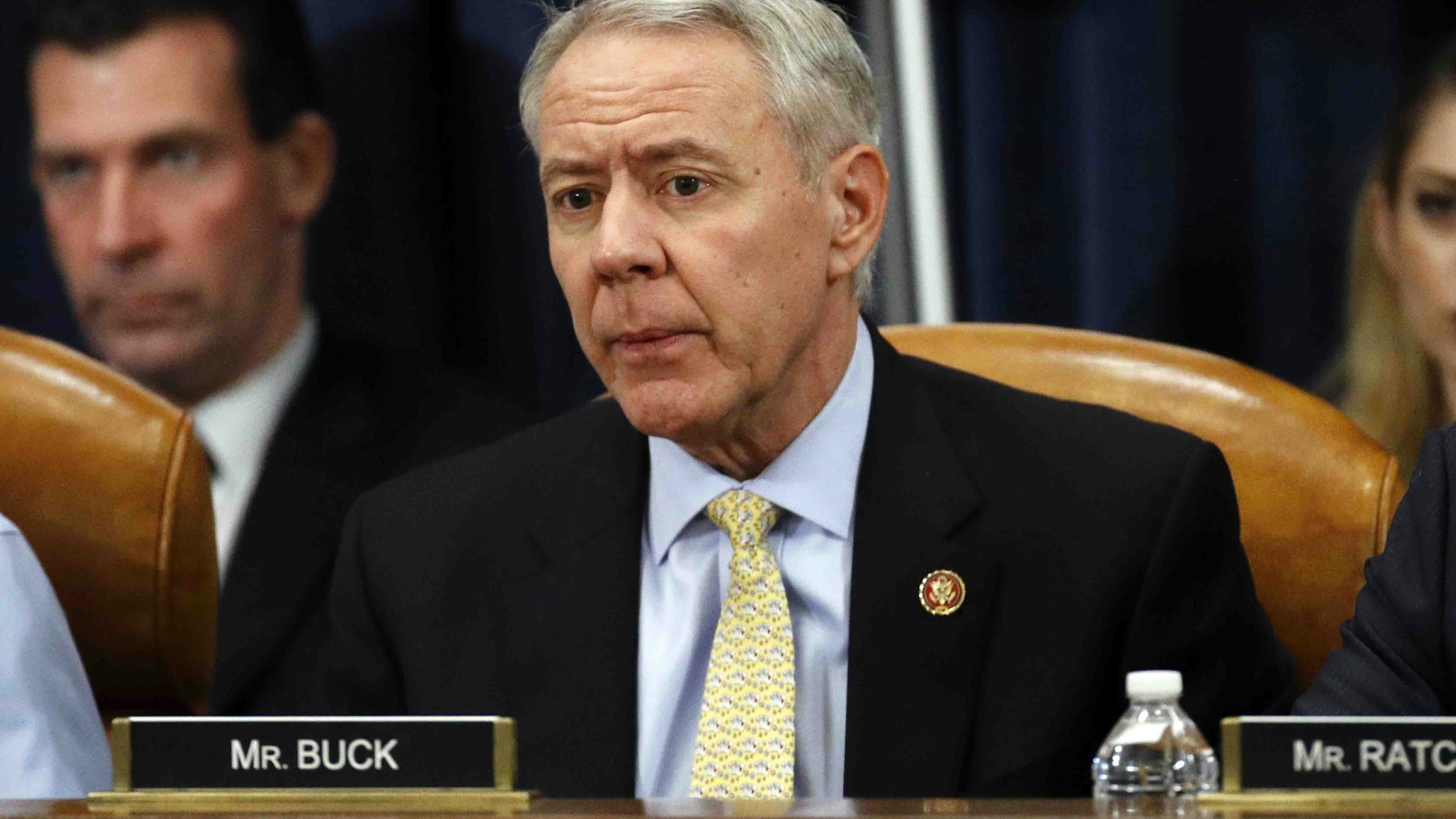
Ken Buck received his law degree at the University of Wyoming and served in the United States House of Representatives from 2015-2024 representing Colorado's 4th congressional district. He now serves as a Fellow with the Independent Center.