
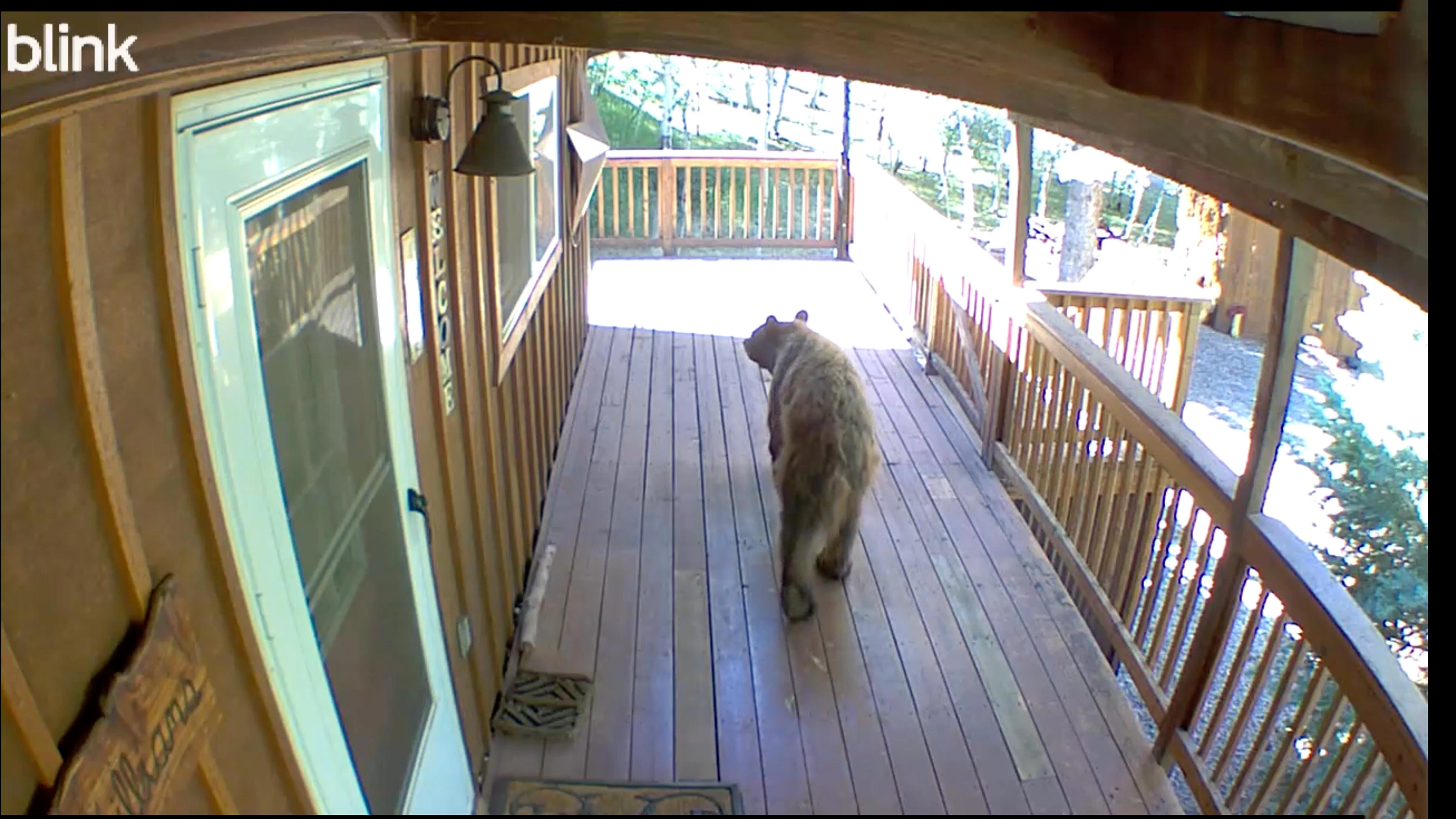
Longtime Colorado residents tell Cowboy State Daily that they’ve never seen anything like the current surge in bear sightings, conflicts, and attacks.
As of mid-August, Colorado Parks and Wildlife has logged 6,129 bear sightings and human-bear conflicts in 2026. That’s nearly double 3,115 reports from the same period in 2025.
Six attacks have resulted in human injuries, mostly bites and scratches.
“You’ve got the worst drought in Colorado history going on. They (bears) just can’t find food anymore,” said Dan Gates, spokesman for the sportsman’s group Coloradans for Responsible Wildlife Management.
“For the first time in 25 years, I had a bear in my dumpster last night.”
Release the Hounds?
With everything that’s been happening with bears, Gates and some other Coloradoans would like to see a reinstatement of the state’s spring bear hunting season, as well as allowing hunters to use bait or hounds.
Others oppose that, arguing that killing more bears won’t solve the problem.
Spring bear hunting, bait, and hounds were banned in Colorado in 1992 under a ballot measure. There is a bear-only hunting season during September. And Colorado hunters can also purchase bear tags to go with their late-season deer and elk tags.
About “10% of the bears harvested” by hunters each year are taken on the big-game season add-on tags, he said.
“CPW’s hands are tied by that ballot initiative” when it comes to bear hunting regulations, Gates said.
More latitude for hunting could come under Initiative 302, which would enshrine the right to hunt and fish in Colorado’s Constitution. It’s on the November ballot.
Hunting and angling have been a right in Wyoming’s Constitution since 2012.
Colorado has an estimated population of 17,000 to 20,000 black bears but no verified grizzly sightings since 1979.
By comparison, Wyoming has estimated populations of between 10,000 and 20,000 black bears, and 1,000 grizzlies.
Grizzlies remain under federal protection and can' t be hunted in Wyoming. There are spring and fall black bear hunting seasons. Bait is allowed, but pursuit with hounds is not.
‘We Are Locking Our Car Doors’
The conflicts are likely driven by drought and bears going into hyperphagia, said Grand County, Colorado, resident Samantha Miller, senior carnivore campaigner with the Center of Biological Diversity.
Hyperphagia is a period of extreme hunger and non-stop eating for bears as they try to pack on fat for winter hibernation.
“I think with the historic drought, we’re seeing bears getting more desperate and moving into places where they normally wouldn’t be,” Miller said.
She lives in a rural area, where folks are used to leaving their vehicles unlocked.
Not so this year.
“We are now locking our car doors at night, for the bears only,” she said.
Bears are clever enough to open doors, gates, and the lock with their front claws.
Under the context of Initiative 302, some people would like to see a return to “more traditional means” of bear hunting, said Miller, who opposes the measure.
“That’s not targeting specific problem bears. It’s a recreational opportunity to target more bears,” she said.
It could also supersede local hunting regulations and allow bear hunting near dog parks, hiking trails, and the like, Miller added.
Routt County Going Bear Bonkers
Routt County, Colorado, has been a hotbed of bear activity, said Shannon Lukens, reporter and social media director for the Steamboat Radio network.
From Aug. 16 to Aug. 23, Routt County Dispatch logged 87 bear-related calls, Steamboat Radio reported.
While reporting on all the bear issues, Lukens has had some of her own.
There’s been a bear “walking right up to the front door” of the Steamboat Springs home where she and her husband live.
Her neighbor’s adult children left an unlocked vehicle in their driveway one weekend, and “the bear went to the neighbor’s house and got into their car,” Lukens said.
Lukens added that she’s been pressing CPW to release a tally of the bears it’s had to kill so far this year because of human-bear conflicts.
‘Reaping The Error Of Our Ways’
John Michael Williams’ family has had a cabin in the Spanish Peaks area of southern Colorado for decades.
This year has “been the worst I’ve ever seen” in terms of bear activity around the cabin, he said.
Surveillance cameras at the cabin have spotted several bears passing by or hanging out, he said. So far, the bears haven’t broken into the cabin, but at least one has gotten up on the front porch.
As Colorado’s human and bear populations have continued to grow, Willams said he questions the wisdom of the 1992 bans on the spring bear season, along with bait and hounds.
“I think we’re kind of reaping the error of our ways there,” he said.
He worries that in one of Colorado’s popular outdoor recreation areas, “a bear is going to happen along and take a kid out, and that’s totally preventable,” he said.
Don’t Expect Bear Hunting To Change
James Pribyl said he opposes Initiative 302 and/or a return to the old ways of bear hunting.
“It is incredibly destructive and disingenuous when it comes to wildlife management,” said Pribyl, who previously served on the Colorado State Parks Board, Greater Outdoor Colorado Trust Fund, and the Colorado Parks and Wildlife Commission.
He is also a co-founder of the Colorado Nature League.
The old “dominion”-based mentality might still be strong among hunters, trappers, and ranchers, he said.
However, Colorado, with a majority-urban and suburban population, has shifted toward a “mutualist” approach to living with wildlife, including bears, he said.
Gates said the surge in bear trouble might work itself out through natural means.
With berries and other food supplies for bears lacking, many might enter their dens “in poor condition” and won’t survive the winter, he said.
“There could be fewer problems next year” because of that, he said.
Mark Heinz can be reached at mark@cowboystatedaily.com.


