
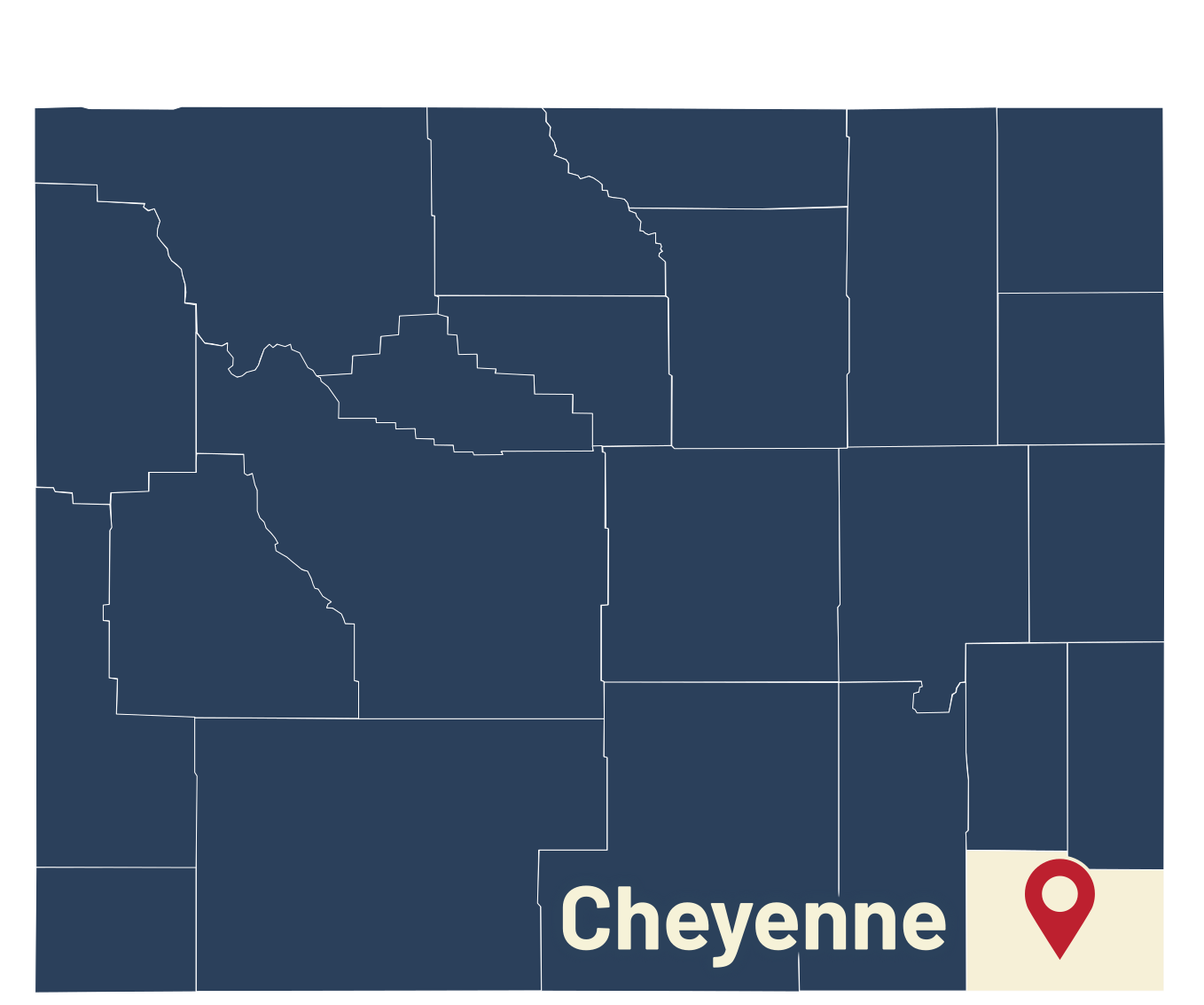
CHEYENNE — Anita Ellis didn’t make the finals at the Daddy of ’Em All, but the fact she was competing at Cheyenne Frontier Days at all — alive and riding well enough to win brackets — may have been the biggest win of the rodeo.
Ellis suffered a traumatic brain injury in November that nearly ended her rodeo career — and her life.
Her performance in Cheyenne, however, underscored just how far the Idaho woman, who has dreamed of barrel racing at the National Finals Rodeo since childhood, has come.
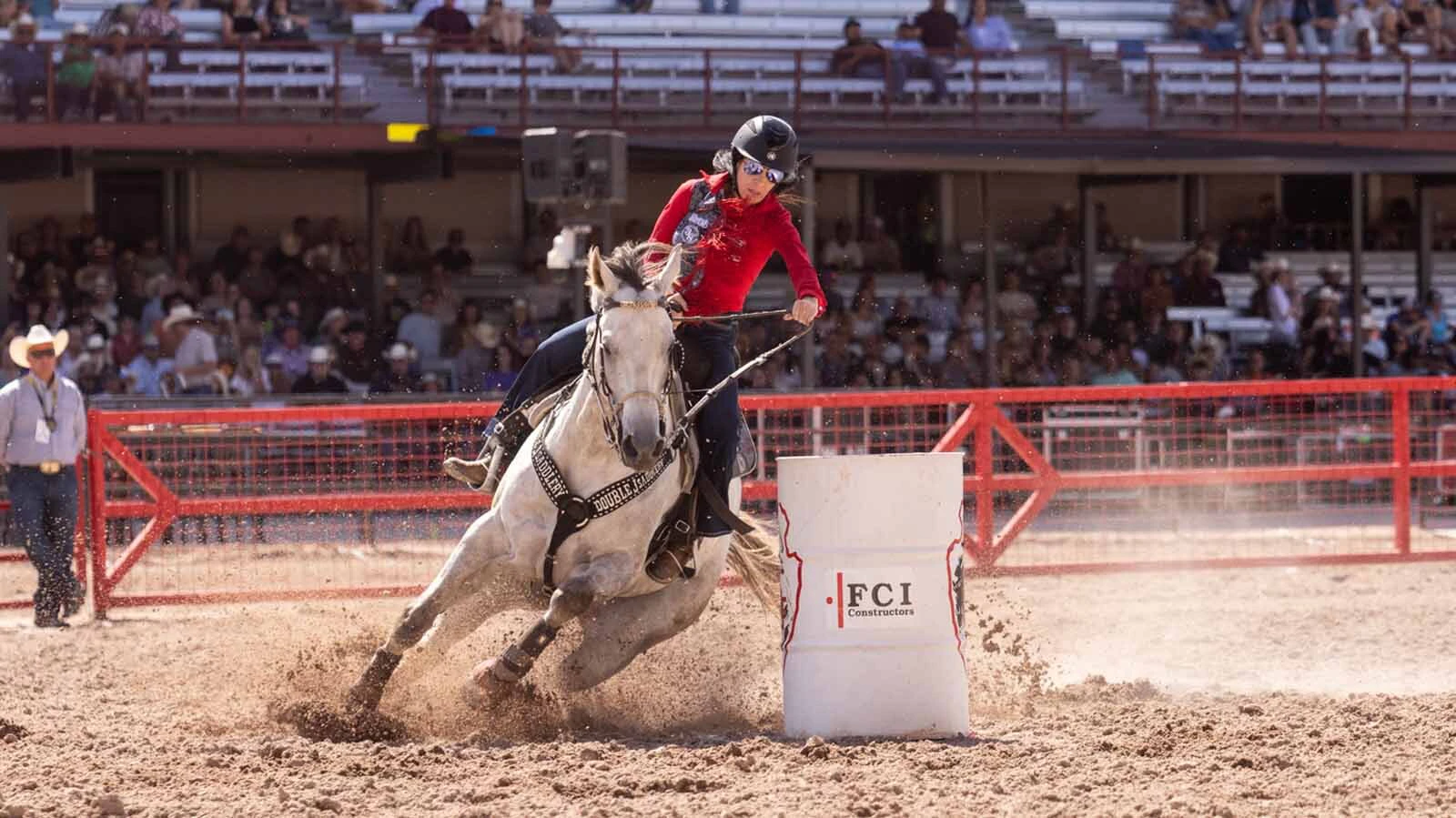
In the qualifying round at Cheyenne Frontier Days, Ellis posted a 17.26-second run, good enough for second place overall. The next day, in Performance Bracket 1, she posted a 17.87-second run, winning the bracket and earning $2,462. That also landed her a spot in the semifinals.
Her Thursday run, which could have carried her into the finals, slipped away in a split-second miscommunication between horse and rider.
The mistake lasted only an instant, but in barrel racing, that’s all it takes.
It was enough to cost her a shot at the finals.
Even so, Ellis doesn’t see the moment as a loss. She was, in that moment, reaching for a new challenge along the way in her recovery by choosing a more difficult horse to ride.
Ax, the horse she chose for the run, requires faster thinking than she could previously handle even as recent as two weeks ago.
“With Ax, I have to be in control of him a little bit more,” she said. “He takes more direction than my other horse, Rico, who will just go to his spot.”
Rico SGL was the horse she rode to win in San Antonio in February, the debut of her remarkable return to rodeo.
“Ax is super quick on his turns,” Ellis added. “But today, he thought the banner that was beyond the third barrel was the barrel. I’m so sad he thought that, because he would have had such a nice run since he can turn so fast.”
The Accident That Changed Everything
Eight months before Cheyenne, Ellis was at a futurity with a young mare named Barbie — the colt’s first futurity. Ellis had trained the horse herself and was excited to see how she’d do.
The day of the accident, Ellis was getting ready for her run while the arena crew was dragging the ground.
Her sister, Deena, an ER nurse, had driven over on a whim to spend the day and maybe ride later — a coincidence that may well have saved Ellis’ life.
As Ellis bent to place rubber bands on her feet, her mare tossed its head violently.
Ellis doesn’t remember exactly what happened next.
She’s told the mare reared back with force, hitting her in the head, possibly breaking either her cheekbone or her jaw.
“And then I was just kind of unresponsive,” Ellis said. “Like, I tried to move my arms a couple times to get ahold of her, but not really well.”
Barbie bucked three more times, nearly running over Ellis’ sister in the process.
“My sister couldn’t get her,” Ellis said. “And then the third buck, she twisted her hip and threw me basically onto my head, on the cement pavement.”
Ellis had been so stunned by the headbutt she didn’t even put her hands up to break her fall. Her forehead hit the cement full force, fracturing both sides of her skull.
As an ER nurse, her sister knew exactly what to do the moment Ellis hit the ground.
“She checked for a pulse and I had a pulse, but I wasn’t breathing,” Ellis said. “So she had to adjust me a little bit in the neck so she could open my airway.”
An ambulance rushed Ellis to the hospital, where she lay unconscious for four and a half days.
Not A Good Patient
Doctors warned the family there was no way to know how much of their Anita they would get back.
Her personality might change. She might not remember their names.
Likely, she would need more surgery to ease the bleeding inside her skull.
On day three, the family had one sliver of good news. The bleeding in Ellis’ brain had slowed enough that she could avoid brain surgery.
But she still had not woken up.
On Day 4, Ellis finally opened her eyes and started looking around more.
She didn’t talk at all, however, until Day 5.
“I don’t remember any of it,” Ellis said. “Apparently, I was not a good rule-follower, though. They had to put a feeding tube in me, and while I was unconscious I tore that out a couple of times.”
Movement was a good sign, doctors told the family.
A physical therapist came in to see if Ellis could walk.
“Hey Anita, we’re gonna get up and go for a walk and use the walker, just to make sure your muscles are working right,” Ellis recalls him saying. “And I was like, ‘No thanks.’”
The PT nurse tried again, but she brushed him off again.
“I was like, 'That’s OK. I’m just visiting,’” Ellis said. “And I pointed at my sister when I said that.”
The therapist decided to take a new tack.
“Well, if you can tell me your sister’s name, I’ll let you wait a little while,” he said, nodding toward her sister.
“That’s my sister Deena,” Ellis said in a tone of voice that also said “of course.”
Everyone looked at each other for a moment, then started crying.
“My family just cried,” Ellis said. “I probably was like, ‘What is going on?’ because apparently, whenever I did talk, I was like, ‘When are we heading to the NFR? What are we doing here? We need to get to the NFR.’”
Grieving Her Old Self
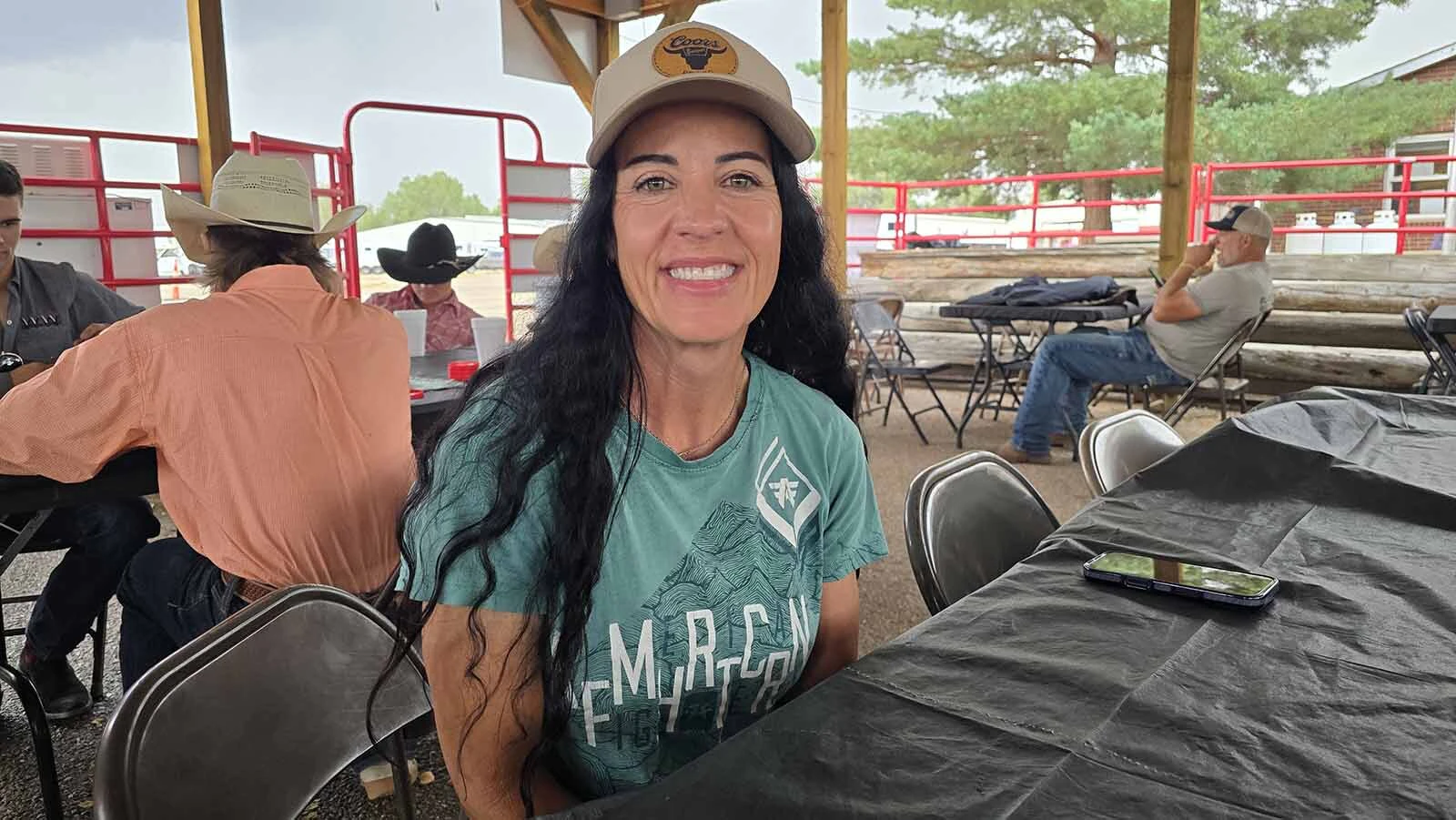
Ellis’ first clear memory after the accident is Christmas Day, sitting on the floor with her grandbaby and opening presents.
In between, there were things the 49-year-old said and did that she still doesn’t remember. Like the times she insisted she had to get to the NFR, and not understanding why she wasn’t in Las Vegas running barrels.
She’s told that doctors kept telling her to take it easy and wait on anything to do with riding horses and rodeo.
And she’s also told she kept ditching all the doctors who said things like that.
“I went to therapy and stuff, and I guess, again, I’m not a very good patient,” Ellis said. “And apparently there were doctors who, I was like, ‘I”m not going back to that guy.’ And my husband was like, ‘Why?’ And I was like, ‘He’s not taking me seriously.’”
The physical discomfort from her injuries was one thing. The real obstacle, though, has been the mental storm.
Weeks into her recovery, Ellis remembers lying on the floor with her family watching a movie when a crushing wave of sadness hit her.
“It was overwhelming, like the worst sadness I’ve ever felt in my life. It felt inhumane,” Ellis said. "It didn’t even compare to [losing] a family member.”
Ellis didn’t know then why she felt so overwhelmed and sad, but realized she had to just let it go.
“I started telling myself to relax,” Ellis said. “And I was like, ‘This is your injury. This does not belong to you. This sadness is your injury. Let it pass.’”
Eventually, she came to realize she was grieving her old self — the woman who could read for hours, teach math without thinking, drive trucks and haul horses without anxiety, and run barrels like she was flying on the wind.
“Even if you don’t come back to the way you feel like you were, you can still love who you’re becoming,” she told herself. “Loving yourself is what’s going to get you through any of this.”
She would give all the sadness up to her injury, and who she became after that would be up to her.
Learning To Ride Again
It took about two months before Ellis felt ready to even think about getting back on a horse. She knew the dizziness had to be gone. Her balance had to be right.
“I had to be really careful with myself, because I just didn’t feel good,” she said. “Like, if I looked too fast in a certain direction or up in the air, I would just get instantly dizzy.”
In January, Ellis and her husband, Brendon, spent some time with her parents in Arizona. The sunshine felt good, and so did the idea of being near horses again.
The moment she got back on a horse for slow-walking felt like she’d found her place in the world again.
“It was like healing my soul,” she said. “I just felt so much better, even though I was so nervous.”
Ellis took it one day at a time. She walked, she trotted, she eased back into old patterns. And she wore a helmet every time.
She also started studying brain injuries, learning more about nervous system regulation and trauma responses. At first, reading was too difficult. She listened to audio books instead.
That led her to discover hyperbaric oxygen treatment and a doctor who had been working with wounded military veterans.
“At first, it was weird,” Ellis said. “They were telling me how comparable my brain injury is to all of theirs, and I’m feeling guilty in a way, because they got blown up by bombs and stuff like that.”
It also put things in a certain perspective.
Ellis realized just how difficult the injury she was trying to overcome really was.
Another Futurity Race
At the end of January, Ellis decided to run in the Royal Crown, a futurity race about 20 minutes from her parents’ home.
That made her husband and her parents nervous.
“I can do it,” she told them. “If I don’t feel good, I won’t. It will be OK.”
Everyone at the race knew who Ellis was and knew what had happened to her.
“When they announced my name, they shut the music down,” Ellis said. “Everyone was so quiet. And then I ran and made a clean run, and everyone just started cheering and clapping. It made me feel so good. I was just waving to everyone in there. It felt so good to be back.”
That clean run in Arizona gave Ellis confidence to aim even higher.
Winning San Antonio
Before Cheyenne, Ellis marked her comeback with one of rodeo’s other crown jewels, San Antonio.
“When I got there, the nervousness was just trying to take me over,” Ellis said. “I had to lay down a few hours before my run and listen to a book that helps me. I like to listen to Neville Goddard. I love the way he talks. It just calms me down.”
Goddard was an influential mid-century spiritual teacher who taught that human imagination is the ultimate creative force in the universe.
“So, I was listening to that and just telling myself, ‘You’re OK, you’re safe, and just — whether people use the word ‘universe’ or ‘God’ or whatever — just knowing that I was in God’s hands and I was being saved and protected. That’s what helped me get past the anxiety.”
The walk to the arena took Ellis past fair rides and flags blowing around, which was a little nerve-wracking, and then she faced a long, dark tunnel to walk down, where the horse’s hooves echoed.
“So everything could have been overwhelming to me, but I just wouldn’t let it happen,” she said. “I was just thinking about all the things I’m grateful for, happy about, and then I kept telling myself, ‘You’re gonna be so happy after you have a successful run.’”
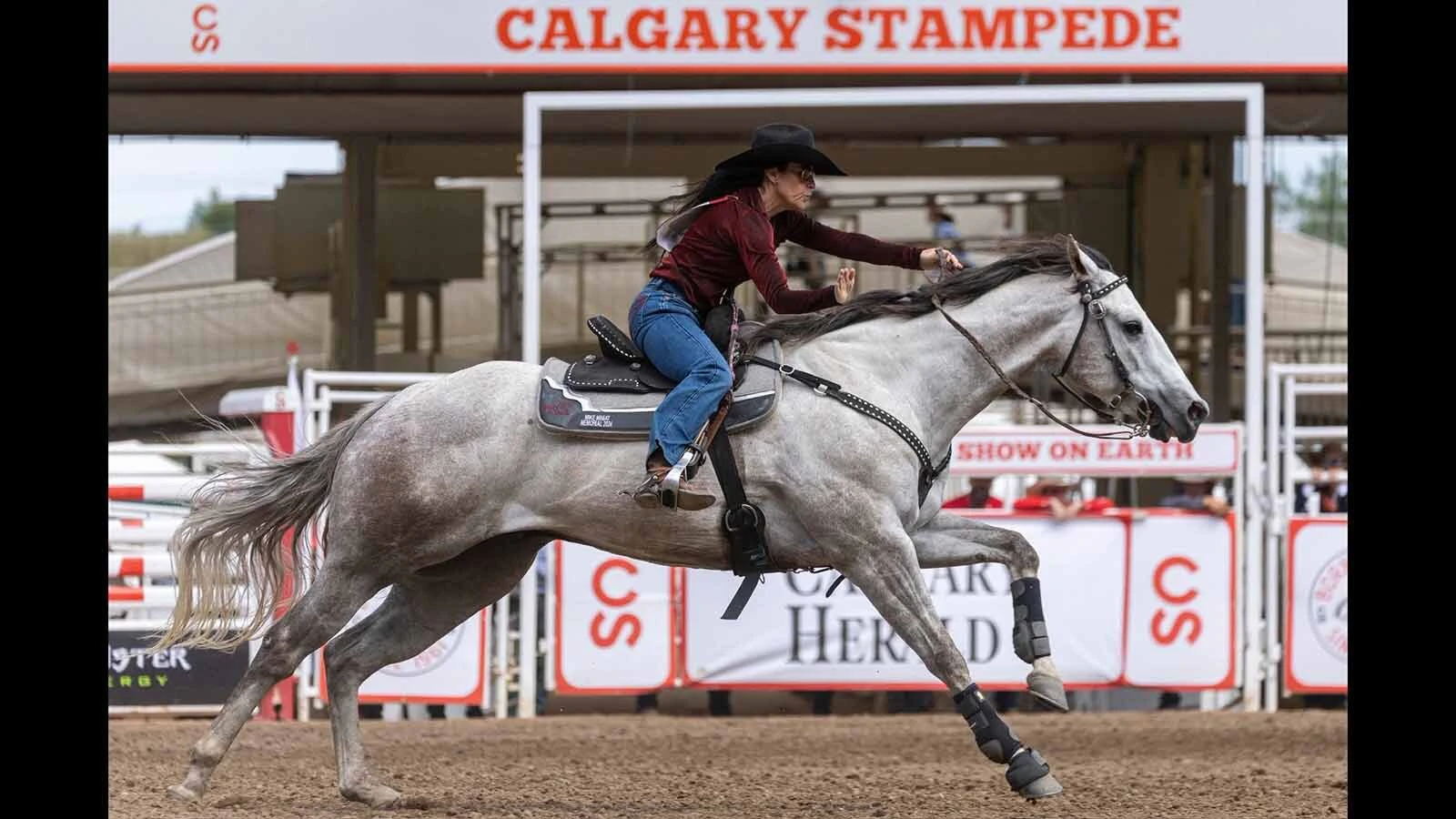
Four successful runs later — three qualifying runs and one in the finals — she had won San Antonio on her big, gray horse Rico, launching her into the world standings, where she now sits around 21st.
“I’m close,” she said. “But I don’t really get intense or worry about stuff now. It’s in God’s hands. I’m just gonna show up and see what’s in store.”
Cheyenne didn’t go the way she’d hoped, but she can feel herself and Ax coming back together.
'Basically Unstoppable'
Today, there are still times when things feel too difficult. She remembers growing terribly anxious when one of her horses spooked over a piece of paper.
She told her doctor about that to see what he would say about it.
“He’s like, ‘We’ll, check your blood pressure again,’” Ellis said. “And then he was like, ‘Was that the first time that you’ve been riding since your accident?’”
Ellis then had to fess up that she’d not only been riding since January, but she’d recently won a barrel-racing event at San Antonio.
“I thought he was going to get upset at me,” Ellis said. “But he stood up and he’s like, ‘You’re basically unstoppable!’”
Ellis felt relief wash over her. Here was a doctor who was going to help her fight for her dreams.
“I need to keep you around more,” she said, laughing with him.
Her doctor ticked through a few things to watch for, but also told her he’s glad she’s challenging and trusting herself. It’s exactly what she needs to do to overcome her injury.
“This is a better way to think about life, I think,” she said. “I’m just going to keep moving forward like this.”
Renée Jean can be reached at renee@cowboystatedaily.com.


