
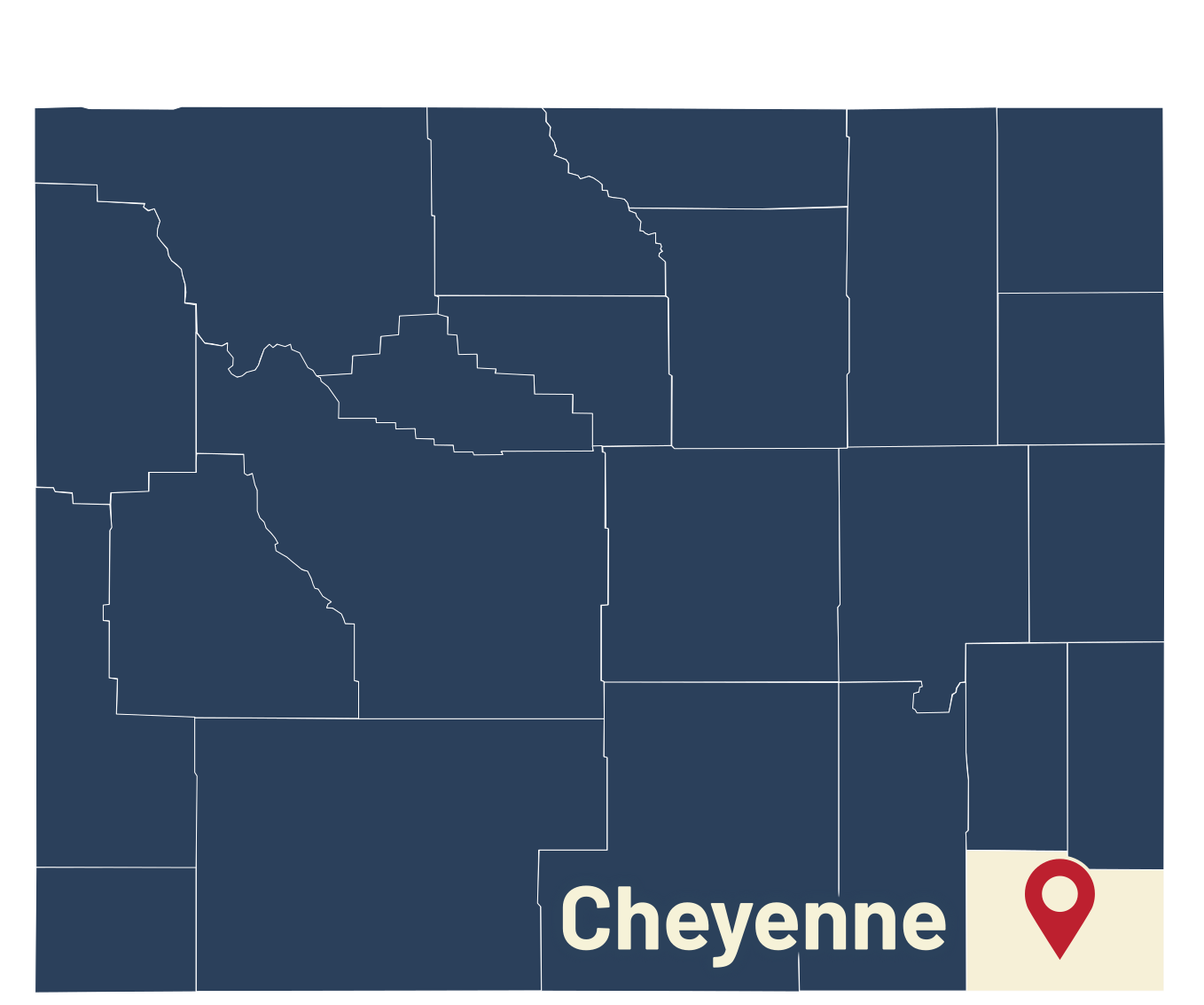
Attorneys for a former Cheyenne woman accused of murdering her newborn baby boy 38 years ago say there’s not enough evidence for a trial and want a district court judge to order a new preliminary hearing.
In the meantime, 57-year-old Eva Martinez is out of jail after her bond was reduced from $100,000 to $25,000 during an arraignment hearing last week in Laramie County District Court.
There’s no record in the public-facing court file of whether Martinez entered a plea to the single charge of first-degree murder she faces.
However, her public defenders claim prosecutors didn’t offer enough evidence to bind her over to trial — an argument they make in a motion to vacate her previous preliminary hearing and order a new one.
During Martinez’s June 18 preliminary hearing, the circuit court judge cited the wrong legal terminology to support moving her case forward to trial and “relied on factual findings unsupported by the evidence provided at the preliminary hearing,” wrote public defenders Stacy Kirven and David Korman in their motion.
Preliminary hearings aren’t trials and there is no “beyond a reasonable doubt” threshold, argues Sweetwater County Attorney Daniel Erramouspe, who’s acting as a special prosecutor in the case for the Laramie County Attorney’s Office.
“‘Reasonable belief’ is the standard” for a preliminary hearing, Erramouspe wrote in his Monday response to the motion for a new hearing. “‘Beyond a reasonable doubt’ is not. The preliminary hearing is ‘not designed to be a dress rehearsal for the trial.’”
The thrust of the claims on Martinez’s behalf centers around Circuit Court Judge Antoinette Williams citing the current laws instead of what the law was in 1988 when the baby died, referencing a “second autopsy” when there wasn’t one, and the definitions of terms relating to a first-degree murder charge.
Some Background
While the grisly discovery of the boy’s body happened more than 38 years ago, it wasn’t until 2021 that advanced DNA testing allowed investigators to advance the case and identify Martinez as the boy’s probable mother, according to an affidavit of probable cause written by Detective Sgt. Ryan Martinez of the LCSO (no relation).
When first interviewed by detectives decades later on Dec. 22, 2025, Martinez “repeatedly denied knowing anything about Baby John Doe or having any children or pregnancies around that time frame,” the affidavit says.
It was during that interview that a sample of her DNA was taken.
When she was interviewed again months later after results showed the strong probability of her being Baby John Doe’s mother, she maintained her first story, according to the affidavit.
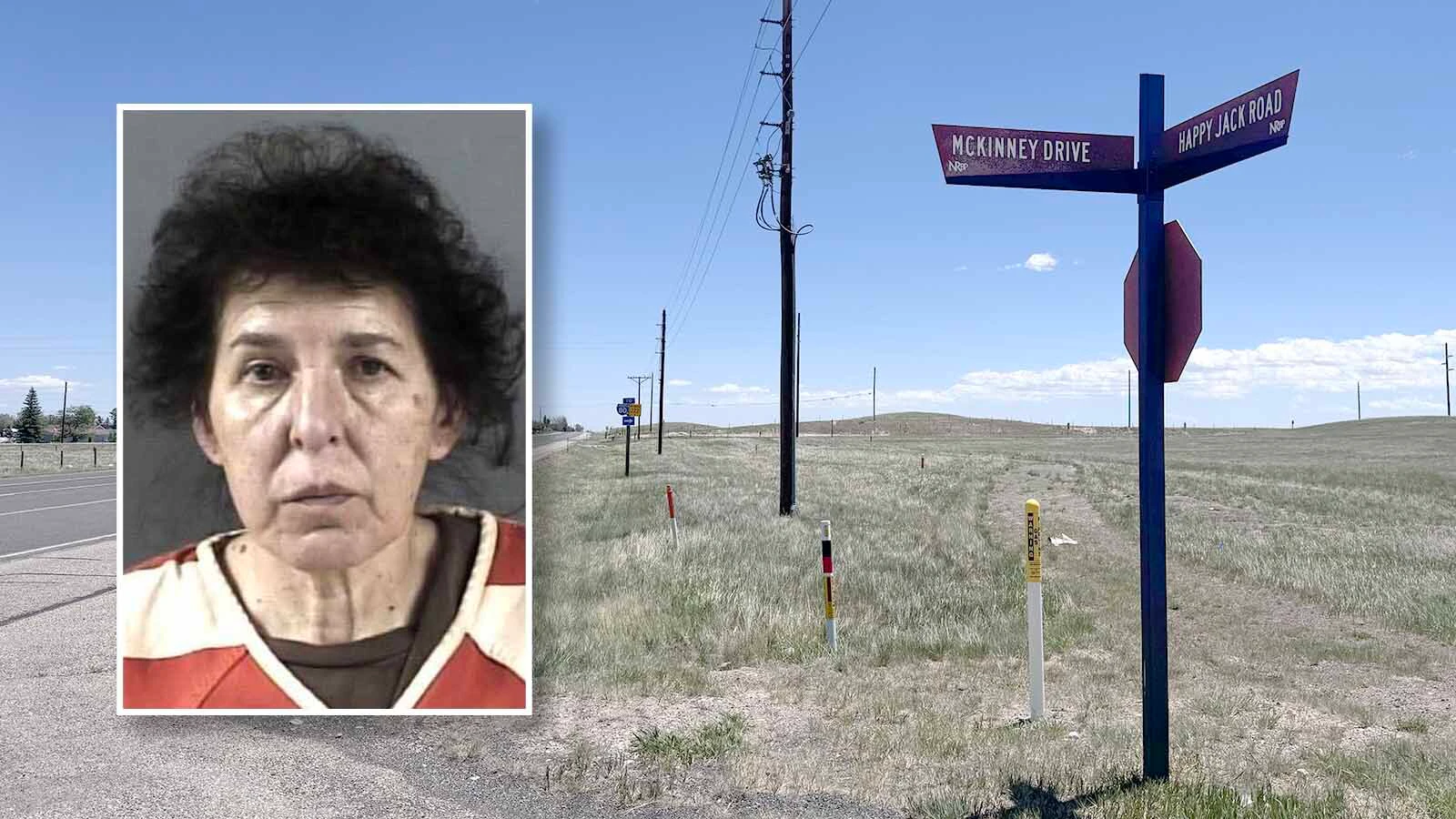
“She denied having any knowledge of Baby John Doe, having knowledge of anyone else who was responsible for Baby John Doe’s death, or why Baby John Doe’s body was placed in the culvert at Happy Jack Road and McKinney Drive,” the affidavit continues.
She claimed she wasn’t in Cheyenne around that timeframe, but investigators could not verify that information.
Martinez graduated from Cheyenne Central High School in 1987, and at some point afterward moved to Las Vegas, where she worked for about the next 20 years before returning to Cheyenne, the affidavit says.
Finding The Body
Martinez would have been 18 on Feb. 28, 1988, when Laramie County Sheriff’s Office deputies responded to a call at Happy Jack Road and McKinney Drive just southwest of the boundary for F.E. Warren Air Force Base.
What they found was anything but routine, the affidavit says.
People who had been walking in the area discovered the dead baby near a culvert.
“Their juvenile son had initially noticed a dog chewing on something in the area, and they later realized it was a deceased baby,” the affidavit says. “It was determined that the deceased baby had initially been inside the culvert prior to the dog moving it.”
The baby was “abandoned, unclothed, deceased … discovered near the roadway,” according to an LCSO report announcing Martinez’s arrest last month.
“An autopsy concluded that the baby was a fully developed, full-term, 6.5-pound baby,” according to the report. “The autopsy found no evidence of significant injury, congenital anomaly, or disease.”
It also was determined that the baby was born alive and remained alive for “an amount of time due to air being in the baby’s lungs and stomach,” the report says.
However, at the time the cause and manner of the boy’s death were undetermined.
That Testimony
That autopsy is one of the reasons Martinez needs a new preliminary hearing, her lawyers argue in their motion.
That the prosecution failed to present any evidence that she killed Baby John Doe is another.
At the first hearing, testimony referred to a “second autopsy” performed on the boy, and Judge Williams also initially mentioned it in giving her order to bind Martinez over to trial.
There never was a “second autopsy” and mentioning that as a reason to advance the case is improper, the public defenders argue.
During the first preliminary hearing, the detective “acknowledged that there is no evidence to support numerous critical facts regarding the alleged offense,” the defense motion says. The detective further “conceded that there was no way to determine if Baby John Doe died in Wyoming.”
Another inconsistency is testimony that the infant’s cause of death in 1988 was listed as “undetermined,” but it wasn’t until March 2026 when his death certificate was amended to show homicide.
Not Enough
Those arguments aren’t enough for a judge to throw out the first preliminary hearing and order another, Erramouspe says in his Monday response.
That’s because a preliminary hearing isn’t a trial, and the issues raised by the defense’s motion should be dealt with during Martinez’s trial.
“Those are trial questions and are not grounds to vacate a bind-over,” he wrote. “Defendant’s contrary position would require the lower court to resolve precisely the kind of ‘difficult legal questions’ that the Wyoming Supreme Court has held are inappropriate at a preliminary hearing and are reserved for the district court.”
He also says the dispute over a nonexistent “second autopsy” doesn’t hold water, because the original autopsy was given an updated review, Erramouspe wrote.
Whether the review “is described as a ‘second autopsy,’ an ‘updated autopsy’ or a review and amendment of the original autopsy is immaterial to probable cause,” he argues.
Moreover, Martinez isn’t entitled to a new preliminary hearing because she doesn’t like that a judge found probable cause, Erramouspe wrote. Whether there’s enough evidence is ultimately a question for a jury.
“Defendant’s requested remedy of a new preliminary hearing before a different circuit judge is especially unwarranted,” according to Erramouspe’s response. “Wyoming law does not entitle a defendant to relitigate probable cause before a new magistrate whenever she disagrees with how the first described the evidence.”
While Martinez was granted a lower bond — and posted it — there are some conditions attached to her being released from jail, according to court records.
Her bond had to have been posted by a bondsman, not personally, and she has to wear an ankle monitor.
If convicted of first-degree murder, Martinez could face life in prison or death.
Greg Johnson can be reached at greg@cowboystatedaily.com.


