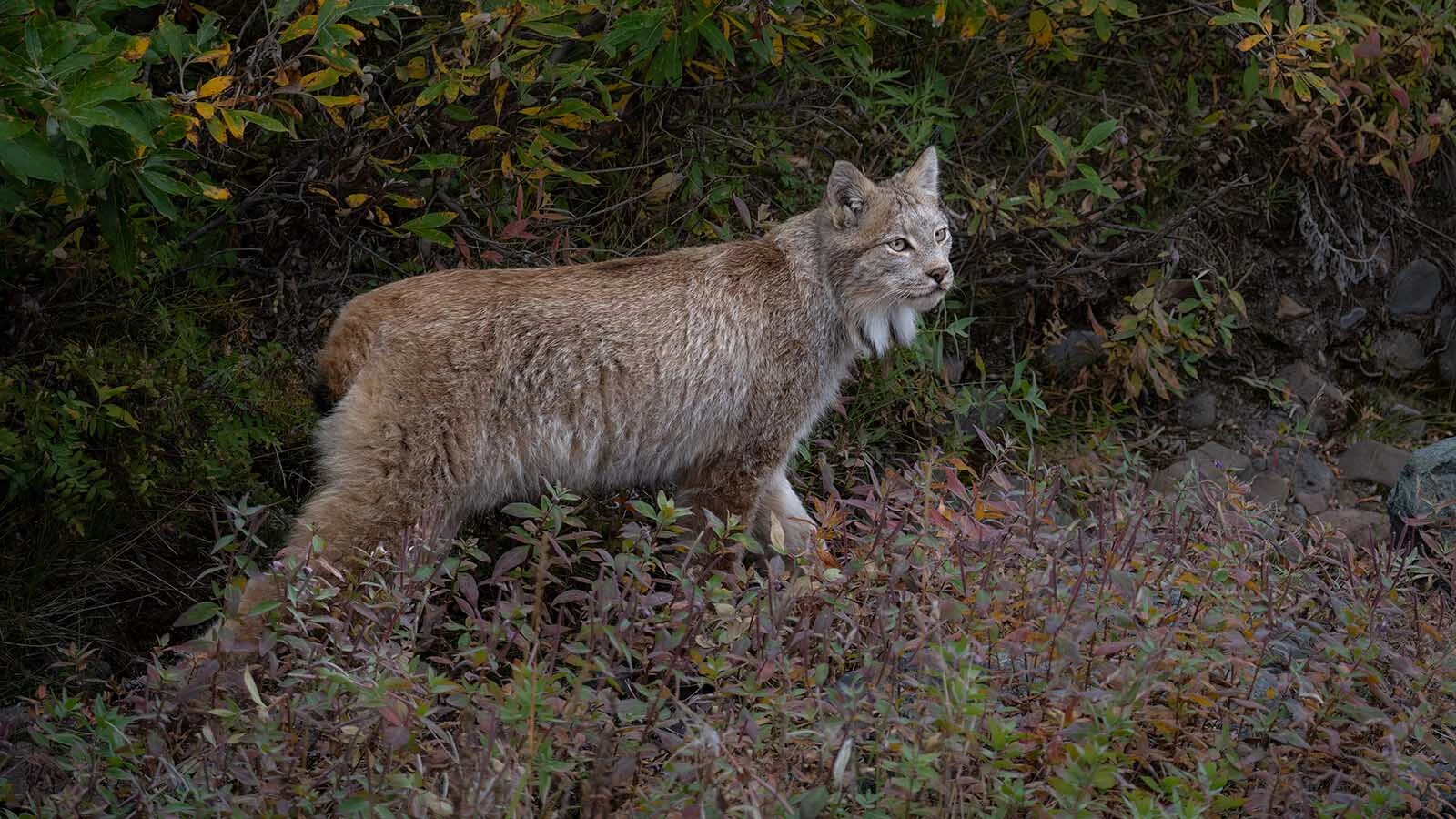
Lynx, the elusive, large-footed cousins of bobcats, are roaming the wilds of Wyoming, but good luck seeing one. They’ve always been rare, and now they’re really few and far between.
At one time, Wyoming apparently had more lynx than it does now, according to a conservationist.
“Anecdotally, there were frequent sightings in the 1940s and 1950s,” wildlife researcher John Carter, who lives near Bondurant, told Cowboy State Daily.
Now it’s tough to know for certain how many lynx are left in Wyoming and the rest of the Rocky Mountain region, he said.
"There’s still lynx around. We know if there are lynx in a general area, but there’s no consistent monitoring,” he said.
The best recent count that he’s aware of was based on trail camera images in Montana’s Glacier National Park that indicated 53 lynx in the area.
An ecologist and engineer, Carter worked for years as an ecological consultant for oil, gas and mining companies.
He went on full-time conservation work and founded the Yellowstone to Uintas Connection. He recently published a report on the state of lynx in the Greater Yellowstone Ecosystem.
Feds List Them As Threatened
The U.S. Fish and Wildlife Service lists lynx in the Lower 48 as threatened.
Lynx are holding steady in the Rocky Mountain region, but probably aren’t expanding their range or growing in numbers, according to the agency.
The agency’s 2023 species status assessment says lynx are either known to be, or could be, in nine Wyoming counties. Those are Albany, Carbon, Fremont, Hot Springs, Lincoln, Park, Sublette, Teton and Uinta counties.
Lynx are holding on in the range they currently occupy. However, there aren’t many “large and vacant high-quality habitats for them to move into,” according to the FWS.
“Overall, our evaluation of historical and current distribution of resident lynx in the DPS range does not indicate broad scale range contraction or the loss of breeding populations from large geographical areas that historically supported them,” the agency stated.
“Although, some small populations may have become extirpated recently,” according to FWS.
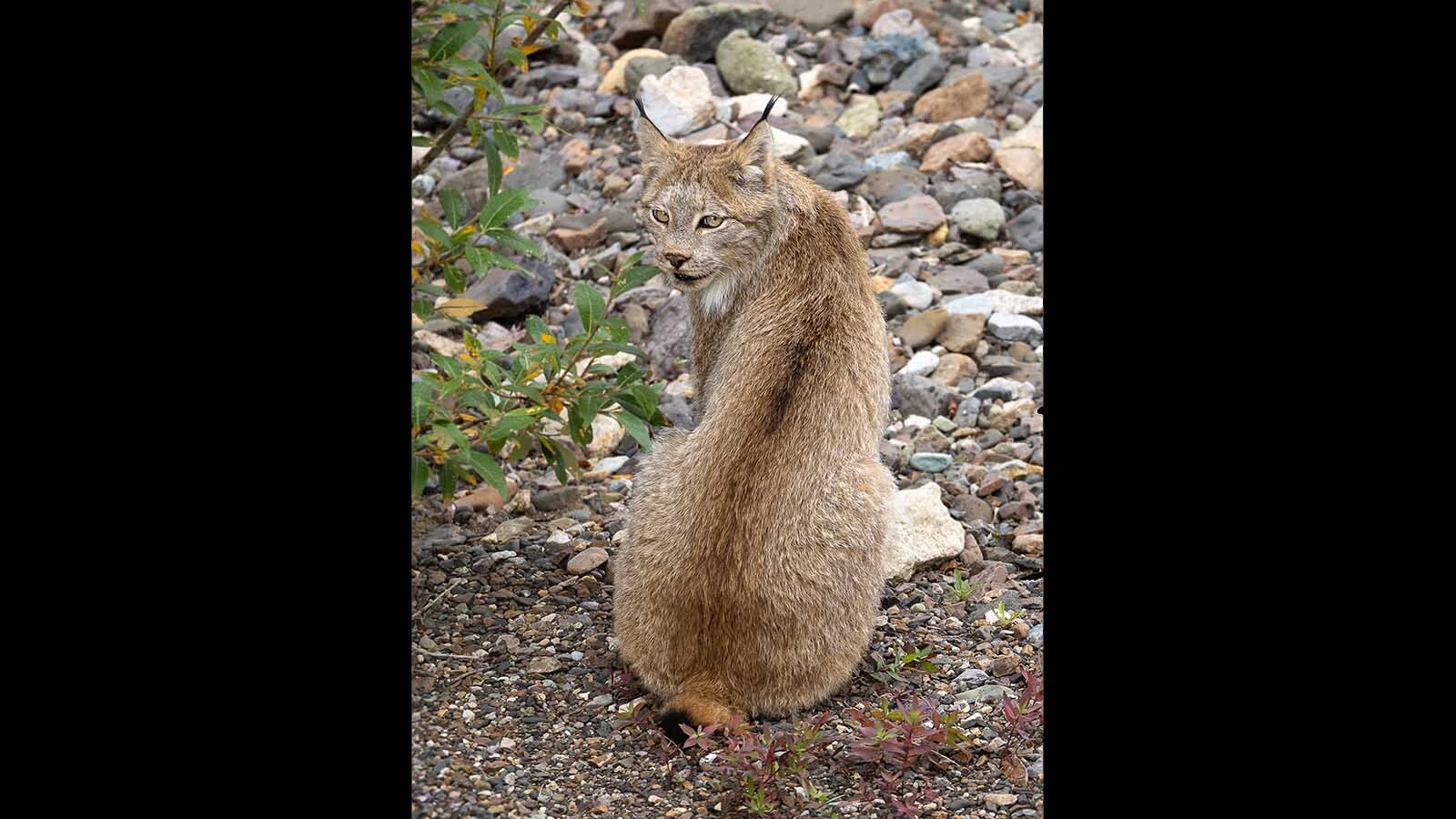
Medium-Sized Cats With Huge Feet
There are misconceptions about lynx, Carter said.
One is that they’re completely dependent on snowshoe hares as their only viable prey. That might be true in the northern part of their range, such as in Canada, he said.
Lynx are much like bobcats, except they have huge feet. That enables them to run across deep, soft snow, catching prey such as snowshoe hares, he said.
Even so, they can still hunt other prey like squirrels during the warm months, or in the southern parts of their range, Carter said.
So, counter to another common misconception, lynx and bobcats sometimes share territory, he said.
“Lynx will hunt jackrabbits out in the sagebrush,” he said.
“A lynx doesn’t need snow year-round to live,” he added. “It just has that competitive edge of being able to run across the top of the snow a few months of the year."
Poor Habitat?
Based upon the misconception that lynx are completely dependent upon snowshoe hares, Carter said he’s gotten pushback on his idea of what amounts to good lynx habitat.
“People will say, ‘There’s no snowshoe hares in Yellowstone National Park, so Yellowstone isn’t suitable lynx habitat,'” but he disagrees.
What lynx need is old-growth forest with lots of “understory,” or brushy growth on the forest floor, he said.
“You need really old trees, at least 80 to 100 years old, with a mature understory to make good lynx habitat,” he said.
So, he’s critical of some logging practices, which can leave forests with widely-dispersed, younger trees and little undergrowth.
‘Wildfire Hysteria’?
Carter is especially critical of wildfire fuel mitigation. That can include cutting or prescribed burns to thin out tangled trees or thick bush.
It might make sense in areas with a “wildland-urban interface,” such as home developments along the edge of forests, he said.
However, he thinks that actual amount of “wildland-urban interface has been greatly exaggerated.”
That’s driven by what he calls “wildfire hysteria” and has led to the U.S. Forest Service being too aggressive with its fuel mitigation programs.
The Forest Service states that fuel mitigation doesn’t just reduce the risk of wildfires, it can also help the ecosystem.
“(The) reduction of fuels improves the resilience of forests and rangelands to wildfire, insect outbreaks, plant invasions, and other disturbances,” according to the Forest Service.
“Research related to prescribed burning and mechanical fuel treatments can be readily applied on the ground and helps identify target ecosystem structures and composition,” the agency states. "Forest Service science also informs the application of fuel treatments at scales that are size and timing appropriate.”
Interconnected Habitat
Carter said that as he sees it, lynx face the same challenge that some claim has hindered full grizzly bear recovery in Wyoming and the rest of the northern Rockies.
That being fragmented habitat and scant genetic interchange between subpopulations.
As the debate over whether to delist grizzlies from federal protection in the Lower 48 rages on, some have argued that the sheer number of bears — including at least 1,000 in the Greater Yellowstone area — makes the case for desisting.
Others argue that the number of bears is meaningless, so long as there are barriers between subpopulations.
The situation with lynx, which are listed as a threatened species, is similar, Carter said.
They’re isolated in scattered “postage stamp” areas of good habitat, he said. There also aren’t enough corridors of undisturbed habitat for them to move between habitat areas and breed between subpopulations."
He’d like to see that change, adding that what’s good for lynx would be good for other species.
“Good habitat and migration corridors for lynx would be good for grizzlies, wolverines and other species,” he said.
“If you protect habitat for lynx, you protect the habitat for all of those other things as well,” he said. "You also protect the watersheds. And our watersheds aren’t disposable."
Mark Heinz can be reached at mark@cowboystatedaily.com.