Babies are a joy, but not one that eases politely into the world. They barge right in on their own time — 3 a.m., during snowstorms, in the middle of dinner, with scrubs falling off and one glove not yet on.
No one knows that better than Lander’s retired “baby catcher,” Helen LaRose. Spend any time around the retired midwife and you’re bound to hear at least one story about a baby.
Stay, and you’re more likely to hear two or three.
Her stories are full of chaos and comedy, but the thread that ties them all together is joy.
With more than 3,000 babies delivered in Texas and New Mexico during a 20-year career, LaRose can tell a new story about a different baby every day for eight straight years.
LaRose has had a life full of joy thanks to her career, and it’s something she can’t help but share everywhere she goes.
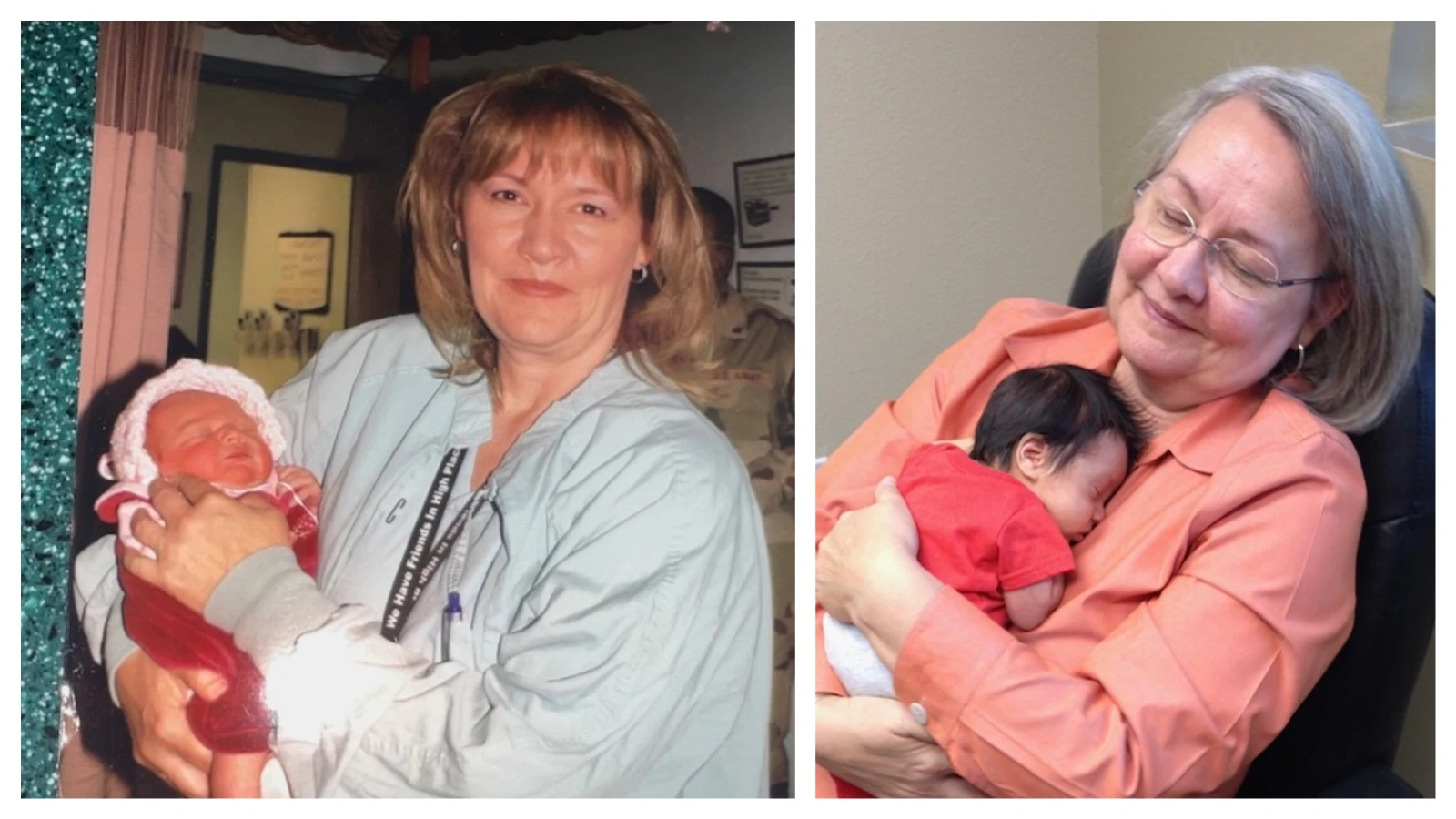
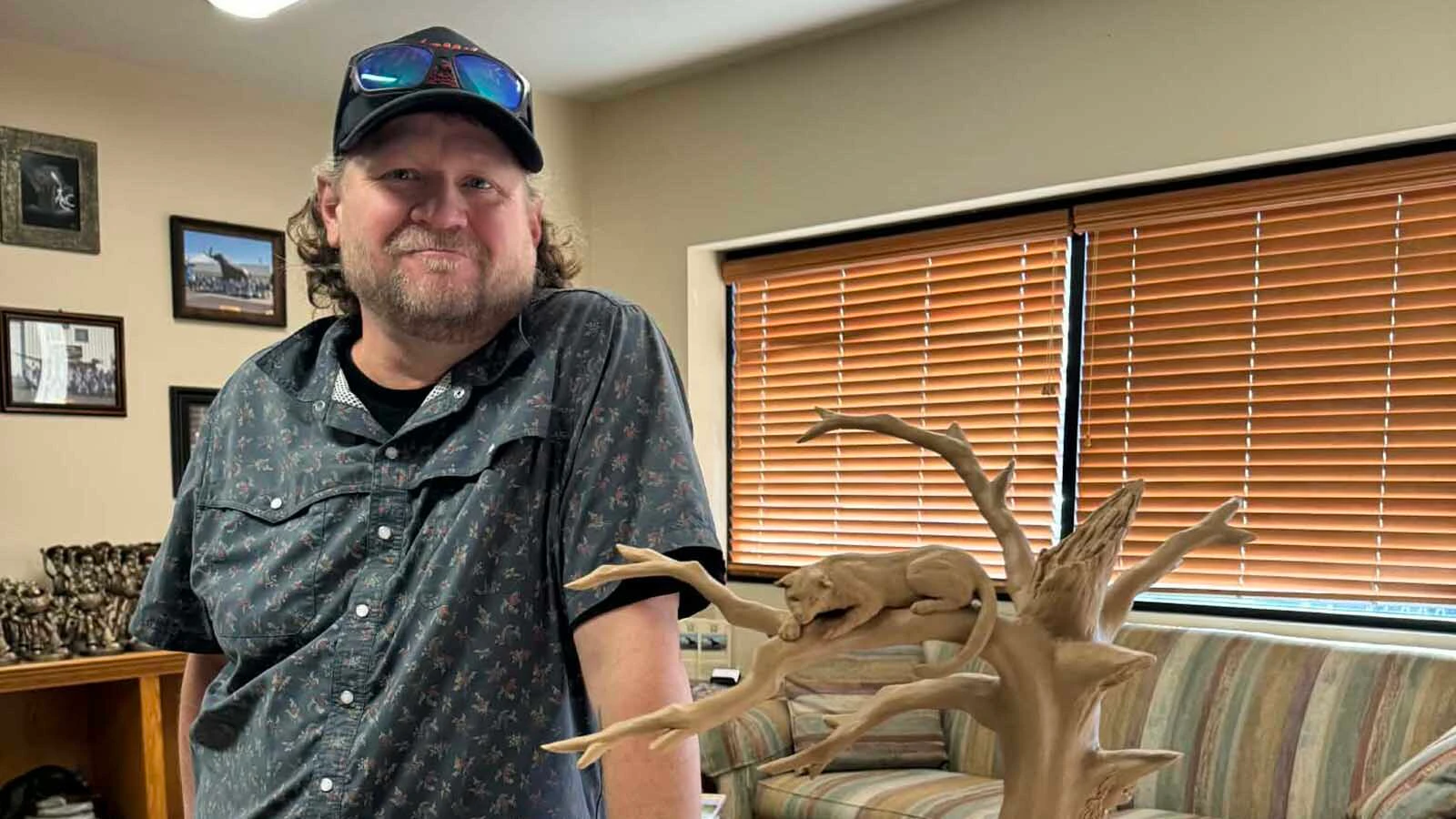
Helen LaRose delivered more than 3,000 babies over a 20-year career as a certified nurse midwife, a self-proclaimed “baby catcher.” Something she learned is babies come when they want, even that time “I delivered that baby shoeless with one glove on." (Courtesy Photo) 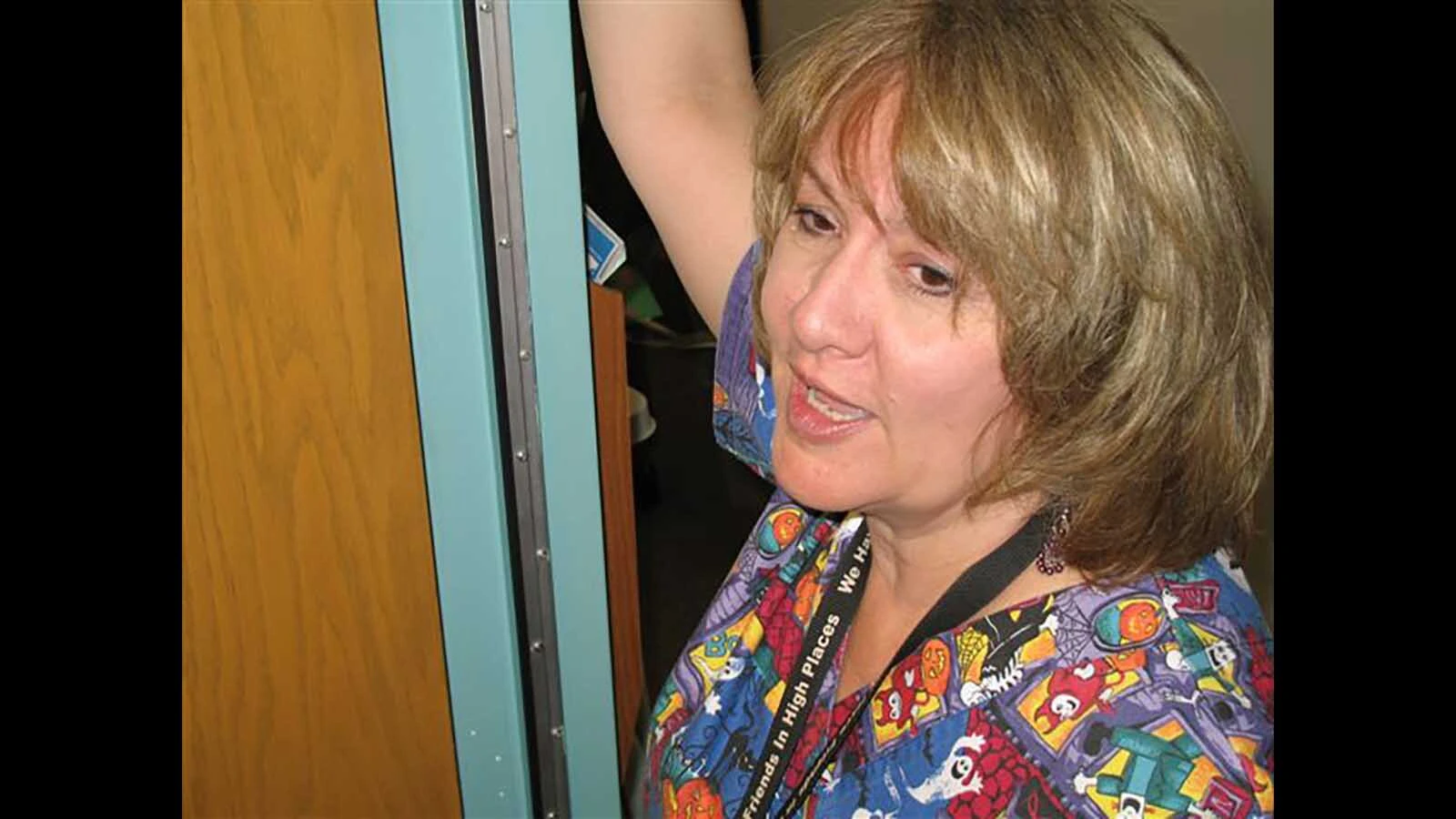
Part of the fun of being a midwife was wearing crazy scrub tops. (Courtesy Photo) 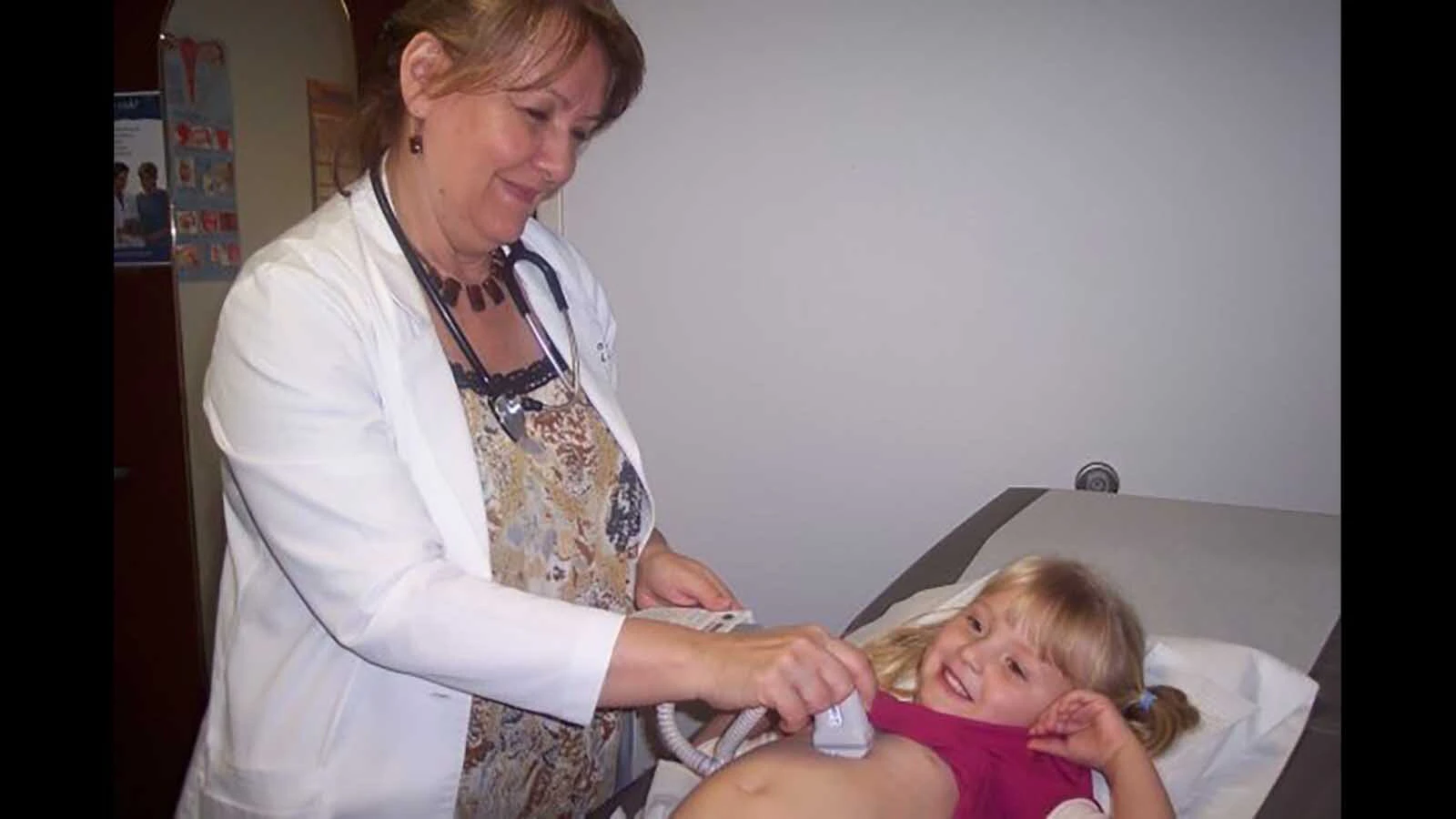
Helen LaRose in the office with the daughter of a patient who thought she was growing a baby just like mommy. (Courtesy Photo)
Racing Barefoot To The Delivery Room
Her first night as a midwife at the Belmont Harvey Medical Center in El Paso is one her most memorable that sounds more like a script for a sitcom.
LaRose was coming on shift and was in the women’s changing room when she heard what she calls “the cry.”
“That’s the sound a woman makes when the baby is coming down,” she told Cowboy State Daily.
LaRose was not close to the woman when she heard it, but she knew exactly what it meant. She had no time left to prepare.
She ran to the delivery room with no shoes on.
“I delivered that baby shoeless with one glove on,” she said, laughing at the memory. “I had my scrub pants pulled up as I was running. I didn’t even have them tied properly.”
It wouldn’t be the last time she raced half-dressed down a hallway to the delivery room.
“There were emergencies where I was called and (told) the lady walked in and the baby’s head’s coming out now,” she said. “I would jump up, throw on scrubs, and run out the door. I know I hit 90 mph, but it was usually in the middle of the night.”
Because of those kinds of calls, LaRose made it a rule to always live within at least a mile of the hospital facility where she was working so that she could get to the hospital in minutes.
Families Take The Lead
Shoeless sprints weren’t the only made-for-a-sitcom moments. They happened all the time, even in the most sacred of moments.
“I would deliver the baby’s head and anterior shoulder, and then I’d have the dad put gloves on and put his hands on the baby to bring the baby up to the mother’s chest,” LaRose said. “That was my style.”
After that, she’d offer the father a pair of scissors to cut the umbilical cord. Some dads turned white. Some cried.
A few even looked as though they might pass out.
One dad of an enormous family offered a new twist.
“He stopped me and said, ‘Wait a second,’” LaRose recalled. “And he looked to all of the kids, who were all the way around the bed, and he says, ‘Whose turn is it?’ And whoever’s turn it was, they stepped up and said, ‘It’s my turn.’
"The other kids didn’t argue with it. They all knew whose turn it was.’”
In another delivery involving twins, dad cut the first cord but the second was cut by the 10-year-old big sister who had faithfully attended every prenatal appointment.
LaRose never batted an eye, no matter what happened or how funny it was in the moment. The babies don’t remember any of it, but the families never forget. And she wanted it to be just right.
“Women deliver the baby,” she said. "I was just the person there for safety, to ease the birth, to keep it safe, to offer suggestions that will help a woman have an easier time of it.
"And I’ve had all kinds of people in there. You just have to look and see what the family wants, and make sure that’s what they get.”
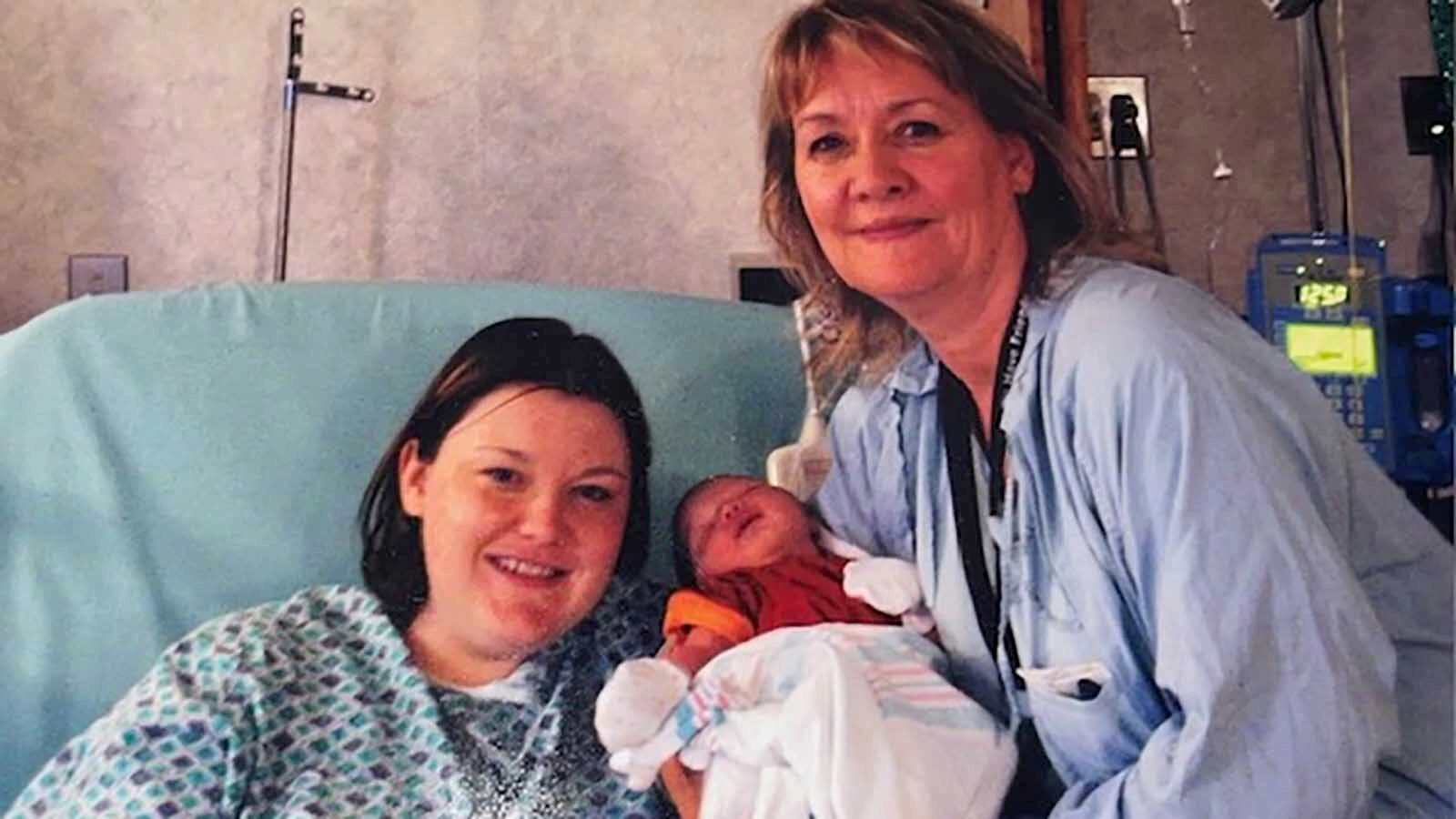
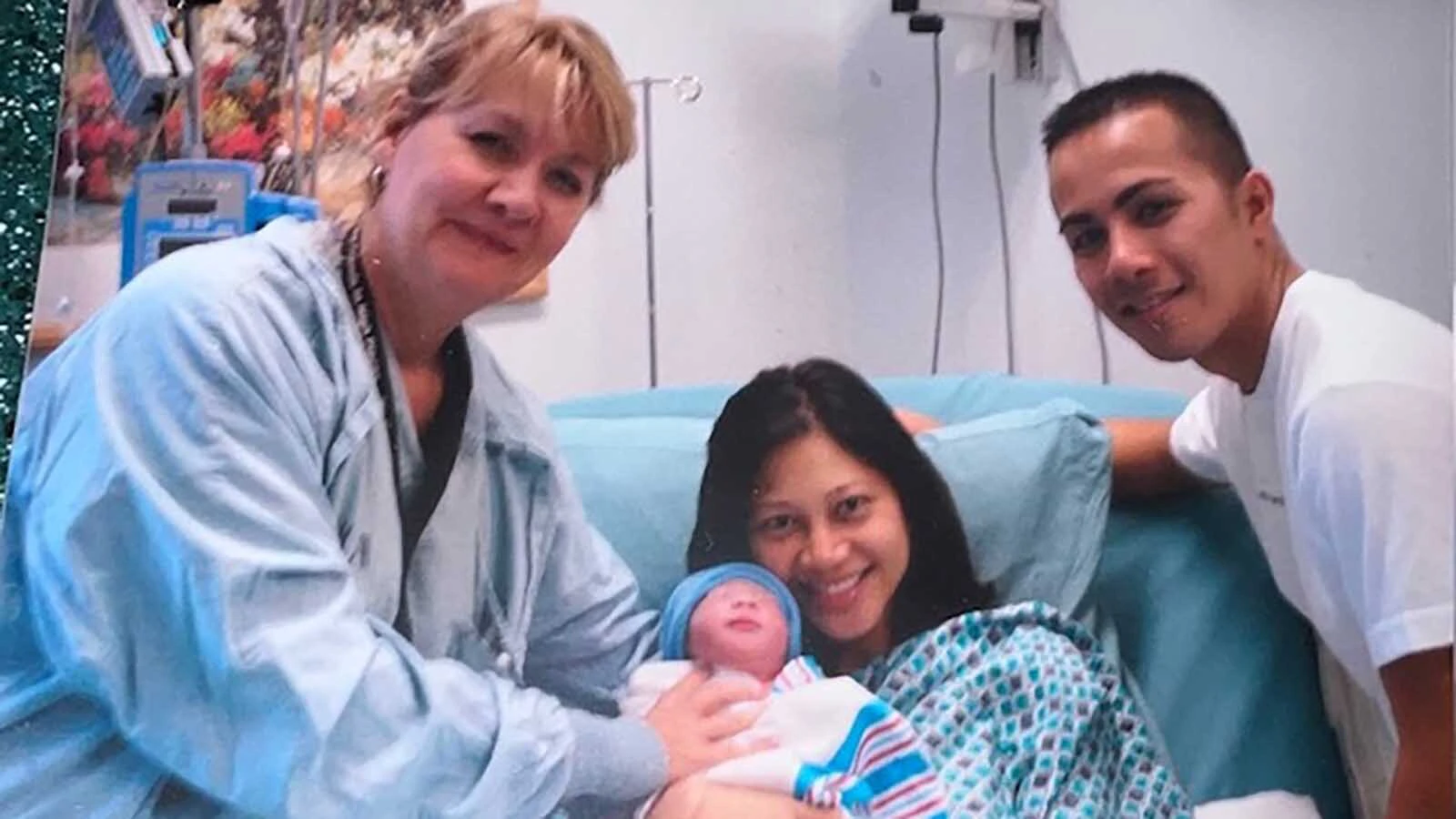
Helen LaRose posees with a happy mom and baby just after the baby was born. (Courtesy Photo) 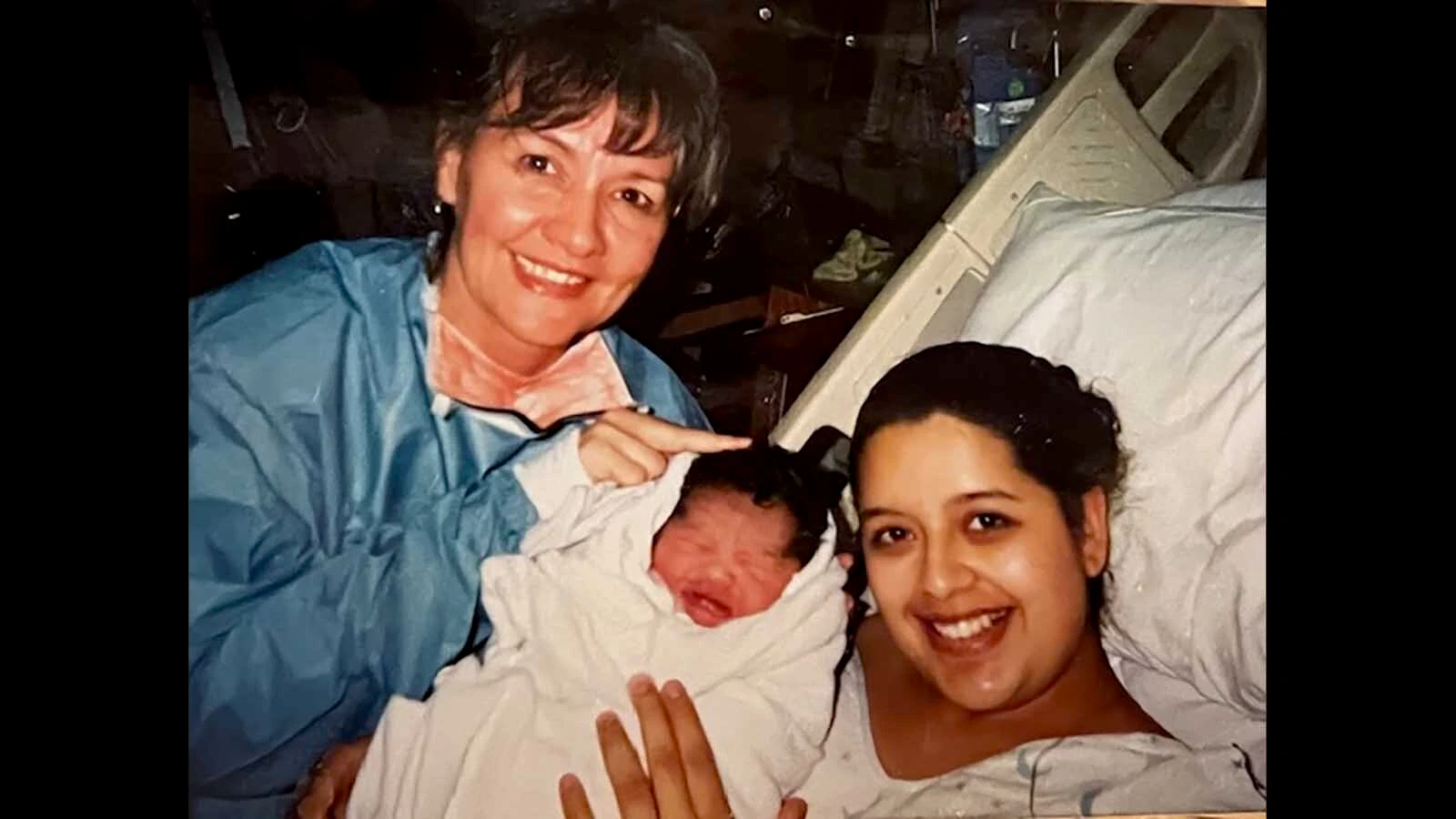
Happy mom and baby pose with Helen La Rose for a photo just after birth. (Courtesy Photo) 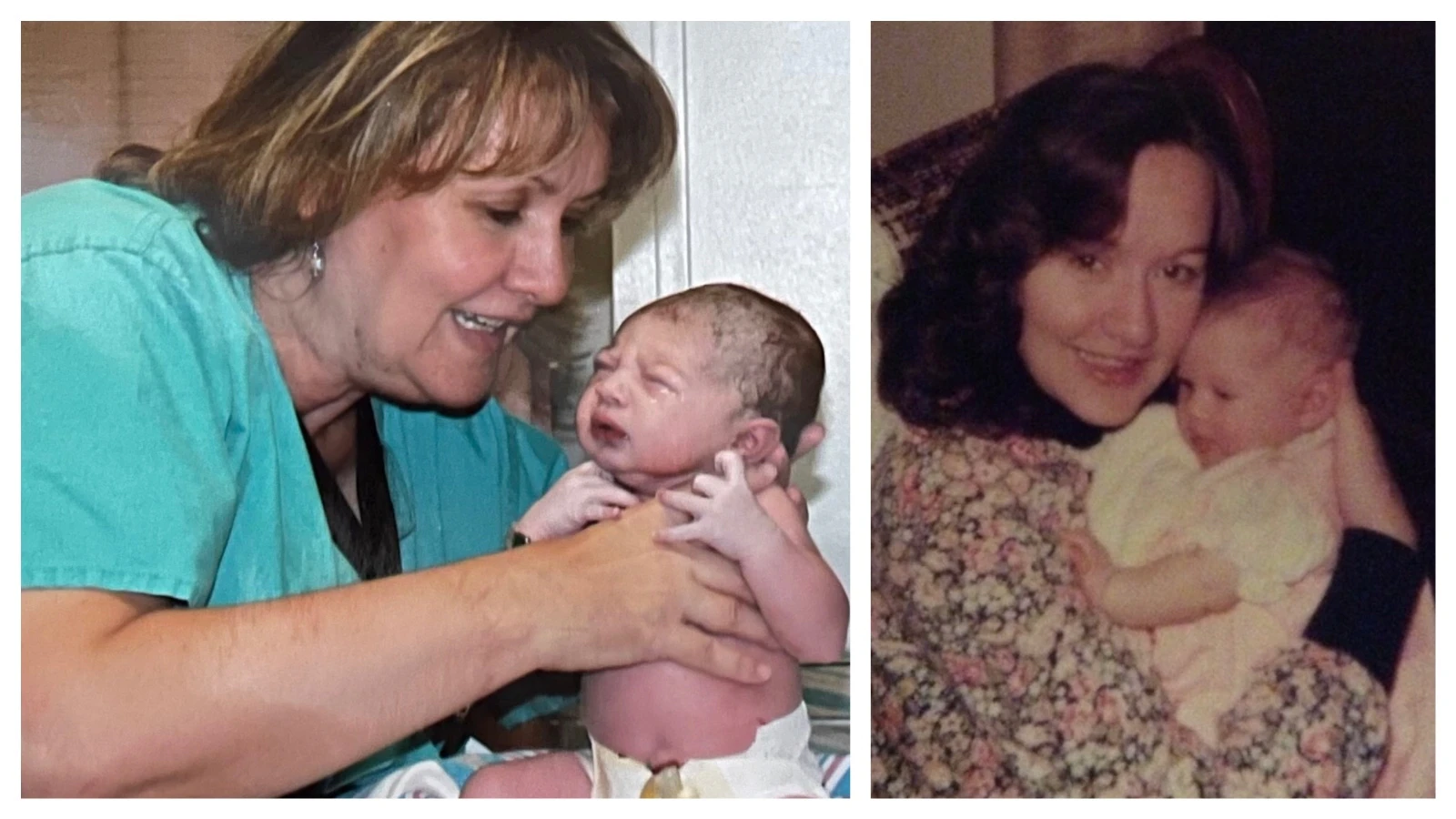
Helen LaRose delivered more than 3,000 babies over a 20-year career as a certified nurse midwife, a self-proclaimed “baby catcher.” Something she learned is babies come when they want, even that time “I delivered that baby shoeless with one glove on." (Courtesy Photo)
Boundaries For Mom And Midwife
Comedy and chaos weren’t confined to the delivery room. There was also plenty of it at the LaRose kitchen table for her children.
Her daughter, Leah Montgomery, recalls eating breakfast alongside obstetrics and venereal disease textbooks.
“She’d leave those suckers wide open on the table like she’s studying for a test,” Montgomery told Cowboy State Daily. “Well, I’m done eating now. I’m like, ‘Goodness gracious, lady.'”
Boundaries, Montgomery quickly learned, were something she had to set with her mother. Like the time mom showed up at the restaurant where Montgomery was working and sat down in her section.
“You can sit in my section,” she told her mother. “But only if you don’t use words like placenta. Nobody wants to hear that while they’re eating.”
She often joked that she couldn’t take her mother anywhere and get out quickly. That’s because she would invariably run into someone whose children she had delivered.
When she was a teenager, it felt embarrassing. But Montgomery learned to appreciate her mother’s gifts as an adult, particularly when her mom dropped everything to help her through a difficult birth and a NICU stay.
“She was able to keep me calm in a very stressful situation,” Montgomery said. “And I am forever grateful for that. I don’t know that I would have survived without her.”
Finding Her Calling
LaRose went to nursing school in her 30s after her own kids were in school. She found her calling when she landed a rotation in labor and delivery.
“It was like the sky opened and the sun came out and there were rains everywhere,” she said, chuckling a little at the memory. “It was just such an eye-opener for me that that’s where I belonged, and I followed that.”
Colleagues saw the same thing.
“You’d be perfect at this,” they told her, and urged LaRose to become a certified nurse midwife.
For all the chaos and comedy, there’s aways a moment when LaRose circles back to the serious. Birth is joyful, but life itself is sacred. As a midwife, she was very particular about that.
“I would tell my nurses the first voice that this baby hears should be mom’s and dad’s,” she said.
She would dim the lights whenever possible and hush the room. Family — not the staff — was the focus.
“It’s never about me being a midwife or how many babies I delivered,” she said. “It’s about each individual woman, how she got to have this great moment in her life, and how she perceived herself as strong.”
LaRose made a point of telling every mom that they are strong, and that what they’d done is miraculous.
“I often told women after birth, ‘Look at what you did. You’re amazing,'” LaRose said. “I mean, women are incredible. They put their bodies through labor, pain, and it can be hard.
"Not all labors are short. A lot of women go through it for hours or even days. And then to be so exhausted and so excited all at once — it’s just so much joy. I think I was in it for the joy.”

Helping Mothers Through Loss
Joy was not always the outcome of pregnancy.
There were a handful of times when the mother LaRose was tending to didn’t carry her baby to term.
That prompted LaRose to start a support group to help women get through their loss. Word spread, and soon women from other hospitals were joining in.
She still hears from many of those mothers, particularly when their “rainbow” babies are born. That’s the term for the first child born after a miscarriage.
A rainbow baby is one of her most vivid and joyful memories.
“She walked into the labor and delivery unit, and she looked at me and she said, ‘Oh thank God it’s you,’” LaRose recalled. “And she delivered in the middle of the night, but she was afraid to deliver. She was afraid she was going to get a stillbirth again.
“'This baby is alive,'” LaRose told her confidently. “'I can hear your baby’s heartbeat, and this is all up to you, sister. All you have to do is push. All you have to do is help me get this baby into your arms.'”
That was one of the most joyous things LaRose has ever seen.
“I still stay in touch with her,” she said. “She lives in Arizona and she had another baby after that. I’ve watched her two girls grow through Facebook.”
Finding Wyoming
Retiring to Wyoming was never a discussion point for LaRose and her husband Larry, who was part of NASA’s shuttle program at one time.
They had both grown up in Wyoming and had long dreamed of returning home. The only question had been where — Rawlins, Casper, Cheyenne?
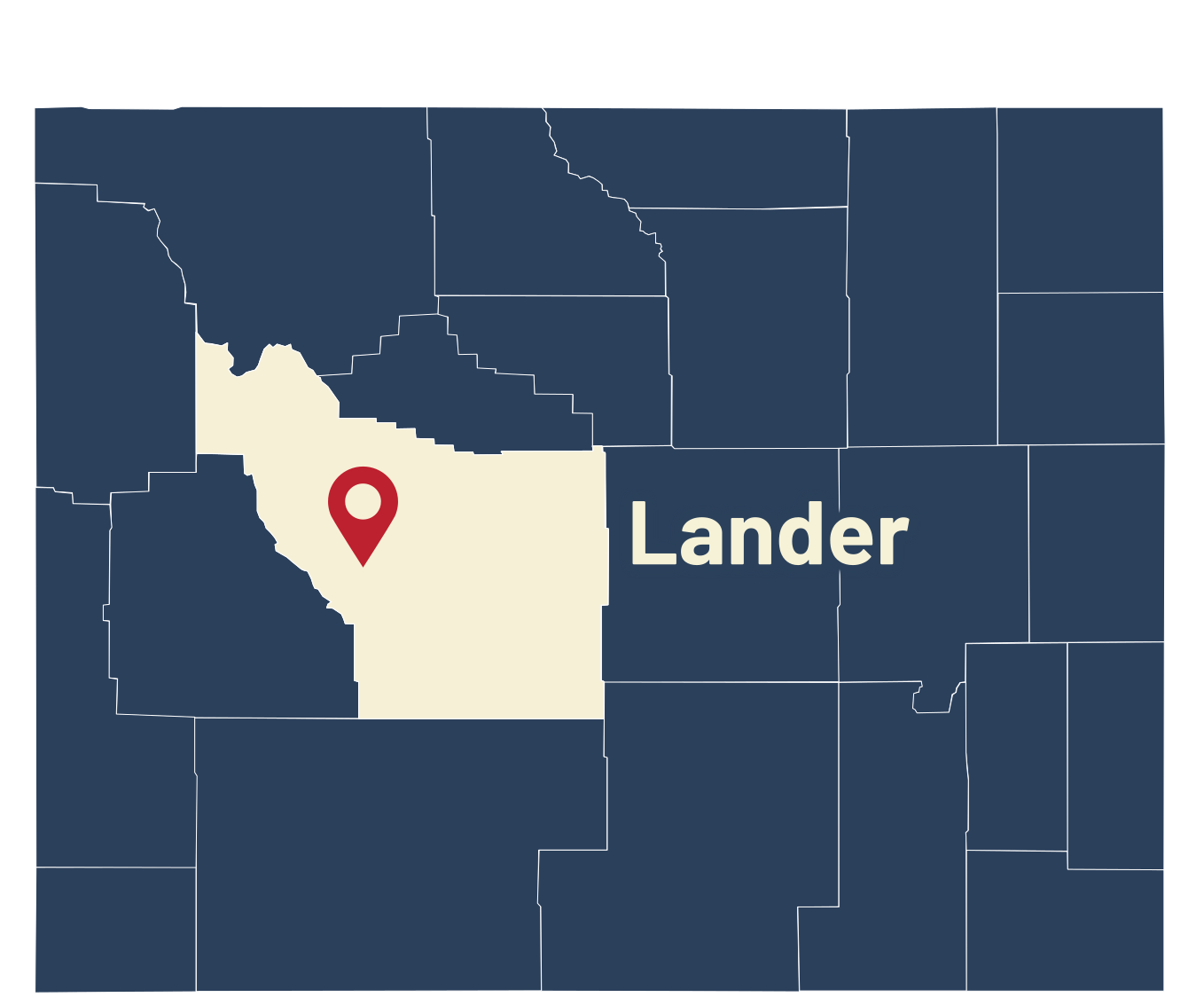
Ultimately, it was Lander, where Helen had gone to school and where the Wind River Mountains frame the skyline. They would teach her a new facet of joy.
“Wyoming is my home, and it has been for my lifetime,” she said. “I’m so grateful to be back home for the rest of my life.”
LaRose is quick to fend off suggestions that she might have another delivery or two in her, given Wyoming’s widening maternity deserts. But she’s not completely separated from her work.
She still has a handheld doppler she loans out to nieces and neighbors so they can hear their babies’ heartbeats at home.
Neighbors often also call to have her remove stitches or to see if they think she needs to go to the emergency room for one ailment or another. Pregnant relatives often seek her advice.
These days, Helen’s still chasing joy.
She keeps up with her 3,000-plus babies, now in their 20s and 30s, scattered across Texas, New Mexico and beyond. They’re like a huge extended family, one that continues to bring her joy.
She also chases life up Lander hills and down Lander valleys, capturing moments she shares with friends and family.
“You can find joy all over life. You just have to look for it,” she said. “It’s all about the light. Being at the right place at the right time.”
Being a midwife was a season of her life, one that touched her deeply and is still part of her life, and still sharing everywhere she goes.
“But deeper is the peace I find in living day to day here in Wyoming,” she added.
Her 3,000 children all carry some of that peace from Wyoming out into the world. They’re an echo of a telling bumper sticker that used to be stuck on the back of her car.
"Baby Catcher," it said.
The ripple effects of her work are still traveling through the world, but all LaRose can see is the unabashed joy, barging right into life.
Renée Jean can be reached at renee@cowboystatedaily.com.