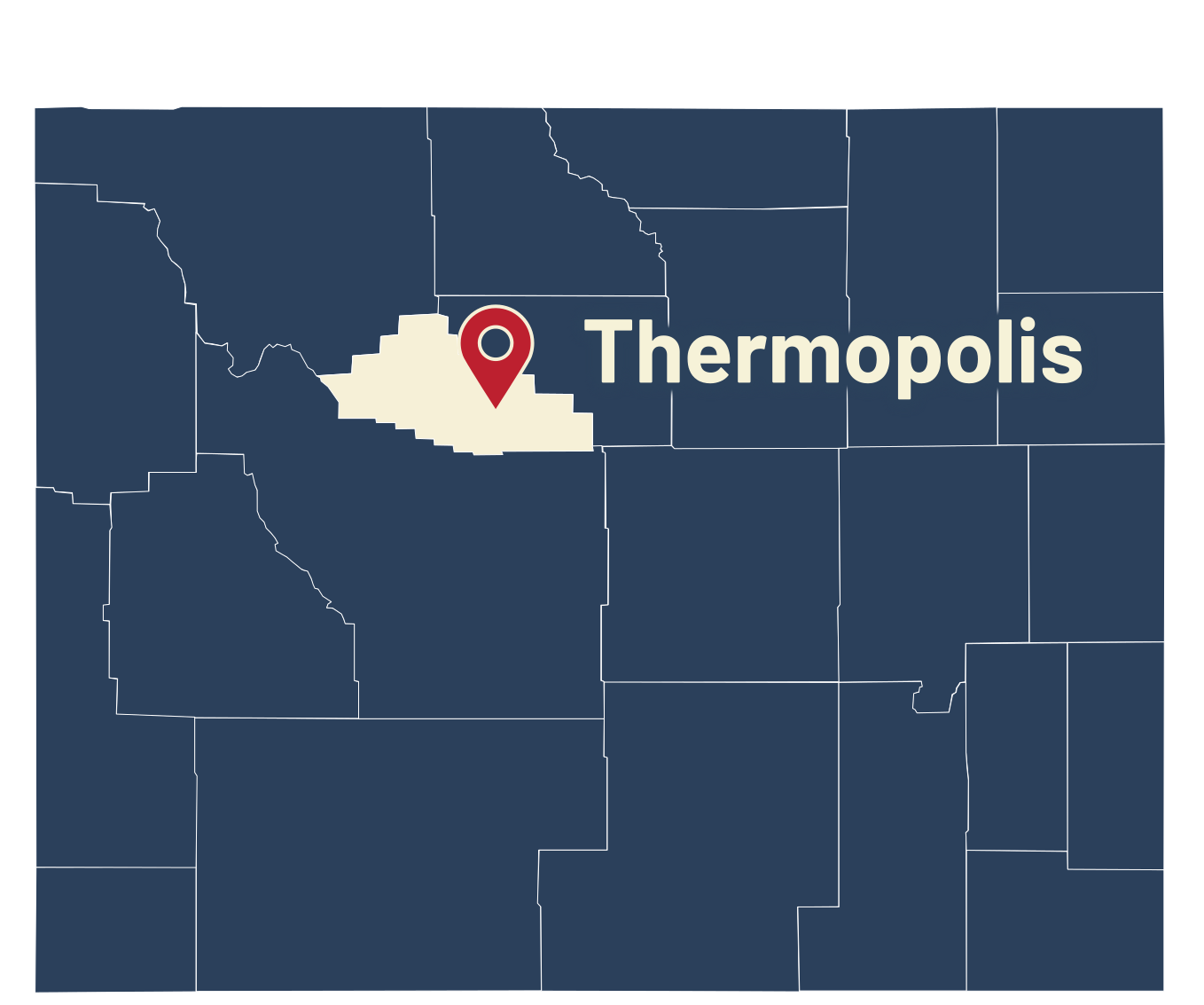
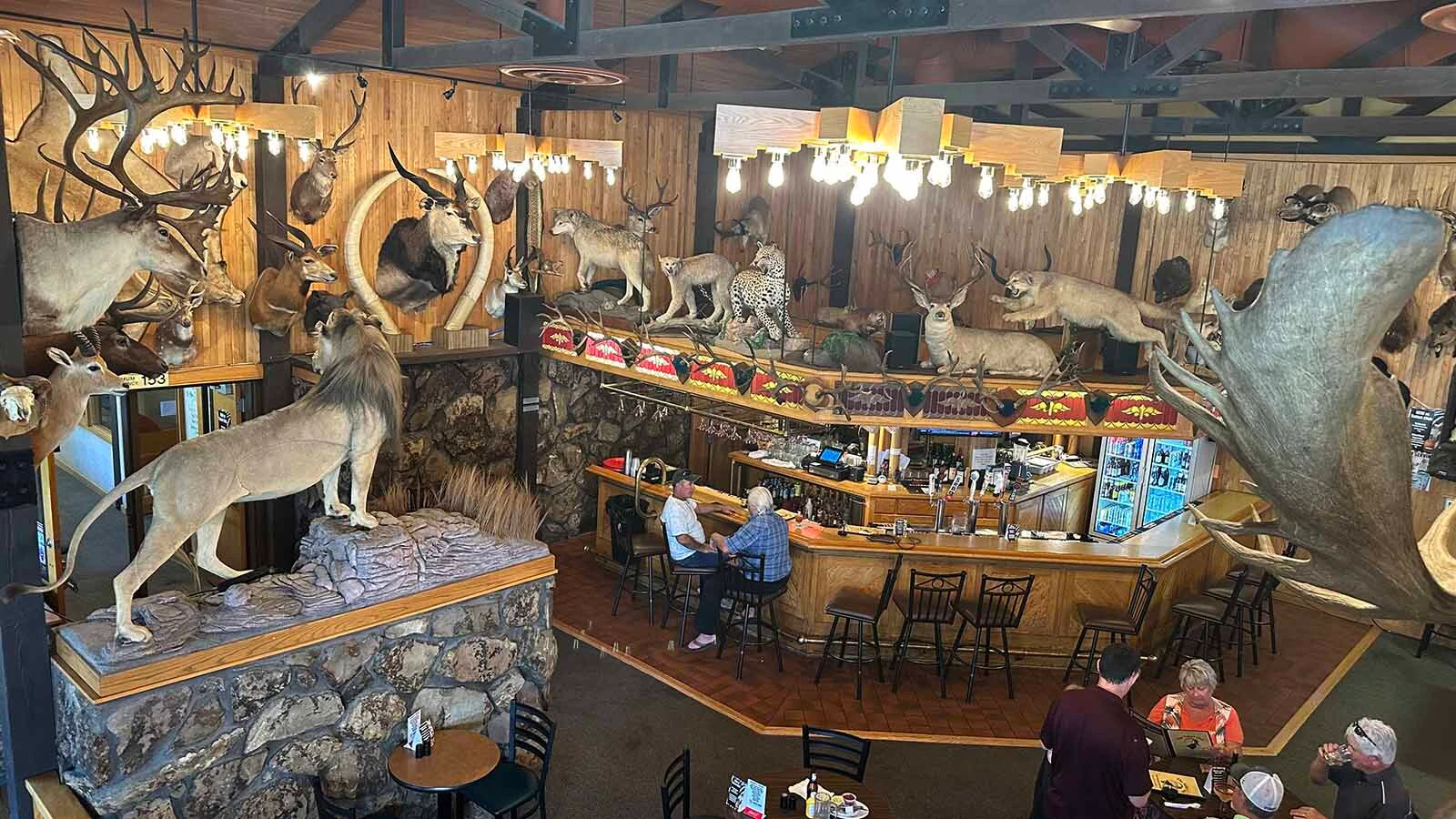
THERMOPOLIS — The Safari Club restaurant's big-game trophy collection that took more than 50 years to grow into a world-class taxidermy display is packing up to be sold.
An auction company specializing in big-game animal mounts will arrive next week to pack up the massive collection that gave the Safari Club restaurant its name.
The restaurant was founded in the early 1980s by Jim Mills in Hot Springs State Park in Thermopolis and was a tourist hotspot and the place to go in the Bighorn Basin.
Mills’ collection had already been growing for years before the restaurant opened, and was then shared with tens of thousands of customers over the decades.
“We were so proud of my dad who created this safari lodge,” daughter Patty Batenhorst told Cowboy State Daily. “The collection is the culmination of his life's passion.”
The inventory has not even been done yet on Mills' extensive collection to determine how many pieces are heading to auction, nor has an estimated value yet been established.
The mounts range from an ordinary moose head to extraordinary specimens such as the two antelope locked in eternal battle.
To the family, the exotic taxidermy animals of zebras, lions and bears were part of normal life.
“I did not know that not everybody grew up with a rhino in their living room,” daughter Jamye Nielson said. “I thought it was just cool how people reacted to them.”
There are some specimens the family will be unable to sell legally that will remain in their personal collection such as the rhino and elephant tusks. But others will be going to the highest bidder.
“Dad was able to hunt and fish and follow his passions to Africa since the 1960s,” Batenhorst said. “The hotel and Safari Club represented my parents' travels over the years, and it is sad to see the end of an era.”
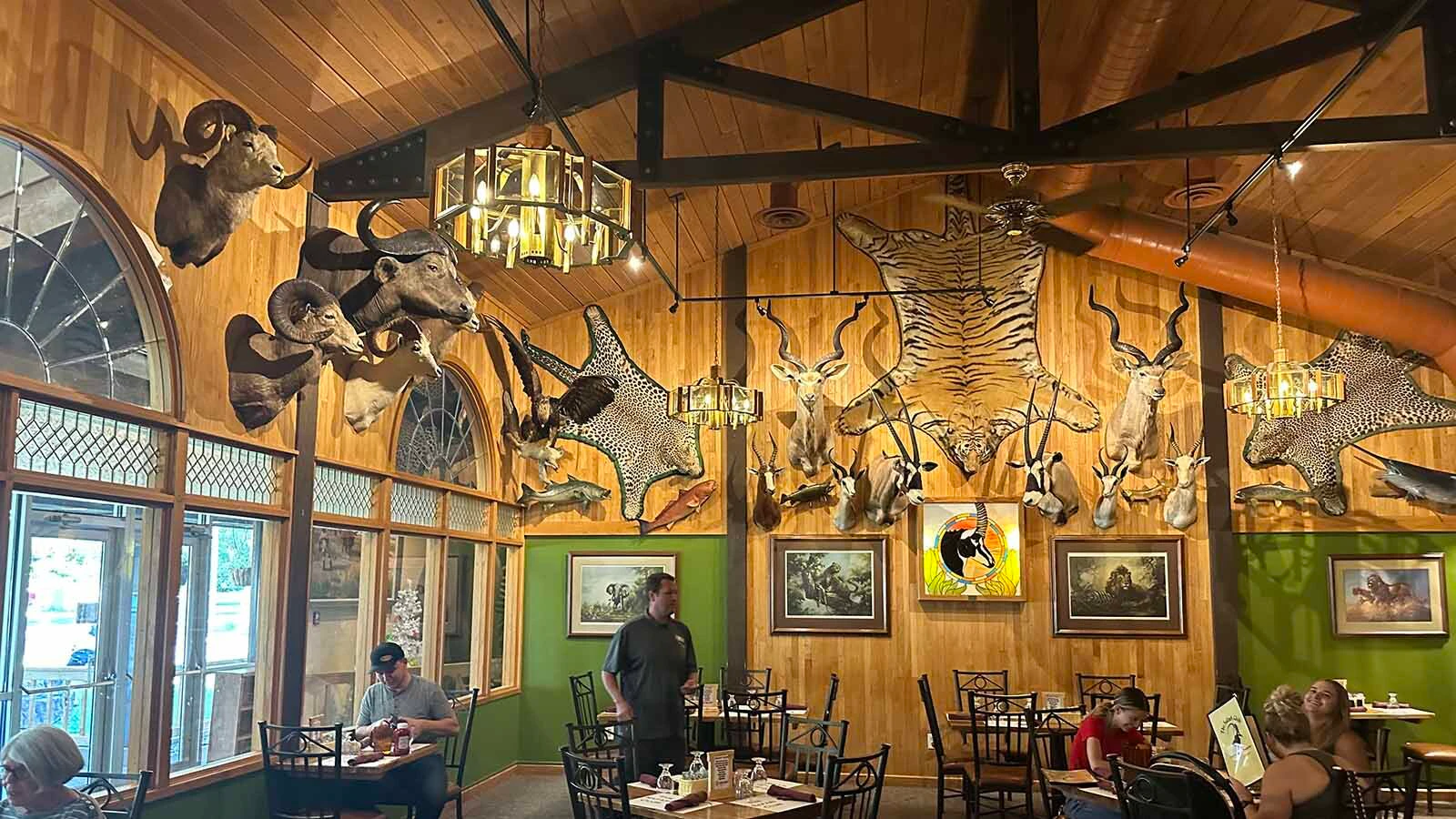
The Safari Club will soon be selling its iconic taxidermy animals representing animals from all over the world. Jim Mills of Thermopolis had spent a lifetime as a big game hunter and displayed his collection for nearly 50 years. The family sold their partnership three years ago and now must find a new home for all the animals. An auction house will be selling them off to the highest bidder. (Jackie Dorothy, Cowboy State Daily) 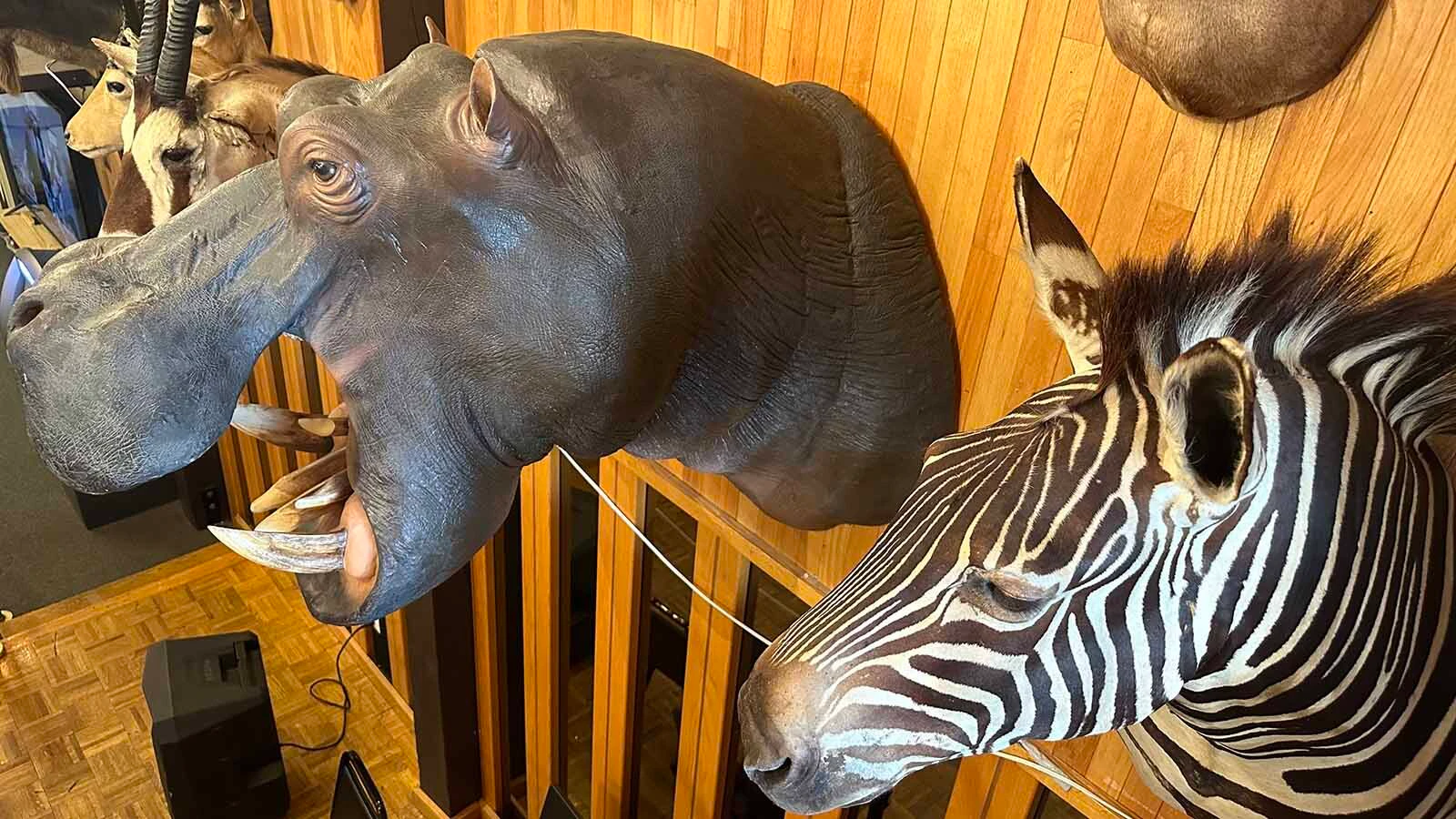
Wyoming animals and rare mounts like the hippo have graced the walls of the Safari Club in Hot Springs State Park for over four decades. The Mills’ family now must find a new home for the animals and those that can be sold legally, are being shipped to an auction house next week. (Jackie Dorothy, Cowboy State Daily) 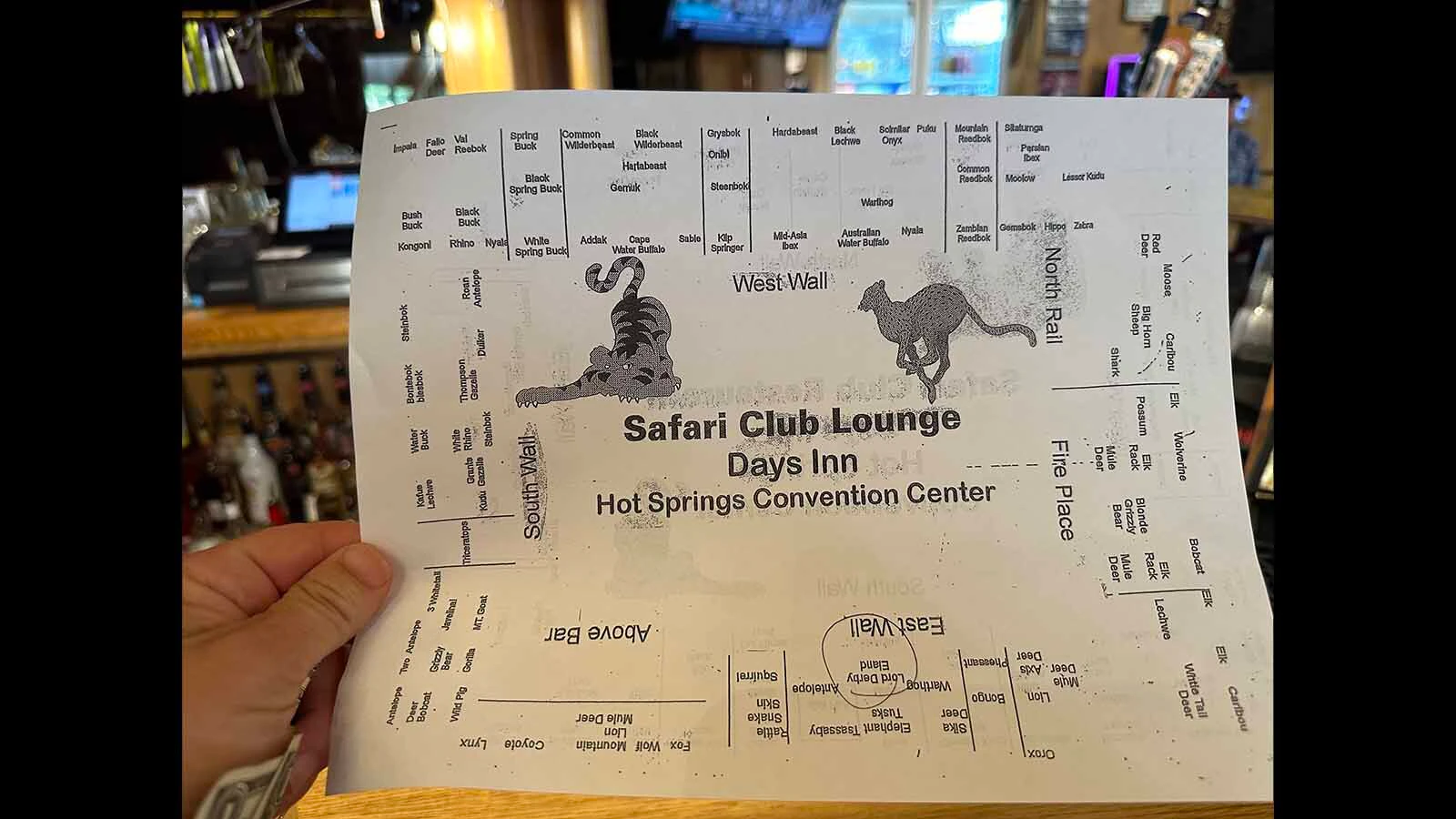
Wyoming animals and rare mounts like the hippo have graced the walls of the Safari Club in Hot Springs State Park for over four decades. The Mills’ family now must find a new home for the animals and those that can be sold legally, are being shipped to an auction house next week. (Jackie Dorothy, Cowboy State Daily) 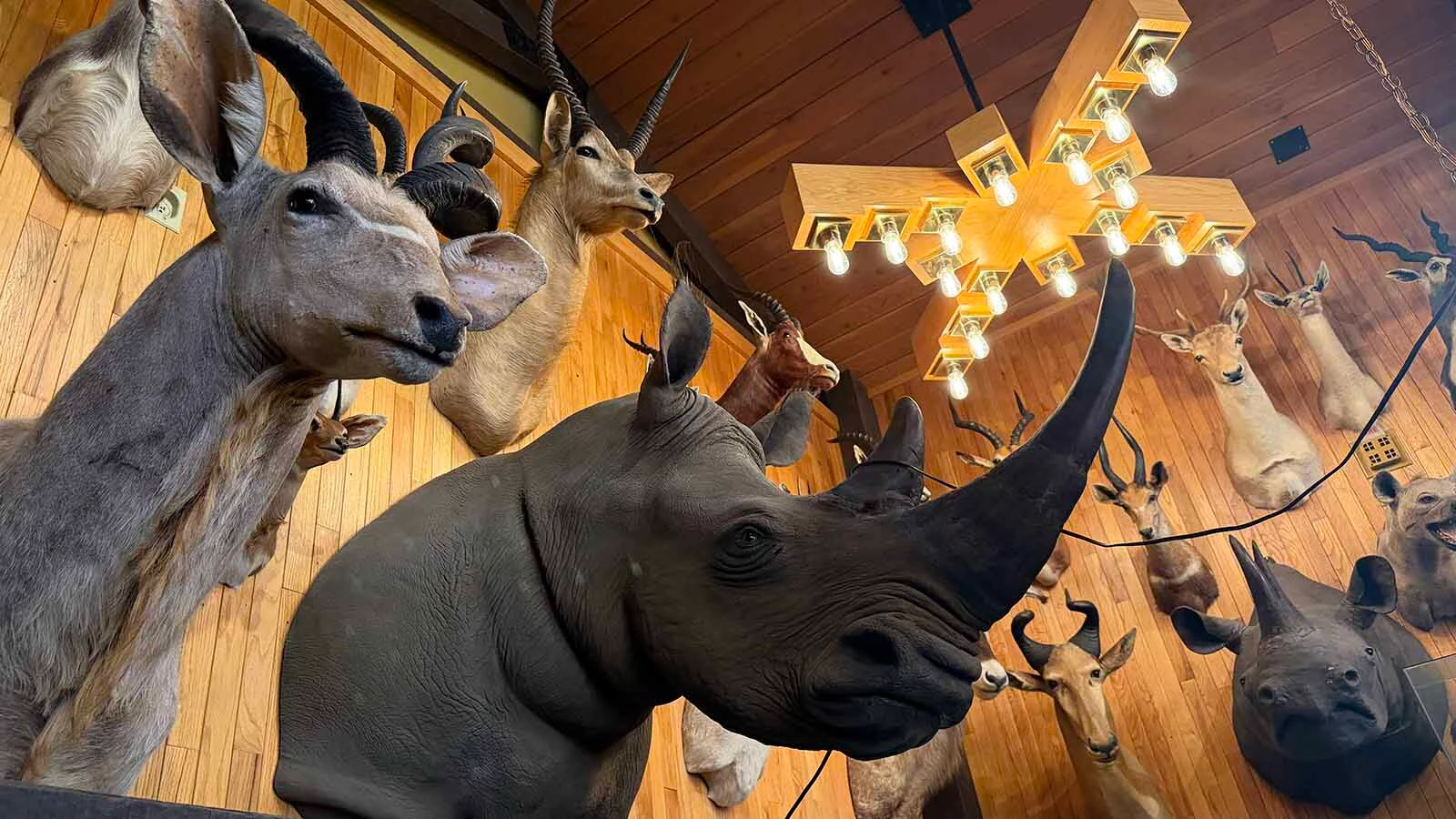
The head mounts and full bodied mounts of the Safari Club in Thermopolis will soon be auctioned off to the highest bidder. The Mills’ family had agreed to display the mounts for three years after selling their partnership in the restaurant and hotel. That three years is now over and the taxidermy animals will be heading to the auction block next week. (Jackie Dorothy, Cowboy State Daily) 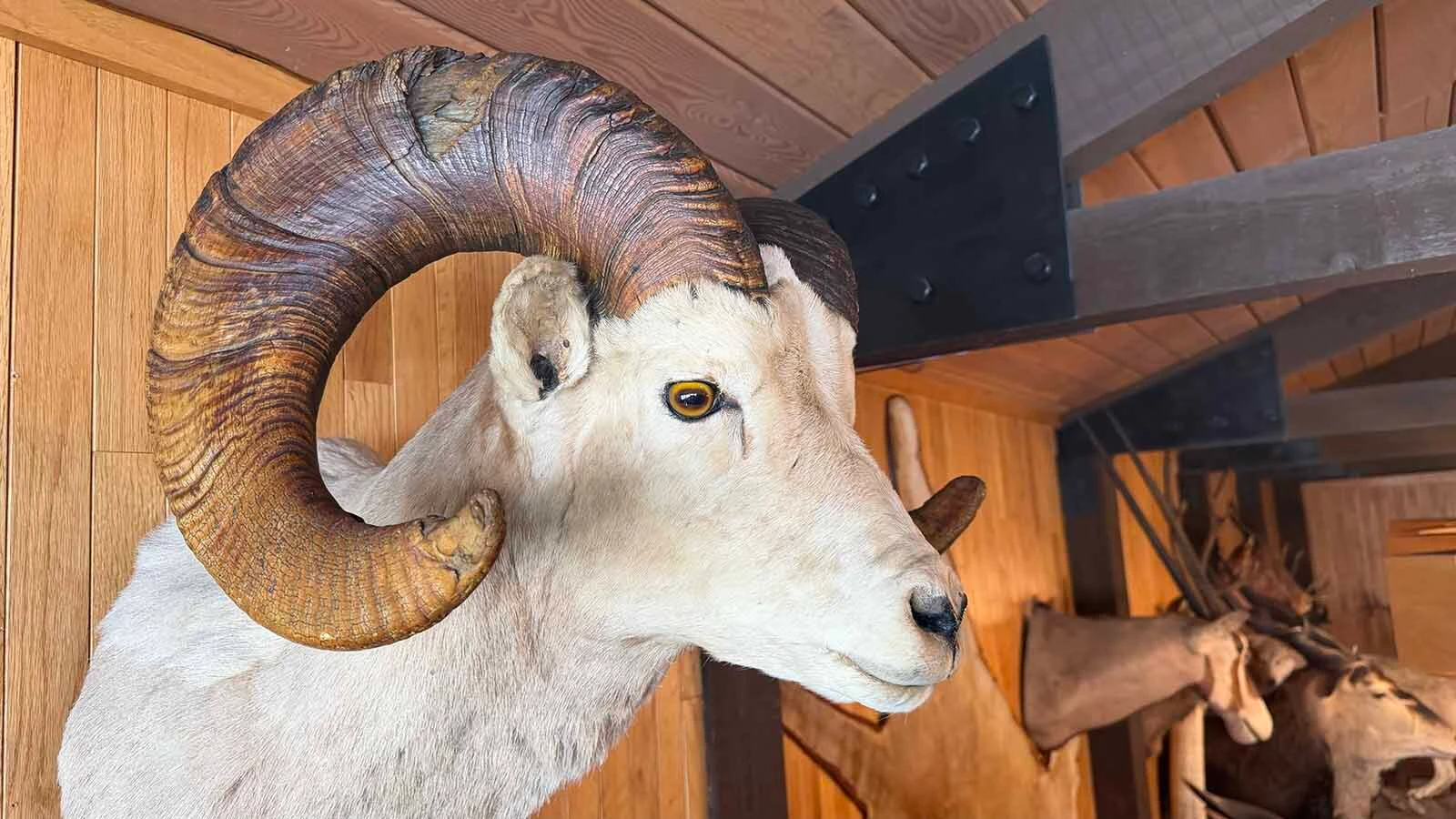
The head mounts and full bodied mounts of the Safari Club in Thermopolis will soon be auctioned off to the highest bidder. The Mills’ family had agreed to display the mounts for three years after selling their partnership in the restaurant and hotel. That three years is now over and the taxidermy animals will be heading to the auction block next week. (Jackie Dorothy, Cowboy State Daily)
Headed To Auction
Tuck Mills, Jim’s widow, owns the collection, which was on loan to the Safari Club restaurant.
The family had sold its interest in the business more than three years ago and is now sending the collection to auction since there's no place to store it themselves.
The Mills family members say that this is not just the end of an era for them, but the end of an era for all Wyomingites who have visited the exotic animals for decades.
Former taxidermist Rusty Bell of Gillette said he knows the collection well and had often traveled to Thermopolis with his boys to show them the animals from around the world.
“It is kind of sad to see that place not there,” Bell said. “It’s something that I always look forward to going to as a big fan of wildlife and taxidermy.”
The lease for the Hot Springs Hotel and Safari Club ends in October, and the family had to have the collection removed by the deadline, said Nielson.
“I've been working for nearly two years to find an auctioneer company, and the truck will arrive next week,” Nielson said. “It will probably take a couple trucks, and they will take them out to a company in the Midwest.”
She said that the auction will be held both in-person and online July 8-9 by the Lolli Brothers out of Macon, Missouri. The collection will be inventoried in the next few months to ready it for sale.
“Hopefully, I'm going to get to go out there to it when the auction happens,” Nielson said. “I feel honored to see this through for my dad.”
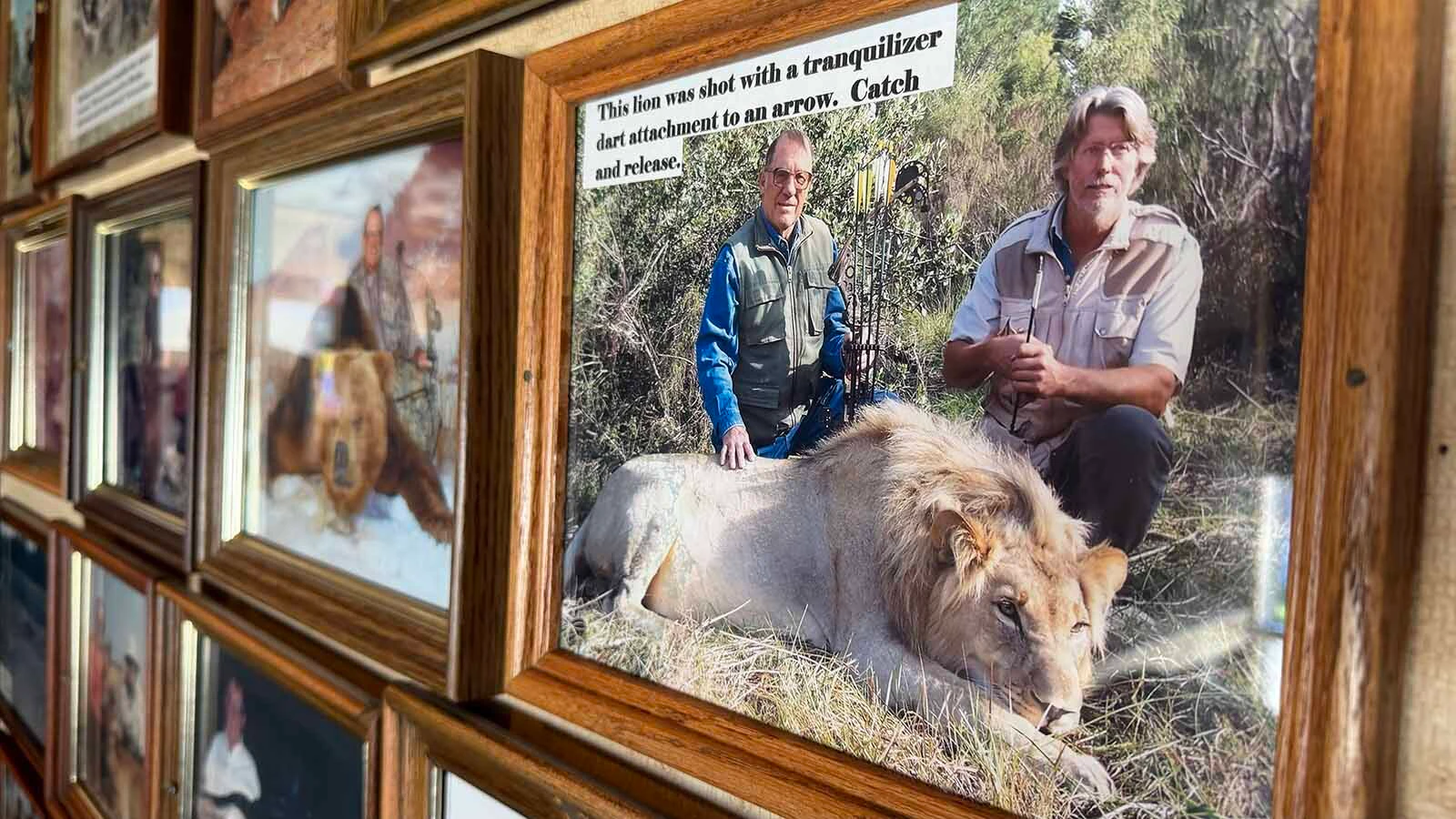
Jim Mills of Thermopolis spent a lifetime as a big game hunter and many of his hunting adventures are on display at the Safari Club in the Hot Springs State Park. His extensive taxidermy collection will be packed up next week to be taken to auction. The photos will remain with the family who say it is a bittersweet end to their father’s legacy and for Thermopolis. (Jackie Dorothy, Cowboy State Daily) 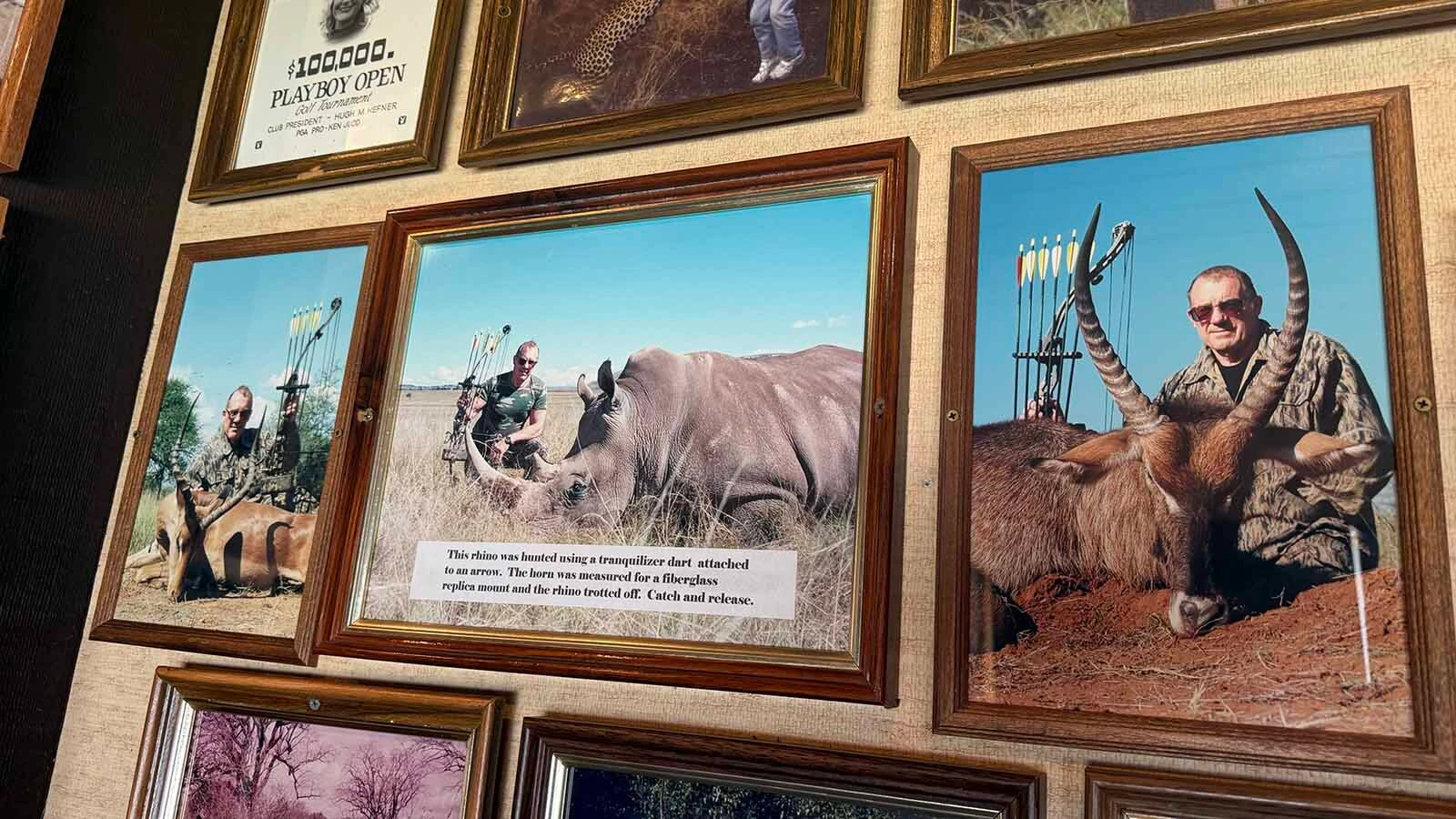
Jim Mills of Thermopolis spent a lifetime as a big game hunter and many of his hunting adventures are on display at the Safari Club in the Hot Springs State Park. His extensive taxidermy collection will be packed up next week to be taken to auction. The photos will remain with the family who say it is a bittersweet end to their father’s legacy and for Thermopolis. (Jackie Dorothy, Cowboy State Daily) 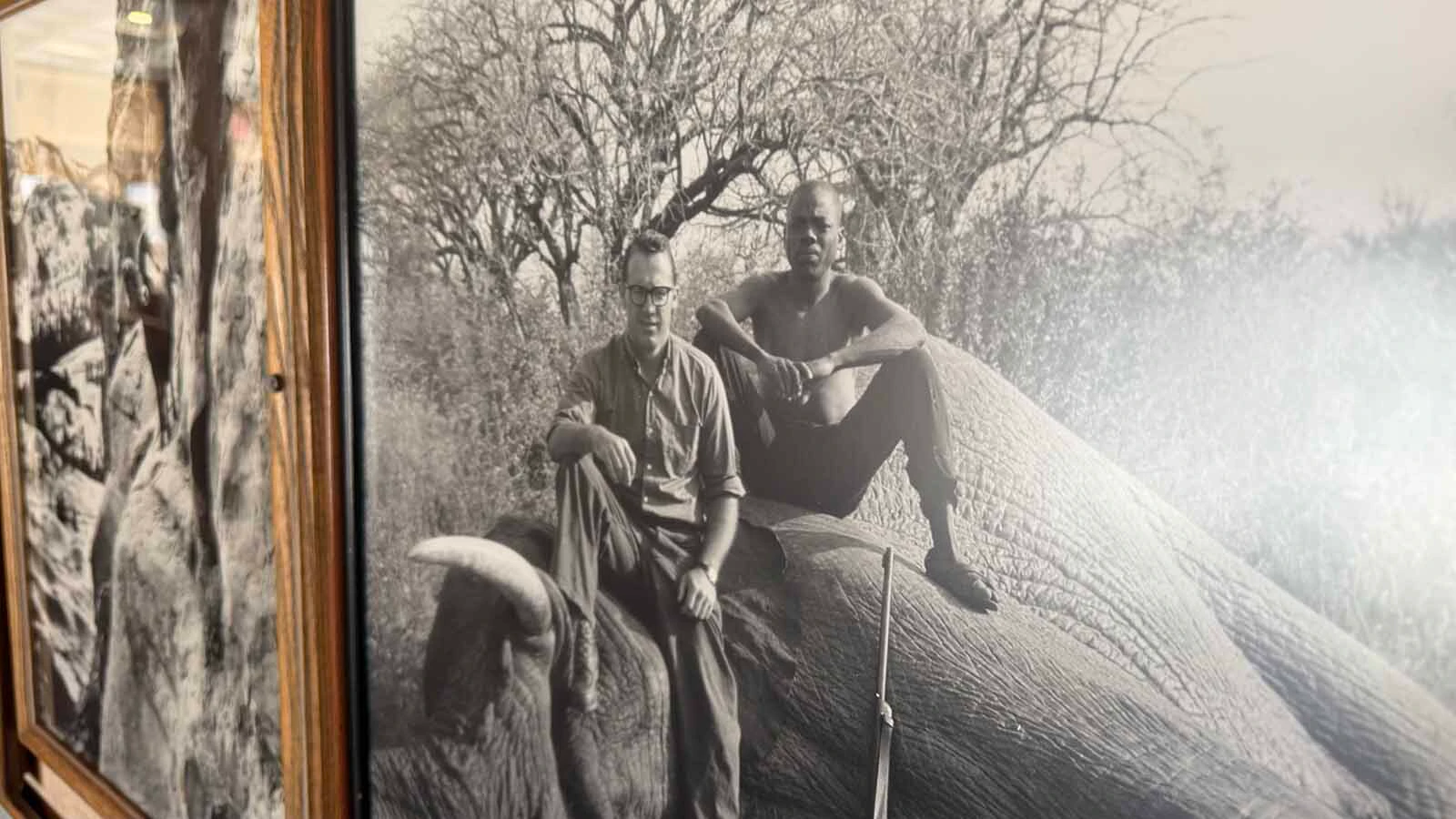
Jim Mills of Thermopolis spent a lifetime as a big game hunter and many of his hunting adventures are on display at the Safari Club in the Hot Springs State Park. His extensive taxidermy collection will be packed up next week to be taken to auction. The photos will remain with the family who say it is a bittersweet end to their father’s legacy and for Thermopolis. (Jackie Dorothy, Cowboy State Daily) 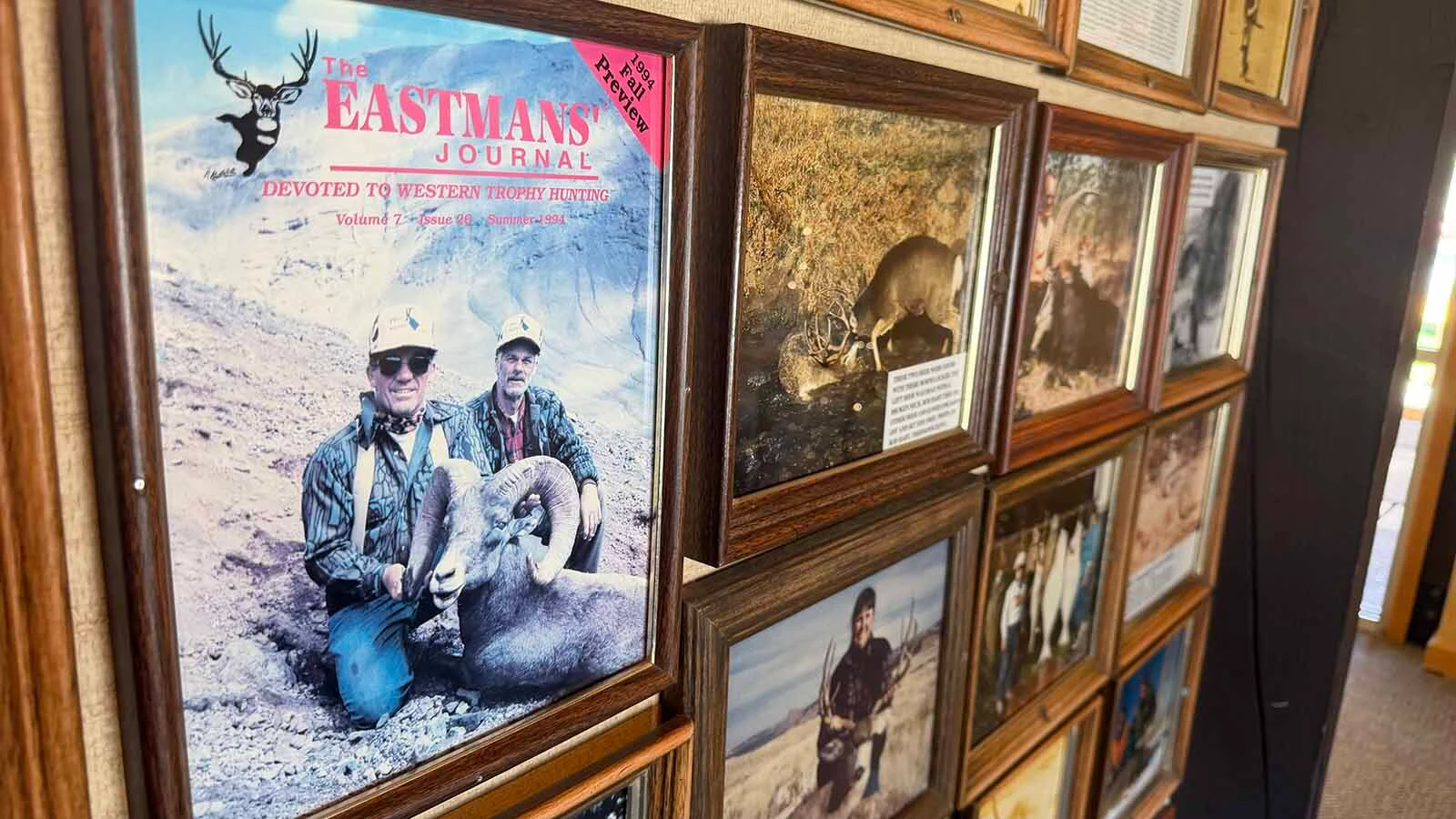
Jim Mills of Thermopolis spent a lifetime as a big game hunter and many of his hunting adventures are on display at the Safari Club in the Hot Springs State Park. His extensive taxidermy collection will be packed up next week to be taken to auction. The photos will remain with the family who say it is a bittersweet end to their father’s legacy and for Thermopolis. (Jackie Dorothy, Cowboy State Daily)
Selling the Collection
There is no way to tell how much the collection will sell for, according to Bell, because there is no sentimental value to the buyers.
When someone brings in their own animal, such as a shoulder mount deer, it can cost anywhere from $700 to $1,200 to mount. But at auction, the same mount could go for relatively nothing.
A fully mounted grizzly bear, however, could go as high as $10,000 to the right collector.
“If it's a Boone and Crockett deer or something that scores really well or somebody really likes the way the antlers look, then they might go for more,” Bell said.
Bell explained that the value for most taxidermy lies in its personal significance, and owners will usually not get what they think a mount is worth.
Bell also said that there are some federal rules on migratory birds that need to be followed, and some states make owning certain animals illegal. He cited the example that California does not allow mountain lions to be sold within the the state's borders.
Remembering the Safari Club
Mills had bought the hotel in 1978 and the rhinoceros was placed in the entryway.
When he added the Safari Club a few years later, Mills immediately started adding his collection as the décor, hence the name. His daughters worked for him and were proud of what their father built.
“I was always a little bit in awe, like, ‘Wow, look at what my dad and grandfather did,'” Batenhorst said. “My sister Mary and I basically lived in the hotel and worked in the hotel all that first summer.”
Since she was 9, Nielson worked for her dad, and as soon as she was able was a bartender and waitress during the busiest years.
“It was probably at its high point for popularity and tourism,” Nielson said. “We used to have huge conventions and it was super busy, and it was fun.”
When Nielson became a teacher in Lander, she would bring her students on field trips to see the animals. She used the opportunity to talk about continents, conservation and "all kinds of cool things."
“Once in a while you'd get someone that didn't agree with it and then, you know, they would voice their opinion or whatever and leave,” Nielson said. “But most people loved to look at the collection because often they never had the chance to see animals like that.”
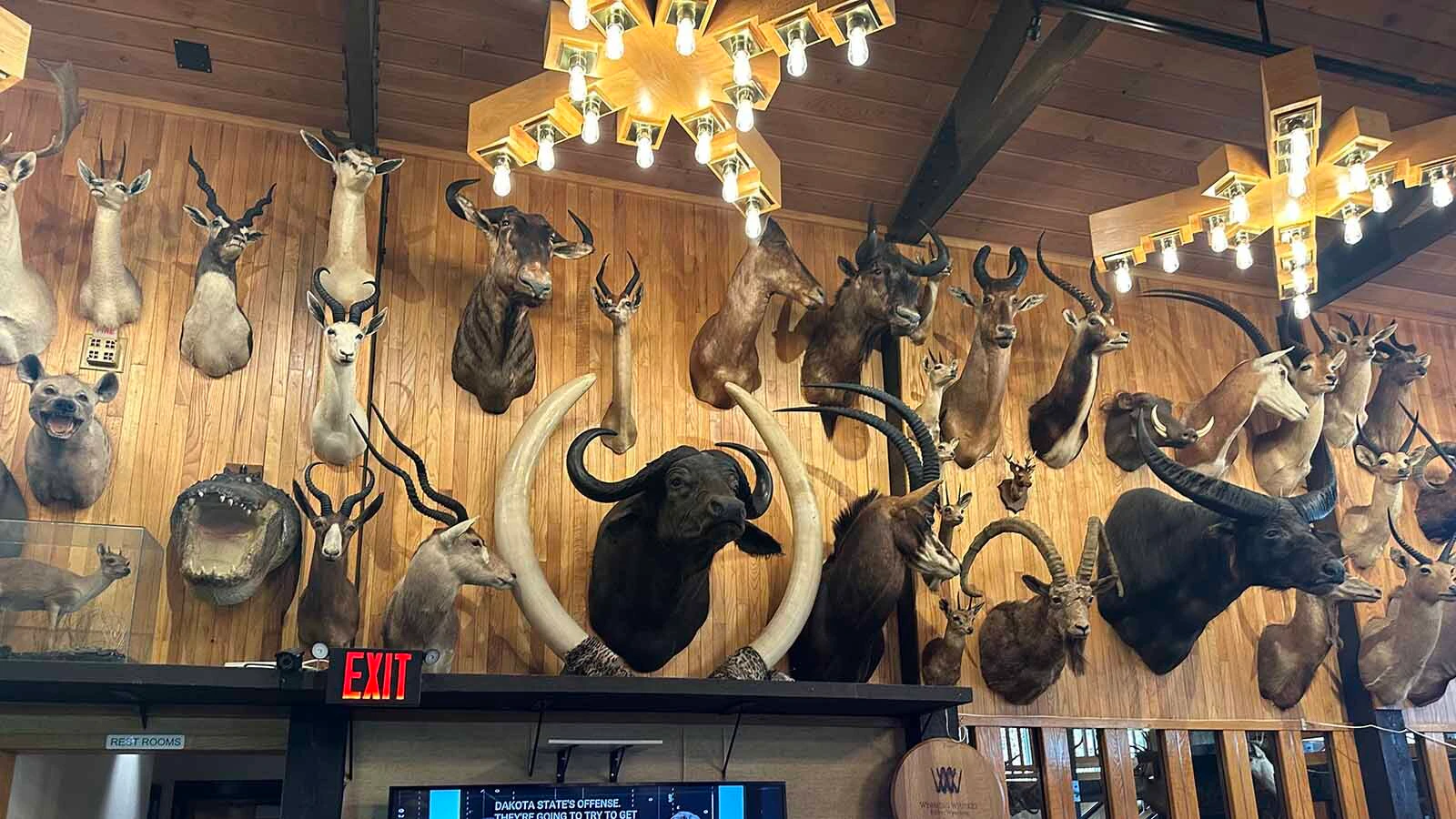
For years, patrons could play pool, hang out at the bar and watch sports beneath the watchful eyes of a large collection of taxidermy animals at the Safari Club in Thermopolis. The collection will be removed next week and brought to auction as the future of the restaurant is uncertain. They lost their lease in the Hot Springs State Park which will expire this October. (Jackie Dorothy, Cowboy State Daily) 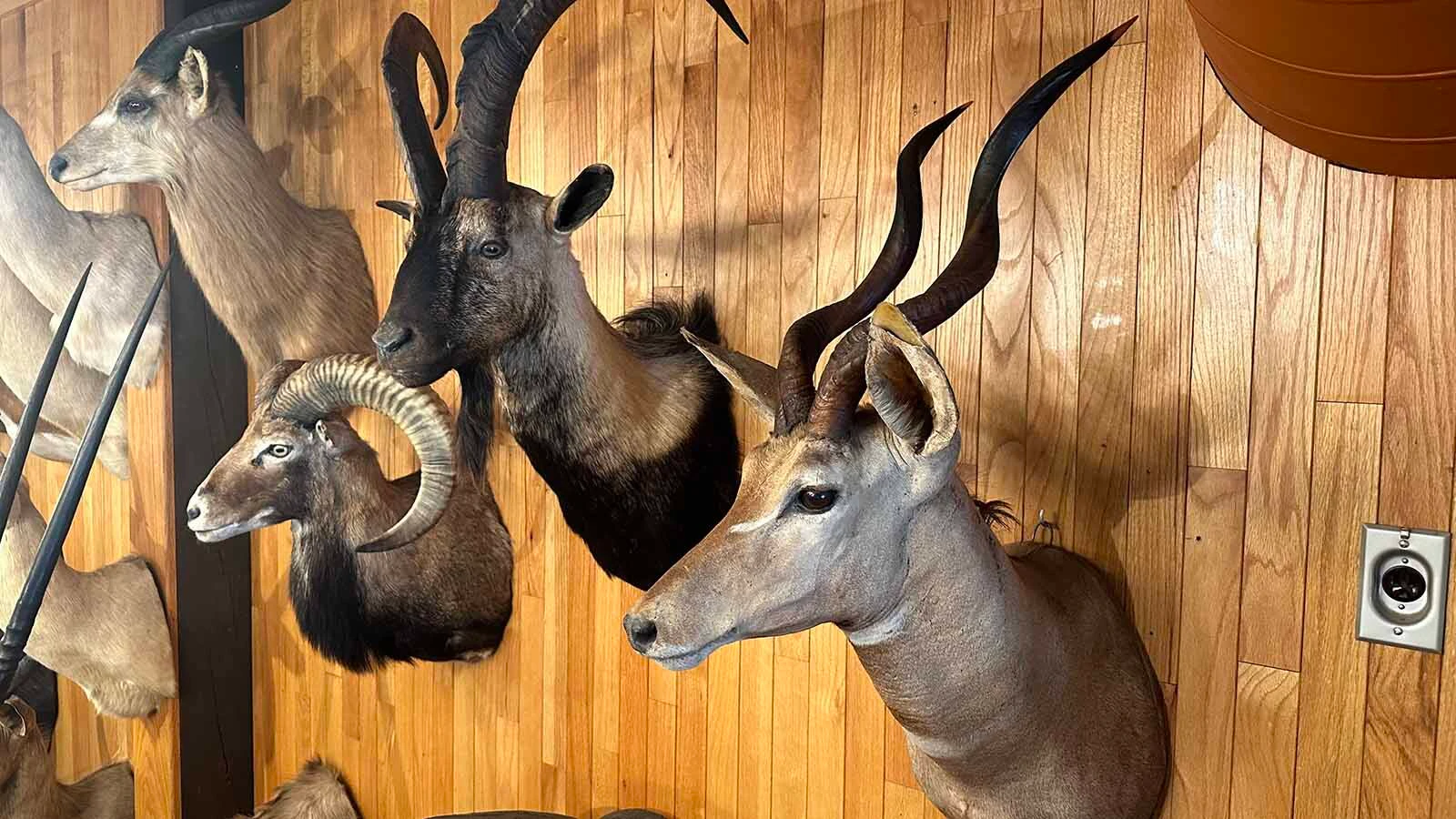
(Jackie Dorothy, Cowboy State Daily) 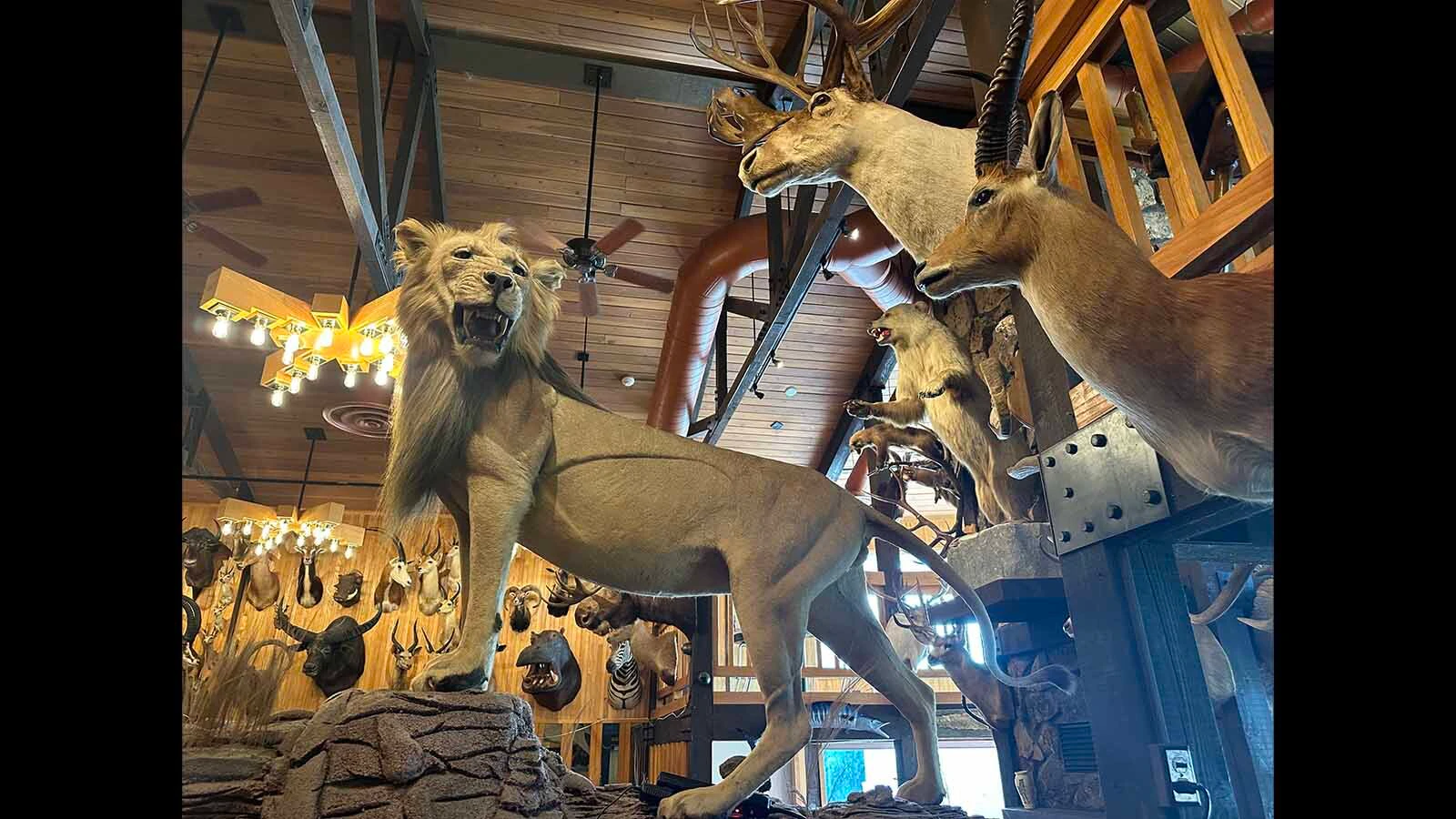
Since the early 1980s, this lion has greeted patrons of the Safari Club in Hot Springs State Park. Most of the taxidermy collection will be auctioned off and those that are illegal to sell will remain with the restaurant and hotel for now. (Jackie Dorothy, Cowboy State Daily)
A Legacy Of Conservation
Jim Mills father Lyle Mills was the first big-game hunter in the family and introduced his son to the sport.
Many of Lyle’s trophies will remain with the family and are displayed in a one-room schoolhouse in Minnesota, the state where Lyle was born.
In the early 1960s, Jim Mills, then 28, went on his first trip to Africa and killed the “Big Five” — elephant, rhinoceros, water buffalo, lion and leopard.
In later years, he changed tactics and started hunting with a bow to “catch and release” the big game that had become endangered.
Mills continued to hunt and fish for the next 60 years, up until just weeks before his death.
“The rhino was in the living room amongst other things,” Nielson said. “It was then moved to the hotel before dad built the Safari Club in the mid-'80s.”
His family said that Mills was devoted to conservation, and the money he spent hunting in Africa was used to build up infrastructure there, including schools.
The big-game hunting industry, according to Batenhorst, helped save the animals from over-killing and poaching because the locals had to protect the animals to preserve their livelihood.
“My dad had such a passion for animals, and I think in today's society, people have more of a negative attitude towards that kind of hunting,” Batenhorst said. “I don't think they really understand the ecosystems that it supplies, like in Africa how everybody eats the animal and nothing is wasted.”
Batenhorst went on one of the trips to Africa with her father and said that it was interesting to see her father’s passion in action and to experience that part of his life.
End Of An Era
Batenhorst said that big-game hunting has been the culture in her family since she was little and said she always took it for granted.
“We grew up around it and my kids grew around it,” Batenhorst said. “But now our grandkids won't see it the way we did.”
Batenhorst and Nielson both said that it was sad to sell the hotel and now, as the collection is being readied for auction, it is hard for the family.
Another chapter has closed for them and Wyoming as a whole.
“It's a legacy that just couldn't really be passed on,” Batenhorst said. “It's the end of an era for our family, but also for the town of Thermopolis and everyone who used to come here to see the animals.”
Jackie Dorothy can be reached at jackie@cowboystatedaily.com.