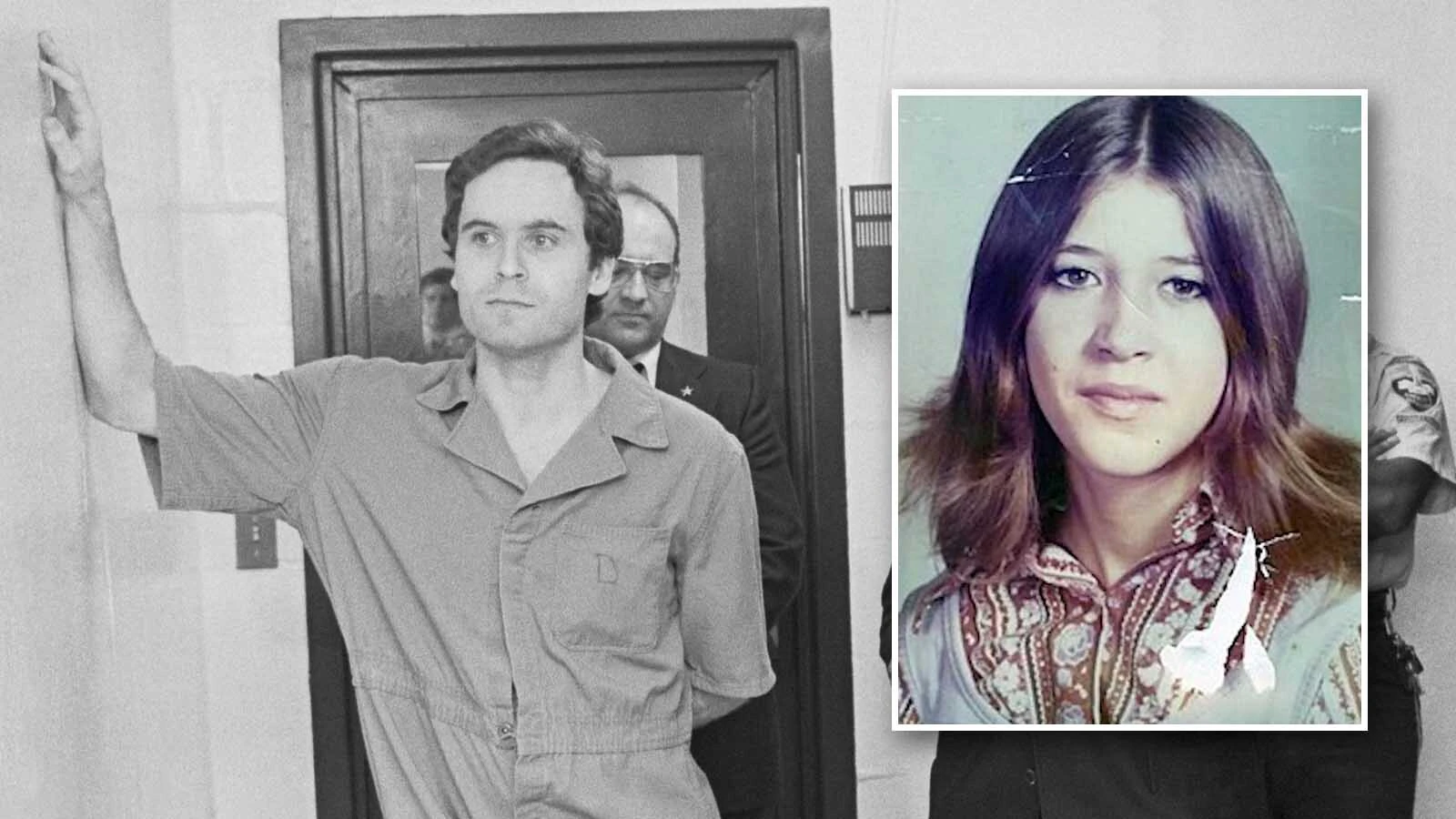
A more than 50-year-old Utah cold case murder has been identified as another victim of the infamous serial killer Ted Bundy using advanced DNA techniques.
The bombshell announcement represents a breakthrough that may lead to resolving other unsolved cases across the United States, and potentially Wyoming.
The Utah County Sheriff’s Office announced at a press conference last week that Bundy was responsible for killing 17-year-old Laura Ann Aime in 1974, a crime that went unsolved for 52 years.
Aime had been at a Halloween party in Utah County the night she disappeared after leaving the party on foot by herself to get some items from a convenience store.
Aime’s body was discovered less than a month later on Thanksgiving when two hikers found her several feet from the highway in American Fork Canyon.
Her naked body had been bound, severely beaten and strangled with a nylon stocking, trademarks of Bundy, who wouldn’t be arrested until more than three years later, on Feb. 15, 1978.
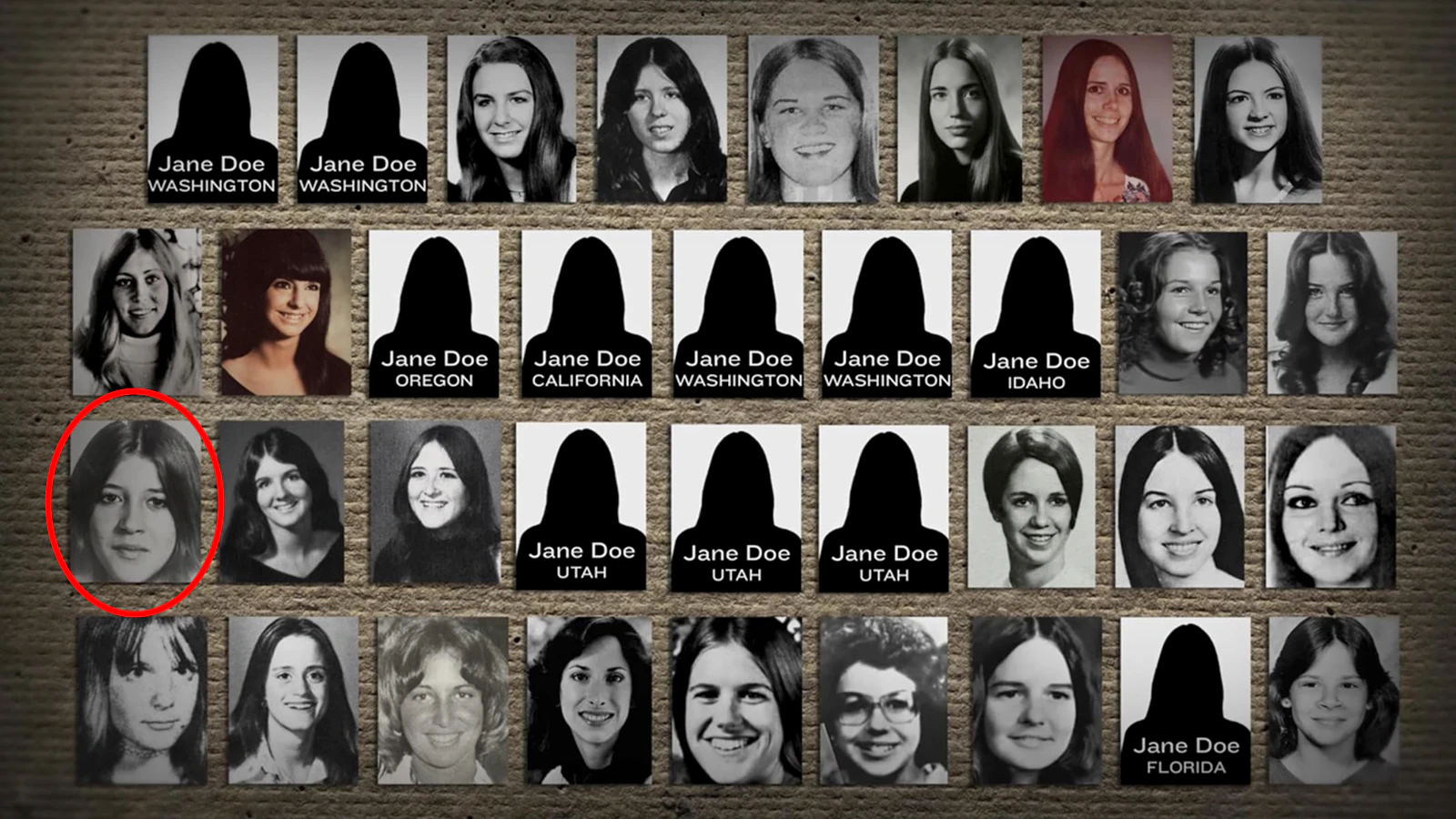
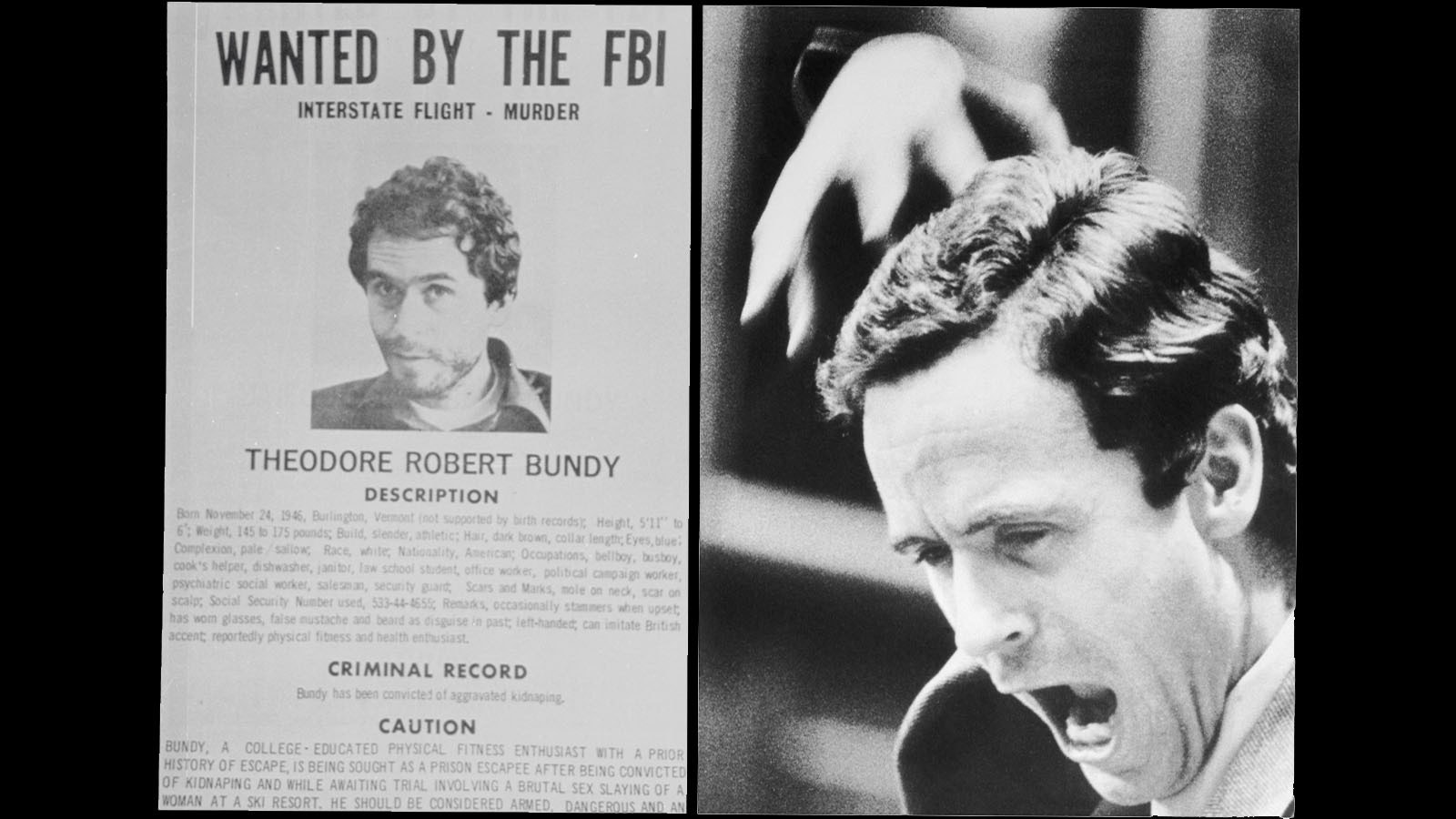
Bundy is believed to have murdered at least 30 young women between 1974 and 1978 across seven states — including Utah, Colorado and Idaho — and was eventually caught in Florida after killing a 12-year-old girl.
He was convicted of three counts of first-degree murder and other charges, sentenced to death, and executed in January 1989.
At Least 30 Murders
Bundy is believed to have killed at least eight young women in Utah during the mid-1970s, when he was a law student at the University of Utah in Salt Lake City, according to reporting by The Salt Lake Tribune.
It’s not clear how early Bundy began killing his victims, though by the time he moved to Utah in 1974, investigators in Washington state had begun looking into the disappearances of several young women from where he previously had lived.
Along with Aime, Bundy is thought to have killed 16-year-old cheerleader Nancy Wilcox, who at the time was chalked up as a runaway, as well as high school senior Melissa Smith, whose body was found bludgeoned nine days after she disappeared.
Upon his deathbed, Bundy confessed to 30 murders, Aime among them, but the Utah County Sheriff’s Department and county attorney weren’t prepared to accept his admission based on the evidence and forensic tools at the time, according to the sheriff’s department.
This changed in 2023 when the Utah state crime lab acquired new genotyping technology that allows investigators to reconstruct a full DNA profile from small, age-degraded, or mixed samples.
A call to the Utah Department of Public Safety, which oversees the state crime lab, was not returned for specifics of the technology, but Sgt. Raymond Ormond of the Utah County Sheriff’s Office said it has allowed investigators for the first time to create a full DNA profile for Bundy that has since been uploaded into the national database.
Along with solving Aime’s murder, the full DNA profile now paves the way for other agencies in Utah and elsewhere to potentially solve other cold cases involving Bundy.
Ormond said there are an unconfirmed number of other agencies interested in the Bundy profile but declined to name them or say if they are in Utah or other states.
There are four other known cold cases in Utah potentially involving Bundy, according to The Salt Lake Tribune.
Could There Be Wyoming Bundy Victims?
So far, it’s not believed that Wyoming is among the states Bundy admitted to killing victims in, but Ryan Cox isn’t ruling it out.
Cox is a commander at the Wyoming Division of Criminal Investigation (DCI) who also oversees the state’s cold case division.
News of the latest Bundy victim in Utah made him consider the question again, Cox told Cowboy State Daily, though there’s no evidence at this time to suggest Bundy committed any murders in Wyoming.
“I have evaluated Bundy's possible involvement in Wyoming. It is obviously a possibility,” Cox said. “Of the known deceased that DCI is investigating, it is possible, but no evidence points to Bundy.
“There are also all the other agencies’ investigations and the missing from that time frame to consider. I would not be able to say yes or no as to his involvement.”
DCI’s cold case database is still incomplete, though will likely continue to expand following legislation passed by the state in March 2024, called the Cold Case Database and Investigations Act.
That law made it mandatory for all law enforcement agencies to report to DCI all unsolved homicides and felony sexual offenses two years or older, dating back to January 1972.
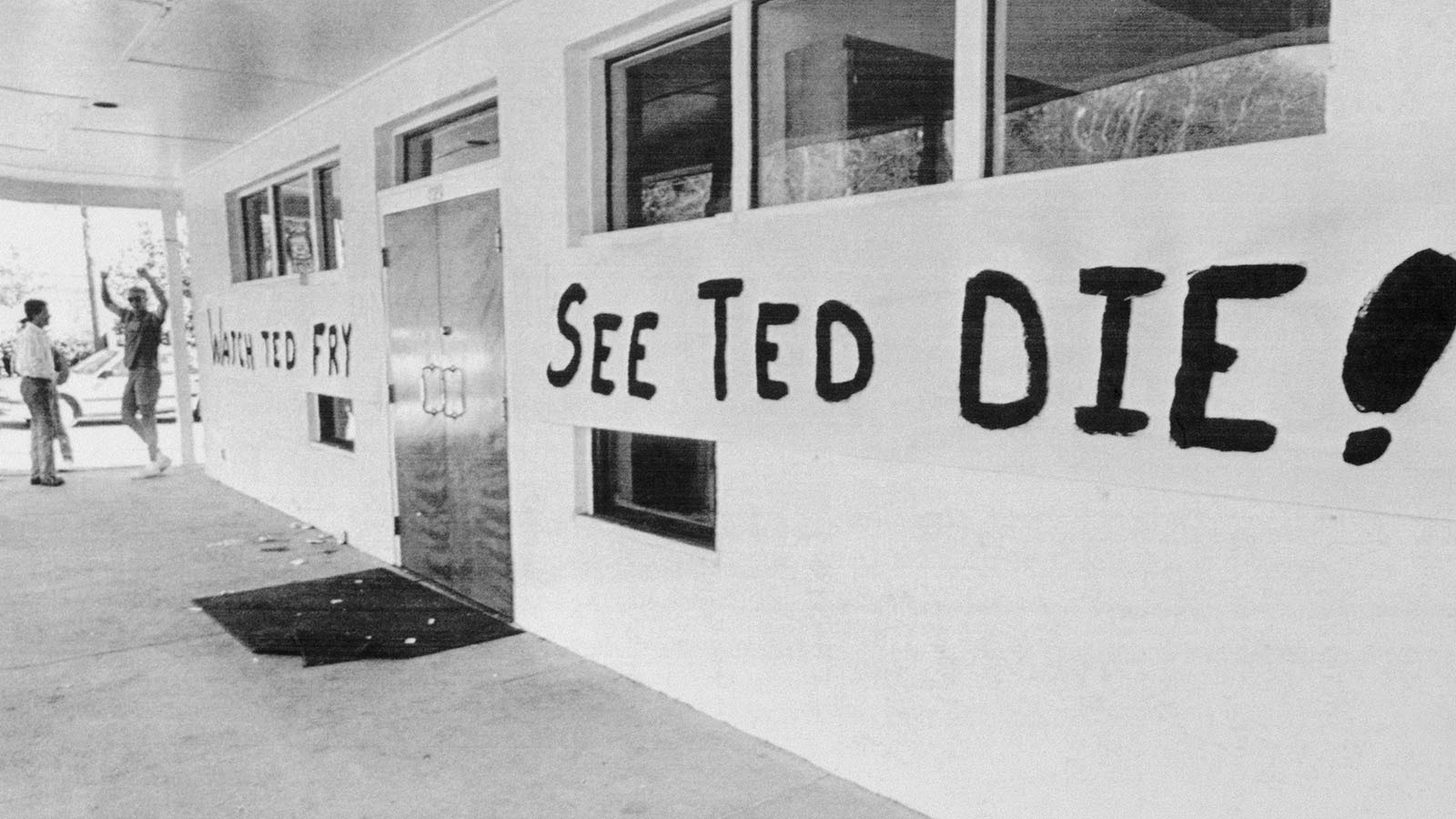
Florida State University's Chi Phi fraternity celebrates the execution of Ted Bundy with a large banner that says, "Watch Ted Fry, See Ted Die!" as they prepare for an evening cookout where they will serve "Bundy burgers" and "electrified hot dogs." Bundy attacked five women and killed two Chi Omega coeds on the campus in 1978. (Getty Images) 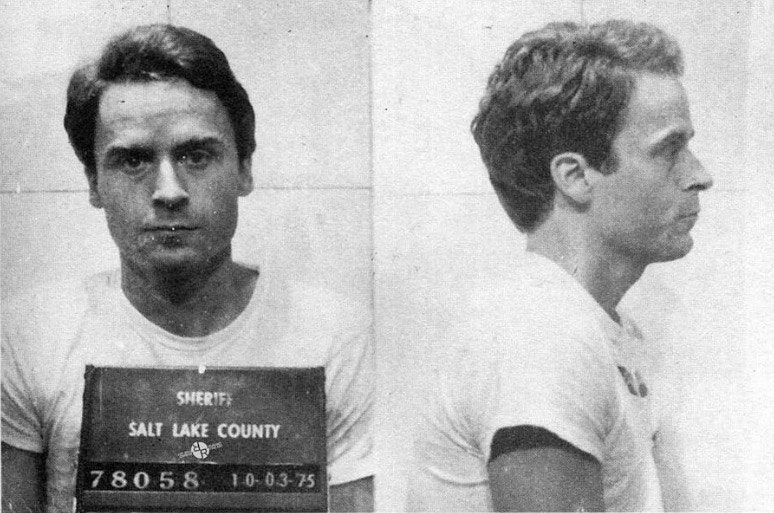
A Utah booking photo of Ted Bundy. (Getty Images) 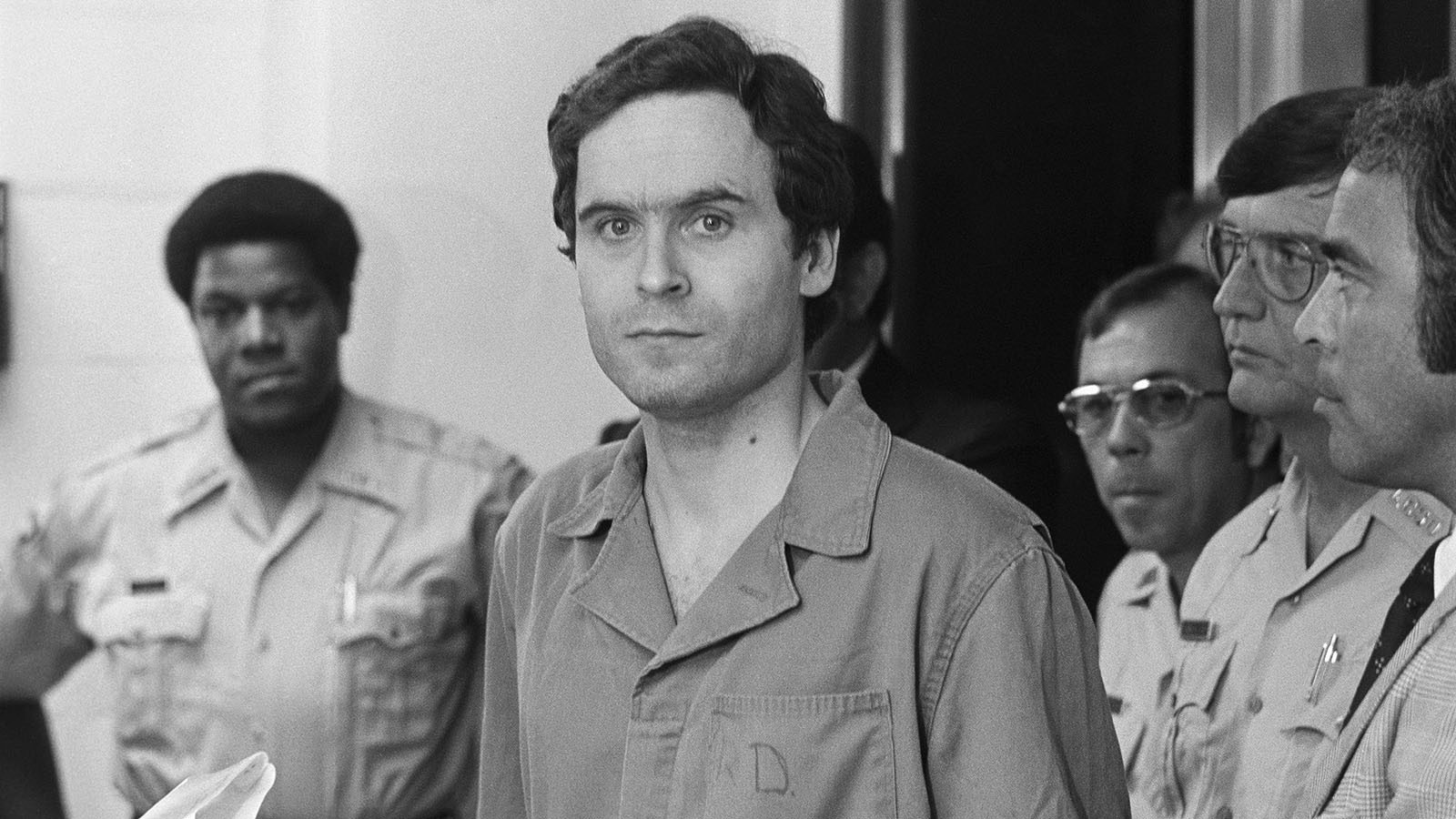
Serial killer Ted Bundy after he was arrested for the murder of two Florida State University co-eds. (Getty Images)
At Least Four Unsolved Cold Cases
There are now four unsolved cases on the DCI Cold Case database between 1974 and 1978, the years Bundy is known to have killed victims, with three of those involving females.
This includes the murder of a 10-year-old girl who disappeared in Rawlins on Aug. 24, 1974, and whose body was found about eight months later.
Though not named, presumably this entry refers to Jayleen Dawn Baker, whose body was found eight months later deceased from a blow to her head.
Royal Russell Long, a long-haul truck driver, is suspected of her murder, though he was never convicted. He’s also suspected in the disappearances or deaths of three other young women in Carbon County during this time known colloquially as the Rawlins Rodeo Murders.
The other homicide listed in the database is Doris Kay Holmes, who was discovered dead of a ligature strangulation in her apartment in Sheridan on July 1, 1975.
In addition to Holmes, an unknown female was also sexually assaulted in a desert region of Green River on Sept. 30, 1977, with no additional details provided in the database.
Cox said that though evidence in many cold cases has already undergone DNA analysis, the agency is “constantly evaluating evidence in cases for potential DNA.”
Palpable Buzz
There was cause for celebration at the Utah County Sheriff’s Office when word came back that they had finally solved Aime’s murder, Sgt. Ormond said.
Ormond said new leadership in the detective division prompted the agency to put fresh eyes on old cases, and a decision was made to test swabs of bodily fluids that were pristinely preserved from the crime scene in 1974.
In light of the new DNA technology, the decision was made to “push this through,” Ormond said. Everyone was on board and excited, including the crime lab.
It took about a year to get the results back, but “the buzz was almost palpable” once they received the results.
“Not only does it close out this case, but we can finally reach out to Laura’s family with the good news,” he said.
People Still Care
The family was touched that the investigators and the public still cared about Aime’s case.
At the press conference, Aime’s younger sister, Michelle Impala, who was 12 at the time her sister was murdered, spoke on the family’s behalf.
“It’s really quite amazing that people are even still interested in Laura’s case,” Impala said. “Know I speak for my family when I thank you, and thank you media, too, for even caring.”
Utah County Sheriff’s Sgt. Mike Reynolds, who oversaw the investigation, called Aime a “quintessential daughter of Utah County.”
Watching Aime’s family last week brought home the tragedy for Ormond and the reality of a life being cut so short.
He said he watched the small group of Aime’s family run the gamut of emotions, and was particularly struck by Impala’s memories of her sister from the perspective of a young girl who was profoundly impacted by her sister’s death as was the rest of her family.
Ormond said having that closure was clearly meaningful for the family, but the joy was also overladen with a profound sadness.
“Here's this person that was taken in the prime of their adulthood that should have been able to have decades worth of more memories,” he said.
But with Bundy’s complete profile officially in the database — and new and better DNA identifying technology being developed all the time — he hopes other families will get that same closure.
Jen Kocher can be reached at jen@cowboystatedaily.com.