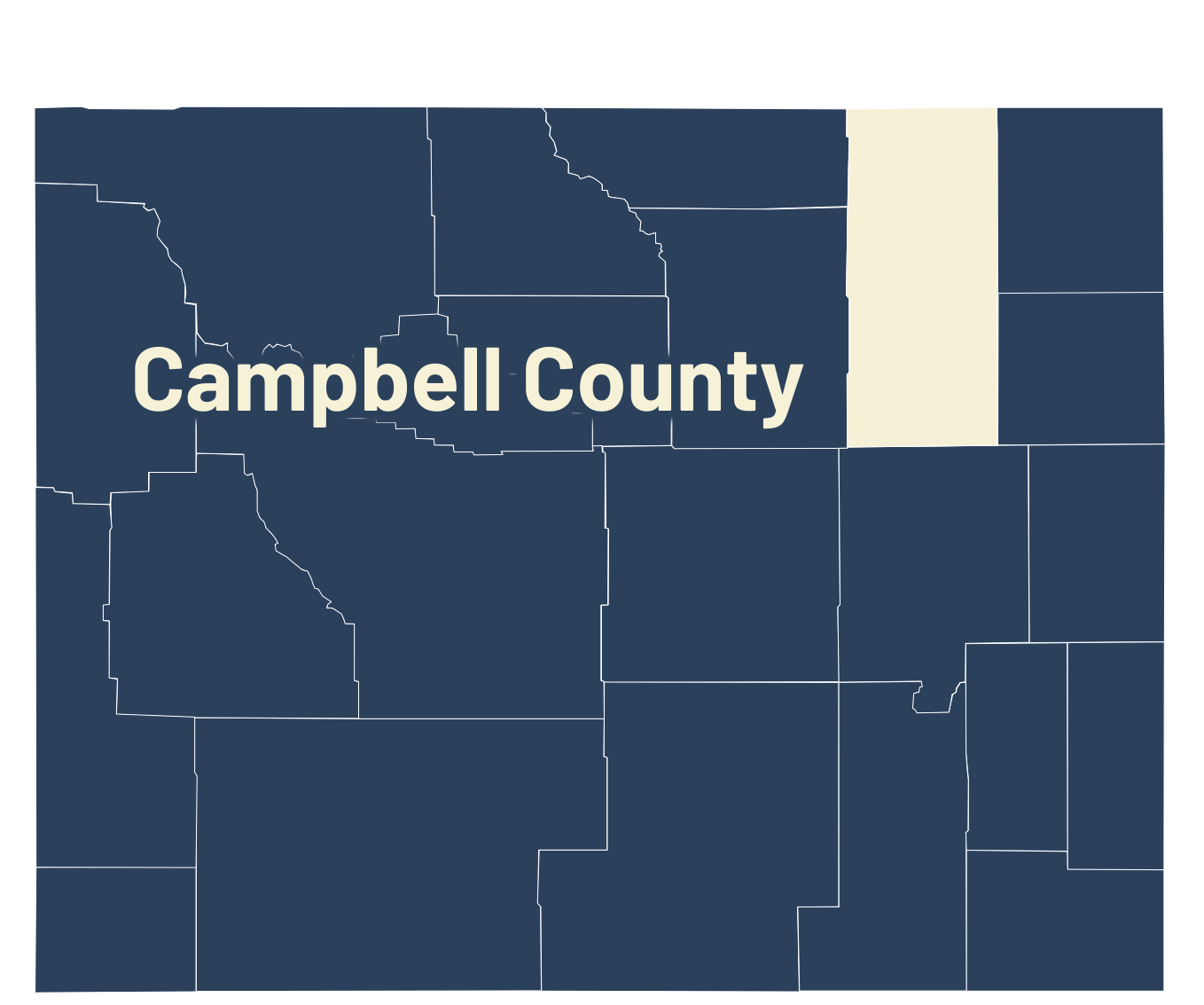

In my corner of Wyoming, the Choice Gas period is underway. Wyoming is divided into utility regions, each with a monopoly energy supplier.
Because of that, we have laws to regulate these monopolies so ratepayers aren’t taken advantage of.
The Public Service Commission, a three‑member board appointed by the Governor, is supposed to advocate for ratepayers. Most increases in gas, electric, and water utilities must be approved by the PSC before they take effect.
I’m thankful that in a regulated monopoly environment like ours, the Choice Gas program exists. It forces natural‑gas suppliers to compete, and competition produces excellence.
This week I signed up with a new supplier, saving an estimated $300 over the next year. That’s real money.
I wish something similar existed for electricity. But the PSC has no jurisdiction over municipally owned utilities, which are exempt under Wyoming law.
City and town councils can raise rates with a simple majority vote. I can voice concerns at city hall, but increases still go through.
City utilities must be self‑sufficient, not taxpayer‑subsidized. I get that, but it raises the question: what is driving costs so high? Why does it feel like I’m paying so much for water and electricity even after cutting my usage?
These questions aren’t unique to Wyoming. Since COVID, utility rates have skyrocketed nationwide.
In some places, people now pay more for utilities than for their mortgages. People are drowning in inflation, yet it doesn’t seem to concern state lawmakers, Congress, or the President.
Trump, to his credit, at least acknowledged the problem on the campaign trail and promised to cut utility rates in half. Instead, the increases have escalated.
To add insult to injury, Trump is proposing to raise the base military budget from $900 billion to $1.5 trillion, not including the extra $200 billion he wants for this Iran war.
Imagine the good we could do at home if even a fraction of that went toward American energy infrastructure instead of bombs to destroy (and then rebuild) someone else’s infrastructure halfway around the world.
So why are costs so high, and who’s responsible? During the last legislative session, the Wyoming County Commissioners Association held its annual conference in Cheyenne.
One breakout session focused on energy generation in the Intermountain West. PacifiCorp’s Vice President of Resource Development, Tim Hemstreet, presented on emerging technologies, policy trends, renewable integration, and grid modernization. As I listened, I noticed PacifiCorp seemed to have future plans for every resource … except coal.
Being snarky, I voiced this during the Q&A. I asked whether coal was the new “little orphan Annie,” whether PacifiCorp cared, and if so, what they were doing about it.
The question drew audible support from other Commissioners.
Mr. Hemstreet did an excellent job dancing around the issue. The question was rhetorical. It was obvious coal‑fired power is now a pariah, a red‑headed stepchild they are reluctantly putting up with, with no intention of future development beyond phasing it out.
It’s strange. We have hundreds of years of coal reserves capable of providing cheap, reliable baseload power, yet utility companies like PacifiCorp have plans for everything but coal.
Here’s the paradox: in the 20th century, most of America’s power came from coal, resulting in cheap energy. Today we’re told coal‑fired generation is too costly, and more than 350 coal units have been retired or announced for retirement since the 1990s.
Rocky Mountain Power, a PacifiCorp utility, reportedly plans to fully exit coal by 2039. But instead of electricity getting cheaper as coal is reduced and other resources added, it has gotten significantly more expensive.
We’re told coal is more expensive because of federal regulations. I don’t deny that’s a factor, but it feels more like an excuse.
We have rising electricity demand, fewer coal‑fired resources to supply it, and that seemingly translates into higher prices and company profits.
To put it bluntly, Americans are being squeezed by energy monopolies that have lost the spirit of excellence because they lack competition, and by government watchdogs who are failing to protect ratepayers.
Everyone is affected, but the people hurt most are the elderly, the poor, and the disabled; those on shoestring budgets who can’t absorb even marginal increases.
A recent AP article reported that many West Virginians are having their power shut off as rates climb and purchasing power plummets. And it’s not just other states.
Over Thanksgiving weekend last November, I was contacted by a citizen desperate for help.
Their disabled friend’s power had been shut off for nonpayment. Thankfully, between a payment from the Salvation Army and my contacting the utility provider, power was restored, but not before this woman spent Thanksgiving in the dark.
So what can be done? Assistance programs can help in emergencies.
In Campbell County, we use a portion of our optional 1% dollars to support nonprofits that help the poor, and for good reason.
The last thing anyone wants is an elderly disabled woman freezing in her home because she couldn’t afford her power bill on a $2,070 monthly income.
But assistance is a bandage, not long‑term energy policy. The real fix is affordability: driving down the underlying cost of power so fewer people need the safety net to begin with.
We cannot allow utility companies or government officials to shrug at the suffering of the American people.
We cannot tolerate apathy towards the poor. We cannot pretend that a nation with abundant coal, talent, and technological genius is somehow incapable of generating cheap, reliable power.
If we refuse to use the resources we have, if we choose greed or ideology over affordability, then the crisis hurting our most vulnerable neighbors isn’t an accident. It’s a choice. And it’s a choice unworthy of Wyoming, and unworthy of America.
Scott Clem can be reached at ScottClem@live.com