A commissioner with the Idaho Department of Fish and Game is facing several misdemeanor charges for illegal wildlife hunting.
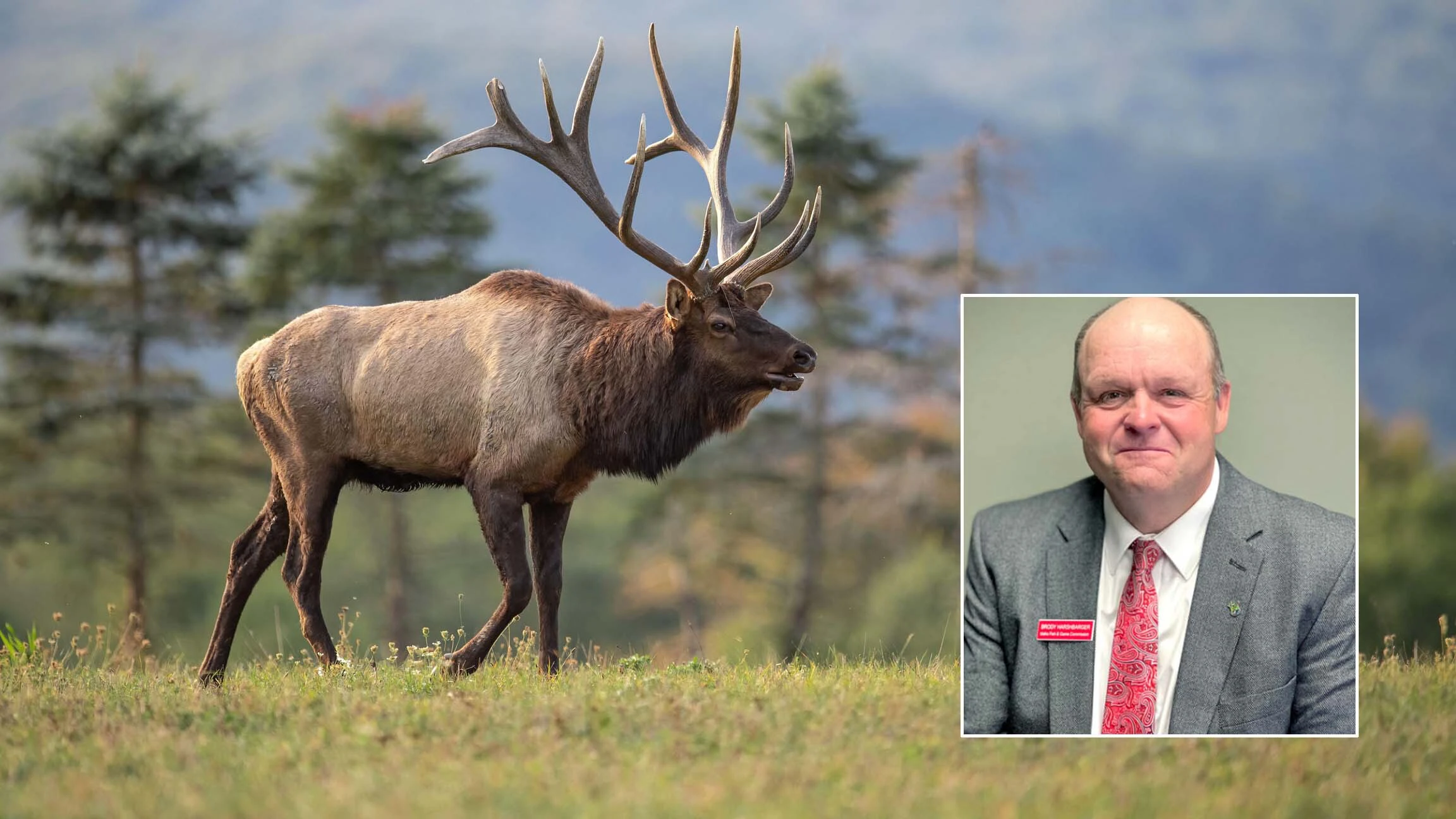
Commissioner Brody Harshbarger, one of Idaho’s seven commissioners, has been charged with seven misdemeanor violations. They include multiple counts of unlawful taking of game animals, one count of hunting without an appropriate tag, one count of hunting from a motorized vehicle, one count of shooting across a public highway, and one count of trespassing on private property to hunt.
The charges stem from Harshbarger taking two bull elk without a valid tag in December 2025, according to news reports. The bulls were found on private property and a parcel of land managed by the U.S. Bureau of Reclamation.
Court documents say Harshbarger was firing shots, across a public highway, from the driver’s seat of his pickup truck to take one of the elk. If convicted on all charges, Harshbarger faces a maximum penalty of up to three years in jail, over $7,000 in fines, and a revocation of his hunting license.
When In Wyoming
Laws about hunting apply to everyone, regardless of their position. John Talbott, the former director of the Wyoming Game and Fish Department, found that out the hard way in 1995.
In June 1995, a game warden found Talbott fishing near Rawlins and asked to see his fishing license. Talbott didn’t have one and reportedly tried to cover for himself by using a forged license.
The scrutiny over this incident ended Talbott’s 16-year career with Wyoming Game and Fish. He ultimately resigned in 1996, paid a $400 fine, and lost his fishing privileges for a year.
“The initial error was very human,” Mary Kay Hill, director of policy for then-governor Jim Geringer, told Cowboy State Daily in November 2024. “I think many people could have put themselves in his shoes. It was just an unfortunate human interaction.”
Brian Nesvik, former Wyoming Game and Fish director and current director of the United States Fish and Wildlife Service, remembered the incident as it occurred right when he was starting his career with the department.
“It demonstrated real integrity on the part of Game and Fish, because it showed we are willing to enforce the laws, regardless of who was involved,” he said.
Happens To The Best Of Us
John Boughman served as director of Wyoming Game and Fish from 1996 to 2002. During that time, he worked with the department's apolitical commissioners on a variety of projects and issues.
“Wildlife agencies, historically, are so incredibly political,” he said. “Everybody in the state thinks they're your constituent. Everybody’s interested. When the commissions were set up in the 1930s, they kind of controlled the agency to get it out of politics.”
Commissioners, according to Boughman, are supposed to be “lay people.” The policy-making board directs and supervises the department, but they are unpaid and subject to the same hunting and fishing laws as everyone else.
Boughman could recall an incident where one of the commissioners he worked with got into a sticky situation. He’d taken a spike elk when hunting with a cow tag.
“It was an unintentional violation,” he said. “He was issued a citation, but he survived that, and everyone understood why he did.”
Many people could confuse a young bull with tiny antlers for a cow elk at a distance. When the mistake is perceived as more “universal,” it influences public opinion and the penalty they deem appropriate.
One of the bull elk allegedly taken by Harshbarger had no antlers, according to court documents. The other was a six-point bull, so it’d be hard for anyone to justify that as a case of mistaken identity.
“Commissioners are lay people, but they can even do some things that some lay people will do, like shoot out of car windows or hunt in the wrong areas,” Boughman said.
When There’s That Much Scrutiny
When people have an issue with a state’s management of wildlife, all eyes turn toward the director of the agency. Commissioners usually avoid the same level of scrutiny, unless it’s an especially polarizing issue.
Boughman said that during his time, the level of scrutiny the commissioners received was “nowhere close” to the level he and other directors were constantly under. Still, he could recall some tough times for the commissioners.
“When I was director, the commissioners were looking at those landowner-sponsored licenses,” he said. “I remember guys carrying signs that said, ‘Death to the Commissioners.’ The people were up in arms (because) they knew that the commissioners were trying to push a certain issue. When you get into a real, visible issue, it's not that much fun being a commissioner.”
If a commissioner is found violating the laws of the agency they’ve been appointed to oversee, there’s not much any of their peers can do for them, especially the director. In Harshbarger’s case, Boughman believes the Idaho Department of Fish and Game director, Jim Fredericks, will stay silent.
“If there was a violation, I would get a call right away,” he said. “A director would not get involved in a law enforcement issue, certainly in Wyoming. I've known and worked with all these (state) directors personally, and they would not get involved in any law enforcement issue."
Overall, Boughman believes most directors and commissioners want to “go by the book” and keep their heads down whenever they can. Even when one of their own is in the crosshairs, they’ll let the proper procedures play out.
“There's no reward for getting involved, or ‘good old boy system’ for that,” he said. “Even if they did try that, the law enforcement guys wouldn't go for it, anyway. These guys are professionals.”
What’s (Probably) Inevitable
Harshbarger, whose term as commissioner ends in June 2027, has pleaded not guilty to the seven misdemeanor violations. He has a pretrial hearing set for April 29.
Boughman doesn’t know any of the people involved in the Harshbarger incident, but he has a strong idea of how it’ll play out.
“I would assume that he’s going to resign,” he said. “From everything I’ve read, it does sound like it was intentional. Nobody’s going to get involved and pressure anyone (involved in the investigation) to stand down.”
Boughman said Idaho is looking to adopt a new policy closer to Wyoming’s in terms of the commissioners’ power. If enacted, it would see the commissioners giving up some of their power to the governor’s office.
“In Idaho, the Commission still appoints the director, set regulations, and controls the budget," he said. “The Wyoming commissioners used to appoint the director, but now they send three names to the governor, and he appoints the director. That’s what they’re trying to do in Idaho.”
A letter from the office of Idaho Governor Brad Little disclosed that Harshbarger has “voluntarily postponed” his duties as a commissioner while criminal proceedings are ongoing.
If a similar incident occurred in Wyoming, the governor could remove the accused commissioner from the board. With as much scrutiny as Harshbarger’s actions have received, it might be the only proactive action that they would consider, in Boughman’s opinion.
“In Wyoming, you serve at the pleasure of the governor,” he said. “He can fire you anytime he wants.”
Andrew Rossi can be reached at arossi@cowboystatedaily.com.