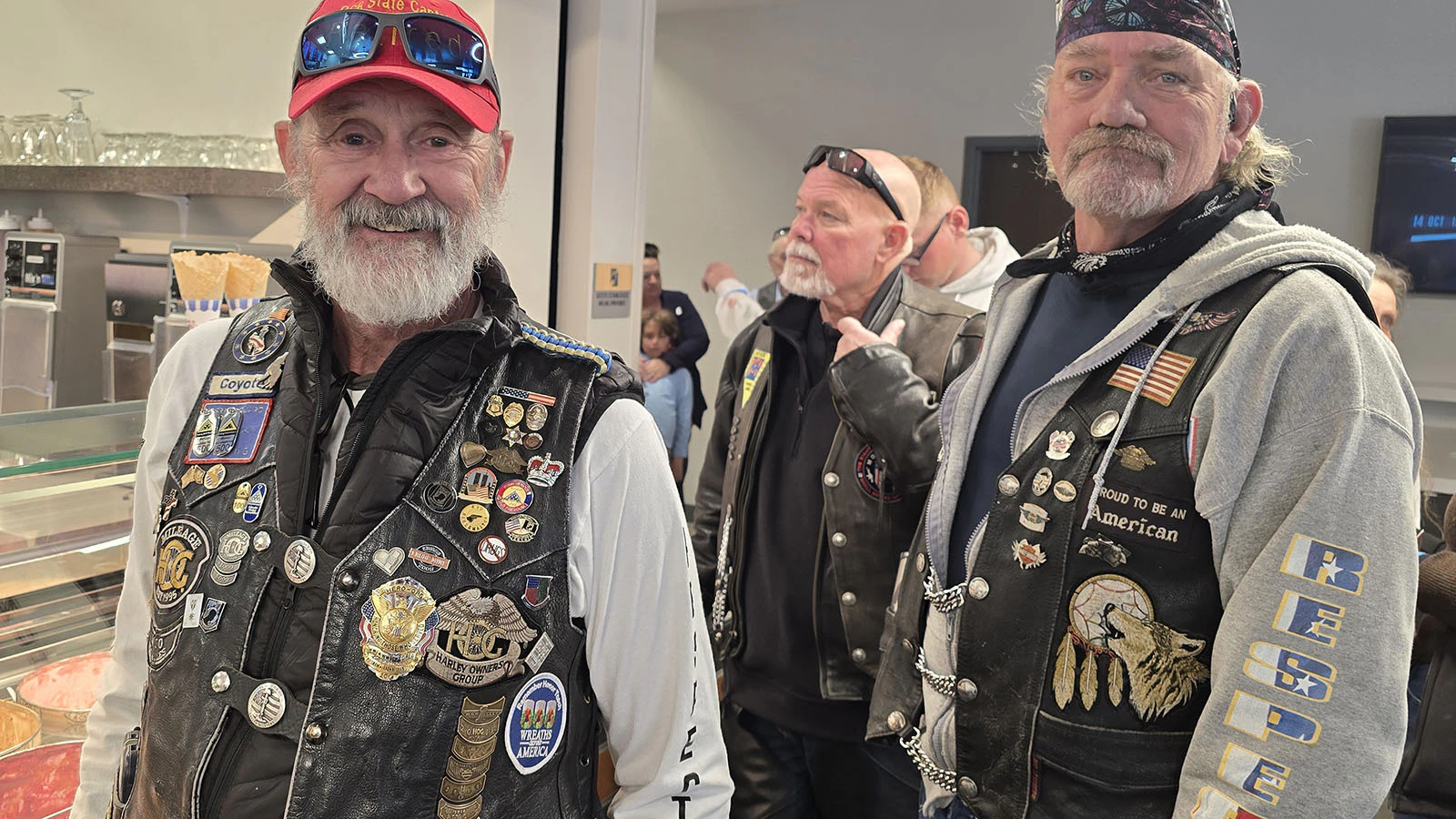
Richard “C0y0te” Parks, Sr. always skips the Vietnam section of the National Museum of Military Vehicles when he visits.
It’s just a little too real, a little too immersive for the Vietnam veteran, who is Senior State Ride Captain for the Patriot Guard Riders to handle.
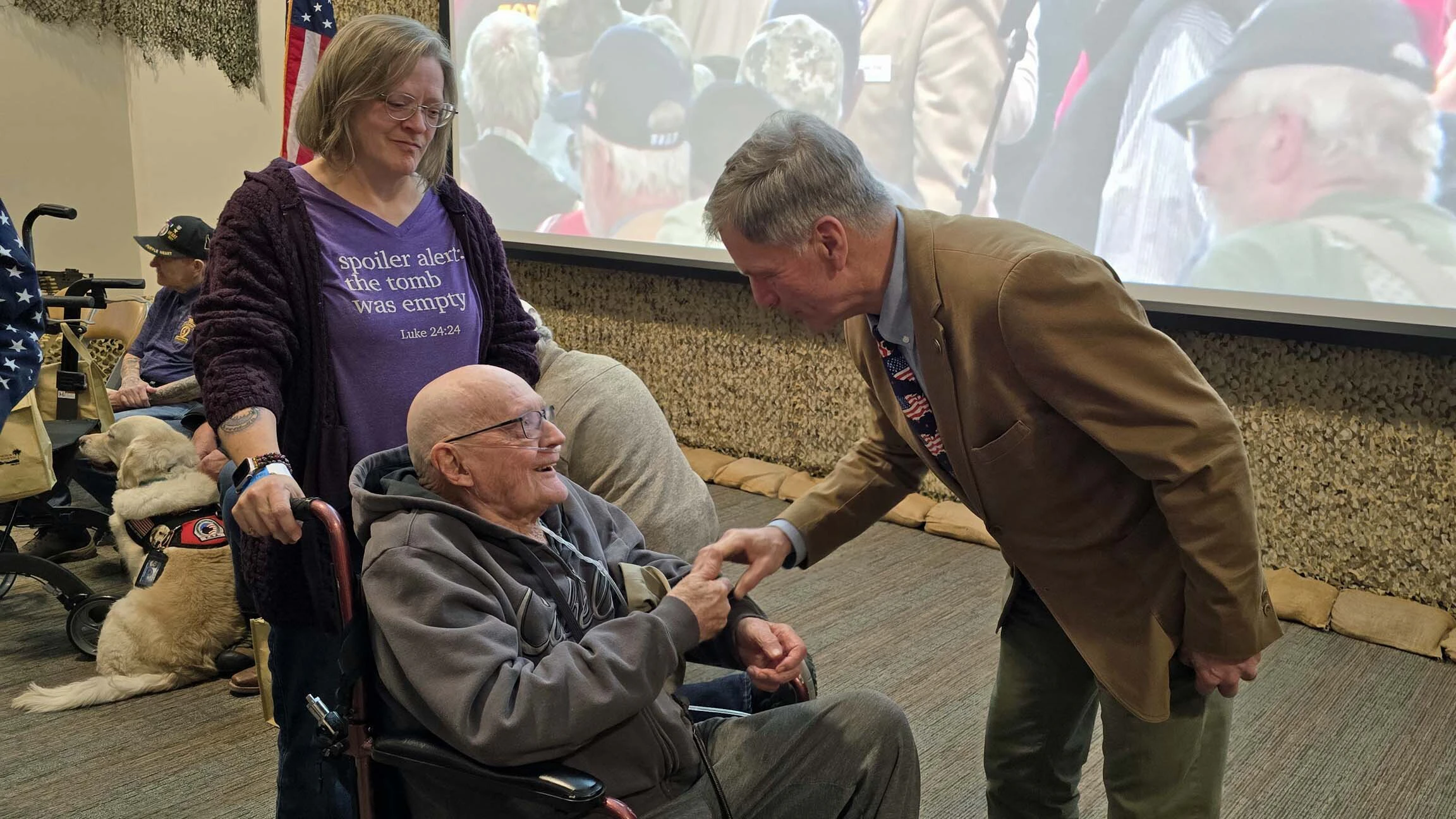
On Sunday, Parks was among hundreds of Vietnam veterans who gathered for Wyoming’s Welcome Home Day, set each year on March 29, as a chance for people to gather and give these veterans the respect and recognition that were due when they came home from war.
“This means the world,” Parks said, shaking his head as he recalled those early years and all the struggles he went through.
“We don’t want your kind here,” Parks remembers being told on more than one occasion. “You’re a killer, you’re a murderer, you know, kind of stereotype. It was tough for about five to seven years. I tell people I came home and for seven years I lived out of a Scotch bottle. I drank 24 hours a day, seven days a week. I just thank God I had a wife who kind of stuck with me.”
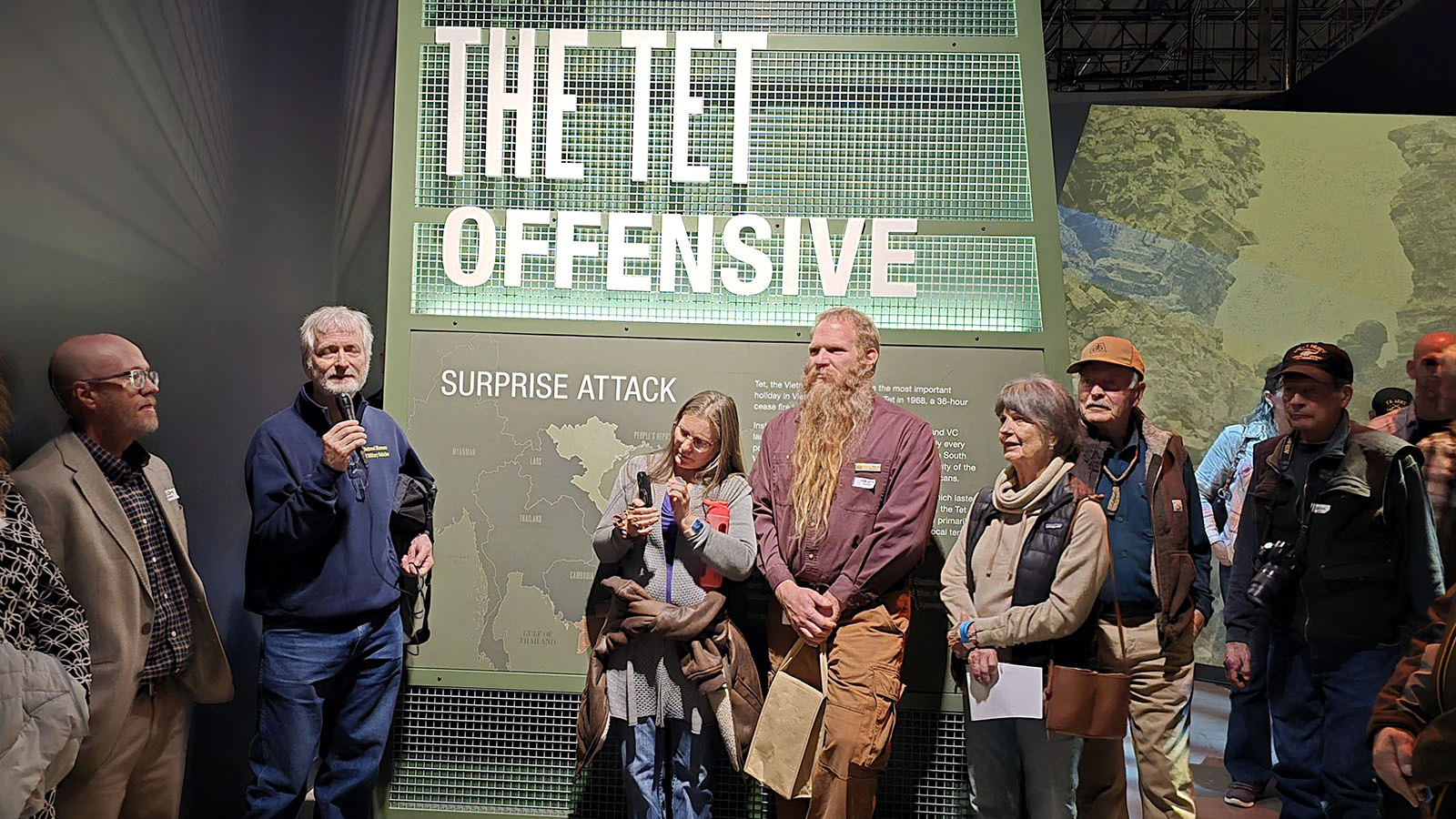
Dan Starks talks about the Vietnam War during an indepth tour of the National Museum of Military Vechile's Vietnam section. (Renee Jean, Cowboy State Daily) 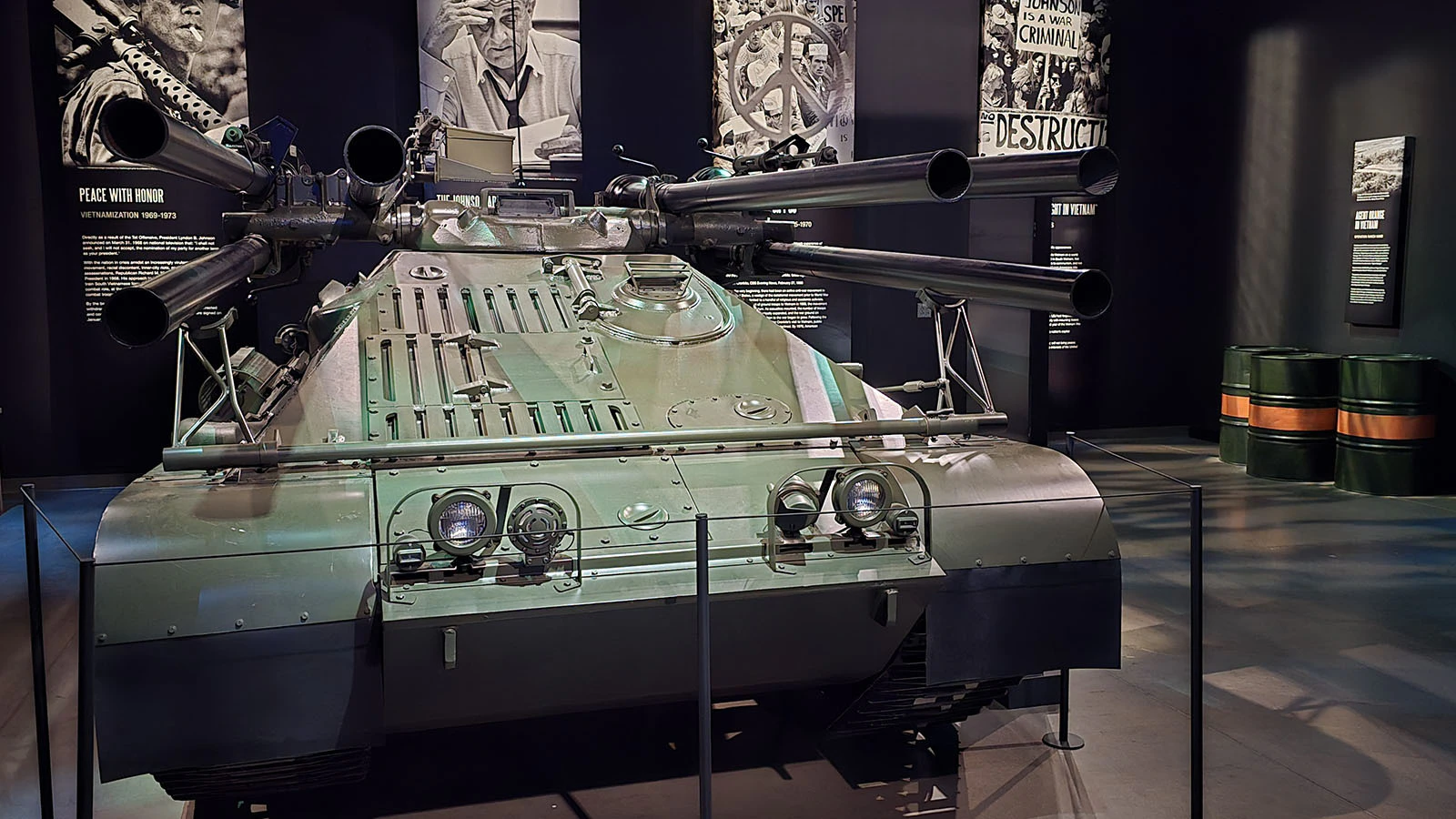
This tank was particularly important during the Vietnam war to bust through thick walls. (Renee Jean, Cowboy State Daily) 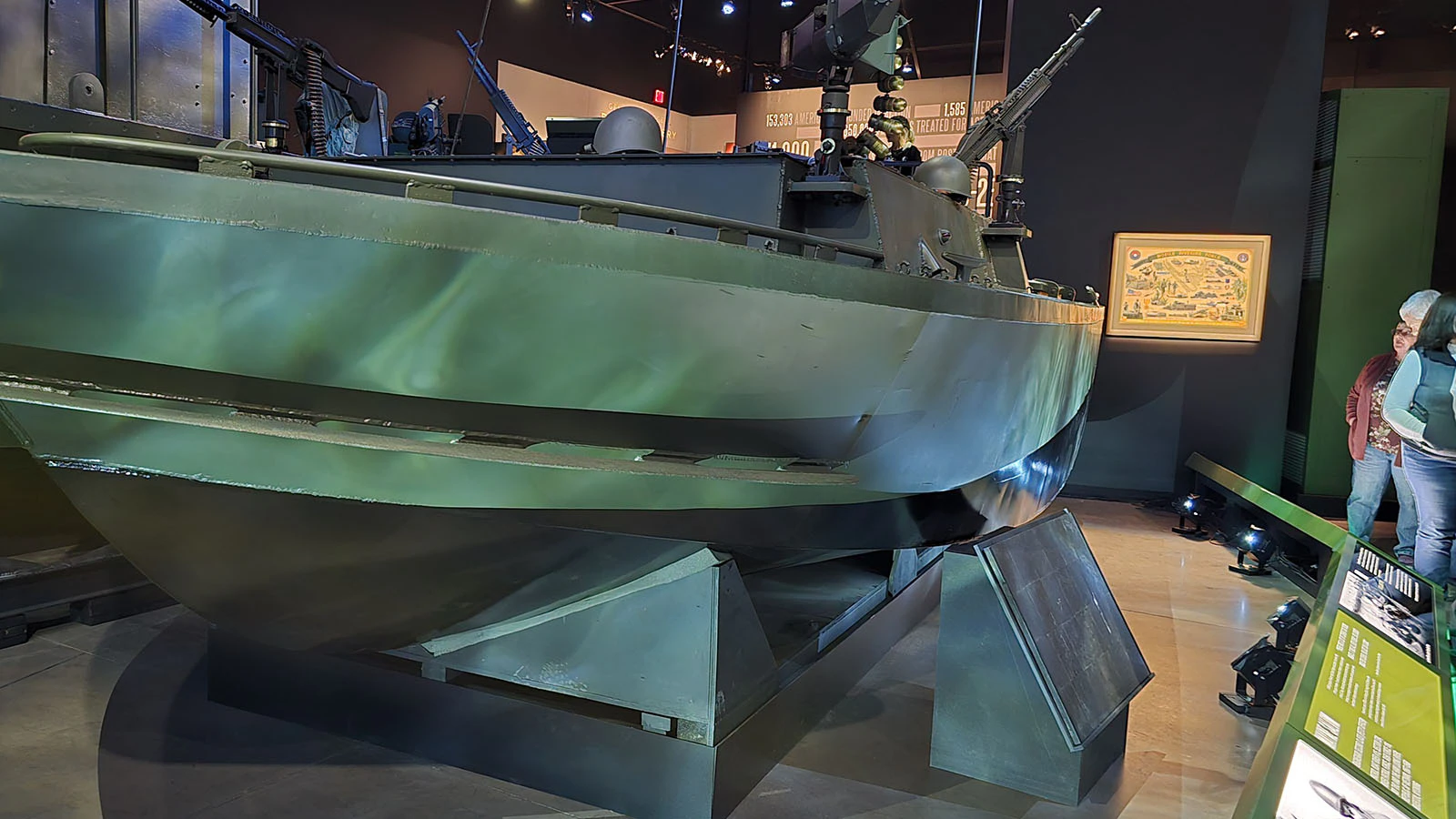
This boat was one of about 20 custom-made for naval units that were operating on the rivers in Vietnam. They proudly called themselves River Rats. (Renee Jean, Cowboy State Daily) 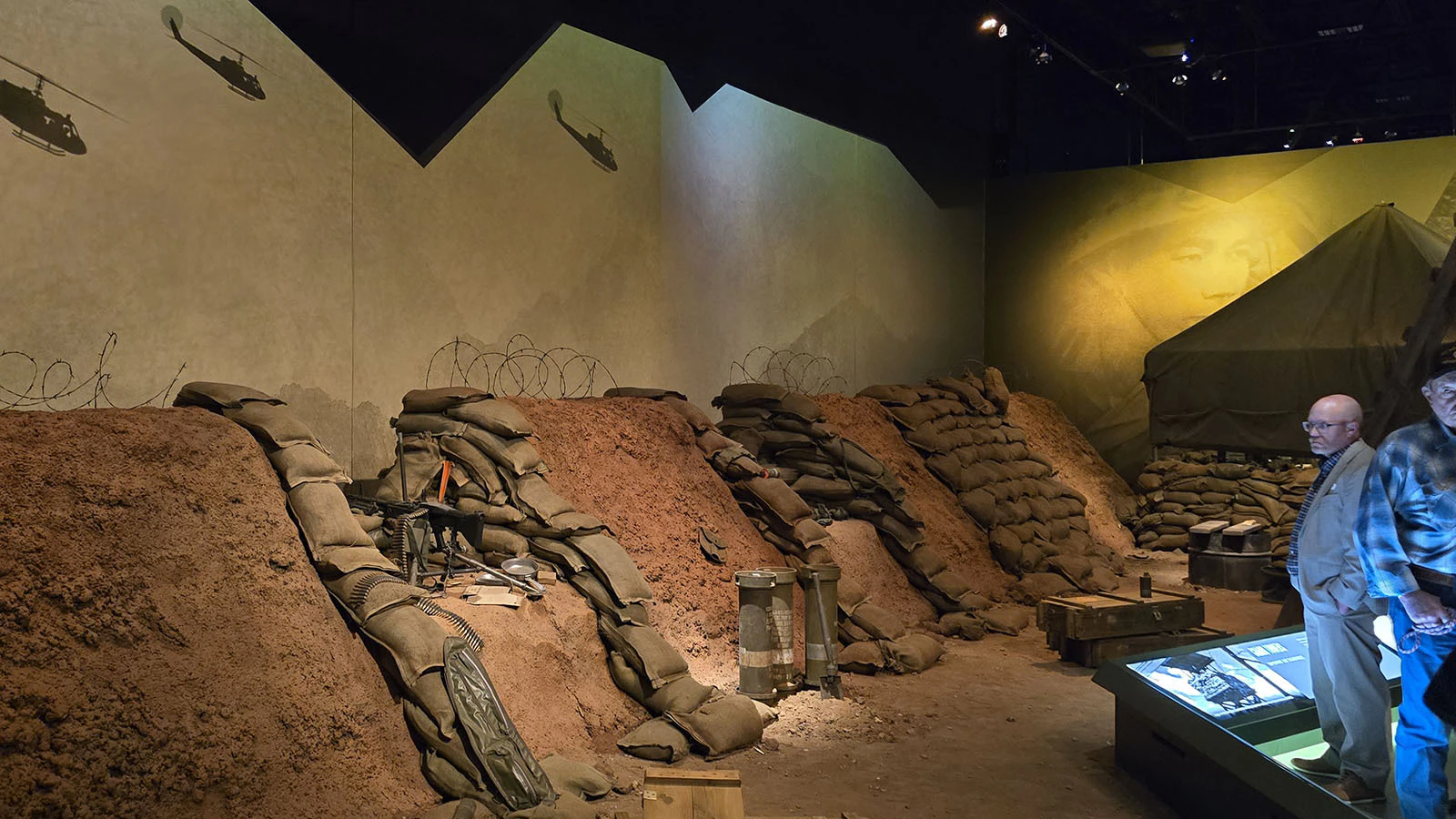
This simulation of a base in Vietnam includes a film that shows helicopters flying overhead and dropping explosives, which then go up in a cloud of smoke. (Renee Jean, Cowboy State Daily)
Vietnam Exhibit So Real, Even Combat Vets Turn Around
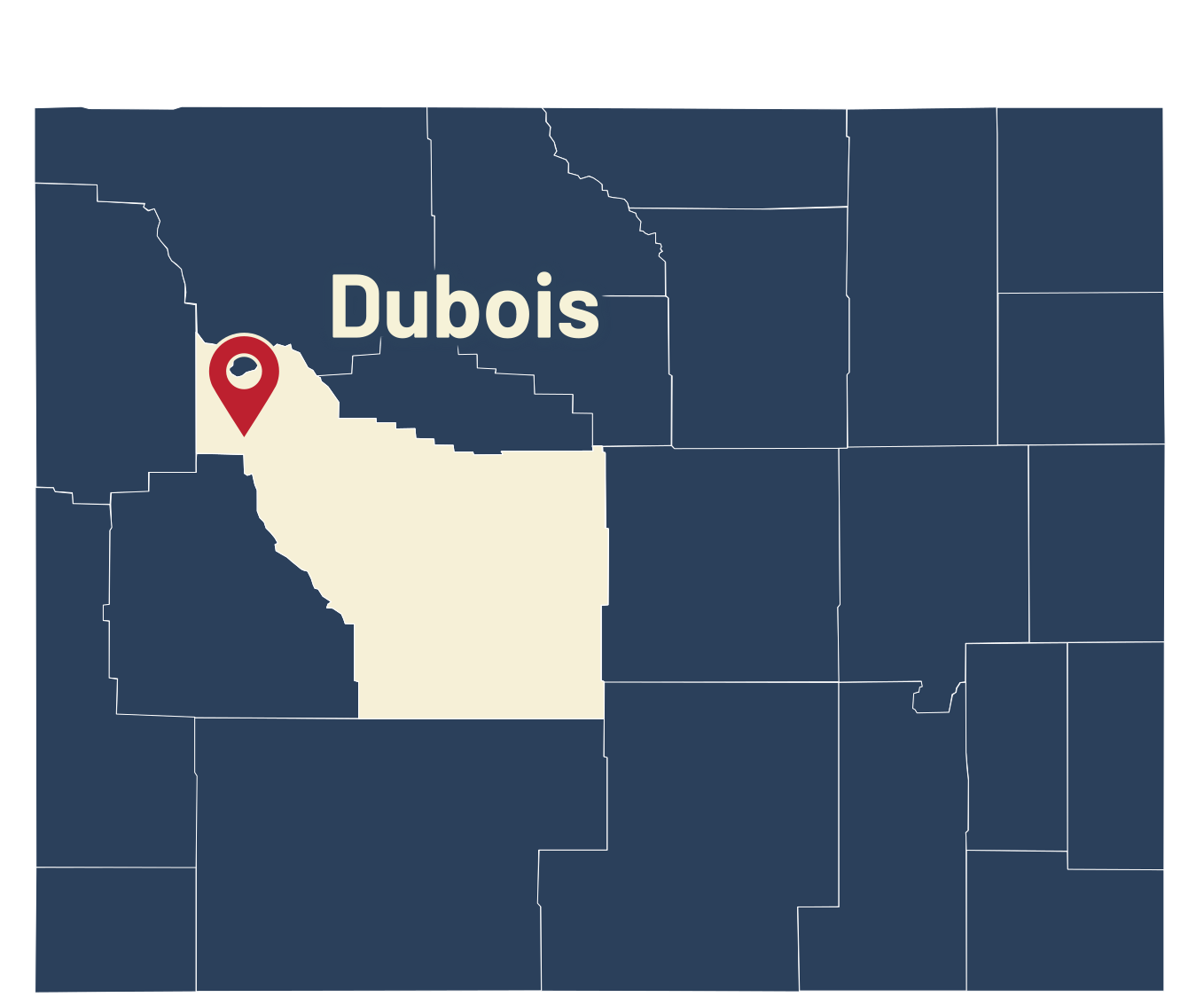
Museum owner Dan Starks particularly wanted the Vietnam exhibit to be an immersive experience and spent the most money on that portion of his museum, which he says is the largest private collection of military vehicles in the world.
The exhibit includes an actual forest, one with a few surprises along the way. Starks encourages visitors to enter the forest so they can see what it was like to be a soldier in Vietnam.
Parks can attest to the realism.
“There’s this guy who pops up out of a rat hole,” Parks said. “That’s, yeah. Too much for me. And most of the guys who have been to Vietnam, they get there, and they do a U-turn. Come back out the way they came in.”
Sunday was no exception for Parks. He loves the museum, and he loves the fact that Starks has recreated the Viet Cong battlefield forest and all.
But he went to war with eight of his high school buddies. And he was one of only two who returned alive.
“Too many lost friends,” he says quietly, shaking his head and trailing off into a silence that may have had no words, but was still full of emotion.
“I love what Dan is doing here,” he said.
It’s so important for people to see and understand, he believes. And there is no military museum that creates as realistic an experience as the National Museum of Military Vehicles in Dubois.
Parks has seen grown men go into the exhibit and leave it crying. One in particular he recalled coming out of there and saying, “I had no idea.”
“Until you see it, live it, until you were there, you have no idea,” Parks said. “You just don’t realize what went down.”
To then come back home to protesters spitting on you, insulting you, calling you a baby killer …
“There was no welcome home then,” Parks said. “I couldn’t even get a job. People wouldn’t even hire you if you were a Vietnam vet.”
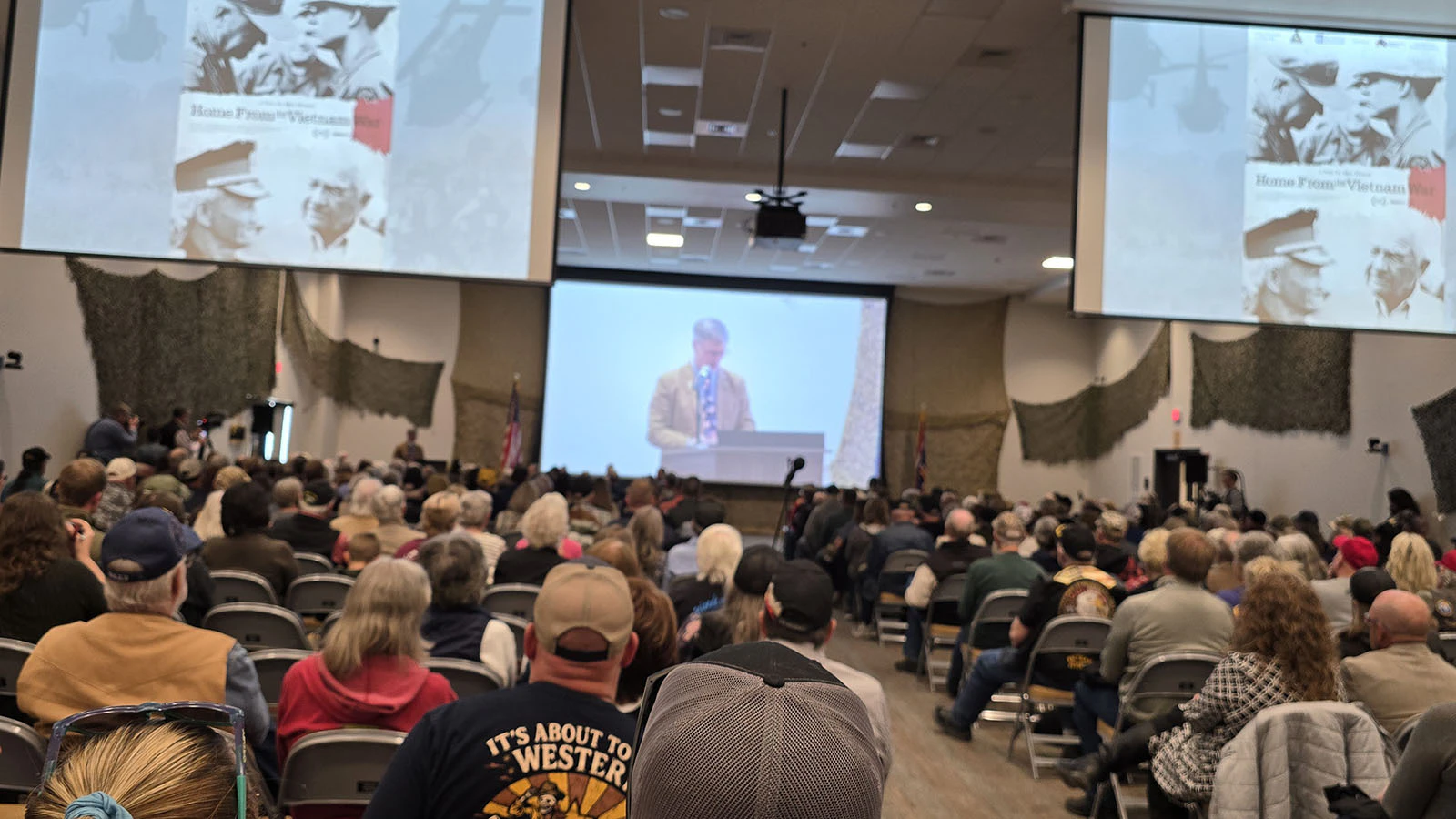
Gov. Mark Gordon speaks to a full house at the Military Museum of National Vehicles during Wyoming's Welcome Home Day. (Renee Jean, Cowboy State Daily) 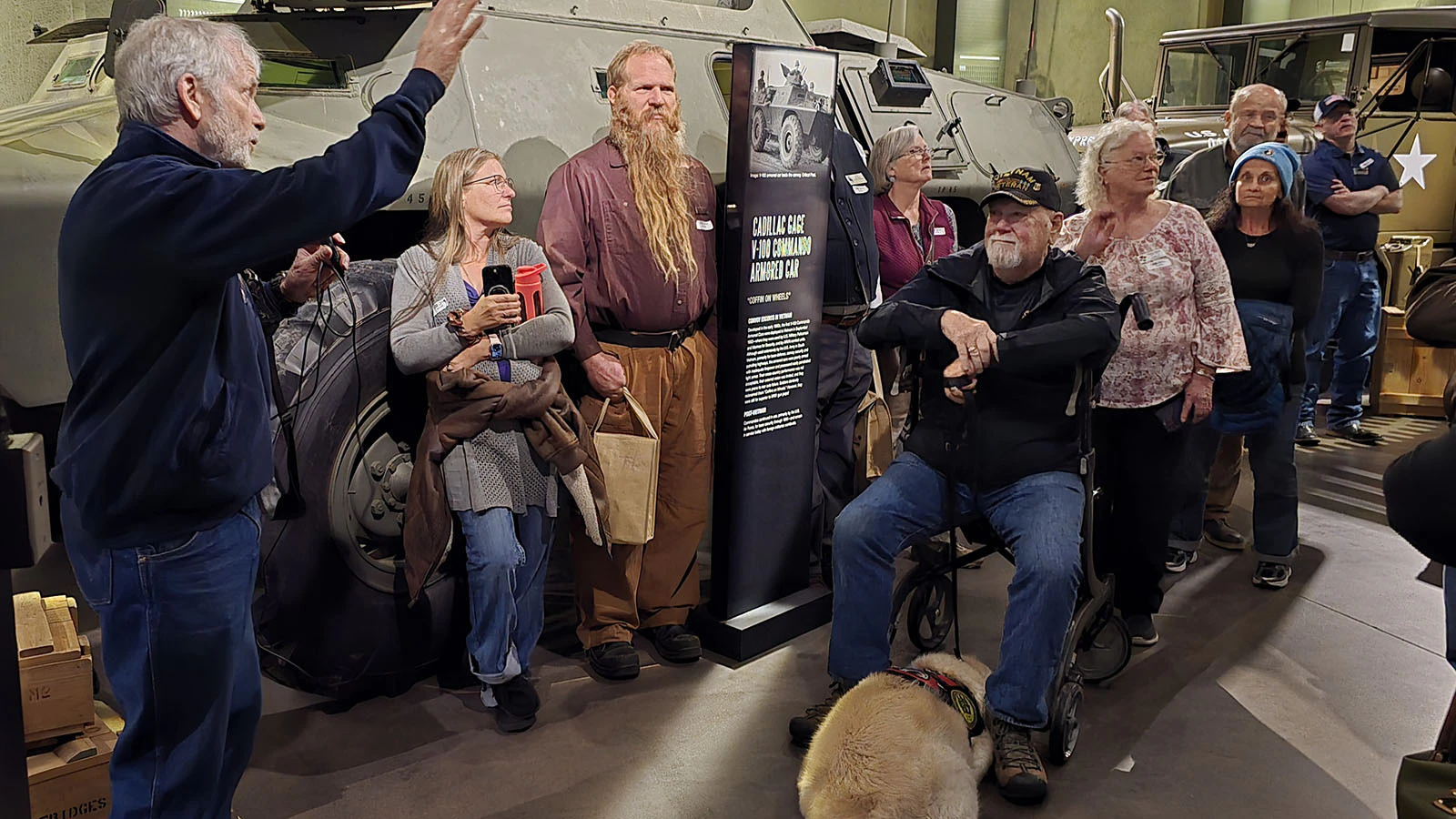
Dan Starks, owner of the National Museum of Military Vehicles, talks about how soldiers had to improvise during the Vietnam war to stay alive. (Renee Jean, Cowboy State Daily) 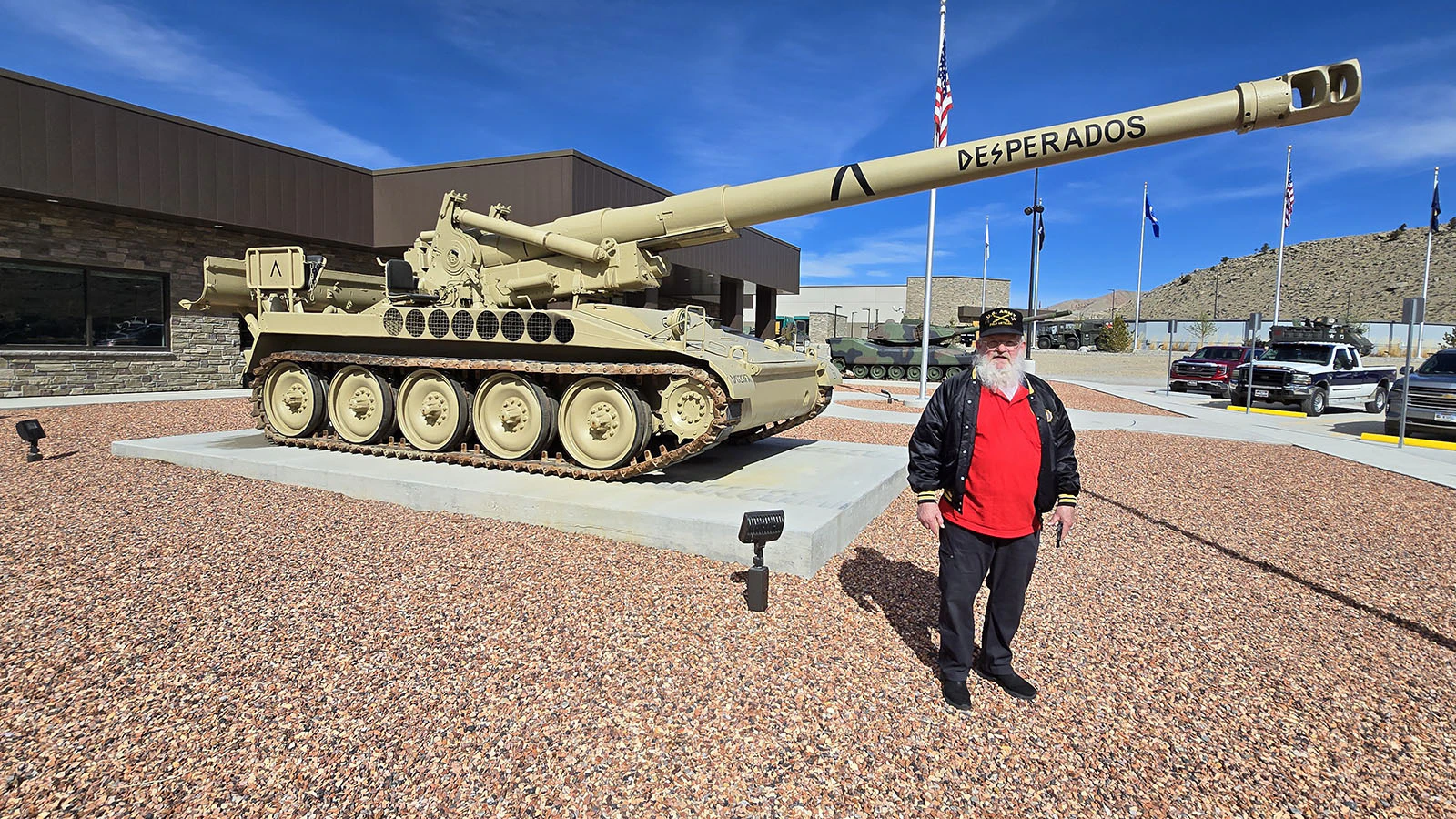
Dave Lee, a Rock Springs veteran, snuck away from all the ceremony to check out this tank, which is just like the one he was assigned to during his service. He was one of about 35 veterans from Rock Springs attending Welcome Home Day held at the National Museum of Military Vehicles in Dubois. (Renee Jean, Cowboy State Daily) 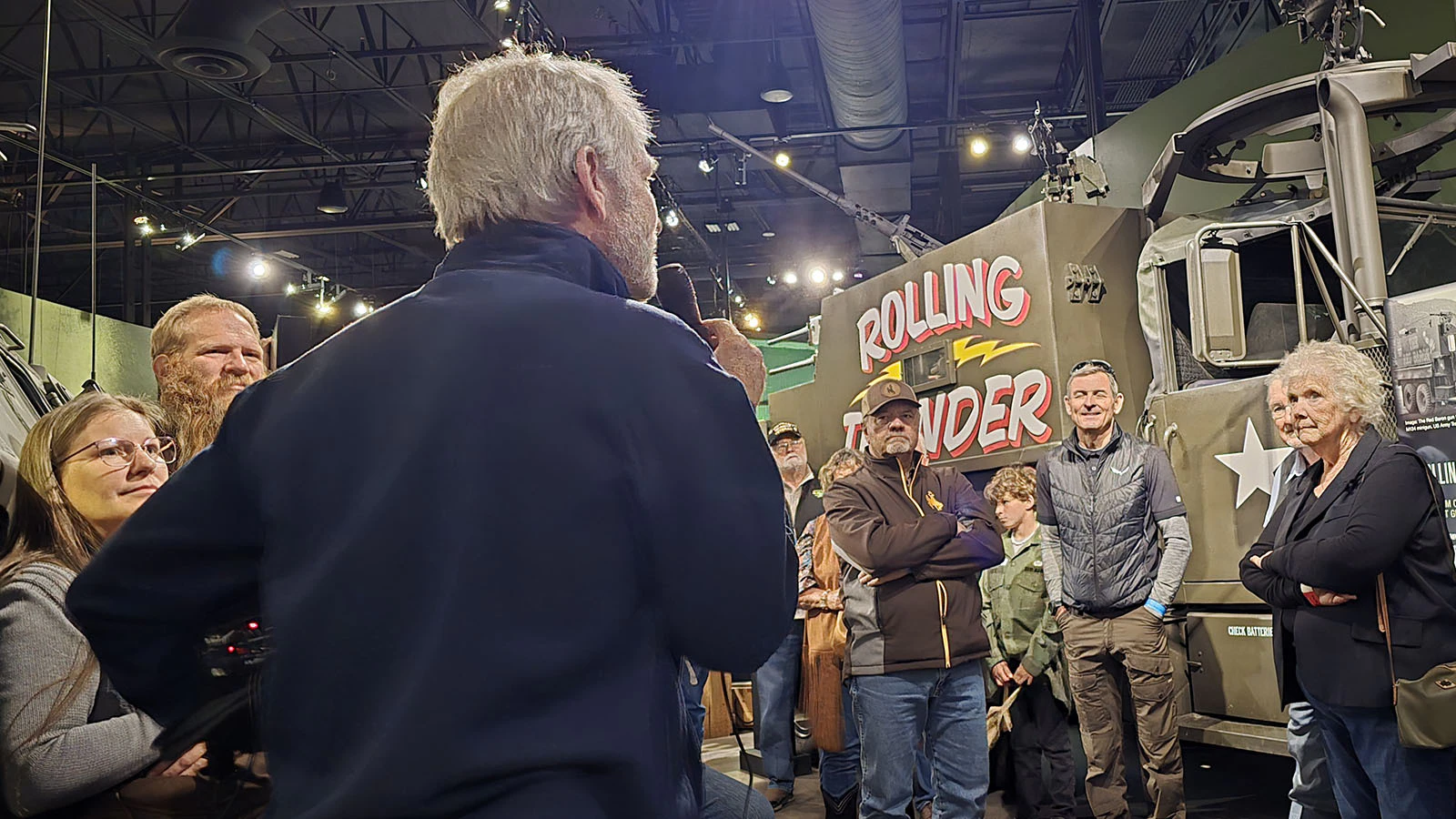
Dan Starks, owner of the National Museum of Military Vehicles, talks about how soldiers had to improvise during the Vietnam war to stay alive. (Renee Jean, Cowboy State Daily)
A Call To Action
It’s been 70 years since the Vietnam War began in November 1955. A welcome home for them that feels like a ticker tape parade has been a little late in coming.
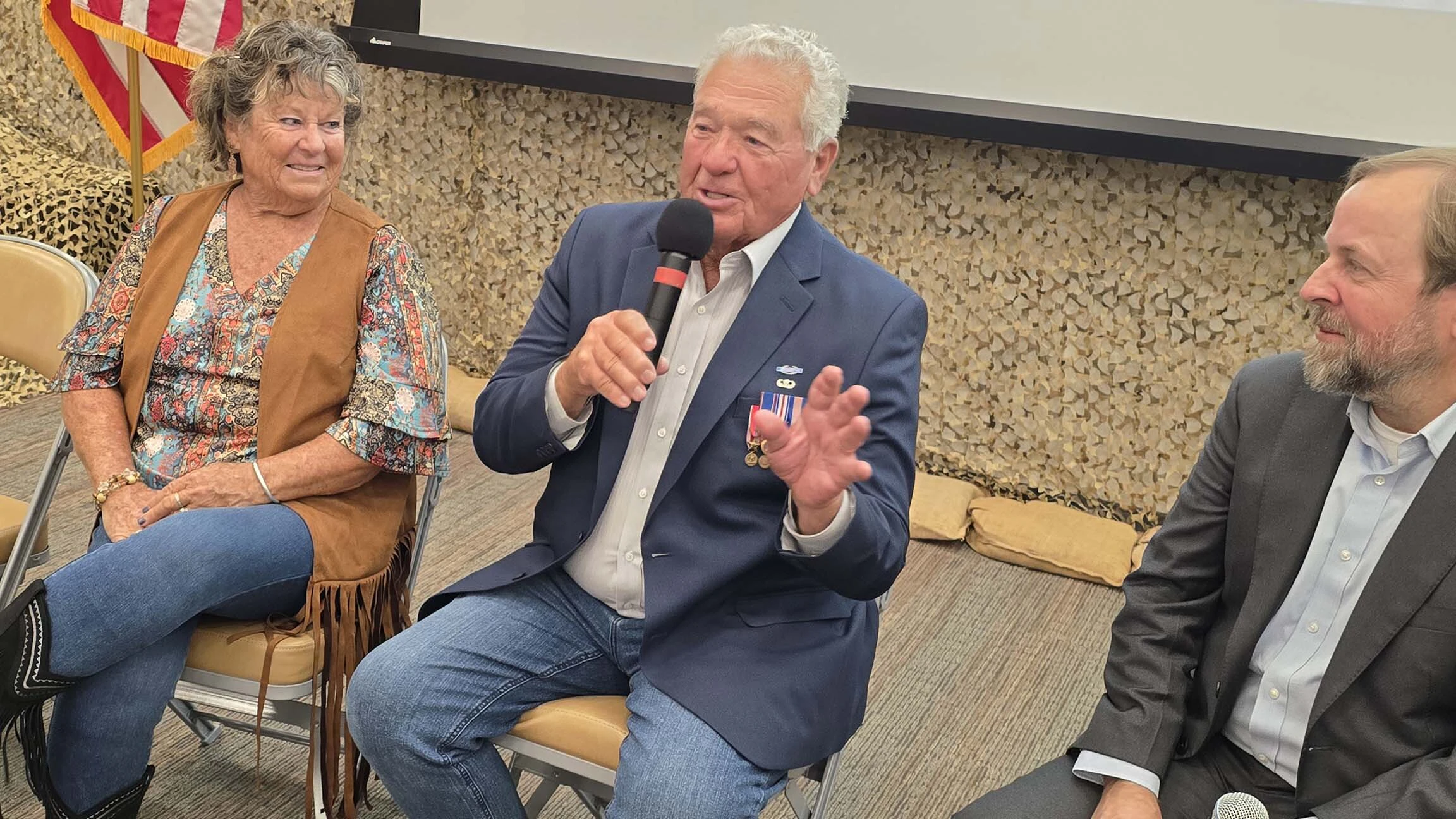
That’s part of what inspired Starks to go all in on a Wyoming Welcome Home Day to remember, paired with a showing of the Lee Alley documentary, “Home From the Vietnam War” produced by PBS, and a panel discussion afterward which included Alley and his wife Ellen.
The day itself was a call to action; he told Cowboy State Daily. His hope was that lots of people would come out and honor Vietnam veterans before it’s too late. Starks also encourages those who couldn’t be there to find the Vietnam veterans in their lives and thank them for their service.
“Of the 3.4 million who went to Vietnam, there are somewhere between 600,000 left alive today,” Starks said. “So the call to action was to say there aren’t that many left and they haven’t been treated well, so let’s all come out and honor our Vietnam vets before it’s too late.”
More than 600 people showed up to do just that in Dubois for Wyoming’s Welcome Home Day. They took an in-depth tour of the Vietnam War exhibit, with Starks himself as narrator, which included a snippet of Lee Alley’s story, Wyoming’s most decorated Vietnam veteran.
They also heard from a variety of state officials including Gov. Mark Gordon, U.S. Sen. John Barrasso, U.S. Rep. Harriet Hageman, and several others, all of whom had different things to say, but offered a similar heart.
They wanted Wyoming’s Vietnam veterans to know that their service was indeed honorable and had always been worthy of recognition, regardless of what did or didn’t happen when they returned.
“(My Wife) Jenny remembers, as a 6-year-old girl, seeing her oldest brother spat on,” Gordon told the gathering. “That should never happen. This country will not forget. We won’t forget those who are left behind, prisoners of war, and our missing in action.
“From time to time, if we are to remain a great nation, a few of us are chosen,” Gordon said, quoting a cousin who is related to General Patton. “Perhaps by the Almighty, to serve our country. God bless you all. God bless Wyoming and God bless this great nation.”
The Night Lee Alley Thought He Would Die
Many came to Welcome Home Day in Dubois to hear Alley’s story, told in PBS’ “Home from the Vietnam War” documentary, which chronicles the veteran’s return to Vietnam last year.
Alley is Wyoming’s most decorated war veteran, due to his extraordinary actions after the Viet Cong overran Fire Support Base Cudgel on Nov. 18, 1967.
To save his unit, Alley ordered his men to withdraw across a river, while he stayed behind, by himself, to provide cover fire. Every third man gave Alley all their ammunition and hand grenades so he could make what he believed was going to be his last stand.
“As soon as one M16 was out of bullets, I would throw it into the river,” Alley said. “I knew I was going down, and I didn’t want them to get the weapon. So I’d pick up another weapon, fire it, and throw it in the river.”
When all the weapons were gone, he went to the hand grenades.
“I know that I’ve got to make every one of these count,” Alley said. “And the crazy thing of it is, they were screaming, ‘GI you die! GI, we kill you tonight!’ They were screaming that at the top of their lungs, and I was thinking you might be right. This might be the end.”
When Lee finally ran out of hand grenades, he dove into the river himself and swam for his life.
He Never Felt Like A Hero
Alley received numerous medals to recognize his acts of valor — the Distinguished Service Cross, the Silver and the Bronze stars, the Soldier’s Medal, two Purple Hearts, two Air Assault badges, the Vietnamese Cross of Gallantry Medal and a Congressional Medal of Honor nomination.
But Alley has never felt like a hero.
He felt instead that war had turned him into a killer — a man he wouldn’t really want to meet and didn’t really want to know.
Many people also touted Alley’s fearlessness and bravery, but Alley had a different perspective on it.
It wasn’t that he hadn’t been afraid at all. He had been afraid almost the entire time he was in Vietnam. Thousands of people were trying to kill him and his men, after all. It was just that there was a “switch” in his mind that flipped the instant his men were in danger.
“It wasn’t me, and it’s nothing I prepared for,” he said. “It’s just that once that shot’s fired, it’s all hell and I don’t care, I’m going to kill you, I’m going to do whatever it takes, you are not getting my men. That was my goal, to get them guys home.
“And I didn’t always succeed,” he said after a long pause. “I failed some of you.”
The War That Never Ends
Among the many battles at Firebase Cudgel was one that happened at 2 a.m.
To this day, Alley said he often wakes up then.
“One night I wrote, ‘I would really like to know who Lee Alley is,’” he said in the documentary. “I felt I needed to go to Vietnam to understand that guy. But, at the same time, I didn’t want to meet that guy that was in war, because he became very cruel and he became very vicious. But I needed to confront him. I was just trying to understand myself. Maybe, I’ll make a friend out of myself.”
The journey back to Vietnam, though, was fraught with anxiety. He was going to meet people who had been his enemy, and he had been their enemy as well.
What would he say to them? What would they say to him?
Finally, the moment arrived when he stood face to face with one of the men who had been trying to kill him, and who he had been trying to kill.
He had a question for Alley.
“Through the interpreter he said, “Ask him if he still has nightmares,’” Alley said. “And I said, ‘Yes, I do. I still have nightmares. And he said, ’So do I.’”
Then the man said something that changed Alley’s entire perspective, not only of the war, but of his life.
“He said, ‘We’re going to stand here on this spot and we’re going to hug. We’re going to hold each other, and we must go forward from here on out and promise each other the nightmares will end today.’”
In that moment, breaths were held and tears were shed, but something else happened as well.
“It’s just like something went off my shoulders,” Alley said. “And he asked me to forgive him and not have nightmares, and he wouldn’t any more either.”
Too Many Are Fighting The Battle Alone
Every veteran returning home alive from war fights a battle within, one that will determine if they will be subsumed by what has happened to them or overcome it in at least some measure.
Far too many veterans are fighting this battle alone, Starks told Cowboy State Daily. And for far too many, the fight ends in death, by their own hands.
“Veteran suicide rates are unacceptable,” he said. “(It’s) the typical challenging dynamics for veterans returning to civilian life, the challenge of finding new purpose that matches the purpose they had when they were in military service, to restore the connections and community that they have when they’re in military service.”
That’s part of what Starks’ museum is all about, making sure the price veterans have paid to support the American way of life is clear.
“There are a lot of isolated veterans with traumatic brain injuries, nightmares and other attributes of post-traumatic stress and struggling to find a purpose,” he said. “And that’s a big contributor to suicide rates… but just think about all the people in pain who don’t get to suicide, but they’re struggling, and they served on behalf of all the rest of us. So it’s like, hey, we owe it. I don’t mean we owe VA benefits. I mean we owe support and transition and employment and recognition and purpose and connection. That’s what we owe, and that’s what this museum has turned into.”
Creating a display that helps those who never had to go to war understand what it was like helps ensure society understands its debts and are more willing to ensure what is owed is paid.
“I want people to understand how tough the fighting was,” Starks said. “How tough the combat scenarios were during their deployment to Vietnam. I want people to understand how successful our Vietnam veterans were in fighting a tough adversary. And how high a price they paid gaining that battlefield success during their deployment to Vietnam. And how poorly we treated our Vietnam veterans after they came home from that combat, paying such a high price, and not only not to be honored, but to be insulted when they’d come home.”
That’s why Starks said the Military Museum was more than glad to collaborate with Wyoming and with PBS to host Wyoming’s Welcome Home Day and to show the documentary about Alley.
“Before it is too late, we have a chance to help veterans heal and give them the honor and recognition they didn’t get but should have gotten when they came home from Vietnam,” Starks said.
Renée Jean can be reached at renee@cowboystatedaily.com.