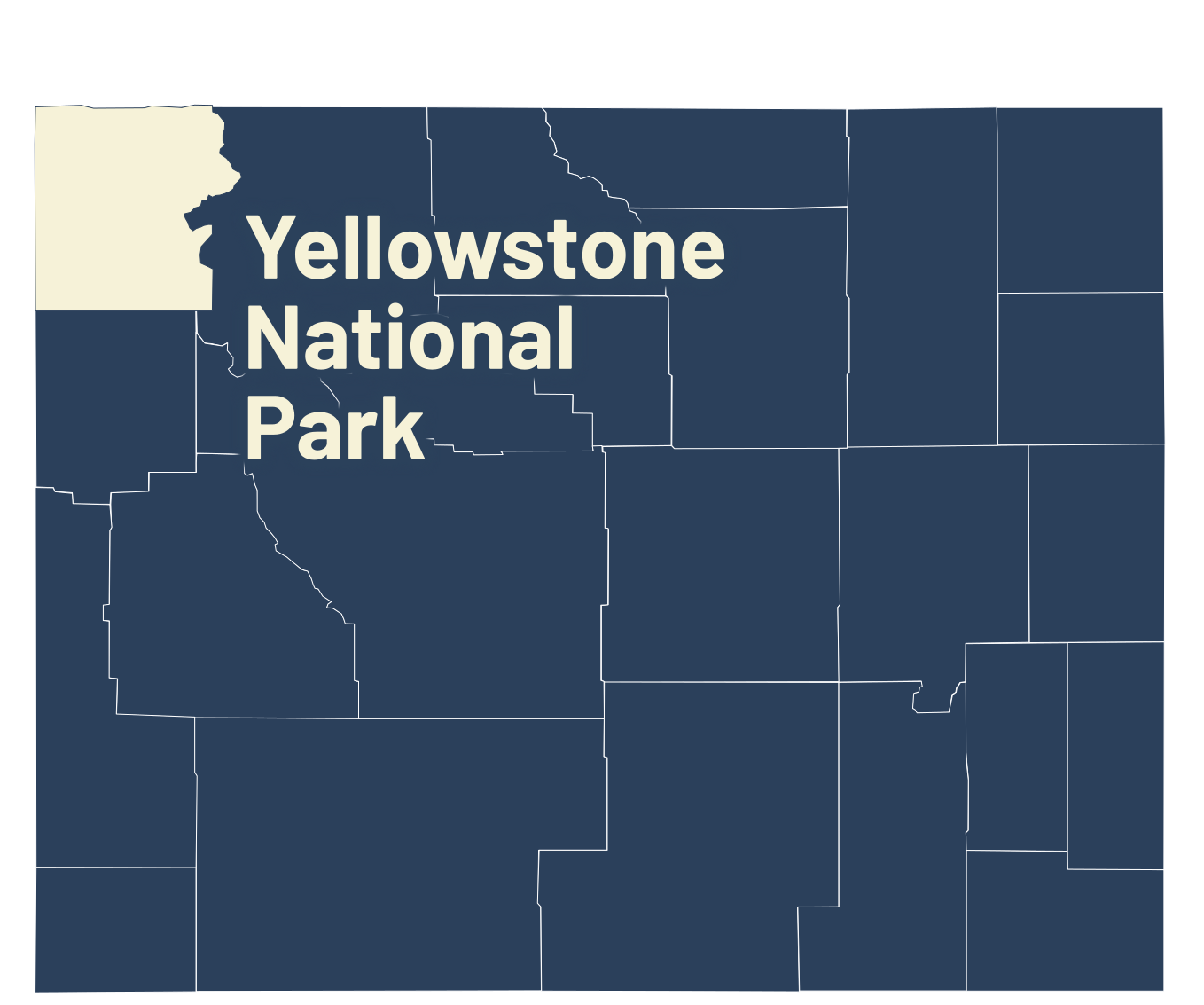
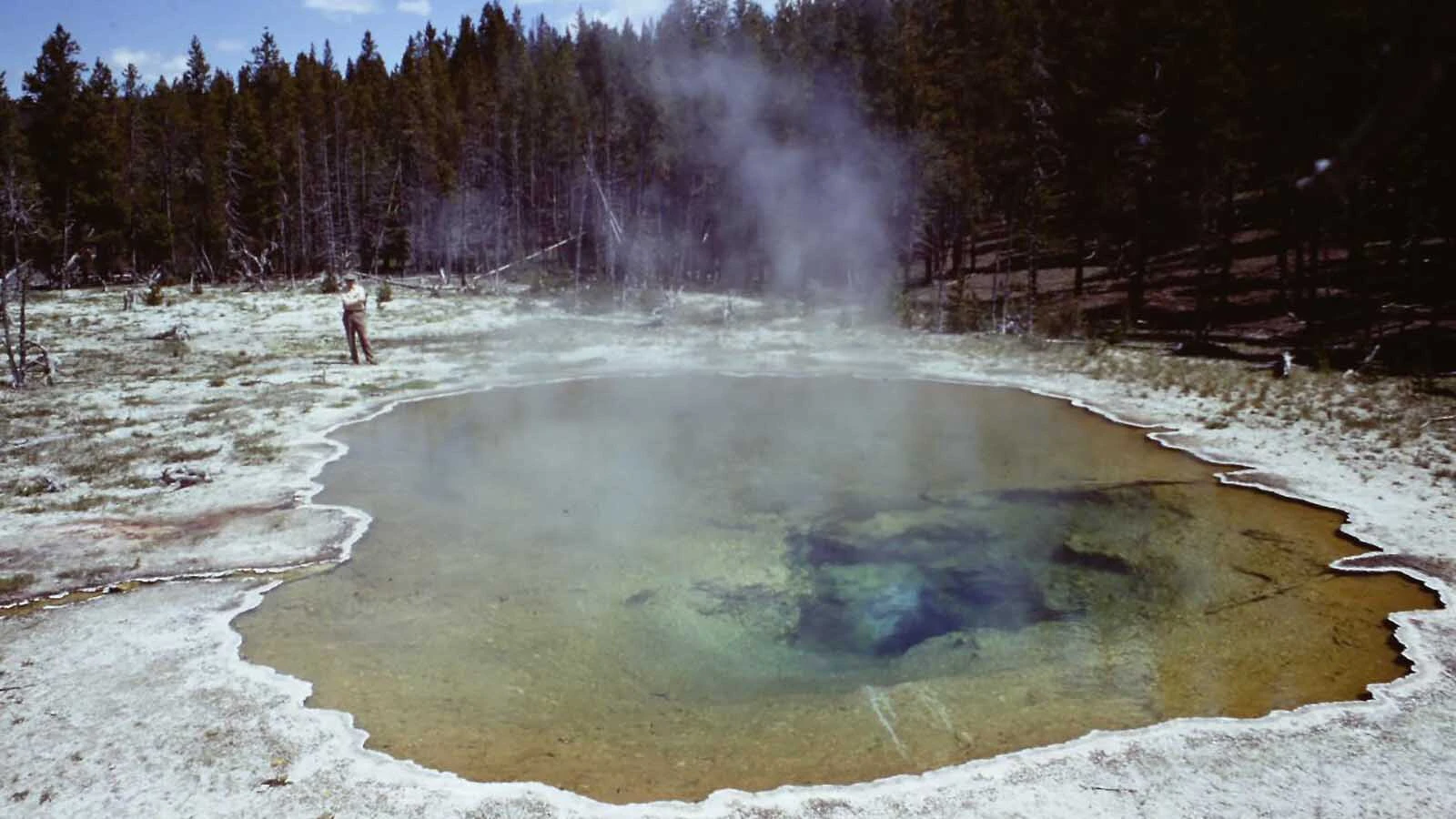
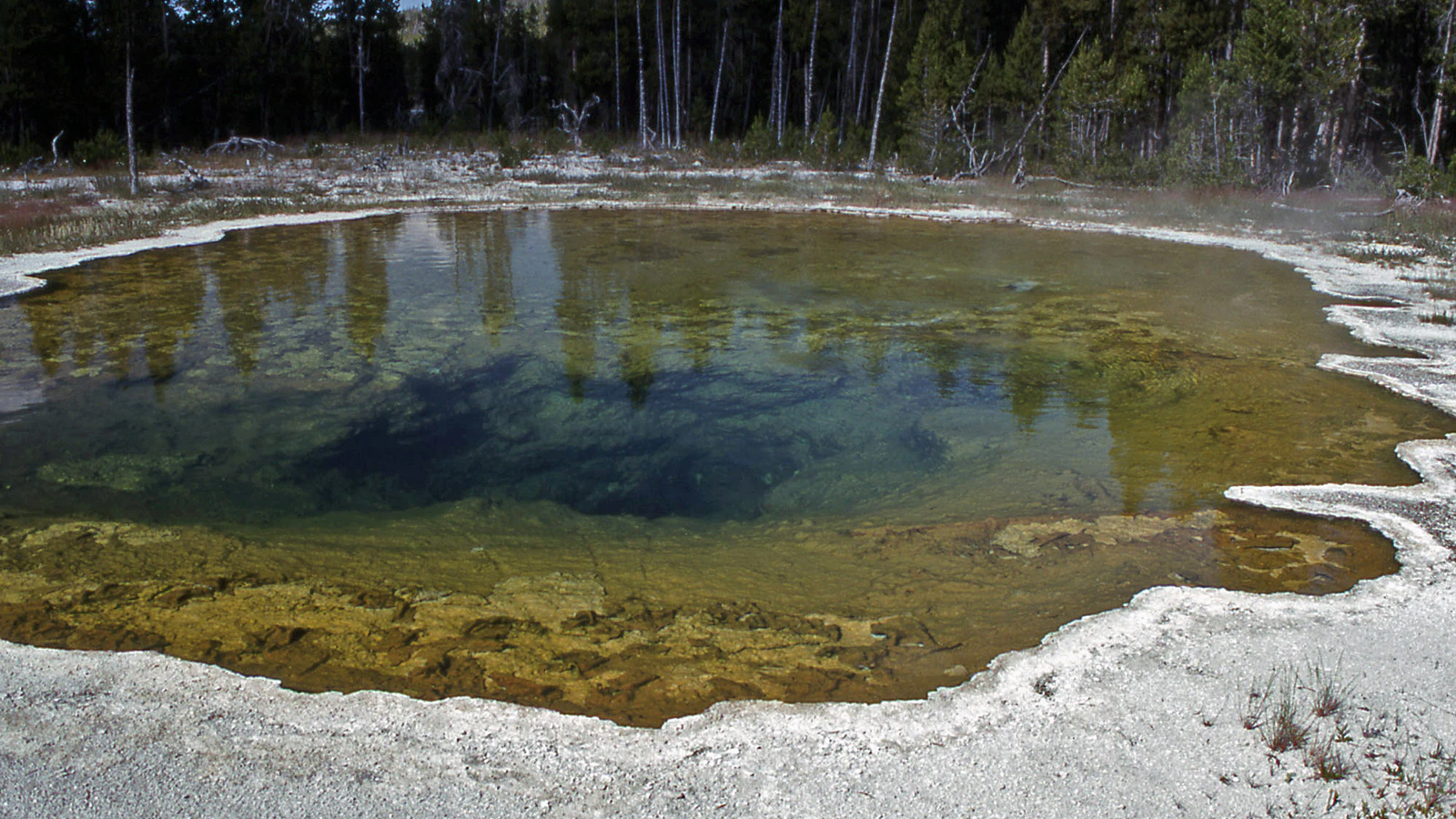
Mushroom Pool in Yellowstone National Park isn’t remarkable. It doesn’t erupt like Old Faithful, it isn’t especially hot like Beryl Spring, and it’s not particularly pretty like Grand Prismatic Spring.
There isn’t a boardwalk or permanent path leading curious visitors to Mushroom Pool, even though it’s located in the Lower Geyser Basin, Yellowstone’s busiest and most popular place.
It’s just not an interesting pool, at least by Yellowstone standards.
For as unremarkable as it is in person, Mushroom Pool might be the most important thermal feature in human history.
A discovery from its warm waters was the basis for a Nobel Prize-winning breakthrough that changed everything from crime scene investigation to medical research and saved countless lives during the COVID-19 pandemic.
At one point, a tiny tube of an enzyme found in Mushroom Pool was worth more than its weight in gold.
“There are a zillion pools like that in Yellowstone, and it wasn't clear to me what made Mushroom Pool special,” said Mike Poland, scientist-in-charge of the Yellowstone Volcano Observatory. “It shows why trying to better understand our world can result in things that we can’t anticipate.”
Unremarkable
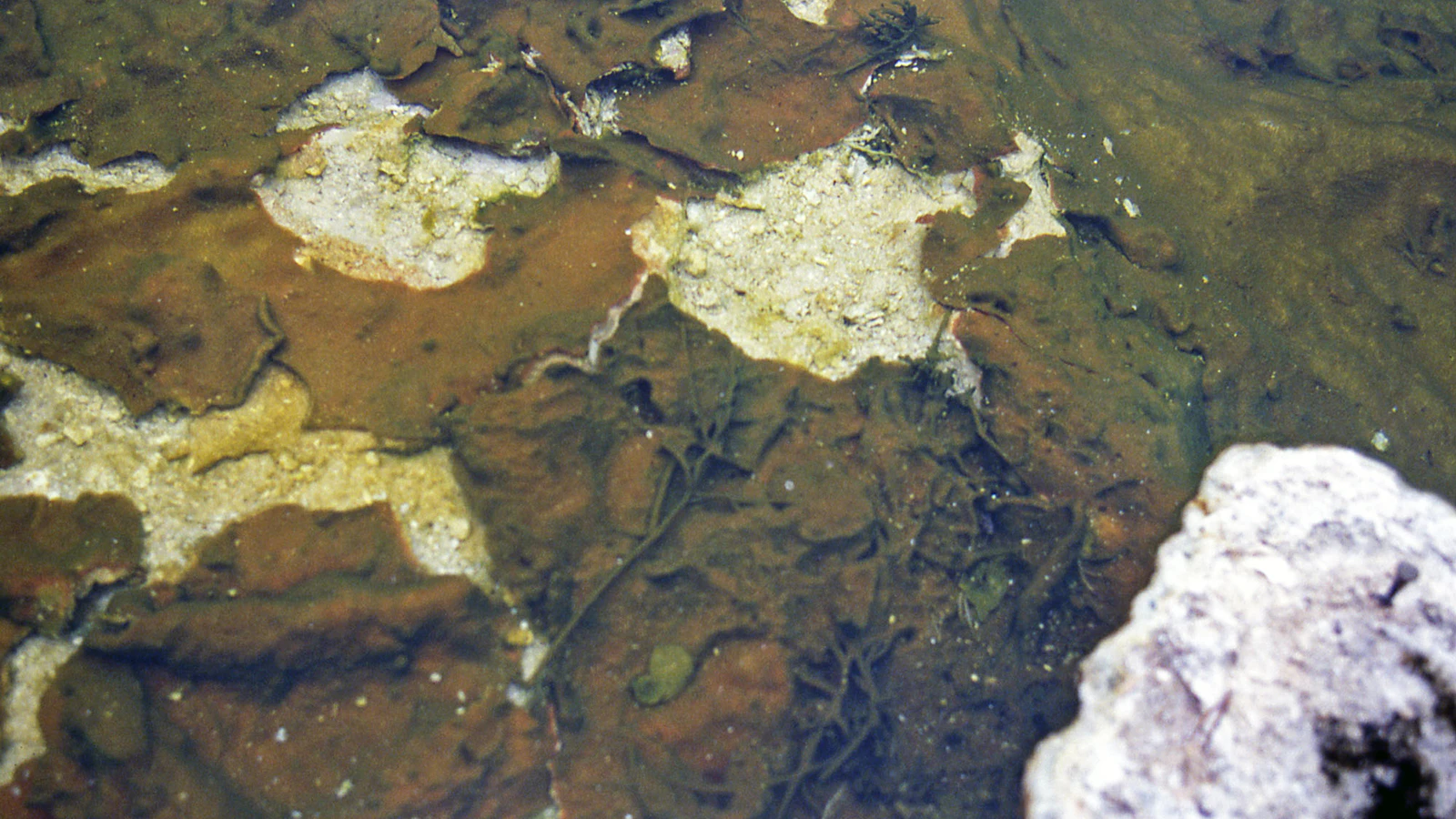
Mushroom Pool, named around 1895, used to sit alongside one of the original roads built in Yellowstone. It wasn’t named for a mushroom-shaped rock formation, but rather “the vegetable formation growing in it,” according to a historical record in the Yellowstone National Park Library.
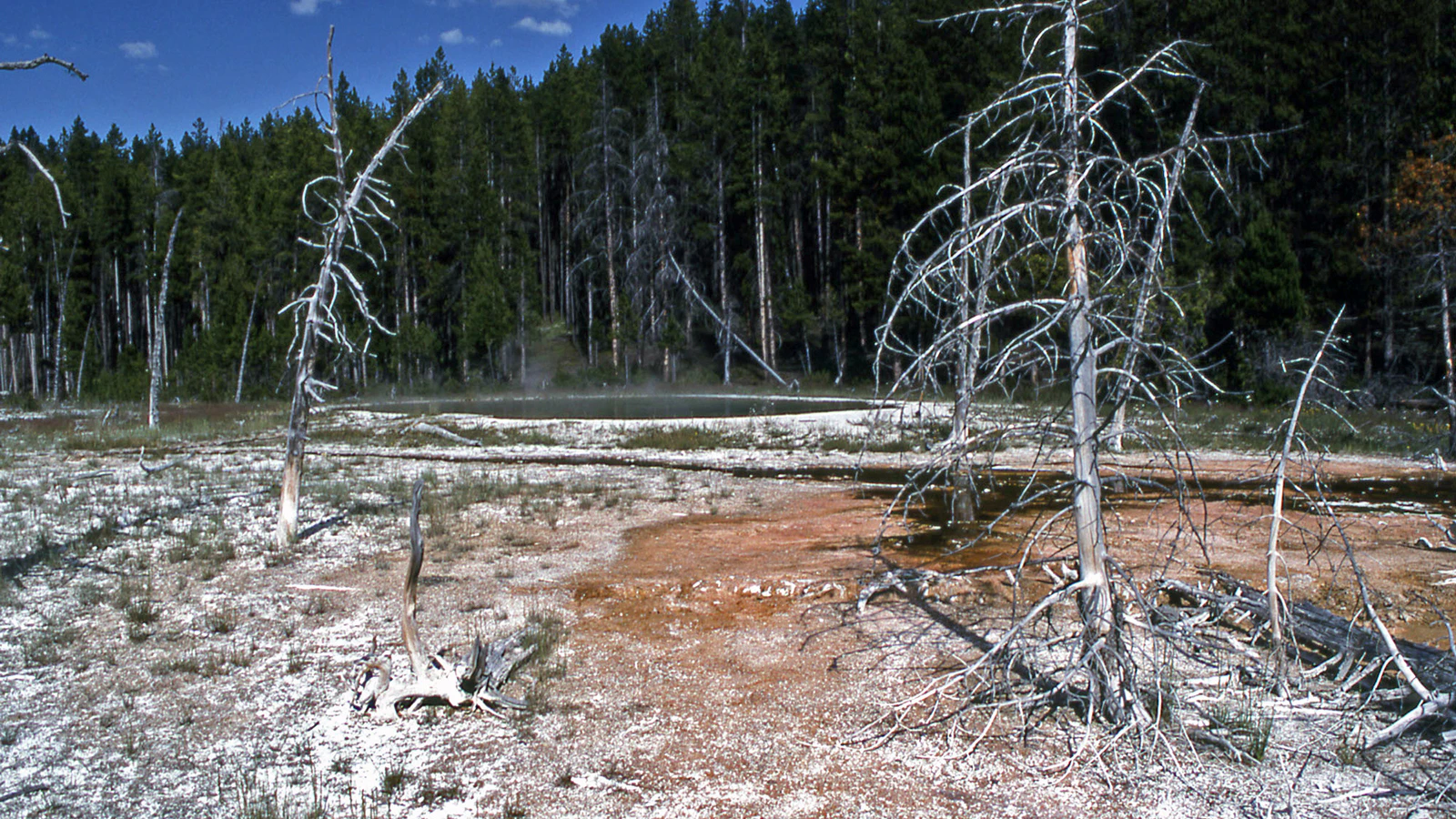
Since then, the pool has stayed unremarkable. The road is long gone, and the National Park Service (NPS) has never developed a permanent trail or boardwalk leading to it.
“It's not a place that you're supposed to go,” Poland said. “Any sort of off-boardwalk travel in Yellowstone’s thermal basins can be pretty dangerous, so you're not likely to see that many photos of it online, because it's not a place that's heavily visited with a lot of signage.”
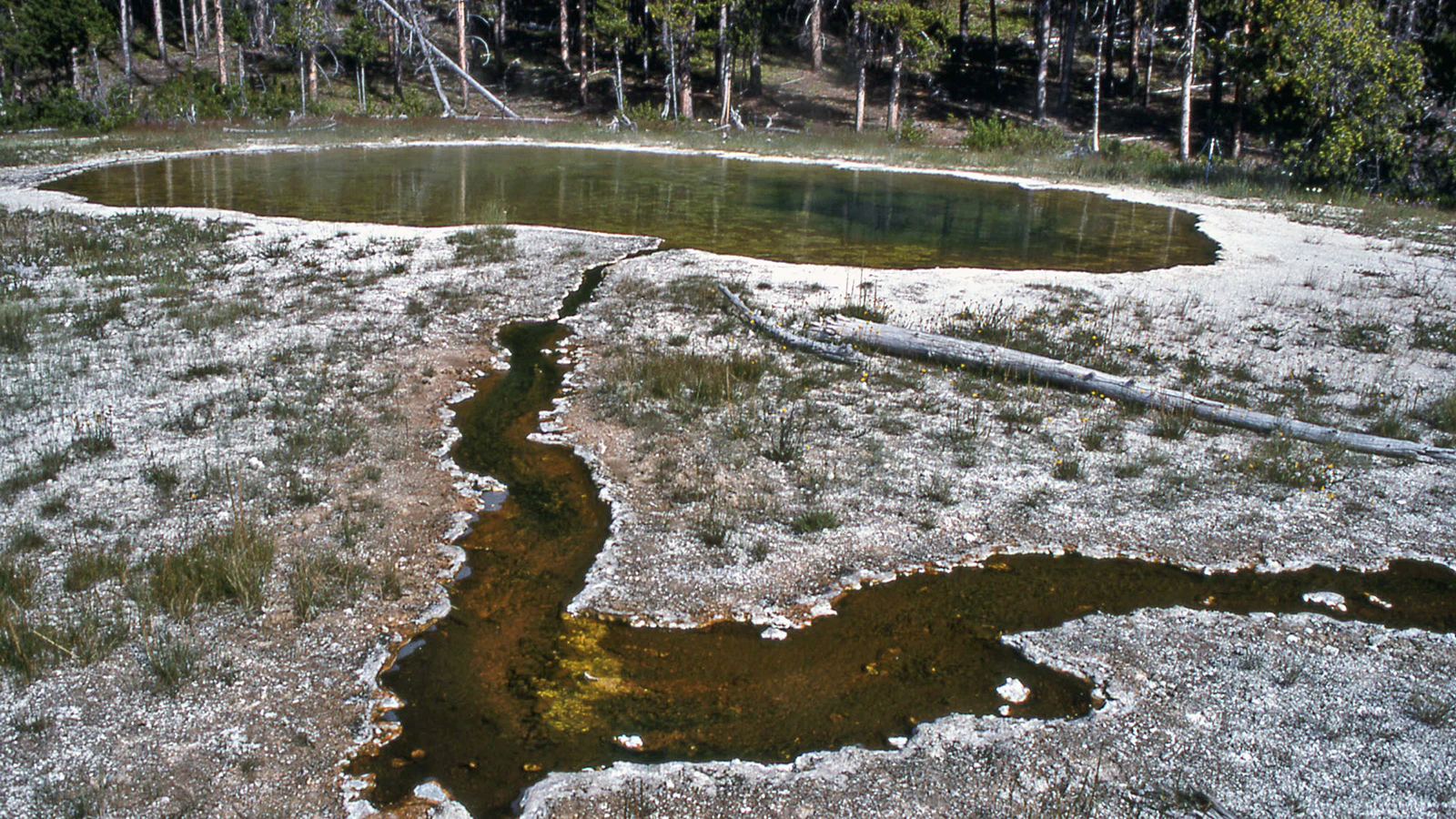
As just one of hundreds of thermal features in the Lower Geyser Basin, Mushroom Pool doesn’t stand out. Its proximity to other, more exciting pools and geysers makes it, in context, even less exceptional.
Yet that’s exactly why Mushroom Pool was selected for a study that would lead to one of the biggest scientific breakthroughs in the last century.
A Logistical Accident
In August 1966, microbiologist Thomas Brock led several colleagues and students from Indiana University on a scientific field trip to Yellowstone. Brock had become interested in the diversity of thermophilic bacteria thriving in thermal pools and wanted samples that could be analyzed in a laboratory.
According to Poland, Brock was hoping to explore bacterial colonization of Surtsey, a volcanic island that emerged off the coast of Iceland in 1963. Sampling Yellowstone pools was intended as a point of comparison rather than a revolutionary study of the pools themselves.
“They weren't working off somebody else's initial work,” he said. “They were spreading new ground here, so they didn't have any cause to think that one spring would be different than any other.”
Mushroom Pool was one of many thermal pools that Brock’s team collected samples from that August. Poland said its unassuming location, near but far enough from one of the park’s most developed areas, made it a perfect candidate for their study.
“They needed a pool they could get to and set up their equipment for some time, so it couldn't require miles of hiking,” he said. “They also wanted a place that wasn’t heavily visited, where things might be disturbed by tourists. Mushroom Pool was relatively accessible and not on the beaten path.”
Mushroom Pool was one of several pools that Brock’s team sampled in August 1966. Even they acknowledged that the pool itself wasn’t anything special as they proceeded on their study of thermophilic bacteria at Indiana University.
“It wasn't an anomalous pool,” Poland said. “It was a logistical accident.”
Taq
Back at Indiana University, undergraduate Hudson Freeze isolated a sample of thermophilic bacteria from thermal water he helped collect in Yellowstone. He and Brock published their findings on Thermus aquaticus, a new thermophilic bacterium, in the Journal of Bacteriology in April 1969.
More importantly, they cataloged the bacteria in the American Type Culture Collection (ATCC), an open-source repository where scientists can access microorganisms for research.
Freeze used the publication as his undergraduate honors thesis and went on with his career. He went on to earn a Ph.D. and currently serves as director of the Sanford Children’s Health Research Center at Sanford Burnham Prebys, a nonprofit biomedical research institute in La Jolla, California.
Cowboy State Daily attempted to reach Freeze but had not received a response by the time of publication.
In 1976, molecular biologist Alice Chen isolated a thermostable DNA polymerase from Thermus aquaticus. This new enzyme was called the “Taq polymerase.”
Neither Freeze nor Chen seemed to think all that much of what they accomplished, at the time. They had unknowingly laid the foundation for an enormous advance in dozens of scientific fields.
And where did the thermal water sample containing Thermus aquaticus and the Taq polymerase come from? Mushroom Pool.
PCR
In 1983, biochemist Kary Mullis was seeking a better way to conduct DNA analyses. Methods for sampling, extracting, and copying DNA already existed, but they were far from ideal due to a critical flaw.
“In the early 1980s, they used restriction fragment length polymorphism, called RFLP, to do DNA extraction,” forensic DNA analyst Suzanna Ryan told Cowboy State Daily. “If you heat DNA in a thermal cycler, the double helix ‘unzips’ and builds a complementary strand. Heat it up again, everything splits apart again, and more DNA is created.”
The flaw with RFLP was that the enzyme used for this process couldn’t endure the heat of this repeated process. A new sample of the enzyme was needed for every test, which was laborious and required a significant amount of DNA, something like a quarter-sized drop of blood, for a successful DNA profile.
Mullis was contemplating this problem with RFLP when he found Freeze’s paper on Thermus aquaticus and Chen’s subsequent isolation of the Taq polymerase. The thermophilic bacterium naturally contained heat-resistant components, essential for copying small amounts of its own DNA.
Mullis didn’t need to create a new enzyme – it already existed in the thermophilic bacteria living inside Mushroom Pool.
Using a sample of Thermus aquaticus obtained from the ATCC, and using Chen's method to extract the Taq enzyme, Mullis developed a new method to rapidly amplify copies of specific DNA sequences. It was patented as the polymerase chain reaction (PCR).
"Beginning with a single molecule of the genetic material DNA, the PCR can generate 100 billion similar molecules in an afternoon,” Mullis told Scientific American in 1990. “The reaction is easy to execute. It requires no more than a test tube, a few simple reagents, and a source of heat."
For Ryan, it’s hard to overstate the impact of PCR. It made laborious and costly DNA analyses faster, easier, and fully automated.
“The Taq enzyme is used to high heat,” she said. “It isn’t killed when high heat is applied, because that's its natural environment. You put the sample in the thermal cycler with all the chemicals and reagents, and it runs through 28 or 30 cycles on its own. You start with a few copies of DNA and end up with millions of copies of that DNA.”
Theory In Everything
How revolutionary was PCR? It earned Mullis the Nobel Prize for Chemistry in 1993 for his discovery of PCR, if that’s any indication.
PCR immediately became indispensable to forensics and crime scene investigation. Countless murders, robberies, “cold cases," and other crimes have been solved by using tiny amounts of DNA to create a genetic fingerprint of the culprit, years or decades after the crime was committed.
Ryan uses PCR constantly, as she has since entering the field of forensics in 1999.
“All forensic DNA testing uses PCR,” she said. “It's what allows us to start with a minuscule amount of material and still get a usable DNA profile. We can obtain results from a small amount of any bodily fluid and from a single hair follicle. We get results from just skin cells, from somebody just touching something. You never would have been able to do that with the old RFLP method.”
In 2019, PCR was used to tentatively identify Aaron Kosminski as Jack the Ripper. A DNA sample taken from a shawl collected at one of the gruesome crime scenes in 1888 was a genetic match for Kosminski, although those findings are controversial.
Hundreds of people have been implicated and exonerated by DNA evidence analyzed with PCR. By proxy, anyone who enjoys true crime podcasts and documentaries owes a debt to Mushroom Pool.
Genetic fingerprinting via PCR was first used for paternity testing in 1988. If you’ve ever spent a sick day enjoying the drama of The Maury Show, thank Mushroom Pool.
More recently, the response to the global COVID-19 pandemic was greatly aided by a modified PCR method called quantitative polymerase chain reaction (qPCR). Many people reading this story probably took a qPCR test to quickly determine whether they had COVID-19.
“That’s called real-time PCR, because you're seeing the amount of RNA in the virus molecule, but it’s still using PCR developed with the heat-resistant Taq molecule,” Ryan said.
This is only a short list of ways that PCR changed the world. It’s become a commonplace procedure for medical treatments, infectious disease research, organ transplants, forensics, and de-extinction experiments like those being conducted by Colossal Biosciences.
And the enzyme that makes it possible came from an unremarkable thermal pool in northwest Wyoming.
A Sore Spot
Mushroom Pool is an early example of bioprospecting in Yellowstone, where scientists explore the unique landscape to discover innovative processes, structures, and organisms that benefit humanity.
Other examples of bioprospecting include research into the uniquely effective photosynthesis of some thermophilic bacteria and a micro-grooving structure that retains water on hydrophobic surfaces found on the exoskeleton of a beetle.
It’d be hard to find anything that surpasses the impact of the Thermus aquaticus still living in Mushroom Pool, but you probably wouldn’t learn that by visiting the pool or the park.
Despite its revolutionary contribution to the world, the story of Mushroom Pool isn’t really shared in Yellowstone. Ryan suggested that that might partially be due to the discovery of Taq being “a bit of a sore spot” for the NPS.
“Yellowstone and the NPS didn’t profit from the discovery of Taq at all,” she said. “There used to be patents on the Taq enzyme and PCR, and they used to be really expensive to buy.”
Cetus Corporation, the company Mullis worked for, sold the PCR patent to the Swiss company F. Hoffmann-La Roche AG in 1992 for $300 million. By 2022, the company had made over $5 billion in PCR-related sales.
The NPS, Yellowstone, and the State of Wyoming don’t get any money made from the use of Taq or PCR, and never have. That led the NPS to call it “the great Taq Rip Off” in the 1990s.
Because of what happened with Taq, modern researchers and biotechnology companies sign “benefits sharing” agreements with the NPS for a share of any profits from breakthroughs in bioprospecting.
Ryan recalled a moment early in her career when her lab director presented her and her colleagues with a tiny tube of Taq for their work.
“He said, ‘You guys need to be really careful with this, because it's more expensive than gold,’” she said.
Pool Pilgrimage
Poland regularly receives requests to guide scientists into Yellowstone, including microbiologists continuing research on the park’s thermophilic bacteria and how they might revolutionize other sciences and technologies.
Occasionally, Poland gets a request to guide a group of people to Mushroom Pool. Not for research, but for something akin to a pilgrimage.
“We've gotten requests from microbiology students, postdocs, and so forth who would like to take a trip out there with our geologists," he said. “To them, that pool has a really special place in the history of science, especially their field, and they want to pay homage to this place."
Poland was baffled by the importance of Mushroom Pool for years. Not only is it an otherwise unremarkable thermal feature, but it’s also not the only spot where Thermus aquaticus can be found, as it’s been found in thermal pools throughout Yellowstone and in other parts of the world.
Thermus aquaticus, the Taq polymerase, and PCR could have been found in any of those other pools. Why does Mushroom Pool hold this hallowed place in humanity’s history?
Not even Freeze, the undergrad who made it all possible, has an answer. He didn’t receive any share of the profits from Taq or PCR, although he and Brock were presented with a “Golden Goose Award” for the revolutionary scientific advancements enabled by their work in the 1960s.
Freeze told Poland a story about a time when he got take some subtle pride in his work during a return to Yellowstone decades after his 1966 sampling trip.
“A visitor who was unaware of who Freeze was asked him if he knew where the pool with the famous bacteria was located,” he said. “Freeze gestured in the direction of Mushroom Pool. ‘It’s right over there,’ he said. The visitor was skeptical. ‘Are you sure?’ Freeze, who is a great fan of Indiana Jones, smiled and said, ‘Pretty sure…’ He wasn’t going to miss the opportunity to use that line.”
Poland doesn’t have an answer either, which makes the story of Mushroom Pool that much more interesting. Even Yellowstone’s unremarkable places have the potential to change the world.
“I think it's a really wonderful example of curiosity-driven science,” he said. “There was no specific mission for (Freeze’s) work in the 1960s other than to investigate this pool and see what was growing there. Later, it becomes something that has had a tremendous benefit to society. It demonstrates why Yellowstone is such a wonderful natural laboratory.”
Andrew Rossi can be reached at arossi@cowboystatedaily.com.