
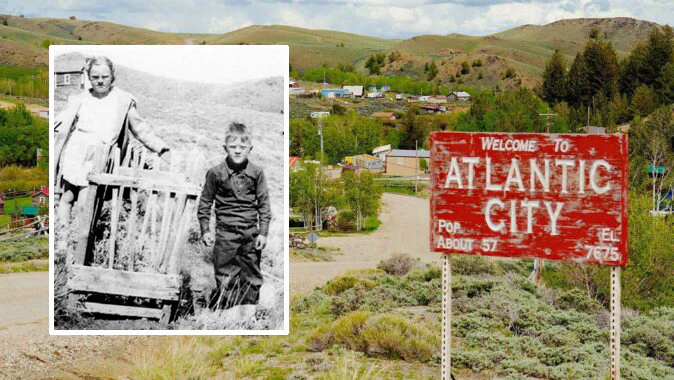
Atlantic City is one of three Wyoming gold rush towns that popped up along the Continental Divide in 1868. But of the three, it’s the only one that remains a town with a few dozen residents.
Its inhabitants were stubborn survivors, and the children of Atlantic City had to grow up tough from the very start.
On paper, 1870 Atlantic City might sound like it was just a rowdy man camp with a few prostitutes. In actuality, the town of 332 had 62 children under the age of 17, about one-fifth of the town’s residents, according to U.S. Census records.
“I was shocked by that,” Atlantic City historian Barbara Townsend told Cowboy State Daily. “There were a lot of families here. So, everybody showed up here, and that’s absolutely fascinating to me.”
Townsend has spent years digging into Atlantic City history and wrote “Life and Death in Historic Atlantic City, Wyoming.”
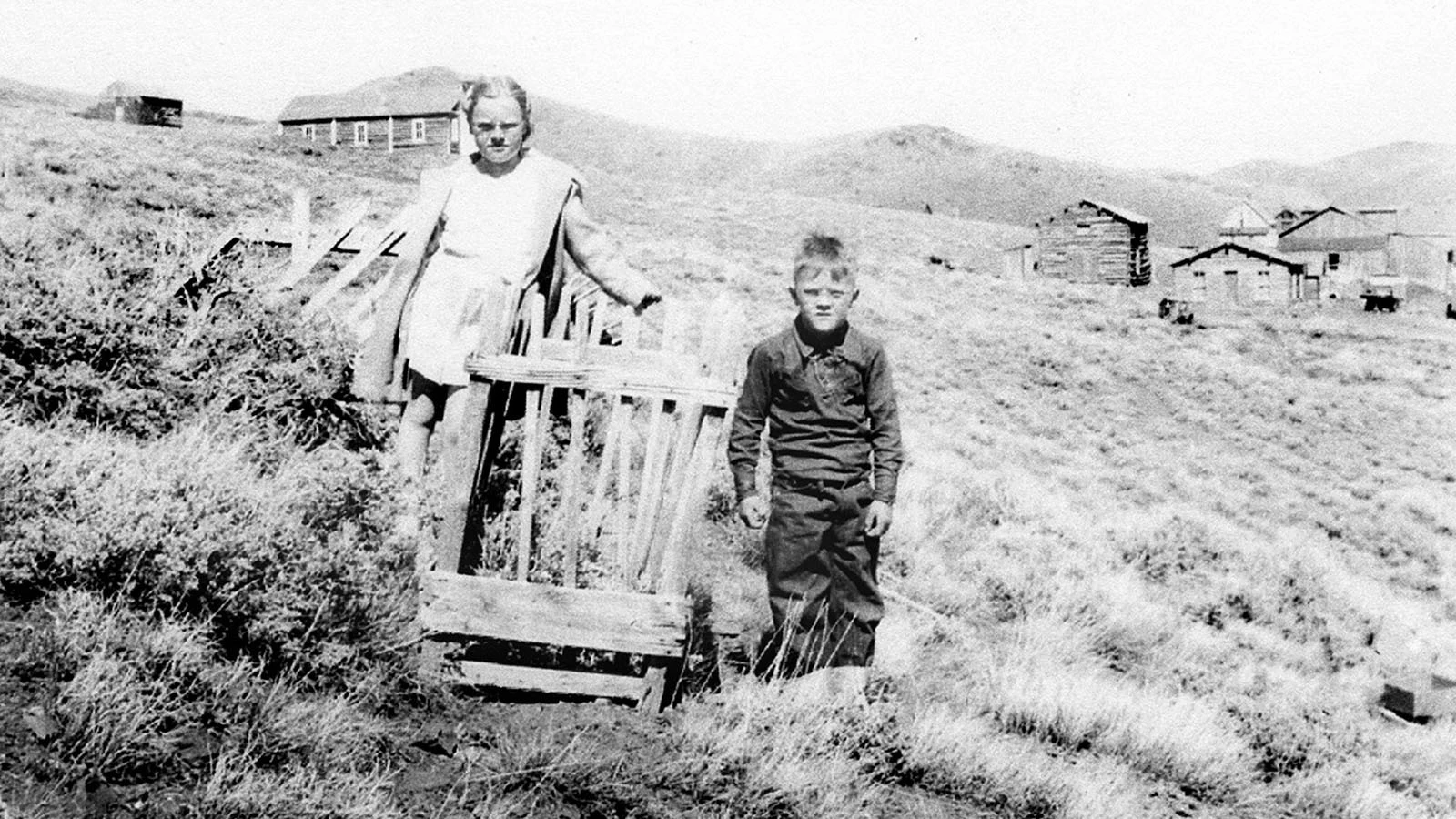
Children in Atlantic City didn’t just do chores, Townsend has found in her research. They were doing real work, some of it backbreaking, to help their families survive.
Boys Doing Hard Jobs
Take Jim Carpenter as one example.
His family landed in Atlantic City in 1890 after getting lost in the Red Desert, where their horses died after drinking alkali-contaminated water.
Carpenter was just 5 years old at the time, but was soon put to work chopping wood for the family, Townsend said, probably when he was between ages 7-9.
“That was a standard,” Townsend said. “They needed to make money, so Jim would go cut and carry firewood.”
That wasn’t Jim’s only job.
He was also paid 10 cents a day to walk the Granier ditch three times a day looking for leaks. The massive ditch had been built by a Frenchman trying to unlock more gold.
“Jim wanted to make sure the company got his money’s worth,” Townsend said. “So, he walked the ditch three times each day.”
After that, the enterprising boy earned another 25 cents by bringing cigars to a woman who wanted to smoke them without anyone else knowing.
That was “a lot for those days,” Townsend said, recounting a story originally told in the book “Fine Gold” by Betty Carpenter Pfaff.
Townsend wasn’t sure how much 35 cents could buy in those days, but even a dime was enough that the young man would walk a ditch three times a day to earn it — and call it honest work rather than hardship.
Schools Weren’t About Enrichment
These days, much ink has been spilled over the word “enrichment,” but nobody in Atlantic City was worrying about such things.
They were more worried about a much different word — survival.
This was no Victorian picture-book village. This was a mining town clinging to a dusty slope in the high country.
It was a place where winter adventures were deadly and the earth was pocked with concealed mining holes that could swallow even adults whole, never to be seen again.
Childhoods in Atlantic City ended as soon as a kid could swing an axe. That was also when children were likely to start going to school.
Never mind that one of the town’s schools slid off its hillside and was so cold and windy it had to be rebuilt somewhere else a little bit safer.
“(Having a school) is another fact we’re proud of,” Townsend said. “The first, formal schooling in Atlantic City was in 1869, and said to have been in a private home.”
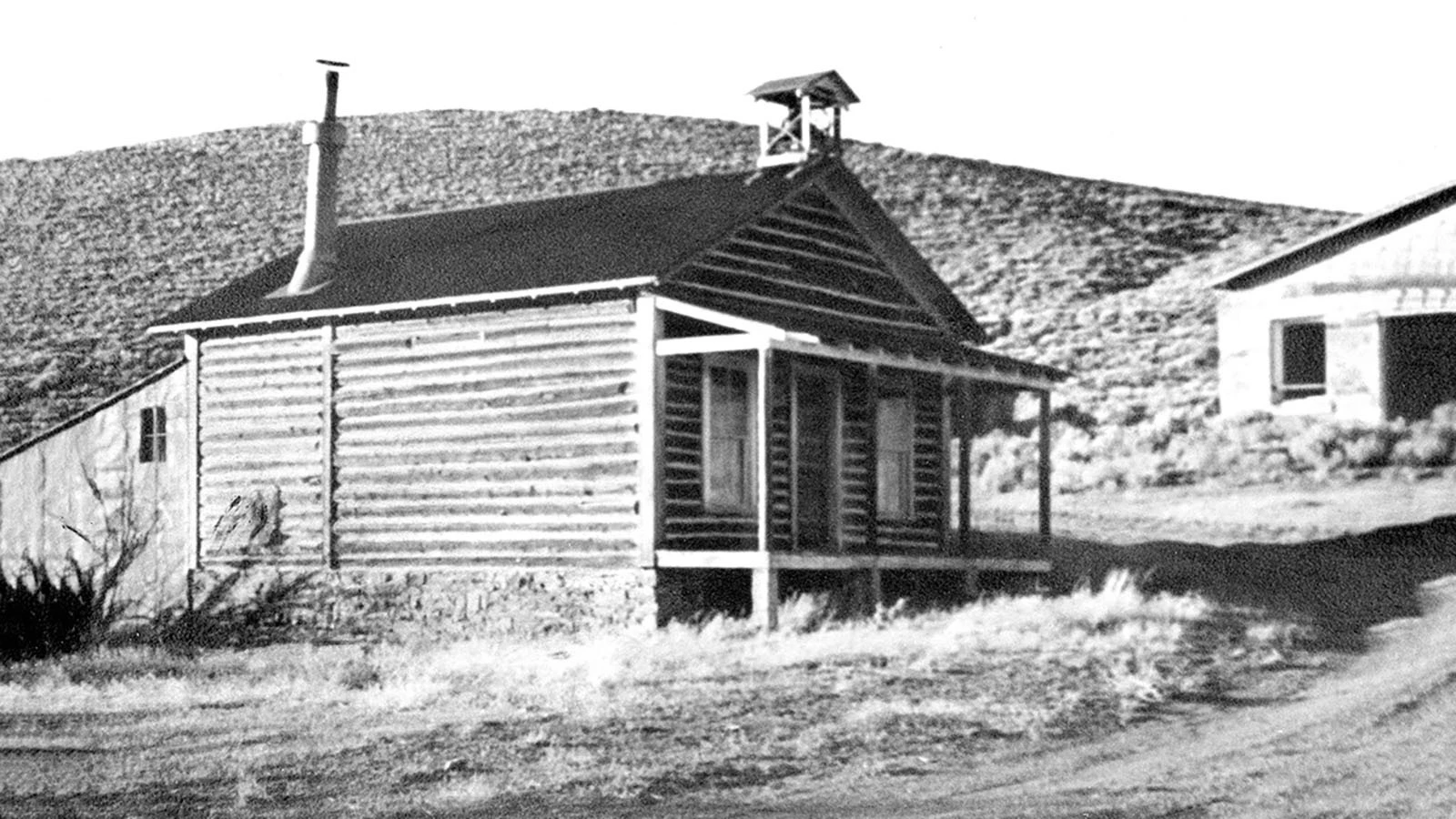
Townsend has been working to restore the Gratrix cabin, which she believes was one of the town’s early school buildings.
Even school was no picnic, according to Zoie Green Fuller.
In an oral history kept at nearby South Pass City, she recalled there was “no fooling or recreation” throughout the eight-hour day.
“Terms were three months,” she said. “At Christmas they’d put on a little play. Otherwise, for eight hours a day, they studied.”
There was no recess or supervised play, just lessons in a one-room schoolhouse situated in a land that was a wind tunnel for much of the year, and a freezer the rest.
Fuller claimed the teacher was a “nice” lady, but others remember things differently.
Robert “Bob” McCauley called his teachers “bullwhackers” in Pfaff’s book, while Bill Carr, born in South Pass in 1895, said there were many examples of “brutal” teachers who kept willow branches handy for whipping children.

Don’t Argue With Kids Whose Parents Own Explosives
It’s often said one shouldn’t argue with publishers or journalists who buy their ink by the barrel. But an even better case can be made for not whipping children with ready access to explosives.
Take the case of a drifter who wandered into Atlantic City asking for a job as a schoolteacher.
“He always smoked a pipe and kept a bunch of long, green willows standing in the corner of the room,” Carr recalled in one of Pfaff’s books. “If anything happened he didn’t like and no one would tell who was guilty, he would lock the door, take a willow, and start slashing the whole room.”
The teacher had a little habit, however, that would get him into big trouble. He would set his pipe down on his desk right after lunch, all filled up and ready to smoke.
One day, a boy decided to teach the teacher a lesson.
He slipped out of his shoes and padded silently to the desk while the teacher wasn’t looking. He quickly dumped out the tobacco, adding a little gunpowder to the bottom of the pipe, before repacking it with the tobacco.
Then he returned to his desk, putting his shoes back on.
Now this teacher liked a quiet room — or so he thought. But as any mom could have told him, a too-quiet room means serious trouble is afoot.
When the teacher picked up his pipe, the room became that kind of unnatural quiet.
Every child’s eye was trained on the teacher without a giggle to be heard. All were waiting to see what would happen next when the teacher lit his pipe.
“All of a sudden, the powder exploded in his face, burning his eyebrows off and singeing his lashes,” Carr recalled. “He didn’t ask questions, but reached for the willow and the merry-go-round began.
"He wore the willow out but never found out who did the mischief.”
Boots, Pride And A Standoff
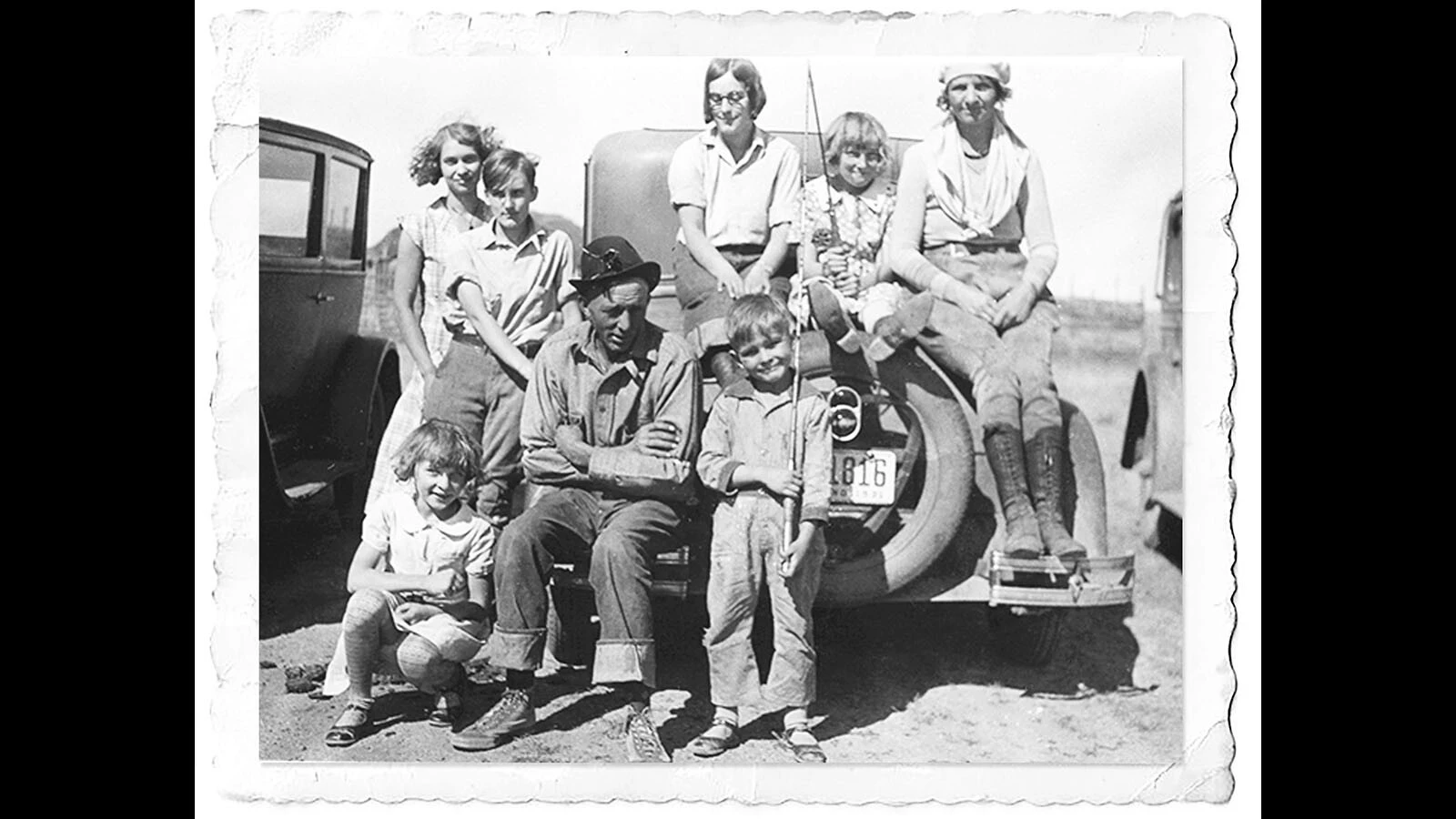
Shoes weren’t a luxury in Atlantic City for children growing up there. Owning a nice pair was a point of personal pride — and sometimes a flashpoint.
Carpenter’s brother Pete recalls the time James showed up for his first day at school with a beautiful pair of boots with a red top and brass tips.
“When Jim went into the building, he was told to sit down at his desk by the teacher, Emmett Connell,” Pete said.
James did as he was told but felt particular about taking good care of his brand-new boots. So he took them off, placing them on his desk so he could wipe each one clean with his handkerchief.
Connell didn’t necessarily see this as appropriate classroom behavior. It’s also possible that Jim’s feet didn’t exactly smell like roses.
“Emmett told him to remove the boots from his desk and put them on his feet,” Pete said.
That’s when things got a bit, well, Western, in an Atlantic City tough kid kind of way.
“Who the heck owns these boots?” James popped off, quickly adding, “As they are mine, I’ll do what I want to with them!”
Next thing James knew, he was walking home with his boots under his arm. He didn’t go back to school the rest of the year.
James was a boy who could walk a ditch three times a day for a dime. A boy like that could afford to walk away from a teacher who was disrespecting his boots.

Making Their Own Fun
While Townsend didn’t find too many mentions of fun in historical archives or her Atlantic City history books, there were tiny slivers of insight here and there.
Children learned to be inventive about their fun, making use of whatever was at hand.
In an oral history held at South Pass City State Historic Site, Alma Williams Golliher tells about taking old barrel staves to make skis by steaming the tips of the wood until they curled.
Pfaff, meanwhile, mentions things like sack races, homemade ice cream, fish fries, tug-of-war and hand wrestling during the Fourth of July holiday in her book “Atlantic City Nuggets,”
But fun in Atlantic City was not without its dangers.
Like the year a 21-year-old man was helping to dynamite some rocks so they’d have a big boulder for the annual drilling competition.
“A 5-ton stone landed on him, and it was just horrible,” Townsend said.
Accidents were common, Townsend added, and many babies never made it past the age of 2 or 3.

Dangers At Every Turn
Among the dangers that remains to this day are all the test holes that pock the hills surrounding Atlantic City.
Exploratory shafts were often closed up by laying logs across the top of a hole and piling dirt on it, Townsend said. Over time, the logs rot and the ground that looks solid is actually quite treacherous.
That was just one of the many dangers in such a rough and tumble town.
Bar and gun fights were as common to the scenery as sage brush.
Meanwhile, Emma Knight was killed by a horse at the age of 2, while 17-year-old Frank Irwin — the doctor’s son — was killed in an Indian attack in 1870, illustrating the wide array of dangers.
An 1883 letter tells how a girl in nearby South Pass City died after her stagecoach became lost in a blizzard.
“She suffered considerable,” the letter says. “She was frozen inwardly and inflammation set in. The doctor said she would have to get her feet and hands amputated and he did not think she could stand it.”
Despite that, Maggie was brave, the letter went on to say and told her mother, “I’m not afraid.”
Maggie would die later that morning.
“Why she should have died such a death is a mystery,” the letter goes on to say. “She was such a good girl. God knows what’s best is good for us. If I could only be reconciled to His will. But it seems so hard. She was such comfort to me, more like a companion than a child.”
Maggie's companions did not escape the brutal incident unscathed.
“Mr. Stewart has had all his fingers taken off, with the exception of his thumb on his left hand, and part of his nose, and he is almost blind,” the letter goes on. “His feet have been operated on, but I forget whether all or part. Doherty has lost both feet. Mr. Clark is yet to be found.
"May God bless and preserve you in the prayer of your living mother.”

Freedom Is Fierce
These sorts of forces raised tough children who had to learn to grow up fast, but they also knitted the town together into a village — something that Townsend believes continues to this day.
“Families had to protect and support each other,” she said. “I think people in town were probably pretty close to each other, and it is still that way. I think that is the beauty of having such a tiny town."
Life may be tough up there along the Continental Divide, Townsend added, but there’s a beauty to it as well.
“It’s a great life because you’re free,” she said. “There’s so many beautiful things you can make your own. You’re self-sufficient. And it was probably that way for them as well.”
One photo that captures the spirt of Atlantic City after the Gold Rush is dated 1918 and is labeled simply “The School” at the bottom of it.
In the fading image, a group of children are assembled outside the school building, standing in coats and hats on top of the piled-up snow. One of the smallest holds up an American flag while his classmates all salute and recite the Pledge of Allegiance.
Here’s a town, the photo says, where growing up is tough, but everyone is part of a common community — a place where, even after the glitter of gold has faded, people can still make a rich life.
Contact Renee Jean at renee@cowboystatedaily.com

Renée Jean can be reached at renee@cowboystatedaily.com.