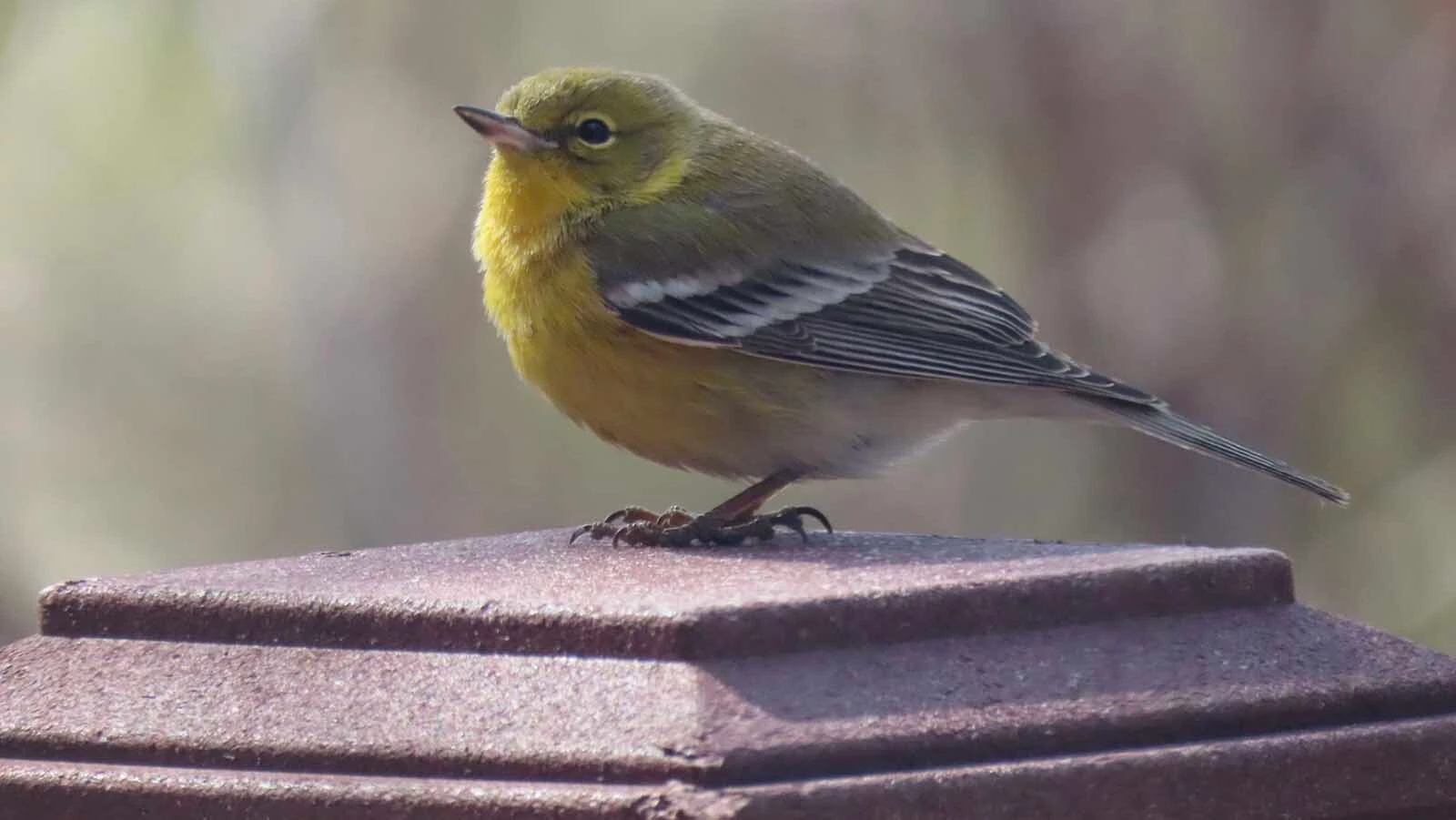
Somewhere on Longs Peak Drive in Cheyenne, an 83-year-old retired Air Force veteran named Charles Seniawski is crushing sunflower seeds and scattering them across his deck for a small yellow bird that isn’t often seen in Wyoming.
The pine warbler — an eastern species more at home in the longleaf forests of South Carolina — has been visiting Seniawski’s heated birdbaths since winter, feeding on chips dropped by house finches and posing for photographs he uploads to a platform called eBird.
About 850 miles southwest in San Jose, California, a 16-year-old named Chris Henry is packing for a spring break trip — not to the beach but to a bird banding residency in the jungles of Belize, followed by a few days in Panama.
Henry has logged 453 species and 2,880 checklists on that same platform.
He attended the inaugural Jackson Hole Birding Festival last year and calls Wyoming “a perfect birding destination, especially in May.”
The two have never met, but they are connected by eBird, the free crowdsourced platform run by the Cornell Lab of Ornithology that has become the go-to tool for birders across Wyoming and the world.
Part logbook, part leaderboard, part scientific database, eBird has helped transform a pastime once dominated by retirees in shade hats thumbing through dog-eared field guides into something that increasingly attracts teenagers, twentysomethings and competitive “listers” who track their sightings with the intensity of fantasy football managers.
The number of contributors and records has grown exponentially, and with it, the demographics of who calls themselves a birder are shifting.
That shift is arriving in Wyoming at a good moment.
The Jackson Hole Birding Festival returns May 27-30 for its second year.
A YouTube documentary titled “Listers” has introduced millions of viewers to the subculture of competitive bird listing. And an early spring after a record-warm winter in Wyoming has species showing up in places eBird considers unusual.
Van Life
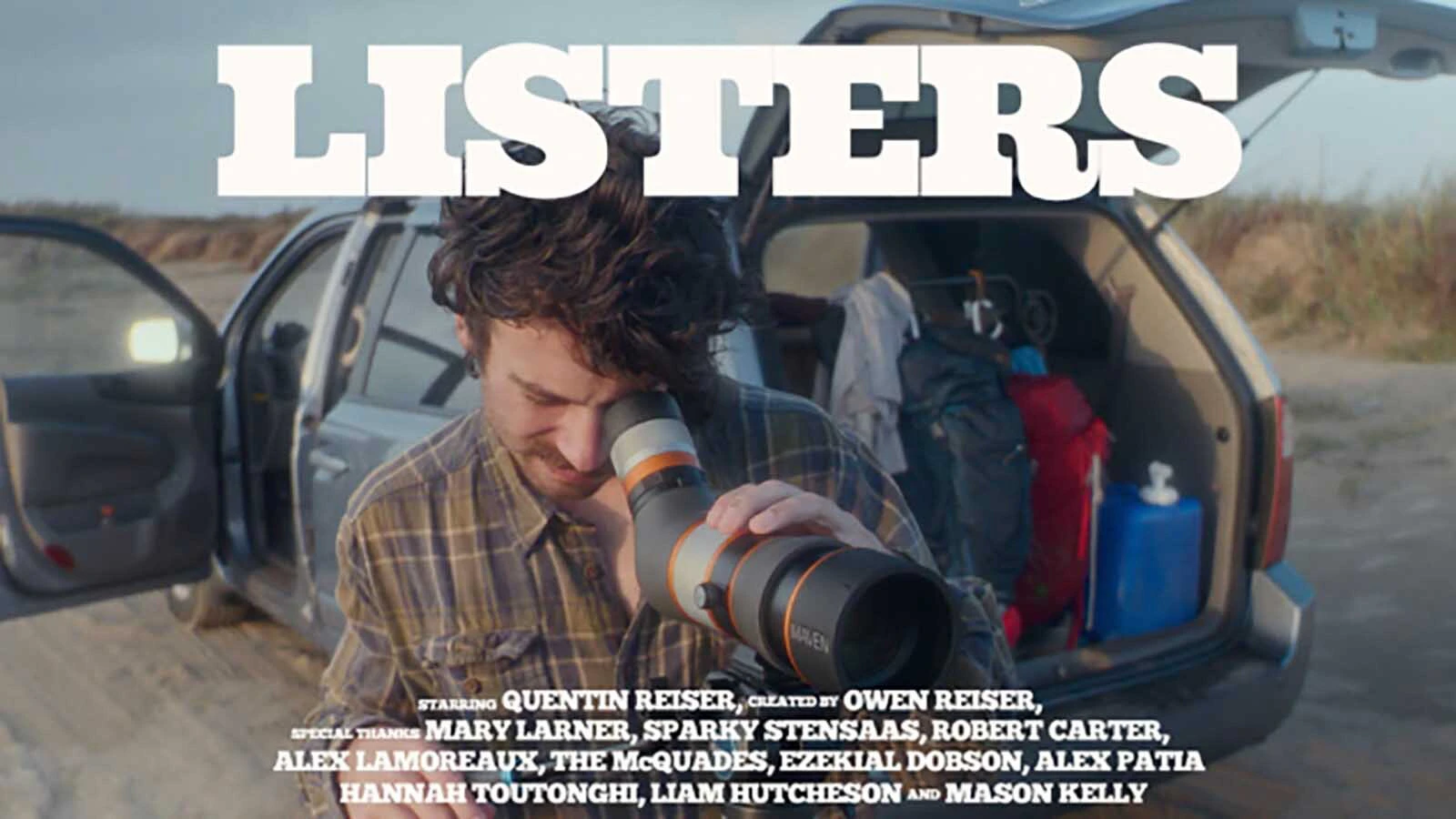
To understand what is pulling young people toward binoculars, a good place to start is “Listers,” the two-hour documentary uploaded to YouTube for free by brothers Quentin and Owen Reiser. Quentin is in his early 30s and Owen is in his late 20s.
They spent a year living in a 2010 Kia Sedona, driving more than 30,000 miles across the lower 48, sleeping in Cracker Barrel parking lots 42 nights, building a homemade boat to spot a least bittern, and tallying 579 species.
The film cost $16,000 to make, and Owen turned down offers from Hollywood streamers to keep it on YouTube with ads off and his Venmo linked in the comments. Within two months it had two million views, 70% watched on a television, with an average watch time exceeding an hour, according to Owen Reiser.
Henry, the California high schooler, told Cowboy State Daily he knows some of the birders interviewed in the film, and called it “super good.”
What struck him was the authenticity.
“It just like portrayed birding, at least for younger people, like really how it is,” said Henry. “It felt supernatural and accurate.”
Digital Lists
eBird is effectively the main character of “Listers.” The platform is where the Reiser brothers logged their finds, tracked the leaderboard, and occasionally sparred with volunteer reviewers who flagged questionable identifications.
The most provocative moment in the film arrives when Ezekiel Dobson — a young birder who in 2024 set the lower-48 big year record — is asked whether he would still go bird watching if eBird didn’t exist. His answer is immediate: no.
Henry, speaking as a young birder, responded to that moment in the film with: “I kind of agree in some way because eBird just, it makes it so fun and like, it adds a kind of like a competitive edge and it makes it easier to count your species. But also, I think I could definitely still bird without it. But I don’t think I’d be as into it as I am now. I think I’d be a lot more casual.”
Does eBird amplify his enthusiasm? “Oh yeah. 100%.”
“There’s honestly a really big community of birders my age and then birders a little older than me that are in college and are more like kind of mentors,” Henry added.
They are all drawn to the thrill of chasing rare birds, and the satisfaction of watching a list grow — county by county, state by state.
Henry’s friends have learned to expect his absence from normal high school life.
“‘Hey, do you want to go hang out at the pool?’” he said, describing a typical exchange. “It’s like, ‘Sorry, man, I’m six hours away looking at a rare bird. I won’t be able to make it.’”
Festival Returns
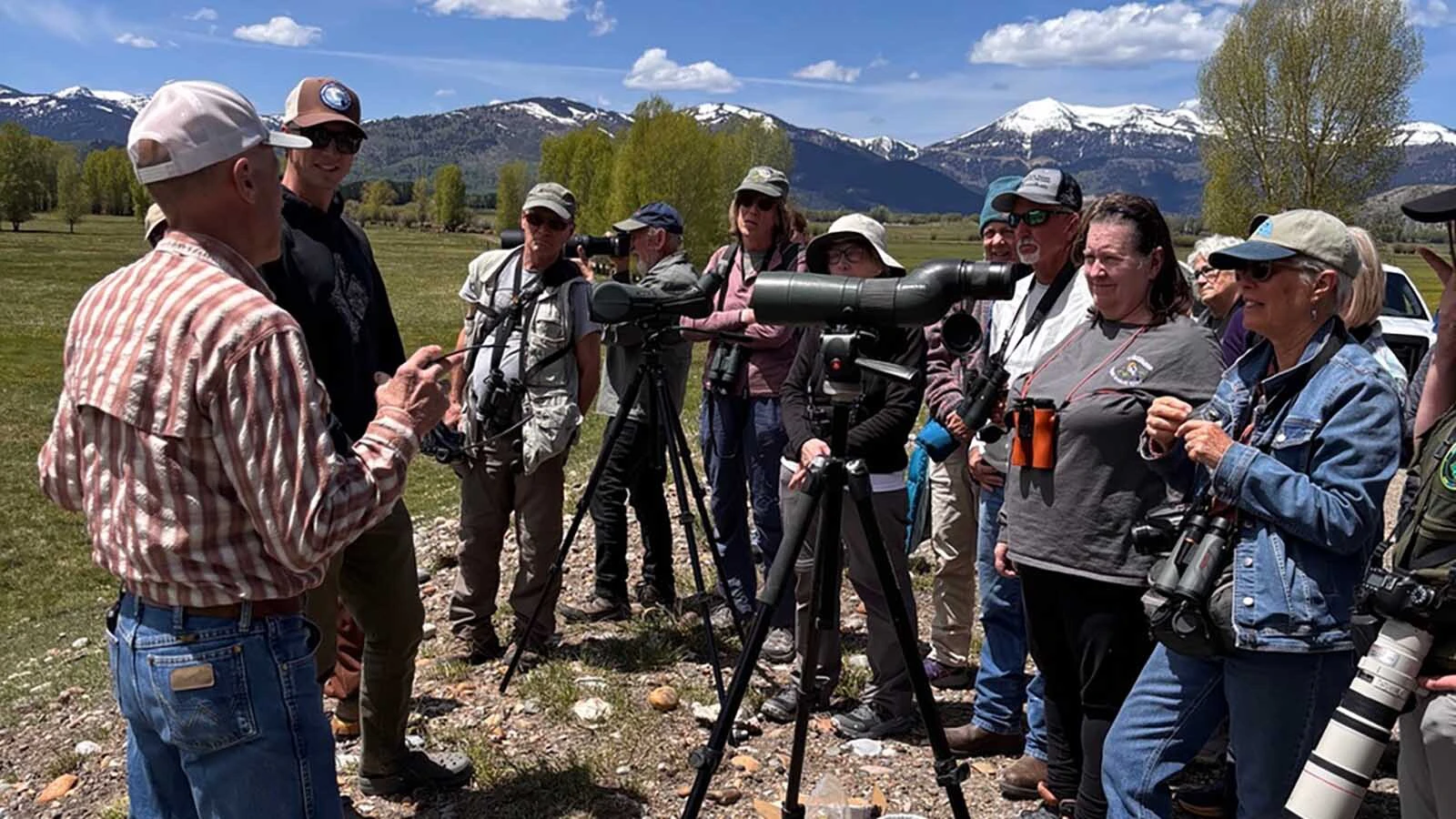
Melissa Rohm remembers when she and her husband were the young ones showing up to birdwalks.
“We’re not anymore,” she said. “I mean, we’re middle-aged now.”
Rohm and her husband David run Wild Excellence Films, a conservation film company that works frequently in the Greater Yellowstone Ecosystem for PBS and other outlets. Their films often feature birds, and even when they don’t, the Rohms work birds in.
“Birds are kind of a gateway to getting people interested in nature in general because birds are everywhere,” she said.
The couple is based in Pittsburgh, Pennsylvania, and they are fans of birding festivals around the country.
“We looked at a map of birding festivals and there was a big hole right over Wyoming,” Rohm said. “No festivals in Wyoming.”
So last year, they launched the Jackson Hole Birding Festival. It is based at the Center for the Arts in Jackson and features more than 30 field trips, workshops and evening presentations at venues including the National Museum of Wildlife Art.
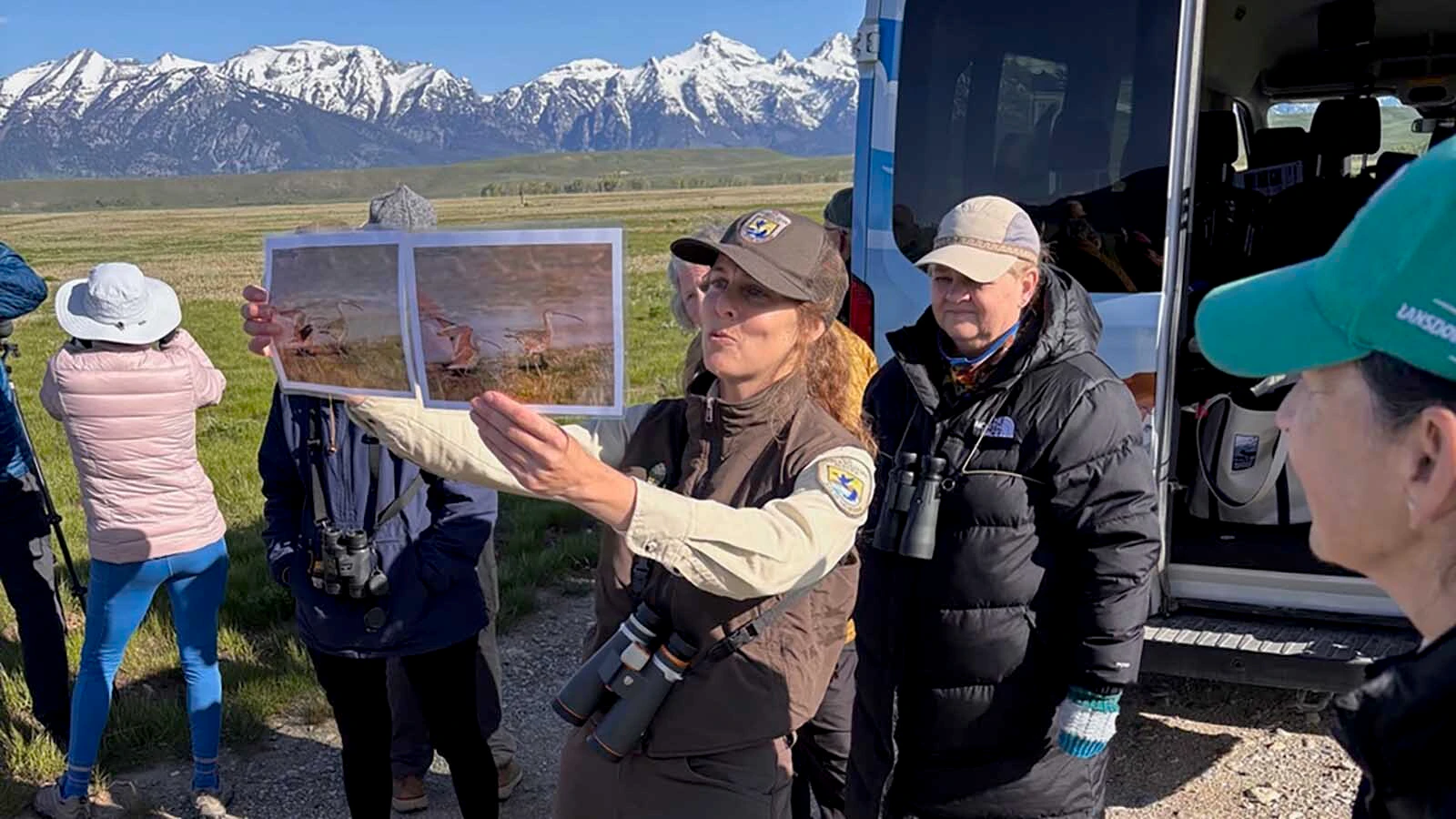
Highlights include curlew cruises on the National Elk Refuge — attendees last year were thrilled by the behind-the-scenes access — birding by gondola at Snow King Mountain, a Snake River rafting trip, and evening speakers ranging from the Owl Research Institute’s Denver Holt to sculptor George Bumann on the conversational habits of ravens.
Rohm has seen encouraging signs on the youth front.
“I think it’s getting younger and it has to get younger because it has to grow and live on,” she said. The festival drew families last year, including children under 10 who were, in her words, “so enthusiastic.”
This year, one of the festival’s guides will be a Jackson high school student named William Hobbs. He attended as a participant last year and wanted to be more involved.
“He’s very accomplished,” Rohm said. “He’s traveled around to different birding camps. There’s a famous one up in Maine he’s attended.”
As for the competitive listing culture that eBird has supercharged, Rohm struck a diplomatic note.
“The competition aspect seems to be more and more important to some birders,” she said. “The other end of the spectrum is just people who just want to enjoy birds. I don’t think it’s right or wrong, but I would hope that all people can enjoy birds for the amazing creatures they are.”
Migration Shift
Brad Andres has been writing down bird sightings since he was 14, starting with a Northern mockingbird in a Pennsylvania backyard. He spent more than 30 years with the U.S. Fish and Wildlife Service in migratory bird management. Now retired, he serves as president of the Laramie Audubon Society and carries a life list north of 3,100 species.
Andres has watched the birding world change. Major organizations like the American Birding Association and National Audubon have spent the last seven to 10 years working to expand the audience, he said — accessible birding initiatives for wheelchair-friendly locations, Black Birders Day in New York City, outreach to LGBTQ communities.
“We don’t go around with pith helmets on and khaki shorts and matching shirts,” he joked.
eBird, he said, has been a major factor.
“It really gives people a place to document birds that are out there for scientific uses as well as housing your own records. You used to have to pay for that. And now here’s a free place to do that,” he said, describing the popular app.
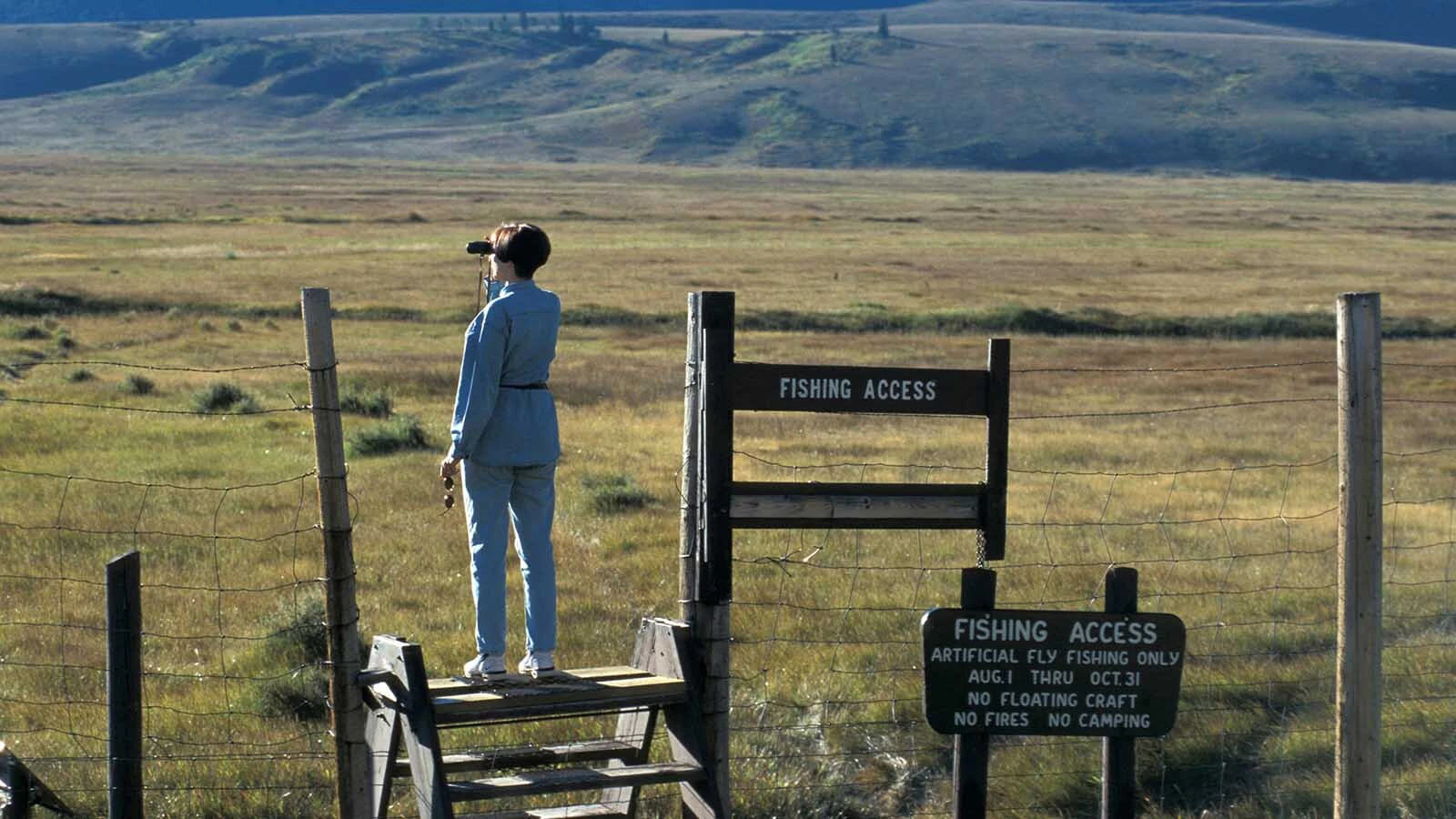
On the question of an early spring, Andres noted that lakes near Laramie were frozen for only about a week this winter, attracting ducks that normally wouldn’t spend the season there.
“Every time I put on a bunch of these ducks in my eBird thing, I was getting flagged,” he said. “Like, this is an unusual number.”
He also spotted roughly 2,000 sandhill cranes in a cornfield near Wellington in early March — a sighting that struck him as ahead of schedule.
Yellow Visitor
Back on Longs Peak Drive, Seniawski has been documenting his pine warbler every few days, photographing it and posting to eBird. He knew the bird immediately because a pine warbler had visited the same birdbaths three years earlier, staying about six weeks before vanishing when temperatures plunged 60 degrees in 24 hours.
“That sort of confirmed my hypothesis that he was eating sunflower seed chips from under the feeders,” he said of his experiment crushing seeds on the deck.
Seniawski has not seen “Listers,” though he enjoyed “The Big Year” — the 2011 Hollywood comedy about birdwatching with Jack Black, Owen Wilson and Steve Martin.
Now making the rounds on YouTube, clips from standup comics like Joe Zimmerman include observations like: “I don’t feel old, but I did recently identify a bird.”
Over his long life, Seniawski has identified 1,294 species. He’s taken several birding trips to Costa Rica, plus expeditions to Panama, Ecuador, Peru, the Galápagos, Israel, Jordan, Egypt and across Europe.
The bird on his bucket list — the Andean cock-of-the-rock, a bright red species found in Peru — remains unseen, and he is not going back just for that.
These days, he’s sticking closer to home and taking advantage of the great birding around Cheyenne.
Seniawski said that in addition to the pine warbler, he’s also been tracking an American goshawk flying around the city about once every three or four weeks this winter.
Known as the “ghost of the forest,” it is a specialized, agile hunter that uses its short wings and long tail to maneuver through dense trees.
The boreal forest raptors come south from northern Canada and Alaska each year, he said, adding, “They come down here because they think it’s nice and warm.”
David Madison can be reached at david@cowboystatedaily.com.