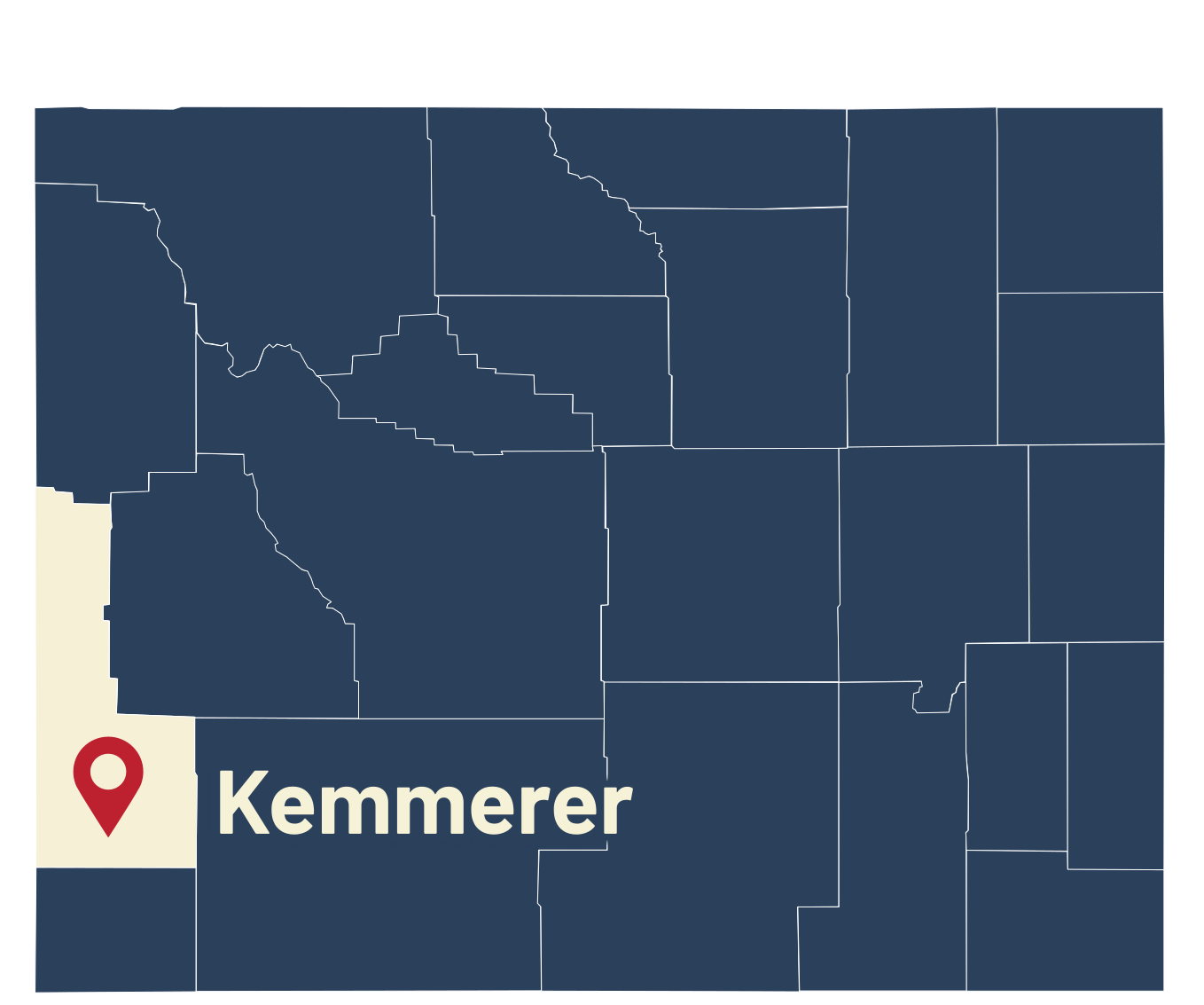
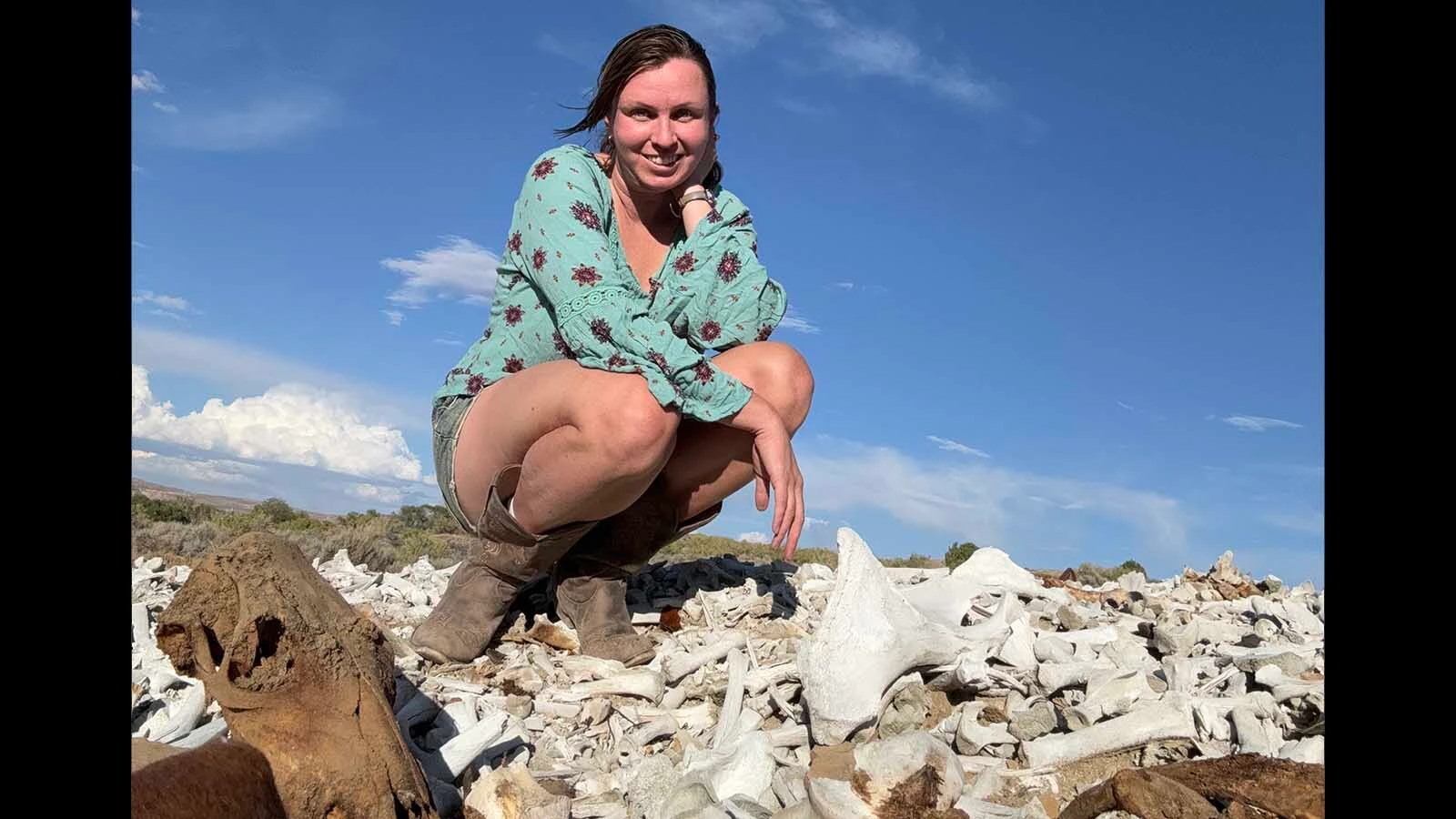
Kristin Hugo of Kemmerer has a fascination with bones and carcasses that litter our world. She sees the beauty that others overlook and gets excited at particularly rare finds, like intact baby skulls.
Hugo shared one such find on her TikTok channel, RollBones, that she found in the Wind River Range. It was the skull of a small lamb, and Hugo was delighted with what she cooed was a “cute” baby.
She cradled the infant skull in her coat to get it safely home because she didn’t have a bag.
“I really love animals, but they are quite hard to take care of and catch when they are alive,” Hugo said. “So, I like the dead ones.”
She said that bones and rotting animals go mostly unnoticed, which she aims to challenge, and so she is now on a mission to share her passion with others. Some of her more than 366,000 social media followers already share her love of bones, while others are new to this pastime.
“A lot of times people have only seen bones in museums,” Hugo said.
She is eager to share tips on bone hunting so that others can become a “champion bone hunter” like herself. This includes advice about how to ask landowners for permission to collect bones and to always hunt for bones whether hiking or driving. She said that bones can be seen caught in fences or hidden in ravines, and the only way to become great at it is to practice often.
Hugo did not grow up bone hunting. She first grew excited about finding dead animals with a friend. Hugo’s friend had found some bones in a ravine, and they went to look at them together. They were amazed at the scattered bones and discovered it was the remains of a cow.
This experience led Hugo to search other ravines and find more bones. She was soon bringing skulls home regularly and became a self-proclaimed “bone girl.”
“It’s like treasure hunting, but nobody planted it there,” Hugo said. “The animals just left parts of their physical selves behind, and you can learn so much from them.”
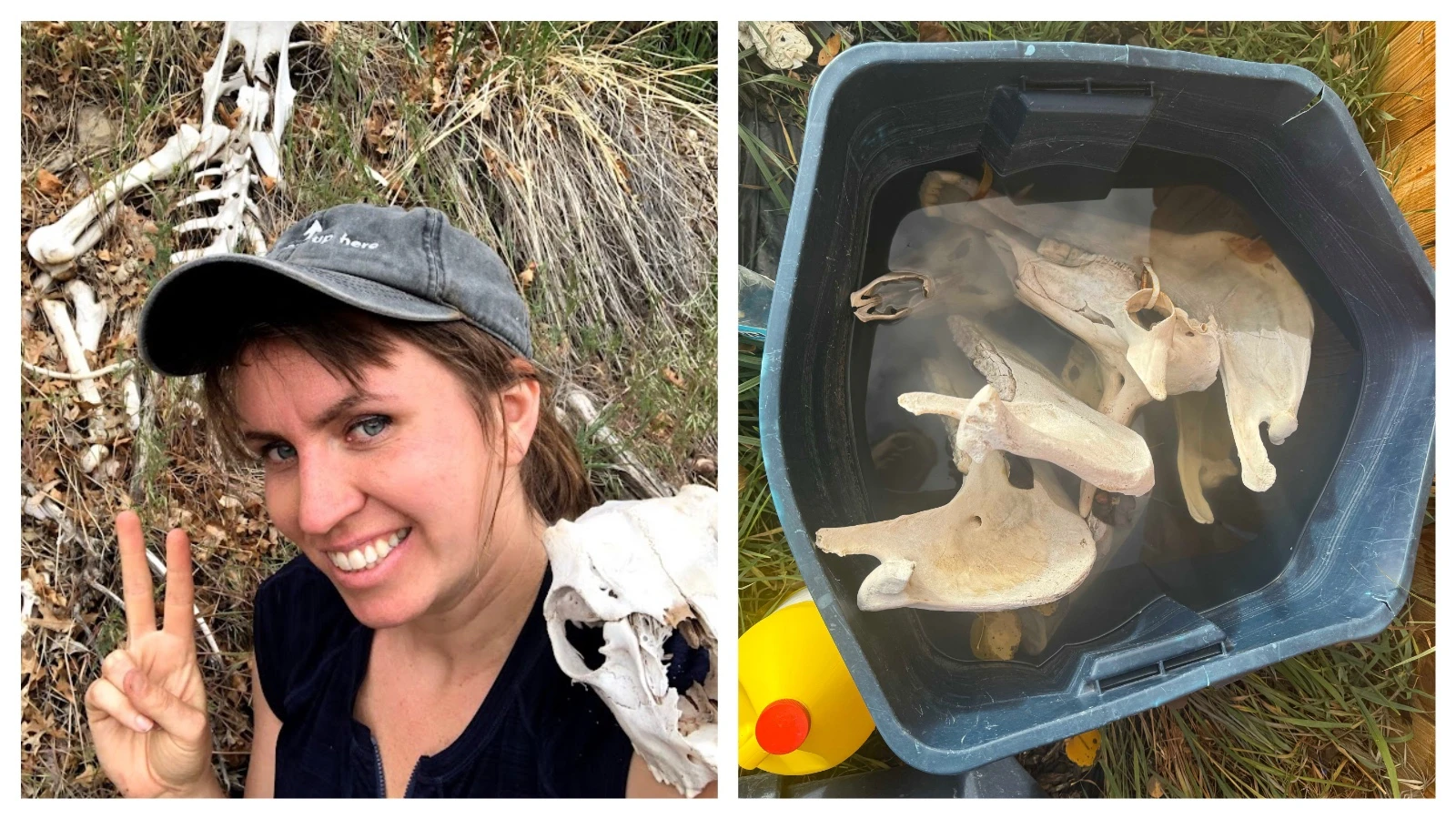
Although Kristin Hugo estimates that she only collects about 1% of the bones and carcasses she finds on her bone tours, there are some skulls that tell such a powerful story that she takes them home and prepares them either to keep or sell. She uses the maceration process and calls it a gross but necessary process to bleach out the bones. (Courtesy Kristin Hugo) 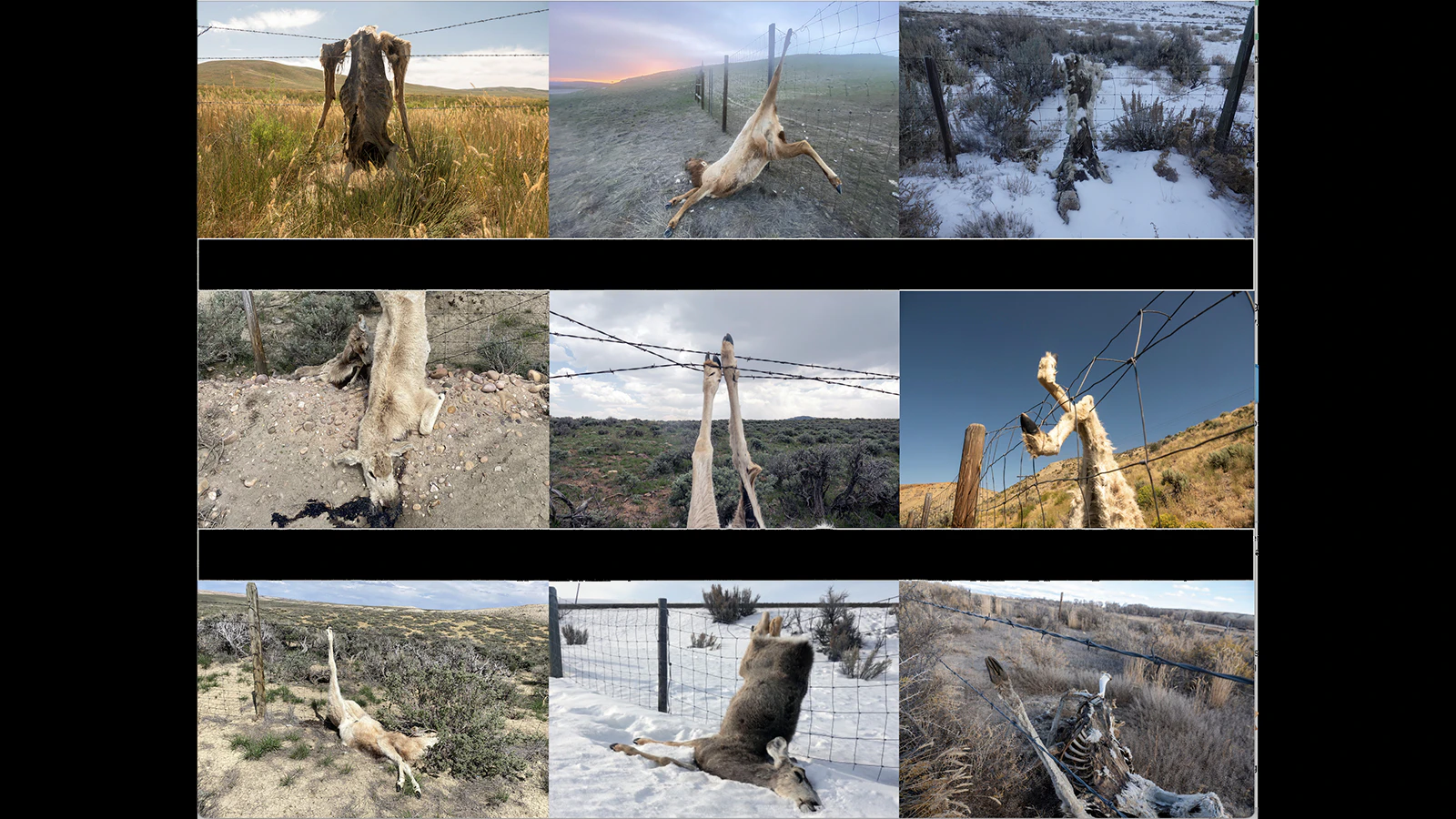
Kristin Hugo of Kemmerer has turned her fascination of bone-hunting into a social media of over 366,000 social media followers with her posts of pictures and videos of dead things. Hugo said her goal is to educate the public on what she sees as the beauty of bones and carcasses. (Courtesy Kristin Hugo)
Weird Science Of Dead Things
At first, Hugo was only identifying the types of animals she was finding, but then she started to discover abnormalities. She began wondering why there was a growth of bone around an animal’s hip, or why there was spongy muscle where muscle should be.
“There’s a new question every single day,” Hugo said. “It’s a big adventure. There’s never a dull moment with dead stuff.”
One of her favorite mysteries was tracking down the owner of a partial ear and tag marked “Old 24.” Hugo discovered the carcass of a cow in the same field, and her sleuthing uncovered that it was indeed old and missing its ear tag. These are the tiny mysteries that keep her intrigued.
Hugo said to also be mindful to use the right resources. A sheep skull, for instance, can actually be mistaken for a horse skull if your book is not exactly right. That happened to her, but because of all the wool surrounding the skeleton, Hugo was tipped off to the identity of the carcass.
Hugo said she grew up hating science, but when she discovered the bones, she said she saw the world in a different way. She eventually went on to get her master’s degree in science journalism to combine her love of art, writing, and dead things.
“Everything can be understood a little bit better if you look at it through a scientific lens,” Hugo said.
She said that there are disgusting dead animals, but that she has discovered that carcasses are very integral to our society, economic structures, art, and to “everything.”
“Carcasses are everywhere,” Hugo said. “They’re in your buttons, medicine and clothes.”
Hugo said that at first, most people think dead animals are just gross, but she points out that people eat carcasses every day.
“There’s so much more to it than that. It goes so deep,” Hugo said. “People don’t even realize that seashells are carcasses.”
Hugo said that the science of dead things can become very complicated, especially when dealing with ethical issues. Her view is that if the creature is already dead, society might as well make use of it.
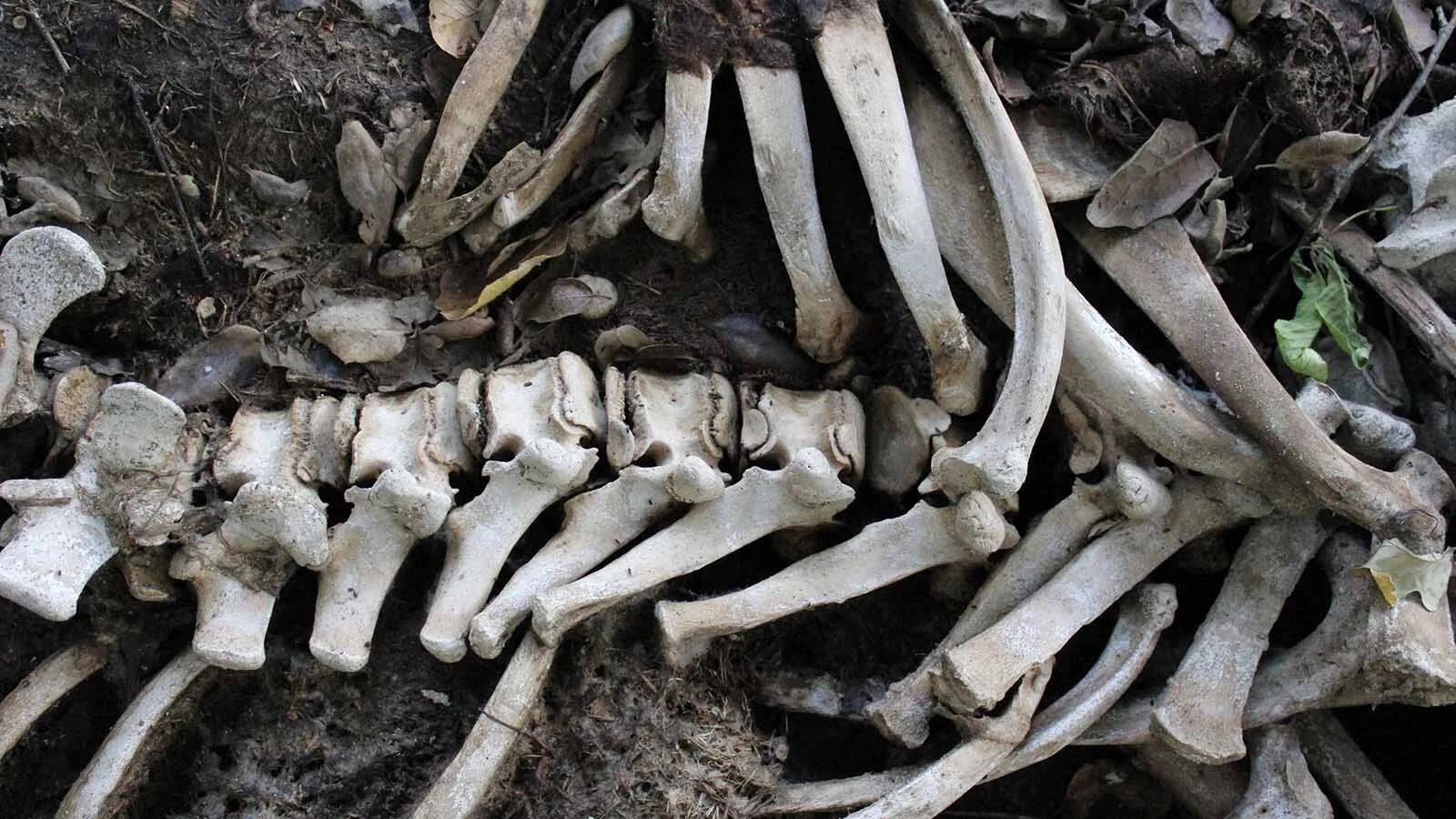
Kristin Hugo of Kemmerer collects bones. She photographs the majority of her finds which she then shares to her many followers as she shares her passion for all dead creatures. (Courtesy Kristin Hugo) 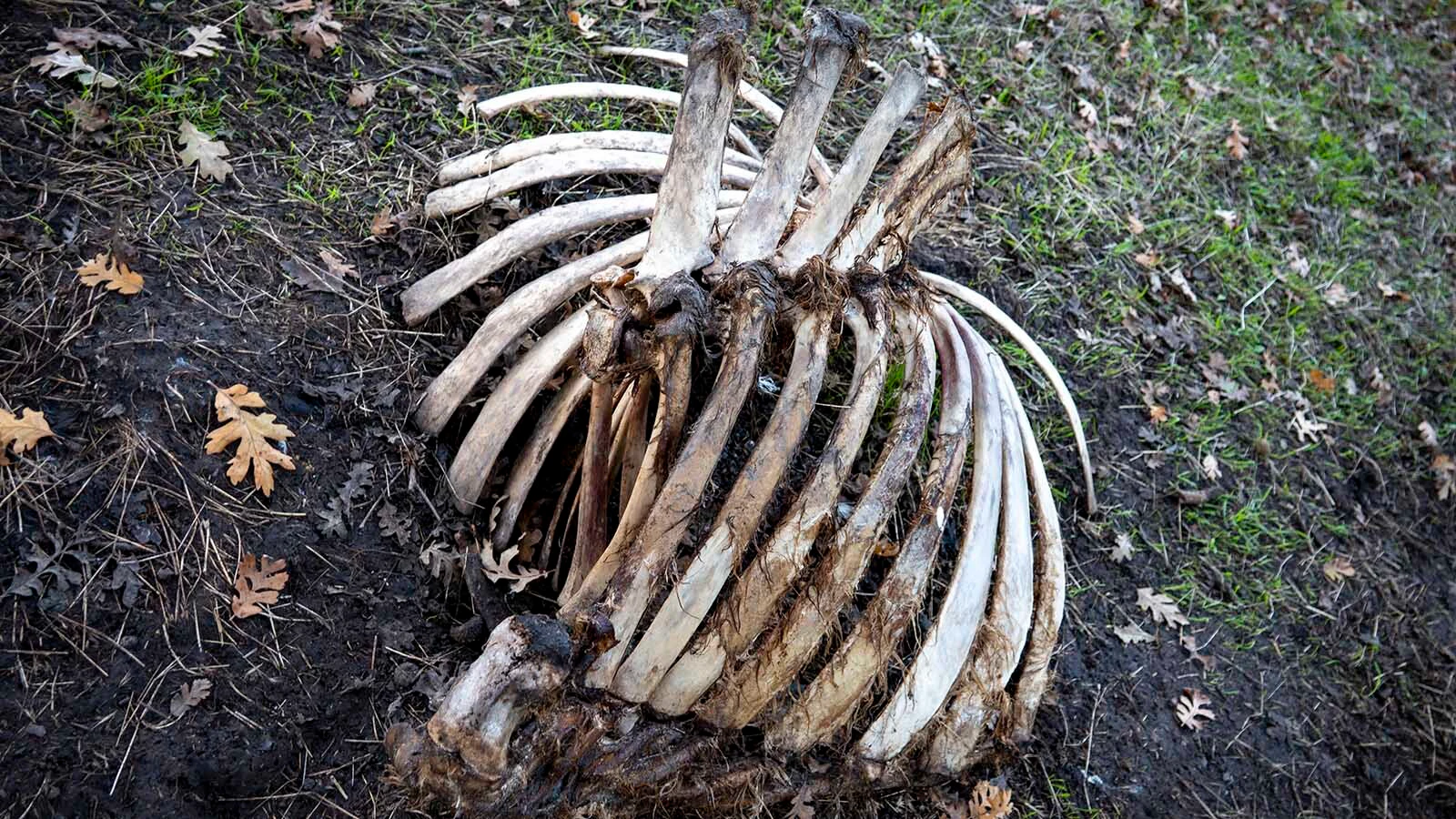
Kristin Hugo of Kemmerer collects bones. She photographs the majority of her finds which she then shares to her many followers as she shares her passion for all dead creatures. (Courtesy Kristin Hugo)
Preserving The Bones
Hugo will spend several hours hiking to find bones and, she estimates, collects less than 1% of what she finds. The ones that come home with her are cleaned using the maceration process. She will put the skulls in water and let the bacteria eat off any flesh still clinging to the bone.
“I think all methods of cleaning are kind of gross, but that’s what you do,” Hugo said. “The bacteria can get into tiny crevices, so sometimes the skulls come apart because they were only being held together by bits of flesh in between the bones.”
She will then degrease the skulls when necessary and whiten them using hydrogen peroxide and water. Each skull she finds, whether she brings it home or only takes a picture, tells Hugo a story about the creature that once lived.
“I just love that when you find a skull, this was in a living creature’s head for its entire life,” Hugo said. “And every single thing that it went through that might have affected its bones is going to be shown there.”
She has found sheep with tooth infections, another sheep with plastic in its stomach, and a lot of other stories in the bones and carcasses. Another time, Hugo was exploring a cave and stepped over a carcass, not realizing it until she came out. It was the carcass of a coyote that had apparently crawled into the shelter and never made it out.
Hugo has shared her discoveries in major publications like National Geographic and on social media, where she has amassed 366,000 followers across her channels. She is known as “StrangeBiology” on Tumblr and Flickr, “CarcassAfterlives” on Facebook, Instagram, and YouTube, and “RollBones” on TikTok.
Her audience is fascinated with Hugo’s passion for the carcasses she finds and shares as videos and photographs. She is also working with an editor and publisher on a soon-to-be-released book, “Carcass: The Afterlives of Animal Bodies,” which is about what happens to animals after they die.
Hugo hopes to share her bone-hunting skills with guided bone-finding hikes and is actively looking for people with significant tracts of land to partner with so she can host tours on their property via Viator. In particular, she said that anyone with a pile of dead farm animals should reach out. She’s also in discussions with the Bureau of Land Management.
Hugo is currently in the artist-in-residence program at Badlands National Park, where she is working on a photo book of dead animals that will be both a bone-hunting guide and workbook.
“You learn something about an animal every time that you go out,” Hugo said. “I tell people that I write about dead animals, although I prefer them alive. They’re just harder to deal with when they are still living.”
Jackie Dorothy can be reached at jackie@cowboystatedaily.com.