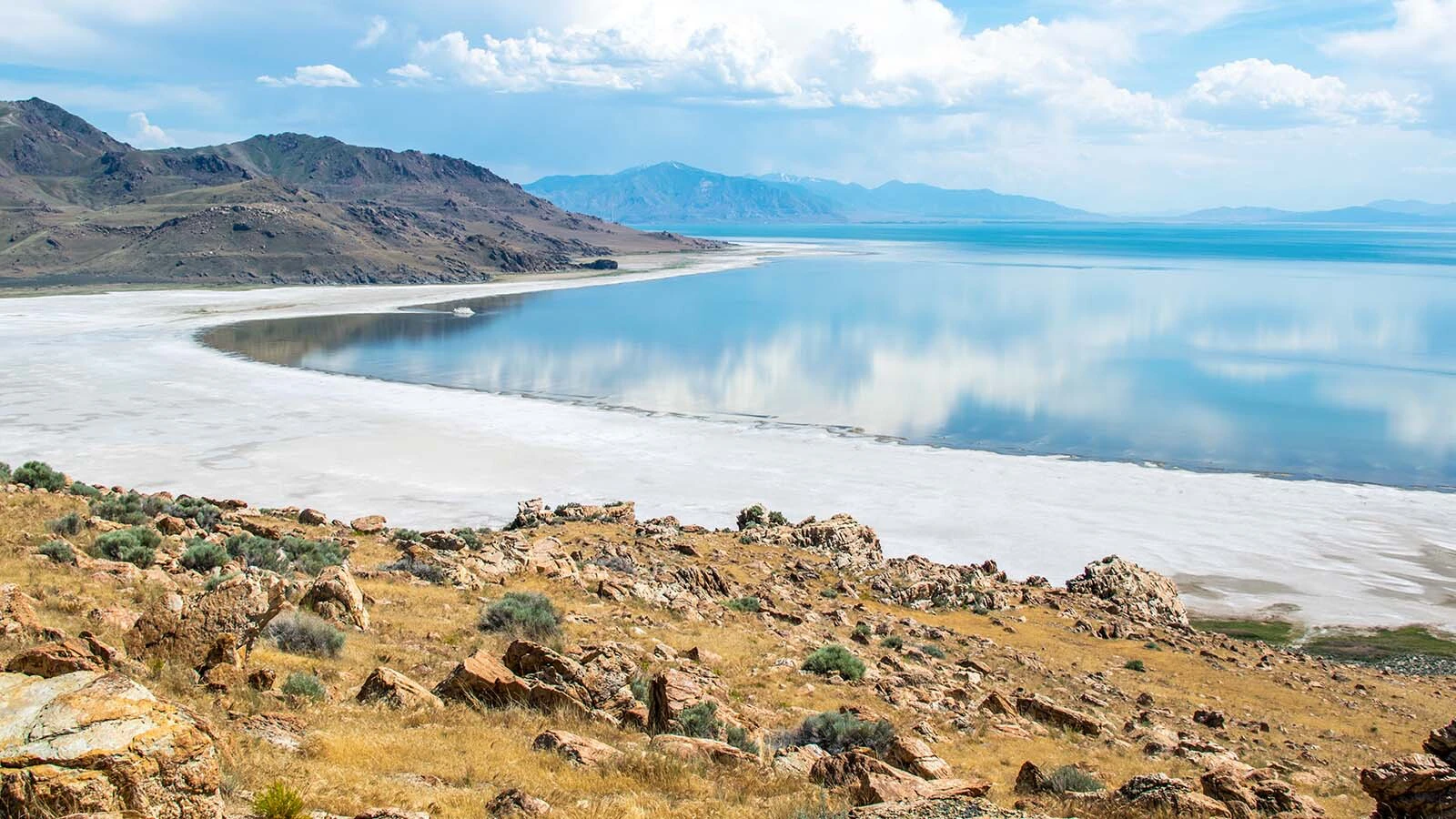
What’s under Utah’s Great Salt Lake? A great fresh lake, apparently.
New research published in Scientific Reports has mapped a small section of a vast freshwater reservoir underneath the Great Salt Lake, the largest inland saline water body in the Western Hemisphere.
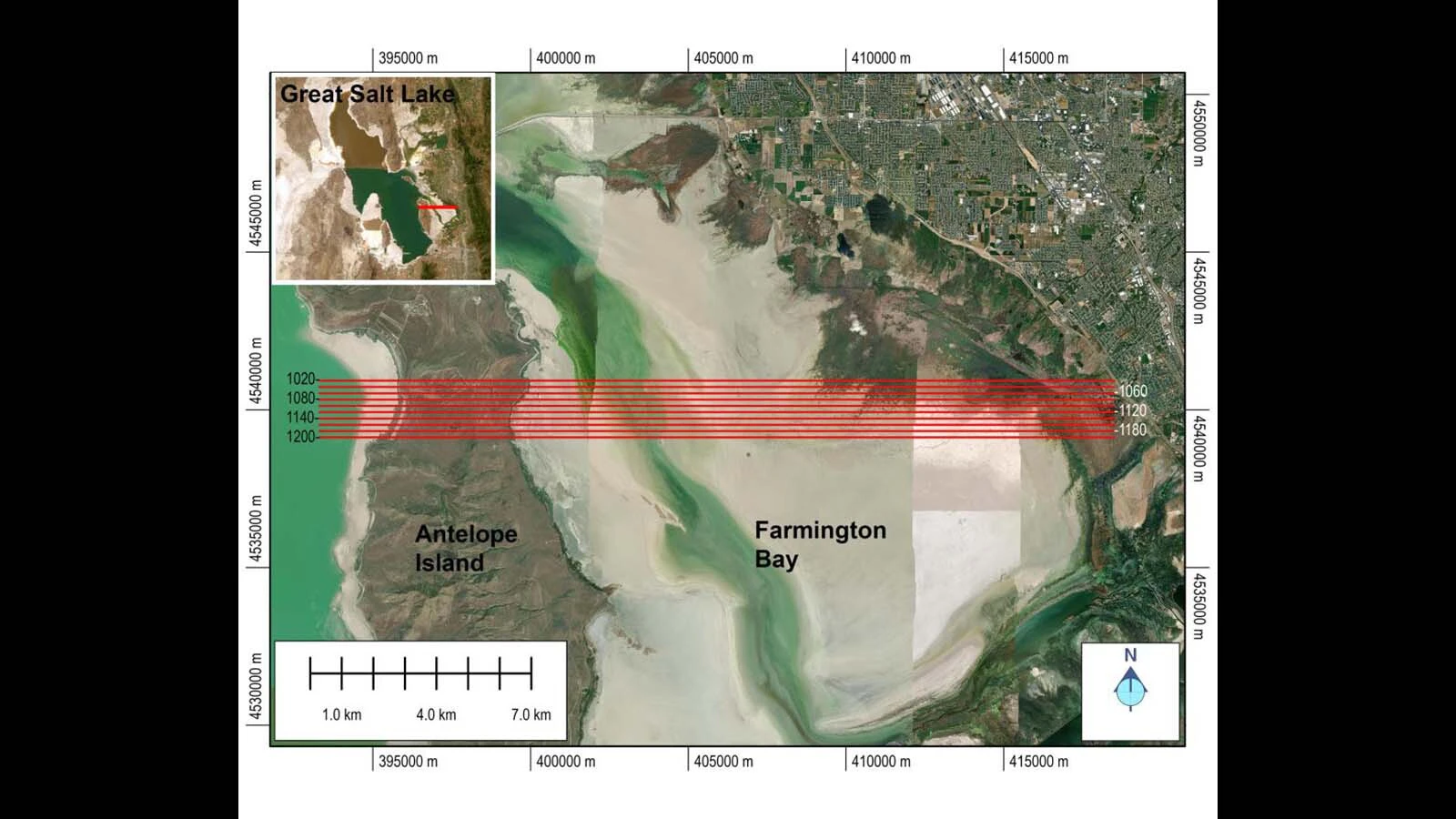
Scientists used a helicopter to do an airborne electromagnetic and magnetic survey of the eastern margin of the Great Salt Lake. They found compelling evidence of a large volume of freshwater trapped in a 2.5-mile-thick layer of porous rocks, collected over millions of years, that could saturate the West.
Michael Zhdanov, a professor in the Department of Geology and Geophysics at the University of Utah, told Cowboy State Daily that they made this amazing discovery with only one day of airtime.
“We mapped a depth of 7 kilometers, over 4 miles,” he said. “We speculate that there is no reason that this reservoir wouldn’t extend under the entire Salt Lake, but we need to fly over the entire lake to answer this question.”
Invasive Oases
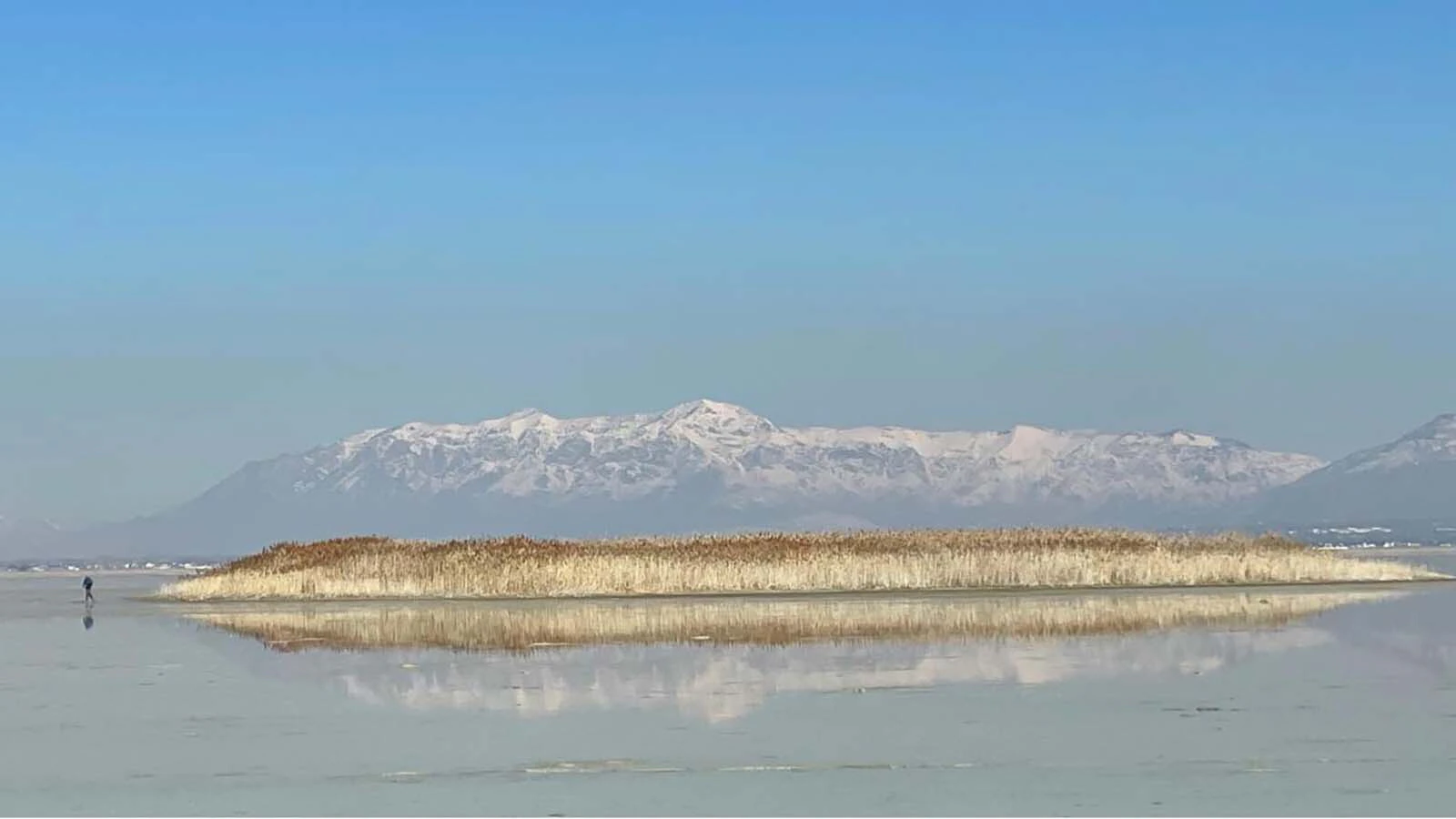
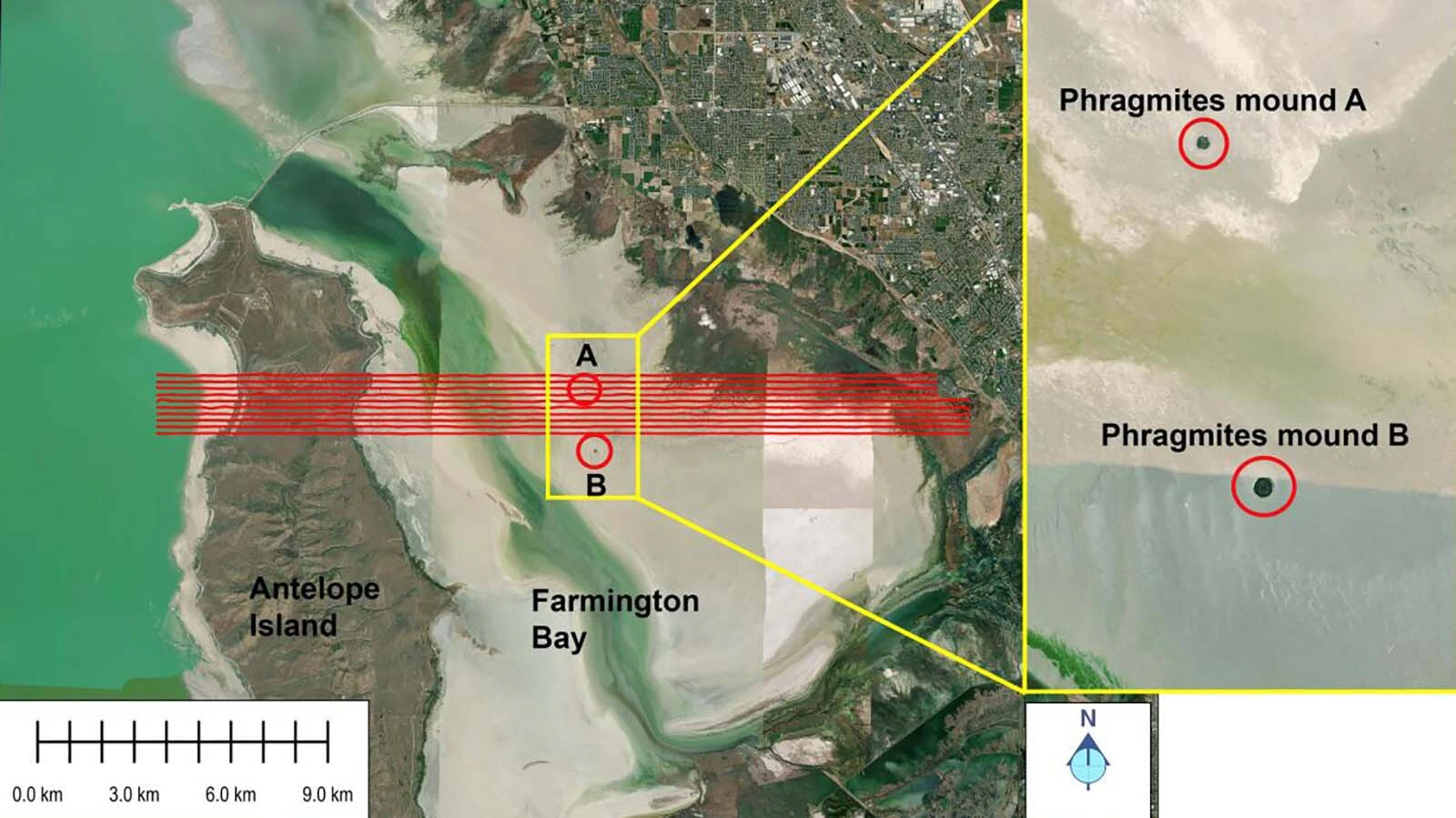
Zhdanov and his team weren’t the first to suspect that there was a source of freshwater under the Great Salt Lake. The clues were evident on the surface in the form of phragmites, an invasive and extremely thirsty reed grass.
“Phragmites require a lot of fresh water, and suddenly little islands of these plants appeared in several places over the eastern margin of the Great Salt Lake,” Zhdanov said. “The question was, if they require a lot of fresh water to grow, where did this fresh water come from?”
Hydrologists sampled these oases and found an ample supply of freshwater. That couldn’t have come from the surface, given that it’s all saltwater.
Finding freshwater is one thing. The next question was whether it was a localized phenomenon or a widespread source of freshwater.
That’s when Zhdanov decided to push for an airborne electromagnetic (AEM) survey.
AEM surveys use electromagnetic waves to get images of subsurface electrical resistivity.
Those images can be used to identify water, rare-earth minerals, and many other items of interest beneath the surface by tracking how electrical currents change as they pass through them.
“It was important to do a geophysical survey of the area, and (AEM) is the best way to do it,” Zhdanov said.
Zhdanov got enough funding for one day of aerial AEM surveys. Now that his work is published, he imagines there will be a lot more funding available based on what they found.
Deep Freshwater
AEM surveys are conducted by a helicopter carrying a vast circular structure covered with various sensors.
It looks like a giant hula hoop with a beachball in the middle, hovering at 200 feet or less, allowing electromagnetic waves to penetrate up to 1,500 feet below the surface.
When Zhdanov and his team began their AEM survey along the eastern edge of the Great Salt Lake, they quickly identified the thick rock layer at the bottom of the Lake.
“Most places are covered by 10 to 15 meters of saltwater,” he said. “It's very easy to discriminate between the saltwater and freshwater. Saltwater is very conductive, while freshwater is very resistive, so you can see this contrast interface between the conductive and resistive layers.”
As they continued, the team eventually found a deep layer of basement rock, seven kilometers underground.
Between these two rock layers was water. Lots and lots of water.
At least, a vast space filled with porous rock containing freshwater. Zhdanov said it’s not like a subterranean ocean, but rather a massive deposit of water-saturated sediment.
“We were able to map the top and bottom levels of this freshwater reservoir,” he said. “Freshwater could only accumulate in the porous sedimentary rocks above the basement, because the basement rock is too dense, so we mapped the depth from the basement to the top.”
The data collected from the AEM survey indicates that the water-rich layer could be over 2.5 miles thick and could stretch across the entire expanse of the Great Salt Lake. That’s roughly 950 square miles of freshwater, potentially, under the saltwater.
“The major discovery was that there wasn’t a localized spot, like a spring, of freshwater,” he said. “This really is a large-volume, freshwater reservoir. We found evidence of it everywhere we looked.”
How Did It Get There?
The new study concluded that there is no connection between the Great Salt Lake and this underground freshwater reservoir.
The phragmites marshes are probably areas where the trapped freshwater has percolated to the surface through cracks in the overlying layers.
“Freshwater penetrates up,” said Zhdanov. “It’s a geological mechanism that isn’t fully understood.”
So how did so much freshwater accumulate under the Great Salt Lake? Slowly, over millions of years, according to Zhdanov.
“This is groundwater that came to the Great Salt Lake Valley from snow in the surrounding mountains,” he said. “Gravity forced it down, but not on the surface. It flowed through underground pathways and accumulated in this layer of porous rock and sediment.”
In fact, so much water has accumulated over time that certain sections of the Great Salt Lake have bulged upwards. That’s from the force of accumulating water in the reservoir pushing against the overlying layers separating it from the surface.
Zhdanov said hydrologists have drilled into these bulges and collected freshwater samples. That gives them an idea of how vast the underground reservoir might be.
The next big question is how much water could be contained in the 2.5-mile-thick layer. That will require more surveys and analysis across the entire expanse of the Great Salt Lake.
“The water is in the porous space, and those can get very tight,” he said. “The size of the reservoir is huge, but the fraction of water there, determined by the porous spaces in these sedimentary rocks, needs to be investigated more carefully. In order to make an accurate estimate, we need to drill to get the samples of these rocks, estimate the porosity, and then we can make calculations.”
Saving The Great Salt Lake
There’s no doubt that the discovery of a freshwater reservoir under the Great Salt Lake is immensely important. Even Zhdanov acknowledged the “practical significance” of his work.
Now that they know it’s there, what should be done with it?
In an increasingly dry area, a new source of freshwater could be a boon for Utah, Wyoming, and other surrounding states. But can it be safely accessed and utilized?
“I don't see any reason why it can't be released,” Zhdanov said. “I specialize in using geophysical instruments and advanced subsurface imaging technology, so it’s not my realm of expertise, but there is technology to extract underground liquid in a controlled way.”
Since they’d be tapping into thick layers of porous rock rather than a subterranean ocean, it’s entirely possible to eventually extract vast quantities of freshwater from the reservoir. That could be used for many purposes in agriculture and industry, but the best usage might be putting it back where it was found, in a sense.
Many scientists, hydrologists, and Utah officials are concerned that the Great Salt Lake is dying. According to Brigham Young University (BYU), it’s already lost 73% of its water and 60% of its surface area, with an average deficit of 1.2 million acre-feet per year.
At that rate, the Great Salt Lake could be gone before Salt Lake City hosts the 2034 Winter Olympics.
Losing the lake would shutter several industries and endanger the health of the 1.3 million people living in the Salt Lake metropolitan area.
Without the water suppressing it, clouds of toxic dust would blow into and cover the region, causing long-term detrimental health and environmental impacts.
Cutting down on what BYU considers “excessive water use” is one solution already being implemented, but Zhdanov wondered whether the water below could be used to help conserve the water above.
“There’s a drought in the Great Salt Lake, and a lot of the salt has become dry,” he said. “If you were able to get access to this freshwater underneath through drill holes, maybe we can sprinkle this dust on the surface and reduce pollution.”
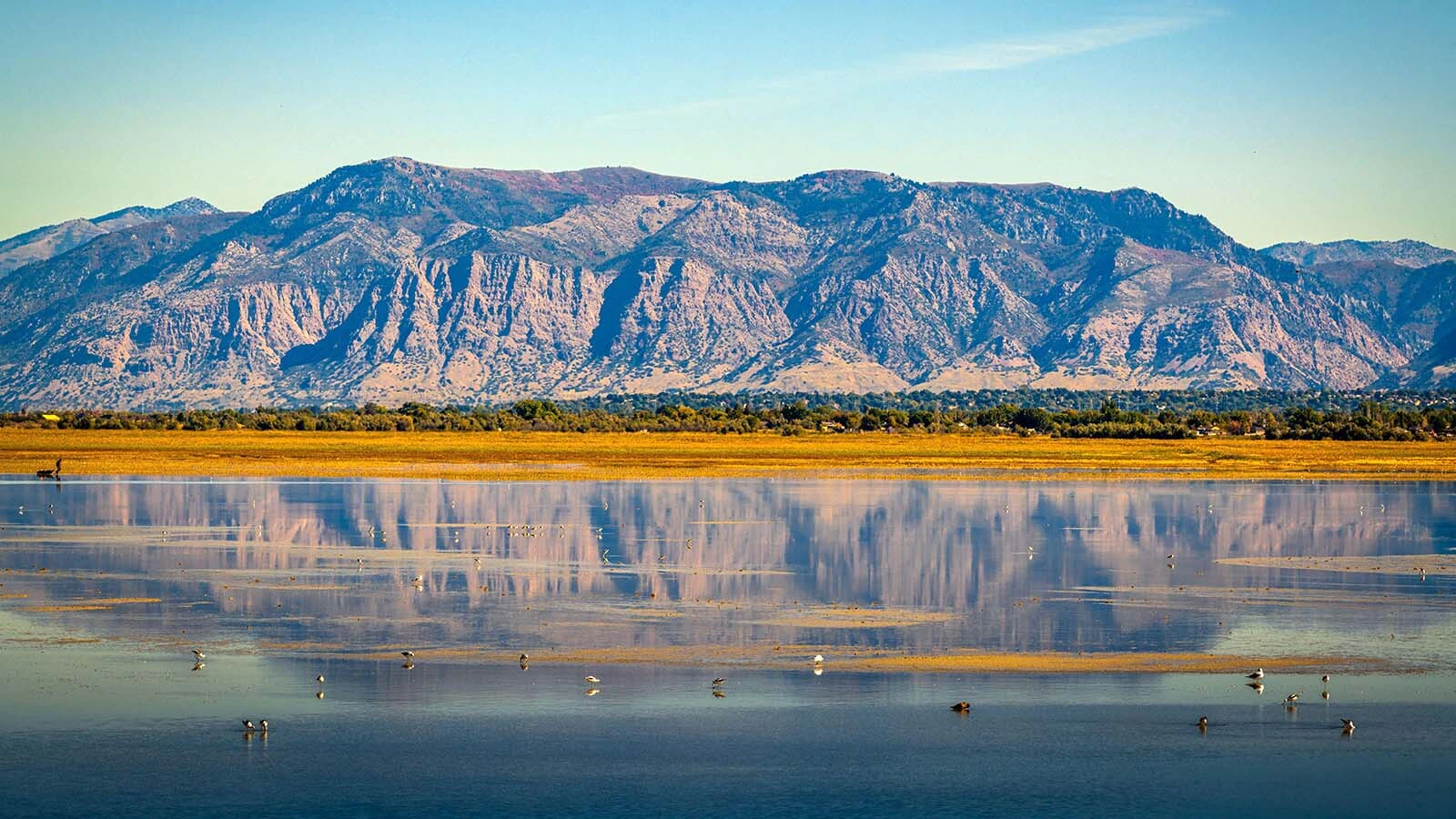
Striking Blue Gold
The West needs more water. Zhdanov and his team found a new source, and a potentially immense one, but more research is needed to know how much freshwater has been stored under the Great Salt Lake.
“We would like to get funding to explore the entire Great Salt Lake,” he said. “It makes sense, because (AEM surveys) are very economical and we only looked at a very small portion for this study.”
As water becomes increasingly scarce, but no less essential, in the American West, Zhdanov believes the solution might be what’s lying underground, rather than flowing on it.
If there’s, potentially, another entire lake of freshwater under the largest saltwater lake in the nation, there could be similarly large reservoirs throughout the western states.
“The West is still unexplored for new resources, including freshwater resources,” he said. “AEM surveys take resources and time, but I think Utah, Wyoming, and other western states need to pay more attention and find out what is under their feet.”
In the meantime, Zhdanov hopes his new research will spark interest, collaboration, and funding to continue the electromagnetic exploration of what lies beneath the Great Salt Lake. It could be the first drop in a bucket of freshwater reservoirs that could saturate the Western U.S.
“We hope to work with the Utah government to explain this, because this will require funding and decisions moving forward,” he said. “Considering the drought situation we have now, this is what we need to look forward to. This is a treasure, unexploited, right under our feet.”
Andrew Rossi can be reached at arossi@cowboystatedaily.com.