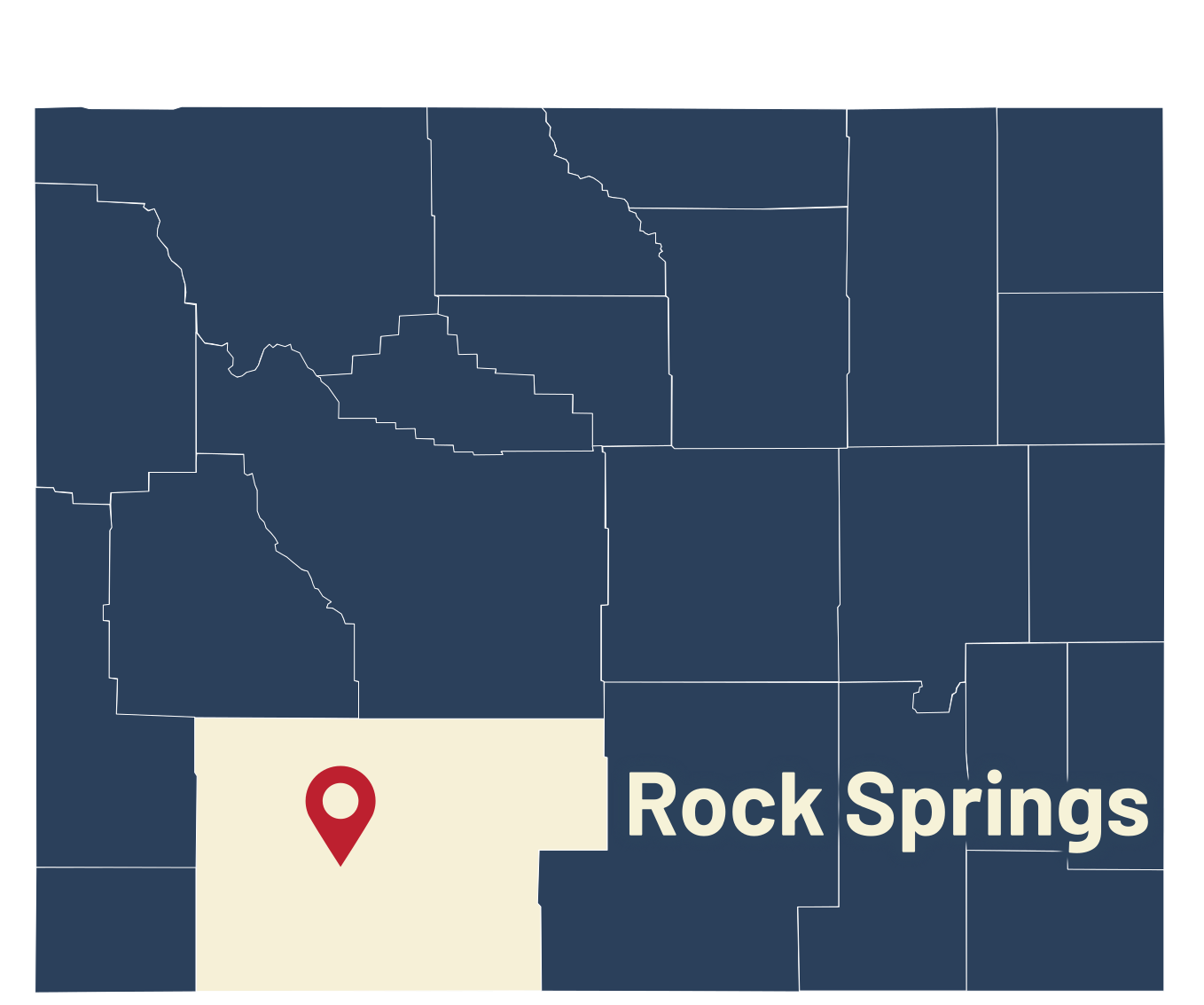
The city of Rock Springs is making a big stink about its latest municipal project, because it’s going to do a lot to remove a big stink that has plagued the west side of town for years.
Rock Springs' $20 million solar sludge-drying facility will be operational this summer. It’s a cutting-edge, fully automated system that will allow for the year-round drying of biosolids (a.k.a. human waste) to reduce odors and provide residents with a Class-A source of fertilizer for growing grass, hay, and food.
Mayor Max Michelson will have the honor of dumping the first load of “sludge” into the new solar dryers, imported from Germany.
“I said I would be happy to do that, as long as someone is there to make sure that I don't screw up and wreck it,” he told Cowboy State Daily.
Once it’s operational, the new facility will provide numerous benefits to Rock Springs and the surrounding landscape. Plus, it’ll make everything smell a lot better.
“It allows us to appropriately take care of the waste byproducts of humanity without stinking up a big chunk of town,” Michelson said. “We’re really excited.”
A Whiff In The West
A decade ago, Rock Springs funded several infrastructure projects to anticipate substantial population growth. One of those projects was an expansion of the city’s wastewater treatment facility.
The people didn’t show up, leaving the wastewater treatment facility operating well below capacity. That left Rock Springs with a particularly pungent problem.
“Solar drying is the final step in processing waste,” Michelson said. “When you do that during the summer, it's fine. Over the winter, the biological agents continue to work on that waste, but don’t evaporate the water content. When spring comes, and it thaws, it produces this really sulfuric, nasty-smelling byproduct.”
Anyone who has lived or worked on the west side of Rock Springs can attest to the strength of that smell. It’s not something that makes a community very desirable for homes and businesses.
“You don't want a big chunk of your town smelling like sewage,” Michelson said.
The solution was to dry the waste year-round. That wasn’t possible with the existing infrastructure, so Rock Springs passed a specific-purpose tax initiative to build a new, massive-scale solar-drying facility.
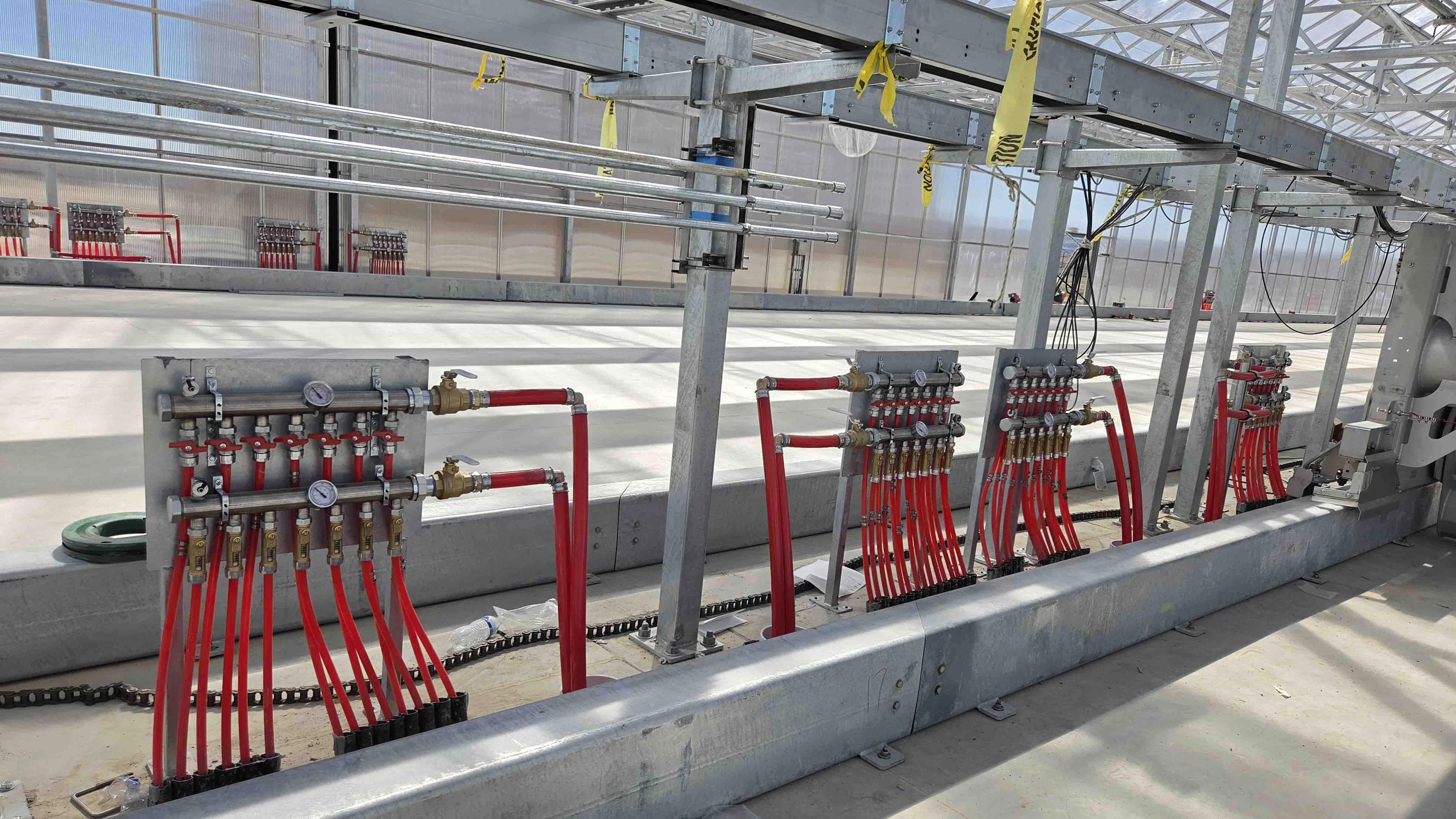
The Facility
Rock Springs isn’t pioneering a new concept with solar drying human waste. It’s commonplace in many Western communities.
“Most wastewater plants will dry and dispose of biosolids in some way,” said Nick Seals, the water reclamation facility superintendent for the city of Rock Springs. “Sometimes it goes to a landfill, sometimes it goes to surface disposal or another beneficial reuse.”
And it’s massive.
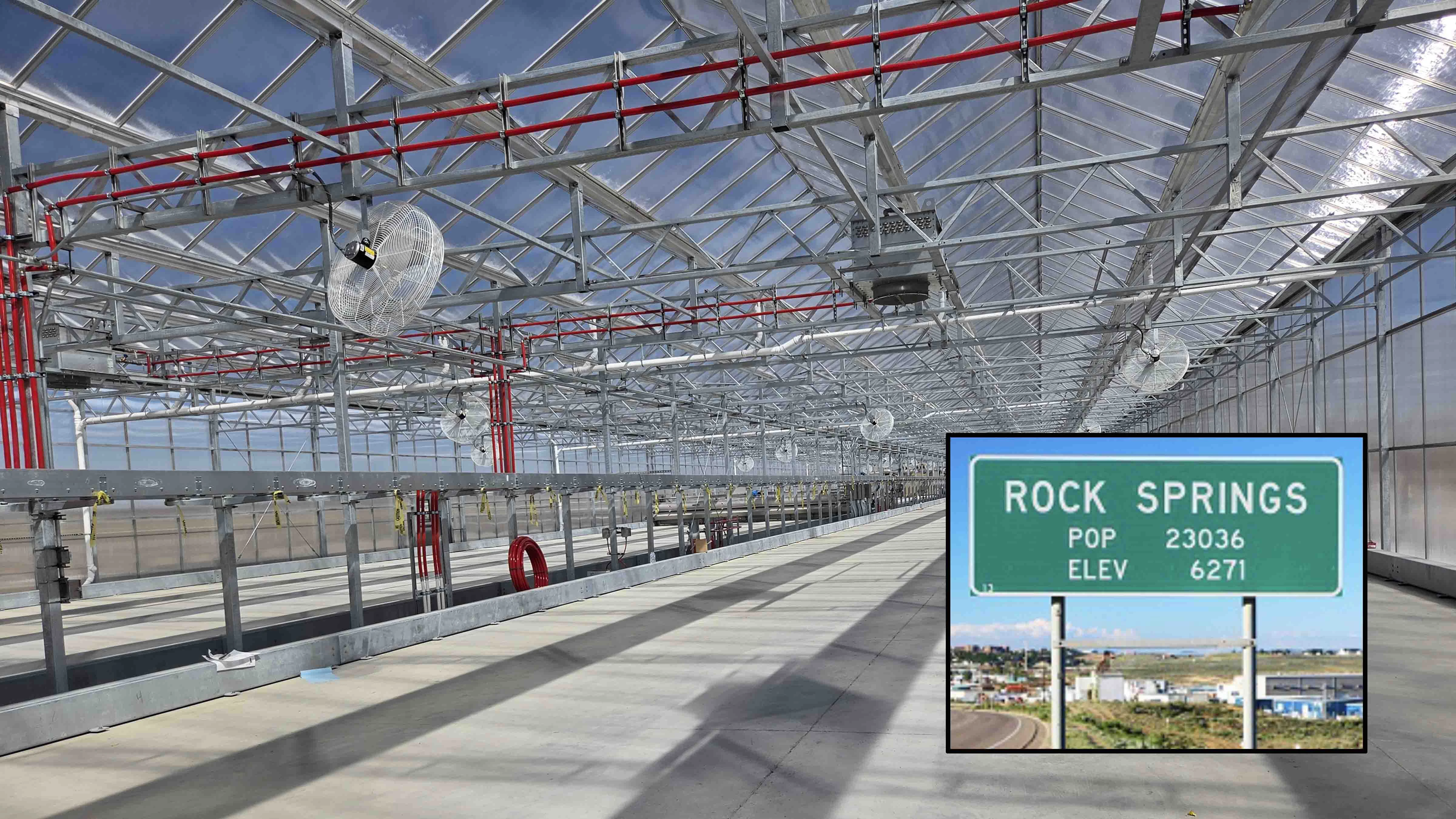
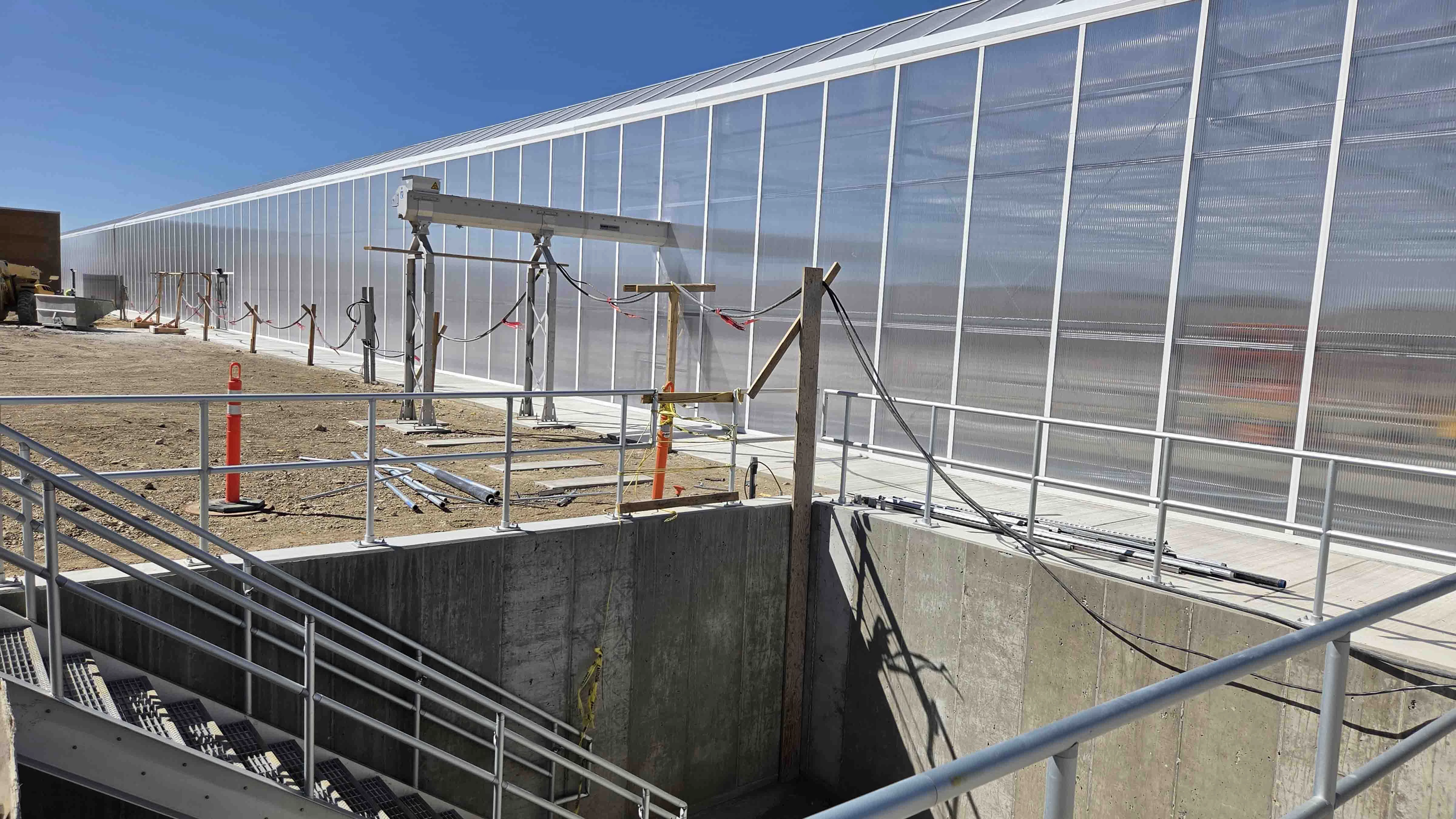
“It’s been a huge project,” Michelson said. “It is literally larger than a football field. Bodell Construction has placed over 1,500 yards of concrete since April 2025.”
The project's centerpieces are the two Huber Solstice Sludge Turners, manufactured by Huber Technologies in Germany. When finished, it will be the first solar-drying facility in the State of Wyoming and only the fourth of its kind to be built in the United States.
The solar sludge turners will be working 24 hours a day, year-round, to turn what Michelson described as “a big greenhouse with a corkscrew that goes through and slowly turns the waste” from smelly sludge to a valuable resource for Rock Springs and surrounding communities.
The Process
Rock Springs has already been drying biosolids to the highest standard for years. The new solar drying facility will make that process easier and more efficient on a much larger scale.
“Our biosolids are centrifuged to around 18% total solids at our wastewater facility, while the other 72% is mostly water,” Seals said. “When the facility opens, we’ll truck and dump the biosolids into the dryer’s load-in bay, which automatically feeds it through a screw conveyor into the solar dryer, and drops it in one of two bays. Then, the turner takes over.”
The turner will continuously turn through the biosolid surface, flipping it over to ensure an even spread across vast heated floors, thoroughly drying everything with solar radiation and supplemental heat.
“That’ll take it to more than 75% total solids and less than 25% water, making it a lot less heavy and easier to haul,” Seals said.
Once dried, the biosolids will enter another screw auger to fill waiting dump trucks. From there, it’ll be stored and tested for up to two years until it meets the Environmental Protection Agency's Class-A Exceptional Quality (EQ) biosolid requirements.
From there, the fertilizer will be certified for all agricultural use, including human food production. And it’ll come at no cost to the community.”
“The city already gives it away for free to people so they can enrich their lawns and gardens,” Michelson said. “We've used it on our golf courses and cemetery to offset some costs. Ranchers can use it for their hay fields. All they have to do is pick it up and haul it off.”
Best of all, there will be no more smelly seasons for the west side of Rock Springs. There’s a lot to be excited about.
“We generate around 300 dry metric tons of biosolids every year,” Seals said. “This facility is designed to handle our projected flows up to 2050, so quite a few years, and make it pretty easy to process biosolids and reduce odors year-round.”
Beneficial Reuse
Rock Springs’ solar drying facility is expected to be online by July 2026. When it is, it’ll be a gamechanger for the entire region.
“We will be able to continually dry and produce a Class A biosolid product,” Michelson said. “It’s more efficient and will be very helpful in enriching our soil, which is great in our particular corner of the world.”
Seals said the new facility will be fully automated, so it will continuously operate while containing all smells.
“By keeping everything indoors, we can process all year long,” he said. “We won’t have any storage of wet biosolids, reducing the odors with the ability to process 24 hours a day. It'll continuously turn, aerate, and dry, all day and night.”
It also comes with the added benefit of enriching the environment beyond soil content. Once the treated water is separated from the biosolids, it will be discharged into Bitter Creek.
“The biological health of Bitter Creek is substantially higher downstream of our waste treatment center than upstream from it,” Michelson said. “We are able to discharge the treated water separately into Bitter Creek and return it into the water cycle, which greatly improves its health than when it’s only relying on natural sources.”
But Seriously, What About The Smell?
Rock Springs didn’t start the trend of solar drying human waste for beneficial reuse, but it could quickly become a trendsetter for Wyoming and other communities nationwide. All because they wanted their town to smell better.
“The role of municipal government is managing those fundamental things like roads, water, sewer, and public safety,” Michelson said. “To be able to improve our wastewater treatment process in a way that prevents a whole section of town from smelling like a dump station is a huge win. Producing a byproduct that's usable by the community and by the city to improve our soil is just a bonus.”
But what about the inside of the solar drying facility? Will anyone who works there be subjected to unspeakably bad smells as the cutting-edge technology does its work?
According to Seal, probably not. Even the inside of the solar drying facility should smell better than the last several springs on the west side of town.
“There should be a nice earthy tone in here,” he said. “Kind of like compost. Shouldn’t be too bad.”
Andrew Rossi can be reached at arossi@cowboystatedaily.com.