Independent trucker Jeff Huntsberger topped off his tanks around 300 gallons at a Douglas truck stop on Thursday, then pushed north on Interstate 25, then across Interstate 90, backing into the Pilot truck stop parking lot in Belgrade, Montana, early Friday.
The Pilot sits just off the interstate near the Highway 191 intersection, which funnels truck traffic up from eastern Idaho.
Rigs from all directions converged on the pumps Friday morning while Huntsberger popped the hood and went to work relieving pressure on his cooling system to stop a leak.
An owner-operator who helps people relocate across the West for a major van line based out of Indiana, Huntsberger has watched diesel prices climb with the grim attention of someone whose paycheck shrinks every time the price ticks up.
Since the Iran war began, Huntsberger has seen roughly a 30% jump in diesel costs while driving around the West.
“The profit margin’s already thin, and now you have an additional expense that should not be there,” Huntsberger told Cowboy State Daily.
The federal government sets a fuel surcharge for trucking companies, said Huntsberger, noting any relief never seems to arrive fast enough.
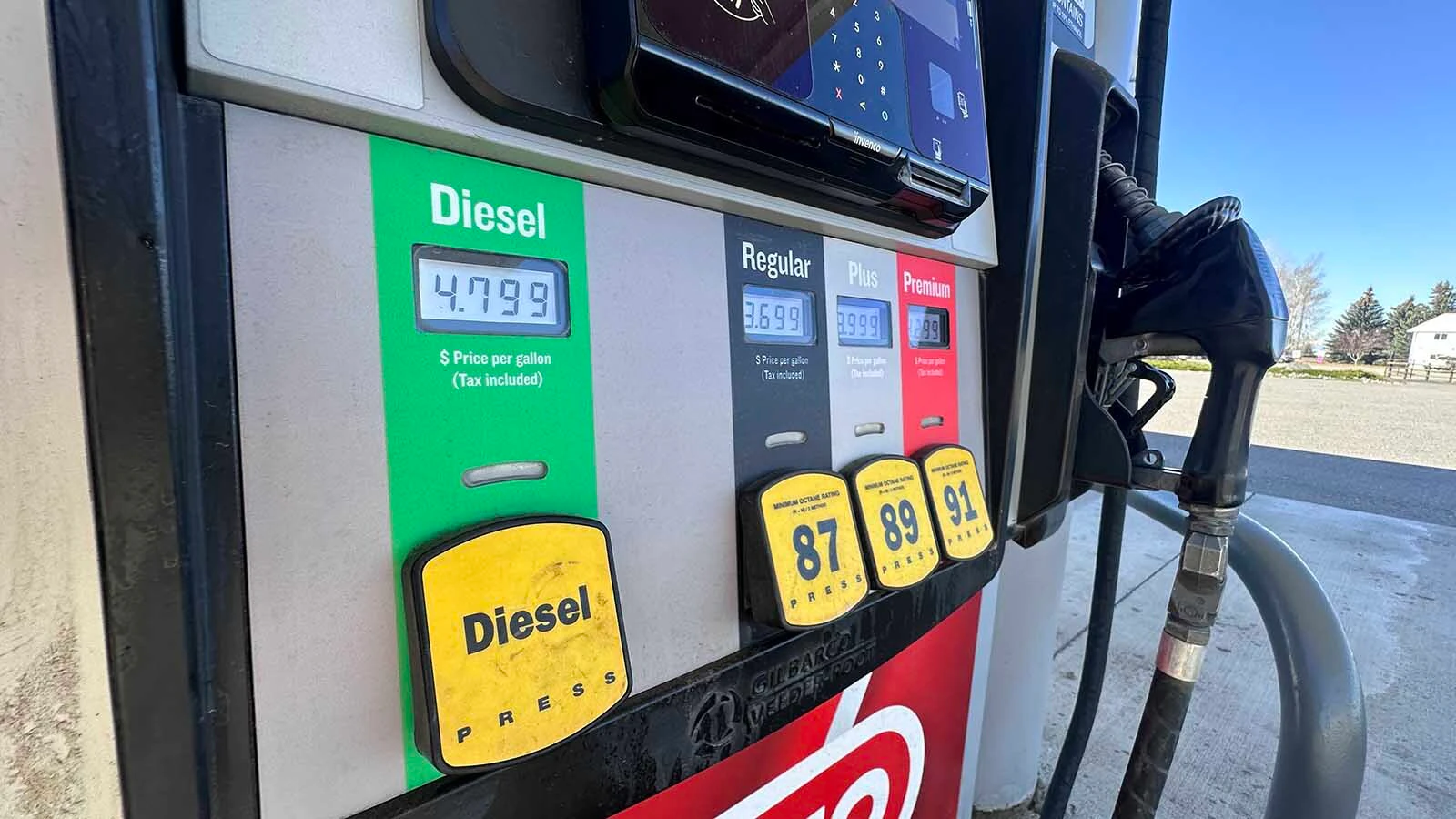
Huntsberger said he tries to stop at “the mom-and-pop truck stops,” where he sometimes finds better prices. The price at Pilot — which is part of a large chain of truck stops — was $4.79 a gallon for diesel on Friday.
Statewide taxes and other factors make the price different state to state.
On Thursday, the cheapest diesel in Wyoming according to Mudflap was $4.60 at the Outpost truck stop in Lusk and $4.61 at Ghost Town in Casper.
As truckers with a connection to Wyoming deal with these recent rising costs, they’re also worried about challenging trends ahead for the industry.

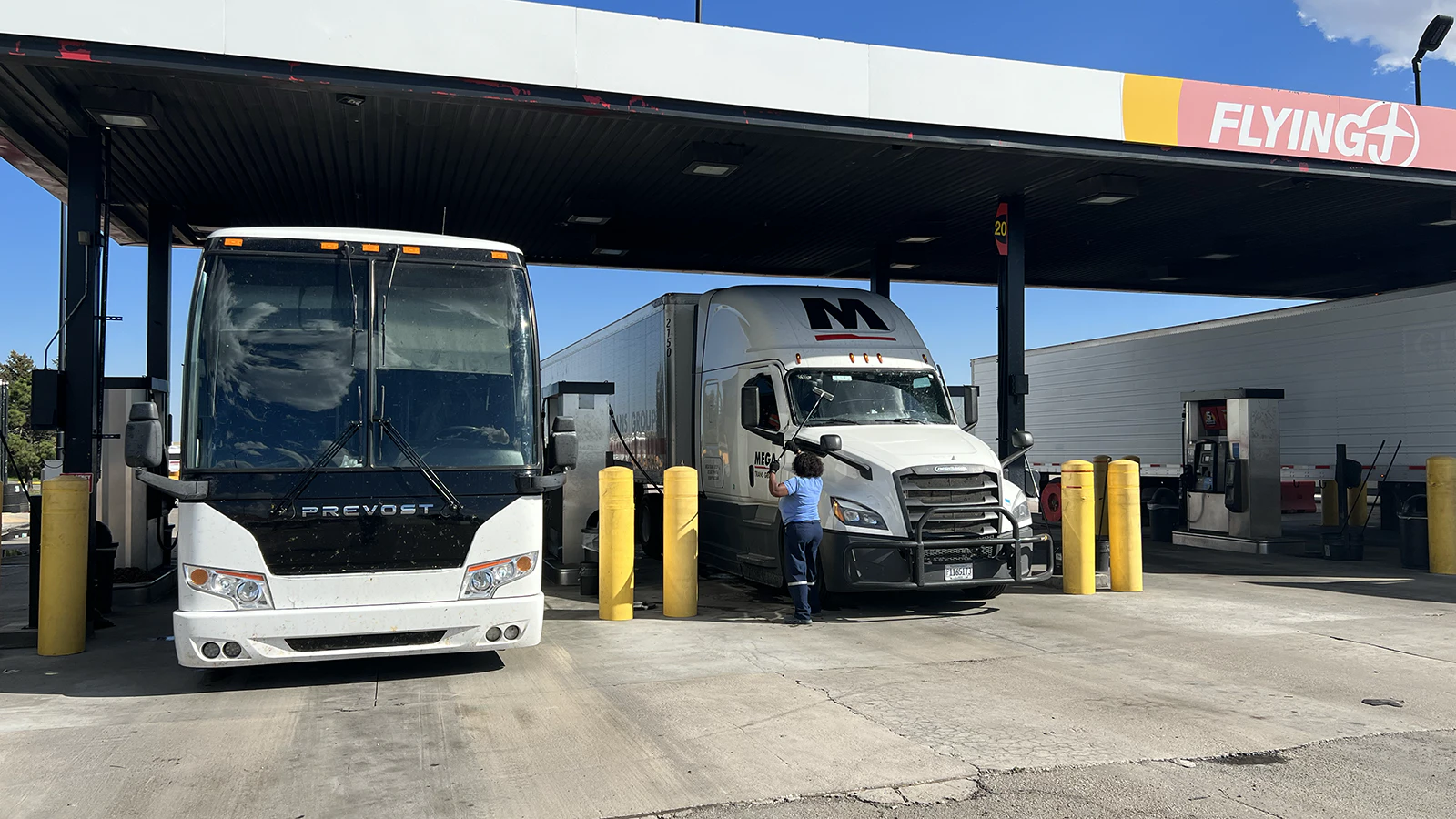
Trucker Jeff Huntsberger drove north from Denver through Wyoming Thursday. Here he preps his diesel rig for the journey ahead, stopping for fuel at a Pilot truck stop in Belgrade, Montana. (David Madison, Cowboy State Daily) 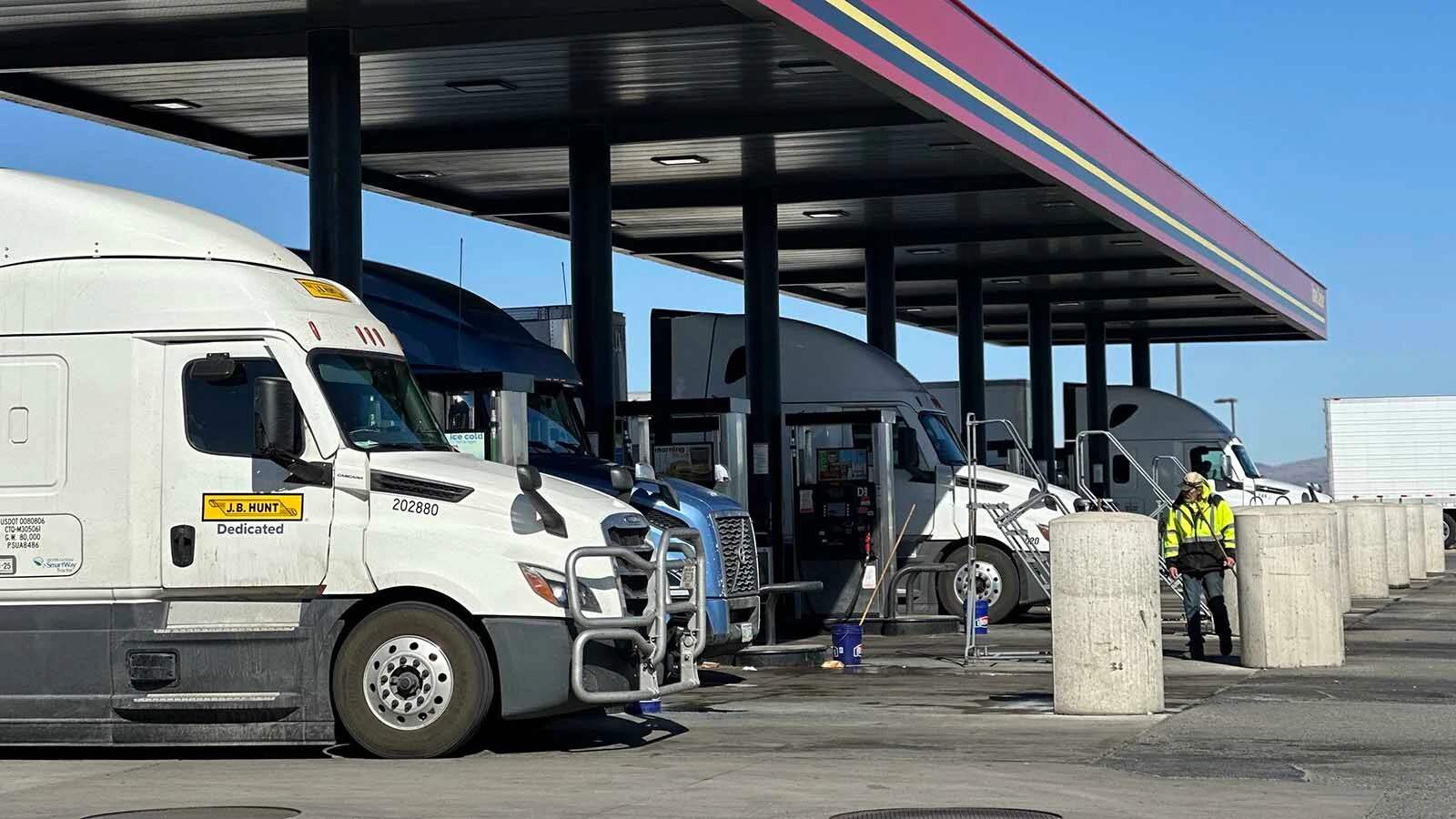
Truckers fill up at the Pilot truck stop in Belgrade, Montana. (David Madison, Cowboy State Daily) 
Trucker Jeff Huntsberger drove north from Denver through Wyoming Thursday. Here he preps his diesel rig for the journey ahead, stopping for fuel at a Pilot truck stop in Belgrade, Montana. (David Madison, Cowboy State Daily)
Local Company
Babcock Trucking out of Boulder, a small town south of Pinedale, operates five to 10 trucks hauling flatbed freight across the middle of the country and the West.
For Babcock, operating costs have climbed from roughly 60 cents a mile to $1 a mile, James Babcock told Cowboy State Daily.
About 75% to 80% of his loads have seen rate adjustments in the last four weeks, but some freight is locked in at old prices, and those loads now bleed money.
One driver hauling stone material for home construction from Idaho to Michigan is paying $700 more in fuel than he would have just weeks ago, and the hauling rate didn’t go up.
“We don’t want to lose a customer,” Babcock said, explaining why the company absorbed the hit rather than forcing a renegotiation.
His drivers use the Mudflap app. It connects carriers and drivers with truck stops offering discounted fuel.
“Energy is expensive,” he said.
Truck Trends
The trucking industry boomed during COVID as Americans retreated to their homes and ordered everything online, with 20% to 30% more freight moving during that period.
But when the pandemic ended, the economy shifted to what Babcock called “experience-based” spending — travel, dining, services — and freight demand cratered. A flood of new drivers who entered the market during the boom kept rates suppressed for two to three years.
The market was just starting to recover when the recent diesel spike hit, Babcock said, essentially erasing the gains.
“Fuel is such a huge expense to trucking that you can’t haul stuff unless the rates are high enough to allow you to buy that fuel,” he said.
Industry Impact
The squeeze Huntsberger and Babcock describe plays out across the entire Wyoming trucking industry, according to Kevin Hawley, president and CEO of the Wyoming Trucking Association.
Commercial trucks consume roughly 46.5 billion gallons of fuel annually, with about 80% of that being diesel, Hawley told Cowboy State Daily in an email. Even modest price increases scale fast at that volume, and small carriers — which make up more than 90% of the industry — operate on margins too thin to absorb sudden spikes.
Fuel surcharges, the mechanism designed to cushion carriers from price volatility, typically recover only about 60% to 70% of increases, Hawley said. Carriers absorb the rest.
Cash flow makes the problem worse. Many fleets aren’t paid for 30 days or more after delivering freight, meaning they cover higher fuel costs upfront, often dipping into reserves or relying on credit.
The industry was already navigating what Hawley called “a prolonged freight downturn” before the diesel spike arrived. Higher fuel prices combined with softer demand create what he described as “a difficult one-two punch for carriers.”
Beyond the pump price, Hawley flagged an emerging concern most people outside the industry haven’t considered.
“Ongoing geopolitical tensions, particularly in the Middle East, also raise concerns about diesel exhaust fluid (DEF) supply, as the region accounts for a significant share of global urea production,” explained Hawley, noting how a key ingredient for DEF could see its supply chain squeezed.
“If these conditions persist, we could see continued pressure not only on fuel prices, but also on supply chains more broadly,” Hawley said.
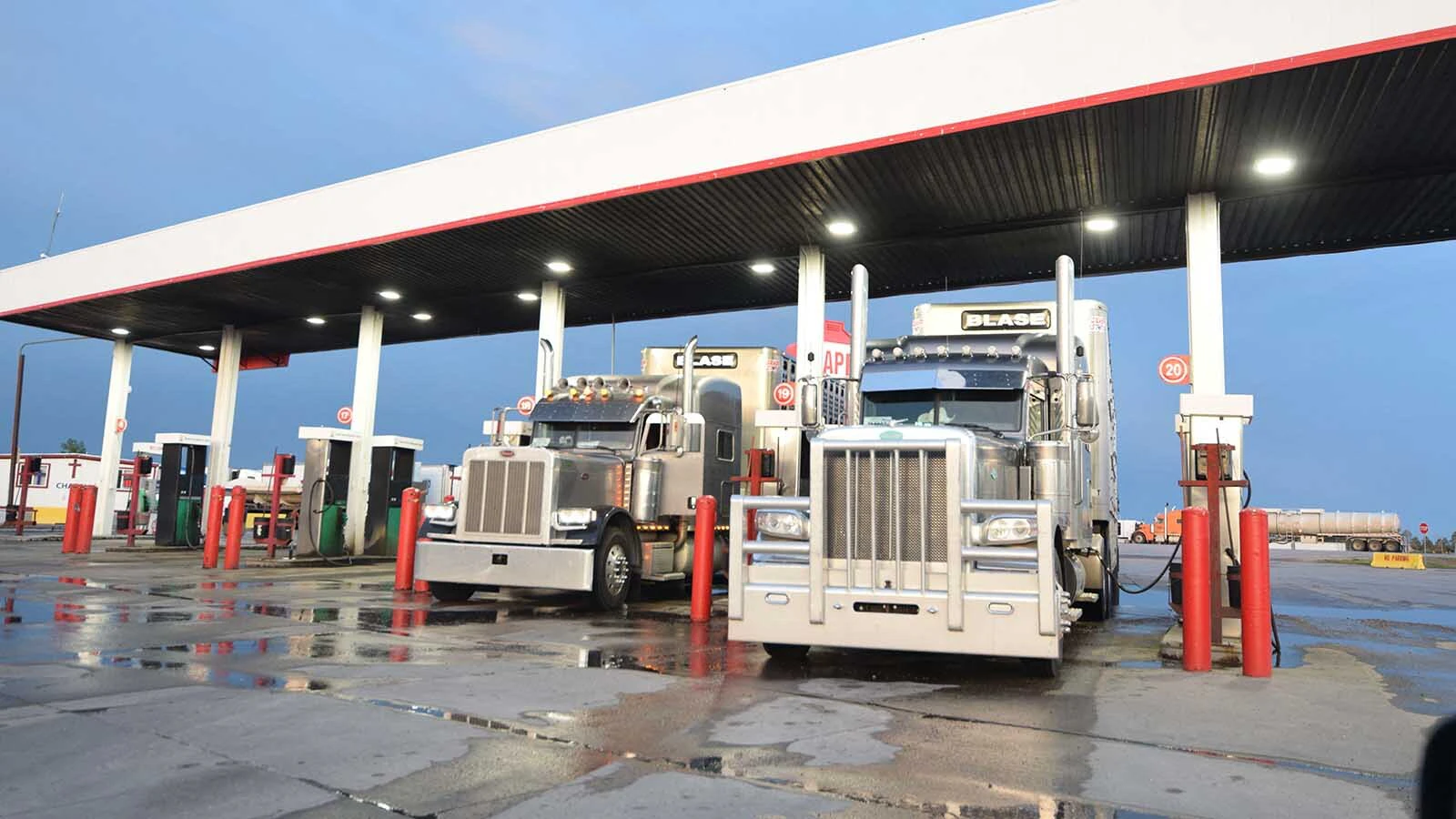
Truckers fill up at the Sapp Brothers truck stop in east Cheyenne in a file photo. (Hum Images via Alamy) 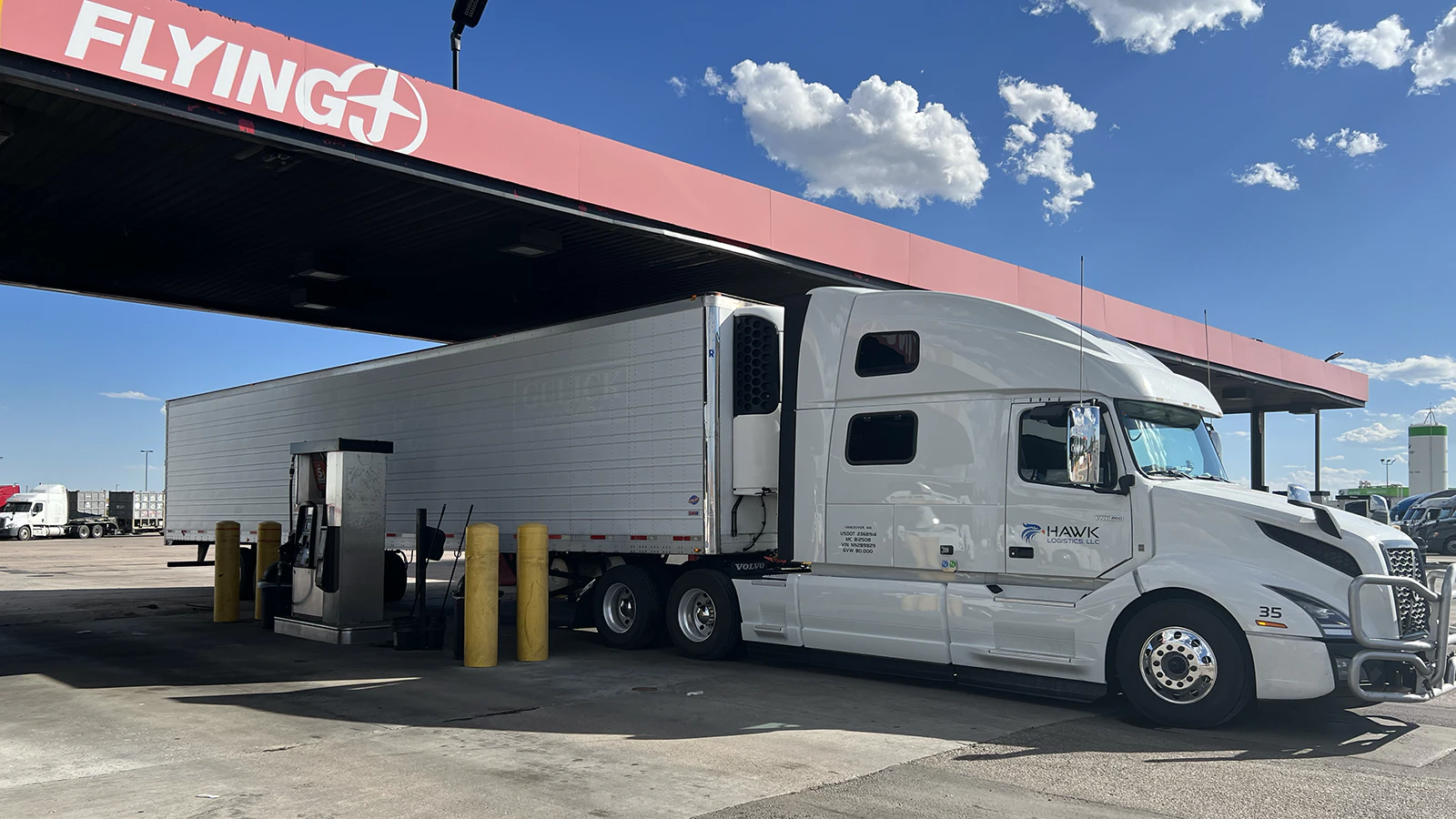
Truckers fill up at the Flying J truck stop in south Cheyenne. (Greg Johnson, Cowboy State Daily) 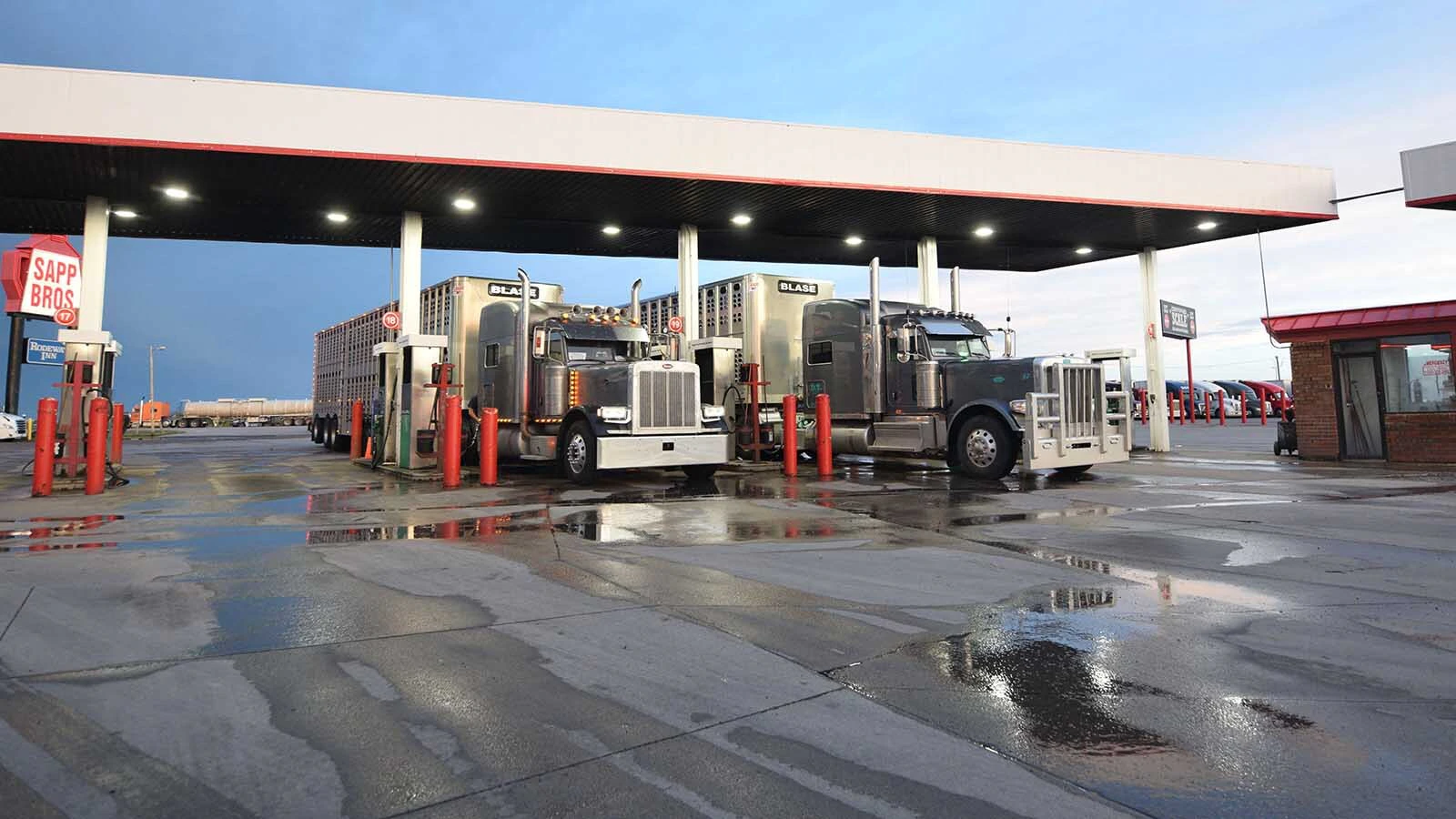
Truckers fill up at the Sapp Brothers truck stop in east Cheyenne in a file photo. (Hum Images via Alamy)
Price Politics
Back at the Belgrade Pilot, Huntsberger traced the diesel price arc from memory.
During the Biden administration, COVID-related inflation drove diesel up before it leveled off toward the end of that presidency, settling around the high $3 range nationally, with California as the usual outlier above $4.
The Trump administration had started to bring things under control, Huntsberger said, but the Iran strikes four weeks ago sent diesel rocketing past anything he’d seen before.
“Since our strikes in Iran, diesel has spiked way higher, faster than ever, way ahead of gasoline,” he said. “And Trump had started to get this inflation under control a little bit. But now we’re back to Biden-era, and worse.”
The national average crossed $5.375 a gallon for diesel on March 24, up about 40% from the beginning of the month, according to the Energy Information Administration.
Huntsberger had a few days of work in Montana before hauling a load to Phoenix, then picking up in Medford, Oregon, before heading to Salt Lake City. Every mile would cost more than it did a month ago.
When asked if he had any final thoughts, the owner-operator from Southern California — who supported Trump in all three of his presidential races — said, “No more wars would be nice. Let’s focus on America. That’s what a lot of us voted for.”
David Madison can be reached at david@cowboystatedaily.com.