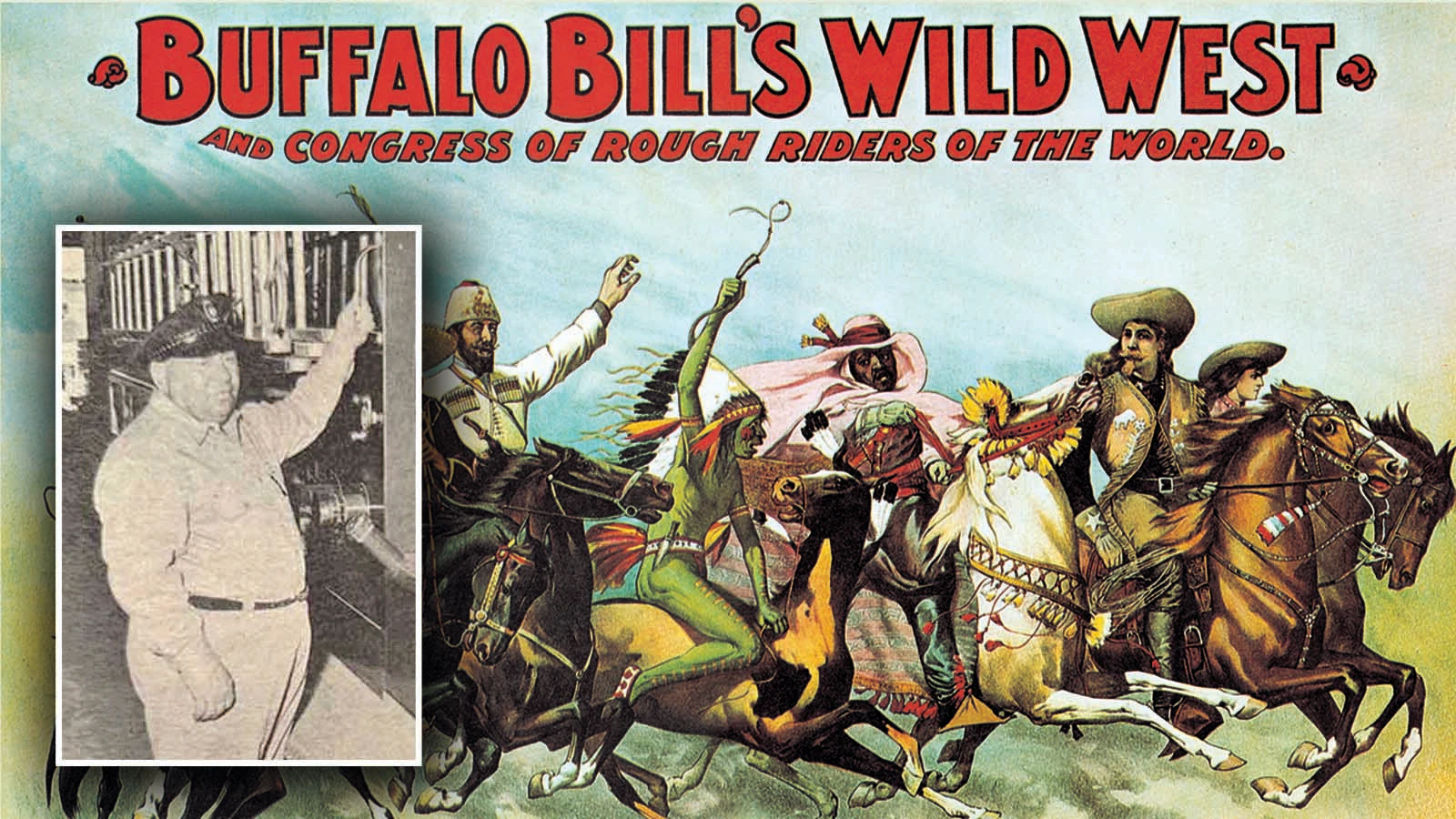
Glenn “Shorty” Kischko was born in a show wagon on March 16, 1882. All around the wagon where Kischko took his first breaths was a noisy, busy hustle.
Following the adage, “the show must go on,” most of the participants of Buffalo Bill’s Wild West show did not pause in their preparation to entertain the citizens of Six-Shooter Junction, the original name of Hempstead, Texas.
The exception was Buffalo Bill, William F. Cody, who had stopped by to check in on the health of the newest member of his troupe.
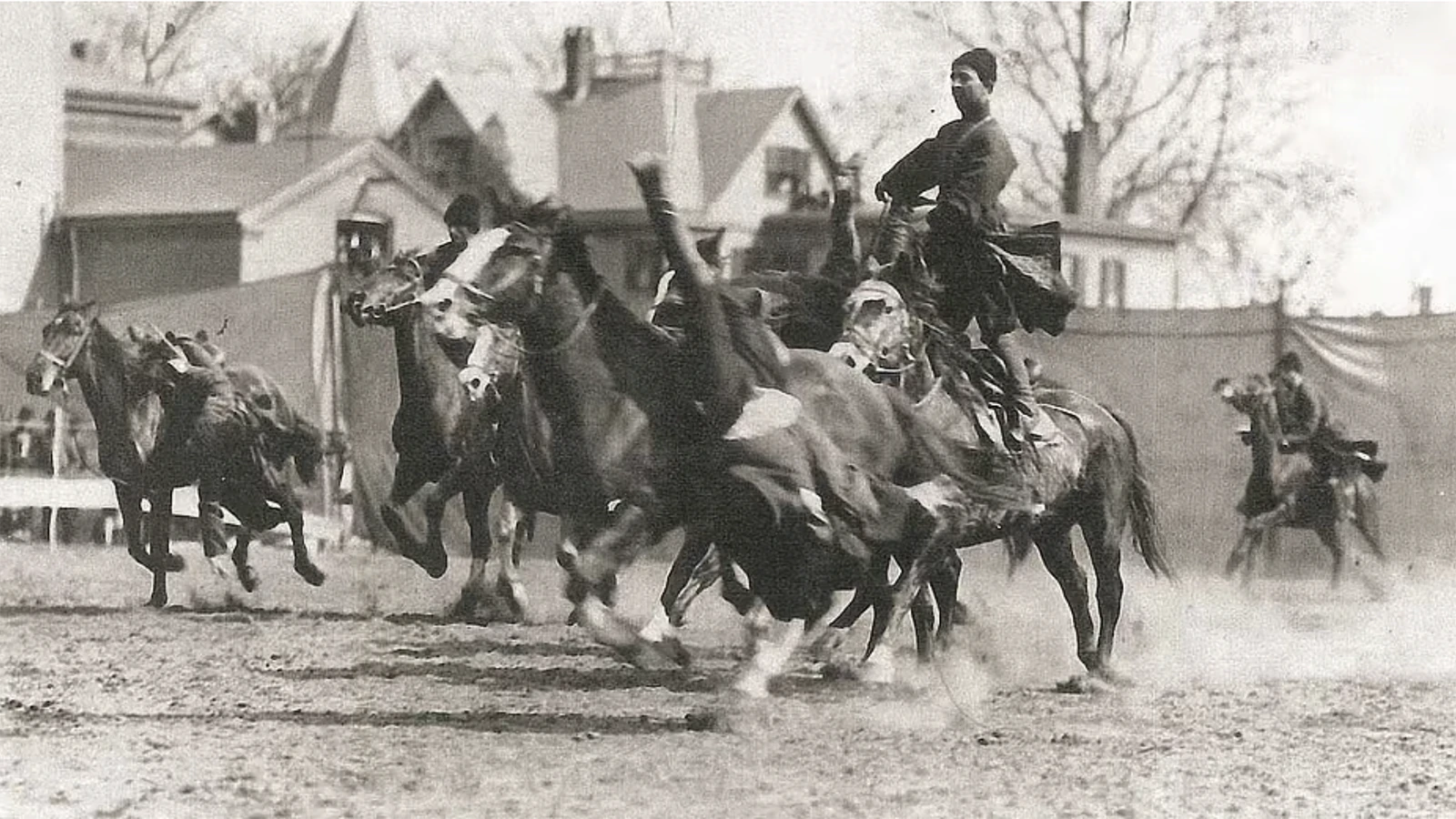
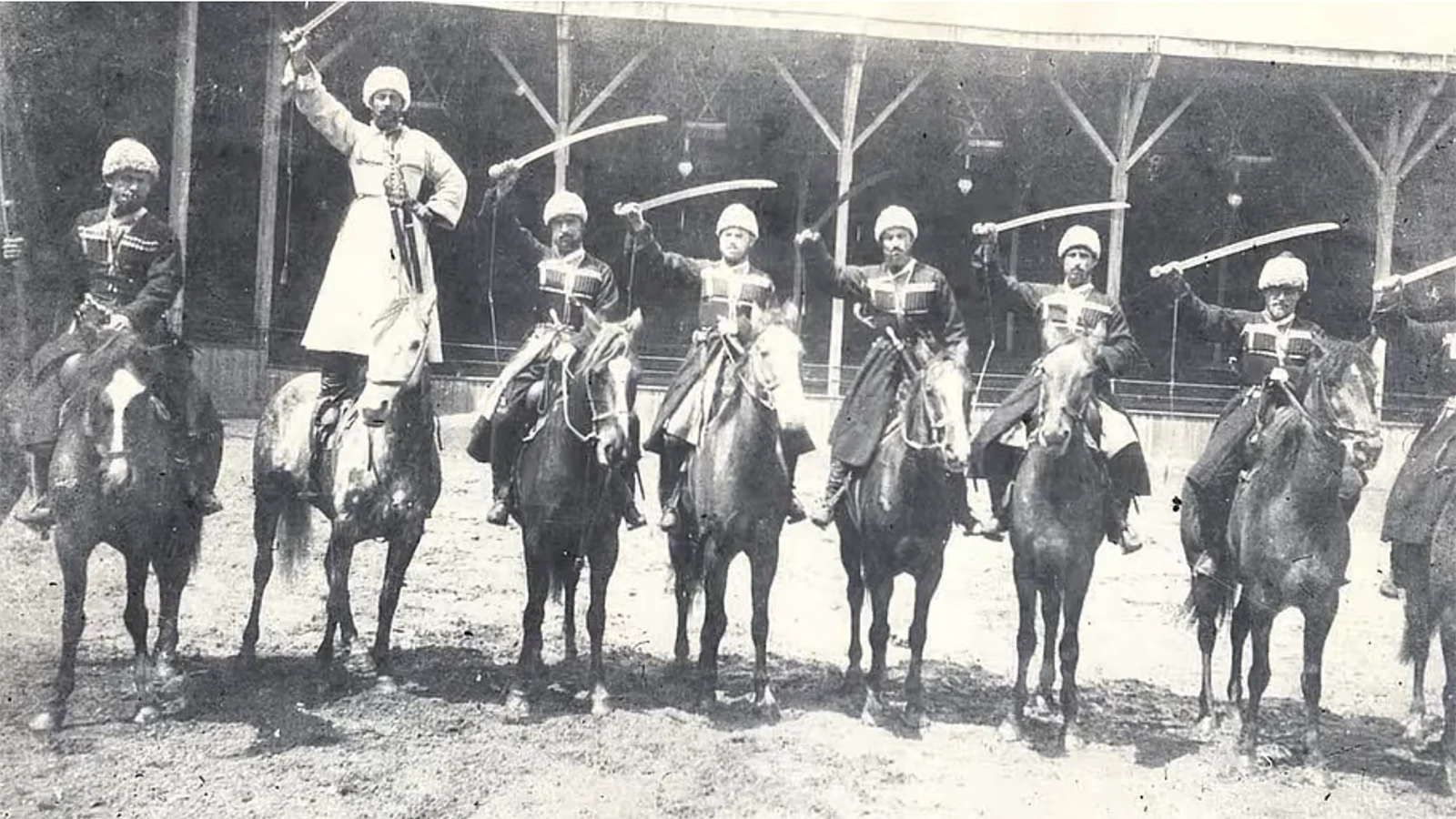
The infant’s father was John Kischko, better known as Prince Luca of the Cossacks, a trick rider who was touted as coming from Russia by permission of the czar.
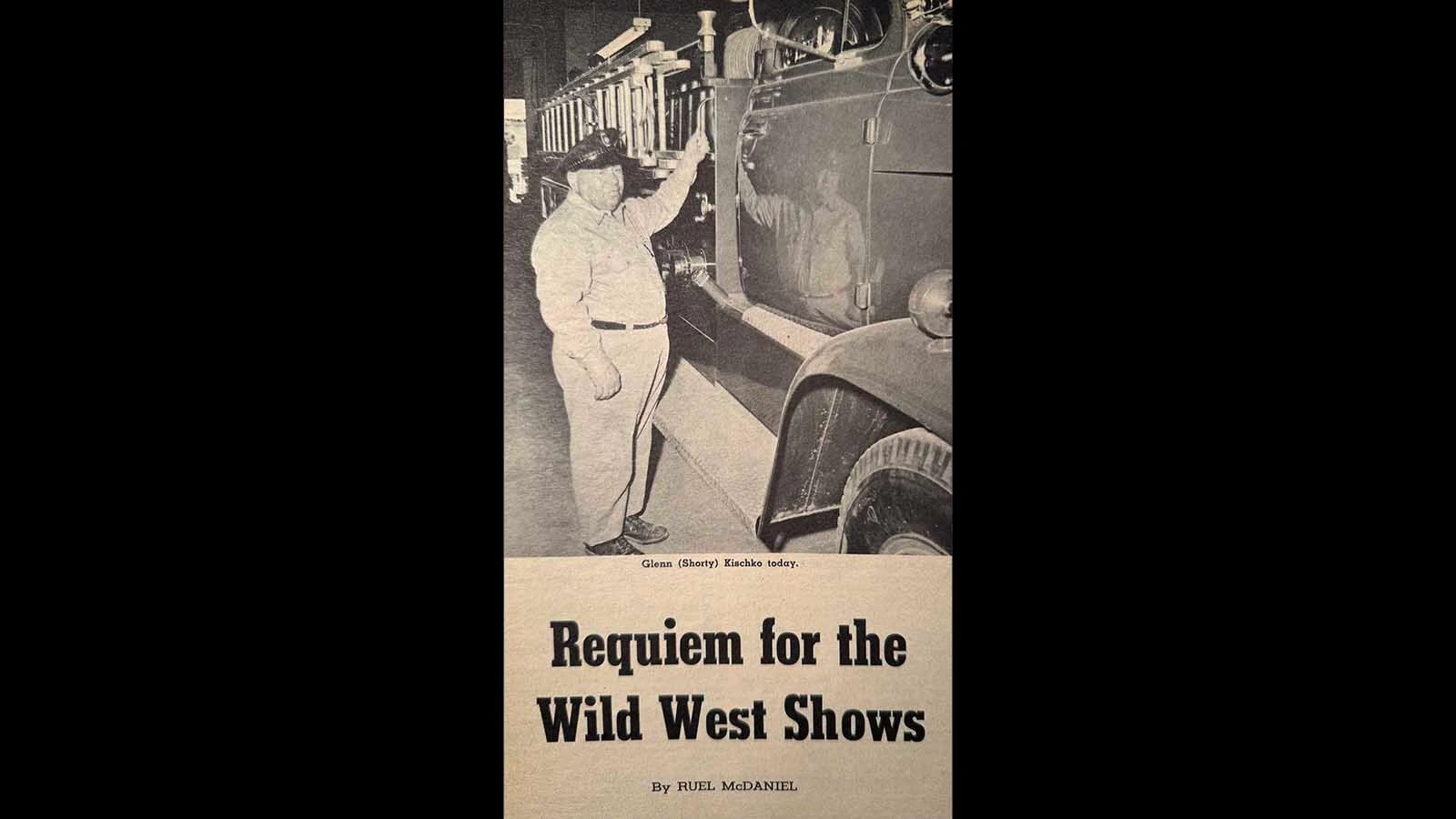
In the 1961 winter edition of the Frontier Times magazine, Kischko shared his adventures growing up in the Wild West shows with author Ruel McDaniel.
Kischko was 79 years old at the time and working odd jobs out of his little shack in Aransas Pass, Texas. He painted signs, designed murals and volunteered for the fire department.
“You might say, I saw the Wild West Show come into its own, I saw it thrive as a part of the West, and I saw it die,” Kischko said. “I don’t think it’ll ever live again.”
The only time Kischko left the show was to serve in both World Wars.
Since Kischko spoke his father’s native Serbian tongue, and thirteen other languages, he was dropped behind enemy lines as a member of the U.S. intelligence agency, the Office of Strategic Services, during World War II.
He remained there 290 days, during which time he collected fourteen assorted bullet wounds, but still carried out his assignment, according to McDaniel.
While proud of his military service, it was his years with the Wild West shows that Kischko considered his legacy.
Earning His Keep
When Kischko was 4, his mother died on the road with the Buffalo Bill show and the small boy was soon put to work making resin balls for the sharpshooters to break when tossed into the air.
Kischko’s father, Prince Luca, continued his trade as a trick rider with the Cossacks, most of whom were really from the country of Georgia. When he was but 11, Prince Luca was killed during a performance at Chicago, leaving Kischko to grow up as an orphan with the show, where he already was a regular hand.
Kischko’s uncle, Prince Tifto, and the other Cossacks only felt a light sense of obligation toward the orphan who was now on his own to earn his living at the show.
“I molded many a resin ball for Annie Oakley,” Kischko said. “There certainly was nothing phony about her marksmanship.”
Kischko told McDaniel a story about another teenager who had come to work with the Buffalo Bill show as a marksman.
Her mother told everybody who would listen that her daughter was the best shot in the world, man or woman, Kischko said. The mother was quite aloof around the other performers and berated her teenage daughter for talking to Kischko and another hand, Tex Cooper. The mother called them common trash, which “riled” the boys.
“I don’t think she is half as good as you claim she is,” Cooper said, according to Kischko.
In response, the daughter fired at various fixed targets from many positions and her score was perfect.
“But on this show, she’s got to shoot buck-and-wing,” Cooper said. “Shorty, toss a few resin balls into the air for her.”
Kischko tossed his balls into the air and she missed every shot. That was the end of her career on the show.
It was while a youngster in Oklahoma that Kischko had a brief encounter with the notorious outlaw Belle Starr.
A young woman rode up to where he was standing in a little village and asked him to hold her horse. He did, and several minutes later she returned, mounted and tossed him a silver dollar. The same day she rode out to a little ranch and shot down the rancher and his wife when they refused to give her a drink of water.
“When I found out that the woman whose horse I held was Belle Starr, I got pretty scared wondering what she’d have done to me if I’d refused to hold her horse,” Kischko said.
Traveling With the Shows
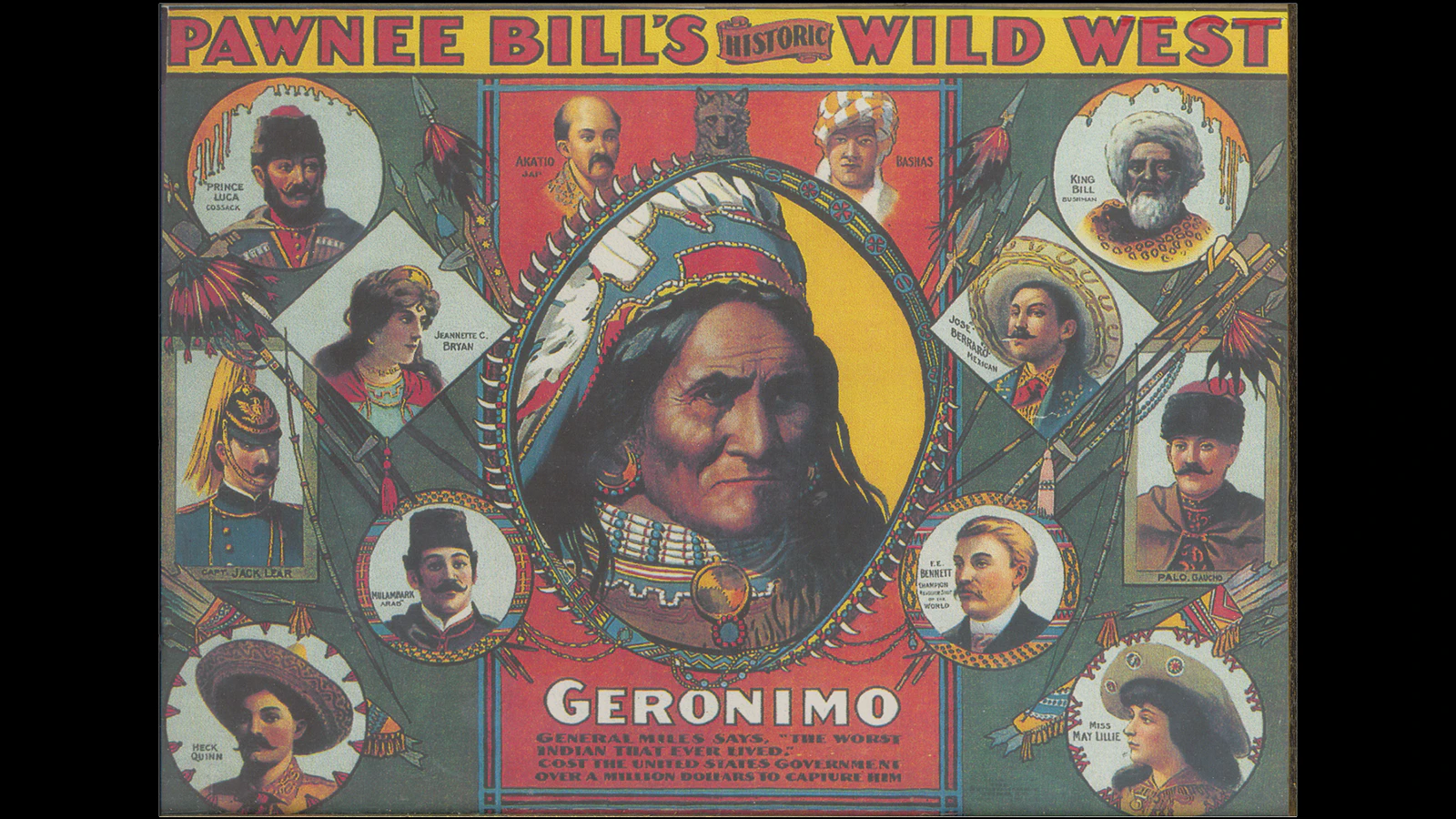
In 1906, Buffalo Bill Cody and Gordon Lilly, known as Pawnee Bill, who had owned the Wild West Show together, split and each formed his own enterprise.
Kischko stayed on with Buffalo Bill. He was 18 by then and had outgrown his first job of making resin balls. He began to ride and rope and worked into a regular riding hand.
When the Buffalo Bill outfit broke up, Kischko next joined up with the 101 Ranch Wild West show run by Joe Miller. Kischko said that Miller had the stuff to build and operate a real Wild West show.
Of the many good hands who helped to operate the Miller show, two men particularly stood out in his mind. One was Bill Pickett, the other was a man simply known as Kirby.
“Kirby was a man all the way,” Kischko said. “Quiet, good-natured, unkempt, and always ready to help anybody who really needed it.”
Kischko said that Kirby was the greatest man he had ever seen with a bullwhip.
“Very few people believe me—except old-timers who were witnesses—but I’ve seen Kirby stand up in a wagon with a whip eighteen feet long, mounted on a six-foot stock, and flip a fly off the ear of the lead ox, without touching the animal,” Kischko said.
He called Kirby an artist with a bullwhip and when he left the Wild West shows, there was nobody to fill his boots.
Kischko described Bill Pickett as a colored rider who Miller respected above almost anybody else on the show.
“A hundred men could tell Joe Miller something a certain way, and then if Bill Pickett said it didn’t happen that way, Miller would believe Bill and call the other hundred liars,” Kischko said. “And he was always right.”
Another man that Kischko admired was Chief Red Fox, a Sioux, who had charge of the Indians in the Miller Brothers show.
“He was a real Indian chief and he carried himself like one,” Kischko said. “He was a fine man and true to the show all the way.”
Kischko learned the Sioux language from him and they had a reunion in Aransas Pass in the 1950s.
The Acts
“The Indian massacre of the wagon train was the spectacular feature of the 101 Ranch show,” Kischko said. “It was a tremendous attraction, because of its realism. Nobody would go to the trouble and pains to produce such realism today.”
Kischko said that the spectacular act showed a wagon train bedding down for the night, with the wagons drawn up in a semicircle.
McDaniel described the scene in vivid detail.
It was a night show and all lights were extinguished. In the distance were faint sounds to signify the approach of the Sioux Indians. Out of the darkness, burning arrows flashed into the tarpaulin of the covered wagons. The tarps, having been sprayed with kerosene, burst into flames and the savages rode in painted and whooping. Women screamed and scampered for safety in the light of the burning wagons.
“Pregnant women, too,” Kischko said. “Every wagon train had its share of pregnant women, and Joe Miller insisted on realism.”
According to Kischko, to make the children scream during the attack, mothers pinched them to produce genuine crying.
“That was realism,” Kischko said. “That sort of attention to detail made the wagon train massacre an act unmatched in all the annals of Wild West shows.”
Kischko looked upon the Wild West riding of the 1960s with considerable disdain.
“When we learned to ride with Buffalo Bill, there were no chutes to make it easy for a rider to mount a bucking bronc,” he said. “We snubbed down the brute, maybe biting his ear, till a rider got aboard, then we turned him loose.”
The rider would then stay on the saddle until the bronc stopped bucking or the rider lost his seat. There were no “fancy” pickoffs.
While with the 101 Ranch, Kischko got to know Will Rogers, Hoot Gibson and other figures of that time who visited frequently at 101 Ranch headquarters.
“Will and Hoot both were fine men,” he said. “They always ate and slept with the cowboys rather than at the headquarters house. They seemed to like cowboy talk better than boss palavar.”
Tragedy After the Show
After the show ended, Kischko’s uncle, Prince Tifto, felt the same way about modern cowboys as did his nephew. In 1939, Tifto was killed on his ranch in Florida. He had become disgusted with the “namby-pamby” way his cowhands were breaking wild horses, so he mounted to give a demonstration and a horse threw and killed him. He was 87 years old at the time.
Kischko left the 101 Ranch show in 1926 and moved east. For several years he was with James E. Strates, the “Sunday school” carnival man, who never allowed a gambling device on his shows and wound up worth several million dollars.
Eventually, Kischko drifted to Oklahoma, which had held quite a fascination for him because of its pioneering spirit. He married and settled down in Woodward. Tragedy struck in 1947 when a tornado hit his home, along with nearly every home in the town, and killed his wife and two children.
Kischko left there almost immediately, went to Aransas Pass, winter quarters for several carnivals, and became a permanent resident.
“The Wild West shows were good in those days because the men who made them put their hearts into their work,” Kischko said in the 1961 interview. “They spared nothing for realism. The era ended because the old blood died off and the youngsters didn’t have the stuff to carry on.”
Jackie Dorothy can be reached at jackie@cowboystatedaily.com.