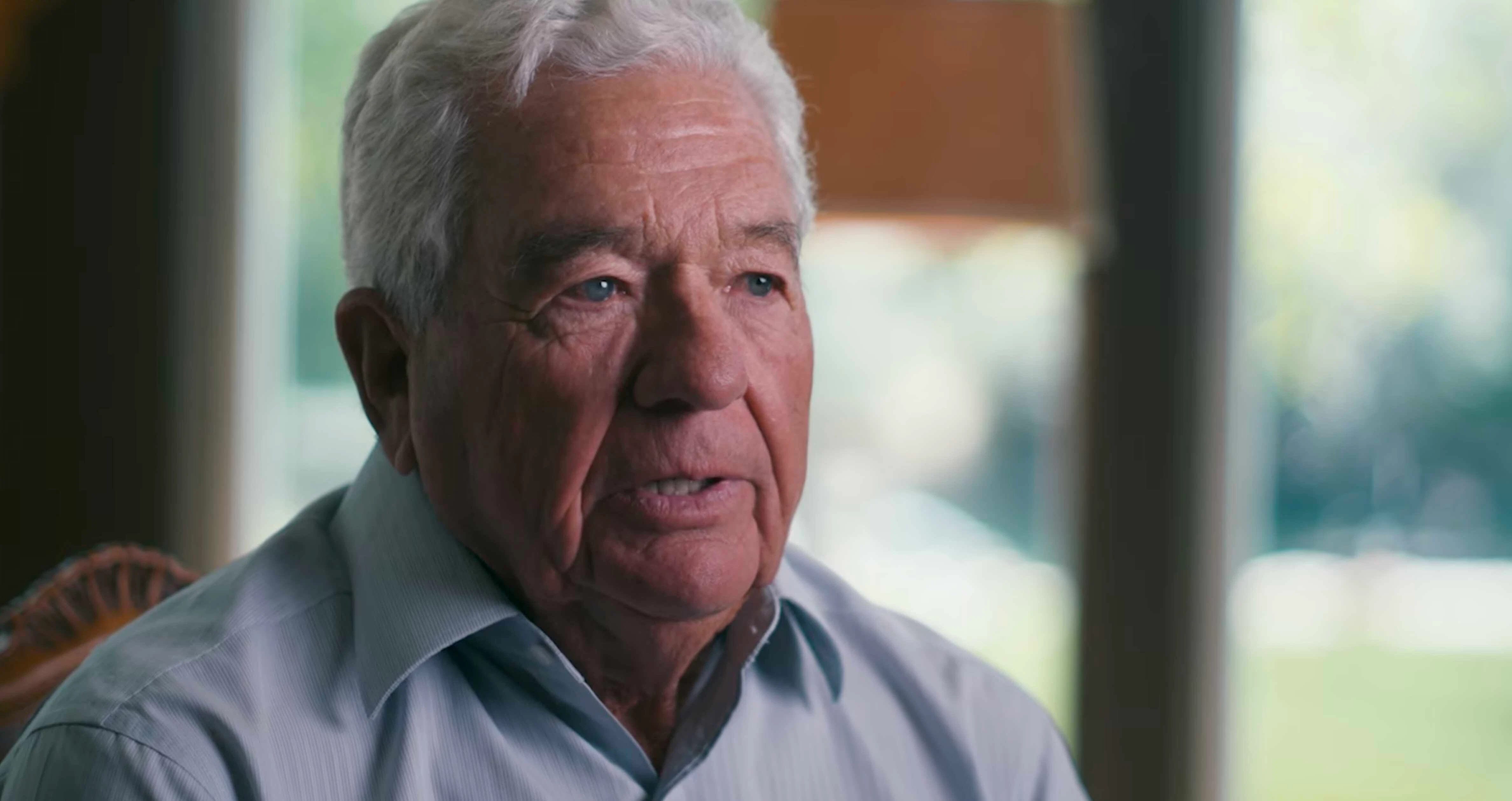
He’s been called the Wyoming Audie Murphy, but former U.S. Army 1st Lt. Lee Alley does not see himself through the same lens.
Murphy was the World War II hero he idolized on the screen going to movies as a kid. And while Alley’s actions in Vietnam rivaled the Medal of Honor winner who held off German soldiers from the top of a tank turret, Alley now has something greater that can’t be pinned on his chest.
It came through the words and hug of his former enemy — as a Wyoming PBS camera rolled. It was in the same spot Alley single-handedly held off a North Vietnamese charge in 1967 as members of his reconnaissance unit escaped across a river.
That moment nearly six decades later?
“It changed my life,” Alley said.
With his 80th birthday coming in a couple of months, Alley can now go to sleep at night without nightmares that have plagued him since returning from a year on the jungle front lines and finding the university he left a foreign place.
He is a successful author, veterans advocate, University of Wyoming graduate, ex-teacher, former rancher, postal retiree, and husband and father of two.
He also holds firm to the belief that serving in the U.S. military remains honorable and needed.
Alley’s experiences and conversations with other veterans also make clear to him that young Americans cannot go into combat and be expected to come back the same person.
“If you don’t change in war you don’t survive,” he said. “You have to become the warrior … War changes you, whether you want it to or not.”
The Beginning
Alley is the second youngest of seven siblings, was born in 1946, and spent the early years of his life through fourth grade outside of Rock Springs in the Red Desert as his father worked for a sheep company. He said those early years helped make him and siblings independent and “sure of ourselves.”
He still remembers the day his father came into their home with everyone around the table and announced that he had quit his job and they were going to move to Laramie. His dad explained that he only had an eighth-grade education and had to leave school when his own father died to help care for the family.
“(Dad said) we’re moving to Laramie because the University of Wyoming is there and every one of you kids is going to get an education,” Alley said. “And out of that move, five of the seven kids actually graduated from the University of Wyoming.”
He said his mother also at one point went back to college and finished her university degree.
Alley spent his high school years at the University High School that once operated on the University of Wyoming campus. After graduating from high school, he enrolled in the university but found there were a lot of distractions that kept him away from the books.
“I was just doing my own thing and sowing my oats,” he said. “The dean of the college basically said, ‘You know, I think you are wasting your time. You’ve got to go do something else. That’s how I ended up in the military.”
Alley said he went down to the draft board and there found that a family friend was in charge. He asked to be put at the top of the draft and go in with his brother who also was being drafted. The Alley brothers went through basic training at Fort Leonard Wood, Missouri and then separated after their aptitude tests were scored and sorted.
Lee Alley was sent to advanced infantry school and his brother to radio repair school, but both were at Fort Gordon, Georgia.
Becoming An Officer
While in infantry training, Alley recalled being sent into the unit’s office and told he scored high on his aptitude tests. He was asked if he would consider officer’s candidate school. He turned them down.
They kept asking. He finally relented.
“So, after advanced infantry training, I went to Fort Knox, Kentucky, to armor officer school, which was a six-month school,” he said. “I graduated from there as a 2nd lieutenant.”
Though he was trained in tanks and armor, Alley would never sit on a tank and lead troops.
He spent time in airborne school at Fort Benning, Georgia and then after graduation was ordered to teach leadership at another officer’s candidate school in Maryland. He spent a year there before being assigned to jungle warfare school in Panama and given orders to Vietnam.
Alley said he was supposed to be an officer in an armored unit, but during the second or third day of orientation in the country heard his name called over the loudspeaker. The voice said that his ride was there to take him to the 9th Infantry Division in the Mekong Delta. He said he panicked and told the officials he had orders to the 11th Armored Division and was an armor officer.
“They said, ‘Well, in the Army things change, and so you are headed to the 9th Infantry (Division),” he recalled. “And so, that’s how I ended up in the 9th and I was assigned as an infantry platoon leader.”
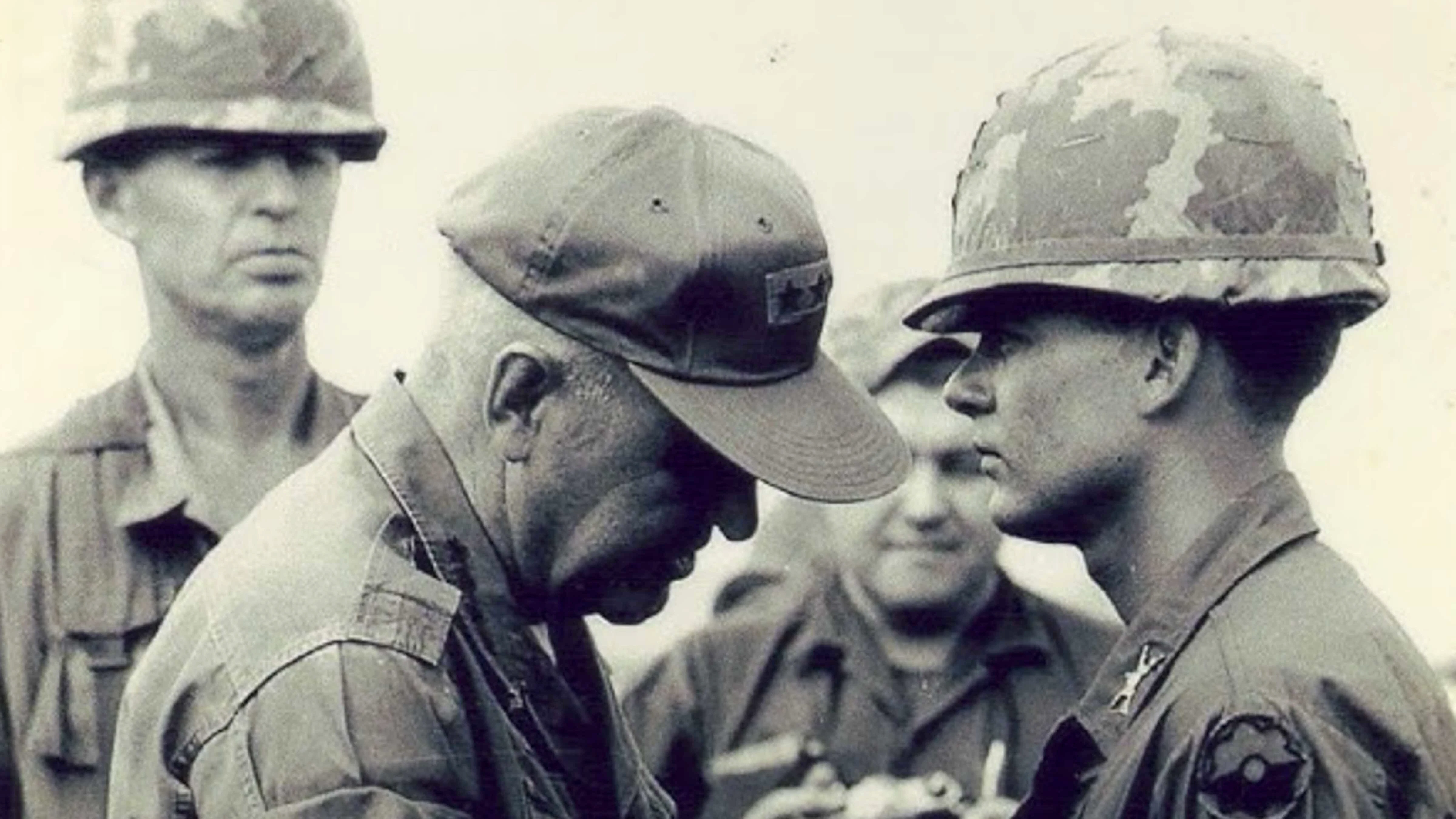
That role involved leading his platoon within the 5th Battalion, 60th Infantry Regiment on jungle patrols and seeing some combat situations.
After about two months, he was called in to see the commander, a colonel, who told him that he wanted him to take over the reconnaissance unit. That unit was the “tip of the spear” for the battalion headquarters. Alley said he hesitated, but the colonel told him he had been watching him and wanted him in that role.
The 35-man unit included hand-picked soldiers and had a reputation for being in the most scrapes and getting the most kills in battle because of their assignments probing enemy positions. Alley said the “hardened” soldiers who had been in the unit took him under their wing and told him they would “help him out.”
On Patrol
So began his baptism under fire, avoiding booby traps, and learning survival against the Viet Cong guerrilla fighters who would slip in and out of the jungle making assaults and trying to keep their American enemy guessing where they would show up next.
When the battle of Fire Support Base Cudgel occurred from Nov. 15 to 19 in 1967, Alley said he had led the recon unit for about four months and by that time had handpicked the 35 soldiers with him because the seasoned guys who helped train him had finished their tour of duty.
In the battle, the recon unit had spent a day under fire laying in a rice paddy attracting leeches and then was helicoptered to another position where they were placed across a river from an artillery position to defend the artillery. After his unit dug in for the night in positions designated by Alley, one lead recon position fired on and killed uniformed soldiers — not wearing typical Viet Cong fighter garb.
Then the enemy attacked. In his book published in 2006, “Back From War: A Quest For Life After Death,” with co-author Wade Stevenson, Alley wrote that he quickly understood that the force against his small unit numbered in the hundreds. Just then they came under heavy assault from mortars and then the North Vietnamese soldiers themselves.
“We started taking casualties quick,” Alley told Cowboy State Daily. He said he knew his job was to protect his men and ordered his out-numbered force across the river. He decided he alone would lay down fire from his small dug-in position to allow them to get the wounded and living across.
Looking back on his actions, Alley describes it as “almost an out-of-body experience.” He took M-16 rifles and hand grenades from some of his troops before they jumped in to swim and wade across the water and started killing as many of the enemy as he could as they made their charge.
He went through four M-16s and clips and several hand grenades until he saw his men across and jumped into the water as bullets rained down around him. Once ashore, Alley called for the artillery to lower their guns and fire on his former unit’s position and radioed for helicopter gunships.
The fire from the air helped drive the enemy back.

Blood On His Back
Alley said they could not get medical evacuations for the 24 wounded in his unit until the next day. There were only eight of them left to fight and three dead. He was also asked that day after the sun rose about the blood on the back of his shirt. He said one of the mortar explosions that rained down during the Vietnamese attack had sent shrapnel into his back. He refused to leave and went to a medical tent where they pulled the shrapnel out.
His actions during the battle led to a Medal of Honor nomination. Between that battle and a second battle at Firebase Jaeger in February 1968, after he had been pulled from the recon unit and was leading an infantry company, he was awarded several medals.
They include the Distinguished Service Cross, Silver Star, Bronze Star, Soldier’s Medal, Army Commendation Medal, two Air Mobile Assault Medals, and the Vietnamese Cross of Gallantry Medal and two Purple Hearts.
When people came to his base camp in Vietnam after the Fire Support Base Cudgel fight to interview him for the Medal of Honor he refused to talk to them. The kid who watched Audie Murphy on the screen and other war heroes took over.
“The first thing in my mind was, ‘No, no, that’s Audie Murphy. That’s the guy in the movie, that’s not me,” Alley said. “I don’t want to talk about it, and I don’t want to be that, those guys are my heroes. … Maybe that was a stupid mentality, but’s that’s how I felt.”
After the completion of his tour, Alley said he had the opportunity to become a general’s aide in Washington, D.C. and get promoted to captain.
Going Home
“But I had some things I had to deal with, and I knew there was something wrong, and I wanted to go home,” he said.
Once back in the state, he enrolled in the University of Wyoming and quickly felt isolated and an outsider with the anti-war feelings and attitudes of those around him.
Alley said a good thing was that he met his wife, Ellen, at the university. The bad thing was that nightmares began that would carry on for decades.
“It’s just like you don’t fit in and people don’t understand you, and I don’t understand people,” he said. Concerns about what to wear to the prom and other mundane issues of life that those around him voiced, just seemed ridiculous.
“There’s guys out there dying,” he said. “Your whole life changes.”
After graduation, marriage, and the blessing of two children, for the next couple of decades, Alley kept his Vietnam days within him.
He taught school, ranched with his wife’s family, and lived out his life trying to be a good father and husband.
He said when he was about 40, a call came from Missouri asking him to come and speak to a group about the Battle of Fire Support Base Cudgel. He declined.
They asked him to review the battle documents they possessed. When he got them in the mail and read them, Alley got angry. The account was inaccurate, accused his men of sleeping, stated they got their throats cut.
Alley made a phone call and traveled to Missouri to set them straight. There a man mentioned that his former unit had a website. He said at that time he did not even know what a website was.
Once back home, he had his wife find it and read there were people mentioning his name. He said he had his wife send a message.
“Hi, this is Lee Alley. I don’t know if anybody remembers me, but how’s everybody doing?”
Alley said a response came the next day from 52 people. They asked him to lead their efforts to help get a reunion together. He agreed. And when his former comrades in arms came together, he decided to hand them a microphone and encourage them to tell their stories.
‘The Greatest Thing’
“From that, I put on 12 reunions for these guys,” he said. “I had opened a door for these guys to tell their stories. We were telling them to each other. From that, the healing began and I think it is the greatest thing I’ve ever done.”
After returning from the war, Alley had a lot of media coverage despite trying to keep his head down. In later years he was appointed by Wyoming governors to serve on the Wyoming Veterans Commission and served for about nine years — including as chairman.
He said it was maybe 10 years ago that he was interviewed by Wyoming PBS.
After the interview, the reporter told him that they had just “the tip of the iceberg” of his story and suggested the possibility of maybe going back to Vietnam to complete it and “find out where this story is going to end.”
The reporter died of a heart attack shortly after their interview.
Alley said he knew veteran friends who had gone back to Vietnam, but he never really had the desire to return.
Then three years ago while at the National Museum of Military Vehicles in Dubois giving a presentation, he joked afterward with Wyoming PBS CEO Joanna Kail, telling her that the organization owed him a trip to Vietnam.
He said she left and came back 15 minutes later and told him that museum founder and owner, Dan Starks, was going to help make that happen.
“And I’m looking at them thinking, ‘Holy crap, what have I done?’” Alley said.
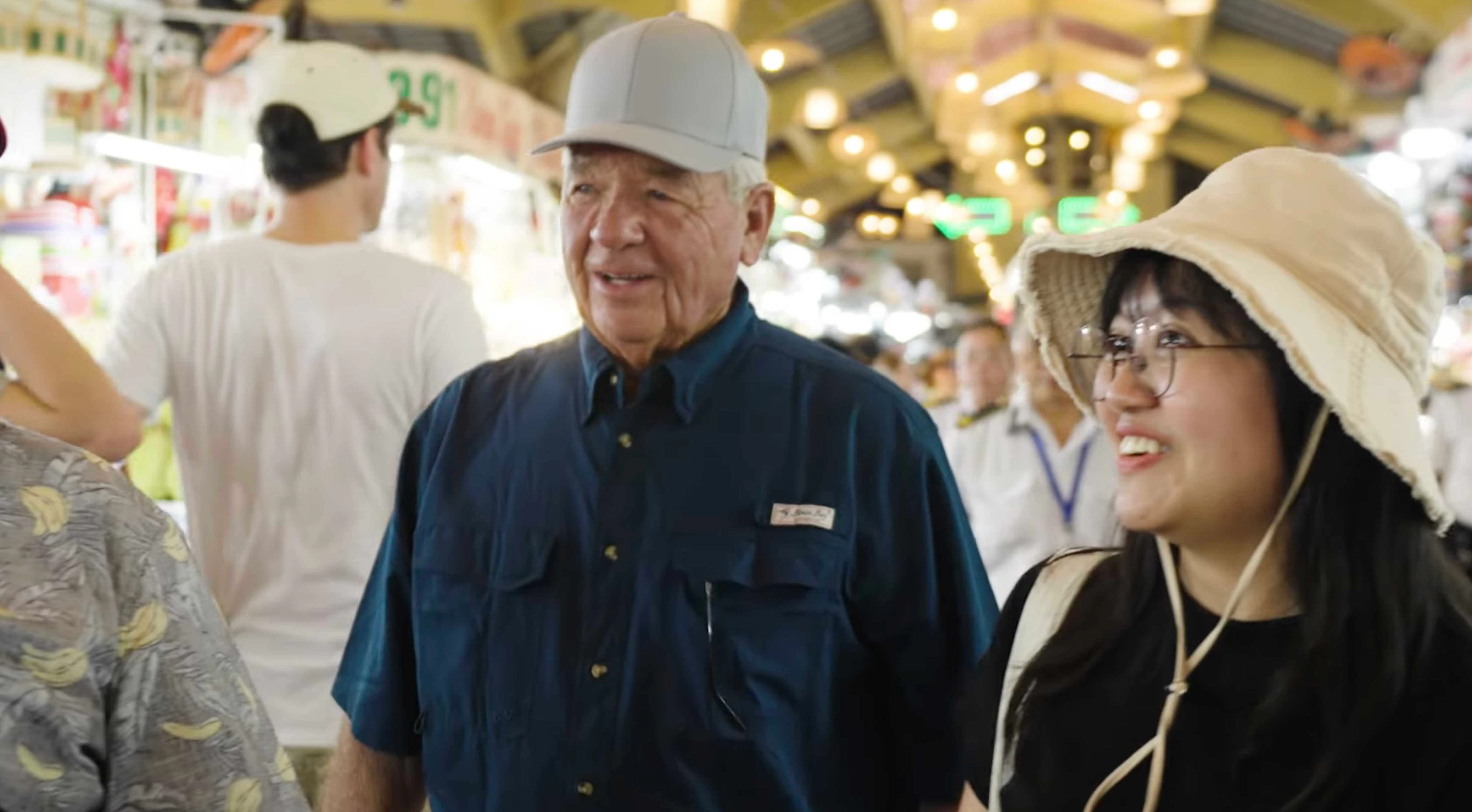
So, last year he and a Wyoming PBS film crew visited his former Fire Support Base Cudgel battlefield where members of the documentary were able to track down former Vietnamese soldiers who participated in the battle.
Alley said he couldn’t recognize the area now because it has houses and has been built up. But there is a big monument to the battle at the site.
While talking though interpreters, he said one of the former Vietnamese soldiers took a piece of paper and drew out a map, showing him exactly where his unit’s positions were in the battle.
The Encounter
The same solider asked the interpreter if Alley was the same man who threw the rifles into the river during the battle. Alley said that as he made his stand with the M-16, it was empty, so he threw them in the river to keep the enemy from taking the weapons.
“He said, ‘Yeah, I saw you. I watched you throw those rifles in the river,” Alley said. “And he said, ‘Guess what American, we came back dressed as civilians three days later and we dove and we got every one of those rifles and we still have them.”
Alley said he was stunned. He said then the soldiers asked him if he was happy and his life had been good and it he had children and grandchildren.
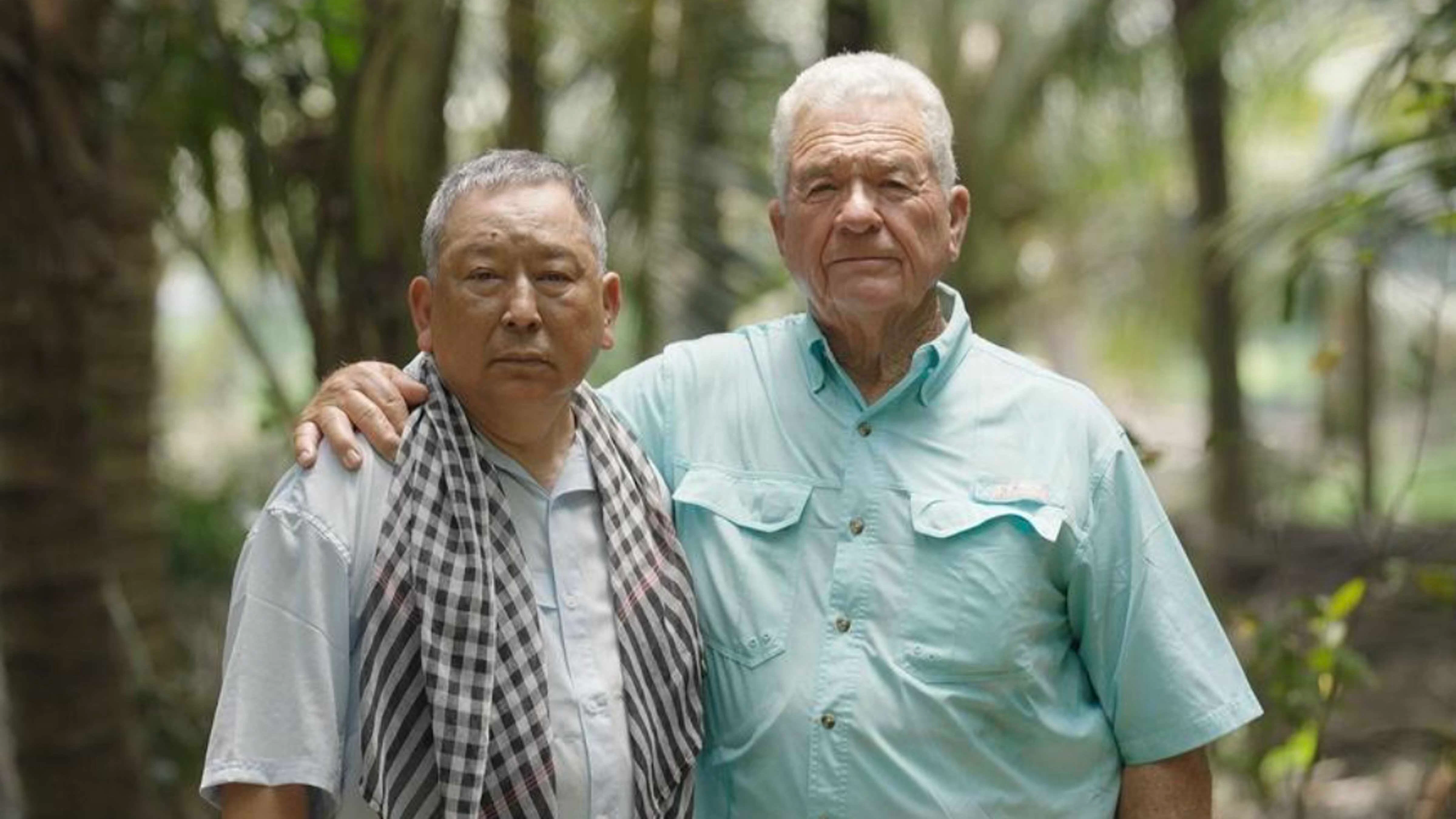
The guy who was mentioned then came over and hugged him and through the interpreter asked him if he had nightmares.
Alley replied that he did. He said the Vietnamese veteran told him he did as well.
The Vietnamese veteran then told him that they both were young, doing what their governments asked them to do.
He told Alley that he just wanted to be a farmer. And then he told Alley that they needed to “bury” the past.
“We must stand here at the site of this battle, and we must hug and we must hold each other and say from this point forward, we must promise each other we have no more nightmares,” Alley quoted his former foe. “It changed my life. … I haven’t had one since.”
The veteran and former warrior believes that military service remains important and that there are many other needs and roles in the military in addition to those who are on the front lines.
Asked if he could go back in time if he would still go to the draft board and ask to go to the top of the list again, Alley laughs.
He said after one of his presentations some years ago, the former family friend who led the draft board came up and apologized and told him he had read his book and heard about his struggles.
“I said, ‘Hey, you did absolutely the right thing,’” Alley recalled. “Because while I went to the military and service, I guarantee you we never lost one square inch of Wyoming to the Vietnamese or the Russians.”
Alley will be at the National Museum of Military Vehicles on Saturday, March 28 as the state honors Vietnam veterans.
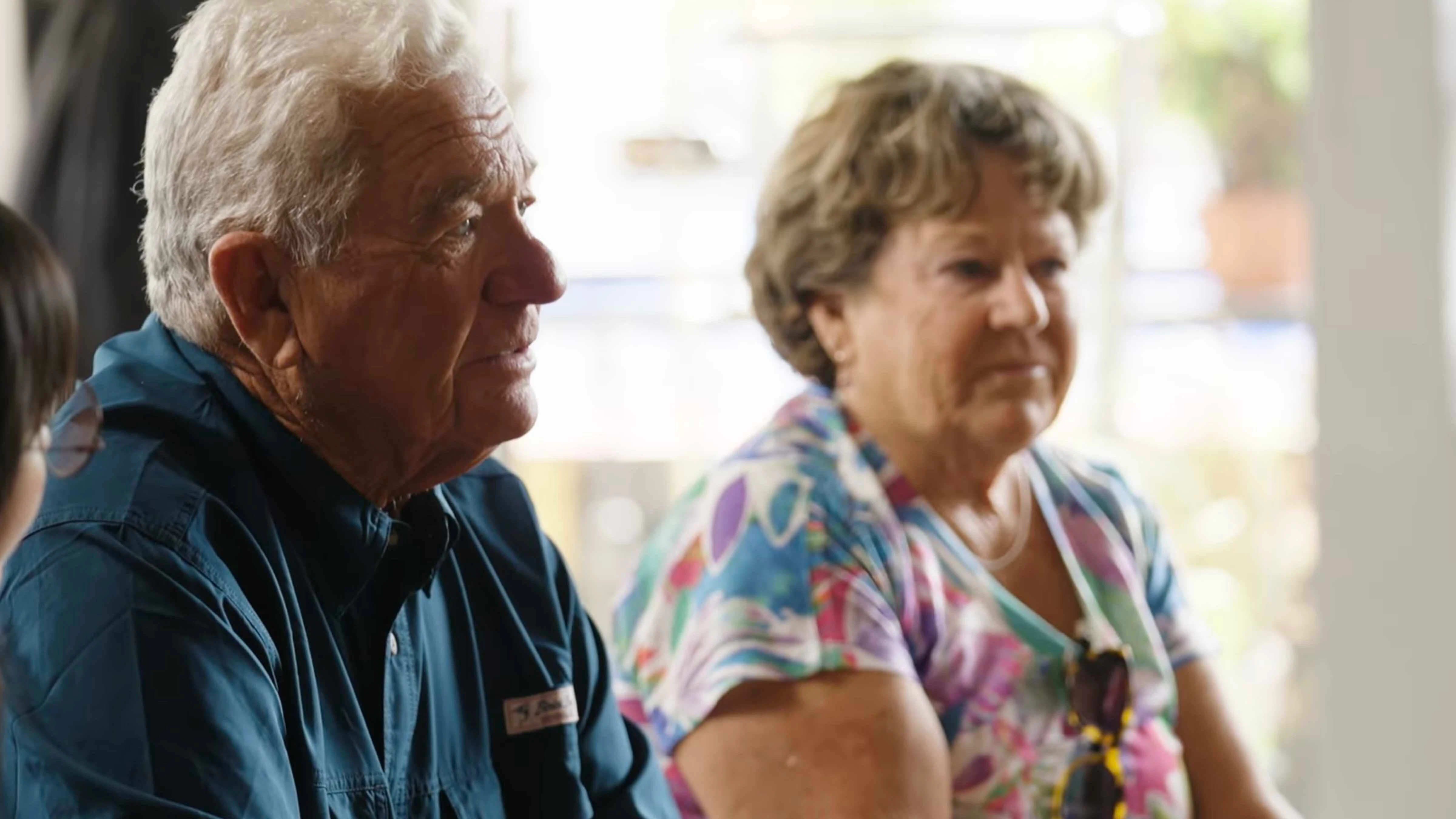
The screening of the documentary on Alley, “Home from the Vietnam War,” will be offered followed by a panel discussion, moderated by PBS’s Kail, with Alley, wife Ellen, and award-winning filmmaker Mat Hames of Alpheus Media.
More information is at wyomingpbs.org/vietnam.
Dale Killingbeck can be reached at dale@cowboystatedaily.com.