Many Wyomingites know that the Oscar-winning movie “The Revenant” is based on the true story of mountain man Hugh Glass.
Attacked by a grizzly bear in South Dakota, Glass became a legend in his lifetime after he crawled back to civilization, intent on taking revenge on Jim Bridger and John Fitzgerald, who had abandoned him and left him to die.
What they may not know, however, is just how much of Wyoming has been woven into the film that’s set across a broad swath of the Rockies.
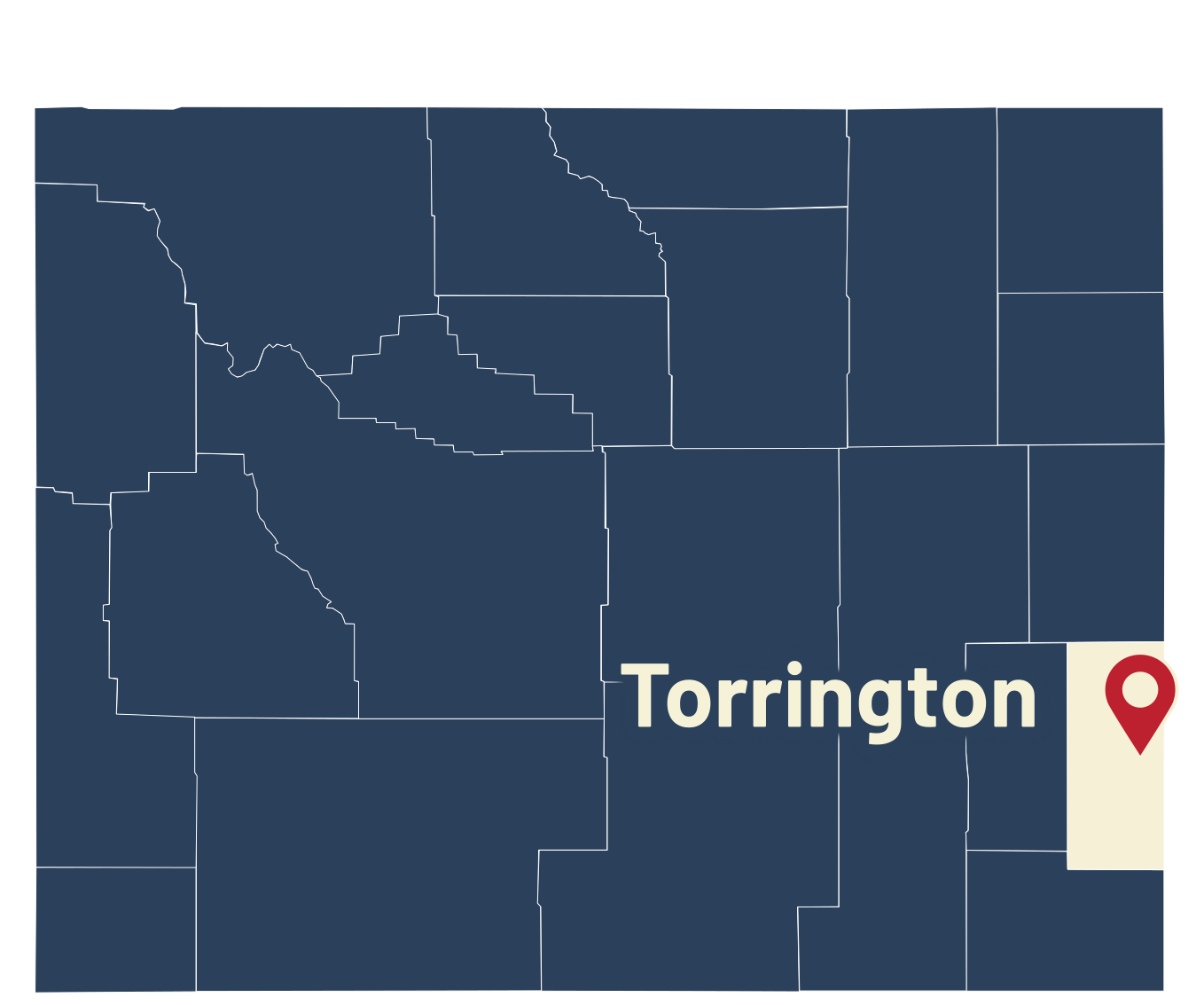
That’s because the film is based on the book “The Revenant: A Novel of Revenge,” which was written by a man named Michael Punke, who was born in Lovell and grew up in Torrington.
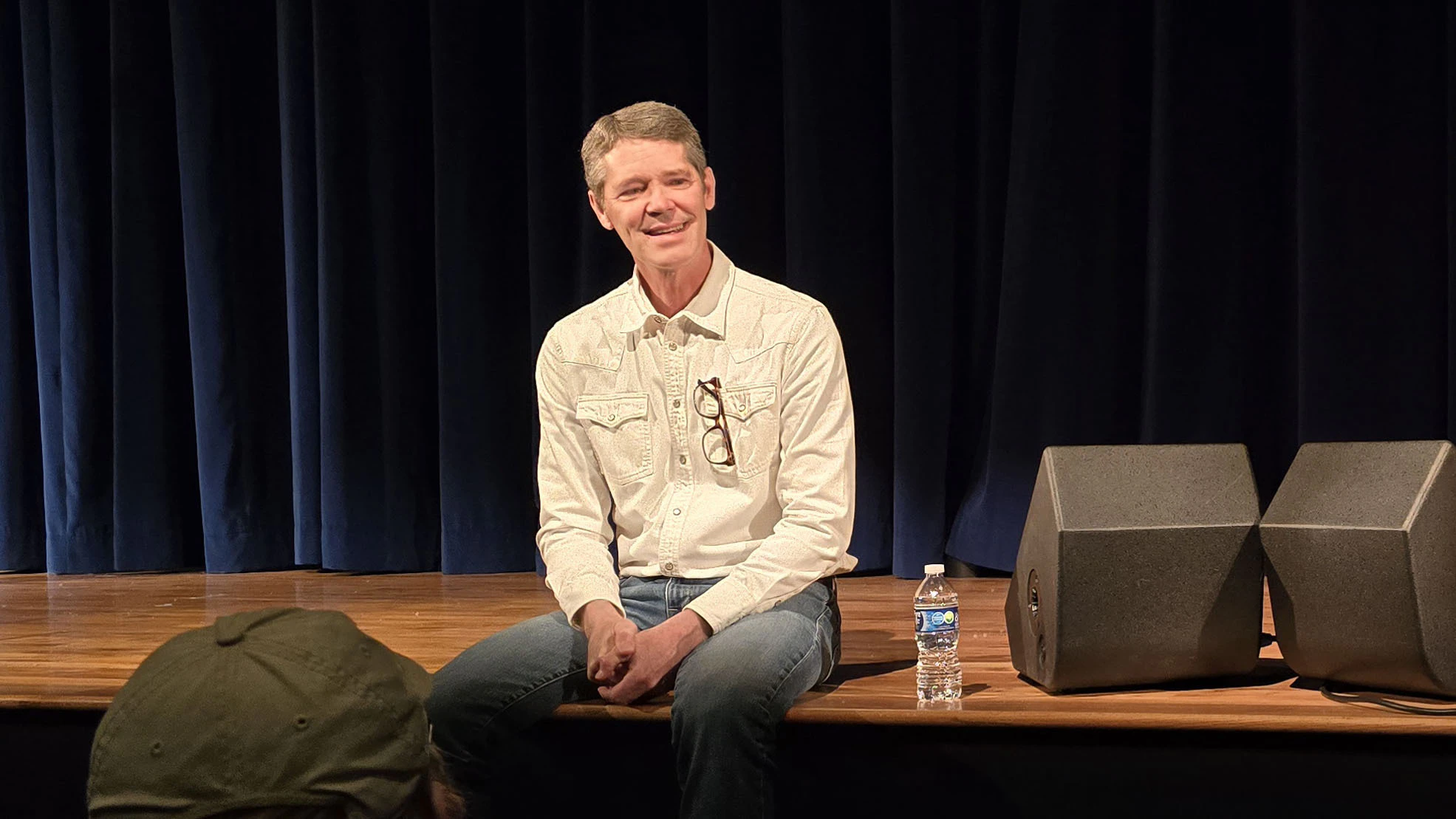
“I’m very much a product of Wyoming public schools,” he told Cowboy State Daily. “I was incredibly lucky with the teachers I had all through my education who not only taught me but inspired me.”
It was not just English teachers who inspired Punke, but history teachers, as well. Not to mention his biology teacher dad, who was always taking him into Wyoming’s backcountry and teaching him all about wildflowers, hunting, and fishing.
“When you grow up in a place like Wyoming or Montana, you can’t not be inspired by the place where you live,” Punke said. “We live in a beautiful place.”
It all made an indelible impression on Punke — an impression that helped create a foundation for his first book.
“That’s the thing about Western stories,” he said. “The land itself is a character in every Western story. It can be a character of inspiring beauty, and it can be a character that is a stark adversary, as in a wilderness survival story. The opportunity to be outside in beautiful places is definitely one of the biggest inspirations to me.”
The Fort Laramie Connection
Not much had been written about Hugh Glass’ life when Punke wrote his book, so he relied heavily on another aspect of his Wyoming upbringing, time spent at Fort Laramie every summer.
From the age of 16, Punke served as a living history guide at the historic site. He was immersed in the life and times of the frontier, down to wearing an 1876 cavalry uniform, baking bread, and firing cannons.
“There’s this scene in ‘The Revenant' where the trappers fire a cannon,” Punke said. “That was twice a day at Fort Laramie. We fired an 1844 mountain Howitzer.”
It’s not the typical experience for most teenagers, Punke will agree with a chuckle.
“But yeah, a lot of those types of experiences came in handy when it was time to write a novel set in the 19th century,” he said. “I literally came about as close as you can to sort of living the 1870s as a teenager. Those experiences and those stories I learned to tell the tourists just really kind of shaped a lot of my early youth.”
Punke’s interest and love of history goes back as far as he can remember, something he credits to his mom, who was also a teacher.
“When I was 12 years old, I built a Hawken Rifle from a kit because I was so interested in that era,” he said.
Hawken rifles, crafted by Jacob and Samuel Hawken in St. Louis, were renowned for their reliability during the Rocky Mountain fur trade. They also offered superior range and stopping power and were a favorite of the famous mountain man Jim Bridger.
A Made For Hollywood Life
Hugh Glass became a legend after surviving a bear attack that should have killed him.
Glass had been scouting a little away from his party, not long after an attack by Arikara, when he encountered a grizzly sow who was not happy to see him. Not at all. He managed to fire a wild shot at the mama bear and then drew his knife. But once the gigantic sow was upon him, a knife really wasn’t much help.
She clawed open his face, splitting it with three deep gashes. She tore chunks of flesh from his body, biting into his chest, his back, and the back of his head.
When he came to, he could hear people talking about his imminent demise, but he couldn’t speak. There was a wound in his throat so deep, bubbles were coming out.
Two men were left with Glass. Not to take care of him or try to heal him, but to bury him once he’d died.
The two men were a young Jim Bridger, who would eventually become one of the West’s most famous mountain men, and an older, more experienced mountain man named John Fitzgerald.
Fitzgerald was concerned the Arikara would return and then there would be three dead men instead of just one. Bridger, on the other hand, was against leaving Glass so long as he was alive.
Glass heard much of the conversation before he passed out. When he came to again, it was clear the older man had won. The two men had gone, leaving him behind. They hadn’t buried him, but they’d taken all that he owned. His rifle, his knife, and his fire kit. All he had left were the bloody rags on his body.
That made Glass so angry he vowed he would live, if only to get revenge on those who had abandoned and essentially robbed him.
Ultimately, Glass didn’t take that revenge. But he did survive, cementing his place in history as a legend among legendary men.
Two Short Paragraphs
The story of Hugh Glass wasn’t something Punke learned of while he was growing up in Wyoming.
He was on a plane flight, indulging his love of history with a book about the history of the fur trade, when he came across two very short paragraphs about Glass.
“He’d been mauled by a grizzly bear, horribly wounded, abandoned by his — robbed by — his so-called compatriots, and then crawled back to seek revenge,” Punke said. “And I thought, ‘Wow, that’s an incredible story.’”
Punke had just tried to write a novel on a different topic, an effort he’d abandoned when he decided the story wasn’t all that good.
“This had the makings of a much better story,” he said. “And it was perfect for historical fiction, because a few of the kind of big mileposts were there. He’s attacked by a bear, he arrives back having crawled for a long distance at this place called (Brazeau’s Post) and he re-equips himself. We know he ultimately encounters the man who betrayed him. But aside from all those kinds of big mileposts, everything else had to be filled in.”
The lack of detail about Hugh Glass would make it difficult to write a nonfiction book about him, Punke added. But the lack of detail made it a perfect canvas for historical fiction.
Early To Rise
One of the big struggles most every writer faces is how to write a blockbuster novel while also holding down a full-time job and caring for family.
Punke had all of that, but he didn’t have just any job. He had a very demanding job at a D.C. law firm. So, it took a little of that Wyoming grit he learned growing up in Torrington to finish his book.
“I would get up very early every morning, usually 5 a.m. and I would sit alone at my law firm for the first two hours of the day,” Punke said. “I would sit at my computer and write.”
When the rest of the firm began to trickle in, Punke would put his novel away and put on his lawyering hat.
“I did that for a year, year and a half in kind of a big push phase of finishing the book,” he said. “And that’s what kind of pushed it over the finish line.”
Then, late at night, he would continue his research and readings, even writing a little more before sleeping a little.
“As a result, I kind of didn’t sleep,” he said. “I sort of didn’t sleep for a year. And I basically ended up getting pneumonia three times as a 36-year-old, which is not something you want. I was not taking very good care of myself at that stage, just trying to push the book across the finish line. But it ended up being worth it.”
Hollywood Vs. History
Punke’s book came out in 2002, and the movie rights were optioned not long after. However, it would be another 13 years before the movie, “The Revenant,” hit movie theaters.
“That’s another one where there’s a lot of perseverance involved,” he said. “When you hear stories about movies, it’s not uncommon for them to have very long development periods attached to them.”
Punke is proud that his work inspired the movie, even if he’s not happy about some of the liberties the movie takes with historical facts, inventing a Pawnee son for Glass and changing the movie's ending, having Glass kill Fitzgerald.
In reality, Glass did not kill Fitzgerald, though he did catch up with him eventually.
Glass told Fitzgerald he ought to kill him for leaving him to die but ultimately settled for the return of his rifle and belongings.
“I’ve worked really hard with the historical fiction I’ve done to make them absolutely as historically accurate as I can,” he said. “Hollywood cares much less about historical accuracy. So, I’m very happy that Revenant got made into a film, and I think it’s a beautiful film. But if there’s a bone of contention I have with it, it’s around historical accuracy.”
More Wyoming-Influenced Blockbusters Are Coming
Punke’s most recent historical fiction is called “Ridgeline,” and it is a fictionalized version of the Fetterman Massacre, set in the Powder River Valley of Wyoming in 1866.
“It’s another one of those kinds of phenomenal stories that only history can make up,” Punke said. “And I just love that.”
He’s also working on a couple of screenplays, including one for Ridgeline, which has been optioned for a possible film.
“And then I’ve been working on a contemporary Western story, also in screenplay form,” Punke said. “That one will be set in Montana.”
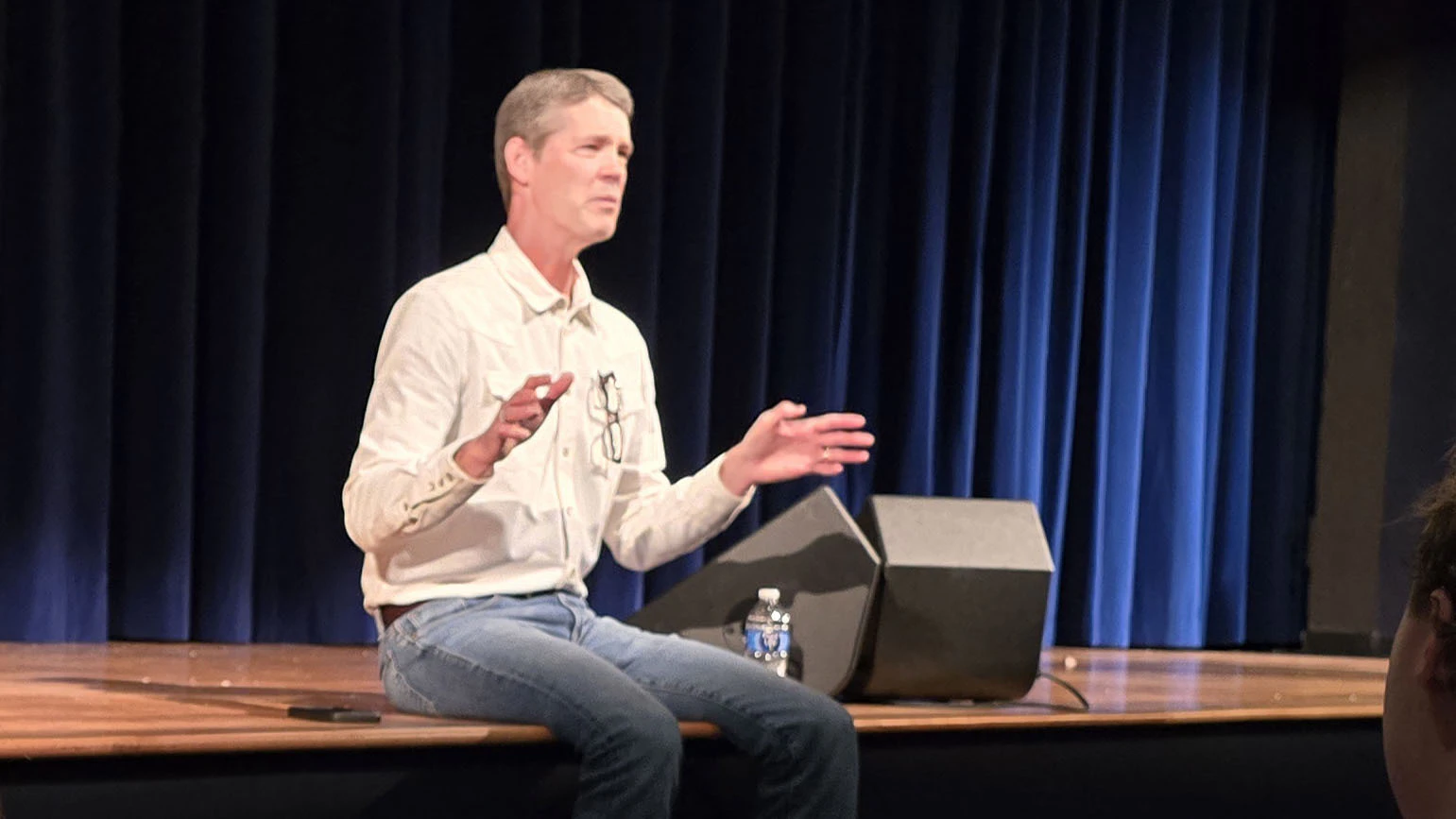
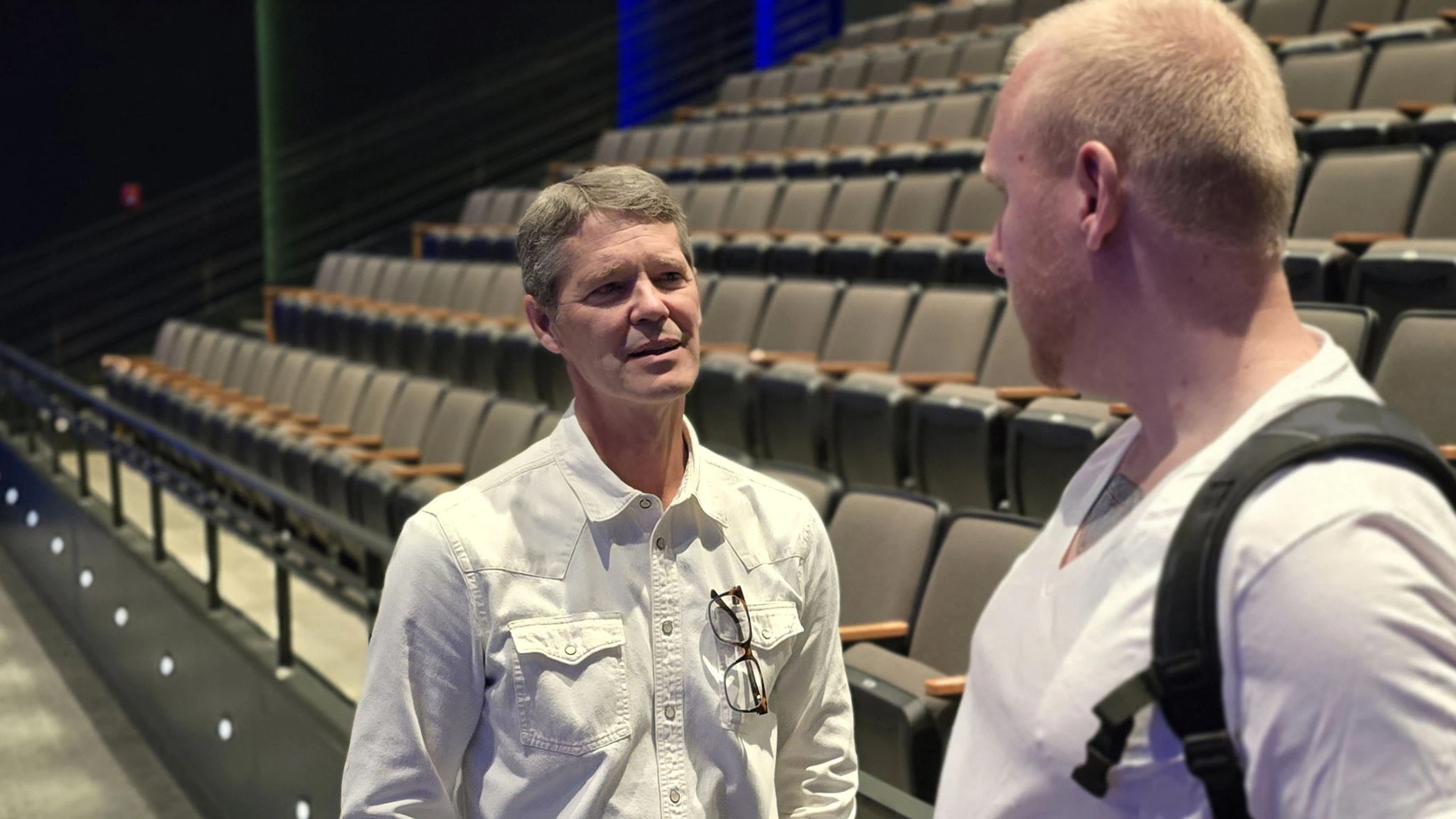
Punke still loves Wyoming and visits often. This week, he’s in Wyoming to talk with students at Laramie County Community College as part of the Dineen Speaker Series.
“I’m happy for any excuse to be here,” he said. “My wife is from Montana, so we ended up making our family home there, but a lot of my family is still in Wyoming. My parents and sister and her family are in Laramie, so I’m in Wyoming a lot.”
And Wyoming will continue to show up in his work, he knows, regardless of where it’s set. How can it not? It’s the place where he first learned his love for the Wild West.
Renée Jean can be reached at renee@cowboystatedaily.com.