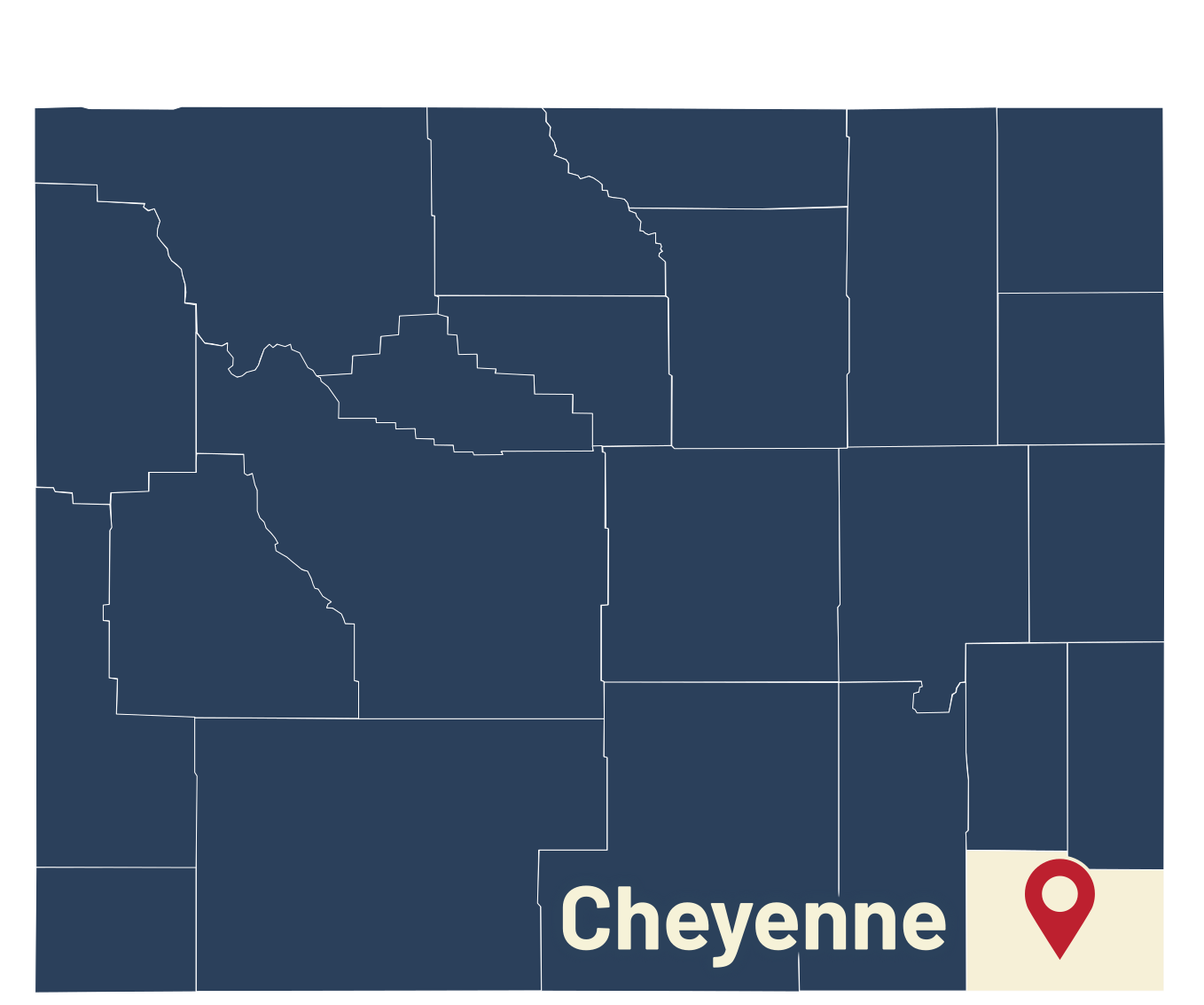
A new bronze statue will soon be erected in downtown Cheyenne to honor Barney L. Ford, the runaway slave who brought elegance to a frontier town, personally cooked breakfast for President Ulysses S. Grant at his prestigious hotel and made and lost a fortune several times over.
Over his lifetime, Ford fled on the Underground Railroad, married his benefactor’s sister, and made his fortunes in the face of illness, fires, thieving lawyers, booms and bust.
“Barney Ford is an example of an American not allowing their situations and circumstances to stand as they are, and working to overcome them,” sculptor LaQuincy Reed said. “It’s about building yourself up and trying to be better than you were the last time around.”
Reed said that Ford exemplifies American work ethic and success when you consider how despite all the adversity Ford faced, he always found a way to come out better than he was the last time around.
When Reed was first asked to be a part of honoring Ford’s memory with a bronze statue, Reed admitted he only knew a little bit about Ford but didn’t know exactly how important he was.
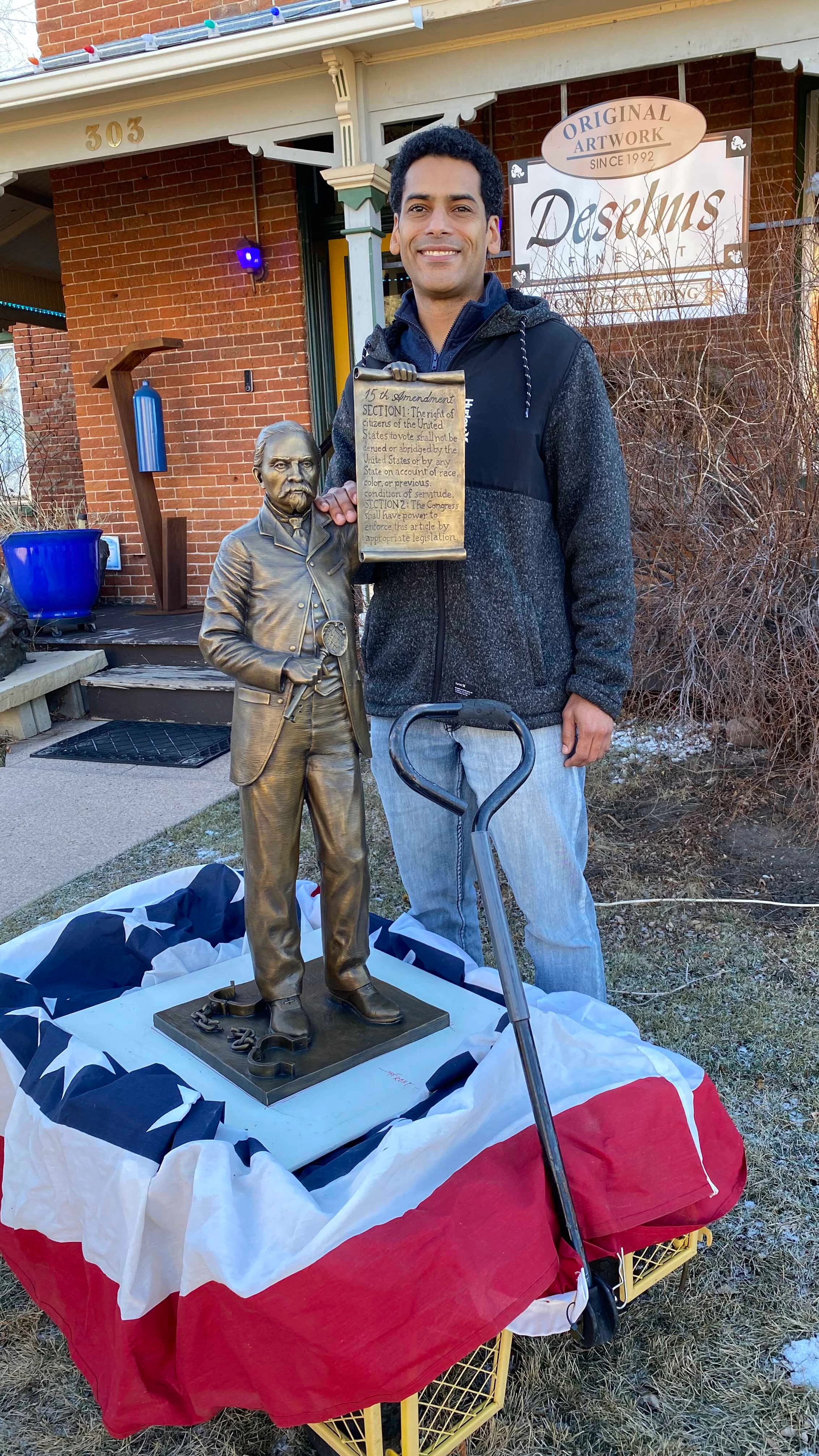
Sculptor LaQuincy Reed created the bronze statue of former slave, Barney Ford. Before he began the project, Reed said he didn’t realize just how important Ford was to Wyoming and Colorado history. Reed was inspired by Ford’s story of persistence and said that history is worth remembering. (Courtesy Harvey Deselms) 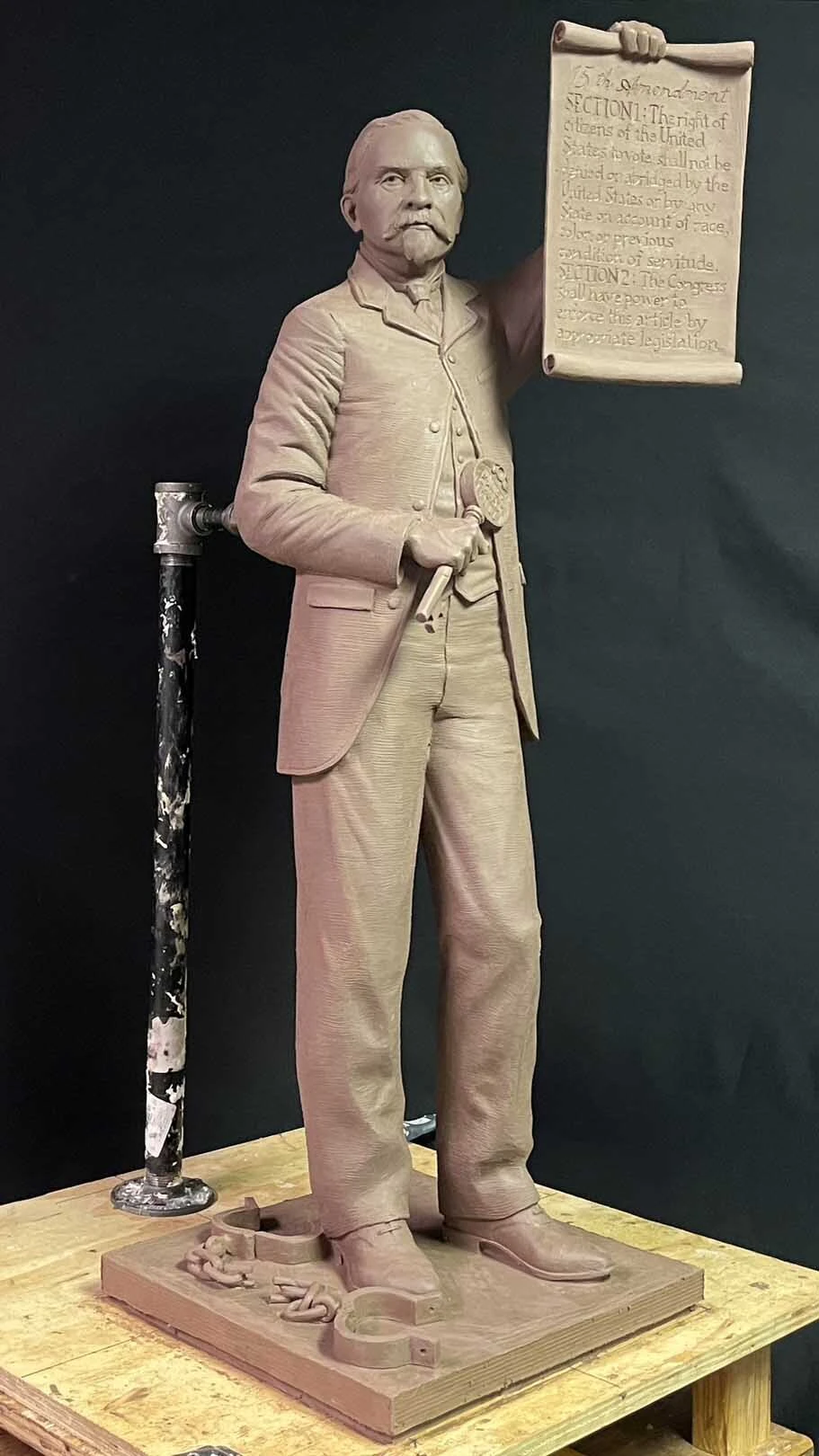
Barney Ford has recently been honored with a bronze statue to his memory. The former slave built the fanciest hotels in both Cheyenne and Denver and is a story of persistence. He lost his fortunes many times over but would continue to rebuild. (Courtesy LaQuincy Reed, artist) 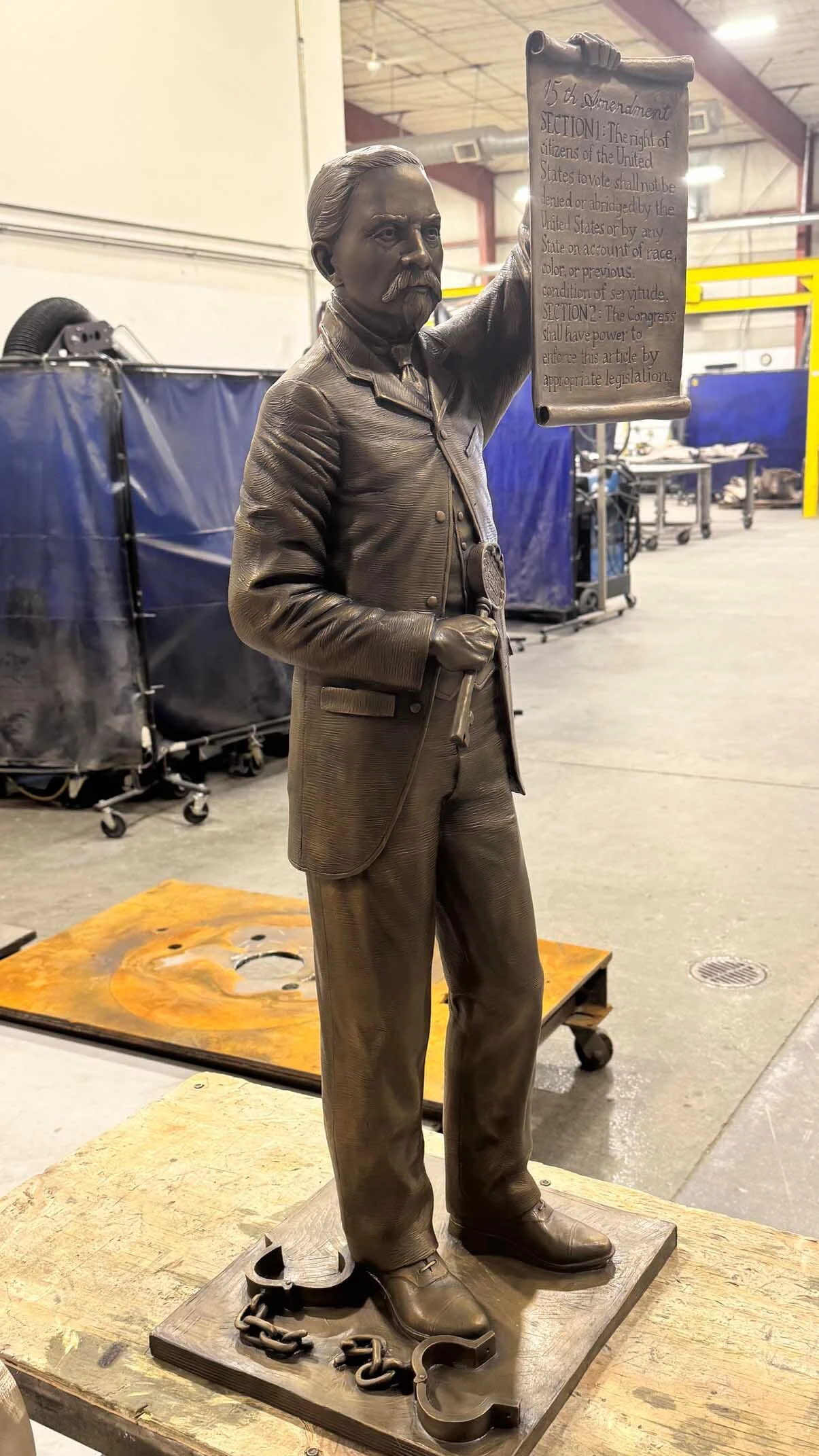
Barney Ford has recently been honored with a bronze statue to his memory. The former slave built the fanciest hotels in both Cheyenne and Denver and is a story of persistence. He lost his fortunes many times over but would continue to rebuild. (Courtesy LaQuincy Reed, artist) 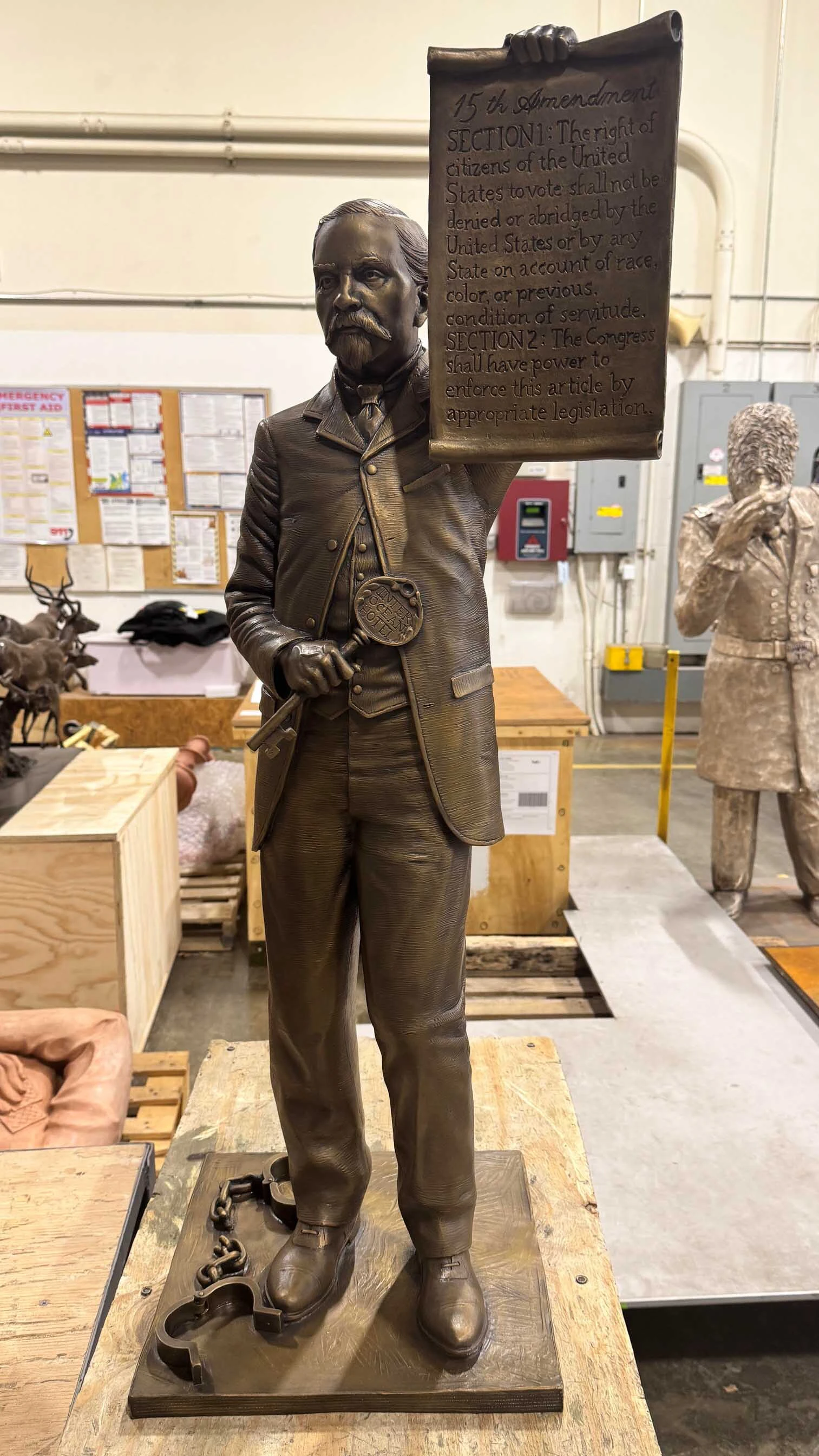
Barney Ford has recently been honored with a bronze statue to his memory. The former slave built the fanciest hotels in both Cheyenne and Denver and is a story of persistence. He lost his fortunes many times over but would continue to rebuild. (Courtesy LaQuincy Reed, artist)
The Runaway
Val Martin had been driving the Cheyenne trolley since 1993 and discovered Barney Ford in her first script over 30 years ago.
Like Reed, she didn’t know much about the former slave.
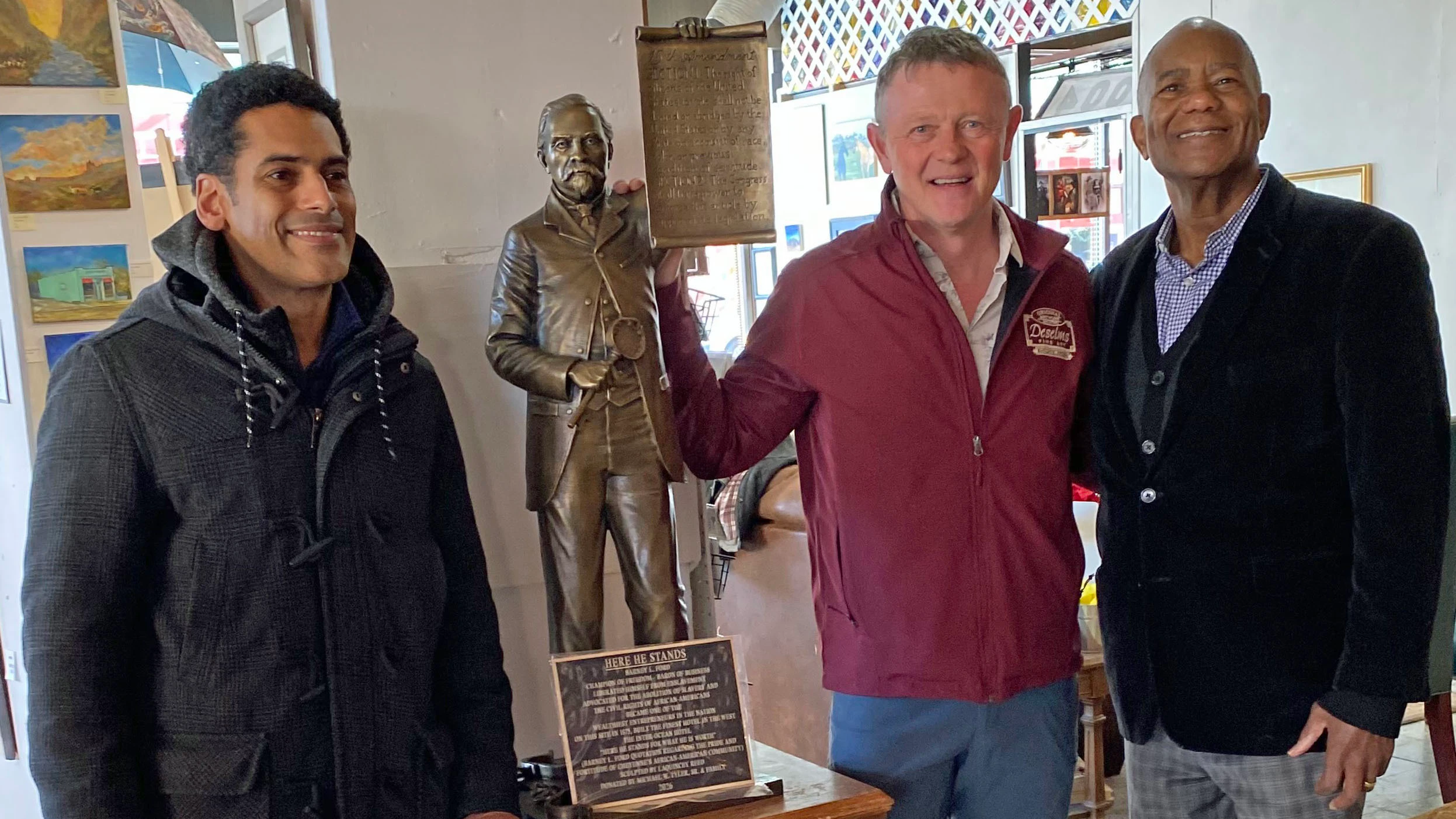
Intrigued, Martin started researching Ford and his connection to Cheyenne. Today, the bronze statue designed by Reed is on display in the shop she manages, Emma’s Old Time Photos, while it waits to be put on display permanently.
“He was the Black Baron,” Martin said. “That literally is what people called him because he was seen as intelligent and was looked up to.”
Martin said that Ford made several fortunes throughout his lifetime, and almost all of them were lost to fire.
“He would start over again, go back to work as a barber, raise the money, and just work his way back up,” Martin said.
The Baron began life simply as Barney and was born on Jan. 22, 1822, at Stafford Courthouse, Virginia in a slave log cabin according to historian Bennett R. Pierce in the January 1973 “Golden West” magazine.
As a teenager, Ford was sold to a Georgia hog raiser and hired out to work in the diggings at Auraria, Georgia, where he was introduced to the mining business. Later, Ford was hired out as a steward on a Mississippi river boat and learned the skills needed to be successful in the restaurant and hotel business. When he was 26, sometime in 1848, Ford jumped ship and followed the underground railroad to freedom.
“At the time of Barney’s arrival in Chicago, the Baldwin Company had just unveiled their latest locomotive which was named the Lancelot Ford,” Pierce wrote. “Barney liked the name Ford, but disliked the name Lancelot, so he decided to take ‘L’ for a middle initial and ‘Ford’ as a surname.”
Now with a full name, Ford started his life as a freed man by marrying Julia A. Lyoni, the sister-in-law of H. O. Wagoner, the man who had sheltered him on the Underground Railroad. The next few years found Ford chasing gold but ultimately ending up in the food and lodging business, first in Nicaragua and again in Denver.
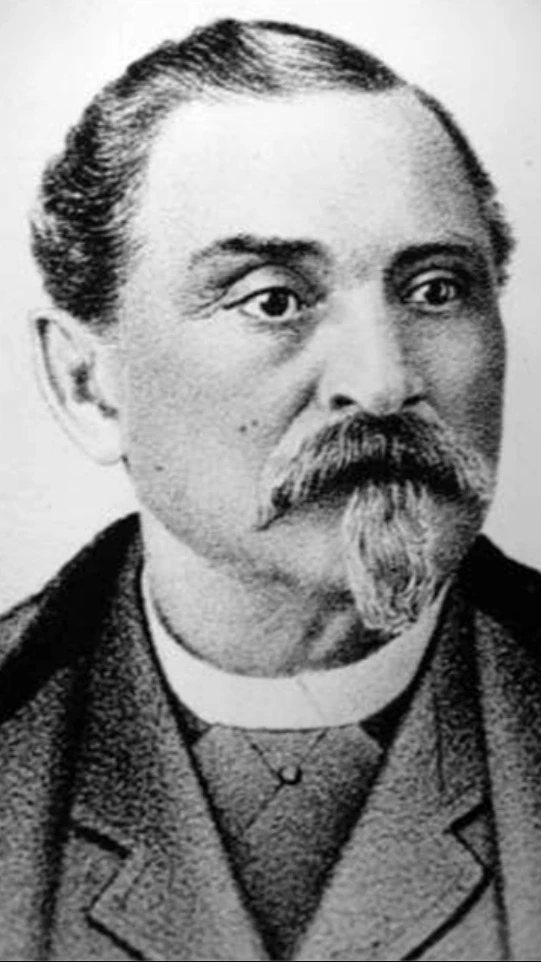
aQuincy Reed used these head shots of former slave and businessman, Barney Ford, to create a full-length bronze statue to honor Ford’s legacy in Cheyenne. Michael Tyler was inspired by the story of Ford to commission the statue to be placed downtown Cheyenne. (Courtesy) 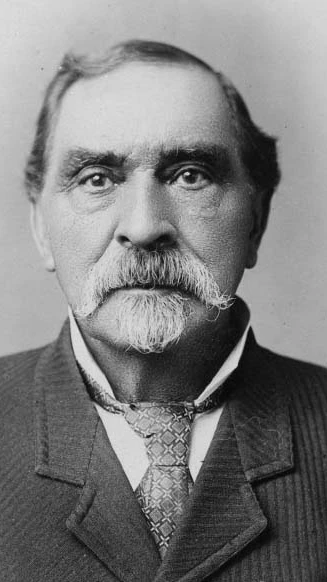
aQuincy Reed used these head shots of former slave and businessman, Barney Ford, to create a full-length bronze statue to honor Ford’s legacy in Cheyenne. Michael Tyler was inspired by the story of Ford to commission the statue to be placed downtown Cheyenne. (Courtesy)
Wyoming Territory Businessman
After suffering numerous setbacks, but always rebuilding, Ford cast his eyes on the tent city of Cheyenne. The railroad was coming and enterprising businessmen like Ford saw the possibilities.
“Barney came to Cheyenne in 1867 when our city was brand new,” Martin said. “He opened up a restaurant called the Ford House.”
He went into partnership with a grocer, John T. Durkee, and waited for the train to arrive. Pierce wrote that in the first twenty-four hours, the restaurant made $1,150, the equivalent of $25,000 today.
“He charged a dollar a meal,” Martin said. “It was very well received.”
Over the ensuing years, Ford continued to build on his successes and even received reviews in the Paris press as the best restaurant along the railroad. His wealth was hard-earned and easily lost. In March 1868, a ‘spectacular’ shooting in his Cheyenne restaurant was unacceptable to Ford who bought out his partner who he blamed for allowing a rough crowd in.
To regain his reputation, Ford ran advertisements in the Cheyenne Leader announcing to the public that he had the finest oysters at his establishment. The campaign was such a success, Ford had to rent a special train car to go personally to Baltimore for more of the specialty.
In 1875, Ford built the most prestigious hotel in town, the Inter-Ocean, at a cost of $65,000, equivalent to nearly two million today. He mortgaged his Denver hotel in this bold move and success quickly followed. Just a month after opening, President Ulysses Grant was a guest at Ford’s hotel and held a reception in the parlor.
However, the real estate market crashed and the bank foreclosed on Ford’s mortgage the following year. Ford sold the Inter-Ocean in Cheyenne, paid his creditors and left for Breckenridge, Colorado to start over once more.
“It’s really easy to give up, but Barney never did,” Reed said. “It’s really hard to say, well, I’m just going to do better this time around.”
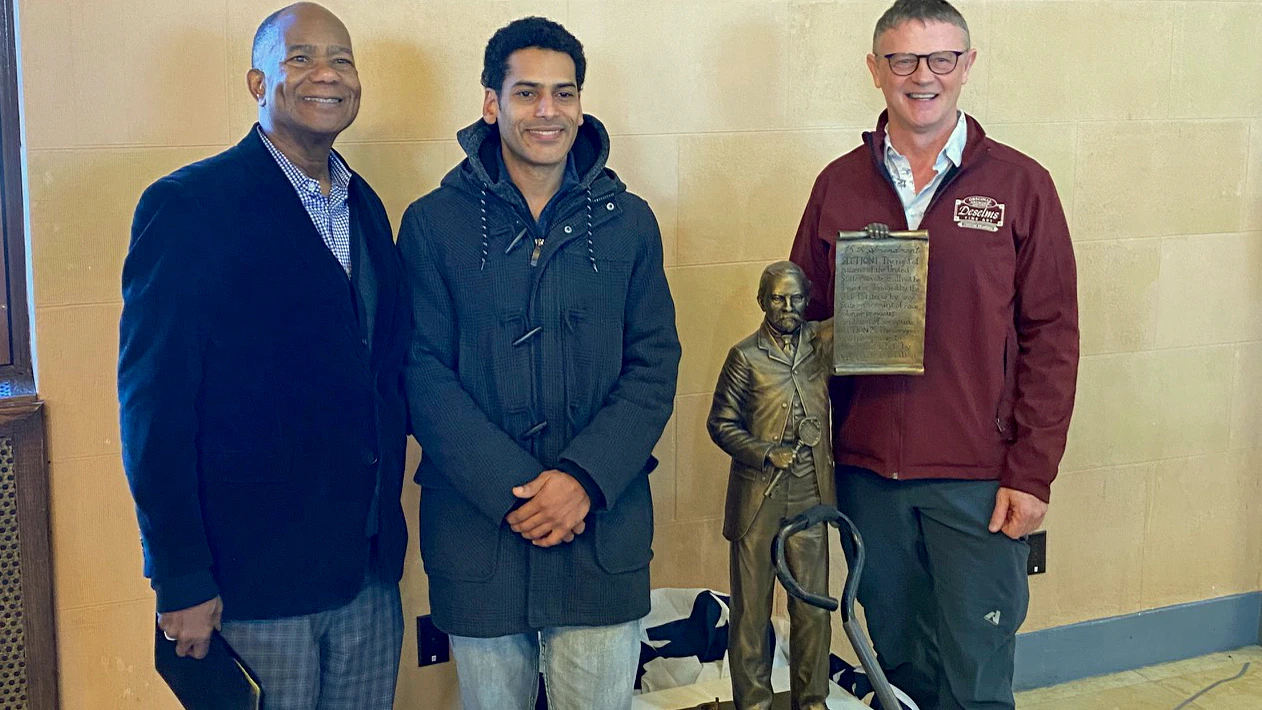
Donor Michael Tyler, Sculptor LaQuincy Reed and Curator Harvey Deselms worked together to make it possible to produce a new bronze statue in honor of Barney Ford, a former slave who built the fanciest hotel in Cheyenne when Wyoming was still a territory. (Courtesy LaQuincy Reed)
Honoring Barney’s Memory
Ford’s legacy of continuing to rebuild his fortunes time and time again instead of giving up is being honored in Cheyenne by donor Michael Tyler. Tyler was inspired by Barney Ford’s story and wanted him to be remembered in bronze.
The idea of bronze statues honoring Cheyenne’s heritage was originally conceived by Harvey Deselms, a Cheyenne gallerist and lifelong advocate of art in public places, who wanted to place a total of 28 bronze statues on every corner of Capitol Avenue from the remodeled Union Pacific Train Depot on Lincolnway up to the Capitol building.
The statues featured western figures, people and wildlife, and scenes from everyday life to represent the experience of Cheyenne and Wyoming and its people. Deselms said that each piece had been donated without any tax dollars and tell a story.
“Michael Tyler really loved the story of Barney Ford,” Deselms said. “Being a former slave in the early days and building the hotel is just a wonderful story and he and wanted to do something to honor that legacy.”
As curator of the bronze project, Deselms said his job is getting the ideas, the donors and the artists together. For this project, Tyler hired LaQuincy Reed as the artist.
“With the bronze project, we want to tell stories,” Deselms said. “Barney is part of our history and the corner he will be placed is one of the greatest corners in Cheyenne.”
The location for Barney Ford’s bronze will be on the same lot where Ford’s Inter-Ocean hotel once stood and was a stage stop on the Cheyenne-Deadwood stage.
“Michael Tyler told me about Barney Ford and his importance to Wyoming and Colorado,” Reed said. “I was fascinated by his history of being a slave and a business owner and overcoming all that to be successful many times over after having things fall apart through no fault of his own a couple of times.”
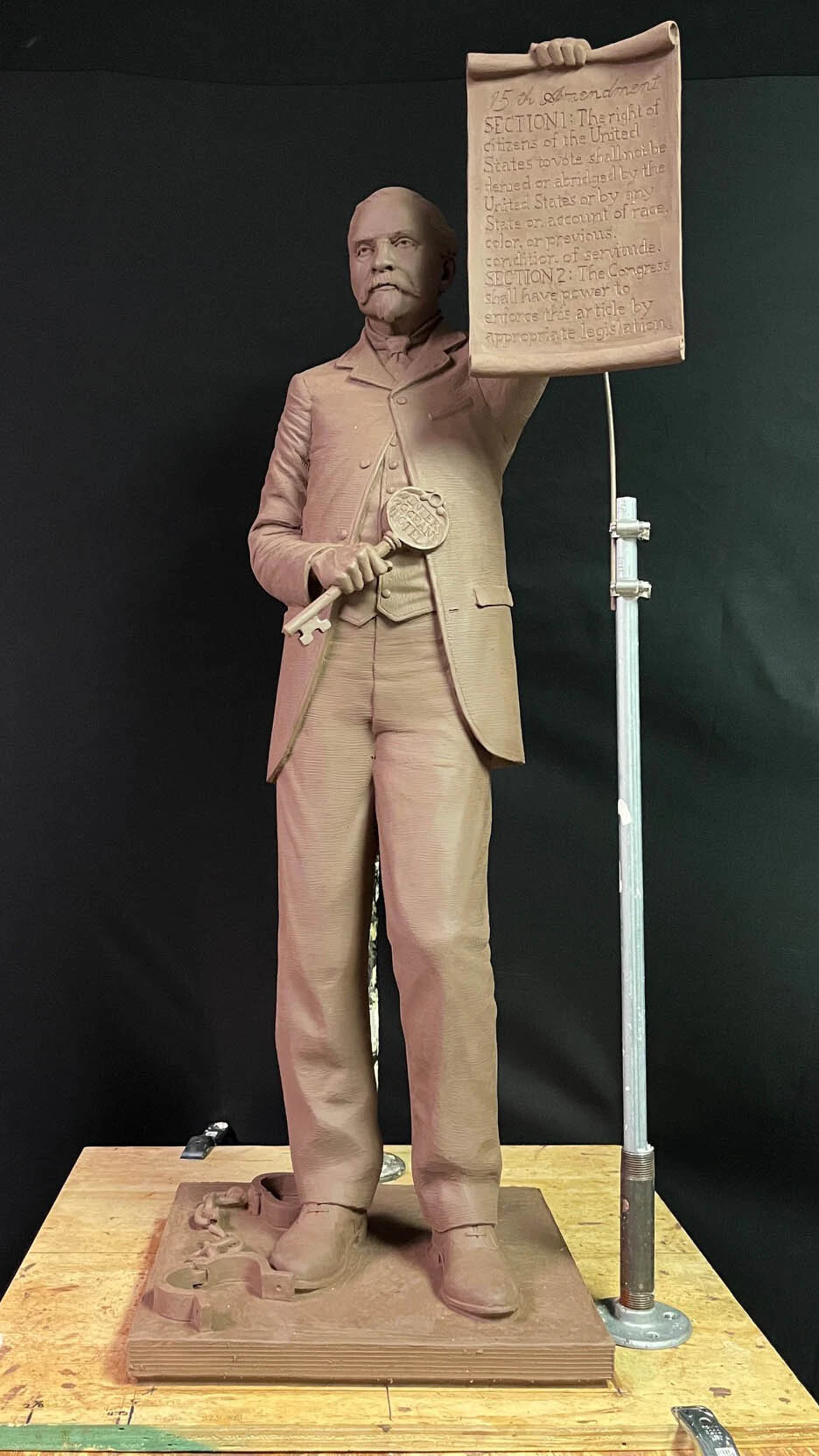
It took LaQuincy Reed a month and a half to sculpt the clay figure of Barney Ford. It involved extensive research to make sure the clothing was true to Ford’s era and that the details were all correct. (Courtesy LaQuincy Reed) 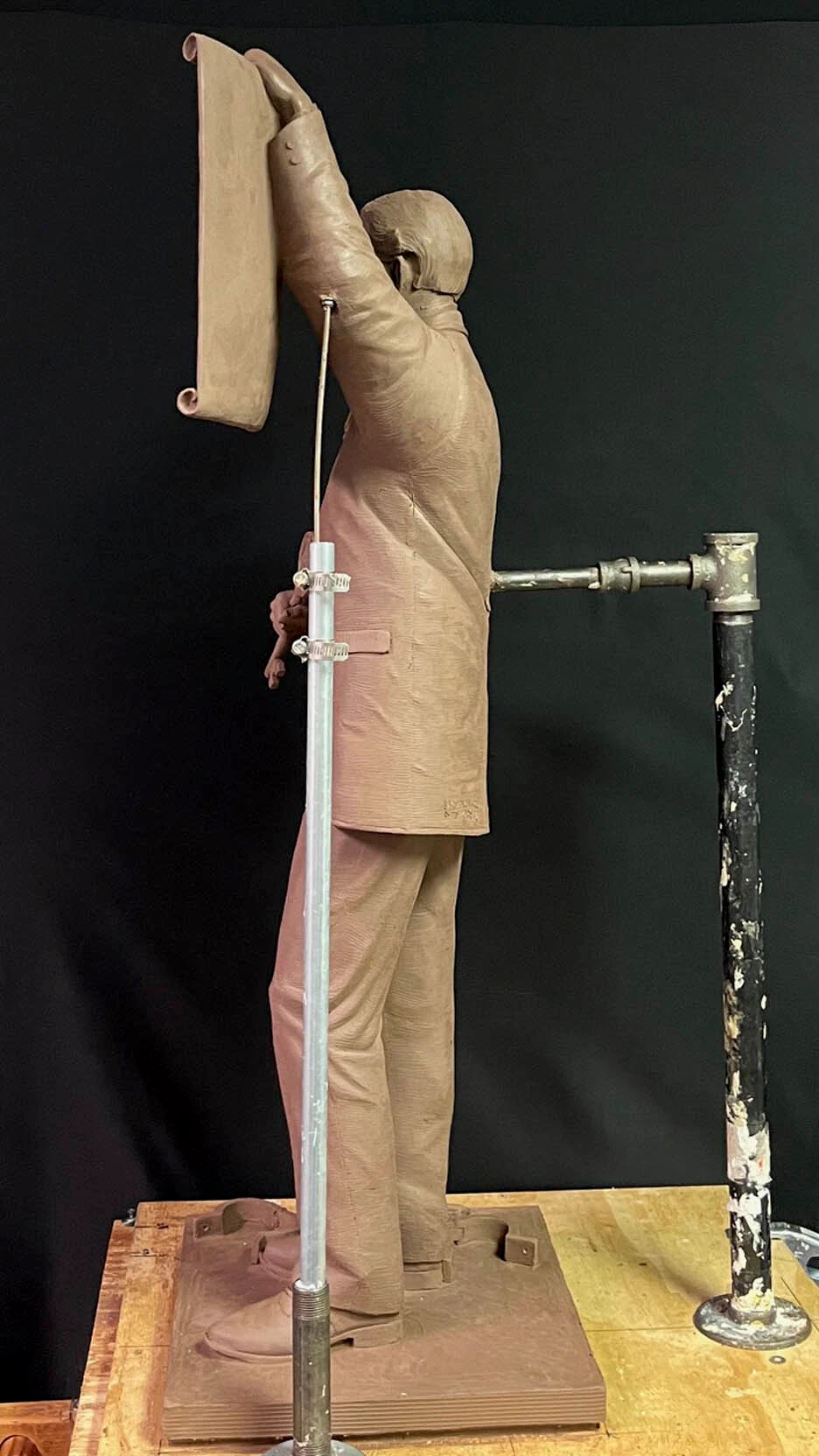
It took LaQuincy Reed a month and a half to sculpt the clay figure of Barney Ford. It involved extensive research to make sure the clothing was true to Ford’s era and that the details were all correct. (Courtesy LaQuincy Reed)
The Bronze
The story Reed told in the bronze is of freedom to build your own life. Barney is featured holding up the 14th Amendment and, on the base, there are open shackles, symbolizing when the slaves were freed.
“He’s standing there in his business suit,” Deselms said. “It tells the story of him going from being a slave to being an entrepreneur.”
On each of the bronzes, a QR code is displayed so visitors can look up more history about each person.
The bronze statue took Reed about a month and a half to complete. The hardest part, he said, was the research and finding what Barney would have worn during that time period.
“All I had of Barney was a headshot of him and no full-length photo,” Reed said. “I had to find clothing that was period appropriate and went for that late 1800s look for him.”
In terms of sculpting, Reed first sculpted Ford in clay and then made a mold. That mold went to the foundry, and the foundry did what is called the lost-wax casting process. They made a wax, covered the wax with a ceramic shell, poured the bronze into that ceramic shell, broke the ceramic shell away, and left only the bronze.
They then welded all the pieces together and finished by placing a patina on the surface of the bronze.
“It’s been done since last fall and we introduced it on Martin Luther King Day,” Deselmes said.
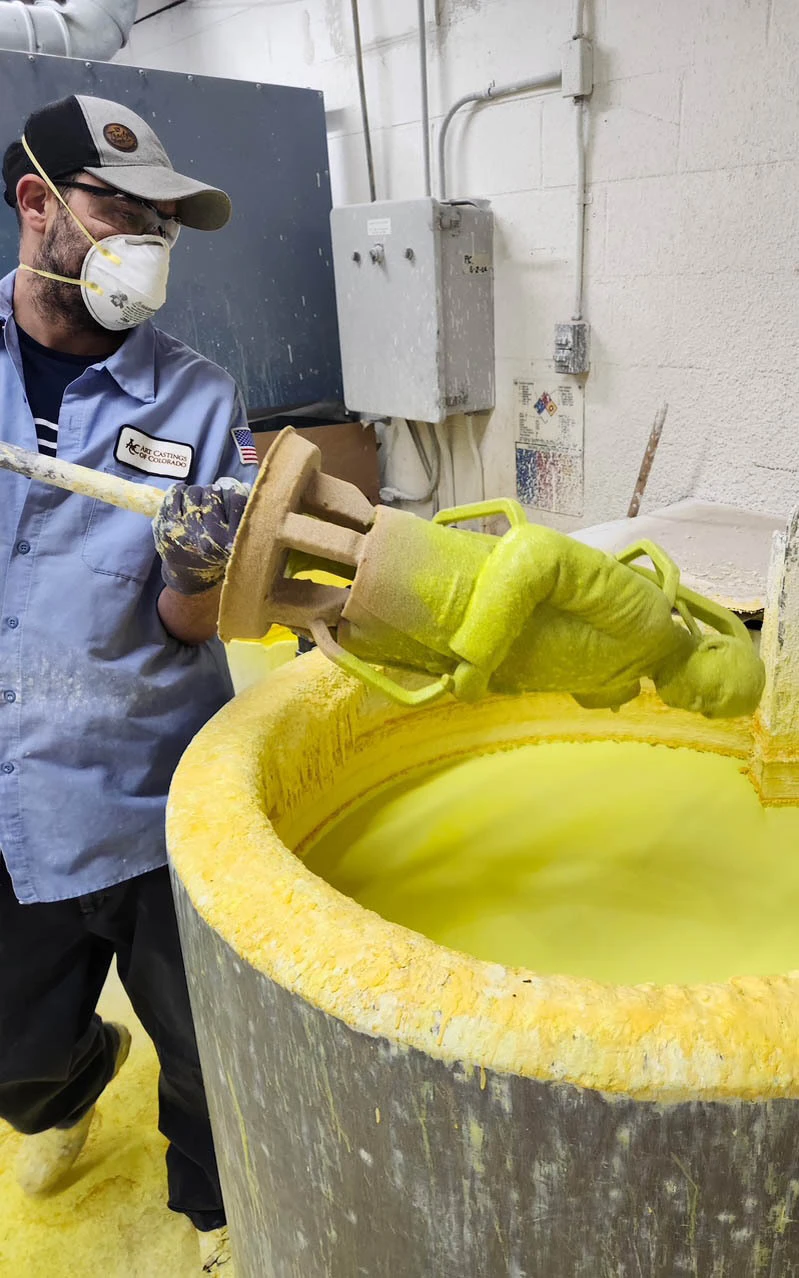
As part of the process of creating the bronze statue to honor former slave, Barney Ford, the foundry used the ‘lost-wax casting method.’ (Courtesy LaQuincy Ford) 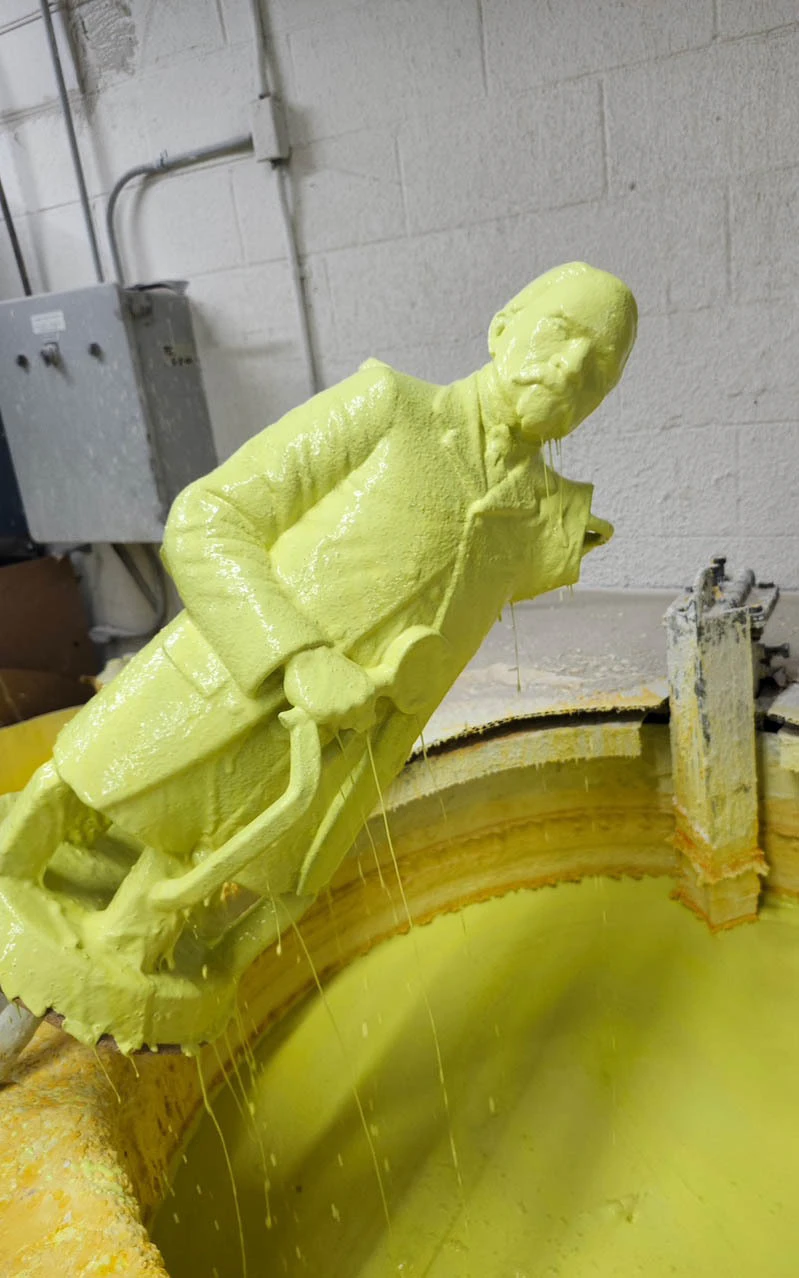
As part of the process of creating the bronze statue to honor former slave, Barney Ford, the foundry used the ‘lost-wax casting method.’ (Courtesy LaQuincy Ford) 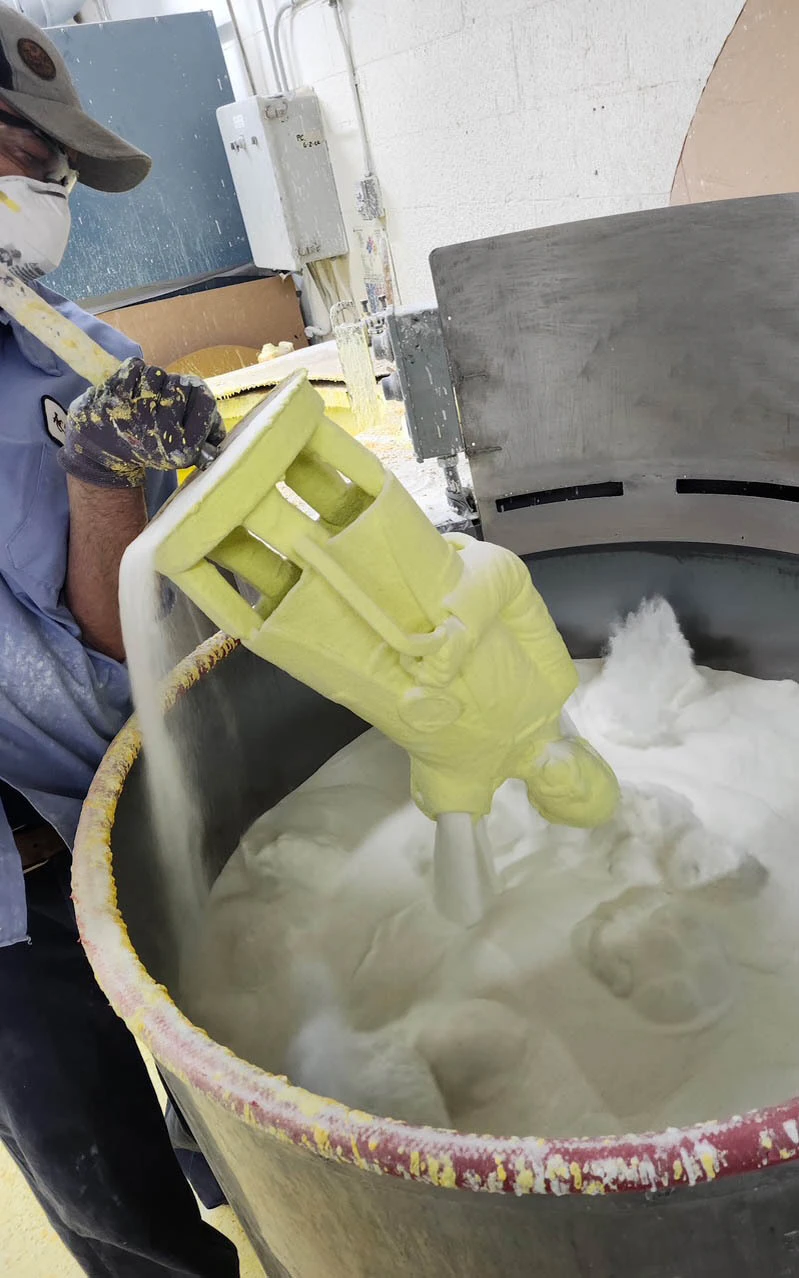
As part of the process of creating the bronze statue to honor former slave, Barney Ford, the foundry used the ‘lost-wax casting method.’ (Courtesy LaQuincy Ford) 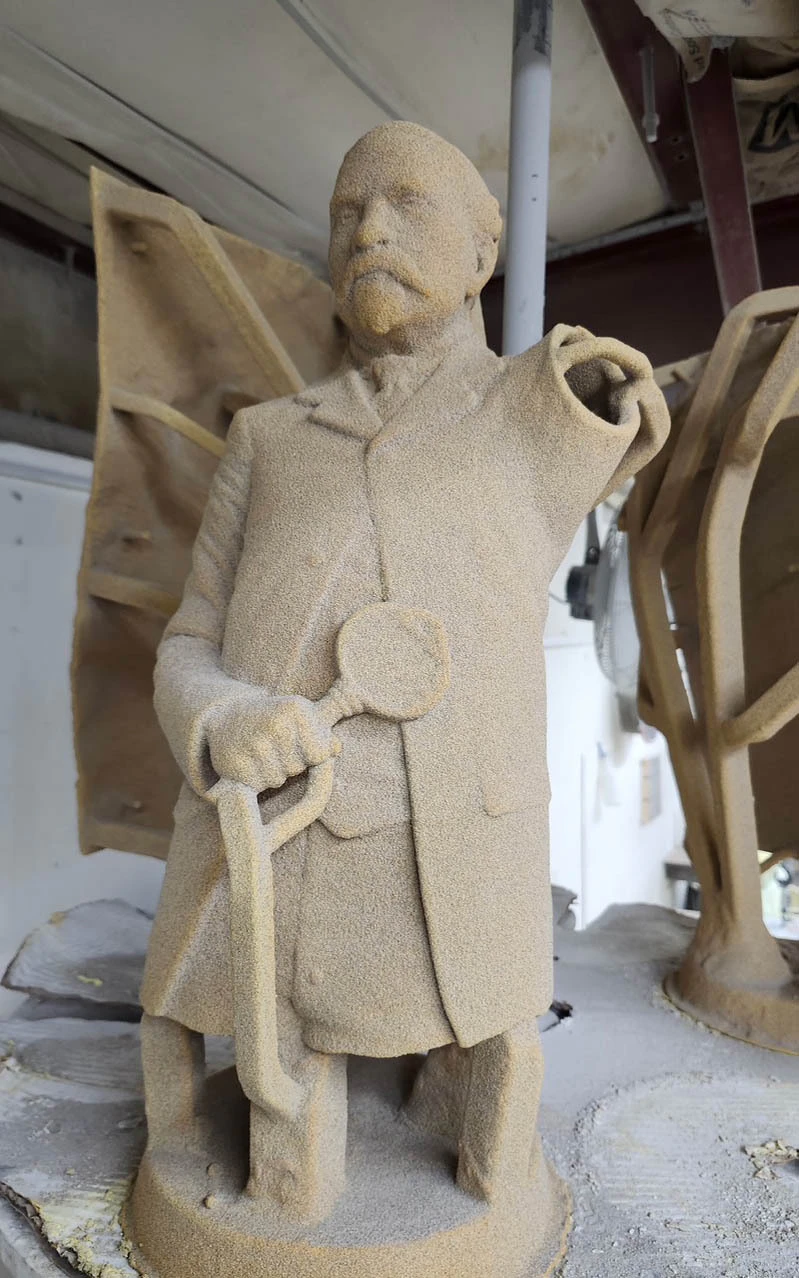
LaQuincy took special care in recreating the shackles that Barney Ford broke out of and the other pieces that came together in the statue Reed created to honor the legacy of the former slave. (Courtesy LaQuincy Ford) 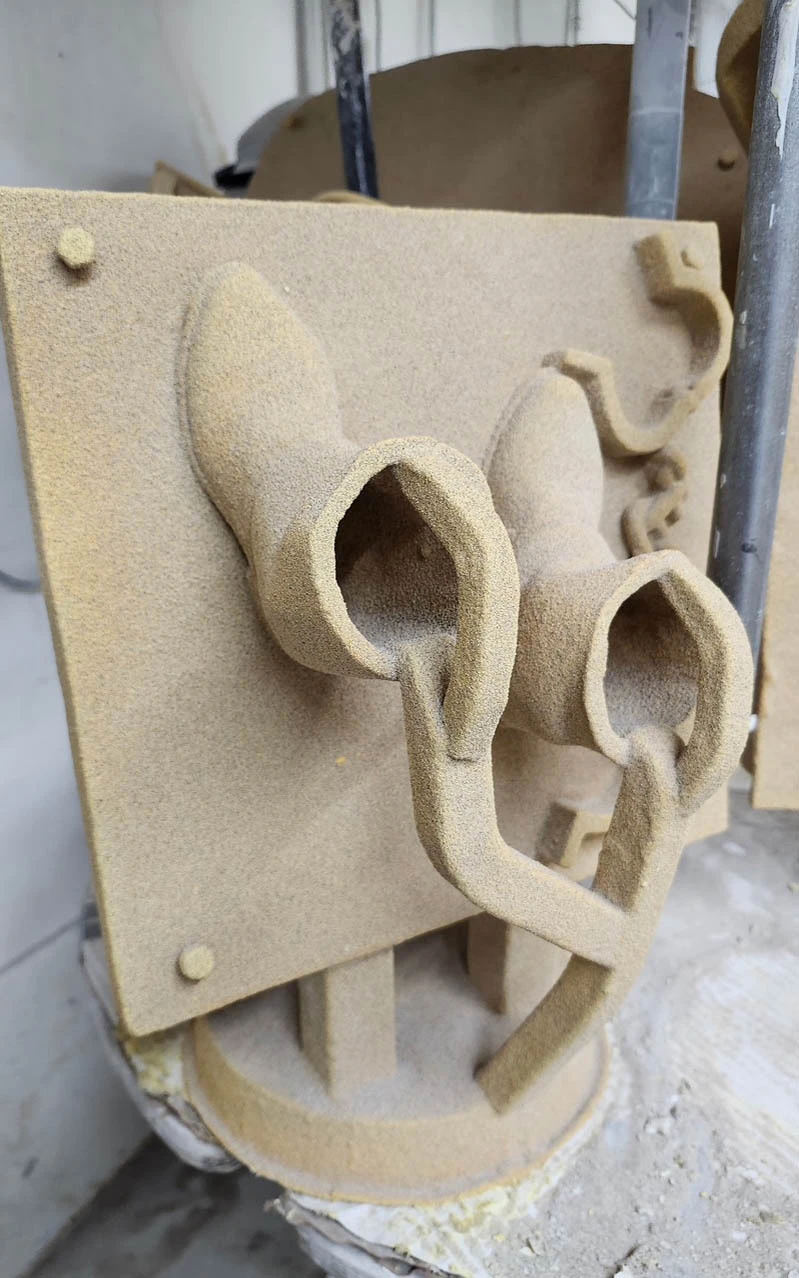
Remembering Our History
Reed said that he remains in awe of Barney Ford and was inspired by his story.
“I think we need to really invest in looking into history and researching all the people that have made America great,” Reed said. “Look into those people and figure out what we can learn from them and apply to our own lives.”
Deselms agreed and said that the story of Ford is a true rags-to-riches story.
“The fact that he was a former slave who made his fortune out west building hotels, is just one of the stories that we want to tell,” Deselms said. “The statue will be by a wonderful downtown icon with the Hynds Building, which, prior to that, was the Inter Ocean Hotel that Barney built.”
There are now 82 bronzes installed downtown, and another dozen going out this year, including Barney, Deselms said. He encourages visitors and locals alike to get the booklet that includes a map for the bronze statues so they can take a walk-through history in downtown Cheyenne.
Jackie Dorothy can be reached at jackie@cowboystatedaily.com.