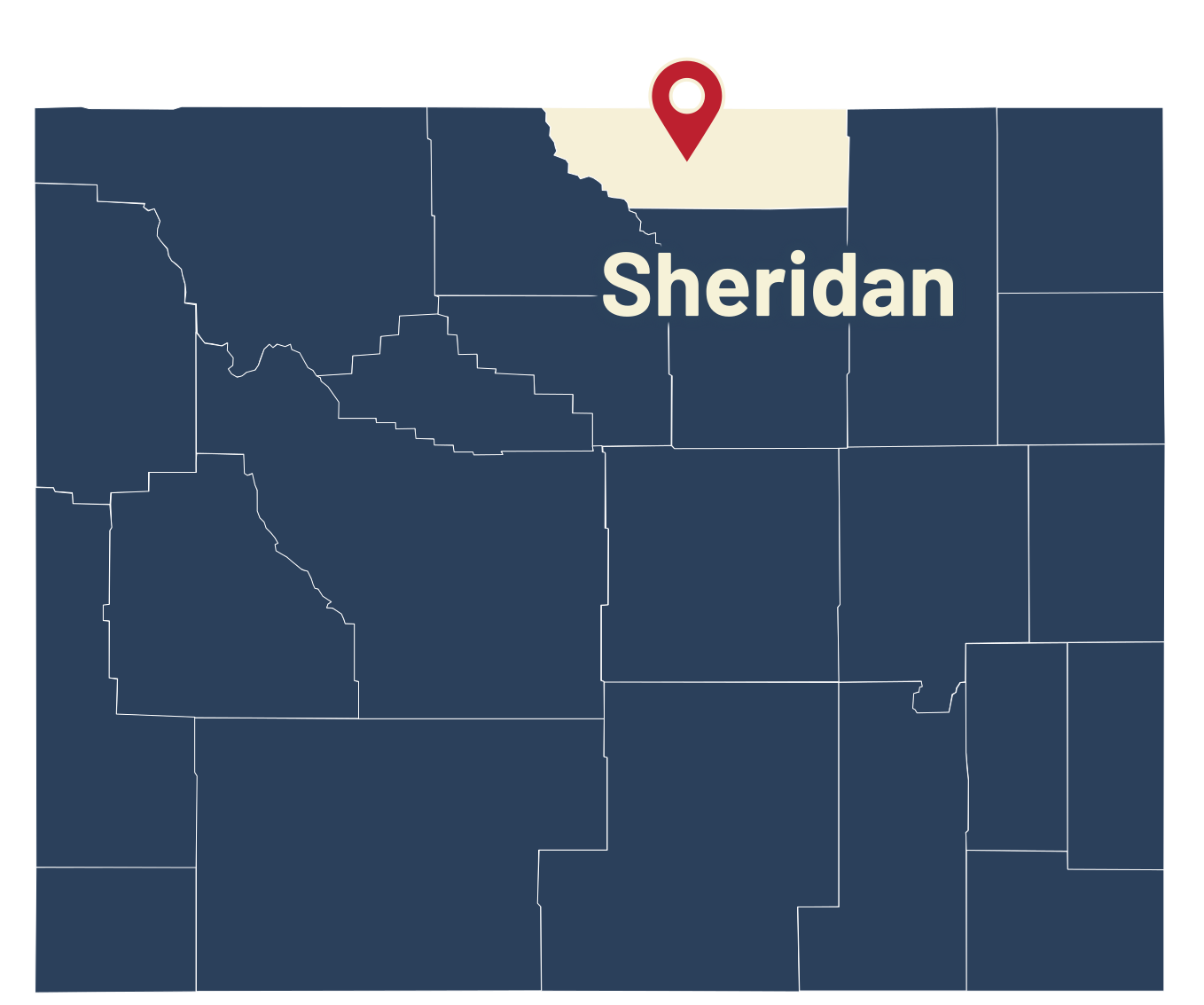
“Voices and Votes: Democracy in America” is embarking on a six-stop tour across Wyoming, opening April 18 at the Museum at the Bighorns in Sheridan.
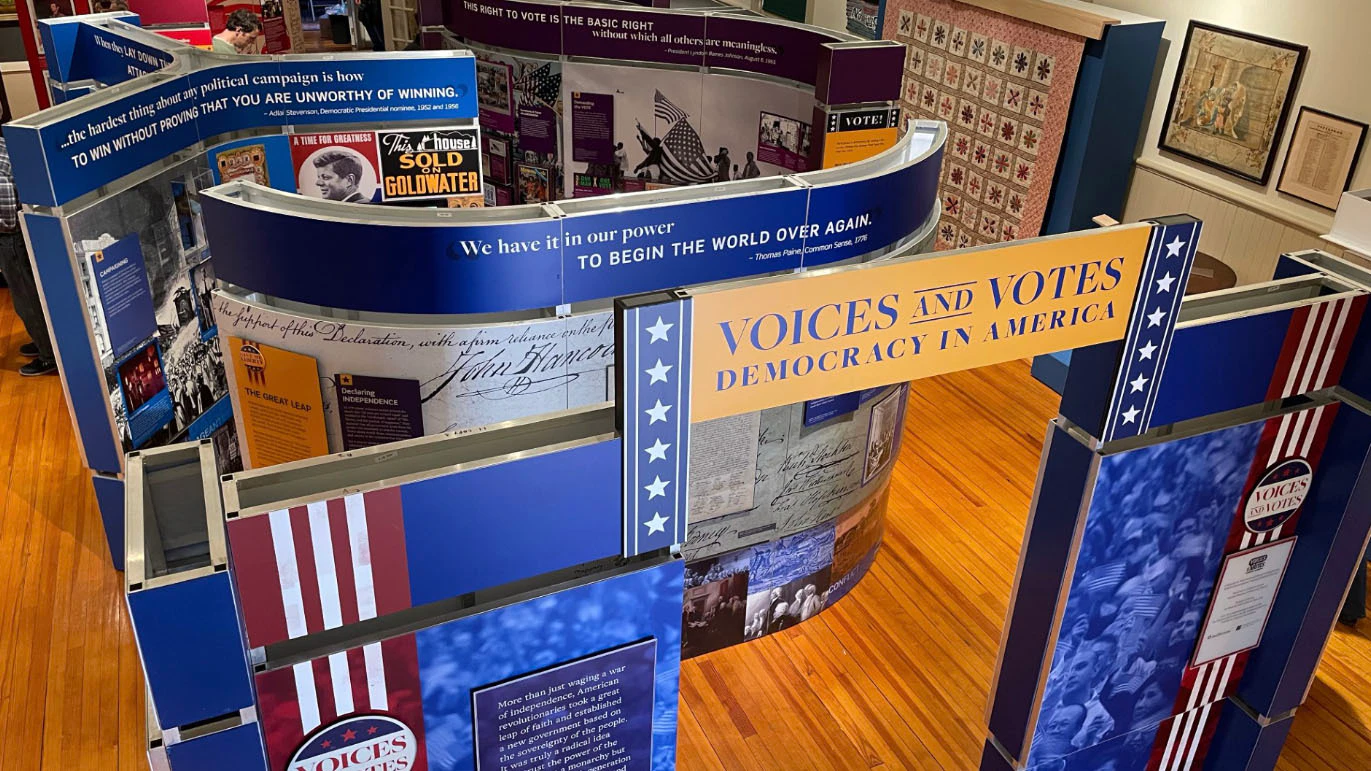
The exhibit explores American democracy from the revolution and suffrage to civil rights and casting ballots through historical photos, archival video, multimedia interactives, reproduction artifacts and campaign memorabilia.
It’s based on a major installation currently on display at the Smithsonian’s National Museum of American History in Washington, D.C., and arrives in Wyoming through the Smithsonian’s Museum on Main Street program, a collaboration between the institution and state humanities councils nationwide, with support from the U.S. Congress.
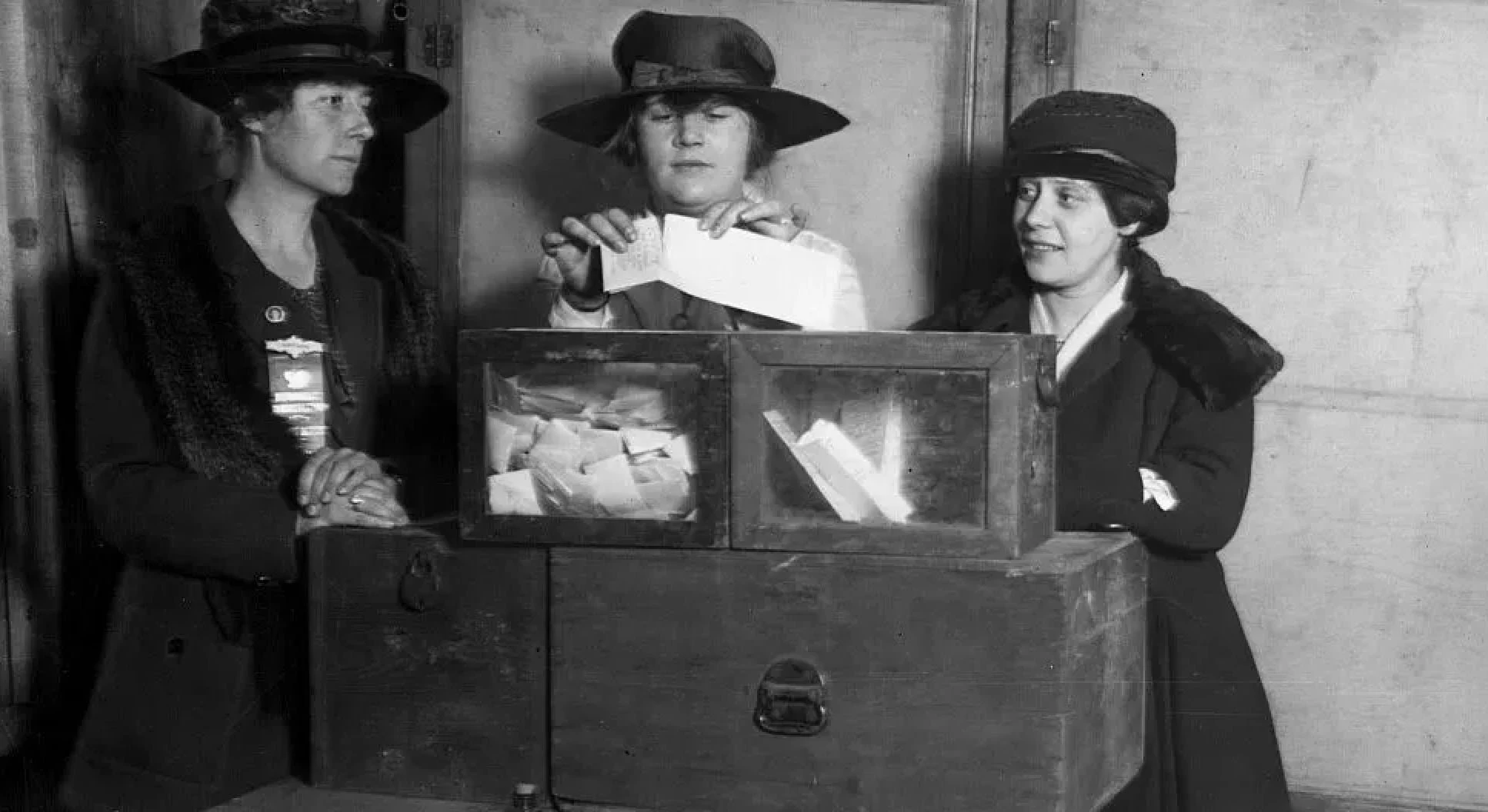
The exhibit features historic campaign memorabilia, patriotic music, old lobbying illustrations and special tie-ins to states and their unique voting histories such as Wyoming’s pioneering efforts for women’s suffrage.
What makes Wyoming’s turn notable is it will be among the upcoming stops in April and the last stop on the exhibit’s national journey when it wraps up in 2027.
“Wyoming will be the last state that’s going to have this exhibit before it’s retired,” said Kevin Ramler, supervisor of exhibits and programs at the Wyoming State Museum in Cheyenne. “This is the end of the line for this particular exhibit.”
The exhibit doesn’t wade into the partisan fights of the moment and instead offers historical context to the current debates over federal and state election laws, explained Ramler.
“Even though with the politics of the day it always feels like it is urgent and it is life or death and this is the biggest thing that’s ever happened, when you look at the history of voting in the U.S., you can see that it has always been contentious,” he said. “It is something we have continually debated about — where the boundaries of who should be allowed to vote, how people should be allowed to vote. It’s not as if it was a fixed thing that we’ve inherited and now we’re trying to fix it or change it. It has always been in flux.”
Ramler added, “In my opinion, one thing that can help make those conversations civil is having that understanding that this is not some sky-is-falling situation. It is the continual process of self-government, of us deciding how we want to have elections work. It’s always been a matter that’s been debated, going back to the very beginning, even actually before the founding of the U.S.”
Selwyn Ramp, a project director with Museum on Main Street at the Smithsonian, explained the exhibit doesn’t tackle today’s polarization head-on. Instead, it presents the full sweep of how American attitudes about voting and participation have evolved — without favoring one side over another.
“The polarization is a very current issue that this exhibit does not necessarily dive into,” Ramp said. “It is more looking at, over the history of this nation, where things have changed… The founding thought kind of set the path. They left a lot of language, in our founding documents, ambiguous. They left a lot of language to be figured out with future generations, and that continues to be the case.”
Ramp spoke to Cowboy State Daily from Utah where he and a colleague were installing the exhibit at a venue.
The exhibit fills about 700 square feet of freestanding walls and structures, Ramp said and is organized into six sections. It opens with “A Great Leap of Faith,” exploring the nation’s founding commitment to popular sovereignty. From there, “A Vote, a Voice” examines who has had the right to participate in the political process and how that has changed over time.
“The Machinery of Democracy” dives into the history of campaigning and voting, Ramp said, featuring a photograph of the first televised debate and exploring how politicians invented a uniquely American system of electing representatives — everything from campaign posters and buttons to the donkey and elephant caricatures that define the two major parties.
A final story kiosk features interviews conducted across the country with everyone from local politicians to everyday community members about how they participate in the democratic process.
Campaign Torches
Among the exhibit’s 15 object cases, Ramp said one artifact stands out.
“The Smithsonian owns a large collection of campaign torches from Lincoln’s parade,” he said, describing a common tool of politics in the 1860s that were used in parades and other events. “We were actually able to travel one of those campaign torches in the exhibit.”
The exhibit also includes three flip books, four videos, two multimedia touchscreens, an audio box of patriotic music and a collection of lobbying materials gathered from Congressional offices on Capitol Hill.
“We actually put a box on Capitol Hill and said, any of the lobbying materials and illustrations that your office doesn’t want to keep, can you put them in here?” Ramp said. “So our lobbying case is really a variety of people that come to the Hill in D.C. to lobby for their passion. And so it’s interesting to see kind of the mass-produced materials.”
Local Stories
Each host museum will develop its own complementary programming to connect the national narrative to Wyoming’s story.
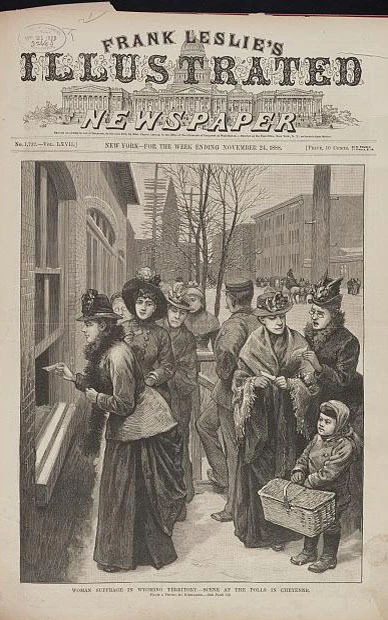
“One big angle that I expect most of the host sites to explore is the fact that we were the first state to allow women to vote,” Ramler said. “Women in Wyoming had been voting for 50 years by the time women’s suffrage law was passed for the entire country.”
A grant from the Wyoming 250 Task Force, established by Gov. Mark Gordon, is funding the statewide tour, said Ramler. The Wyoming State Museum, under the umbrella of State Parks and Cultural Resources, is serving as the host organization after Wyoming Humanities had to step away due to budget cuts.
For many of the host museums, the collaboration represents a rare opportunity to partner with one of the world’s most recognized cultural institutions, said Ramler.
“We don’t get a lot of opportunities to do a kind of collaborative project like this with the Smithsonian, with this kind of national, huge organization that represents the whole country,” Ramler said. “Being able to say it’s a Smithsonian exhibit helps them get more visitors through their door and learn more about everything else they have, all the other stories that they have to share.”
After opening in Sheridan, where it will remain through mid-June, the exhibit heads to the Wyoming State Museum in Cheyenne starting June 20 through early August. From there, it travels to the Fort Casper Museum in Casper for August through early October, then to the Campbell County Rockpile Museum in Gillette from Oct. 10 through Nov. 28.
The tour then moves to the Washakie Museum in Worland from December through the end of January 2027 and wraps up at the Homesteader Museum in Powell from early February through the end of March 2027.
Election Season
At the Rockpile Museum in Gillette, the exhibit’s October arrival aligns with something the staff sees as a fortunate coincidence.
“We actually have it during the election,” said Robert Henning, museum director at the Rockpile Museum. “That’s kind of neat for us. We’re trying to think of ways to bring people’s attention to it at that time. They’re a little more, maybe, focused on those kinds of issues during an election.”
The Rockpile Museum has hosted three previous Museum on Main Street exhibits and plans to supplement the Smithsonian installation with local artifacts, including old voting equipment.
“We’ve got some old voting equipment that’s pretty neat that we’ll probably pull out, including an old punch card system,” Henning said. “Like the 2000 Florida election with the hanging chad. We’ve got one of those machines.”
David Madison can be reached at david@cowboystatedaily.com.