Rare earth processing that’s economically competitive with China has been one of America’s most pressing problems, landing it as a national security priority for the Trump administration.
A solution is now one step closer, thanks to a plant in one of Wyoming’s tiny towns, where for the first time, the Cowboy State is processing minerals crucial to batteries, glass, wind turbines and electric vehicles.
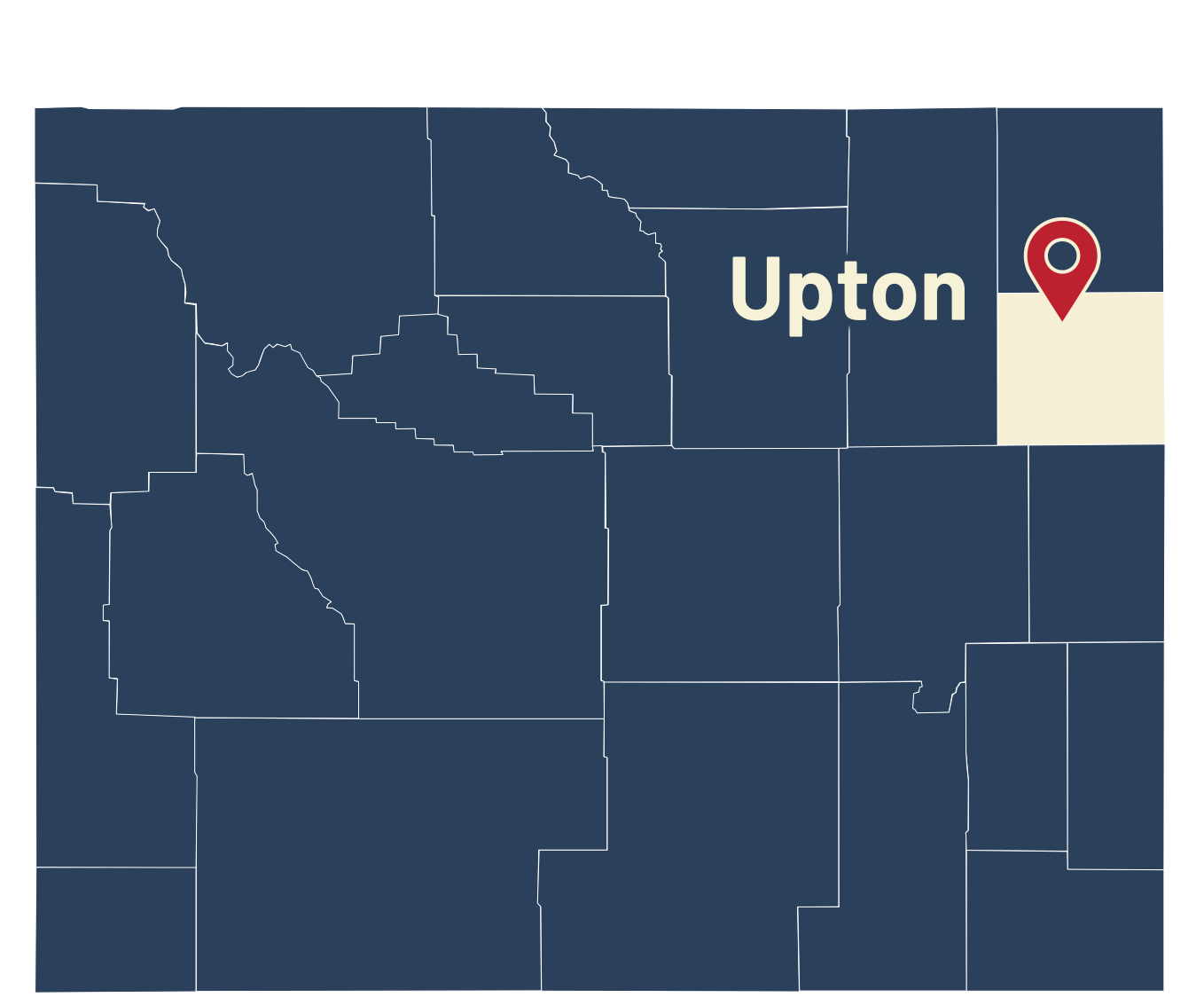
Upton, Wyoming, had a population just under 1,000 in the 2020 census. The small, tightly knit community is more well-known for its quiet living than for being the center of global change.
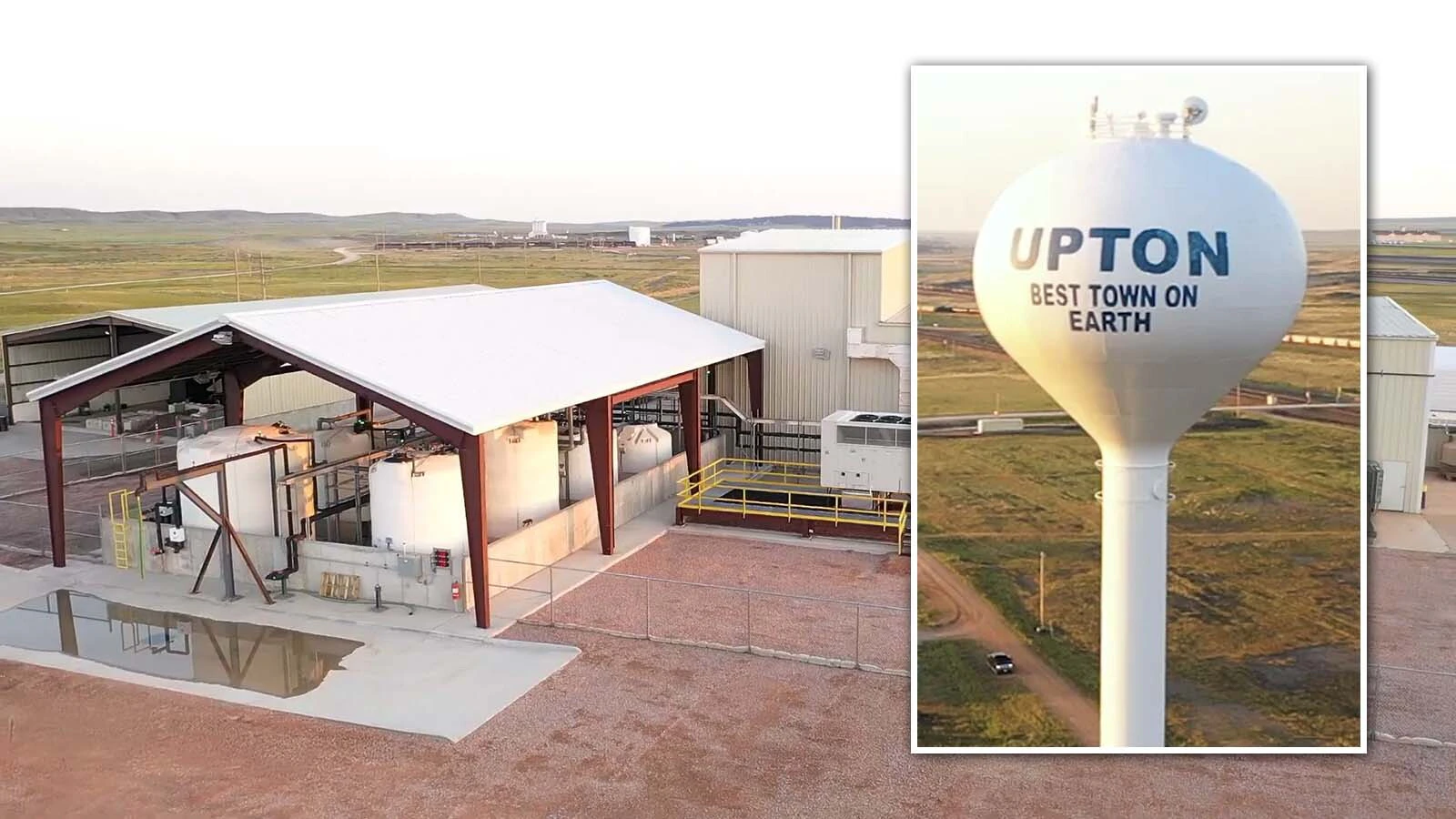
But it is also now home to Rare Element Resources’ rare earth demonstration plant, which just completed its first full day in operation.
The plant will spend the next 12 months proving out a brand-new approach to separating a mineral critical to national security, called neodymium-praseodymium oxide.
That’s a mouthful, and there’s no common name for this magnet metal just yet, but it is a vital component in many technological devices. It’s also integral to medical technology, defense systems and electronic devices including the ubiquitous smartphone.
Until now, China has had a lock on these valuable minerals, keeping their prices so low it’s been economically infeasible for companies in other countries to mine and process the substance.
A brand-new process that’s less expensive will help break that stranglehold, creating a needed domestic supply chain.
“This is one of two, three, maybe four plants in the United States that are coming online,” Wyoming State Sen. Ogden Driskill, R-Devils Tower, told Cowboy State Daily. “And Texas got a plant online ahead of us, but I think we’re going to be the next one.”
Driskill added he couldn’t be prouder of Upton, which lies in his senate district.
“They have championed this from day one,” he said. “And this plant’s a first-breaking, transitional thing, not just for Upton, but the state of Wyoming and the United States.”
Proving Out Its Process
Rare Element Resources plans to run its demonstration plant for up to 12 months, proving out its new and cheaper approach to processing high-purity neodymium-praseodymium oxide.
Rare Element Resources President and CEO Ken Mushinski credited the 20-man team in Upton for what he believes is an incredible milestone not just for Wyoming, but the nation.
“If you just look at the current world affairs, and specifically what is going on in the Strait of Hormuz in the Persian Gulf, it is not too far of a leap to see something of equal or even greater consequence affecting the critical minerals supply chain,” he said. “In that case, the U.S. is not a net exporter of separated rare earth elements as we are with oil, so the impact on the American supply chain would likely be more immediate and costly to counteract.”
Having a domestic supply chain for critical rare earths is a way to build in security for both America’s economy and its national security, while also supporting local and regional economies with high-paying jobs.
Mushinski said initial operations at the plant will put the entire process Rare Element has designed to the test.
“The balance of plant systems are in full operations, such that we can now move forward with the introduction of feed material into the front-end primary processing circuit,” he said. “As we progress, we will safely and methodically proceed with the primary processing circuit to produce the total rare earth product that will feed the plant’s separation circuits.”
That process will incorporate the balance of the plant’s systems, including the waste processing and acid recovery systems, Mushinski added.
“To date, things are progressing as expected,” he said. “However, as anyone with experience in starting up a plant for the first time, we do expect to be required to overcome certain challenges as we move forward, which we are fully prepared to do.”
Once all the systems seem to be operating together as expected, every plant system will be methodically tested, to ensure everything works as planned and is economically feasible.
Once the technology has been fully demonstrated, several options exist for the plant’s future, Mushinski added.
“To name a few, we may continue with operations to enhance the efficiency of the current technology once proven,” he said. “Or prove our ability to also separate heavy REEs and possibly convert the plant into a related commercial production facility, and/or enhance the facility to prove our separation technology on ore other than that sourced from our mine.”
Next Step Could Be A National Plant
Much will depend on how the market dynamics are playing out, Mushinski said, but what excites Driskill the most is the chance Wyoming has to not just mine a natural resource, but process it and add economic value to it in the Cowboy State.
“Like so many other things Wyoming does, we’ve got big areas of rare earths,” he said. “And this will mean that we don’t ship it somewhere else. We actually process it in Wyoming and get that value-added to the state.”
Driskill has been told if all goes well that Rare Element Resources plans to construct a national-scale plant in Upton, one that would offer more than 300 permanent jobs once built.
“I believe that would be right next to the (demonstration) plant,” Driskill said. “And that would turn Upton into one of the up and comer, small communities that’s changing the state of Wyoming. I’m so proud to have been a piece of that.”
Adding value to mined resources within the state is something Wyoming has historically struggled with.
While much of the trona mined in southwest Wyoming is processed within the state and ships out as baking soda, few of its other natural resources get any value added within the Cowboy State. They ship out to other states, which do the processing, and Wyoming loses out on much of the chain of economic value.
That makes the demonstration plant a real milestone for the state on several levels, Wyoming Mining Association Executive Director Travis Deti told Cowboy State Daily.
“The startup of the Upton pilot plant for the processing of rare earth elements is a critical step in the creation of an American rare earths supply chain. An industry dominated today by the Chinese,” he said. “With rare earths being necessary in products ranging from cell phones to sophisticated weapons systems, it’s absolutely critical and an issue of national security that we develop these resources domestically.”
The potential for 300 long-term, high-paying jobs is also an “exciting and important development,” he added.
Bear Lodge Project In Fast Lane
Rare Element Resources demonstration plant is starting about a year later than expected.
Double-digit inflation and supply chain pressures pushed the project significantly higher than its original $44 million cost projection to $53 million. It also delayed the start of construction.
Federal funding was increased to help cover the extra costs, and the Export-Import Bank of the U.S. approved a $533 million loan to help the company get off the ground.
Meanwhile, the company is continuing to pursue permitting for its associated Bear Lodge project near Sundance, Wyoming, which has been recognized as a FAST-41 Transparency Project.
The designation, conferred by the federal government, aims to put permitting processes for vital projects in the fast lane, ensuring they don’t get hung up in red tape that takes a decade or so to resolve.
“The acceptance of Bear Lodge into the FAST-41 Covered Projects program is a significant milestone in our development timeline,” Mushinski said. “It ensures a coordinated, timely, and thorough NEPA review. As America prioritizes secure domestic sources of rare earths, Bear Lodge is advancing toward commercialization to support the U.S. and our allies.”
If and when Rare Element Resources is able to prove out its new process, that will set things up for a fast track to full scale mining in Upton, Wyoming. It will also give the Cowboy State yet another key role to play in helping secure America’s national security.
For a town of fewer than 1,000 residents, that might seem like a big role on the world stage. But it’s one Upton seems ready to play.
“This is a shining success story in Wyoming,” Driskill said. “And I think it’s a model. Upton realizes they don’t have the capacity as that plant grows, so they’re now hand-in-hand working with the city of Newcastle to make Newcastle grow via the plant in Upton.
"That tells you volumes about two communities not fighting each other, not beating each other up over who gets what, but how do we make our communities better together?”
Renée Jean can be reached at renee@cowboystatedaily.com.