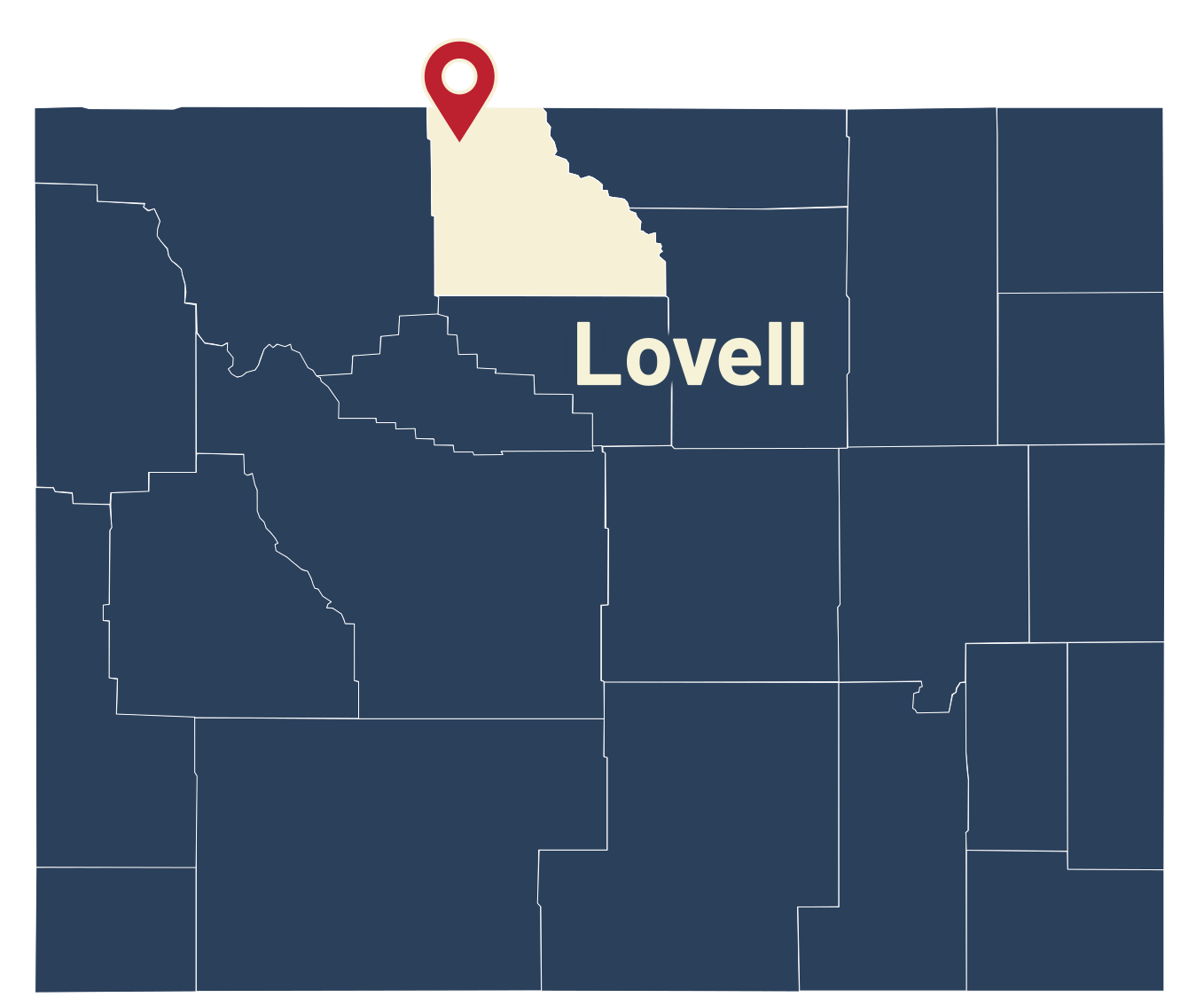
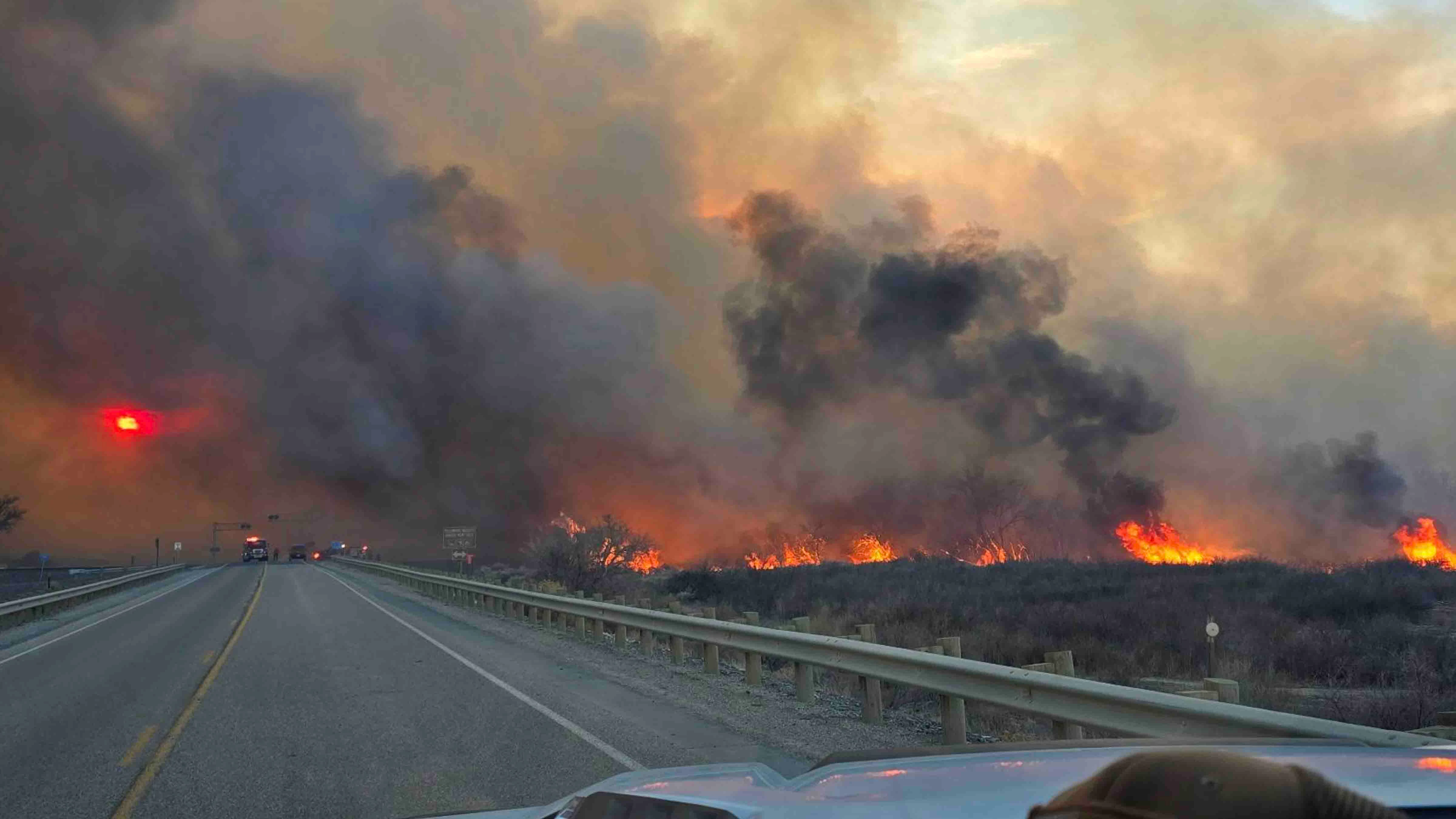
Several agencies continue controlling the spread of the Kane Fire near Lovell. As of Wednesday, the fire has burned over 1,900 acres since it started on Saturday afternoon and is around 30% contained.
According to the Bighorn Canyon National Recreation Area, the Kane Fire is around 30% contained. Firefighters are “in a strong position moving forward,” but are concerned about the ongoing dry conditions and gusty winds that have created “critical fire weather” since the fire started.
Nobody in Big Horn County was prepared for such an intense wildfire response this early in the year. What’s worse, it’s strongly believed to be a human-caused fire that started when open and controlled fires were prohibited.
If conditions remain as they are or worsen, Wyoming could face a historically bad fire season.
“It’s like a tinderbox out there,” said Sgt. Jeff Angell with the Big Horn County Sheriff’s Office. “People need to be careful, because it’s really dry out there.”
Rapid Response
The fire was reported at 5 p.m. Saturday. It was burning through thick riparian vegetation in the Yellowtail Wildlife Habitat Management Area, just north of Lovell.
“The entire Lovell Fire Department was on scene on Saturday, along with the Big Horn County Sheriff’s Office and the Wyoming Highway Patrol,” Angell said. “They’ve been relieved by the Bureau of Land Management and U.S. Forest Service, who’ve taken command.”
By Sunday morning, the fire grew to 530 acres. It had reached 1,943 acres by Monday, according to the National Interagency Fire Center.
Firefighters on the scene said the fire had the behavior of “an August blaze.” Its spread was aided by 70-degree temperatures and wind gusts between 20 and 45 mph.
As of Wednesday, the situation appears to be under control. The fire hasn’t been contained yet, but containment lines have been reinforced, the responding agencies have an adaptable tactical plan, and Angell said they have plenty of personnel and resources on hand.
“We haven't had any trouble so far, and it’s not a threat at all to any residences or anything like that,” he said. “I drove out yesterday, and they were putting out hot spots and doing a lot of hand stuff. They’ve got a good handle on it.”
The Human Factor
Most wildfires, especially in summer, are sparked by lightning strikes in dry areas. Human-caused wildfires are rarer but especially egregious.
The cause of the Kane Fire is still being investigated by the Big Horn County Sheriff’s Office and the National Park Service, but Angell said they already have a strong lead.
“I can tell you that it was human-related, and we have an idea how it started,” he said, but wasn’t able to share additional details.
Most of the Bighorn Basin, including Big Horn County, has been under Red Flag Warnings since last week due to “low humidities, unseasonably warm temperatures, and strong, gusty winds.” Daytime temperatures were in the high 70s to low 80s.
Big Horn County Fire Warden Brent Godfrey instituted fire restrictions on March 18, prohibiting all open and controlled burns. A county-wide burn ban was put in place on Sunday morning after the Kane Fire was reported.
The burn ban has since been lifted, but that doesn’t mean the fire danger has been reduced. Angell implored people to think before they strike.
“Nobody should be burning anything right now,” he said. “If they do attempt to burn, they need to call the Big Horn County Sheriff's Office or the Lovell Police Department dispatch center to find out about any bans or restrictions. Dispatchers will know if they can burn or not.”
Open and controlled burns were prohibited in Big Horn County on Saturday afternoon, which will make the consequences of the Kane Fire even more serious for the perpetrator.
Heed The Warnings
Firefighters are confident that they can quickly control the Kane Fire. Bighorn Canyon National Recreation Area said the personnel on scene made “significant progress” on Tuesday and are adjusting their tactics around the weather, terrain, and fire behavior.
A slight change in the weather, with cooler temperatures and higher humidity starting Thursday, will assist firefighters in their goal of containing and completely extinguishing the fire.
Meanwhile, the Yellowtail Wildlife Habitat Management Area and all roads leading into it will remain closed until further notice.
Fighting a fire of this intensity wasn’t expected in March. Angell believes people need to see the Kane Fire as the writing on the wall going forward. If it’s this bad now, it’ll only be worse when summer arrives.
“Be careful with campfires,” he said. “If this continues, we’re going to have a tough season.”
Andrew Rossi can be reached at arossi@cowboystatedaily.com.