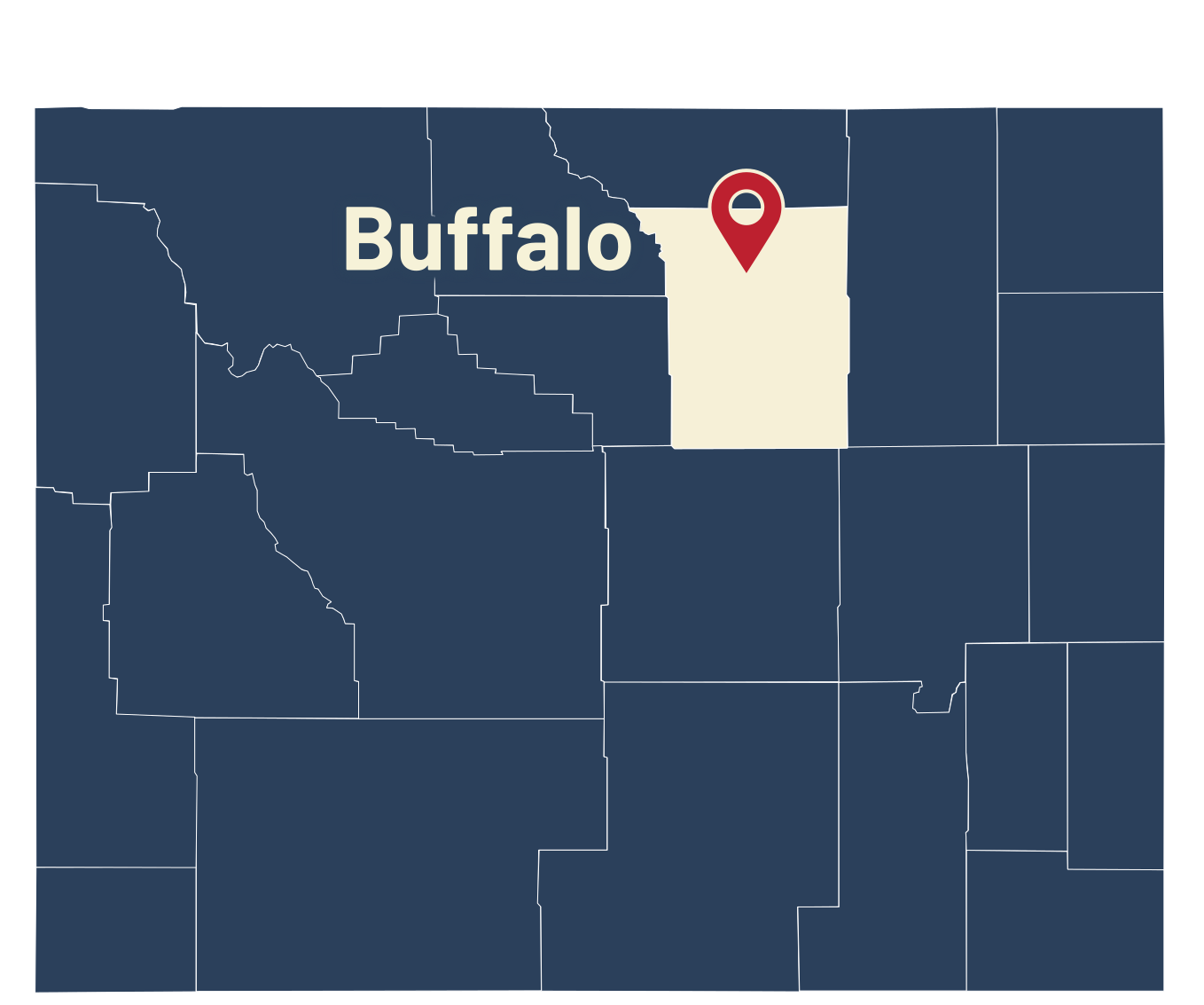
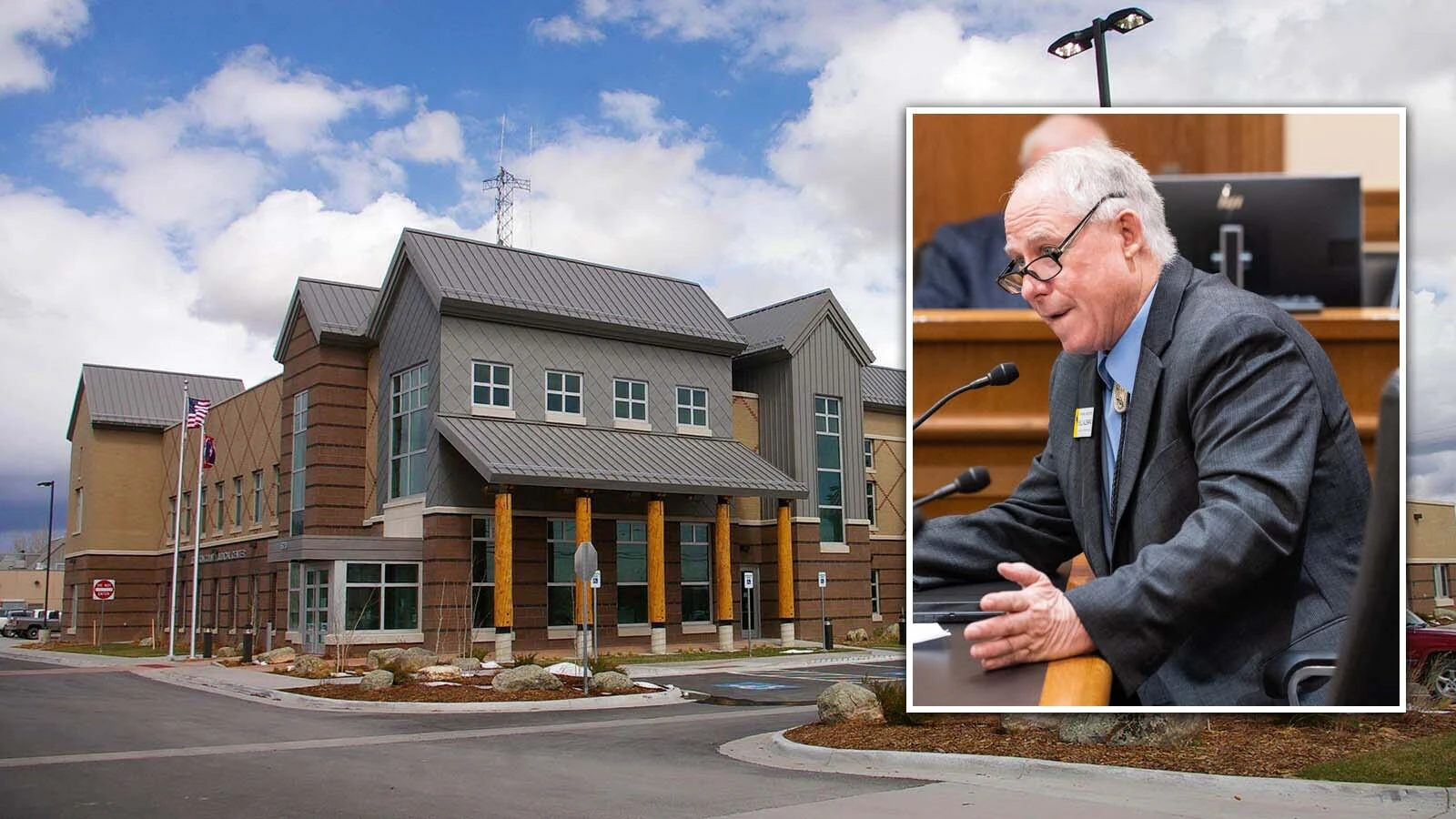
A Buffalo Circuit Court magistrate is considering whether a Johnson County Sheriff’s Office deputy had enough evidence to arrest state lawmaker Bill Allemand in late December.
Magistrate Jeremy Kisling listened to a combination of evidence, testimony and closing statements for more than two hours Wednesday in Buffalo, while state Rep. Bill Allemand, R-Midwest, sat quietly at the defense table.
Allemand’s attorney Mike Vang, an experienced defense attorney on DUI cases in Wyoming, asserted that Johnson County Sheriff’s Deputy Caleb Campbell didn’t have enough evidence to suspect Allemand of drunk driving the afternoon of Dec. 28; didn’t have enough evidence to arrest Allemand; and interrogated Allemand while the man was handcuffed in a parking lot.
Johnson County Deputy Attorney Joshua Stensaas argued back that the stop and arrest were proper and lawful, and even if a couple of the answers Allemand gave to the deputy’s questions while handcuffed don’t make it into the state’s main case at trial for constitutional reasons, the deputy had enough evidence to clear the probable cause evidentiary hurdle.
“Obviously I’m going to take this under advisement,” said Kisling at the hearing’s conclusion.
Video
The prosecutor played about 18 minutes of Campbell’s body camera video from the incident, which started just after midday Dec. 28. He also played portions of Campbell’s dash camera video.
These are videos that have not been available via public records request while the case is ongoing, but which the prosecutor was allowed to play in court to contest Vang’s assertions that the stop, arrest, and questioning were not proper.
The dash camera video is grainy. Campbell testified that it shows Allemand, 66, nearly hitting a red truck while trying to enter an intersection at a stop sign, after exiting the Interstate into Buffalo.
The body camera video, projecting the view from Campbell’s torso forward, shows the deputy approaching Allemand in the parking lot of a gas station in Buffalo, which court documents say was Miller’s Travel Center.
A supplemental affidavit by Campbell says he confronted Allemand at the gas station after receiving a REDDI report, or drunk driver tip, in which the caller had described a blue Dodge pickup swerving across the Interstate headed toward Buffalo. Allemand’s pickup was a Toyota, but blue in color. The supplemental affidavit also says Campbell witnessed Allemand enter an intersection too early at a stop sign, nearly causing a wreck with another vehicle.
‘Howdy’
As Campbell approaches Allemand's truck in the video, the lawmaker appears to be sitting in the driver’s seat of a blue pickup truck, looking at a cellphone.
Campbell raps on the window and says “howdy."
Allemand talks to him, asks what he did wrong, and after a brief exchange, leans over his passenger seat to retrieve documents for the deputy.
In the video, the lawmaker is dressed in a casual blue T-shirt, his hair somewhat ruffled.
Campbell asks Allemand why his speech sounds the way it does.
“I dunno,” answers Allemand, handing the deputy a document.
While at legislative meetings and elsewhere Allemand normally speaks loudly, somewhat slowly and with a unique cadence. That pattern also showed in the video, though Allemand’s speech sounded less articulate than usual in that footage.
Campbell would later report that Allemand's speech was “slurred.”
Stensaas paused the video in court, on a frame in which Allemand leans over his passenger seat. The prosecutor asked Campbell about the circumstances during that portion.
Though the deputy didn’t know it at that juncture, said Campbell, Allemand was leaning over a pistol and handling things near it; and the pistol sat on the front passenger seat near the center console.
“I didn’t see it at that time,” noted Campbell. “It seems very reckless to place your body in front of any firearm or your hands near it” while a police officer is near, the deputy added.
Stensaas resumed the video. It played from multiple monitors in court.
In it, Campbell orders Allemand to exit the vehicle, and Allemand does.
“Am I being arrested?” asks Allemand.
“You’re being detained right now,” Campbell answers. The deputy explains that there’s a firearm in the truck, which Allemand “did not disclose.”
Allemand says he has a conceal carry permit for that.
While beginning to detain Allemand, Campbell asks, “did you drink anything today?”
“Yes,” answers Allemand.
Campbell asks how much.
“Probably two beers,” says Allemand, in the video.
“That’s everybody’s answer,” parries Campbell while handcuffing Allemand.
“So what did I do illegal?” Allemand asks in the video.
He was driving erratically, he was reported as a drunk driver and he stopped just short of hitting a vehicle, answers Campbell, adding, “if that makes sense.”
“No, it don’t,” says Allemand, who leans on his truck.
After more back-and-forth, Allemand challenges Campbell’s assertion about the intersection.
“So I did stop at the stop sign, but it was an improper stop. Is that what you’re telling me?” he asks. “I don’t understand that.”
Campbell calls for another deputy to come to the scene.
Allemand says there’s a firearm on his hip, feels his hip and says, “Oh, ok, I put it off.”
Campbell would later opine from the witness stand on that portion of the video, saying Allemand indicated he had lost track of his gun.
In the video, the other deputy arrives. Campbell pats Allemand down for weapons.
Allemand, standing outside in his T-shirt and pants, asks for a coat.
Campbell circles to the passenger side of the pickup, opens the door, moves aside a cowboy hat and retrieves the pistol.
Here Stensaas paused the video to ask Campbell what the flash of green was on that passenger seat.
It was a statute book – a copy of Wyoming’s traffic and criminal laws, Campbell said.
Back To The Video
In the video, Campbell manipulates the gun and tries to talk to someone on his radio. He references static interfering with his message, and says he can go back to his vehicle to use the radio.
He does go back to his vehicle to communicate Allemand’s date of birth and particulars about the gun, then returns to Allemand.
Allemand is still handcuffed at this juncture.
Campbell asks if Allemand is under the care of a doctor, and for what.
The answer is yes, and for blood pressure and hearing, says Allemand.
“You are taking me to jail?” Allemand asks.
“Not yet,” says Campbell. “I’m trying to figure out what level intoxication you are.”
Campbell delivered those words as a statement, not a question.
“I had two beers,” answers Allemand.
After more back and forth, Campbell says, “I just want you to be honest,” and Allemand parries, “I am being honest, man. What do you need me to do?”
“When was the last drink you had?” asks Campbell.
Allemand says his last drink was 15 miles down the road.
“I have a little bit of a problem. I have anxiety,” he says, adding that two-lane roads don’t bother him but he’s learned that if he has a beer when he drives down the interstate “it’s so much better.”
Campbell asks Allemand if he has balance problems.
Allemand says he does, and has had two knee replacements. His balance is a medical problem, he says.
Allemand’s handcuffs are removed. Campbell discusses field sobriety tests.
Allemand rubs his wrists and says, “Ah, that feels better.”
He stumbles toward Campbell, who steadies him with one hand and says, “Woah, personal space.”
The other deputy retrieves Allemand’s jacket and brings it to him, while Campbell asks if Allemand has issues with his eyes.
“Not that I know of,” answers Allemand.
Campbell asked Allemand to put his feet together and hold his hands at his sides.
“K, see, that is hard,” says Allemand.
Allemand stumbles backward during a sobriety test in which Campbell directed him to follow a pen with his eyes.
“Are you gonna be able to walk in a straight line without falling?” asks Campbell.
“Yeah,” says Allemand.
He stumbles toward Campbell. The deputy then halts the field sobriety tests and directs Allemand to put his hands behind his back and turn around.
“I am placing you under arrest for DUI,” Campbell tells Allemand, handcuffing him a second time.
“So what happens to my pickup?” asks Allemand.
It will be towed, says Campbell.
“Would you dang sure lock it up?” Allemand asks.
Said He Was A Legislator
Stensaas paused the video there.
He had argued in favor of playing the remaining 22 minutes of that video, which he said show events that happened after Allemand’s arrest.
Vang said it wouldn’t be necessary to play the rest of the video, since he didn’t raise arguments pertaining to those events.
Stensaas said Allemand told an officer that he’s a state legislator, after his arrest, and that he knew his rights. He said Allemand’s statements go to a general calculation about his savviness, which would be relevant to a legal calculation in Vang’s challenge.
“I can try to skip to (relevant) spots,” said Stensaas.
“Oh, God,” said Vang in a loud whisper from the defense table.
Kisling discouraged Stensaas from playing the rest of the video, saying even if the prosecutor played those parts, Kisling wouldn’t consider them in his analysis since they were outside Vang’s argument.
Stensaas then played Campbell’s dash camera video, which shows Allemand from a side view, corroborating the three incidents in which he stumbled.
Cross-Examination
Vang questioned Campbell in court.
“At all times you made contact with Mr. Allemand, he wasn’t free to go, was he?” asked Vang.
“No,” answered Campbell.
Police officers are supposed to tell a suspect his Miranda rights before questioning that suspect in a state of confinement.
If an officer asks a person incriminating questions while the person is not free to leave, but without having given him his Miranda rights, the answers that person gives can’t be part of the prosecutor’s main evidence pool at trial.
A prosecutor can still use those answers to fact-check the defense at trial if necessary, however.
Judges weigh whether someone was confined and interrogated under a “totality of the evidence” standard, looking at all circumstances.
Vang established by questioning Campbell that, though the caller who reported Allemand identified himself to dispatch, Campbell didn’t know who that person was. The report was of a Dodge pickup, not a Toyota. Allemand did stop at the stop sign. His leftward view may have been obscured by an embankment in the land; and people often nose into intersections to check them for traffic.
“Would you agree with me he appeared to yield to the vehicle that was coming?” asked Vang.
“I mean, it appears he yielded to it because he didn’t hit it,” answered Campbell, who under Stensaas’ redirect questioning estimated that Allemand came within about a foot of the red truck he allegedly almost hit.
Campbell conceded under Vang’s questioning that he’s not familiar with Allemand’s normal mode of speech.
“You agree with me he wasn’t slurring his speech?” asked Vang.
“I would disagree,” retorted Campbell.
Vang asked whether Campbell, when he saw the gun, patted Allemand down and searched the truck at that time as a relevant case advises.
Campbell said he did not.
He’d later tell Stensaas under redirect questioning that he did these things once his “cover” deputy arrived.
“Can you explain to me why you didn’t shut the (truck) door instead?” asked Vang.
“I can’t,” answered Campbell.
As for earlier testimony by Campbell, that Allemand’s tendency to interrupt him was unusual, Vang asked, “people have interrupted you in the past that aren’t impaired?”
“Correct,” answered Campbell.
Vang also scrutinized Campbell for not asking specifically about head, leg, back or ankle injuries before attempting field sobriety tests.
Campbell conceded he hadn’t asked those questions. He countered that he’d asked if Allemand was under a doctor’s care for anything.
It’s not normal for people to stand with their feet touching and hands at their sides, Vang asserted within a question.
“I mean, in the military we do it all the time,” said Campbell, adding that the stance is part of that test.
Vang noted that Campbell didn’t complete the gazing test involving the pen.
That’s because Allemand couldn’t complete it and maintain his balance, the deputy parried.
Kisling called for a break before Stensaas’ redirect questioning.
Allemand limped as he exited the courtroom with his attorney.
Argument
During Stensaas argument after the questioning phases, the prosecutor said that even if the magistrate purges some of Allemand’s answers from the evidence pool of the state’s case-in-chief, the stop was proper, the detainment was proper and the arrest was proper.
Vang has raised challenges as to whether Campbell had enough evidence for the initial stop, whether he interrogated Allemand during detainment and whether he had probable cause to arrest the man.
“I mean, his gesturing, judge, looks like he’s intoxicated. Every bit of it,” says Stensaas. “Normal people who are sober… when there’s an armed law enforcement officer right in front of you – normal people don’t put their hands right over a gun.”
Allemand had admitted to drinking, he noted. He’d also volunteered some statements about drinking on his own, rather than in response to direct questions.
And as for the field sobriety tests, “we don’t get very far” in those before Campbell has to stop, the prosecutor said.
Allemand spent 12 minutes total in handcuffs, Stensaas added.
Not Valid From The Start
Vang in his own argument cast the whole encounter as flawed.
“This was not a valid detention from the start under Terry (the case defining investigative detentions,” he said.
Allemand’s admission that he’d been drinking didn’t necessarily vault the case over the probable cause standard, Vang indicated: a man can drink and drive in Wyoming.
The legal limit is 0.08% blood-alcohol concentration.
“That commercial saying buzzed driving is drunk driving isn’t true,” said Vang.
A half smile formed on Kisling’s face.
“This stop was not justified at its inception,” said Vang. “And we don’t believe there’s probable cause for the DUI.”
Vang pointed to corroborative evidence in Campbell’s account that the video does not show or does not show well enough to produce conclusions: the appearance of the blue pickup truck near the white minivan of the person said to have reported Allemand; the almost-collision at the intersection; and a blue Dodge pickup.
“They got the wrong person,” said Vang, referencing the contrast between the vehicle make in the initial report and the one Allemand was driving.
This case is ongoing.
Clair McFarland can be reached at clair@cowboystatedaily.com.