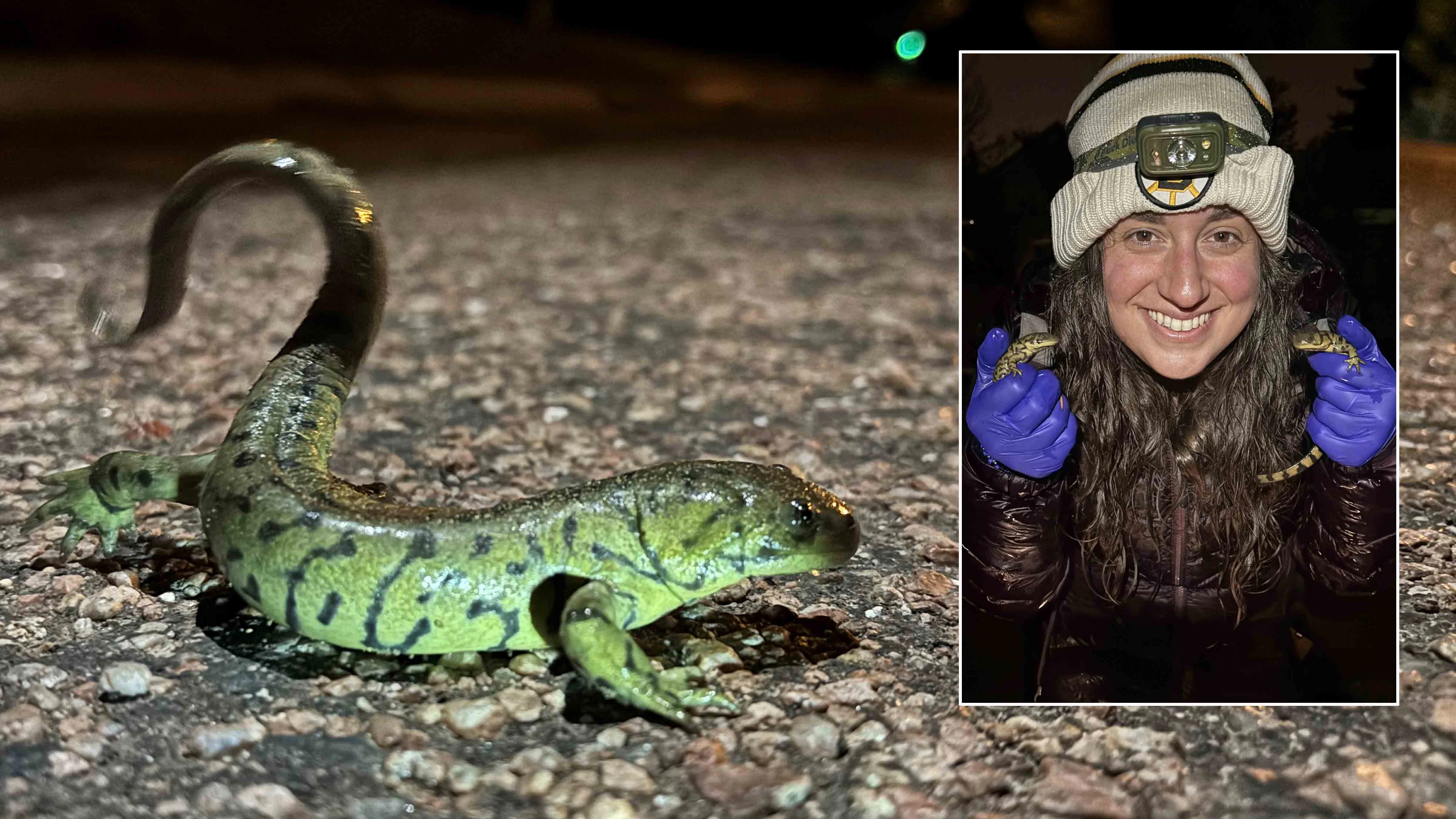
April showers may bring May flowers, but in Laramie, it brings something else, too.
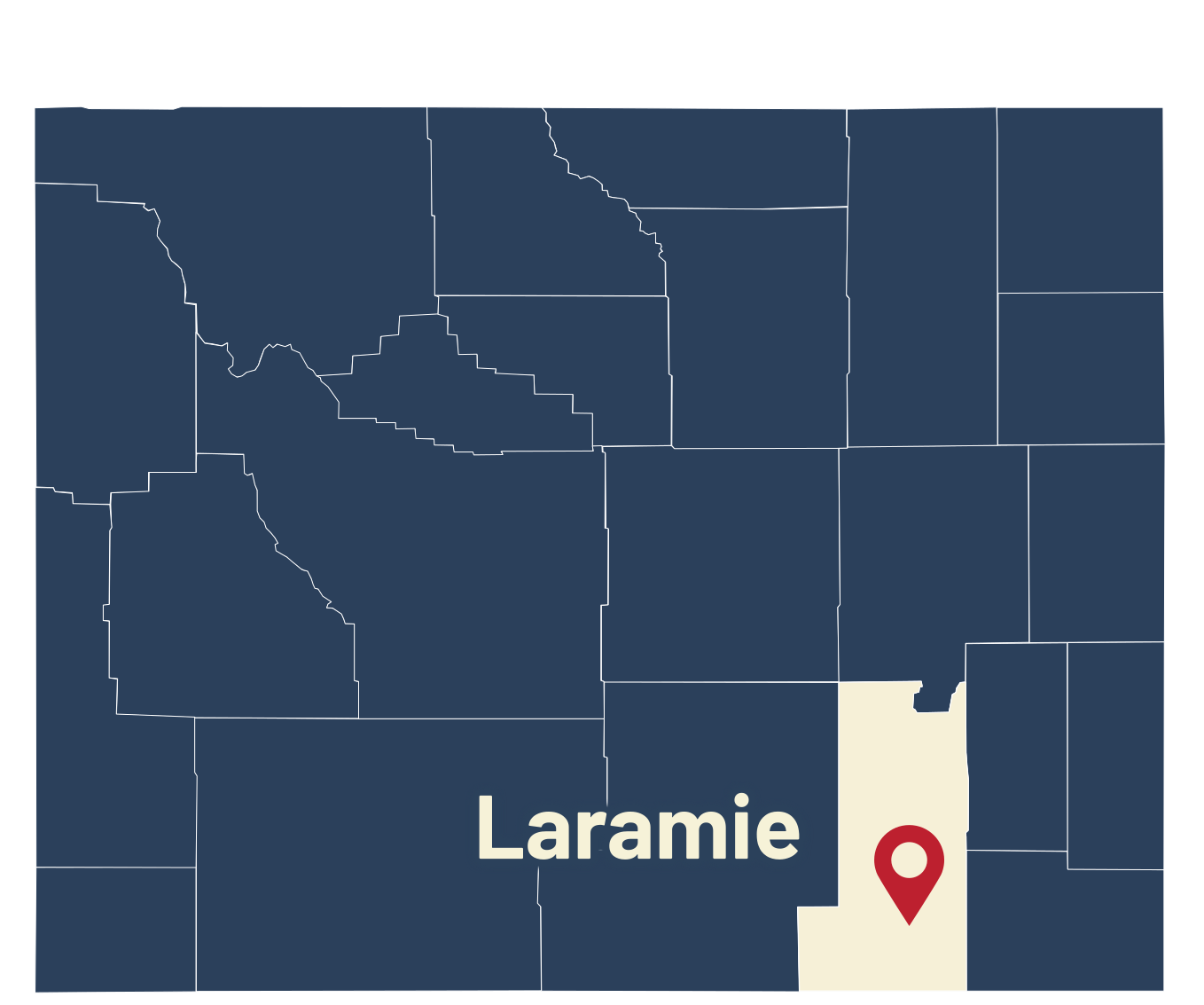
On the first properly warm and rainy spring night, tiny heads will start poking out from underground burrows in neighborhood after neighborhood around LaBonte Park.
While those heads might, on casual glance, seem like tiny snakes, that’s not what they are at all. In fact, they’re not even reptiles — they’re amphibians.
They’re western tiger salamanders, the Cowboy State’s only salamander. They are also part of Wyoming’s least known, least studied migration. Though that is about to change. The Biodiversity Institute has begun to count the LaBonte Park population of salamanders and is asking people across the state to note sightings of this creature to better understand their range.
“When we think of migrations in Wyoming, we think of mule deer and things like that,” Biodiversity Institute’s Mason Lee told Cowboy State Daily. “But the salamanders migrate, and a lot of other amphibians do, too. They just are typically living closer to their water bodies and aren’t often in urban areas.”
Spring Break At LaBonte Park
This year’s spring salamander migration could start a bit early, based on forecasts from Cowboy State Daily’s weather meteorologist Don Day.
“There’s going to be a little bit of shower activity Friday,” Day said. “But I would say that it’s probably not going to be until Tuesday or Wednesday before there’s a decent chance of any moisture.”
The chances will rise dramatically in April, Day added, which is a more likely timeframe for the salamanders to begin their annual migrations.
“March, April, May and June are the four wettest months in Laramie on average,” he said. “The trick is when is it going to come?”
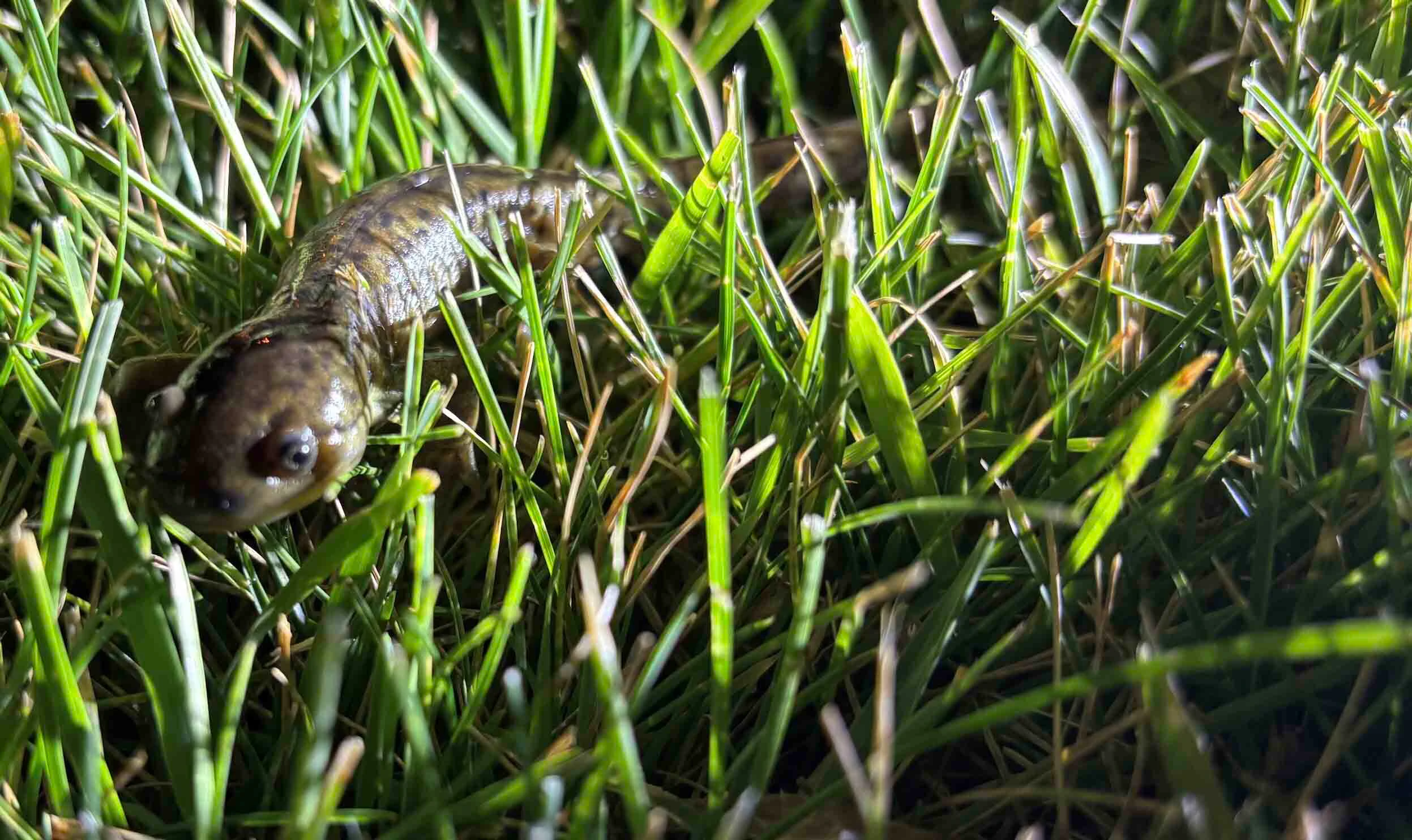
Once they wake from their long winter nap, the Laramie salamanders are ready to travel. The grass will start wriggling with their bodies as they head for their own little version of spring break at a neighborhood pond in LaBonte Park.
It’s a little slice of salamander heaven. A shallow lake that is 100% fish free — perfect for laying hundreds of eggs for a new generation.
Fear The Highway Dragon
The LaBonte Park salamanders are one of few documented western tiger salamander populations in the West. They drew attention, perhaps, because of their proximity to the University of Wyoming, where there are plenty of curious students looking for things to study.
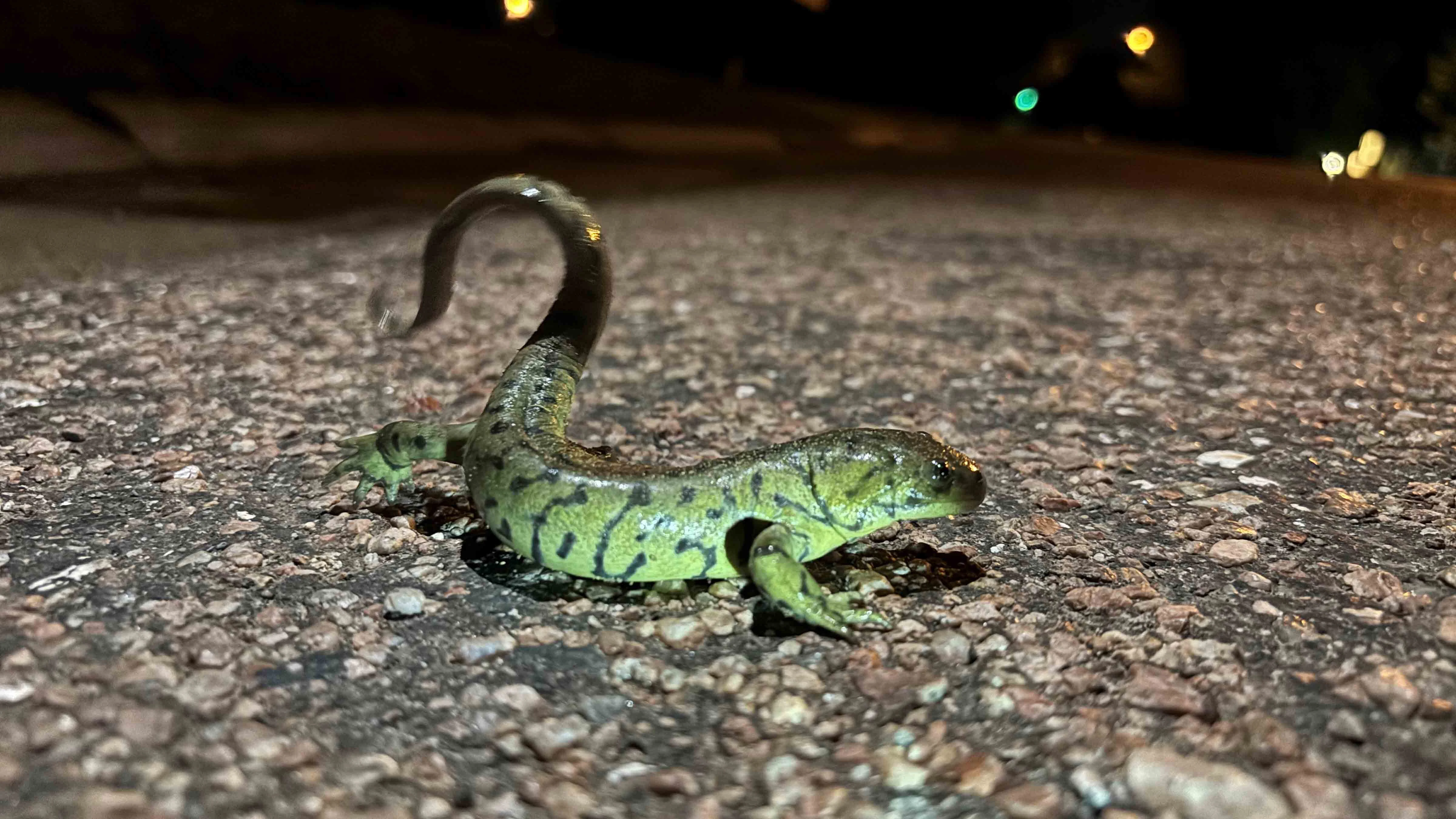
Although their journey to LaBonte Park’s pond may seem short in human terms, to a salamander, this is an epic, dangerous journey.
They not only leave their comfort zone, a nice cozy underground burrow where birds and skunks cannot see them, but they also face a particularly fast and fearsome foe. A creature that might as well be an invincible dragon with an uncanny affinity for wide open, rocky expanses.
“These salamanders don’t hold up well against the car,” Lee said. “There’s been a lot of studies on amphibian susceptibility to road mortalities, and, without human intervention, that can lead to a 40% to 100% decline for an amphibian population.”
Those kinds of statistics led Lee to start a bucket brigade in 2022 for the LaBonte Park salamanders, to help them get where they’re going, while also collecting population statistics for the species.
“The salamander is a species of greatest conservation concern in Wyoming, and they are declining throughout the range,” Lee said. “And that’s a cool way to get involved with wildlife conservation and I think it’s pretty special that we have them in Laramie.”
When Your Roommate’s A Deer Mouse
Many people think of salamanders as a wetland species and expect to find them living on or near water. But the western tiger salamander, like many Wyoming creatures, has a completely different lifestyle.
“They really only use water during the breeding season, so during the spring for their eggs to be laid in, and then for the larvae to grow up in the pond,” Lee said. “Then they spend most of the rest of their lives in burrows underground.”
That means they are quite often found very far away from water sources, hiding in environments that would seem to be far too dry for such a creature.
Their underground burrows help explain this, as they provide a nice cool environment that is just moist enough to keep the Wyoming wind from drying them out too much.
Salamanders can build their own burrow, but what they more usually do is take over a burrow that another animal has already made.
Quite often, that means they’re sleeping with a roommate.
“There are video cameras that researchers have set out that have a little deer mouse in a mammal burrow with a salamander living right next to it,” Lee said. “And they both seem to coexist. I think that’s pretty fascinating.”
Although it’s not been well studied, one reason the salamander might prefer sleeping with a mammal nearby is that the creature’s poop will attract insects. That’s a free lunch, as well as a free bed.
The mammal is also helping to keep the space nice and humidified by just breathing, making the space more comfortable for one and all.
Peter Pan, Move Over
Salamanders have more than one form, and some of them never really grow up.
“Some of them will stay in their larval form their entire lives,” Lee said. “So, they’ll never actually metamorphose and become a terrestrial, land-dwelling adult.”
That doesn’t mean, however, that they don’t lay new eggs each spring, along with their land-dwelling cousins. They want to join the fun, too, and will keep laying new eggs every spring, despite never really growing up.
The plasticity of form that allows these animals to act like they’re Peter Pan also allows them to go a bit rogue, if you will, sometimes becoming cannibals who prey on their fellow salamander larvae. It’s not known if that happens because of population pressure, where there are just too darn many salamander larvae and not enough other food sources, but it’s considered normal for this species.
The cannibalistic salamander larvae adopt a slightly different body shape, including a broader head, which helps accommodate eating what is a little bit bigger prey.
After metamorphosis, the cannibals sometimes keep their broader heads, though they don’t remain cannibals and instead eat a normal, insect-laden diet.
“They just have a plasticity in general,” Lee said. “And they can live a really long time. Researchers in Colorado have tracked some that are more than 30 years old.”
Big Brother Buffalo
Before civilization sprang up on the plains, western tiger salamanders had a canny game plan for coexisting with their much larger bison brothers, grazing happily on The Plains.
“The buffalo when they wallow, they make these pretty big depressions in the soil that then fill up with water,” Lee said. “And the tiger salamanders have been known to use those for breeding. So, in the dry prairie, they could find these temporary pools of water to breed in.”
Populations of Wyoming’s only salamander have been declining lately due to disease and loss of habitat, Lee said, and so the Biodiversity Institute has created a statewide reporting system for the creature, to start tracking their populations and identify whether there are other urban populations of salamanders at risk.
“It’s really special that we have these in Laramie, and they are a wildlife species,” she said. “So, it’s an awesome opportunity for everyday people to get involved in the conservation of one of our native wildlife species.”
While salamanders might need a little help avoiding vehicles on the giant rocky expanses we call roads, they are otherwise tough creatures, who have adapted to life in a windy state.
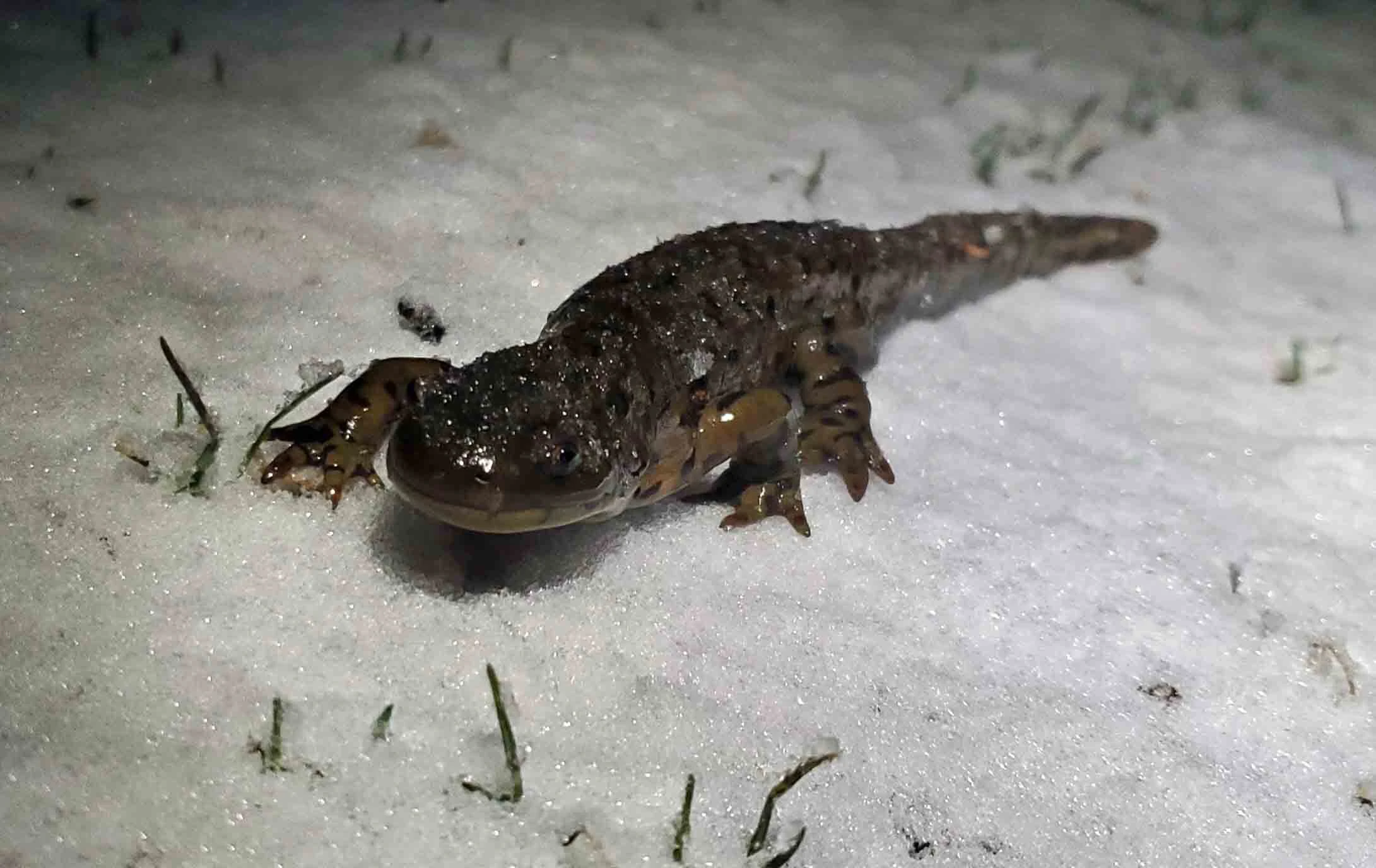
“One of our volunteers caught an absolutely iconic picture of the tiger salamander,” Lee said. “It often turns to snow during their migration here in town, and the salamander was moving to the pond on a layer of snow with ice on its back, still trying to get to its pond.”
It just goes to show the size of a creature isn’t what makes it Wyoming tough. It’s the size of the heart within, and that determination to get wherever one needs to go in all kinds of wind and weather.
Renée Jean can be reached at renee@cowboystatedaily.com.