It’s officially tick season in Wyoming. That may come as a surprise to many, which is why experts are eager to inform as many people as possible.
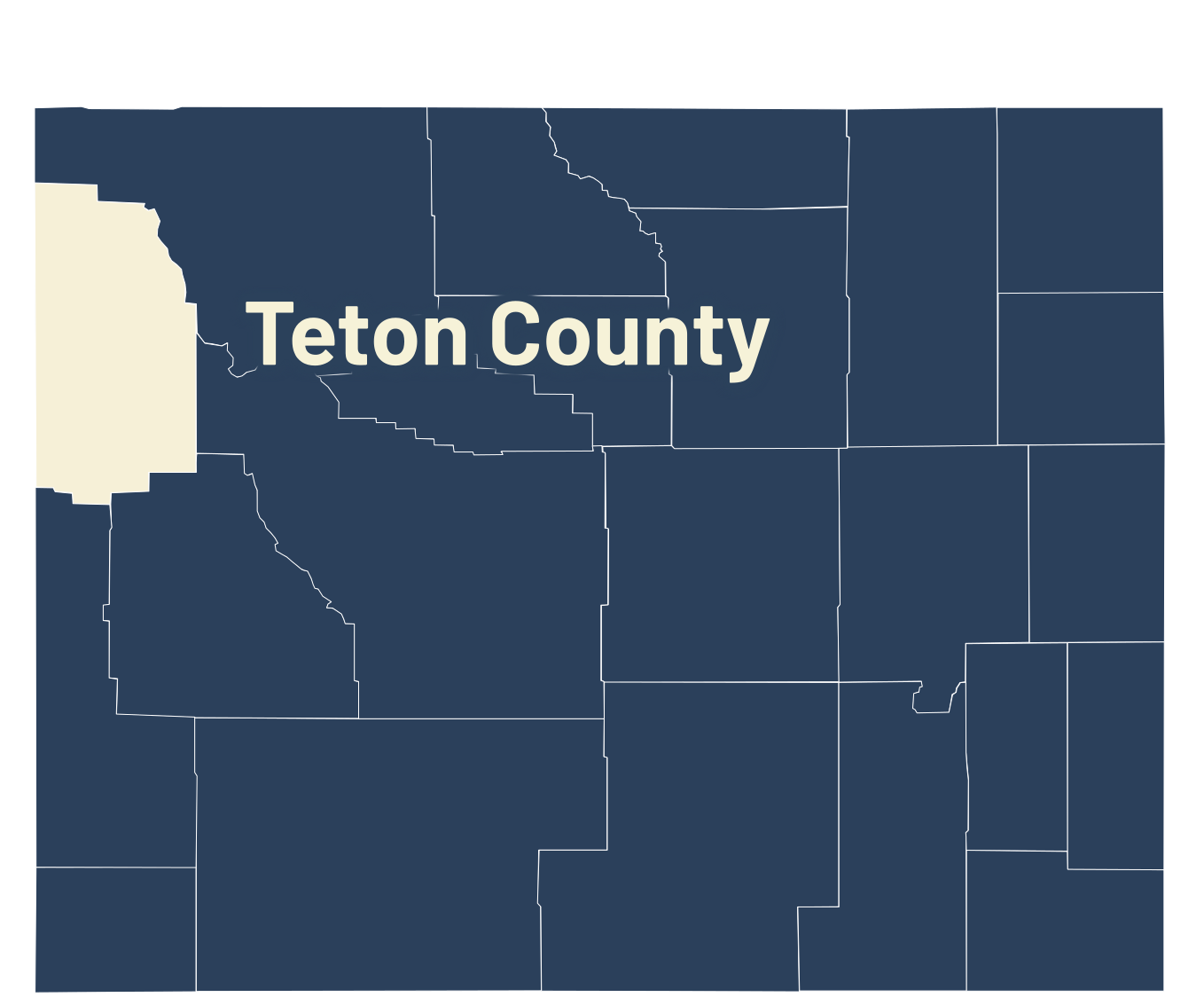
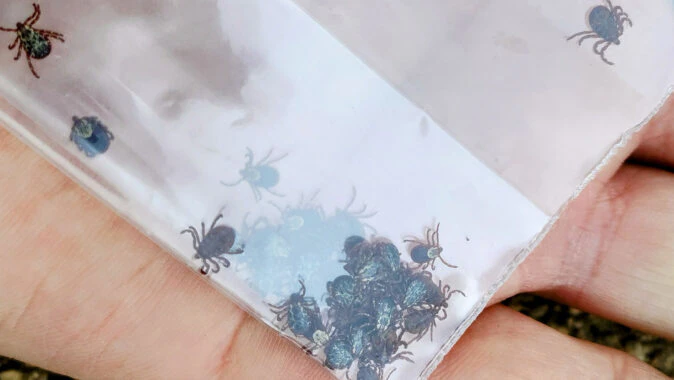
Mikenna Smith, an entomologist with Teton County Weed and Pest District, usually prepares to be out in the field collecting ticks when their population usually peaks in May. Now, she’s scrambling to get ready earlier because the ticks are already out there.
“Ticks don't keep a calendar,” she said. “We know people are seeing ticks now, so I would want Wyomingites to be aware of ticks earlier than they would normally expect, and March is pretty early.”
Earlier Bell Curve
Ticks have a highly cyclical life cycle. When it’s consistently warm enough for them to emerge from hibernation, their population explodes as they rush to get their once-a-year meal of blood from whatever source they can find.
“It’s like one big group that comes out all at once,” Smith said. “The tick population is like a big bell curve. They ramp up their population as soon as conditions are favorable, and then it drastically drops off when it gets too hot or dry for them to do much of anything.”
Favorable conditions for ticks are usually daytime temperatures consistently above 50 degrees. That could describe most of Wyoming for the last several weeks, if not months, during the warmest winter season on record.
That’s what’s causing Smith so much concern. Wyomingites always anticipate ticks, but their population will probably peak much earlier than usual.
“I was talking to someone in Lander who got ticks on her in February,” she said. “The unseasonably warm winter means they’ve probably been out for a month. That’s what I’m expecting, and I’m a bit worried.”
But Wait, There’s More
Not only are ticks out and about earlier than usual, but Smith said it’s entirely possible that there will be a lot more of them. That’s another consequence of Wyoming’s warm winter.
“When you have a really mild winter, you're going to have less mortality throughout the winter,” she said. “We may see the overall number of ticks that are coming out be higher than we normally would.”
Like all insects, ticks have a high mortality rate due to factors like weather, temperature, and predation. Ticks lay thousands of eggs in the hope that a handful of those will survive long enough to hatch, feed, and create the next generation.
Freezing temperatures and snow are big factors that reduce tick populations. Since there hasn’t been much of either this winter, Smith said Wyoming’s tick population could blow up when it peaks, which could already be much earlier than anticipated.
“If we had a really good winter, it would have killed a bunch of ticks,” she said. “After the winter we had, I expect more ticks and, potentially, their population peaking earlier than we’d expect.”
Tick Tock, Tick Tock
An important aspect of Smith’s job is collecting ticks in the field when their population peaks. She usually does that in May, but now she’s trying to rearrange her schedule to accommodate the earlier-than-expected ticks.
“My personal worry is that I’m not ready for it,” she said. “I need a little bit more time to get my staff and materials together so I can get my samples. In terms of public health, I get the impression that people who know about ticks in Wyoming are taken by surprise when they come out earlier, so they might not have their guard up right now.”
Smith is anticipating Wyoming’s tick population to peak in April, rather than May, because of the unseasonably warm winter temperatures. That means people who enjoy the outdoors over the next month already need to get their guard up.
“They could be exposing themselves to ticks and not be thinking about doing tick checks for themselves, their dogs, or their horses,” she said. “If they’re not expecting ticks, their behavior will be different.”
The good news? According to Smith, an earlier beginning and peak might lead to an earlier end.
Tick populations usually drop off dramatically by July or August, when it becomes too hot and dry for them to survive, en masse. Smith can’t promise anything, but if the tick population peaks in April, they could be gone by July.
“If they all come out and get their blood meals earlier, we're not going to see them too late into the year,” she said. “There's not much tick activity going on by August in a normal year, but if they’ve already been out and about for a while, we might stop seeing earlier than that.”
This Year’s Spring Fashion
If there are too many ticks lurking in Wyoming’s wilderness this spring, it’s past time for outdoor enthusiasts to prepare themselves. That means following Smith’s scientific fashion advice.
“One method that works really well is tucking long pants into socks,” she said. “If you're in the brush, ticks will get on your boots or your lower pant leg, crawl up the inside of your pant leg, and then bite the skin on your legs or groin. This is a foolproof method to keep them from crawling inside.”
Smith acknowledges that it’s “not a cute look,” but you can’t argue with the results. She certainly doesn’t.
“I’ve caught thousands of ticks, and found dozens and dozens of them on me, but I've never once been bitten,” she said. “It’s a little cumbersome, but it works.”
One of the biggest misconceptions that Wyomingites have about ticks, in Smith’s experience, is that they don’t affect animals like pets or livestock. That couldn’t be further from the truth.
“People have told me they woke up with a tick on them because their dog slept in their bed,” she said. “Ticks can make animals sick as well, and they can also transport those ticks inside your home.”
Spring fashion accessories for outdoor pets should include insecticide collars or insecticide drops that can be applied to their backs. Horses and cattle can benefit from permethrin sprays that keep biting flies away.
Anyone who suspects they’ve been bitten by a tick should seek out a medical professional as soon as possible. One possible sign of a tick bite is flu-like symptoms within a week or two of the bite.
Overall, ticks are already out and about across Wyoming. With their peak population likely to come sooner rather than later, even before the end of April, Smith hopes everyone will be on their guard.
“We need to be aware of ticks earlier than we normally would be,” she said. “I worry they’re going to surprise people a little bit this year.”
Andrew Rossi can be reached at arossi@cowboystatedaily.com.